
 English
 usheenthermal

How to Choose the Right Thermal Gel Manufacturer for Your Project
Date:2026-04-25
How to Choose the Right Thermal Gel Manufacturer for Your Project
Choosing the right thermal gel manufacturer isn’t just a box to check—it’s the difference between a smooth product launch and a five-alarm fire in your production line. I’ve seen teams celebrate a killer prototype, only to watch it overheat like a pickup truck hauling too much in August. When power modules and EV systems run hot, reputations melt fast. And once customers lose trust, that’s a tough hill to climb.
In 2025, Sheen Technology’s senior materials engineer noted, “Thermal interface stability now drives warranty risk more than component cost.” BloombergNEF’s 2025 EV outlook echoes the pressure: higher power density, tighter tolerances, zero room for sloppy materials.
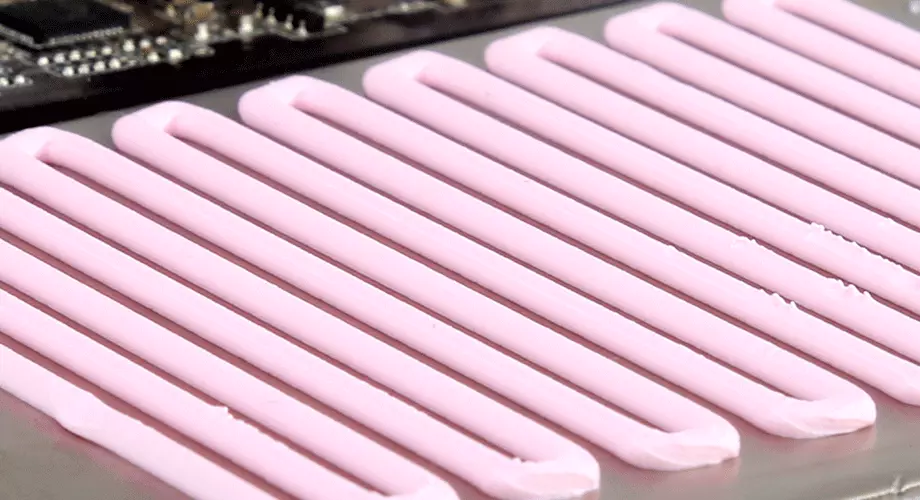
So here’s the real question: is your supplier built for scale, or just good at samples? Because when orders spike and deadlines loom, you don’t need excuses—you need gel that performs, batch after batch.
5 Questions To Vet A Gel Manufacturer
Choosing the right thermal gel manufacturer isn’t just a box-checking task. It shapes heat control, safety margins, and product lifespan. If you’re sourcing from a thermal gel supplier or screening a gel manufacturer for power electronics, these five questions keep things real and practical.
What thermal conductivity specifications do you offer?
When evaluating a thermal gel manufacturer, start with measurable performance metrics and how they relate to real heat transfer demands.
Core material properties
1.1 Thermal conductivity (W/mK)
· 1–3 W/mK: general LED drivers
· 3–6 W/mK: automotive ECUs
· 6+ W/mK: high-density inverters
1.2 Thermal resistance under compression
1.3 Long-term stability across operating temperature range
Application verification
2.1 Testing in real assemblies, not just lab coupons
2.2 Compatibility with thermal interface material standards
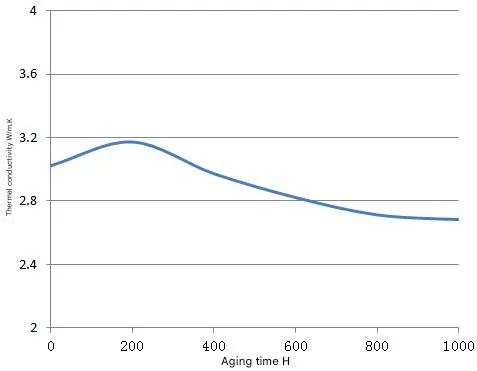
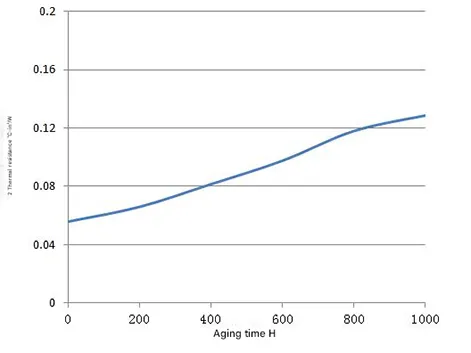
| Sheen technology SE30 Thermal Gel Aging Test | |||||||||
| Aging Duration(H) | 0 | 200 | 400 | 600 | 800 | 1000 | Change Rate (1000 Hours) | Acceptance Criteria | Result |
| Thermal Conductivity(W/m*k) | 3.02 | 3.17 | 2.97 | 2.82 | 2.71 | 2.68 | -11.2% | ±15% | OK |
| Thermal Resistance(℃*in²/W) | 0.0558 | 0.0659 | 0.0814 | 0.0974 | 0.1177 | 0.1283 | 2.3X | ≤3X | OK |
 |
 |
||||||||
A serious thermal gel supplier will back numbers with third-party data and aging reports. At Sheen Technology, data sheets connect lab values to actual module conditions, not marketing hype.
Can you customize viscosity for different Power Modules?
A capable thermal gel manufacturer should adjust viscosity without killing thermal flow.
Rheology tuning
1.1 Control of thixotropy for vertical dispensing
1.2 Stable flow under automated dispensing methods
Application alignment
2.1 Match flow to gap size
2.2 Prevent pump-out in vibration-heavy power modules
Good material customization means the gel fills tight gaps yet stays put during thermal cycling. That balance separates an average gel maker from a reliable thermal gel partner.
How do you verify dielectric strength in cleanroom manufacturing?
Electrical safety can’t be guessed. A trustworthy thermal gel manufacturer will show layered controls.
Lab validation
1.1 Measure dielectric strength and breakdown voltage
1.2 Track volume resistivity trends per batch
Cleanroom safeguards
2.1 Controlled cleanroom environment
2.2 Strict contamination limits in the manufacturing process
Ongoing quality control
· Documented testing procedures
· Batch traceability
If the gel is meant for high-voltage modules, solid electrical insulation data is non-negotiable.
What is your typical lead time for batch production?
Delivery speed reflects real manufacturing capacity.
Standard metrics
1.1 Average lead time in days
1.2 Typical batch size range
Operational depth
2.1 Flexibility in production schedule
2.2 Backup plans across the supply chain
Output stability
· Documented production efficiency
· Clear delivery timeline commitments
A dependable gel manufacturer won’t dodge these numbers.
Do you provide a Certificate of Analysis for RoHS compliance?
Compliance is paperwork plus proof.
Documentation set
1.1 Certificate of Analysis per lot
1.2 Evidence of RoHS compliance and REACH compliance
Material transparency
2.1 Full material certification
2.2 Disclosure of hazardous substances limits
Audit readiness
· Alignment with regulatory standards
· Traceable quality assurance records
A professional thermal gel manufacturer makes audits smooth. Clear documentation and adherence to environmental regulations signal a supplier ready for long-term partnership.
Quality Vs Cost: Thermal Gel Manufacturer Decisions
Choosing a thermal gel manufacturer is rarely a simple price check. You are weighing long-term Performance against short-term Expenditure, and the stakes are real. In automotive electronics and chips, one weak batch from a thermal gel supplier can snowball into recalls. So let’s break down how smart buyers size up quality and cost without losing sleep.
Quality
When evaluating a thermal gel manufacturer, buyers usually assess layered criteria rather than a single test result.
Core Material Specifications
1.1 Thermal and Electrical Metrics
· Stable conductivity under load
· High dielectric strength
· Low volatility during aging
| Sheen technology SE35 thermal gel Aging Test | |||||||
High-Temperature Aging |
|||||||
| Aging Duration(H) | 0 | 300 | 600 | 1000 | Change Rate (1000 Hours) | Acceptance Criteria | Result |
| Thermal Conductivity(W/m*k) | 3.52 | 3.43 | 3.35 | 3.22 | 7.1% | ±15% | OK |
| Thermal Resistance(℃*in²/W) | 0.0564 | 0.0603 | 0.0631 | 0.0674 | 19.5% | ±30% | OK |
Thermal Shock |
|||||||
| Aging Duration(H) | 0 | 300 | 600 | 1000 | Change Rate (1000 Hours) | Acceptance Criteria | Result |
| Thermal Conductivity(W/m*k) | 3.52 | 3.42 | 3.36 | 3.27 | 7.1% | ±15% | OK |
| Thermal Resistance(℃*in²/W) | 0.0564 | 0.0591 | 0.0629 | 0.0656 | 16.3% | ±30% | OK |
Constant Temperature & Humidity |
|||||||
| Aging Duration(H) | 0 | 300 | 600 | 1000 | Change Rate (1000 Hours) | Acceptance Criteria | Result |
| Thermal Conductivity(W/m*k) | 3.52 | 3.44 | 3.34 | 3.26 | 7.4% | ±15% | OK |
| Thermal Resistance(℃*in²/W) | 0.0564 | 0.0589 | 0.0634 | 0.0661 | 17.2% | ±30% | OK |
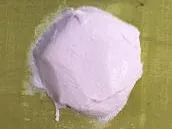
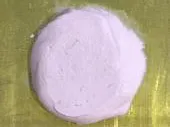
| Original sample of thermal gel | Thermal Gel After 1000 Hours at High Temperature | Thermal Gel After 1000 Hours of Constant Temperature and Humidity | Thermal Gel After 1000 Hours of Thermal Shock |
 |
.jpg.webp "Thermal Gel After 1000 Hours at High Temperature") |
 |
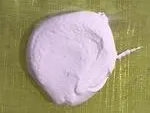 |
| Surface is smooth and gel-like | Surface is smooth and gel-like | Surface is smooth and gel-like | Surface is smooth and gel-like |
Conclusion: Based on the single-component gel SE35 aging test described above (1000 hours), the thermal conductivity of SE35 changed by less than 10%, thermal resistance by less than 20%, and hardness by less than 10 points; furthermore, no powdering or cracking was observed. Therefore, the reliability assessment for SE35 is: Passed.
1.2 Mechanical Stability
· Pump-out resistance
· Long-term Durability in vibration-heavy settings
Process Control and Consistency
2.1 Batch Management
· Documented raw material sourcing
· Controlled filler dispersion
2.2 Quality Systems
· ISO-based Standards
· In-house Testing protocols
· Third-party Certification
Field-Level Reliability
3.1 Application Validation
· Automotive ECU trials
· Semiconductor burn-in checks
3.2 Supplier Reputation
· Track record as a thermal interface gel provider
· Transparent failure analysis reports
Sheen Technology, as a specialized thermal gel manufacturer, puts serious weight on Consistency and real-world Performance, not just lab data. That mindset protects product Reliability when devices run hot and fast.
Cost
Price talks, sure. But smart sourcing from a thermal gel manufacturer looks beyond the invoice.
Direct Expenditure Factors
1.1 Material Formulation
· Filler content ratios
· Additive grade selection
1.2 Production Scale
· Automation level
· Yield control
Hidden Economic factors
2.1 Lifecycle Impact
· Rework rates
· Warranty exposure
2.2 Compliance
· Environmental approvals
· Export documentation risks
Strategic Investment View
3.1 Cost vs. Value
· Longer service life
· Fewer field failures
3.2 Supplier Partnership
· Joint material Optimization
· Stable long-term Efficiency
A low quote from a thermal gel supplier can look sweet today, yet hurt tomorrow if Reliability slips. Sheen Technology approaches pricing with balanced Value, aligning Budget limits with lasting Durability. In this market, the best thermal gel manufacturer is not the cheapest one; it is the one that protects your product when heat tries to win.
Can Your Gel Maker Scale To Large Orders?
Scaling isn’t just about bigger mixers or faster lines. A capable thermal gel manufacturer must handle global shipping, rising output, tight specs, and zero room for slip ups. If your gel maker plans to grow, every link in the chain matters.
Assessing global distribution capabilities
For a thermal gel manufacturer, scale starts with reach.
Distribution network
· Regional hubs across Asia, Europe, North America
· Integrated warehousing with climate control
· Real-time inventory management
Logistics partners
· Certified freight forwarding providers
· Multimodal transportation modes (air, sea, rail)
· Local customs clearance teams
Supply chain resilience
· Dual sourcing of raw silicone bases
· Backup international shipping routes
· Clear visibility across the geographic reach
A mature thermal gel supplier keeps buffer stock near key automotive and data center clients. No drama. No last minute scrambling.
Evaluating production capacity and automated production
A scaling gel manufacturer should break capacity into layers:
Facility size
· Total plant area
· Dedicated clean mixing rooms
Production lines
· Parallel automation technology units
· Redundant curing ovens
Output rate
· Shift-based manufacturing volume
· Monthly maximum scalability
| Metric | Standard Line | Automated Line | High-Volume Line |
| Batch Size (kg) | 200 | 500 | 1000 |
| Cycles/Day | 4 | 6 | 8 |
| Monthly Output (tons) | 24 | 90 | 240 |
A serious thermal gel manufacturer shows data like this without hesitation.
Ensuring consistent quality control at scale
Scaling without drift is the real test.
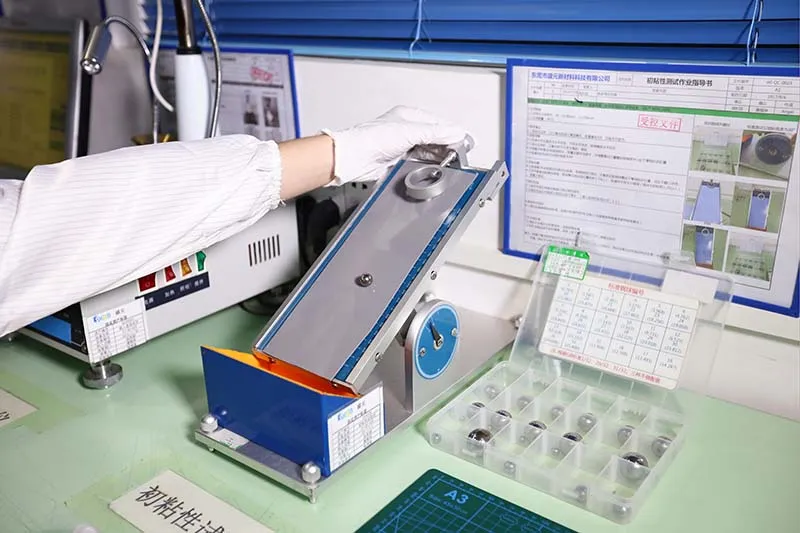
Quality assurance
· In-line viscosity monitoring
· Dielectric strength validation
Process control
· SPC tracking per batch
· Controlled curing profiles
Standards compliance
· ISO 9001
· UL and RoHS alignment
· Third-party certification
In its 2025 electronics materials outlook, IPC noted that material suppliers serving EV and data infrastructure markets must maintain “tight statistical consistency across high-volume lots to prevent cascading system failures.”
A dependable thermal gel manufacturer builds repeatability into the recipe, not just the sales pitch.
Optimizing packaging and shipping logistics
Large orders mean smarter packing.
Packaging materials
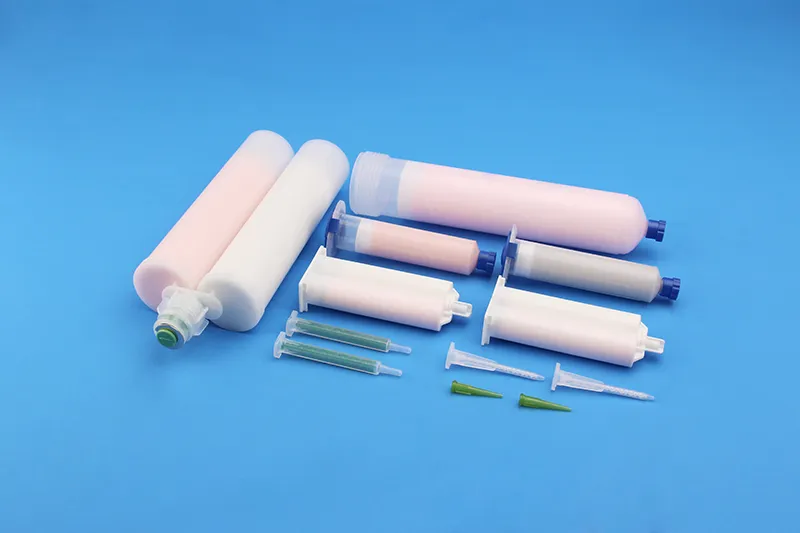
· Syringes for prototyping
· Cartridges for mid-scale runs
· Drums and pails for OEM contracts
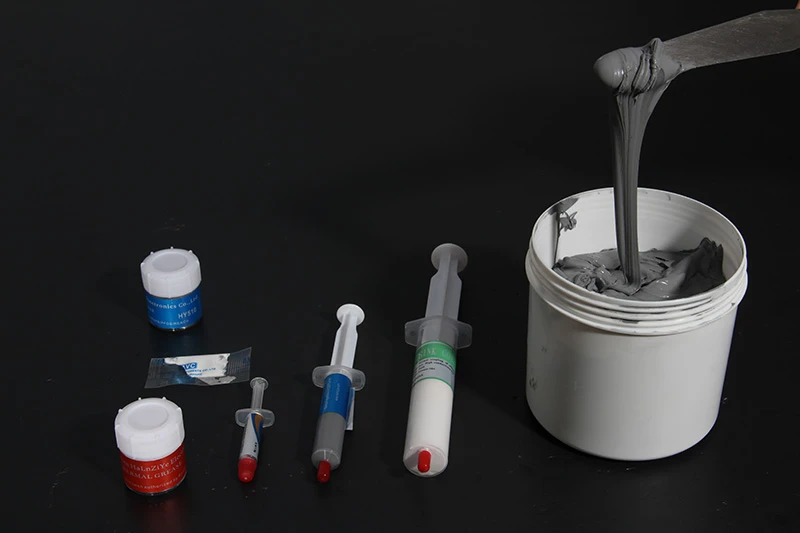
Containerization
· Temperature-stable liners
· Moisture barriers
Route optimization
· Shortest transit paths
· Controlled shipping methods
From factory gate to customer dock, every step protects the thermal gel. A capable thermal interface material manufacturer treats logistics as part of product performance, not an afterthought.
FAQs about Thermal Gel Manufacturer
What technical specifications should I request from a thermal gel manufacturer?
Selecting the right partner often comes down to clarity in data and honesty in testing.
1) Core thermal data
· Thermal Conductivity & Thermal Impedance for Power Modules and Semiconductor Devices
· Operating Temperature Range for Automotive Electronics and Data Centers
2) Electrical safety
· Dielectric Strength
· Volume Resistivity
· Flammability Rating aligned with UL Certification
3) Material transparency
· Silicone Base or Non-Silicone system
· Ceramic Fillers or Metallic Fillers
· Confirmation of Volatile Organic Compounds limits
Clear test reports, conducted under strict Quality Control and Cleanroom Manufacturing, signal discipline—not marketing.
Can a thermal gel manufacturer customize viscosity and material composition?
Yes—and this is often where performance is won or lost.
A capable supplier with strong R&D Facilities and Application Engineering can adjust:
· Viscosity using Rheology Modifiers for precise Dispensing
· Thixotropic Gel behavior for vertical gaps
· Non-Curing Gel or Curing Gel formats depending on rework needs
Customization areas at a glance
| Parameter | Typical Adjustment | Application Impact |
| Viscosity | Low to high | Controls pumpability in Automated Production |
| Filler Type | Ceramic Fillers / Metallic Fillers | Balances Thermal Conductivity & weight |
| Polymer Matrix | Silicone Base / Non-Silicone | Affects durability & Operating Temperature Range |
For Battery Management Systems or LED Lighting, even small formulation shifts can decide long-term stability.
How does a thermal gel manufacturer ensure quality and compliance?
Consistency builds trust—batch after batch.
· Cleanroom Manufacturing during Mixing and Curing
· Tight Batch Production records
· Certificate of Analysis for every shipment
Compliance checkpoints typically include:
RoHS Compliance · REACH Compliance · ISO Certification · Conflict Minerals declarations
When Dielectric Strength and Volume Resistivity remain stable across production lots, it reflects disciplined Quality Control—not luck.
What production capacity and packaging options should large buyers expect?
Scaling supply without sacrificing material integrity is a real test.
Production strength
· Automated Production lines
· Scalable Production Capacity
· Predictable Lead Time supported by Global Distribution
Packaging matched to usage
· Syringes / Tubes → Consumer Electronics prototyping
· Cartridges → Automated Dispensing lines
· Pails / Drums → High-volume Data Centers and Automotive Electronics
Proper Storage Conditions and controlled Shipping Logistics protect Specific Gravity, Viscosity, and electrical properties during transit.
In high-growth sectors, the right thermal gel manufacturer doesn’t just ship material—they safeguard performance from factory floor to final assembly.
Sheen Thermal
Dongguan Sheen Electronic Technology Co., Ltd · Founded in 2008
Manufacturer of thermal interface materials and silicone foam for automotive electronics, energy storage, power electronics, communications and consumer electronics.
Certified
- ISO 9001:2015
- ISO 14001:2015
- IATF 16949:2016
What we supply
- Thermal conductivity Up to 90 W/m·K
- Thickness 0.3–10.0 mm
- Custom & samples Die-cut to drawing, 3–7 days