
 English
 usheenthermal

Why Thermal Resistance and Thermal Impedance Impact Performance
Date:2026-05-06
Why Thermal Resistance and Thermal Impedance Impact Performance
Thermal Resistance and Thermal Impedance decide if your electronics run cool or cook themselves alive. In high-power designs, heat is the silent budget killer. Ignore it, and performance tanks fast.
A few stray degrees can slash lifespan, spark warranty claims, and stall production lines. Smart material choices keep margins safe and engineers sleeping at night soundly.
What Are Thermal Resistance and Impedance?
Heat in electronics is a bit like traffic in a busy city—if it can’t move, trouble builds up fast. That’s where Thermal Resistance and Thermal Impedance step in. Understanding thermal resistance, thermal impedance, and overall thermal behavior keeps devices cool and reliable.
Thermal Conductivity vs Thermal Resistance Explained
When talking about heat flow, two ideas always show up: thermal conductivity and thermal resistance. Both sit at the core of heat transfer and define how a temperature gradient turns into heat flux.
Material capability
Thermal conductivity describes intrinsic material properties.
High conductivity materials
· Copper
· Aluminum nitride
Low conductivity materials
· Ceramics used for insulation
· Polymers limiting heat flow
Thermal resistance depends on:
· Thickness
· Cross-sectional area
· The material’s thermal properties
Even a good conductor can show high resistance if it’s thick enough.
Practical link to Thermal Resistance and Thermal Impedance
· Thermal resistance defines steady heat blocking.
· Thermal impedance adds time behavior.
· Together, Thermal Resistance and Thermal Impedance explain both constant and changing heat conditions.
In short, conductivity is about how well heat can move through a material, while thermal resistance tells you how hard that specific path makes it.
How Junction-to-Case Thermal Resistance Affects Devices
For any semiconductor device, the hot spot lives at the junction. The path from junction to case—called junction-to-case thermal resistance—controls junction temperature directly.
Here’s why it matters:
Lower junction-to-case resistance
· Reduces temperature rise
· Improves device reliability
· Allows higher power dissipation
If this internal resistance is too high, even a strong heatsink can’t save the device. That’s why datasheets highlight it so clearly.
According to the 2025 IEA tracking report on power electronics efficiency, improved thermal design is now “a critical enabler for higher power density systems and long-term reliability.”
In real circuits—MOSFETs, IGBTs, power modules—Thermal Resistance and Thermal Impedance shape safe operating limits. Managing thermal resistance keeps junction temperature below its max rating, protecting lifespan and performance.
The Role of Thermal Impedance in Heat Dissipation
Unlike simple thermal resistance, thermal impedance changes with time. It describes transient thermal behavior during power swings.
Under power pulses
· Heat builds gradually.
· Internal layers store energy due to heat capacity.
· This defines the device’s thermal response curve.
Steady vs transient comparison
· Steady-state: constant load, stable temperature rise.
· Transient: short bursts, delayed peak temperature.
Why Thermal Resistance and Thermal Impedance both matter
· Thermal resistance predicts final equilibrium.
· Thermal impedance predicts momentary overshoot.
· Combined, they guide thermal management strategies.
In microprocessors and LEDs, quick load spikes are common. Without understanding Thermal Resistance and Thermal Impedance, designers risk underestimating peak junction temperature. Thermal resistance handles the long run. Thermal impedance handles the heat spikes. Together, they keep heat dissipation under control and devices running cool instead of cooking themselves.
Which Materials Lower Thermal Resistance Best?
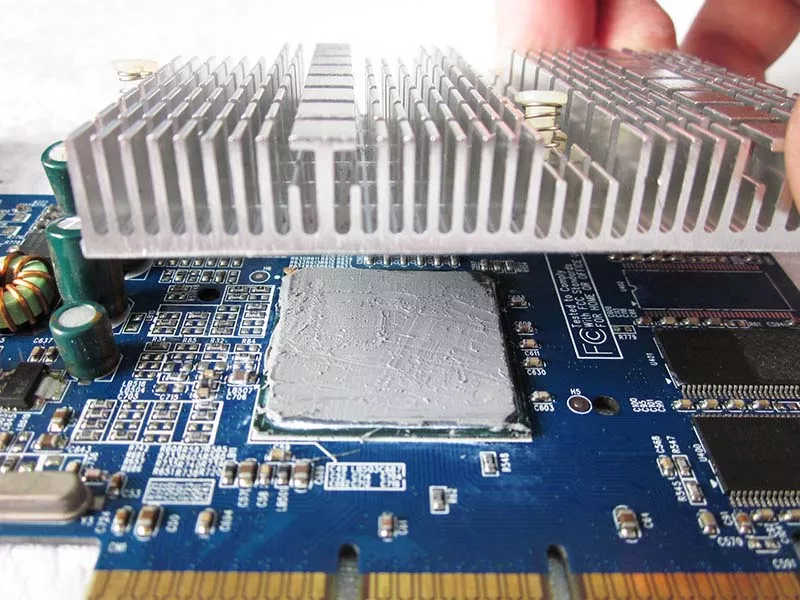
Heat has zero patience. If your design ignores Thermal Resistance and Thermal Impedance, temperatures climb fast and performance drops even faster. Breaking down Thermal / Resistance / and / Thermal / Impedance helps engineers see the difference between steady heat flow and dynamic heat behavior. Lowering thermal resistance and controlling thermal impedance is how electronics stay cool, stable, and reliable.
Thermal Grease and Thermal Paste: Direct-Bonded Copper Alternatives
When pairing direct bonded copper with a heat sink, air gaps are the real enemy. That’s where thermal grease and thermal paste step in as a high-performance thermal interface material.
· Fills microscopic voids
· Boosts heat transfer
· Reduces contact resistance
In practice, lowering Thermal Resistance and Thermal Impedance at this junction depends on three-layered factors:
Material Properties
· Base oil stability
· Filler particle size
· Verified thermal conductivity
Application Control
· Thin, uniform coating
· Proper mounting pressure
· Surface flatness
Long-Term Bonding Reliability
· Pump-out resistance
· Dry-out prevention
· Consistent bonding strength
Sheen Technology formulates compounds that stay stable under thermal cycling, keeping thermal resistance predictable instead of drifting over time.
Phase Change Materials for MOSFET and Power Transistor Cooling
High-power MOSFET and power transistor devices swing between idle and peak load. That cycling stresses interfaces.
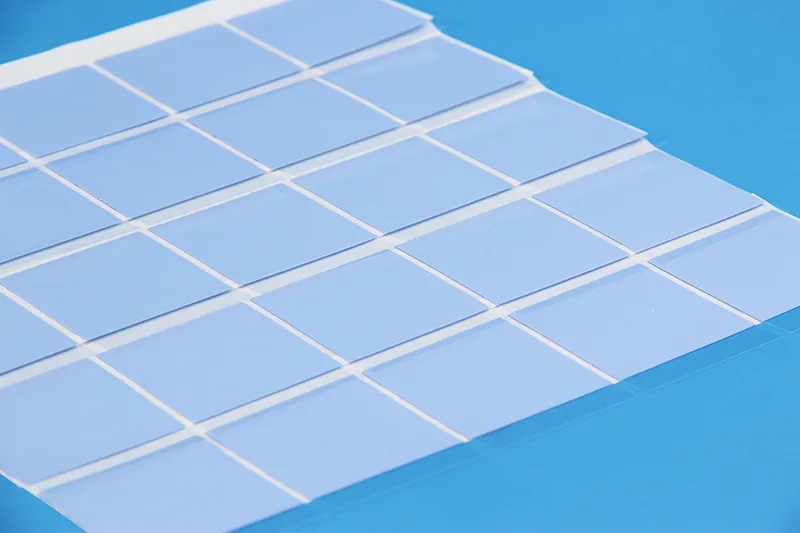
Phase change material works differently:
· Solid at room temperature
· Softens near operating range
· Enhances surface wetting
Under load, it absorbs latent heat, tightening contact and improving heat dissipation. This directly reduces Thermal Resistance and Thermal Impedance during dynamic spikes.
The International Energy Agency noted in its 2025 power electronics efficiency outlook that improved thermal management remains “one of the most cost-effective ways to extend device lifetime in high-density power systems.”
For serious thermal management, Sheen Technology offers PCM solutions tuned for repeat heating cycles without performance drop-off.
Thermal Pads vs Thermal Gap Fillers in LED Modules
LED systems hate uneven cooling. A small hotspot can wreck lumen output.
Thermal pads are clean and easy:
· Pre-cut
· Electrically insulating
· Stable thickness

Thermal gap fillers adapt better:
· Conform to warped LED modules
· Reduce air pockets
· Improve heat transfer
To lower thermal resistance in lighting assemblies, engineers often compare:
· Pad compressibility
· Filler flow behavior
· Actual thermal conductivity under pressure
Lower Thermal Resistance and Thermal Impedance here means smoother temperature spread and less thermal stress cracking.
Ceramic Substrates and Aluminum Nitride for Low Resistance Paths
Power modules demand insulation and cooling at the same time. That’s why ceramic substrates matter.
Two common choices:
Alumina
· Good insulation
· Moderate thermal conductivity
Aluminum nitride
· High thermal conductivity
· Excellent heat dissipation
· Ideal for advanced electronic packaging
In silicon carbide drives and high-voltage systems, lowering thermal resistance inside the substrate material shortens the path from junction to heat sink. That reduces overall heat flow resistance and stabilizes thermal impedance under switching loads.
For designers chasing tighter thermal margins, Sheen Technology supports substrate-level optimization to keep Thermal Resistance and Thermal Impedance firmly under control.
4 Ways to Measure Thermal Resistance Accurately
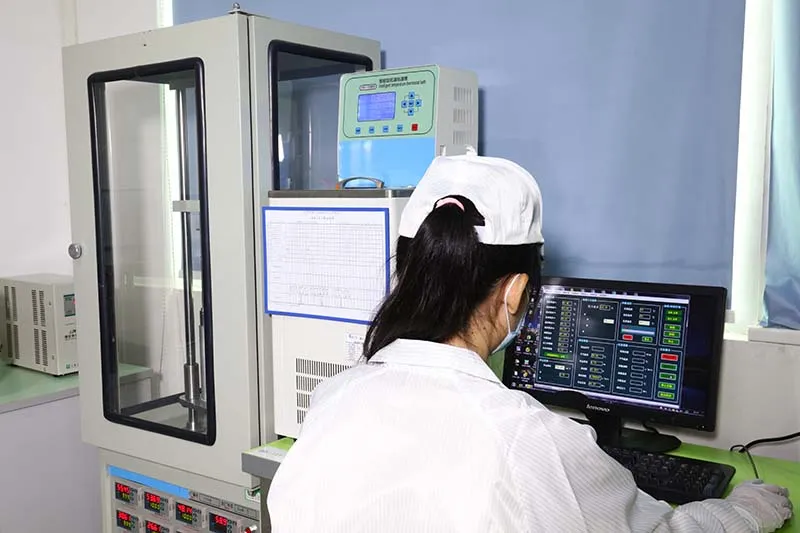
Understanding Thermal Resistance and Thermal Impedance is not just lab talk—it’s what keeps chips alive and products reliable. When heat flow gets messy, performance drops fast. This guide breaks down practical ways to measure thermal resistance, thermal impedance, and overall heat transfer behavior, so your thermal resistance calculation actually matches real-world power dissipation.
Steady-State Thermal Analysis under JEDEC Standards
In steady-state testing, steady-state conditions are maintained until junction temperature stabilizes. The goal is simple: measure true thermal resistance under recognized JEDEC standards so results make sense across labs.
Core control factors:
Ambient stability
· Maintain fixed airflow
· Lock chamber temperature
Power input
· Constant power dissipation
· Verified current and voltage
Sensor placement
· Calibrated thermocouples
· Accurate case temperature capture
Measurement flow typically looks like this:
· Apply defined electrical load.
· Wait until temperature plateau confirms equilibrium.
· Record junction and case data.
· Compute junction-to-ambient and junction-to-case values.
The value of this method? Repeatability. For teams analyzing Thermal Resistance and Thermal Impedance, steady-state data becomes the anchor for validating thermal impedance curves later on.
At Sheen Technology, engineers align every thermal analysis routine with JEDEC guidance to ensure that heat flow comparisons remain fair, clean, and defensible.
Transient Thermal Analysis with Thermal Imaging
Heat rarely behaves politely in real use. That’s where transient thermal analysis steps in.
Using an infrared camera, engineers track temperature distribution as power ramps up. Instead of waiting for equilibrium, the focus is on time-dependent rise—this reveals hidden limits in heat transfer paths.
Typical workflow blends tools and logic:
· Apply short power pulse.
· Capture high-speed thermal frames.
· Extract thermal impedance curve from temperature vs. time.
Dynamic observation helps identify internal bottlenecks inside packaging layers. When Thermal Resistance and Thermal Impedance are evaluated together, transient data exposes where internal die attach or substrate layers resist heat flow.
The International Energy Agency noted in its 2025 efficiency outlook that improved thermal management directly supports higher power density electronics while reducing system energy losses.
That aligns with real lab results. Smarter thermal impedance testing reduces overdesign and trims cost.
Thermal Cycling and Temperature Measurement Techniques
Reliability testing pushes hardware hard. Thermal cycling repeatedly swings temperature to evaluate long-term stability and material stress.
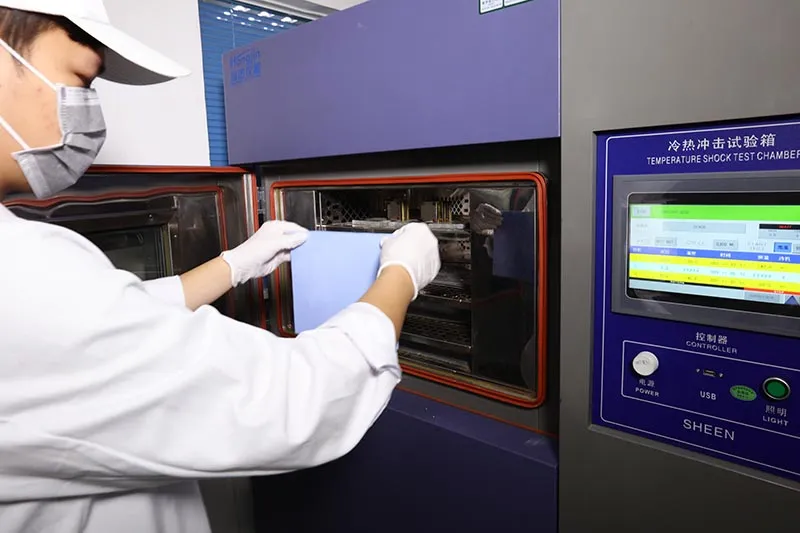
Key reliability pillars include:
Mechanical stress
· Thermal stress buildup
· Coefficient mismatch fatigue
Measurement integrity
· Calibrated temperature sensors
· Shielded thermocouples
Failure tracking
· Resistance drift
· Structural cracking
Testing hierarchy often follows this path:
· Define temperature extremes.
· Program cycle duration and ramp rate.
· Monitor junction response.
· Compare shifts in thermal resistance after cycles.
Repeated gradients simulate years of field use. For companies concerned with Thermal Resistance and Thermal Impedance, this testing verifies that thermal conductivity paths remain stable over time.
Sheen Technology integrates cycling data with steady-state and transient findings, ensuring that thermal resistance calculation reflects aging, not just fresh-off-the-line samples.
Calculating Thermal Resistance via Power Dissipation Data
At its core, thermal resistance equals temperature difference divided by power dissipation. Simple formula. Real-world execution? Not always.
Engineers track:
· Junction temperature
· Ambient temperature
· Input power
Then:
· Subtract ambient from junction temperature.
· Divide by measured heat flow.
· Validate against expected junction-to-ambient values.
When repeated under varied loads, this process also supports thermal impedance modeling. Accurate calculation methods prevent undersized heat sinks and overheating surprises.
In practice, teams studying Thermal Resistance and Thermal Impedance rely on clean measurement loops, verified thermal conductivity assumptions, and consistent calibration.
That’s the difference between guessing and engineering.
Thermal Resistance vs Thermal Impedance
When engineers talk about Thermal Resistance and Thermal Impedance, it can sound like insider jargon. In reality, it’s about how heat moves, how fast temperature rises, and how safely devices survive. From chips to power modules, Thermal Resistance and Thermal Impedance shape real-world reliability.
Thermal Resistance
Understanding Thermal Resistance and Thermal Impedance starts with steady heat behavior. Thermal resistance focuses on constant conditions—no sudden spikes, just ongoing heat flow driven by temperature difference and power dissipation.
Core idea of thermal resistance
· Defines opposition to heat transfer under steady state.
· Expressed across a thermal path, such as junction-to-ambient.
· Determined by material properties, thickness, and interface pressure.
In practical electronics
Chip level
· Junction → case
· Case → heat sink
System level
· Heat sink → air
· Air → environment
Why it matters
· Lower thermal resistance means smaller temperature difference for the same heat flow.
· Stable power dissipation prevents runaway heating.
In product design at Sheen Technology, engineers map every thermal path carefully, trimming excess thermal resistance so devices stay cool without oversized heat sinks.
Thermal Impedance
Now shift from steady to changing conditions. Thermal Resistance and Thermal Impedance differ most when time enters the story. Thermal impedance captures the transient side—how temperature reacts during pulse power events.
Dynamic heat behavior
· Includes both thermal resistance and heat capacity.
· Influenced by thermal mass and internal structure.
Time-based response
· Short pulse:Limited temperature rise due to stored energy in materials.
· Long pulse:Approaches steady heat dissipation limits.
Key parameters
· Time constant defines how fast the system heats up.
· Dynamic response predicts junction swings in microprocessors.
Think of Thermal Resistance and Thermal Impedance as static versus time-aware heat control. One handles constant load. The other explains rapid temperature rise under bursts.
In advanced modules developed by Sheen Technology, modeling Thermal Resistance and Thermal Impedance together ensures safe operation from idle to full pulse power stress.
Power Module: Managing Thermal Resistance
Power modules run hot, and heat never plays nice. Getting Thermal Resistance and Thermal Impedance under control keeps junctions alive and systems steady. From heat sink choices to adhesive details, every layer shapes thermal resistance, thermal impedance, and overall heat flow.
Optimizing Heat Sink Technologies for Power Modules
Managing Thermal Resistance and Thermal Impedance starts at the top surface and moves outward.
Heat spreading foundation
Heat sink architecture
· Extruded profiles support cost control and stable manufacturing process.
· Skived fins improve fin geometry density, cutting thermal resistance in tight power module layouts.
Material selection
· Aluminum balances weight and cooling performance.
· Copper lowers thermal resistance but raises mass and cost.
Intermediate transfer control
Thermal interface layers
· Surface flatness affects contact resistance.
· Clamping force shifts effective thermal impedance.
Vapor chambers and heat pipes
· Reduce hot spots.
· Stabilize transient thermal impedance during load swings.
Advanced cooling routes
Liquid cold plates
· Directly extract heat near the die.
· Improve cooling performance under high power density.
By reducing Thermal Resistance and Thermal Impedance, Sheen Technology designs keep junction temperatures predictable, not chaotic.
Balancing Power Dissipation and Thermal Budget
Thermal math sounds dry, yet it drives reliability.
Core relationship
· Power dissipation × total thermal resistance = temperature rise.
· Add ambient temperature, and you approach junction temperature limits fast.
Budget alignment
· Check case temperature targets.
· Compare against allowable thermal budget for lifetime goals.
· Track thermal impedance under dynamic loads, not just steady state.
Reliability impact
· Lower thermal resistance slows material fatigue.
· Stable thermal management improves system performance.
· Controlled junction temperature supports long-term reliability.
Sheen Technology evaluates Thermal Resistance and Thermal Impedance early in design, so thermal impedance curves match real operating stress, not lab-only numbers.
Selecting Thermal Adhesives and Gap Fillers for Reliability
Small layers, big consequences. Material fundamentals
Thermal adhesive vs gap filler selection
· Adhesives provide bonding strength.
· Gap fillers accommodate tolerance stack-up.
· Thermal interface material conductivity affects total thermal resistance.
Mechanical alignment
· Match coefficient of expansion to substrates.
· Control bond line thickness to limit added thermal resistance and excess thermal impedance.
· Tune viscosity for clean application method and void control.
Long-term durability
· Prevent pump-out and dry-out.
· Maintain low contact resistance across thermal cycles.
· Protect overall reliability under vibration and heat.
Dialing in these layers directly shapes Thermal Resistance and Thermal Impedance across the stack. With careful material pairing and process control, Sheen Technology keeps heat moving the right way—out.
FAQs about Thermal Resistance And Thermal Impedance
Why do Thermal Resistance and Thermal Impedance decide the fate of power modules?
When a power module runs hard, heat becomes the silent judge of its lifespan.
· Thermal resistance defines steady heat flow from junction temperature to ambient temperature.
· Thermal impedance captures time-based effects driven by heat capacity and thermal diffusivity during pulsed power dissipation.
In silicon carbide MOSFETs or dense integrated circuits, a high junction-to-case thermal resistance quickly raises thermal stress. Transient thermal analysis often reveals hidden temperature spikes that steady-state thermal analysis may not show. Under JEDEC standards, this difference can mean stable operation—or early failure.
How does junction-to-case thermal resistance shape MOSFET reliability?
A single parameter carries enormous weight.
· Low junction-to-case thermal resistance → lower junction temperature
· Lower junction temperature → reduced thermal stress
· Reduced stress → longer life for power transistors and microprocessors
This path depends on materials and structure:
· Aluminum nitride or alumina ceramic substrates
· Direct bonded copper layers for heat spreading
· Epoxy molding compound with controlled coefficient of thermal expansion
Thermal imaging during temperature measurement often exposes weak packaging points before field failure does.
Which interface materials truly reduce thermal resistance in mass production?
Contact surfaces decide everything. Microscopic air gaps raise thermal resistance sharply.
Short comparison:
| Material | Key Strength | Typical Use |
| Thermal grease / thermal paste | High wetting, low contact resistance | Power modules, CPUs |
| Thermal pads | Clean assembly, consistent thickness | LEDs, compact ICs |
| Phase change materials | Softens at operating temperature, improves contact | Repeated thermal cycling |
| Thermal gap fillers | Absorbs tolerance gaps | Large enclosures |
| Thermal adhesives | Mechanical bonding + heat path | Permanent assemblies |
In high power dissipation systems, poor interface choice can consume the entire thermal budget before heat reaches extruded heat sinks or vapor chambers.
How can system design minimize overall thermal impedance efficiently?
Heat must move fast—and keep moving.
① Spreading stage
· Direct-bonded copper
· Aluminum nitride substrates
· Control temperature gradient early
② Transfer stage
· Heat pipes or vapor chambers for fast lateral conduction
· Skived fin heat sinks or fan heat sinks for airflow systems
· Liquid cooling plates for extreme loads
③ Validation stage
· Steady-state thermal analysis for equilibrium limits
· Transient thermal analysis for pulse behavior
· Thermal cycling to assess the coefficient of thermal expansion mismatch
When thermal conductivity, heat capacity, and power dissipation are balanced carefully, LEDs maintain color stability, microprocessors avoid throttling, and the system holds its ground under pressure.
Sheen Thermal
Dongguan Sheen Electronic Technology Co., Ltd · Founded in 2008
Manufacturer of thermal interface materials and silicone foam for automotive electronics, energy storage, power electronics, communications and consumer electronics.
Certified
- ISO 9001:2015
- ISO 14001:2015
- IATF 16949:2016
What we supply
- Thermal conductivity Up to 90 W/m·K
- Thickness 0.3–10.0 mm
- Custom & samples Die-cut to drawing, 3–7 days