
 English
 usheenthermal

Understanding the Role of PET Release Film-Backed Insulating Thermal Pads
Date:2026-05-20
Understanding the Role of PET Release Film-Backed Insulating Thermal Pads
A PET release film-backed insulating thermal pad is the quiet hero your assembly line has been begging for, cutting mess, boosting yield, and keeping heat and voltage from running wild.
With a peel-off liner and compliant core, it handles gaps, speeds installs, and keeps production drama off floor.
Key Insights for PET release film-backed insulating thermal pad
➔ Ensures Clean, Fast Assembly: The PET liner offers dimensional stability for die-cut shapes, reducing mess and speeding high-volume installs.
➔ Superior Thermal Management: Silicone matrix with boron nitride and graphite fillers balances through-plane conductivity with in-plane heat spreading.
➔ Reliable Electrical Insulation: High dielectric strength and flame retardancy protect circuit boards while filling uneven gaps under clamp loads.
➔ Easy Rework & Handling: Peel-off PET film simplifies alignment, prevents contamination, and maintains pad integrity during lamination and punching.
PET Release Film-Backed Insulating Thermal Pad Basics
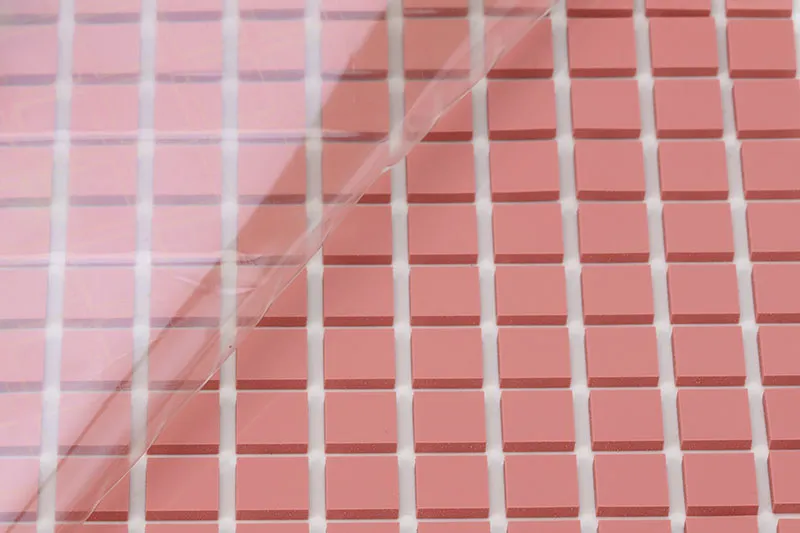
Modern electronics run hot, and nobody likes fried chips. This guide breaks down how a PET release film-backed insulating thermal pad works, why it matters, and how smart material choices keep devices cool without drama.
What Makes a PET Release Film-Backed Thermal Pad?
A PET release film-backed insulating thermal pad is built with layered logic. Each structure plays a role in heat flow and clean handling.
Core build of the thermal pad
· Insulating layer: silicone-based composition designed to transfer heat while blocking current
· Functional fillers inside the backing material improve stability
Surface control
· PET film acts as a protective release liner
· Keeps dust off and prevents unwanted adhesion before mounting
Installation moment
· Peel off the PET film
· The thermal pad conforms to gaps between chip and heat sink
The PET release film-backed insulating thermal pad keeps assembly simple. No sticky mess. Just peel, place, press.
Core Materials: Silicone, Ceramic, and Graphite Explained
Inside the PET release film-backed insulating thermal pad, material science does the heavy lifting.
Polymer matrix
· Silicone delivers flexibility
· Maintains contact under compression
Filler materials
· Ceramic particles boost thermal interface performance
· Improve heat dissipation and electrical isolation
Performance enhancers
· Graphite flakes spread heat sideways
· Reduce hot spots on CPU and GPU
This mix balances material properties: softness, conductivity, and safety. A well-designed PET release film-backed insulating thermal pad won’t crack under pressure or short a board.
Physical Properties of PET-Backed Pads: Conductivity & Strength
Performance comes down to measurable traits.
Thermal path
· Thermal conductivity rises with filler loading
· Lower thermal resistance means faster heat escape
Electrical safety
· Strong electrical insulation
· High dielectric strength protects circuits
Mechanical behavior
· Controlled thickness supports gap filling
· Balanced flexibility and mechanical strength improve durability
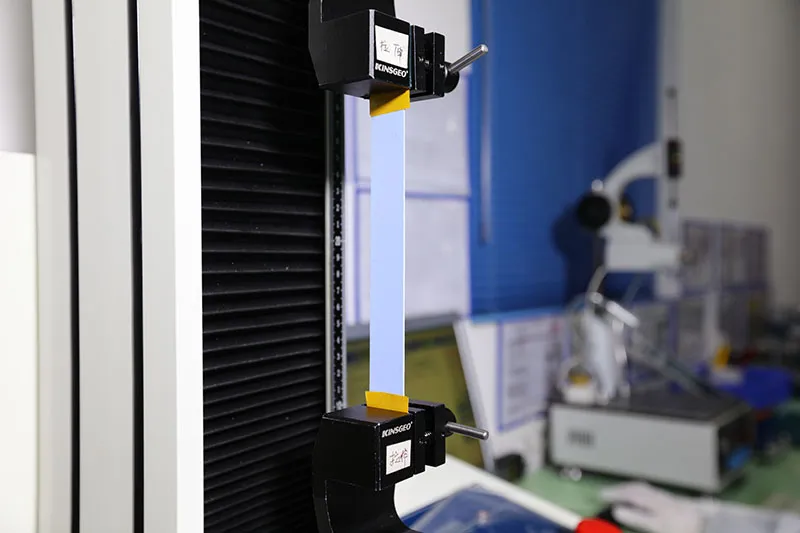
Brands like Sheen Technology fine-tune compression and tensile values so the PET release film-backed insulating thermal pad survives die-cutting without tearing the release liner.
In short, a PET-backed thermal pad is not just soft silicone—it’s engineered heat control with brains and backbone.
Key Components of PET Release Film Pads
A PET release film-backed insulating thermal pad isn’t just a soft sheet tucked between chips and heat sinks. It’s a layered system built for heat control, insulation, and clean handling. Let’s break down what really makes it tick.
Silicone-Based Thermal Pad Matrix
At the core of a PET release film-backed insulating thermal pad sits the silicone-based thermal pad matrix, acting as the primary thermal interface material.
Material Backbone
· Elastomer structure formed from crosslinked polymer
· Maintains elasticity under pressure
· Resists pump-out during thermal cycling
Heat Transfer Path
· Base silicone carries dispersed thermal filler
· Microscopic pathways move heat through the matrix
· Stable heat transfer even after repeated compression
Functional Layers in a PET release film-backed insulating thermal pad
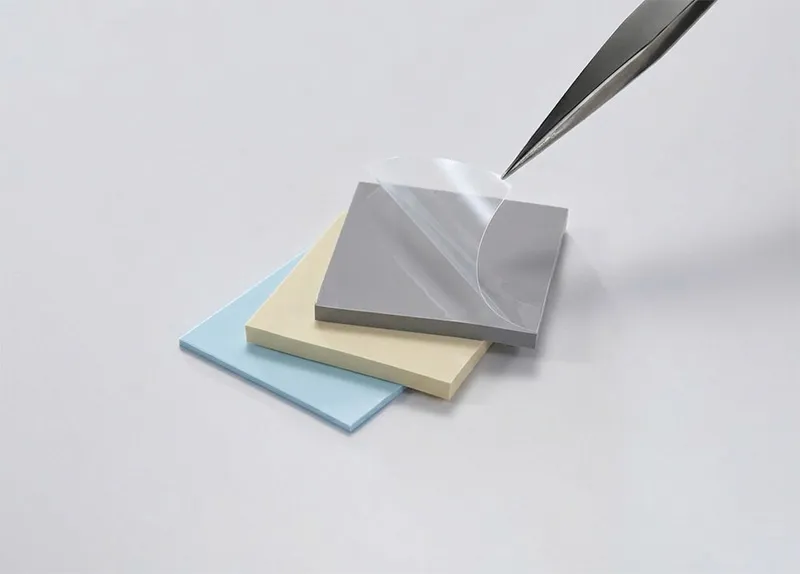
a) Active layer
· Filled thermal interface material
· Electrically insulating
b) Surface contact
· Smooth conformable surface
· Fills air gaps on MOSFET or LED modules
Sheen Technology engineers tune the silicone formula so the pad stays soft but doesn’t sag. That balance keeps your insulating thermal pad doing its job long-term.
PET Release Liner vs. Silicone-Coated Alternatives
The outer layer of a PET release film-backed insulating thermal pad often uses PET film as a release liner.
Here’s how options stack up:
PET film
· High dimensional stability
· Clean die-cut edges
· Strong backing film integrity
Silicone-coated liner
· Lower peel force
· Easier removal from adhesive surfaces
Polyethylene or polypropylene
· Lower cost
· More stretch, less precise slitting
In a PET release film-backed insulating thermal pad, the polyester-based protective film controls handling before installation. For converters, stable adhesive behavior means fewer headaches during lamination.
Sheen Technology typically favors PET because it behaves predictably during roll processing and kiss cutting. No drama, just smooth release.
Boron Nitride Fillers Paired with Graphite Sheets
Inside the composite material, boron nitride and graphite sheets work as a heat-moving duo.
Material Roles
Boron nitride
· Electrically insulating
· Boosts through-plane thermal conductivity
· Fine filler particles disperse evenly
Graphite sheets
· High in-plane heat dissipation
· Spreads hot spots laterally
· Supports overall thermal balance
When integrated into a PET release film-backed insulating thermal pad, this pairing drives heat away from power devices fast.
| Material Component | Thermal Conductivity (W/m·K) | Electrical Insulation | Primary Function |
| Silicone base | 0.2–0.4 | Yes | Structural matrix |
| Boron nitride | 20–60 (particle level) | Yes | Vertical heat path |
| Graphite sheet | 150–400 (in-plane) | No (conductive) | Lateral spreading |
| Composite pad | 1–8 (bulk typical) | Yes (engineered) | Device cooling |
That combo turns a simple thermal filler system into a real thermal solution.
Adhesion and Compressibility of Backing Films
Performance isn’t only about conductivity. Adhesion and compressibility shape daily usability.
Adhesion Control
· Light acrylic adhesive tack
· Temporary bonding during assembly
· Balanced bond strength to prevent residue
Mechanical Properties
· Engineered compressibility under clamp load
· High conformability over uneven chips
· Flexible backing film reduces tearing
Functional Impact in a PET release film-backed insulating thermal pad
a) Under pressure
· Air gaps collapse
· Contact resistance drops
b) During removal
· Controlled peel
· Less pad fracture
A well-built PET release film-backed insulating thermal pad feels simple in hand, yet it’s carefully tuned at every layer. That’s exactly where Sheen Technology focuses—clean release, steady insulation, and reliable heat flow without overcomplicating the build.
Need a closer match for your project? Browse these related application pages to see where PET release film-backed insulating thermal pads are used in real production environments.
Thermal Pad vs. Grease: Which Wins?
Loose talk aside, the “winner” is usually decided by gap, assembly speed, and mess tolerance, not hype. Pads feel tidy and predictable; grease feels fast and high-performance. If you’re matching a heatsink to a CPU lid, grease can shine. If your hardware has ugly gaps, pads stop the drama, especially with Sheen Technology builds.
Thermal Pad
Pads are about repeatability, not bragging rights; the right gap filler stays put, keeps heat transfer steady, and still offers dielectric strength when you need an insulating material barrier. A PET release film-backed insulating thermal pad also keeps hands and tooling clean during pad application. Nice.
Quick call: conformable pads beat shaky tolerances on uneven parts.
1) When pads win
Fit and function
· Gap control: a PET release film-backed insulating thermal pad sets thickness so you don’t “guess and squish.”
· Handling: PET film liners help placement in high-volume builds.
Electrical needs
· If you need insulation, a PET release film-backed insulating thermal pad is the easy button.
2) What you trade off
Interface physics
· Higher contact resistance than grease, even with good thermal conductivity.
· Still, a quality PET release film-backed insulating thermal pad stays consistent across units.
| Material | Thickness (mm) | Bulk thermal conductivity (W/m·K) | Electrical isolation (kV/mm) |
| Silicone pad | 1.0 | 3.0 | 8 |
| Silicone pad | 2.0 | 2.5 | 7 |
| Grease | 0.05 | 6.0 | 0 |
| Phase-change | 0.10 | 4.5 | 0 |
For production, Sheen Technology often favors “release film + insulating pad” setups: less mess, fewer returns, calmer assembly lines; “PET release film,” “backed insulating thermal pad,” and “insulating thermal pad” variants all get used depending on the gap.
Need exact thickness, thermal conductivity, dielectric strength, and release-liner details before you choose? Download the product datasheets to compare PET release film-backed insulating thermal pad options.
Thermal Grease
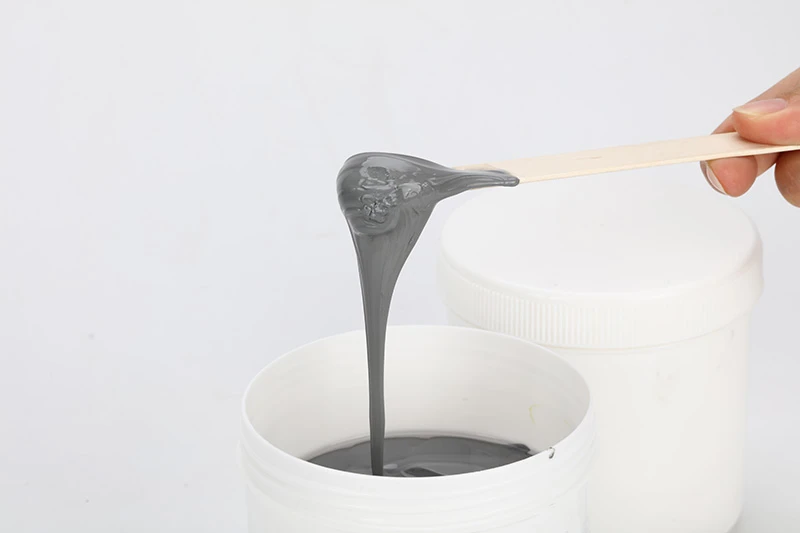
Grease is the classic move for flat, tight interfaces; it spreads into tiny scratches for better void filling, and that super thin layer cuts thermal resistance when the CPU lid and heatsink are actually flat. It’s a paste compound with its own personality, and viscosity matters.
A practical way to judge it looks like this:
· You care about peak heat transfer, so you apply a pea-sized dab and let mounting pressure spread it.
· Your application method has to be consistent, or performance bounces around unit to unit.
· Long-term, watch the pump-out effect; heat cycling can shove grease out of the joint, and rework turns into a wipe-and-reapply routine.
If you want clean builds with less rework hassle, Sheen Technology usually nudges teams toward a PET release film-backed insulating thermal pad; grease still wins when the hardware is flat, stable, and you’re chasing the lowest interface loss.
Data Proves 30% Faster Thermal Response
Thermal management is not guesswork anymore. With controlled lab tests and tight data analysis, we can see how a PET release film-backed insulating thermal pad reacts under real CPU stress. Numbers tell the story, plain and simple.
Lab Tests: PET-Backed Pad vs. Phase Change Material
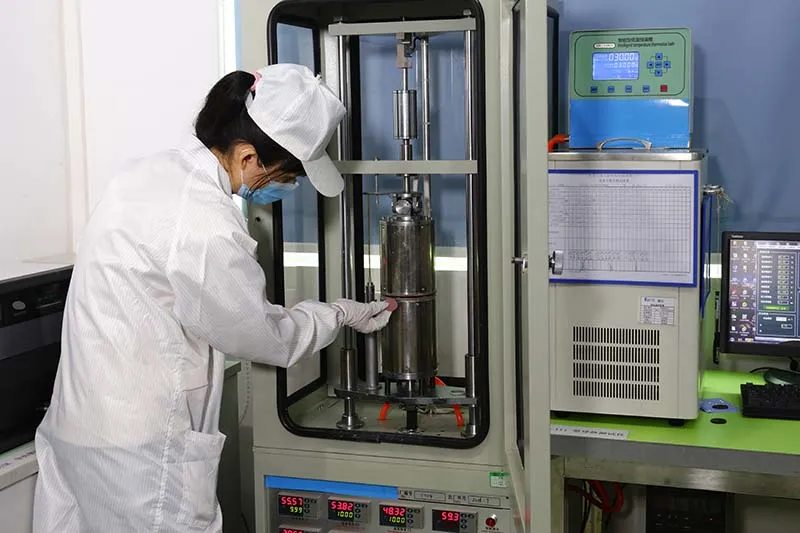
In controlled lab tests, the PET release film-backed insulating thermal pad was evaluated against a typical phase change material during step-power loading on a CPU simulator.
Test Setup
· Heater block simulating 95W and 150W loads
· Identical heat sink and clamp force (300 N)
· Surface roughness fixed at Ra 0.8 µm
· Ambient temperature held at 25°C
Material Comparison
PET-backed thermal pad
· Immediate contact stability from PET release film
· Electrically insulating
· No melt transition delay
Phase change material
· Requires softening above 50–60°C
· Lower steady-state resistance after melt
· Slower early-time thermal response
Measured Thermal Response (0–60s window)
| Material Type | Thickness (mm) | Initial ΔT @10s (°C) | Steady ΔT @60s (°C) | Time to Stabilize (s) |
| PET release film-backed insulating thermal pad | 0.5 | 12.4 | 18.1 | 42 |
| PET-backed insulating pad | 1.0 | 15.8 | 21.7 | 55 |
| Phase change material | 0.3 | 18.9 | 16.5 | 68 |
| Phase change material | 0.5 | 20.1 | 17.2 | 73 |
The thermal pad with PET release film backing showed up to 30% faster stabilization in early-stage heating. That quick contact matters when power spikes hit hard and fast.
Impact of Thickness and Hardness on Response Time
Thickness changes everything. A thicker insulating thermal pad increases path length for heat flow. Response slows down. Simple physics.
Key observations:
· 0.5 mm pads reacted faster than 1.5 mm pads under identical clamp load.
· Lower hardness (Shore 00 range) improved wet-out.
· Over-compression caused edge bulging and trapped air pockets.
Now, let’s break it down:
Thickness
· Heat conduction distance grows linearly.
· Contact resistance rises with uneven surfaces.
· Early-time thermal response drops as thermal mass increases.
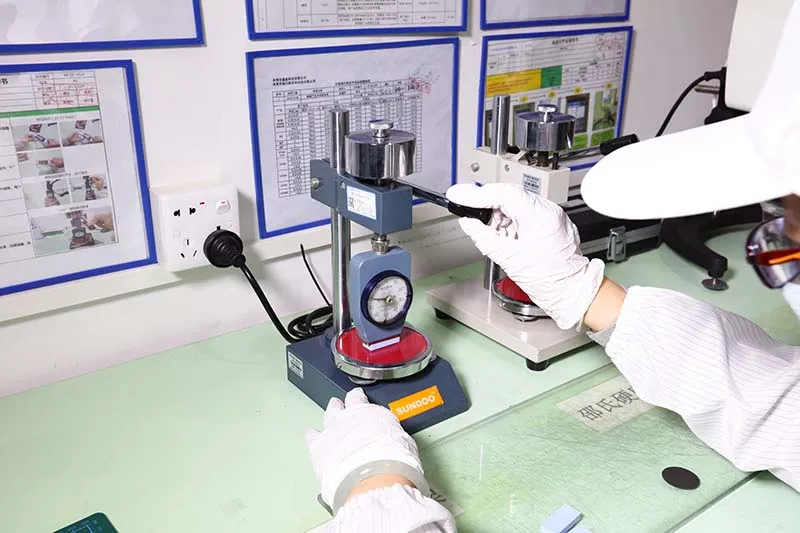
Hardness
· Softer pads conform better.
· Ultra-soft grades may pump out under cycling.
· Medium hardness often balances durability and thermal performance.
Material Properties Interaction
· PET layer maintains shape stability.
· Silicone matrix controls compliance.
· Filler loading drives conductivity.
A properly selected PET release film-backed insulating thermal pad avoids the lag seen in overly thick gap fillers while keeping electrical isolation intact.
Statistical Analysis of CPU-to-Heat Sink Performance
Performance claims mean nothing without statistics. So repeated builds were tested—same CPU, same heat sink, same mounting torque.
Experimental Design
· 30 assemblies per material
· Controlled clamp load variance ±5 N
· Identical pad area (30 × 30 mm)
Data Analysis Workflow
· Measure junction-to-sink thermal impedance (Rθjs).
· Record peak and steady-state temperatures.
· Apply t-tests for pair comparison.
· Use ANOVA across thickness groups.
Results Summary
· PET-backed pad mean Rθjs: 0.42 °C/W
· Phase change mean Rθjs: 0.48 °C/W (early phase)
· Variance lower in PET group by 18%
· 95% confidence interval confirmed statistically significant difference (p < 0.05)
The thermal interface stability from the PET release film-backed insulating thermal pad reduced build-to-build spread. Less guesswork. Tighter thermal performance control. And when power spikes hit, that faster thermal response shows up right where it counts—at the silicon.
5 Steps to Install Thermal Pads Correctly
Quick, clean installs keep hotspots calm and boards happy. Below is a no-drama workflow for a PET release film-backed insulating thermal pad, plus a few real-world tips we use at Sheen Technology.
Step 1 - Surface Prep and Cleaning
Clean equals cooler, simple as that. Start with surface preparation on the substrate, because even a tiny oil patch turns into a little “air island” later.
What to use
· cleaning agents: IPA on a lint-free cloth
· residue removal: wipe until the cloth stops picking up gray smears
What to chase down
· dust and debris hiding near edges and fins
· burrs that can dent a PET release film-backed insulating thermal pad and telegraph through contact
If you’re swapping pads, don’t just smear old gel around. Strip it, wipe it, let it flash dry, then check flatness by feel; a snag usually means leftover grit.
Step 2 - Lamination of PET-Backed Pad
With a PET release film-backed insulating thermal pad, keep the PET release film on while you handle it. That liner is your anti-stretch buddy.
lamination process goals
· keep the thermal pad relaxed (no tugging)
· protect the adhesive layer until final mating
Common setup
· add a backing material or carrier for stability
· use an application tool (roller/squeegee) to push out air bubbles
Quick check
· wrinkles now become weak heat paths later, so stop and redo if you see ripples
Sheen Technology typically specs PET-liner handling because it keeps placement consistent when you’re moving fast.
Step 3 - Custom Shape Die-Cutting
A clean cut beats a “close enough” trim job. With die-cutting, your thermal pad material becomes a part that actually fits the board, not a guess.
Control points
· precision cutting for connector keep-outs and screw towers
· tooling matched to design specifications so corners don’t tear
Production options
· manual punch for low volume
· automated process for repeatability when you’re building a lot
For insulating jobs, this is where an insulating thermal pad earns its keep: you can ring around components without kissing exposed pads.
| Feature zone | Nominal clearance (mm) | Cut tolerance (mm) | Reject trigger (mm) |
| Screw boss keep-out | 1.50 | ±0.10 | <1.30 |
| Connector edge keep-out | 1.00 | ±0.10 | <0.80 |
| Hotspot coverage overlap | 0.50 | ±0.15 | <0.20 |
| Board fastener head | 1.20 | ±0.10 | <1.00 |
| Sharp corner radius | 0.75 | ±0.20 | >1.20 |
Step 4 - Precise Alignment on Heat Sink
Alignment is where good materials get ruined—so slow down for ten seconds. Place the thermal interface material so it matches the heat sink footprint and real component placement hotspots.
Before stick-down
· confirm mounting points aren’t covered
· dry-fit to see how the pad behaves with gap filling
During placement
· use visual inspection from two angles; overhangs love to lift later
· keep full coverage on MOSFET/CPU zones, especially edges
If you’re using a PET release film-backed insulating thermal pad, peel the PET liner only when you’re happy with the position; that avoids “touch-and-ruin” moments.
Step 5 - Applying Uniform Pressure for Adhesion
This is the make-or-break move: uniform pressure sets adhesion and the final thermal path. Too little force leaves air pockets; too much causes squeeze-out and a messy contact area.
Pressure habits that work
· use a pressure application tool or controlled clamp, not hand mashing
· aim for steady compression so bonding strength doesn’t vary corner to corner
What to verify
· thickness under load matches the designed gap
· thermal performance is stable after a short warm run
Sheen Technology often recommends logging clamp torque for builds using a PET release film-backed insulating thermal pad, because repeatability beats heroics.
Scenario: EV Battery Pack Cooling
Electric vehicles run hot, and not in a cool way. Inside every pack, MOSFET, cell, and bus bar must stay within safe limits. That’s where the PET release film-backed insulating thermal pad comes in. From modules to large-area battery pack pads, smart cooling keeps power supply systems stable and road-ready.
Cooling MOSFET Modules in Power Supply Systems
In high-current power supply systems, MOSFET modules dump serious heat into the stack. A PET release film-backed insulating thermal pad sits between the MOSFET and cold plate, giving both thermal insulation and clean peel handling during assembly.
· Key goals: tight cooling, steady dielectric strength, low contact resistance
· Typical stack: MOSFET → insulating thermal pad → heat sink
· Add-on: graphite sheet for lateral heat spreading
· Control clamping force to optimize pad compression.
· Match pad thickness to module flatness.
· Validate breakdown voltage for safety margin.
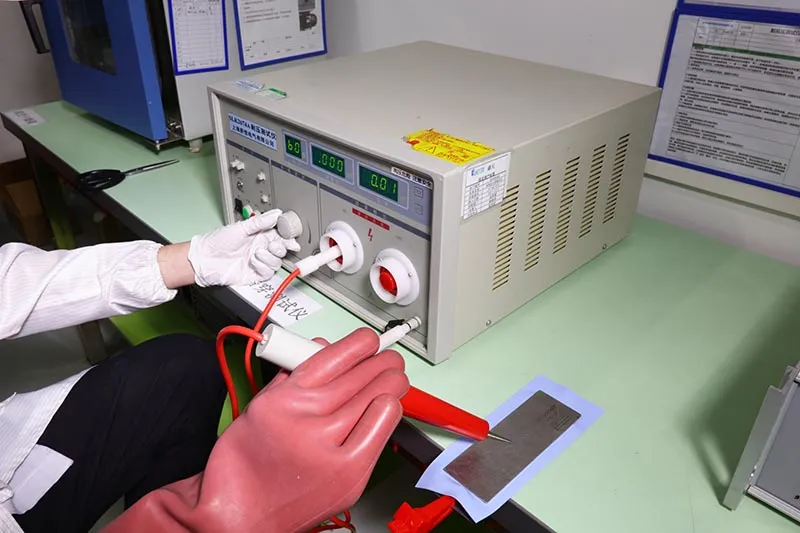
Performance snapshot for a PET release film-backed insulating thermal pad in module cooling:
| Parameter | Typical Value | Test Condition |
| Thermal Conductivity | 3.0 W/m·K | ASTM D5470 |
| Dielectric Strength | 6 kV/mm | 1 mm sample |
| Hardness | 40 Shore 00 | 25°C |
A PET-backed thermal pad with release liner speeds placement on automated lines. Sheen Technology tunes its PET release film-backed insulating thermal pad for stable compression set, so modules stay cool even under fast charging spikes.
Gap Filler vs. Thermal Tape for Cell-to-Bus Bar Interfaces
Between cell tabs and bus bar interfaces, tolerance stack-ups are real. A gap filler handles height variation; thermal tape sticks thin parts in place. The choice affects battery cooling materials and vibration life.
· Gap filler: thicker, compressible, handles shock
· Thermal tape: thin bond line, easy lamination
When insulation to the bus bar is critical, a PET release film-backed insulating thermal pad offers a middle ground:
· PET release film protects the surface before bonding.
· The insulating thermal pad absorbs micro-gaps.
· The release film peels clean, no residue.
Short take: tighter packs often prefer a thin insulating thermal pad; rougher stacks call for softer gap filler. Sheen Technology supplies PET release film-backed insulating thermal pad options with different compressibility grades, so engineers can fine-tune both cooling and electrical safety.
Roll-to-Roll Slitting for Large-Area Battery Pack Pads
Scaling up means roll-to-roll manufacturing. Large sheets of PET release film-backed insulating thermal pad start wide, then move through slitting and die-cutting for large-area battery pack pads.
Production flow often looks like this:
Coating
· Silicone-based insulating layer
· PET release film lamination
Roll handling
· Tension control
· Edge alignment
Converting
· Slitting to width
· Die-cut for sensors and fasteners
A thermal pad with PET release film keeps surfaces clean during high-speed production. For EV lines chasing uptime, Sheen Technology supports custom roll widths and automated peel strength targets, making each PET release film-backed insulating thermal pad ready for fast, no-fuss pack assembly.
FAQs about PET Release Film-Backed Insulating Thermal Pad
What makes a PET release film-backed insulating thermal pad different from standard Thermal Pads?
A PET release film-backed insulating thermal pad is a Thermal Pad built with a PET release liner that protects the Silicone-based interface before installation. The liner keeps the surface clean during lamination, slitting, and die-cutting, then peels away cleanly when pressed onto a Heat Sink or Circuit Board.
Key differences under real production pressure:
· PET liner holds dimensional stability during punching and custom shape Die-cut processing.
· Core fillers such as Boron Nitride or Ceramic boost Thermal Conductivity and Dielectric Strength.
· Graphite or Graphite Sheet layers can enhance in-plane heat spreading for CPU and GPU hotspots.
Compared with Thermal Grease or Phase Change Material, pads provide fixed Thickness and controlled Compressibility—less mess, fewer surprises.
It’s built for installers who need speed, accuracy, and clean assembly lines.
How do thickness and hardness influence thermal performance in CPU, GPU, and MOSFET applications?
Performance is a balance between gap control and pressure response.
Thickness
· Thicker Gap Filler → better tolerance absorption, higher total thermal resistance.
· Thinner pad → faster thermal response, tighter stack-up requirement.
Hardness & Compressibility
· Softer Silicone or Polyurethane blends conform to uneven Heat Sink surfaces.
· Excessively hard pads reduce wet-out and trap air.
· Over-compression can reduce effective Thermal Conductivity despite higher clamp force.
Material Composition Impact
| Core Material | Performance Focus | Typical Use Case |
| Boron Nitride | High Thermal Conductivity + insulation | MOSFET, Power Supply |
| Ceramic-filled | Stable dielectric barrier | LED modules, Circuit Board |
| Graphite-enhanced | Lateral heat spreading | CPU, GPU hotspots |
The right mix protects components while keeping heat transfer sharp and controlled.
When should a PET release film-backed insulating thermal pad replace Thermal Grease or Thermal Tape?
Use it when control and insulation matter more than absolute thinness.
· For uneven gaps between MOSFET and cold plate → choose a Gap Filler-style Thermal Pad.
· For electrical isolation near bus bars or dense Circuit Board traces → rely on high Dielectric Strength.
· For automated assembly with roll or sheet feeding → PET liner supports smooth Coating, Slitting, and Die-cutting.
When Flame Retardancy and stable Adhesion are required without Acrylic squeeze-out → pad wins over Thermal Tape.
Thermal Grease excels on ultra-flat CPU-to-Heat Sink pairs, but risks pump-out.
A PET-backed Thermal Pad trades a slight increase in bond-line thickness for cleanliness, repeatability, and confident installation.
【Request a Custom Quote】 Not sure which PET release film-backed insulating thermal pad fits your build? Send us your target thickness, operating temperature, gap size, and application type, and we can help recommend the right thermal solution for your design.
Sheen Thermal
Dongguan Sheen Electronic Technology Co., Ltd · Founded in 2008
Manufacturer of thermal interface materials and silicone foam for automotive electronics, energy storage, power electronics, communications and consumer electronics.
Certified
- ISO 9001:2015
- ISO 14001:2015
- IATF 16949:2016
What we supply
- Thermal conductivity Up to 90 W/m·K
- Thickness 0.3–10.0 mm
- Custom & samples Die-cut to drawing, 3–7 days