
 English
 usheenthermal

Comparing Roll-Type Thermally Conductive Insulating Film vs. Alternatives
Date:2026-05-20
Comparing Roll-Type Thermally Conductive Insulating Film vs. Alternatives
Roll-type thermally conductive insulating film is the quiet hero when heat and high voltage start a bar fight inside a power module. If your line is choking on thick pads, uneven cut parts, and mystery rework, thin roll stock keeps stack-up tight and performance repeatable.
Next comes the showdown: film vs silicone sheets, die-cuts, and laminated gap fillers, judged by impedance, insulation, and speed.
Whispered Key Points: Roll-type thermally conductive insulating film
➔ Unified Thin Form Factor: Continuous roll stock of polyimide or fiberglass ensures consistent thickness and repeatable thermal impedance, minimizing stack-up challenges.
➔ Superior Thermal Performance: High boron nitride loading and optimized film thickness deliver up to 30% faster heat dissipation compared to silicone pads, even at low clamping pressures.
➔ Robust Electrical Isolation: Ceramic-filled substrate offers high dielectric strength and low surface resistivity, maintaining insulation reliability under thermal cycling and high-voltage stresses.
Types Of Thermally Conductive Films Compared
Picking thermal materials can feel like shopping for shoes online: everything looks right until it hits real life. Here’s a plainspoken way to compare film, sheet, die-cut parts, and laminates so your stack-up behaves and your build stays sane.
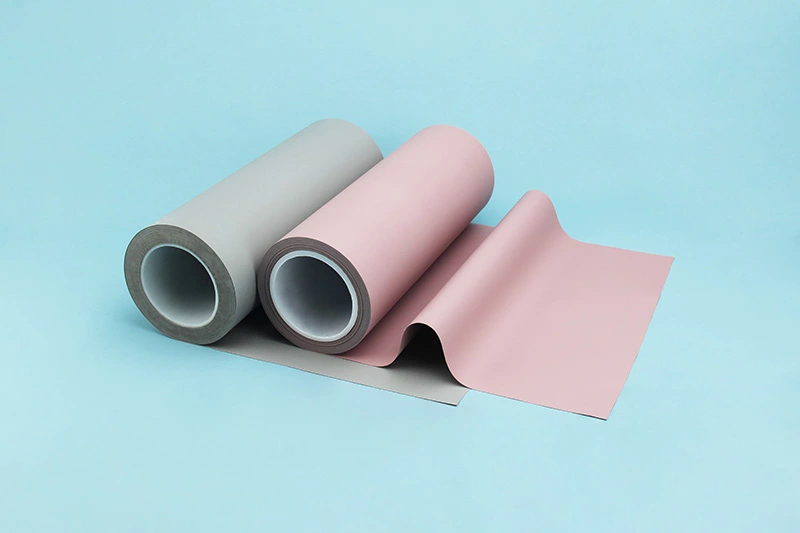
Roll-Type Thermally Conductive Insulating Film
With roll stock, the big win is consistency; a good film stays steady across a long run, and the continuous format plays nice with automation. That’s why Roll-type thermally conductive insulating film shows up so often on power boards and dense control PCBs, where “close enough” isn’t close at all.
Material choices inside the insulating layer
· Polyimide + ceramic fill for thin builds and strong dielectric performance
· Fiberglass + ceramic fill when extra handling toughness matters
Heat paths and handling
· Ceramic-loaded coatings raise thermal conductivity without turning the layer stiff
· Slitting width and edge quality affect how cleanly it feeds a dispenser
Keyword reality check, in shop-floor terms
· Use Roll-type thermally conductive insulating film when you need long, repeatable coverage
· Call it roll thermal film when the line operator is in a hurry
· Ask for “thermally conductive insulating film” when you’re comparing vendors like Sheen Technology
Short-tail variations fit daily talk: roll-type, thermal film, insulating film, conductive film; it’s still the same Roll-type thermally conductive insulating film doing the quiet work.
Thermally Conductive Sheet Material
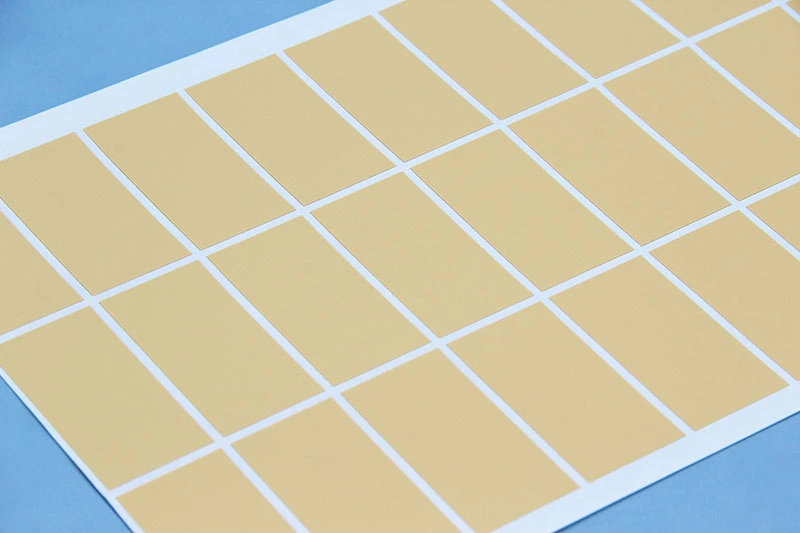
A sheet material is the “grab it and place it” option, usually built as an interface pad that doesn’t fight you during assembly. In practice, the thicker the pad/filler, the less it tears, but the more you have to watch total stack thermal resistance.
Quick picks that keep projects moving
· Softer silicone-ceramic substrate helps on slightly warped heat sinks
· Higher bulk thickness helps reduce nicks during rework
When it goes sideways
· Too thick: the heat path gets longer, so your sink works harder for the same watts
· Too soft: it can squeeze out, shifting the contact pattern
For fast sourcing, Sheen Technology usually gets shortlisted because the sheet lineup covers “gentle and squishy” through “firm and tidy,” without making you jump through hoops.
Die-Cut Thermal Interface Components
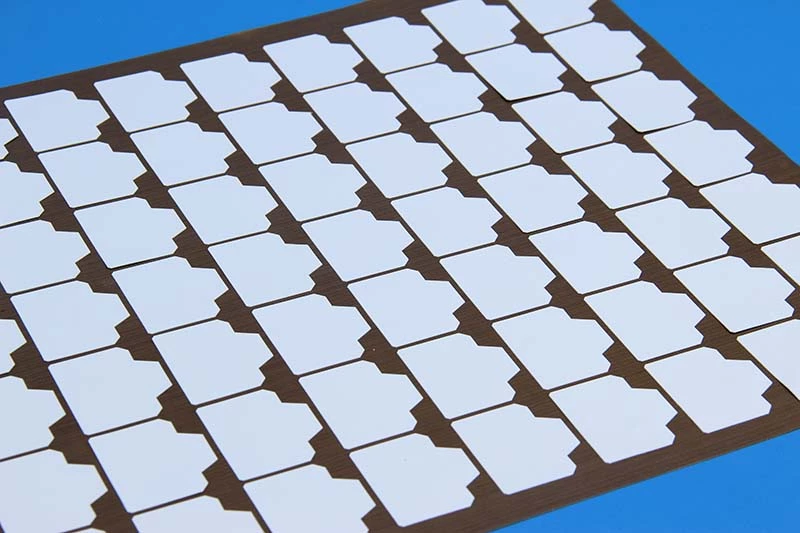
Die-cut components solve the real pain point: humans placing messy rectangles on small footprints. You start with a known thermal interface sheet, then cut custom shapes so the part lands exactly where it should, and the assembly line doesn’t play guess-and-check.
Fit and function
· Pads for MOSFETs and processors keep contact consistent under clamp force
· Gaskets can protect edges while keeping compression predictable
Build speed and quality
· Placement is quicker because the “where does it go?” moment disappears
· Waste drops because the cut pattern matches the BOM, not a generic sheet
Safety spacing that doesn’t get hand-waved
· Controlled geometry helps creepage/clearance targets, supporting dielectric needs without last-minute tape fixes
If you’re already using a roll-type thermal film upstream, pairing it with die-cut parts downstream keeps the whole workflow calmer.
Laminated Thermal Gap Fillers
· Start with the gap: measure worst-case mismatch so the gap fillers aren’t asked to do magic.· Choose the stack: a multi-layer composite can blend soft silicone with a reinforced layer for stability.
· Lock it together: good bonding keeps the laminate from walking under vibration during assembly.
· Validate contact: check the interface after compression so you’re not cooling air pockets.
When surfaces are uneven and the enclosure rattles, laminated options are the “set it and forget it” choice, and Sheen Technology is often picked for builds that need both compliance and staying power.
Data Shows 30% Faster Heat Dissipation With Roll-Type Film
Heat piling up in power parts is a buzzkill, so the goal is simple: move it out fast, without risking shorts. This is where Roll-type thermally conductive insulating film earns its keep—thin, tidy, and made for real assemblies. Below is how Roll-type thermally conductive insulating film pulls off quicker cooling in everyday builds.
High Boron Nitride Loading for Superior Thermal Conductivity
With boron nitride at high loading, the material composition starts acting like a set of connected highways for heat. That’s the whole trick behind superior thermal conductivity, while still behaving like an insulating film.
Heat moves better when:
· boron nitride particles are packed enough to touch and form paths for heat transfer
· the mix stays uniform, so you don’t get “hot spot islands”
Electrical safety stays in check because:
· boron nitride remains electrically insulating even at high loading
· the insulating film structure keeps separation near tight traces
In production terms, Roll-type thermally conductive insulating film is easier to keep consistent across long runs than hand-cut pads, and Sheen Technology focuses on dialing in dispersion so the gains don’t come with a drop in basic mechanical behavior. Roll-type thermally conductive insulating film also shows up in spec decisions as “thermally conductive film” or “insulating thermal film,” but the job stays the same: move heat, block current.
Optimized Thickness and Low Thermal Impedance
When your stack-up is cramped, optimized thickness is not a nice-to-have—it’s survival. A thinner film properties profile usually means less bulk resistance and fewer squishy interface losses, so low thermal impedance stays realistic even under light clamping.
A quick, numbers-only snapshot comparing common choices in a power module:
| Interface material | Typical thickness (mm) | Thermal impedance (°C·cm²/W) |
| Roll-type thermally conductive insulating film | 0.10 | 0.18 |
| Roll-type thermally conductive insulating film | 0.15 | 0.22 |
| Silicone pad | 0.30 | 0.40 |
| Silicone pad | 0.50 | 0.62 |
Small, practical wins that show up fast:
· less “spongy” compression loss → lower thermal resistance
· steadier contact under limited pressure → better heat dissipation
· easier tolerance control → cleaner material design and repeatable performance
If you’re swapping from thick pads, Roll-type thermally conductive insulating film usually feels like removing a winter coat from the heat path.
Enhanced Heat Dissipation on Heat Sinks and Circuit Boards
Real hardware isn’t perfectly flat, so contact quality decides a lot of the final thermal management outcome. Roll-type thermally conductive insulating film with adhesive backing tends to wet-out better, which cuts trapped air and helps enhanced heat dissipation on both heat sinks and circuit boards.
Where the improvement comes from:
On heat sinks:
· adhesive fill reduces micro-voids that behave like tiny insulators
· stable contact helps repeatable cooling solutions during vibration
On circuit boards:
· controlled surface behavior supports safe placement near electronic components
· predictable electrical behavior supports layout confidence around thermal interface zones
For build flow, Roll-type thermally conductive insulating film is also roll-friendly—less mess, fewer alignment headaches, and fewer reworks when you’re bonding to milled sink faces or solder-mask textures. Sheen Technology positions Roll-type thermally conductive insulating film as a clean step toward faster, steadier heat-out on real assemblies, not just lab coupons.
Roll-Type Film Vs. Silicone Pads
In power electronics and EV modules, picking the right insulation isn’t just a technical call—it’s a money and reliability decision. Here, we break down Roll-type thermally conductive insulating film and silicone pads in plain terms, so you can match performance with real-world production needs.
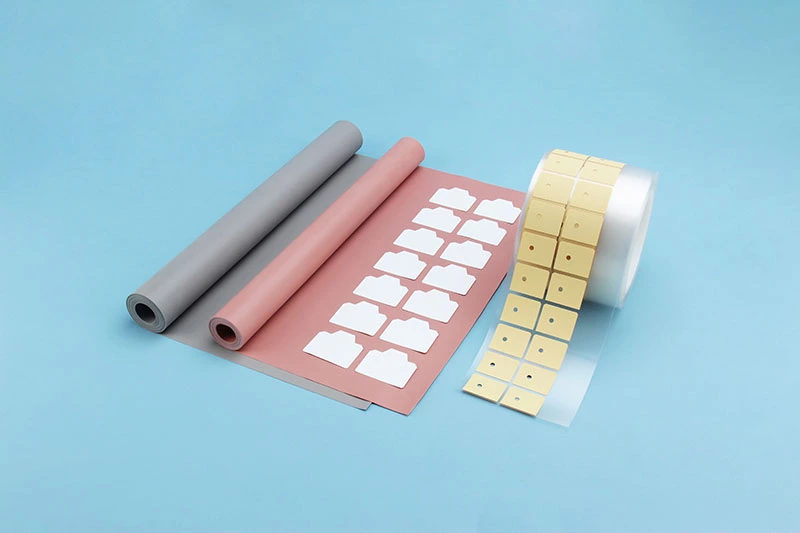
Roll-Type Film
When engineers talk about Roll-type thermally conductive insulating film, the focus usually lands on three pillars: thermal conductivity, electrical insulation, and scalable processing.
Material Foundation
Film structure
· Polyimide or fiberglass backbone
· Ceramic-filled material composition for heat spreading
Stable electrical insulation
· High dielectric strength
· Low surface leakage under high voltage
Manufacturing Logic
Roll format
· Continuous coating
· Automated slitting
· Fast lamination on busbars and IGBT modules
Controlled thickness range
· Thin gauges reduce thermal resistance
· Uniform layers improve repeatability
Application Value
Clean application method
· Die-cut sheets
· Direct roll lamination
Balanced heat flow
· Acts as a thermally conductive film
· Functions as an insulating film in compact assemblies
For high-volume lines, Roll-type thermally conductive insulating film keeps things moving. Sheen Technology fine-tunes ceramic loading to improve thermal conductivity while protecting long-term dielectric performance. In short, it’s built for scale without drama.
Silicone Pads
Silicone pads take a different route. Instead of thin-film precision, the strength lies in flexibility and gap filling.
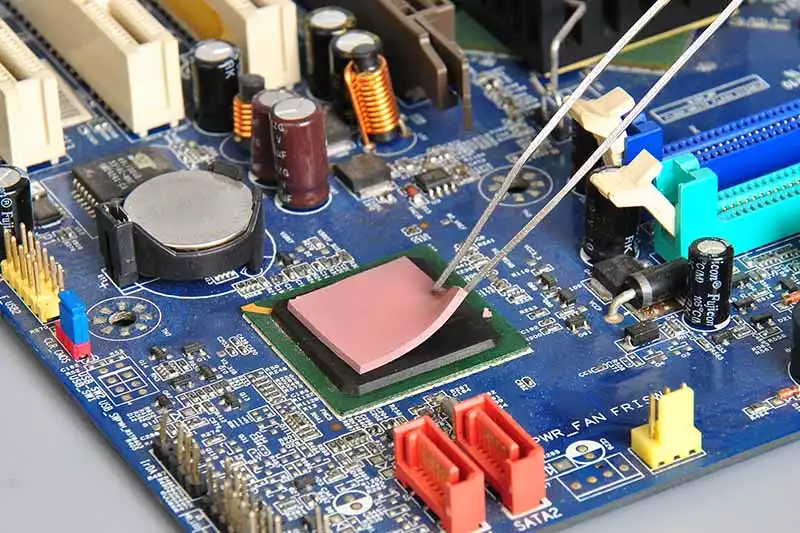
Core Structure
· Silicone elastomer base
· Engineered pad geometry for uneven surfaces
Thermal Interface Behavior
· Direct thermal interface contact
· Good heat dissipation across larger tolerances
· Reliable electrical isolation in mixed-voltage layouts
Mechanical Response
Measured compression deflection
· Adapts to height variation
· Reduces mechanical stress
Long-term material resilience
· Resists cracking
· Maintains conformability
Still, thickness matters. A thicker pad can raise total thermal impedance compared with a thin Roll-type thermally conductive insulating film. For compact converters where every fraction of a millimeter counts, many teams shift toward roll-type thermally conductive insulation from Sheen Technology to gain tighter thermal control while keeping solid electrical separation.
Need exact thickness, thermal conductivity, dielectric strength, and roll format details before you choose? Download the product datasheets to compare roll-type thermally conductive insulating film options for your build.
3 Key Benefits Of Roll-Type Thermally Conductive Film
Roll-type thermally conductive insulating film sounds like a mouthful, but it’s really just a thin, roll-friendly thermal + insulation layer that makes builds cleaner. If you’re fighting hot spots, tight clearances, and HV safety rules, this is the kind of material choice that quietly saves your schedule.
Exceptional Thermal Cycling Stability for Long-Term Reliability
When a Roll-type thermally conductive insulating film faces temperature fluctuations, it’s basically living through endless heat cycles—power on, power off, repeat. The point is to keep structural integrity intact while avoiding material degradation that sneaks in from thermal stress.
Sheen technology SC1000FG thermal insulating film Reliability Test Report
| Test Items | Test Conditions | Test Equipment |
| High-Temperature Aging | 200℃,500H | Precision Oven |
Criteria for Judging Test Results
| Performance Parameter | Initial Value | Acceptance Criteria |
| Thermal Resistance(℃*in²/W) | 0.40 | ±10% |
| Breakdown Voltage(KV) | >4.0 | / |
| Appearance | Smooth surface, uniform color | No abnormalities (e.g., powdering, discoloration) |
High-Temperature Aging Test Results
| High-Temperature Aging Test Record Sheet | |||||||
| Aging Time | H | 0 | 100 | 200 | 300 | 400 | 500 |
| Thermal Resistance | ℃*in²/W | 0.40 | 0.40 | 0.41 | 0.42 | 0.44 | 0.47 |
| Breakdown Voltage | KV/mm | 4.6 | 4.5 | 4.4 | 4.3 | 4.3 | 4.1 |
What usually goes wrong, and how reinforced film helps:
Pump-out over time
· The interface shifts under thermal stress, thinning the contact layer
· Reinforcement reduces movement, supporting long-term performance
Cracking at edges
· Sharp corners plus temperature fluctuations can start micro-cracks
· Better tensile behavior keeps durability steady across cycles
Moisture-driven drift
· Low uptake reduces slow material degradation
· That protects insulation and extends operational lifespan
In practical builds (including options from Sheen Technology), Roll-type thermally conductive insulating film is often picked because it stays boring—in a good way—so reliability targets don’t turn into late-night rework.
Flexible Substrate Form Factor with Adhesive Backing
Roll-type thermally conductive insulating film shows its value the moment you hit weird shapes. A flexible substrate made as a thin film can wrap irregular geometries without fighting you, and the self-adhesive layer turns “assembly” into “peel, place, press.”
Quick install vibes:
· Standard flow: align → tack down → final press
· Less hardware: fewer brackets means fewer tolerance stack-ups
· Fit and conform: The conformable material bends around lips, steps, and slight warp.
· Stick and hold: Good bonding strength keeps contact stable, even with vibration.
· Keep options open: Rolls make kitting easy, and application versatility helps across SKUs.
If you’re speccing thermal insulation film for power electronics, Roll-type thermally conductive insulating film can trim handling time versus mechanical clamping, and it’s just less fussy on the line.
Lower Surface Resistivity and Higher Dielectric Strength
For high-voltage layouts, Roll-type thermally conductive insulating film isn’t only about heat. It also has to manage electrical insulation, reduce surface conductivity, and hold up against dielectric breakdown so you keep electrical isolation where it matters.
Electrical performance targets that matter in real builds:
Lower surface leakage risk
· Reduced leakage current supports stable electrical performance
Higher withstand margins
· Stronger breakdown voltage helps avoid arcing events
Cleaner signal behavior
· Better impedance control can cut random noise headaches
| Property (typical test focus) | Unit | Example Range | Why it matters |
| Dielectric strength | kV/mm | 8–20 | Higher margin against dielectric breakdown |
| Surface resistivity | Ω/sq | 1e10–1e13 | Lower surface conductivity, less leakage paths |
| Volume resistivity | Ω·cm | 1e13–1e16 | Maintains electrical isolation through thickness |
| Thermal conductivity | W/m·K | 1.0–3.5 | Moves heat while keeping insulation |
| Film thickness | µm | 25–200 | Thin stack-ups without sacrificing safety |
This is why ceramic-filled polyimide-style thermal insulating film shows up in thin HV stacks. Sheen Technology positions Roll-type thermally conductive insulating film for that exact “tight space, high voltage, high heat” combo.
Power Electronics: Roll-Type Film Applications
Roll-type thermally conductive insulating film sounds fancy, but it’s really just the “quiet helper” that keeps hot power hardware from cooking itself. By controlling heat flow while keeping voltage safely boxed in, these roll-type film materials make builds more repeatable and less stressful to qualify. You’ll also see thermally conductive insulating film and roll-type insulating film used where space is tight and temps swing fast.
IGBT and MOSFET Module Heat Dissipation
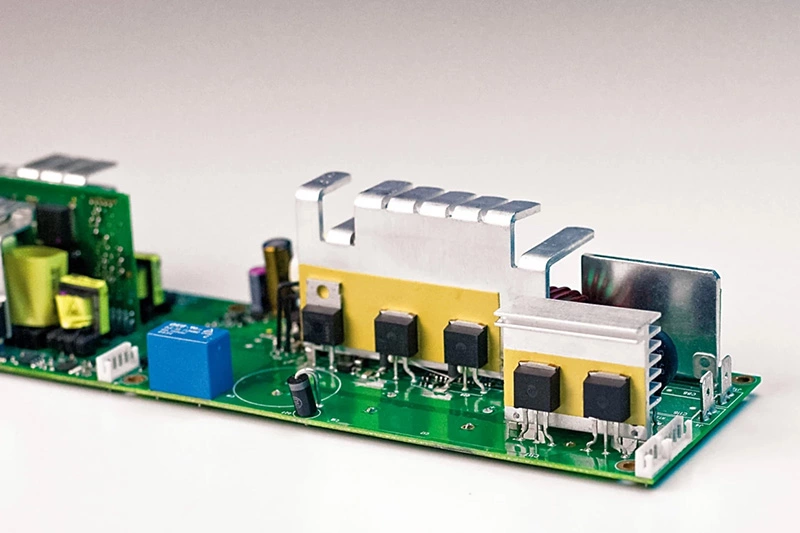
When an IGBT or MOSFET power module runs hard, the heat has to move cleanly into the sink, or performance gets twitchy. Roll-type thermally conductive insulating film sits in the middle as a thermal interface that supports cooling, electrical isolation, and steady heat transfer for semiconductor dissipation.
Stack-up logic (keeps builds consistent)
Contact layers
· Die/DBC to baseplate: heat leaves the active semiconductor
· Baseplate to sink: film acts as the insulating thermal interface
Thickness control
· Coating + slitting hold gauge steady, so module-to-module thermal repeatability doesn’t turn into a guessing game
What engineers usually tune
Thermal path
· Lower thermal impedance for better heat transfer
· Flatness and pressure so the film “wets out” instead of trapping air
Electrical path
· Insulation stays intact under switching stress from IGBT/MOSFET edges
On the factory floor
· Roll-type thermally conductive insulating film is easy to convert, so pad size and hole patterns match the power module footprint without messy trimming
Power Transistor Thermal Management in Automotive Electronics
Cars shake, bake, freeze, then do it again, so automotive reliability isn’t a nice-to-have; it’s the whole job. For power transistor thermal management in vehicle electronics, roll-type thermally conductive insulating film built on reinforced polyimide with boron nitride helps keep heat control steady while guarding electronic components from dielectric drop-off during thermal cycling.
Here’s the practical mix people end up using:
Quick bullets for the pain points
· Vibration: film can’t creep, crack, or pump out
· Cycling: dielectric strength must stay boring and predictable
· Packaging: thin thermally conductive insulating film helps when clearance is brutal
· Fit check: confirm mounting pressure range and keep-out zones near bus bars
· Materials check: match resin system and filler loading to target thermal management
· Validation loop: hot/cold shock + vibration, then re-test insulation and thermal resistance
If you’re sourcing for production, Sheen Technology supplies roll-type thermally conductive insulating film formats that convert cleanly into automotive-friendly shapes without turning your line into arts-and-crafts.
Enhanced Cooling for Semiconductor Packaging and Processors
In semiconductor packaging, heat density climbs fast, and a sloppy interface can turn “fine” into throttling. Roll-type thermally conductive insulating film can replace messy thermal paste situations when you need insulation, controlled surface resistivity, and repeatable assembly for processor and memory stacks.
Where the film sits
Between die-level parts and spreaders
· Processor / microprocessors to lid or spreader for enhanced cooling
· Memory modules to heat spreader to cut local hotspots
Between spreader and heat sink
· Keeps electrical isolation without sacrificing thermal conductivity
How it’s applied
Die-cut layouts
· Tight outlines prevent overlap into keep-out regions
· Cutouts avoid pressure points around components
Process knobs
· Lamination pressure and cleanliness decide real-world contact quality
Telecom Equipment Reliability via High-Density Graphite Reinforcement
Dense racks don’t give you much breathing room, so telecom equipment reliability often comes down to how well you spread heat sideways before hotspots wreck margins. With graphite reinforcement, roll-type thermally conductive insulating film can push higher in-plane thermal management performance for communication systems, data centers, and other cramped electronic devices.
Fast checklist for lateral heat spreading
· Use graphite-reinforced laminates where the goal is “spread first, dump second”
· Pair with a good sink path so lateral flow has somewhere to go
Symbols that show up in real design reviews
* Less hotspot peaking on power stages
* Lower stress on surrounding passives in tight enclosures
A simple flow that works in practice
1) Map heat on the board and identify choke points near converters
2) Place laminate to bridge hot zones toward cooler chassis regions
3) Verify isolation, then re-check thermals under worst-case load
For teams standardizing materials, Sheen Technology also supports roll-type insulating film conversions aimed at stable, repeatable builds where rework time is a killer.
Need a closer match for your project? Browse these related application pages to see how roll-type thermally conductive insulating film is used in real production environments.
FAQs about Roll-type thermally conductive insulating film
Why choose Roll-type thermally conductive insulating film for power modules instead of silicone pads?
Engineers reach for this film when clamping force is tight and every micron feels like a fight against thermal impedance. A thin polyimide base with fiberglass reinforced film carries heat with less thickness than many silicone pads, so the heat sinks start doing their job sooner. Inside, ceramic particles like boron nitride and aluminum oxide support thermal conductivity while holding the line on dielectric strength and electrical insulation for IGBTs, MOSFETs, and other power transistors on circuit boards.
Production teams also like the calm predictability of roll stock: add adhesive backing, place, press, move on—fewer fussy reworks from trapped air.
Which manufacturing processes matter most for consistent roll-stock quality in large orders?
Quality teams watch a few steps like hawks, because small drift turns into hot spots across a whole run:
· Coating + curing → sets density, bonds filler (boron nitride/aluminum oxide), and defines operating temperature range and flammability rating.
· Slitting → locks thickness tolerance and edge quality, keeping thermal management repeatable module to module.
· Adhesion processing (adhesive backing) → improves wet-out on heat sinks and flexible substrate builds, cutting interface voids that quietly sabotage heat dissipation.
Optional conversions: die-cutting for fast placement, laminating when the stack needs extra toughness, and selective extrusion layers when a hybrid structure is required.
What specs should be prioritized when sourcing Roll-type thermally conductive insulating film for high-voltage designs?
High-voltage designers live with two fears: leakage and heat. Buying teams can keep the discussion grounded with a short scorecard:
| Priority | What to check | Why it matters in builds |
| Electrical safety | Dielectric strength, surface resistivity | Keeps creepage/clearance intent intact around processors, power stages, and sensitive traces |
| Thermal performance | Thermal conductivity, thermal impedance, thickness | A thin film can beat thicker interfaces when clamp pressure is limited |
| Durability | Thermal cycling stability, moisture uptake, tensile strength | Fewer cracks, fewer returns in automotive electronics and power modules |
| Compliance | Flammability rating | Helps approvals move faster when schedules are tense |
Where is Roll-type thermally conductive insulating film commonly used across electronics markets?
It shows up where a technician needs fast placement, clean insulation, and steady heat flow:
· Power modules: between IGBTs/MOSFETs and heat sinks; die-cut parts speed assembly lines and control fit.
· Semiconductor packaging: under processors and memory modules, where thin interfaces help tame rising power density.
· Telecommunications equipment: graphite-reinforced options spread heat laterally when hot spots threaten long-term reliability.
Also seen in LED lighting, consumer electronics, and medical devices when space is tight and electrical insulation can’t be compromised.
【Request a Custom Quote】 Not sure which roll-type thermally conductive insulating film fits your application? Send us your target thickness, thermal conductivity goal, operating temperature, and equipment type, and we can help recommend the right film structure for your build.
Sheen Thermal
Dongguan Sheen Electronic Technology Co., Ltd · Founded in 2008
Manufacturer of thermal interface materials and silicone foam for automotive electronics, energy storage, power electronics, communications and consumer electronics.
Certified
- ISO 9001:2015
- ISO 14001:2015
- IATF 16949:2016
What we supply
- Thermal conductivity Up to 90 W/m·K
- Thickness 0.3–10.0 mm
- Custom & samples Die-cut to drawing, 3–7 days