
 English
 usheenthermal

Improving System Reliability: Using an Avionics Insulating Heat Dissipation Sheet
Date:2026-03-19
Improving System Reliability: Using an Avionics Insulating Heat Dissipation Sheet
In high-altitude avionics racks, heat is that uninvited guest who just won’t leave. The Avionics insulating heat dissipation sheet steps in like a seasoned bouncer—keeping circuits cool, currents contained, and mission data safe. When power modules cook under pressure, failures aren’t dramatic; they’re expensive. Downtime, recalls, fried boards. That sting hits fast.
A 2025 MarketsandMarkets report notes rising demand for advanced thermal interface materials in aerospace electronics as power densities climb. As one Sheen Technology senior engineer put it this year, “In avionics, insulation failure isn’t a glitch—it’s a grounding event.”
That’s why this sheet isn’t just material. It’s insurance. Layered for heat spread, built for dielectric grit, and tough enough for vibration that rattles your teeth. For procurement teams, that means fewer surprises—and hardware that keeps its cool when the sky gets rough.
Reading Notes: Avionics Insulating Heat Dissipation Sheet Unveiled
→ Layered Composition: Combines polyimide film, ceramic substrate, graphite sheet and silicone pads for optimized heat spread and vibration damping.
→ Thermal Management: Employs aluminum nitride, boron nitride and phase change materials to boost conductivity and stabilize temperatures under continuous power cycling.
→ Electrical Insulation: High dielectric strength, volume resistivity and arc resistance prevent breakdown in critical avionics power electronics.
→ Standards & Compliance: Meets RoHS, IPC and ISO 9001 requirements, ensuring reliable deployment in aerospace, telecommunications and medical devices.
Component Failures? Avionics Sheet Ensures Thermal Stability
Modern aircraft electronics run hot and tight. An Avionics insulating heat dissipation sheet keeps circuits cool while guarding insulation performance. From power modules to signal layers, avionics insulating heat dissipation sheet materials balance heat flow and dielectric safety, helping aerospace crews avoid costly downtime and in-flight risks.
How Polyimide Film Enhances Thermal Conductivity in Aerospace Systems
In high-altitude Aerospace Systems, Polyimide Film inside an Avionics insulating heat dissipation sheet works like a quiet hero.
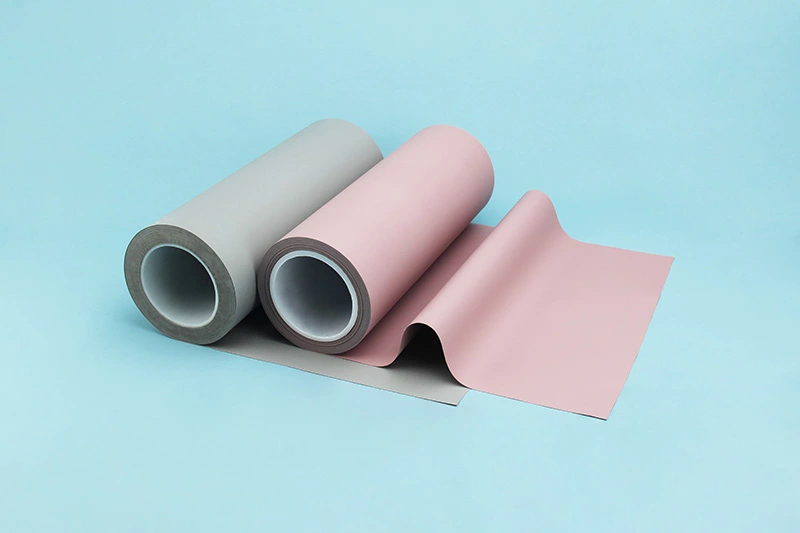
Core Material Properties
Thermal Conductivity
· Moves heat away from processors and converters.
· Supports steady Heat Transfer under vibration.
Electrical Insulation
· Maintains stable dielectric barriers.
· Reduces leakage during thermal expansion.
Structural Stability in Flight
· Handles rapid temperature swings.
· Resists cracking under pressure cycles.
Integration in Avionics Insulation Sheet Designs
· Bonds with ceramic fillers.
· Maintains flexibility for tight layouts.
Short bursts of heat. Long missions. The polyimide-based avionics heat dissipation sheet keeps performance steady without adding bulk. Sheen Technology fine-tunes film thickness and filler ratios so aerospace teams get both cooling and insulation in one smart layer.
Managing Heat: Aluminum Nitride and Boron Nitride for High Operating Temperatures
For High Operating Temperatures, ceramic fillers matter.
Ceramic Materials in Thermal Management
Aluminum Nitride
· High intrinsic conductivity.
· Stable under continuous load.
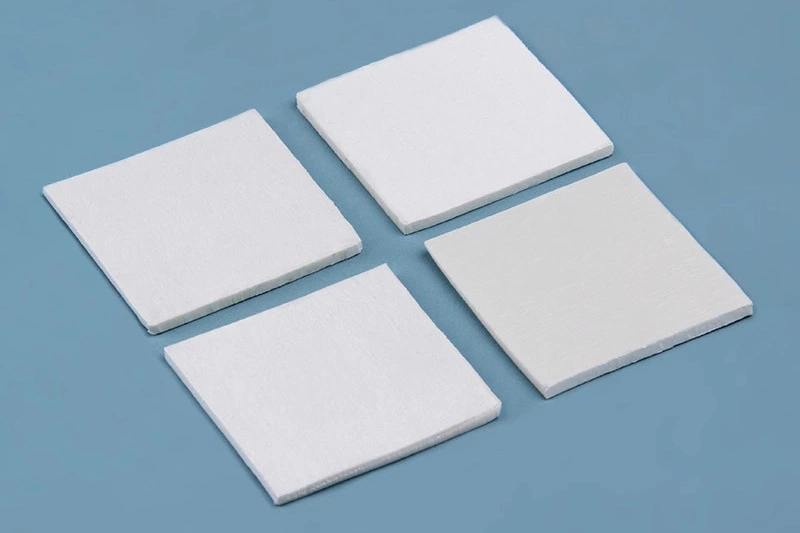
Boron Nitride
· Low dielectric constant.
· Smooth Heat Dissipation pathways.
Performance Snapshot in Aerospace Electronics
| Material | Thermal Conductivity (W/m·K) | Max Temp (°C) | Dielectric Strength (kV/mm) | Density (g/cm³) |
| Polyimide Base | 0.12–0.20 | 260 | 150–200 | 1.4 |
| Aluminum Nitride | 140–180 | 800+ | 15–20 | 3.3 |
| Boron Nitride | 60–200 | 900+ | 10–15 | 2.1 |
| Filled Composite A | 1.5–3.0 | 300 | 25–40 | 2.0 |
| Filled Composite B | 3.0–6.0 | 350 | 20–35 | 2.3 |
Inside an Avionics insulating heat dissipation sheet, these fillers cut thermal resistance while protecting circuit paths. The result? A lighter avionics insulation sheet that survives power cycling in radar and communication modules. Sheen Technology blends ceramic networks carefully so aerospace electronics stay cool without sacrificing signal clarity.
Dielectric Strength and Volume Resistivity: Preventing Electrical Failures
Heat control is only half the story. Dielectric Strength and Volume Resistivity keep sparks where they belong—nowhere near flight controls.
Key protections in an aircraft thermal insulation sheet include:
1. High Electrical Insulation to block breakdown voltage.
2. Stable Material Integrity during long missions.
3. Strong arc resistance for Component Protection.
A well-designed Avionics insulating heat dissipation sheet handles thermal loads while guarding System Reliability. That balance prevents short circuits in dense power boards and keeps navigation units online.
In real-world aerospace bays, space is tight and stakes are high. An optimized avionics insulating heat dissipation sheet from Sheen Technology supports cooling, insulation, and durability in one compact solution—keeping aircraft electronics steady, safe, and ready for takeoff.
4 Benefits Of Avionics Heat Dissipation Sheet
Modern aircraft electronics run hot and tight. Inside compact racks, power modules and control boards sit shoulder to shoulder. That’s where the Avionics insulating heat dissipation sheet steps in. By combining insulation, thermal spreading, and structural buffering, this avionics insulating sheet keeps systems cool, steady, and ready for long-haul performance.
Benefit 1: Improved Vibration Damping and Mechanical Stability
In flight, constant motion challenges Avionics components. An Avionics insulating heat dissipation sheet is built to guard both heat and hardware through layered protection:
Core Protection
· Silicone-based layers enhance Vibration damping.
· Elastic structure improves Shock absorption.
· Reinforced backing supports Structural integrity.
Mechanical Performance
· Increased Mechanical stability under cyclic loads.
· Reduced micro-cracks in ceramic substrates.
· Higher long-term System reliability in avionics racks.
Application Impact
· Stabilizes flight control boards.
· Protects radar processing modules.
· Extends service life in harsh aerospace cabins.
With Sheen Technology, this aviation heat insulation sheet is tuned for high tensile strength and strong adhesion, so nothing rattles loose when turbulence hits.
Benefit 2: Efficient Heat Dissipation Through Graphite Sheet Layers
Thermal buildup can choke performance. The Avionics insulating heat dissipation sheet tackles that through engineered Graphite sheet layers designed for rapid Heat transfer.
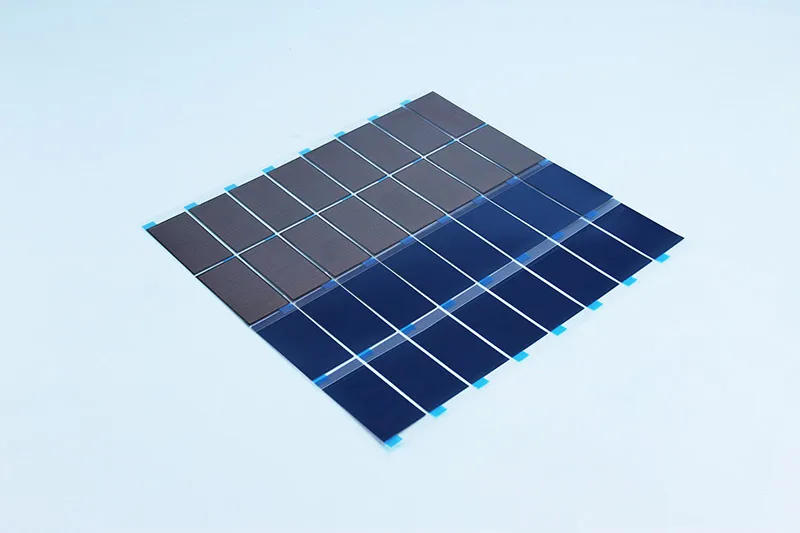
At the material level:
· High in-plane Thermal conductivity spreads hotspots fast.
· Low interface resistance boosts Heat dissipation.
· Stable structure supports steady Temperature management.
Within electronic assemblies:
· Heat flows from chips to graphite layer.
· The layer disperses energy across a wider surface.
· Cooling systems remove distributed heat efficiently.
For dense Electronic components in navigation and LED modules, this avionics heat dissipation sheet keeps temperatures balanced, not spiking.
Benefit 3: Phase Change Materials for Consistent Thermal Performance
Temperature swings can cause expansion gaps. That’s where Phase change materials earn their keep.
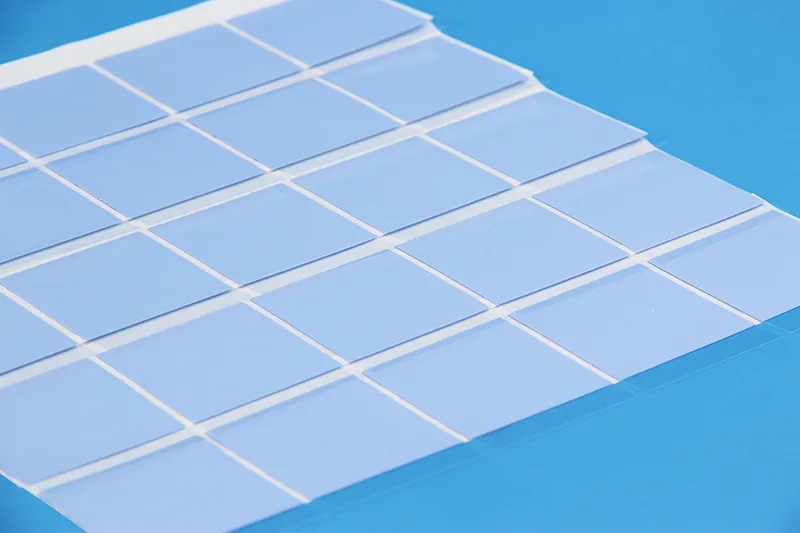
Performance benefits include:
· Smart Heat absorption during peak loads.
· Stable Temperature regulation across duty cycles.
· Improved Thermal performance in sealed avionics bays.
Working principle in practice:
· As heat rises, the material softens and fills micro-voids.
· Contact improves, lowering interface resistance.
· During cooldown, structure resets without losing shape.
This keeps Consistent operation on track, supporting long-term Thermal management for aerospace and telecom hardware.
Benefit 4: Compliance with RoHS and IPC Standards for Safe Deployment
Safety is non-negotiable. The Avionics insulating heat dissipation sheet is engineered for:
· Verified RoHS compliance.
· Alignment with IPC standards.
· Strict Material safety controls.
Manufacturing process overview:
· Precision lamination for uniform thickness.
· Controlled die cutting for exact fit.
· Batch inspection aligned with global Industry standards.
This ensures Safe deployment across aircraft systems, medical electronics, and defense equipment. Sheen Technology keeps quality tight, so engineers can focus on performance instead of paperwork.
Aluminum Foil Vs Avionics Insulating Sheet
Modern aircraft electronics run hot, tight, and fast. Thermal control is no joke up there. When engineers compare aluminum foil with an Avionics insulating heat dissipation sheet, the talk quickly shifts to safety margins, electrical insulation, and long-term system reliability. Small material choices can decide big outcomes in avionics bays.
Aluminum Foil
Aluminum foil looks simple, and in some cases, it works fine. It offers:
· Strong thermal conductivity
· Good heat reflection
· Excellent electrical conductivity
· Noticeable lightweight benefits
· Easy flexibility
· Clear cost-effectiveness
Yet aerospace design asks tougher questions.
Electrical performance limits
· Low dielectric strength
· Limited insulation resistance
· Risk under high breakdown voltage
Thermal behavior profile
· Rapid heat spreading
· Poor thermal insulation
· No built-in vibration damping
Application boundaries in avionics bays
· Suitable for shielding layers
· Not ideal as an avionics insulating heat dissipation sheet
· Requires added insulating materials
| Property | Aluminum Foil | Avionics Insulating Heat Dissipation Sheet | Test Standard |
| Thermal Conductivity (W/m·K) | 205 | 1.5–12 (engineered layers) | ASTM E1461 |
| Dielectric Strength (kV/mm) | <1 | 5–15 | IEC 60243 |
| Volume Resistivity (Ω·cm) | 10⁻⁵ | 10¹²–10¹⁵ | ASTM D257 |
| Temp Resistance (°C) | ~150 | 260–500 | UL 746B |
Aluminum foil moves heat fast. It doesn’t block current well. In high-density avionics racks, that trade-off can feel risky.
Avionics Insulating Sheet
An Avionics insulating heat dissipation sheet blends polyimide film, ceramic substrate, and graphite sheet into one engineered stack. It’s not just insulation. It’s thermal control plus electrical safety in one neat layer.
Layered material architecture
1.1 Surface graphite layer
· Enhances heat dissipation
· Stabilizes hot spots
1.2 Ceramic substrate
· Adds high-temperature resistance
· Improves durability
1.3 Polyimide base film
· Provides strong electrical insulation
· Boosts system reliability
Core performance advantages
· Balanced thermal insulation and heat spreading
· High volume resistivity
· Built-in vibration damping
Operational impact in avionics systems
· Protects control boards
· Reduces thermal stress cycles
· Extends component lifespan
The 2025 Aerospace Materials Market Outlook by MarketsandMarkets notes that advanced thermal interface and insulating materials are seeing sustained demand growth due to increasing avionics density and electrification in aircraft platforms.
That trend says a lot. As avionics power loads climb, a simple foil sheet just doesn’t cut it.
Solutions like the Avionics insulating heat dissipation sheet, especially those engineered by Sheen Technology, align with real flight demands—tight spacing, rising temperatures, and strict electrical insulation rules. In high-altitude electronics, cutting corners is not an option.
Avionics Rack: Layered Dissipation Sheet
Modern aerospace racks run hot and tight. An Avionics insulating heat dissipation sheet keeps power modules cool while guarding against short circuits. By splitting the phrase into Avionics + insulating + heat dissipation + sheet, we target airflow control, insulation safety, and steady thermal release in one smart build.
Multi-Layer Lamination Using Ceramic Substrate and Silicone Pads
In high-density racks, the Avionics insulating heat dissipation sheet depends on precise Multi-layer lamination. The internal layout works like this:
Core Functional Stack
Ceramic substrate
· High dielectric strength
· Stable Heat transfer enhancement
Thermal interface material
· Reduces contact resistance
· Fills micro gaps
Silicone pads
· Shock buffering
· Long-term elasticity
Layered structure alignment
· Maintains flatness
· Prevents air voids
Compression control
· Even load spread
· Vibration damping
Rack-Level Integration
· Mounted between avionics modules
· Works as an insulating heat sheet and thermal buffer
· Supports continuous heat dissipation cycles
Sheen Technology refines this lamination so the Avionics insulating heat dissipation sheet handles harsh vibration without peeling or cracking. In short, it stays cool and keeps its shape.
Optimizing Adhesion Strength and Flexural Modulus for Rack Stability
Rack stability lives or dies on bonding quality. For each Avionics insulating heat dissipation sheet, material pairing is verified through:
· Mechanical properties validation
· Adhesion strength testing
· Flexural modulus measurement
· Fatigue under vibration
Bonding techniques assessment
· Surface plasma treatment
· Controlled curing cycles
· Pressure-balanced lamination
Material compatibility review
· Metal-to-ceramic interfaces
· Polymer-to-filler bonding
· Long-term humidity resistance
Key performance comparison:
| Material Stack | Adhesion Strength (MPa) | Flexural Modulus (GPa) | Thermal Conductivity (W/m·K) |
| Alumina + Silicone | 1.8 | 6.5 | 3.2 |
| AlN + Graphite | 2.3 | 8.1 | 6.8 |
| Ceramic + TIM Hybrid | 2.0 | 7.4 | 5.5 |
| Reinforced Composite | 2.6 | 9.0 | 7.1 |
This data-driven tuning keeps rack stability tight. Sheen Technology applies these benchmarks so every avionics insulating heat sheet resists warping during flight loads.
Enhancing Heat Capacity and Thermal Expansion Control in Complex Assemblies
Thermal stress sneaks up fast inside Complex assemblies. A high-grade Avionics insulating heat dissipation sheet manages both Heat capacity and Thermal expansion control through structured filler design:
Filler Engineering
Material selection
· Aluminum nitride for conductivity
· Graphite for heat spread
Dimensional Strategy
· Controlled CTE matching
· Aligns with aluminum racks
· Protects solder joints
· Reinforced Dimensional stability layers
Thermal Management Loop
· Heat absorption
· Lateral spread
· Regulated release
The result? Steady Temperature regulation without stressing connectors. Sheen Technology builds each Avionics insulating heat dissipation sheet to act like a quiet bodyguard—handling expansion, absorbing heat spikes, and keeping avionics safe mile after mile.
FAQs about Avionics Insulating Heat Dissipation Sheet
What makes an Avionics insulating heat dissipation sheet outperform aluminum foil in aerospace systems?
Aluminum foil conducts heat fast—but fails under high breakdown voltage. The Avionics insulating heat dissipation sheet is built differently:
· Layer synergy: Polyimide film + Ceramic substrate + Graphite sheet
· Thermal balance: High thermal conductivity with controlled thermal resistance
· Electrical safety: Strong dielectric strength, high volume resistivity, stable insulation resistance
· Mechanical endurance: Vibration damping from Silicone pad, steady tensile strength under altitude stress
In aerospace systems and power electronics, this layered design protects circuits where a thin metal foil simply cannot survive.
How do advanced ceramics like Aluminum nitride and Boron nitride enhance thermal stacks?
Heat surges in telecommunications racks or LED lighting modules can trigger failure in seconds. Ceramic fillers change that outcome.
· Aluminum nitride — Raises heat capacity while maintaining low thermal expansion.
· Boron nitride — Reduces thermal resistance and stabilizes operating temperature.
· Sintered integration — Ensures dense particle bonding within the ceramic substrate.
The result is fast heat spreading without stressing nearby components, even during repeated power cycling in aerospace systems or medical devices.
Why is mechanical stability critical for avionics reliability?
Inside aircraft racks, constant vibration tests every bond line.
A short structural view:
· Silicone pad → absorbs shock, improves adhesion strength
· Graphite sheet → maintains flexural modulus during thermal swings
· Polyimide film → resists tearing and preserves hardness
Together, these layers guard against delamination, protect arc resistance performance, and maintain dielectric constant stability across military specifications and IPC standards.
How do manufacturing and compliance standards ensure consistent performance?
Precision is not optional in aerospace systems. Each Avionics insulating heat dissipation sheet is shaped and validated through controlled processes.
| Process / Standard | Functional Impact | Application Confidence |
| Lamination | Stable layer bonding, controlled thermal expansion | Long-term insulation resistance |
| Die cutting | Exact geometry for power electronics racks | Reduced assembly stress |
| Coating & Molding | Improved surface adhesion, uniform thickness | Higher breakdown voltage reliability |
| RoHS, REACH, UL, ISO 9001 | Regulated material purity and traceability | Acceptance under military specifications |
Under extreme operating temperature cycles, compliance and process discipline prevent small defects from turning into catastrophic failure.
Sheen Thermal
Dongguan Sheen Electronic Technology Co., Ltd · Founded in 2008
Manufacturer of thermal interface materials and silicone foam for automotive electronics, energy storage, power electronics, communications and consumer electronics.
Certified
- ISO 9001:2015
- ISO 14001:2015
- IATF 16949:2016
What we supply
- Thermal conductivity Up to 90 W/m·K
- Thickness 0.3–10.0 mm
- Custom & samples Die-cut to drawing, 3–7 days