
 English
 usheenthermal

The Future of EV Charging: High-Voltage Charging Pile Insulating Thermal Solution
Date:2026-03-19
The Future of EV Charging: High-Voltage Charging Pile Insulating Thermal Solution
High-voltage charging pile insulating thermal solution isn’t just engineering jargon—it’s the quiet hero standing between a smooth, fast charge and a melted mess. As chargers jump to 350kW and beyond, heat builds up like traffic on the I95 at rush hour. If insulation and thermal control slip, components cook, downtime spikes, and customers walk.
The IEA’s Global EV Outlook 2024 notes public chargers must rise to 17 million globally by 2030. “Reliability will be critical to user confidence.”
Buyers feel that pressure. Overheating cables, stressed MOSFETs, callbacks that eat margins. Smart insulation and heat flow design keep power moving and profits intact.
Why Do High-Voltage Charging Piles Overheat Easily?
High-power EV stations look calm on the outside, but inside, heat builds up fast. A weak High-voltage charging pile insulating thermal solution can quietly push components past safe limits, especially under long charging cycles and peak current loads.
Inadequate Heat Sink and Vapor Chamber Integration
When heat dissipation falls behind, trouble starts small and spreads quickly.
· Poor thermal conductivity between baseplate and vapor plate
· Gaps increasing interface thermal resistance
· Weak cooling efficiency from mismatched airflow paths
In many cabinets, the issue runs deeper:
· Heat sink design lacks surface area for 350–480 kW output.
· Material selection favors cost over conductivity.
· Vapor chamber performance drops when internal fluid distribution is uneven.
From a system view tied to a High-voltage charging pile insulating thermal solution, risks stack up:
Mechanical Layer
· Mounting torque inconsistency
· Surface flatness deviation
Thermal Layer
· Rising base temperature
· Reduced thermal conductivity across TIM
Electrical Layer
· IGBT heat accumulation
· SiC leakage increase
A stable high-voltage charging pile thermal insulation layout, like designs offered by Sheen Technology, balances structural pressure and thermal spread so heat actually moves instead of lingering.
SiC MOSFET Junctions Running Beyond Thermal Limits
High switching speeds push semiconductor devices hard. Junction temperature climbs fast in compact power electronics bays.
| Load Current (A) | Switching Frequency (kHz) | Junction Temp (°C) | Efficiency (%) | Failure Risk Level |
| 200 | 20 | 95 | 97.8 | Low |
| 300 | 30 | 112 | 97.1 | Medium |
| 400 | 40 | 128 | 96.4 | Elevated |
| 450 | 50 | 142 | 95.6 | High |
| 500 | 60 | 156 | 94.8 | Critical |
As overheating rises, device reliability drops sharply. The International Energy Agency noted in its 2024 Global EV Outlook that fast-charging infrastructure must improve thermal control to sustain ultra-fast charging growth without reliability losses.
A refined High-voltage charging pile insulating thermal solution keeps junctions under control by pairing insulation strength with smarter thermal management pathways. Sheen Technology tunes insulation thickness and heat spread layers together, not in isolation.
Uneven Thermal Grease Application on Epoxy Resin Layers

Tiny air gaps. That’s all it takes. Non-uniform thermal interface material over epoxy resin insulation disrupts heat transfer from metal core PCB to sink.
Grease too thick? Heat stays trapped. Too thin? Insulation properties suffer. Key risk chain inside a charging pile insulating thermal solution:
Surface Preparation
· Contamination residue
· Uneven pressure
Grease Application
· Inconsistent layer uniformity
· Manual spreading errors
Thermal Outcome
· Higher case temperature
· Local board warping
A solid High-voltage charging pile insulating thermal solution standardizes dispensing volume and compression control, keeping thermal conductivity stable across every module.
Hotspots from Overstressed Power Cables and High-Voltage Connectors
Cables take the hit during peak hours. When current carrying capacity is stretched, electrical resistance rises. Add minor oxidation at terminals and contact resistance spikes.
Heat concentrates near:
· Terminal blocks
· Cable glands
· Crimp points
Inside the system:
· Elevated thermal stress weakens insulation.
· Micro-expansion loosens contact surfaces.
· Resistance climbs further.
· Overheating hotspots form.
Under a reliable High-voltage charging pile insulating thermal solution, cable routing, connector plating, and insulation spacing are designed as one logic chain. Sheen Technology integrates high-voltage connector shielding with controlled thermal paths, reducing localized heat pockets before they turn into shutdown alarms.
In short, overheating rarely comes from one dramatic failure. It’s usually small thermal flaws stacking up inside the high-voltage charging pile system—until the pile simply runs too hot to handle.
Thermal Management Systems In EV Charging Infrastructure
High-power EV stations run hot, plain and simple. A smart High-voltage charging pile insulating thermal solution keeps heat in check while protecting every live part inside the charging pile.
Composite Insulation: Ceramic Substrate Meets Polyimide Film
In a reliable High-voltage charging pile insulating thermal solution, insulation is never a single layer. It’s a smart stack built for stress, voltage spikes, and long charging hours.
Composite Insulation framework
Ceramic Substrate
· High Dielectric Strength under surge voltage
· Stable Thermal Performance above 200°C

Polyimide Film
· Flexible wrap for busbars and transformer windings
· Reinforced High-Voltage Insulation in tight layouts
Functional coordination inside the charging pile
· Ceramic handles electrical isolation
· Polyimide absorbs vibration and thermal cycling
· Together, support high-frequency transformer safety
Practical impact
· Reduced insulation aging
· Lower partial discharge risk
· Longer service life for high-voltage charging pile insulation systems
At Sheen Technology, this layered approach is tuned specifically for each High-voltage charging pile insulating thermal solution, keeping both safety margins and thermal flow right where they should be.
Thermal Pad Coupling with Heat Pipe and Cooling Fan
Heat builds up around power modules fast. A proper High-voltage charging pile insulating thermal solution handles that heat before it turns into downtime.
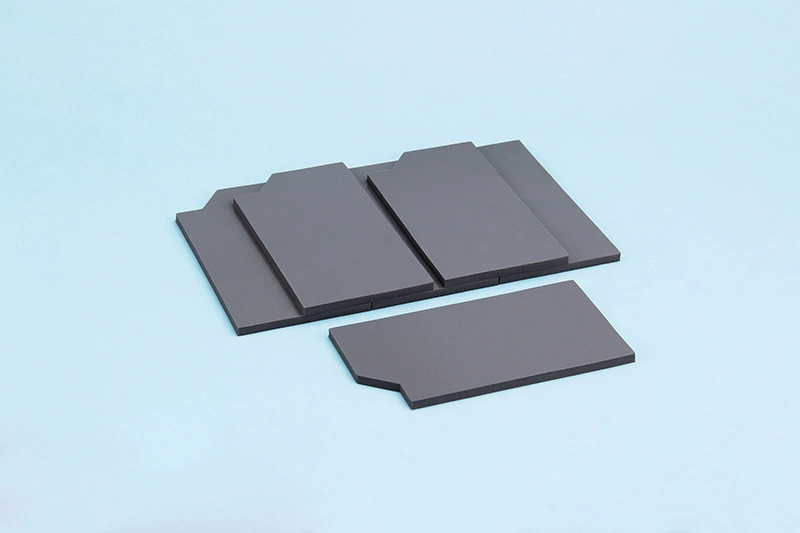
A Thermal Pad works as a Thermal Interface Material, filling tiny air gaps between IGBT modules and the Heat Pipe base. No drama, just tight contact. The heat pipe then moves thermal energy toward fin stacks, where a Cooling Fan pushes air across the surface for Active Cooling.
Key cooling actions include:
· Direct surface contact to cut thermal resistance
· Rapid axial heat transfer inside the heat pipe
· Forced airflow to stabilize Component Temperature
In many fast-charging cabinets, this combo improves Heat Dissipation around capacitors and inductors that usually run the hottest.
BloombergNEF’s 2025 EV Infrastructure Outlook notes that “thermal control reliability is becoming a defining factor in uptime performance for ultra-fast charging networks.”
That’s exactly why Sheen Technology integrates pad hardness, thickness, and airflow rate into one coordinated high-voltage charging pile thermal management plan, forming a stable High-voltage charging pile insulating thermal solution from core to casing.
FR-4 PCB and Metal Core PCB Temperature Monitoring
Control logic and power switching sit side by side. Without tracking heat, things go south quickly.
FR-4 PCB
· Supports low-power control circuits
· Balanced Thermal Conductivity for signal stability
Metal Core PCB
· Aluminum base for improved Heat Management
· Direct spreading under MOSFETs and IGBTs
Monitoring system integration
· Embedded thermistors near power semiconductors
· Real-time Temperature Monitoring via MCU
· Data feedback to fan and liquid cooling controllers
Protection logic
· Tier 1: Fan speed increase
· Tier 2: Power derating
· Tier 3: Emergency shutdown
This layered sensing design strengthens the Printed Circuit Board reliability inside every High-voltage charging pile insulating thermal solution. The goal is simple: detect hotspots early and keep the high-voltage charging pile thermal solution steady under peak demand.
Liquid Cooling Plate Paired with Sealed Cable Glands
When air cooling isn’t enough, liquid steps in. Here’s how a High-voltage charging pile insulating thermal solution upgrades to water-based control:
1) A Liquid Cooling Plate is mounted directly beneath IGBT modules for efficient Thermal Transfer.
2) Coolant channels circulate fluid for continuous Liquid Cooling across high-loss zones.
3) Flow sensors confirm stable water cooling pressure and temperature.
4) Sealed Cable Glands secure high-voltage connectors, maintaining Environmental Sealing and reinforced Cable Insulation.
5) Leak detection triggers instant protection logic if abnormalities appear.
This setup keeps the high-voltage charging pile insulation and thermal solution working safely even during ultra-fast sessions. With precision sealing and controlled water cooling, Sheen Technology ensures each High-voltage charging pile insulating thermal solution balances heat extraction and electrical isolation without cutting corners.
3 Key Factors In High-Voltage Insulation Thermal Performance
High-power EV stations are heating up fast, and a solid High-voltage charging pile insulating thermal solution is no longer optional. From charging pile insulation to thermal control, every material choice shapes safety and lifespan. Let’s break down what truly drives stable high-voltage charging pile performance.
Epoxy Resin vs Silicone Gel Insulation Stability
In a High-voltage charging pile insulating thermal solution, insulation stability depends heavily on material behavior under heat and voltage stress.
Core Material Properties
1.1 Epoxy Resin
· High Dielectric Strength, rigid structure
· Strong mechanical bonding
· Risk of Thermal Degradation under long-term cycling

1.2 Silicone Gel
· Flexible, absorbs expansion stress
· Better crack resistance
· Maintains Insulation Stability in vibration-heavy charging pile environments
Long-Term Performance in Charging Piles
2.1 Thermal Cycling Response
· Epoxy: stable at fixed loads, weaker in rapid cycling
· Silicone gel: adapts to expansion and contraction
2.2 Environmental Resistance
· Moisture tolerance favors silicone systems
· Chemical sealing strength favors epoxy
For a practical high-voltage insulation thermal system, many engineers now blend rigidity and flexibility. Sheen Technology applies material matching strategies to optimize Long-term Performance in demanding charging pile insulation setups.
Phase Change Material Conductivity vs Graphite Sheet
Thermal transfer is the heartbeat of any High-voltage charging pile insulating thermal solution.

• Phase Change Material improves surface contact during heating cycles.
• Graphite Sheet offers superior in-plane Thermal Conductivity.
Both reduce Thermal Resistance, but in different ways.
1) Phase change layers soften under heat, filling micro gaps and boosting Heat Dissipation efficiency inside compact charging modules.
2) Graphite sheets rapidly distribute heat across surfaces. That keeps hot spots from frying sensitive insulation layers.
Here’s the real-world logic:
· Use phase change material at interfaces.
· Add graphite sheet for lateral spreading.
· Combine both inside a high-voltage charging pile thermal management stack.
This combo strengthens the overall High-voltage charging pile insulating thermal solution, especially where space is tight and power density keeps climbing.
Heat Sink Design Impact on Vapor Chamber Efficiency
Thermal structure design can make or break a High-voltage charging pile insulating thermal solution.
Heat Sink Design Variables
1.1 Fin Geometry
· Fin spacing controls airflow resistance
· Taller fins increase Surface Area
1.2 Base Thickness
· Thicker bases stabilize temperature spread
· Thinner bases react faster but may distort heat flow
A well-tuned vapor chamber setup reduces peak temperatures and protects insulation materials from stress fatigue. That’s why Sheen Technology integrates structural modeling directly into its high-voltage charging pile insulation thermal solution design—keeping charging piles cool, safe, and ready for heavy daily use.
Air Cooling Vs Liquid Cooling In Charging Pile Thermal Systems
High-power EV stations are heating up—literally. Choosing the right High-voltage charging pile insulating thermal solution shapes safety, efficiency, and long-term stability. Let’s break down air and liquid paths in a real-world, no-fluff way.
Air Cooling
For many operators, an air-based High-voltage charging pile insulating thermal solution feels practical and budget-friendly. It relies on:
Fan system
· Controls Airflow across power modules
· Supports steady Temperature Control
Heat Sink array
· Expands surface area
· Enhances passive Thermal Management
Cabinet Ventilation layout
· Guides hot air outward
· Protects insulation layers
How It Supports Insulation and Thermal Balance
· In a high voltage charging pile thermal setup, stable airflow reduces hot spots around busbars and control boards.
· Proper duct design keeps insulating materials within rated limits.
· Maintenance stays simple; swap a Fan, clean the Heat Sink, and airflow returns to spec.
Application Fit
· Moderate power density stations
· Sites prioritizing easy servicing
· Projects integrating a cost-aware High-voltage charging pile insulating thermal solution
Sheen Technology optimizes airflow paths so the high-voltage charging pile insulating thermal solution works without overbuilding the cabinet.
Liquid Cooling
When power climbs and SiC devices push heat flux higher, a liquid-based High-voltage charging pile insulating thermal solution becomes the smart move.
Closed-loop Coolant circuit
· Driven by precision Pump
· Routed through sealed Piping
· Direct-contact cooling plate
· Transfers heat to Radiator
Assisted by compact Heat Exchanger
· Thermal and Insulation Coordination
· High Thermal Conductivity of coolant stabilizes junction temperatures fast.
· Lower internal air temperature reduces stress on insulating barriers.
Compact layouts shrink conductor spacing risks in high voltage charging pile thermal designs.
Why It Matters for Ultra-Fast Charging
· Supports compact modules
· Enables higher continuous output
· Strengthens the overall High-voltage charging pile insulating thermal solution under peak load
1 Breakthrough! Charging Pile Insulation Thermal Efficiency Redefined
High heat loads in fast chargers are no joke. A smarter High-voltage charging pile insulating thermal solution keeps power modules cool, safe, and stable while pushing charging speed higher. Here’s how material science is quietly changing the game.
Liquid Metal Compound Enhances Mica Sheet Heat Transfer
The core of a reliable High-voltage charging pile insulating thermal solution sits inside the insulation stack, where Liquid Metal Compound meets Mica Sheet and turns passive blocking into active Heat Transfer control.
Material Innovation
1.1 Liquid Metal Compound infusion
· Improves Thermal Conductivity inside traditional Insulation Material
· Maintains dielectric strength for High-Voltage Charging Pile systems
1.2 Engineered Mica Sheet layering
· Enhances lateral heat spreading
· Reduces hotspot buildup near IGBT and busbar zones
Thermal Path Optimization
2.1 Direct heat extraction
· Shortens the path from power module to cooling plate
2.2 Stable insulation barrier
· Supports long-term operation in a high voltage charging pile insulation thermal management setup
System-Level Impact
· Better module lifespan
· Higher charging consistency
· Safer High-voltage charging pile insulating thermal solution deployment
BloombergNEF’s 2025 EV infrastructure outlook notes that thermal stability is becoming “a defining factor in next-generation fast-charging reliability,” especially in ultra-fast DC stations.
For operators chasing uptime and safer insulation, Sheen Technology turns the High-voltage charging pile insulating thermal solution from a hidden layer into a serious performance upgrade.
FAQs about High-Voltage Charging Pile Insulating Thermal Solution
What causes overheating in a High-voltage charging pile insulating thermal solution?
1) Power semiconductor stress
· SiC MOSFET and GaN HEMT switch at high frequency; junction heat rises fast.
· IGBT Module paired with Snubber Capacitor may trap heat if airflow is blocked.
2) Thermal path defects
· Uneven Thermal Grease or aged Thermal Pad leaves air gaps.
· Poor bonding between Heat Sink and Vapor Chamber increases resistance.
3) Connection hotspots
· Loose High-Voltage Connector or overloaded Power Cable.
· Oxidized Terminal Block raising local resistance.
When insulation such as Epoxy Resin or Polyimide Film starts discoloring, the warning has already been issued.
Why is insulation design critical in high-power charging cabinets?
Inside a compact cabinet, voltage and heat compete for space. A well-built insulation stack keeps both under control.
Electrical barrier layer
· Ceramic Substrate for dielectric strength near High-Frequency Transformer
· Mica Sheet under Power Diode and Thyristor
· Fiberglass Reinforced Polymer for structural rigidity
Thermal transfer layer
· Graphite Sheet spreads lateral heat
· Phase Change Material maintains tight contact during cycling
A balanced structure protects FR-4 PCB or Metal Core PCB traces from breakdown while guiding heat toward the Heat Pipe or Liquid Cooling Plate. The result: stable output instead of creeping failure.
Air cooling or liquid cooling: which suits dense fast-charging systems?
A short comparison clarifies the tension:
| Aspect | Air Cooling (Heat Sink + Cooling Fan) | Liquid Cooling Plate System |
| Heat Flux Handling | Moderate | High |
| Cabinet Size | Larger airflow path | Compact layout |
| Maintenance | Simpler | Pump and seal care needed |
| Best For | Standard IGBT Module setups | High-density SiC MOSFET arrays |
In ultra-fast stations packed with Film Capacitor banks, Ferrite Core Inductor units, and High Tg PCB assemblies, liquid cooling keeps temperature swings calmer and component life longer.
How can long-term reliability be improved in daily operation?
Reliability grows from disciplined detail:
① Select Silicone Gel instead of rigid Epoxy Resin in zones exposed to thermal cycling.
② Use a ceramic PCB near a high-current Power Inductor and Common Mode Choke.
③ Seal Cable Gland entries to prevent moisture near Electrolytic Capacitor terminals.
④ Embed sensors on the Metal Core PCB close to the Supercapacitor banks for early heat alerts.
A charging pile ages like any machine. Good insulation, clean Signal Cable routing, and consistent thermal interfaces prevent small sparks of heat from turning into silent structural damage.
Sheen Thermal
Dongguan Sheen Electronic Technology Co., Ltd · Founded in 2008
Manufacturer of thermal interface materials and silicone foam for automotive electronics, energy storage, power electronics, communications and consumer electronics.
Certified
- ISO 9001:2015
- ISO 14001:2015
- IATF 16949:2016
What we supply
- Thermal conductivity Up to 90 W/m·K
- Thickness 0.3–10.0 mm
- Custom & samples Die-cut to drawing, 3–7 days