
 English
 usheenthermal

Boron Nitride Thermal Pad: Properties, Applications and Buying Guide
Date:2026-02-26
Boron Nitride Thermal Pad: Properties, Applications and Buying Guide
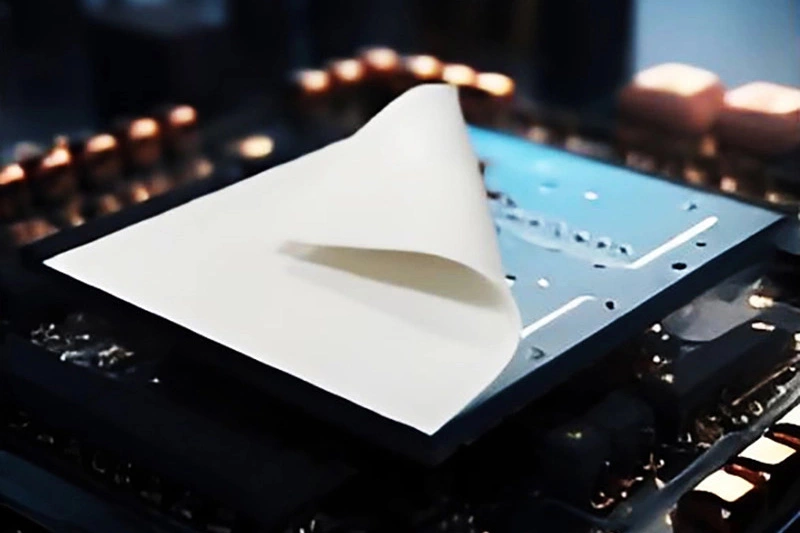
Electronic systems are getting denser, hotter, and less forgiving. Thermal management has therefore graduated from an engineering afterthought to a mission-critical design pillar.
Boron nitride thermal pads provide a pragmatic bridge: they combine solid-state thermal pathways with electrical insulation and manufacturing friendliness.
This article maps out their properties, explores the best applications, and gives a practical buying guide so decisions land fast and reliably.
The Heat Problem Modern Electronics Can’t Ignore
Today, circuit boards integrate more power in a smaller space. This leads to dramatic temperature gradients and localized hotspots, which stress silicone thermal pads and passive components, degrade thermal pad performance, and accelerate failure modes.
Thermal interface materials must reduce interfacial thermal resistance while withstanding in-situ stresses such as vibration and humidity. Traditional thermal interface materials cannot meet these requirements. For example, thermal paste performs well with micron-level surface matching and precise clamping pressure, but it is prone to contamination and increases the difficulty of automated assembly and long-term maintenance. Ordinary thermal silicone thermal pads and elastomers sometimes lack the thermal conductivity required for high TDP modules.
Boron nitride thermal pads fall between these two extremes—they offer relatively high thermal conductivity while maintaining robustness and repeatability. The boron nitride filler forms a conductive network within a flexible substrate, which transfers heat through phonon and percolation contacts. The resulting interface product reduces temperature differences (ΔT) across different gap widths without sacrificing dielectric isolation.
What Is a Boron Nitride Thermal Pad?
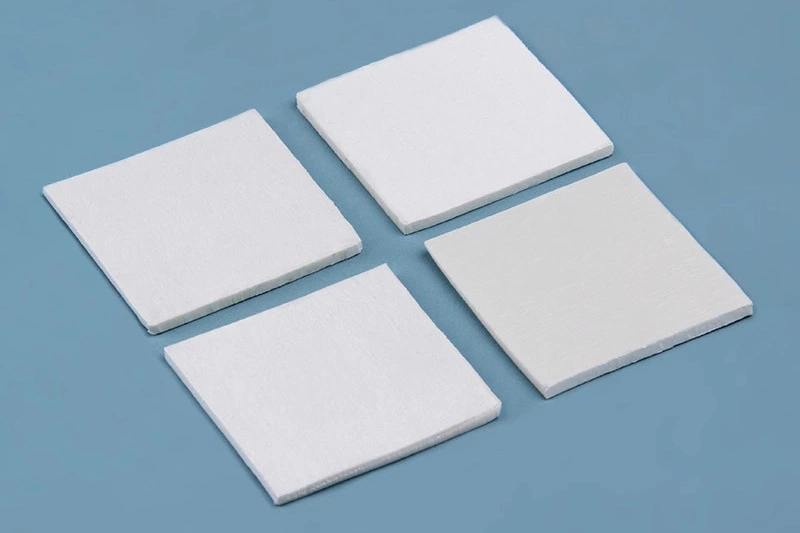
The basic structure of a boron nitride thermal pad
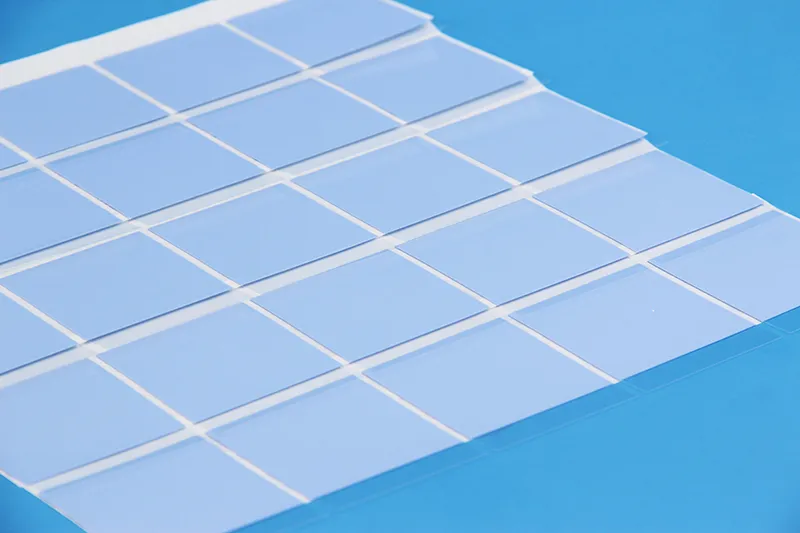
A boron nitride thermal pad typically consists of a polymeric matrix loaded with hexagonal boron nitride (h-BN) platelets,the polymer provides elasticity,the h-BN platelets create continuous or semi-continuous thermal pathways. Additives such as tackifiers, adhesion layers, or EMI foils are often laminated to the base material for enhanced handling or multifunctionality.
How hexagonal boron nitride boosts thermal performance
· Hexagonal boron nitride exhibits high in-plane thermal conductivity and good chemical inertness.
· When platelets align under compression, anisotropic thermal transport can be exploited to channel heat toward the heat sink.
· This alignment reduces interfacial contact resistance and enables superior performance relative to unfilled elastomers at comparable bond-line thicknesses.
Key differences between boron nitride thermal pads and standard thermal pads
· Boron nitride thermal pads typically show higher effective k-values at realistic BLTs.
· Their dielectric properties are usually superior to metal-filled pads and their galvanic neutrality mitigates corrosion risk.
· Standard silicone or acrylic pads might be cheaper and more conformable, but they often lose thermal headroom where larger gaps persist.
Core Properties of a Boron Nitride Thermal Pad
| Properties | Unit | BSF800-20 | BSF1000-20 | Test Method |
| Color | - | White | White | Visual |
| Thermal Conductivity | W/m·K | 8.0 | 10.0 | ASTM D5471 |
| Thermal Impedance (@40psi) | ℃*in2/W | 0.35 | 0.3 | ASTM D5470 |
| Thickness | mm | 1.0~2.0 | 1.0~2.0 | ASTM D374 |
| Breakdown voltage | KV,@AC | ≥10 | ≥10 | ASTM D149 |
| Dielectric constant | F/m, @ 1MHz | ≥ 3.8 | ≥ 3.8 | ASTM D150 |
| Flammability rating | - | V-0 | V-0 | UL 94 |
| RoHS | - | PASS | PASS | IEC 62321 |
| Halogen | - | PASS | PASS | EN 14582 |
| REACH | - | PASS | PASS | EN 14372 |
Thermal conductivity: what the numbers really mean
Thermal conductivity (k) is a single-point metric,it does not capture contact resistance, BLT, or anisotropy,practical performance requires reading k together with thermal impedance (R″) at the target compressed thickness.
Electrical insulation and dielectric strength advantages
· Most boron nitride thermal pads are electrically insulating.
· High dielectric strength makes them suitable where conductors or exposed traces exist.
Compare dielectric breakdown values under the same test geometries to ensure compliance with system safety requirements.
Mechanical behavior: compressibility, softness, and conformability
Two mechanical parameters matter most: initial Shore hardness and compression set.
· A low Shore value improves wetting of rough surfaces but may increase the chance of cold flow.
· Low compression set (small permanent deformation after cycling) is critical for fixed assemblies where contact integrity must persist over years.
Long-term reliability: compression set and thermal aging
· Compression set quantifies how much a pad fails to rebound after sustained compressive stress.
· Thermal aging can harden or soften the matrix depending on polymer chemistry and filler interaction.
Where Boron Nitride Thermal Pads Deliver the Most Value
High-power processors and GPUs
· Server blades, compute accelerators, and high-end GPUs generate concentrated heat flux.
· Boron nitride thermal pads provide a compromise between the high performance of paste and the practicality of pads, especially where electrical insulation is needed or gap heights fluctuate.
Automotive electronics and power modules
· In traction inverters, DC–DC converters, and onboard chargers, robustness is mandatory.
· BN thermal pads with low compression set and high dielectric strength maintain thermal pathways under vibration and thermal cycling, reducing field failures.
Telecom and 5G infrastructure hardware
· Remote radio units and baseband modules operate in harsh environments and require predictable thermal behavior.
· Boron nitride thermal pads maintain thermal continuity across larger tolerance stacks where traditional pastes would either squeeze out or fail to bridge.
Industrial control systems and rugged environments
· Harsh ambient conditions — moisture, contaminants, cyclic shock — demand materials that do not cold-flow or outgas.
· High-quality BN thermal pads with proper polymer chemistry check those boxes and keep assemblies within thermal envelopes.
How to Choose the Right Boron Nitride Thermal Pad
Matching thermal conductivity to your heat load
· Start with the thermal budget (W) and acceptable ΔT (°C).
· Calculate the R″ target and select a thermal pad whose datasheet reports similar R″ at the compressed BLT.
· Avoid choosing solely on nominal k; instead, insist on vendor data tied to your BLT and clamp conditions.
Selecting the proper thickness and bond-line target
Measure stack tolerances in production and pick a nominal thermal pad thickness that compresses to the target BLT under expected clamp force.
If the assembly has widely variable clamping, pick a thermal pad with a broad compressibility window to ensure consistent contact.
Evaluating hardness, tackiness, and surface wetting
· Hardness affects both manual handling and contact reliability.
· Adhesive (tacky) options aid automated placement but can complicate rework.
· Assess wetting behavior on your specific substrate finishes to ensure uniform contact.
Compliance, certifications, and quality checks before buying
Ask vendors for test certificates: RoHS, UL flammability ratings (if relevant), outgassing reports, and any desirably stringent domain tests (medical sterilization compatibility, spaceflight outgassing, etc.).
Supplier lot traceability and in-house QC capabilities are important for repeatable supply.
Boron Nitride Thermal Pad vs Other Thermal Interface Materials
Boron nitride thermal pad vs silicone thermal pad
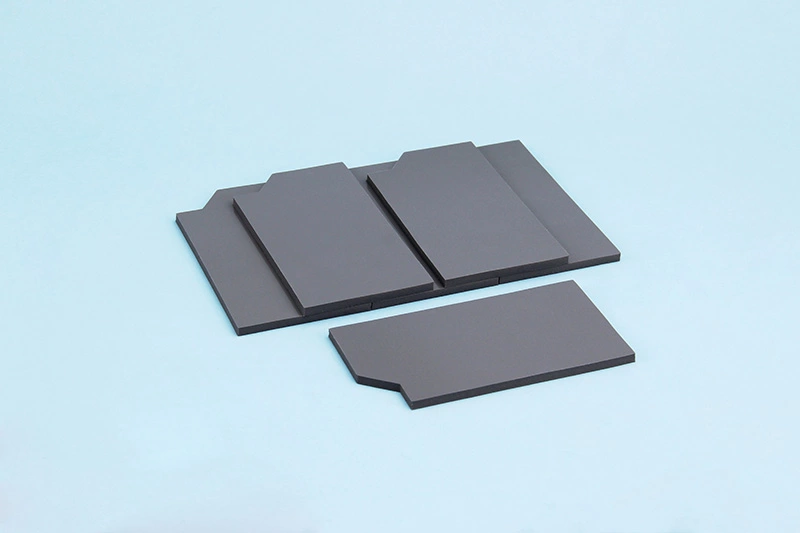
· Silicone thermal pads are versatile and cost-effective.
· Boron nitride thermal pads provide higher effective conduction where BLT is nontrivial and dielectric neutrality is desired.
If line throughput and lowest first-cost matter most, silicone might be acceptable; if thermal headroom and lifetime are mission-critical, BN is the better choice.
Boron nitride thermal pad vs thermal paste
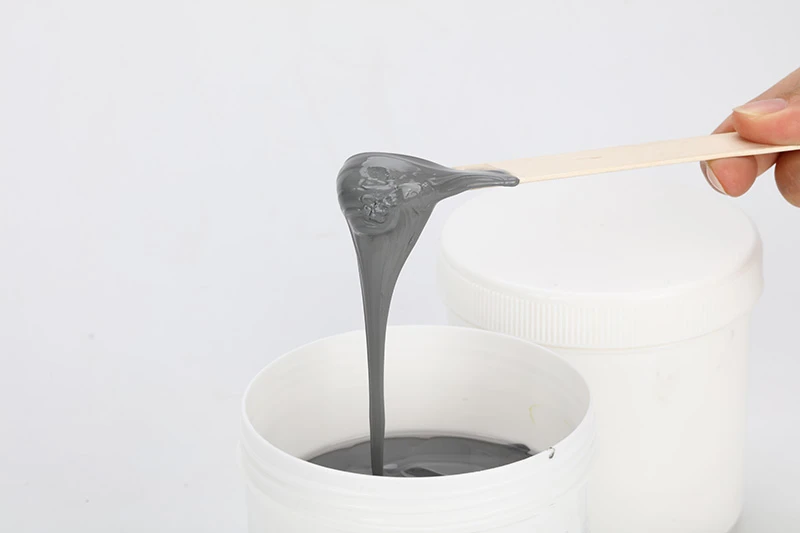
· Thermal paste typically outperforms thermal pads at ultrathin BLTs under high clamp forces.
· However, paste suffers from variability, rework burden, and contamination risk.
· For production lines seeking repeatability, BN thermal pads often deliver a superior lifecycle ROI.
When a gap filler or phase change material may be better
· Gap fillers and phase-change materials can outperform thermal pads in certain high-fill or conformal regimes.
· Yet they introduce complexity: curing, viscosity control, or latent heat dynamics.
· Choose them when the design specifically benefits from viscous flow or phase transitions; otherwise, BN thermal pads remain a pragmatic default.
Quick decision matrix for engineers and buyers
· High TDP + electrical isolation required → BN thermal pad.
· Tight BLT and highest thermal conductivity needed → paste (if process allows).
· Low cost + high conformability required → silicone thermal pad.
Buying Guide — What Smart Procurement Teams Look For
Key supplier qualifications and manufacturing capabilities
· Prefer suppliers with documented lot traceability, die-cutting capability, and inline QC.
· Capability to supply sample runs and to produce small pilot batches speeds validation cycles.
Reading datasheets without getting misled
· Insist that thermal data specify BLT, clamp force, and surface finish.
· Scrutinize compression-set methodology and aging protocols.
· Beware of marketing k-values that do not tie to real assembly geometries.
Cost vs performance: finding the real sweet spot
· Compute total cost of ownership: material cost + rework + field returns.
· A pricier BN thermal pad that reduces rework and improves warranty outcomes can be cheaper in the medium term.
Customization options: thickness, die-cutting, and adhesive backing
· Request both standard and custom die-cuts during sampling.
· Evaluate adhesive variants to ensure pick-and-place reliability without bleeding adhesives under thermal stress.
Frequently Asked Questions About Boron Nitride Thermal Pads
Are boron nitride thermal pads electrically insulating?
Most formulations are. Confirm dielectric strength and test conditions on the datasheet.
Can a boron nitride thermal pad replace thermal paste on CPUs?
Yes — for many production environments where repeatability trumps absolute peak conductivity.
However, in tightly clamped, ultra-thin BLT scenarios, paste can still be superior.
How thick should a boron nitride thermal pad be?
Select a nominal thickness that compresses to your target BLT under expected clamp force.
Typical starting thicknesses range from 0.5 mm to 1.5 mm, but measure and validate.
What tests should be requested from suppliers?
ΔT vs power at specified BLT and clamp force, compression set after defined cycles, dielectric strength, and any application-specific aging tests (humidity, vibration, outgassing).
How long do boron nitride thermal pads last in the field?
Longevity depends on polymer chemistry, operating temperature, and mechanical loading.
Good materials with low compression set show stable behavior for years under designed conditions.
Selecting a boron nitride thermal pad is a systems decision. Consider thermal budget, geometric tolerance, production practices, and lifecycle economics. When reliability, electrical insulation, and predictable long-term behavior matter most, BN thermal pads are a compelling, production-friendly solution.
Request a free sample please visit /sheenthermal/contact us or email our application team at contact tina@u-sheen.com. Let’s match a thermal pad to your process.
Sheen Thermal
Dongguan Sheen Electronic Technology Co., Ltd · Founded in 2008
Manufacturer of thermal interface materials and silicone foam for automotive electronics, energy storage, power electronics, communications and consumer electronics.
Certified
- ISO 9001:2015
- ISO 14001:2015
- IATF 16949:2016
What we supply
- Thermal conductivity Up to 90 W/m·K
- Thickness 0.3–10.0 mm
- Custom & samples Die-cut to drawing, 3–7 days