
 English
 usheenthermal

Top 5 Cost-Effective Phase Change Solutions for Thermal Storage
Date:2026-06-10
Top 5 Cost-Effective Phase Change Solutions for Thermal Storage
Heat is eating budgets alive, and cost-effective phase change solutions are quickly becoming the fix hiding in plain sight.
Cooling systems keep getting pricier, bulkier, and harder to scale, pushing buyers to rethink what actually saves money.
IEA and BloombergNEF research show demand for thermal storage as industries cut cooling costs.
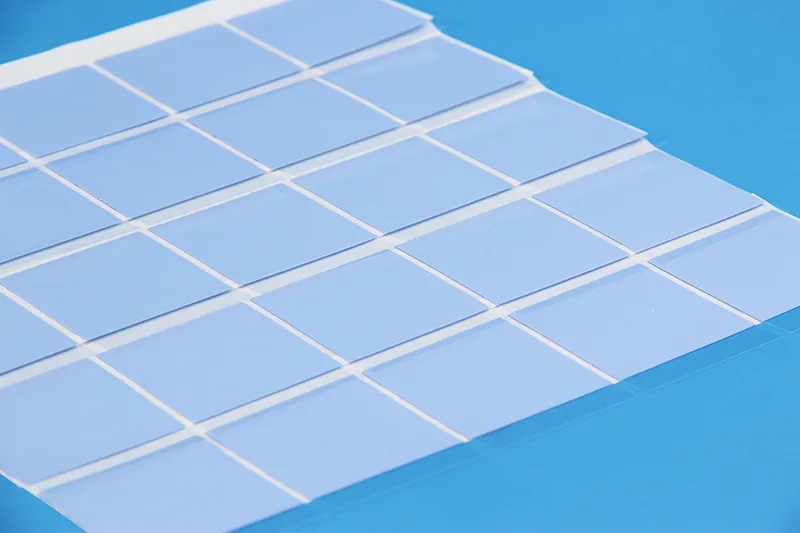
Quick Insights on Cost-effective phase change solutions
→ Material Selection: Paraffin waxes, salt hydrates, eutectic mixtures and polymeric or bio-based PCMs each balance latent heat, conductivity and cycle stability for targeted applications.
→ Energy Savings: High latent heat PCMs reduce peak loads in data centers, EV batteries and HVAC systems, cutting operational costs.
→ Scalability: Simple casting, extrusion and encapsulation enable mass production of sheets, gels, pellets and foams at lower unit costs.
→ Integration Ease: Passive cooling modules—sheets with heat sinks, films in liquid loops or microencapsulated foams—minimize system complexity and maintenance.
Types Of Thermal Storage Materials Explained
Thermal control isn’t just lab talk anymore—it’s daily business for batteries, electronics, and buildings. Choosing Cost-effective phase change solutions means balancing performance, budget, and long-term stability without overcomplicating the engineering side.
Paraffin Waxes: High Latent Heat Meets Processing Efficiency
When it comes to practical phase change solutions, paraffin stands out for stable melting point behavior and strong latent heat capacity. For brands seeking Cost-effective phase change solutions, it checks key boxes:
· High latent heat for reliable thermal energy storage
· Predictable crystallization during cooling
· Simple processing like casting or impregnation
From a material design view:
· Molecular stability supports repeated phase change material cycling.
· Clean melting profiles reduce system stress.
· Compatibility with aluminum housings improves heat spread.
In real production lines, teams often choose paraffin-based, cost-effective solutions because scale-up feels straightforward. For battery packs, steady melting point control keeps temperature spikes in check. For consumer devices, affordable PCM solutions based on wax blends remain a go-to path toward Cost-effective phase change solutions without adding mechanical complexity.
Salt Hydrates’ Thermal Conductivity and Cycle Stability
Salt hydrate systems bring higher thermal conductivity and enthalpy than many organic PCMs. That translates to faster heat transfer, which engineers appreciate in dense modules.
Industry data keeps pointing to the shift toward inorganic materials:
“Advanced thermal storage materials are expected to see accelerated adoption in grid and mobility applications through 2025–2028,” notes a 2025 International Energy Agency energy storage outlook.
Still, performance depends on careful design:
· Control supercooling through additives
· Improve nucleation behavior
· Enhance long-term cycle stability
Without stabilization, phase separation hurts consistency. With encapsulation and tuning, though, salt-based phase change solutions become serious contenders for Cost-effective phase change solutions in industrial heat management.
Eutectic Mixtures for Tunable Melting Points
Eutectic systems are all about control. By adjusting composition, engineers fine-tune the melting point using insights from the phase diagram.
Here’s how teams typically approach it:
· Define the target operating temperature window.
· Select compatible phase change material components.
· Optimize ratios to lock in desired thermal properties.
· Validate latent heat and cycling durability.
Under that workflow:
· Temperature precision improves device lifespan.
· Material synergy enhances overall phase change reliability.
For aerospace and precision electronics, eutectic blends deliver Cost-effective phase change solutions that feel tailored, not improvised. Smart formulation reduces overspending on overqualified materials while keeping phase change solutions aligned with real operating demands.
Polymeric PCMs with Superior Volume Change Control
Polymer-stabilized PCM systems focus on volume change management and shape stability. Instead of free-flowing melt, the matrix structure holds the material in place during phase transition.
Material architecture often looks like this:
· Core layer:Encapsulated phase change material for efficient heat absorption.
· Structural network:Cross-linked polymer ensuring encapsulation integrity.
· Outer compatibility layer:Designed for extrusion or compounding.
The result? Clean integration into panels, battery modules, or enclosures. Fewer leakage worries. Better mechanical fit.
Manufacturers searching for Cost-effective phase change solutions often adopt polymer-based systems when geometry matters as much as thermal capacity. With scalable processing and dependable thermal cycling, companies like Sheen Technology translate these engineered matrices into market-ready, cost-effective solutions that stay practical, not overengineered.
Inorganic Vs. Organic PCMs: Which Wins?
Picking between inorganic and organic PCMs isn’t just lab talk—it’s about finding cost-effective phase change solutions that actually work in real projects. Performance, safety, and budget all collide here, and smart choices save real money.
Inorganic PCMs
When discussing cost-effective phase change solutions, inorganic materials often enter the chat fast.
· Excellent cycling capacity in controlled systems
· Competitive cost per kWh stored
· Suitable for large-scale thermal management
· Ideal for industrial retrofits seeking cost-effective solutions
At the core are Salt hydrates and Eutectics, known for High latent heat and solid Thermal conductivity. Many are naturally Non-flammable, which boosts safety in commercial buildings.
Yet trade-offs shape performance:
Thermal Behavior
▸ Supercooling may delay solidification
▸ Phase separation can reduce reliability
Material Interaction
▸ Corrosion risk in metal containers
▸ Encapsulation required for stability
Economic Impact
▸ Lower raw material cost
▸ Maintenance planning affects lifecycle value
For engineers chasing cost-effective phase change systems in HVAC or grid storage, inorganic options often lead on energy density. Sheen Technology optimizes encapsulation to reduce instability, making cost-effective phase change solutions more predictable in real-world use.
Organic PCMs
Organic options—think Paraffins, Fatty acids, and Polyols—are known for Chemical stability and steady cycling.
Short and simple:
· No serious Corrosion issues
· Minimal Phase separation
· Smooth melt-freeze curves
Still, trade-offs matter.
Performance Factors
▸ Lower latent heat than many salt hydrates
▸ Limited Thermal conductivity
▸ Noticeable Volume change during transition
Safety & Sustainability
▸ Some Flammability concerns
▸ Often Biodegradable options available
Cost Considerations
▸ Higher upfront material price
▸ Reduced maintenance risk
For buildings and electronics cooling, affordable phase change materials in the organic family offer consistency. When paired with proper design from Sheen Technology, these become practical, cost-effective phase change solutions that balance safety, lifespan, and stable thermal output.
In short, phase change solutions win when matched to the job—not by category alone, but by smart engineering choices.
3 Reasons Cost-Effective Phase Change Solutions Excel
Cost-effective phase change solutions sound technical, yet the idea is simple: store heat when it’s available and release it when needed. By blending smart material science with practical design, Cost-effective phase change solutions raise efficiency without inflating budgets. Let’s unpack why this approach keeps gaining traction across thermal storage and cooling projects.
Maximized Energy Savings Potential via High Latent Heat
High latent heat is the backbone of Cost-effective phase change solutions. More stored energy per kilogram means fewer materials and lower system size.
Energy storage performance
· Phase change material absorbs heat during melting
· Higher energy density reduces tank volume
· Stable thermal efficiency over repeated cycles
Release cycle
· Stored thermal storage capacity offsets peak demand
· Improved energy savings in HVAC and EV packs
Comparative metrics of typical materials used in cost-effective phase change solutions
| Material Type | Latent Heat (kJ/kg) | Density (kg/m³) | Typical Application |
| Paraffin PCM | 180–220 | 750–900 | Building cooling |
| Salt Hydrate | 200–260 | 1400–1600 | Data centers |
| Bio-based PCM | 150–200 | 800–950 | EV battery packs |
Practical impact
· Lower peak electricity draw
· Smaller chillers
· Better heat capacity utilization
In plain terms, more stored heat per cycle equals real savings. That’s why cost-effective phase change solutions consistently outperform traditional sensible heat methods.
Streamlined Scalability of Production with Simple Casting
Scaling up matters. Cost-effective phase change solutions rely on easy manufacturing routes that don’t drive up costs.
· Simple casting process allows fast mold filling
· High moldability supports sheets, pellets, foams
· Stable material fabrication improves batch consistency
Now add a practical flow:
1) Melt and blend PCM
2) Pour into modular molds
3) Cool under controlled conditions
4) Package for mass production
Short supply chains reduce risk. Straightforward tooling supports production scalability without exotic equipment. That’s the sweet spot of cost-effective phase change solutions: cost-effective phase change materials made in volume, ready for integration.
Reduced System Integration Complexity through Passive Cooling
Passive design trims moving parts. Cost-effective phase change solutions simplify thermal management by absorbing heat without pumps or compressors.
Core integration logic
PCM layer placed near heat source
· Boosts heat dissipation
· Encourages natural convection
Encapsulation inside enclosure
· Cleaner system architecture
· Greater installation ease
System-level benefits
· Fewer control units
· Lower maintenance load
· Cleaner design simplicity
When passive cooling handles temperature swings, engineers avoid overbuilding active systems. The result? Cost-effective phase change solutions that fit neatly into electronics, telecom racks, and battery modules—saving money while keeping performance steady.
5 Modular PCM Systems That Slash Costs
Cost-effective phase change solutions break down into three ideas: cost-effective, phase change, and solutions. In plain talk, it means smart thermal control that cuts waste, stores heat, and keeps systems stable without blowing the budget. That’s the vibe across today’s PCM designs.
PCM Sheets Coupled with Heat Sinks for Consumer Electronics
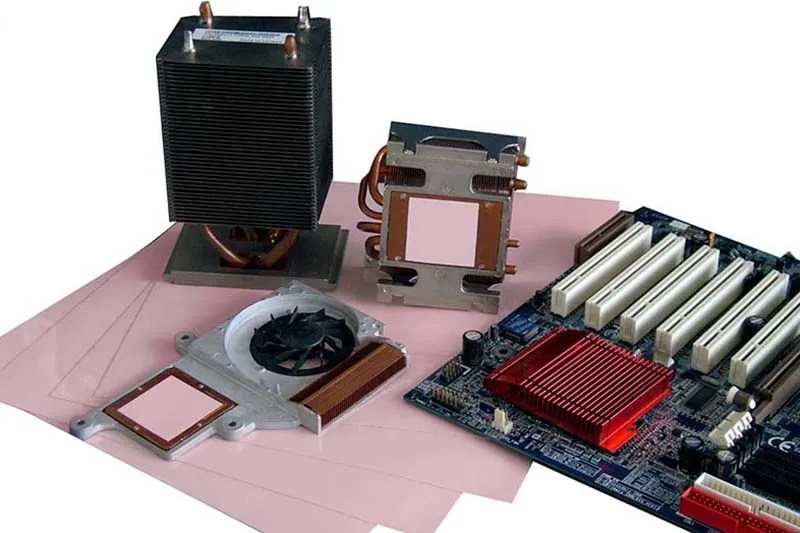
When PCM sheets meet heat sinks in consumer electronics, you get cooling that works harder during short bursts. Think gaming spikes, 4K streaming, or fast charging.
· PCM absorbs latent heat fast
· Cooling peaks are flattened
· Devices last longer under stress
Why it works:
· Heat rises from chips.
· The sheet stores excess energy.
· The sink releases it gradually.
This mix delivers cost-effective phase change solutions that feel practical, not flashy. It’s phase change cooling made affordable. And yes, phase change solutions like this are cost smart because you upgrade materials, not the whole system.
PCM Films Integrated into Liquid Cooling for Data Centers
Inside data centers, PCM films are added directly into liquid cooling paths. The setup looks layered:
Cooling Loop
1.1 Coolant absorbs server heat
1.2 PCM films capture thermal spikes
Control Layer
2.1 Sensors track heat transfer
2.2 Flow adjusts in real time
Efficiency Output
3.1 Lower chiller load
3.2 Better energy efficiency
The International Energy Agency noted in its 2025 data center update that advanced thermal storage integrated with liquid systems can significantly reduce peak cooling demand in high-density facilities.
That’s cost-effective phase change solutions in action—steady temps, lower bills, smarter phase change storage.
PCM Gels Paired with Vapor Chambers in 5G Infrastructure
In 5G infrastructure, heat is tight and brutal. Pair PCM gels with vapor chambers, and the flow changes:
· Spread heat fast through the chamber.
· Store it briefly in the gel.
· Release slowly into the chassis.
Result? Stronger thermal management for high power telecom gear. This phase change solution is compact, flexible, and cost-effective. It keeps towers steady without bulky add-ons.
PCM Pellets in Conduction Cooling for High-Power Semiconductors
For power electronics and high-power semiconductors, PCM pellets slip into conduction cooling stacks through layered integration:
Thermal Interface Path
1.1 Chip surface
1.2 Interface pad
1.3 Embedded PCM pellets
Heat Flux Control
2.1 Rapid absorption
2.2 Reduced peak heat flux
Reliability Gains
3.1 Less thermal cycling
3.2 Improved reliability
Cost-effective phase change solutions here mean fewer failures and longer service life. It’s a straightforward phase change approach that keeps budgets under control.
Microencapsulated PCM Foams for LED Arrays
Microencapsulated PCM foams slide neatly into LED arrays where space is tight and weight matters.
• Porous structure boosts heat dissipation
• Lightweight build supports slim fixtures
• Stable capsules protect against leakage
The foam acts like a quiet buffer. Short heat bursts get absorbed. Light output stays stable. Lifetime improves.
That’s cost-effective phase change solutions done right—affordable phase change materials, smart storage, and everyday thermal management that just works.
Solar Thermal Storage: 5 PCM Applications
Solar heat is great—until you need it at night. That’s where Cost-effective phase change solutions step in. By blending smart materials with practical design, these systems turn sunlight into steady, usable warmth or cooling without blowing the budget.
Residential Heating: Bio-based PCMs in PCM Pastes
In Residential settings, Bio-based Phase Change Material blends are reshaping Heating strategies through adaptable PCM Pastes and reliable Thermal storage.
Key value layers:
· Material level:Plant-derived compounds,Tuned melting ranges.
· Application level:Wall cavities,Floor systems.
· Performance level:Long cycle life,Minimal degradation.
This is where Cost-effective phase change solutions shine: low upfront complexity, steady returns. Think cost effective PCM blends that work quietly in the background. For homeowners, cost effective phase change storage simply feels practical.
Utility-Scale Plants: Salt Hydrates in Macroencapsulated Modules
In Utility-scale Power plants, Salt hydrates inside Macroencapsulation Modules boost Thermal energy storage capacity.
Core structure:
· Module design:Encapsulated salt core,Protective shell.
· Plant integration:Linked to turbines,Dispatch scheduling.
· Grid outcome:Peak shaving,Stable supply.
These Cost-effective phase change solutions help large operators balance output without overspending.
Greenhouse Climate Control with Fatty Acid PCM Gels
For Greenhouse Climate control, Fatty acids in PCM Gels support Agriculture and tight Temperature regulation.
Process flow:
· Daytime heat absorption
· Phase transition storage
· Nighttime heat release
Cost effective thermal storage here means fewer surprise frost losses. Cost-effective phase change solutions make controlled growing less stressful.
Industrial Process Heat Storage Using Eutectic Mixtures
In Industrial processes, Eutectic mixtures enable precise Heat storage and controlled Thermal energy recovery.
Nested implementation path:
· Manufacturing line:Heat capture units,PCM containment.
· Energy recovery loop:Storage tanks,Timed discharge.
· Operational gains:Fuel savings,Emission cuts.
This form of cost effective phase change storage keeps production steady without massive retrofits.
Solar Cooling Systems Employing Paraffin Wax PCM Sheets
Solar cooling and Cooling systems benefit from Paraffin wax PCM Sheets paired with Air conditioning and Renewable energy inputs.
System logic:
· Absorb midday heat spikes.
· Delay heat transfer indoors.
· Reduce compressor workload.
Here again, Cost-effective phase change solutions translate to cooler interiors and lower bills. Cost effective PCM sheets may look simple, yet the impact on peak load reduction is anything but small.
Levelized Cost Comparison Of Top 5 PCMs
Cost-effective phase change solutions are no longer niche. Energy users want lower bills, stable latent heat storage, and fewer surprises during thermal cycling. Breaking down Cost-effective phase change solutions into cost effective + phase change + solutions helps clarify what really drives pricing. Material cost, encapsulation, durability, and lifecycle efficiency all shape the final levelized cost of cost effective PCM systems.
Paraffin Waxes
When discussing Cost-effective phase change solutions, hydrocarbons like alkanes dominate entry-level markets.
Material Foundation
· Derived from petroleum fractions
· Stable liquid-solid transition behavior
· Predictable melting temperature
Cost Drivers
A. Raw Material
· Abundant supply keeps $/kg low
· Refined grades cost more
B. Performance Factors
· Moderate latent heat storage
· Strong thermal stability under repeated solidification
C. System Add-ons
· Encapsulation improves leakage control
· Enhances long-term cost-effective phase change solutions
Levelized Cost Snapshot
· Low upfront material cost
· Minimal degradation
· Competitive cost per kWh-th over lifecycle
For practical cost effective phase change installations, paraffin remains the “safe bet” option.
Salt Hydrates
Inorganic compounds used in Cost-effective phase change solutions often deliver higher storage density.
· High hydration enthalpy
· Risk of supercooling
· Possible incongruent melting
Performance and Cost Comparison:
| Property | Typical Range | Cost Impact | Lifecycle Effect |
| Energy Density (kWh/m³) | 150–250 | Lowers storage volume | Positive |
| Raw Material Cost ($/kg) | 0.8–2.5 | Lower than fatty acids | Positive |
| Stabilization Adders (%) | 3–10 | Raises CAPEX | Neutral |
| Thermal Cycling Stability | 1,000–5,000 cycles | Maintenance sensitive | Mixed |
Key economic considerations:
· Manage crystallization with proper nucleation agents.
· Control corrosion in containment systems.
· Optimize encapsulation to sustain Cost-effective phase change solutions long term.
When balanced right, salt hydrates offer cost-effective thermal storage with strong energy density per dollar.
Fatty Acids
Organic acids with clear phase transition points.
Derived from renewable carboxylic acids.
Often labeled biodegradable and partly renewable.
Higher raw input pricing nudges up system cost. Yet steady thermal properties reduce surprises. Some grades show mild flammability, so enclosure design matters. Through esterification, blends can be tuned for cost-effective phase change solutions in mid-range temperature bands.
Short story? Stable, clean, slightly pricier.
Eutectic Mixtures
Creating cost effective phase change materials from a binary system or ternary system takes careful sequencing:
Step 1: Map the phase diagram to locate the ideal melting point.
Step 2: Adjust composition for congruent melting behavior.
Step 3: Test under accelerated thermal cycling.
Step 4: Integrate into composite materials if conductivity needs a boost.
This tuning allows tailored Cost-effective phase change solutions. Complexity can raise formulation cost, yet scalability improves once ratios stabilize. For custom temperature windows, eutectics strike a practical balance.
Bio-based PCMs
Cost-effective phase change solutions are shifting toward renewable resources.
Source Base
· Plant-derived oils
· Animal-derived fats
· Other biomass streams
Sustainability Metrics
A. Reduced environmental impact
B. Use of natural compounds
C. High biodegradable potential
Economic Reality
· Feedstock price volatility
· Processing refinement costs
· Limited mass-scale supply
Even so, cost-effective phase change technologies built on sustainable materials attract green building projects. Over time, scale could narrow the price gap, making bio options serious players in long-term cost-effective phase change solutions.
Sheen Thermal
Dongguan Sheen Electronic Technology Co., Ltd · Founded in 2008
Manufacturer of thermal interface materials and silicone foam for automotive electronics, energy storage, power electronics, communications and consumer electronics.
Certified
- ISO 9001:2015
- ISO 14001:2015
- IATF 16949:2016
What we supply
- Thermal conductivity Up to 90 W/m·K
- Thickness 0.3–10.0 mm
- Custom & samples Die-cut to drawing, 3–7 days