
 English
 usheenthermal

A Practical Guide: Judgment of Phase Change Material Failure Analysis
Date:2026-06-10
A Practical Guide: Judgment of Phase Change Material Failure Analysis
Judgment of phase change material failure hits when devices run hot, warranties spike, and cooling promises quietly slip.
IEA and Gartner research highlight growing thermal strain in dense electronics, pointing to material reliability as a persistent procurement risk.
This guide helps buyers spot failure early, avoid misreads, and choose steadier PCM partners today.
Quick Answers: Judgment of Phase Change Material Failure
· Inspect material composition variance to spot melting‐point shifts and latent‐heat loss.
· Monitor thermal cycling degradation—track phase separation and capacity drop over repeated use.
· Check interface bonding integrity to prevent delamination and rising thermal resistance.
· Employ combined tests (DSC, in-situ stress profiling, embedded sensors) for early failure detection.
3 Key Factors In Judgment Of Phase Change Material Failure
Understanding the Judgment of phase change material failure is not just lab talk; it’s how engineers avoid costly rework and product recalls. When phase change materials start acting weird, performance drops fast. Below are the three drivers behind reliable phase change material failure analysis and smarter failure judgment.
Material Composition Variance and Its Impact
When running a proper Judgment of phase change material failure, material composition is ground zero.
· Inconsistent purity shifts melting behavior
· Poorly dispersed additives disturb homogeneity
· Weak chemical stability speeds up aging
At a deeper level:
· Raw inputs:Measure impurity percentage,Screen reactive contaminants.
· Mixing stage:Monitor dispersion uniformity,Prevent early phase separation.
· Final validation:Confirm melting plateau,Compare latent heat stability.

A slight deviation in blend ratio can throw off the entire Judgment of phase change material failure, especially when long-term storage is involved. That’s why Sheen Technology puts tight tolerance windows on incoming material verification—because small chemistry shifts create big thermal surprises.
Short version? If the chemistry drifts, the performance drifts.
Thermal Cycling Degradation Over Time
No serious Judgment of phase change material failure skips thermal cycles testing. Repeated melting and solidification stress internal structure, triggering fatigue, unstable crystallization, and gradual degradation of latent heat.
Key degradation chain:
Thermal exposure
· Volume fluctuation
· Repeated volume change
· Internal stress buildup
· Micro-cracks formation
Structural response
· Crystal disorder:Partial phase segregation
· Performance outcome:Reduced storage efficiency,Shifted melting temperature
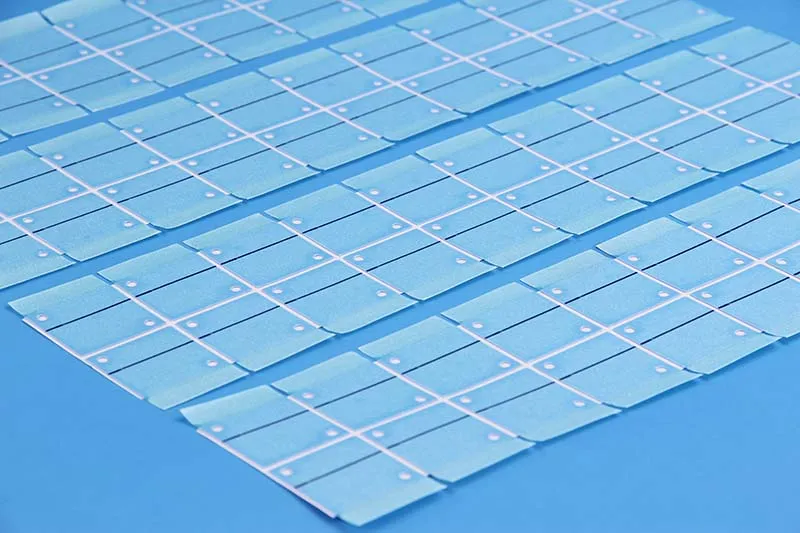
Sheen technology SP205A-60 phase change thermal sheet Reliability Test Report
| Test Items | Test Conditions | Test Equipment |
| High-Temperature Aging | 100℃,1000H | Precision Oven |
| Constant Temperature & Humidity | 85℃、85%RH,1000H | Constant Temperature & Humidity Chamber |
| Thermal Shock | -20℃~80℃,1000H | Constant Temperature & Humidity Chamber |
Criteria for Judging Test Results
| Performance Parameter | Initial Value | Acceptance Criteria |
| Thermal Conductivity(W/m*K) | 6.07 | ±30% |
| Thermal Resistance(℃*in²/W,@10 psi) | 0.082 | ±40% |
| Appearance | Smooth surface, uniform color | No abnormalities (e.g., powdering, discoloration) |
High-Temperature Aging Test Results
| High-Temperature Aging Test Record Sheet | |||||||||
| Aging Time | H | 0 | 200 | 400 | 600 | 800 | 1000 | Change | Assessment |
| Thermal Conductivity | W/m*k | 6.07 | 5.74 | 5.45 | 5.25 | 5.08 | 5.00 | -17.6% | OK |
| Thermal Resistance | ℃*in²/W,@10 psi | 0.082 | 0.084 | 0.089 | 0.095 | 0.102 | 0.107 | +30.5% | OK |
| Appearance | / | No change | No change | No change | No change | Slightly yellow | Slightly yellow | Slightly yellow | OK |
Constant Temperature and Humidity Test Results
| Constant Temperature and Humidity Test Record Sheet | |||||||||
| Aging Time | H | 0 | 200 | 400 | 600 | 800 | 1000 | Change | Assessment |
| Thermal Conductivity | W/m*k | 6.07 | 5.81 | 5.50 | 5.31 | 5.22 | 5.09 | -16.1% | OK |
| Thermal Resistance | ℃*in²/W,@10 psi | 0.082 | 0.090 | 0.094 | 0.098 | 0.101 | 0.105 | +28.0% | OK |
| Appearance | / | No change | No change | No change | No change | Slightly yellow | Slightly yellow | Slightly yellow | OK |
Thermal Shock Test Results
| Thermal Shock Test Record Sheet | |||||||||
| Aging Time | H | 0 | 200 | 400 | 600 | 800 | 1000 | Change | Assessment |
| Thermal Conductivity | W/m*k | 6.07 | 5.72 | 5.50 | 5.33 | 5.18 | 5.07 | -16.5% | OK |
| Thermal Resistance | ℃*in²/W,@10 psi | 0.082 | 0.086 | 0.092 | 0.099 | 0.105 | 0.110 | +34.1% | OK |
| Appearance | / | No change | No change | No change | No change | Slightly yellow | Slightly yellow | Slightly yellow | OK |
Test Conclusion: After aging for 1000 hours under various conditions, the SP205A-60 phase change thermal sheet maintained satisfactory performance with no changes to its appearance. Therefore, the reliability test results are deemed satisfactory.
Need exact latent heat retention, thermal conductivity, hardness, and aging-test details before you choose? Download the product datasheets to compare phase change material options for failure analysis.
During Judgment of phase change material failure, engineers track these shifts closely. A drop below 85% retention usually flags early functional failure in energy storage systems. That’s also where Sheen Technology runs accelerated cycling to predict service life before customers ever see a problem.
Thermal fatigue doesn’t shout. It creeps.
Interface Bonding and Adhesion Issues
A clean Judgment of phase change material failure must inspect the interface between PCM and substrate. Weak bonding or poor adhesion increases thermal resistance and invites trouble.
Watch for:
· Incomplete encapsulation
· Surface contamination
· Early leakage
Failure progression tends to unfold like this:
· Shear stress at interface:Micro-gap formation,Local heat blockage.
· Repeated cycling:Crack growth,Surface lift.
· Structural breakdown:Delamination,Loss of mechanical integrity.
Sometimes the PCM works fine chemically, yet the system fails because adhesion gives up. That’s why phase change material failure analysis must look beyond chemistry and into structural fit.
In practical Judgment of phase change material failure, engineers test peel strength, thermal resistance rise, and leakage mass loss together. A material can pass melting tests and still fail in application if the bonding layer cannot withstand stress.
At the end of the day, failure judgment is simple in theory: chemistry, cycling, and interface. Miss one, and the whole evaluation falls apart.
Why Does PCM Failure Occur?
Understanding the Judgment of phase change material failure is not just lab talk—it’s practical survival for any thermal system. When phase change material failure judgment is off, energy storage drops and costs creep up. Let’s break down the real causes behind PCM breakdowns and how smart diagnostics, including Sheen Technology solutions, keep failure analysis honest and actionable.
Latent Heat Capacity Loss After Repeated Cycles
The Judgment of phase change material failure often starts with tracking latent heat decline under heavy thermal cycling. Small shifts stack up fast.
Key warning signs:
· Reduced heat capacity
· Slower phase change
· Noticeable performance loss
In practical phase change material failure judgment, engineers usually follow a nested check path:
Cycle Stability Review
1.1 Monitor energy storage output
1.2 Compare baseline vs. current cycle stability
1.3 Identify material degradation
Thermal Response Testing
2.1 Heating ramp consistency
2.2 Cooling curve deviations
2.3 Repeatability across 50–100 cycles
Failure Confirmation
3.1 Verify reduced latent heat
3.2 Cross-check with microstructural scan
When done right, the Judgment of phase change material failure avoids guesswork and keeps systems running longer.
Microstructure Instability and Phase Segregation
Hidden inside the material, microstructure shifts quietly to reshape behavior. Over time, phase segregation breaks homogeneity, weakening material integrity.
For accurate Judgment of phase change material failure, teams often examine:
Structural Integrity Mapping
1.1 Analyze crystal structure shifts
1.2 Detect material instability zones
1.3 Track morphology drift
Phase Distribution Study
2.1 Identify phase separation layers
2.2 Evaluate melting unevenness
2.3 Compare cross-sectional consistency
Risk Evaluation
3.1 Predict future performance loss
3.2 Recommend stabilization strategy
A sharp phase change material failure judgment ties micro-level flaws to macro-level heat response. Sheen Technology supports this workflow with precision thermal diagnostics that make small defects visible before they snowball.
Contaminant Ingress and Chemical Degradation
Sometimes the troublemaker is outside the system. A tiny contaminant can spark chemical degradation, and that shifts everything.
Common triggers:
· Impurity buildup
· Oxidation exposure
· Moisture-driven corrosion
In structured Judgment of phase change material failure, analysis moves like this:
Environmental Audit
1.1 Assess sealing condition
1.2 Measure oxygen exposure
1.3 Track humidity trends
Chemical Reaction Screening
2.1 Detect byproduct formation
2.2 Evaluate material integrity decline
2.3 Confirm irreversible chemical reaction
Stability Conclusion
3.1 Rate degradation severity
3.2 Plan material replacement or purification
A solid Judgment of phase change material failure always checks environmental factors—skipping that step is asking for repeat failures.
Unexpected Thermal Stress and Fatigue
Rapid swings in temperature create intense thermal stress. Over time, repeated stress cycles lead to material fatigue, cracking, or leakage.
For reliable phase change material failure judgment, inspection typically includes:
Stress Mapping
1.1 Measure thermal expansion mismatch
1.2 Locate peak mechanical stress zones
1.3 Evaluate boundary constraints
Damage Detection
2.1 Surface cracking scan
2.2 Internal void inspection
2.3 Seal integrity review
Structural Verdict
3.1 Confirm structural integrity loss
3.2 Determine the need for repair or redesign
The Judgment of phase change material failure becomes far more accurate when stress behavior is modeled alongside thermal data. That’s where Sheen Technology steps in—combining stress analysis with real-world cycling insight so failure doesn’t catch you off guard.
Thermal Vs. Mechanical Failure: Which Dominates?
Phase change materials don’t just fail out of nowhere. The Judgment of phase change material failure depends on tracking heat behavior and structural stress over time. A sharp phase change material failure judgment blends lab data with real world wear. Getting the Judgment of phase change material failure right keeps systems stable and budgets intact.
Thermal Failure
The Judgment of phase change material failure under heat stress usually unfolds like this:
Temperature cycling impact
· Repeated Temperature cycling:Causes Phase separation,Triggers Supercooling.
· Long exposure:Leads to Thermal degradation,Results in Latent heat loss.
Property drift
· Melting point shift
· Drop in Heat transfer efficiency
Performance data snapshot
| Cycle Count | Latent Heat (J/g) | Melting Point (°C) | Efficiency (%) |
| 0 | 210 | 28.0 | 98 |
| 500 | 198 | 27.4 | 93 |
| 1000 | 182 | 26.8 | 88 |
When numbers slide like this, the Judgment of phase change material failure becomes clear.
“Thermal stability remains the primary limiter in PCM commercialization,” noted the IEA Energy Storage Outlook 2025.
Mechanical Failure
Heat isn’t the only troublemaker. Mechanical stress builds quietly.
· Volume change during melt–freeze cycles
· Declining Encapsulation integrity
· Surface Cracking and slow Leakage
Here’s how the Judgment of phase change material failure works in practice:
· Inspect casing for Delamination.
· Measure deformation linked to Stress accumulation.
· Test durability under Cyclic loading to detect Material fatigue.
Short signs show up fast. Hairline cracks. Sticky residue. Warped panels.
For many clients, Sheen Technology runs accelerated compression tests to refine the Judgment of phase change material failure before deployment. In field audits, Sheen Technology often finds mechanical damage hiding behind stable thermal data.
In plain terms, thermal issues reduce storage capacity; mechanical damage risks sudden breakdown. Accurate Judgment of phase change material failure means checking both—because dominance depends on operating conditions, not guesswork.
Need a closer match for your project? Browse these related application pages to see where phase change materials are used in real systems.
Electronics Cooling: Phase Change Material Failure
High-power electronics run hot, and when cooling slips, performance drops fast. This guide unpacks the Judgment of phase change material failure by breaking it into practical checks engineers actually use, while keeping thermal talk real and grounded.
Overheating Hotspots in High-Power Devices
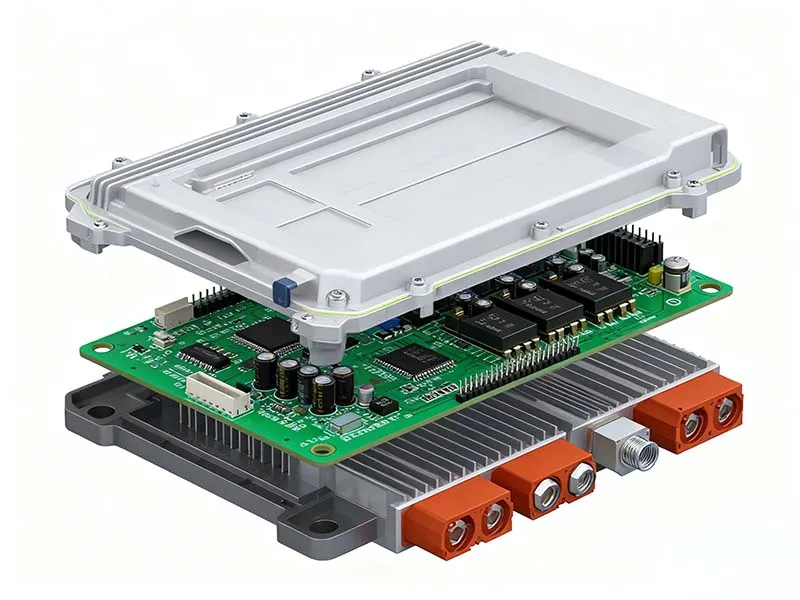
When overheating strikes high-power devices, the junction temperature spikes beyond what thermal management planned for. That’s where proper Judgment of phase change material failure begins.
Quick warning signs:
· Sudden hotspots
· Uneven heat dissipation
· Rising fan speed with no load change
Device level
1.1 Chip scale
· Monitor electronics temperature gradients
· Compare peak vs. average case temp
1.2 Module scale
· Check PCM melt spread
· Inspect void formation
If melt zones stay partial after peak load, that’s a red flag in phase change material failure analysis. Sheen Technology recommends logging three thermal cycles before confirming a judgment call.
“Thermal density in power electronics continues to rise, increasing localized failure risk,” notes a 2025 IDC hardware reliability brief.
Phase Segregation in Cooling Modules
Repeated thermal cycling can drive phase segregation inside cooling modules, shifting the microstructure and lowering usable latent heat.
Key checkpoints for the Judgment of phase change material failure:
· Material layer:Crystal separation,Binder migration.
· Performance layer:Drop in thermal performance,Delayed melting onset.
Over time, PCM degradation sneaks in quietly. One day the module looks fine; the next, thermal uniformity is off by a few degrees. That small drift adds up. Smart phase change material diagnostics track melt consistency, not just peak temp. Sheen Technology integrates this into routine reliability screening.
Pressure-Driven Leak Paths
Internal pressure builds during expansion. If PCM containment or encapsulation is weak, leak paths form.
Steps engineers follow:
· Inspect packaging seams
· Measure casing deformation
· Test sealing integrity
Under mechanical stress, even slight material fatigue can reduce material integrity. The Judgment of phase change material failure here focuses on volume loss and surface residue. A clean housing should stay clean—simple rule.
Long-Term Thermal Conductivity Decline
Aging changes material stability. Thermal conductivity doesn’t crash overnight; it slowly declines, increasing thermal resistance and weakening heat transfer.
Look for:
· Rising steady-state temperature
· Longer cool-down time
· Irregular melt-solid cycles
Long-term PCM degradation is subtle but measurable. Good phase change material diagnostics compare year-one and year-three conductivity curves. That’s how Judgment of phase change material failure becomes data-backed instead of guesswork, something Sheen Technology actively supports in lifecycle validation.
Avoid Misdiagnosis With Combined Test Strategies
Accurate Judgment of phase change material failure is rarely about one test result. It’s about connecting signals—thermal shifts, strain patterns, sensor data—so small warning signs don’t slip by. Miss one clue, and phase change material failure can quietly grow into a system breakdown.
Differential Scanning Calorimetry: Correlating Heat Flow to Degradation
Reliable Judgment of phase change material failure often begins with calorimetry and sharp thermal analysis. Tracking heat flow and enthalpy shifts helps spot hidden degradation before visible cracks appear.
Thermal Signal Review
· Transition temperature drift
· Reduced peak heat flow
· Irregular phase change curves
Stability Mapping
· Compare baseline vs aged samples
· Flag abnormal enthalpy loss
· Link anomalies to early material failure
| Sample | Transition Temperature (°C) | Enthalpy (J/g) | Degradation Index |
| A-New | 28.4 | 185 | 0.02 |
| A-500c | 26.9 | 162 | 0.15 |
| A-1000c | 25.8 | 141 | 0.27 |
This layered reading tightens the Judgment of phase change material failure, turning lab data into practical decisions.
Mechanical Stress Testing with In-Situ Thermal Profiling
Thermal data alone won’t cut it. Add mechanical stress, controlled load, and track strain with synchronized thermal profiling.
· Apply cyclic deformation
· Capture real-time temperature rise
· Correlate stress points with thermal spikes
When thermal gradients line up with strain hotspots, the Judgment of phase change material failure becomes clearer. Subtle softening under repeated load often signals approaching material breakdown.
“Advanced in-situ material diagnostics are reducing unplanned downtime across thermal management systems,” noted a 2025 materials reliability outlook from MarketsandMarkets, pointing to integrated thermo-mechanical validation as a growth driver.
For teams using Sheen Technology platforms, synchronized in-situ testing data streams shorten diagnosis cycles and reduce guesswork in phase change material failure analysis.
Embedded Sensor Monitoring for Real-Time Diagnostics
Continuous insight sharpens the Judgment of phase change material failure beyond lab conditions.
Sensor Layer
· Embedded sensors for core temperature
· Strain gauges for micro-deformation
Data Layer
· Live data acquisition
· Trend alarms for abnormal performance
Decision Layer
· Predictive diagnostics
· Reliability scoring against baseline
When sensor data shows gradual efficiency loss or uneven thermal distribution, early-stage phase change material failure becomes visible. That’s how real-time monitoring supports consistent Judgment of phase change material failure, keeping reliability high and surprises low—exactly the performance standard promoted by Sheen Technology.
【Request a Custom Quote】 Not sure which phase change material fits your application? Send us your target operating temperature, thickness target, cycle profile, and performance requirements, and we can help recommend the right thermal solution for your project.
Sheen Thermal
Dongguan Sheen Electronic Technology Co., Ltd · Founded in 2008
Manufacturer of thermal interface materials and silicone foam for automotive electronics, energy storage, power electronics, communications and consumer electronics.
Certified
- ISO 9001:2015
- ISO 14001:2015
- IATF 16949:2016
What we supply
- Thermal conductivity Up to 90 W/m·K
- Thickness 0.3–10.0 mm
- Custom & samples Die-cut to drawing, 3–7 days