
 English
 usheenthermal

Sourcing Custom Manufacturers of Carbon Fiber Thermal Pads Fast
Date:2026-05-22
Sourcing Custom Manufacturers of Carbon Fiber Thermal Pads Fast
Your NPI clock is screaming: Custom manufacturers of carbon fiber thermal pads can’t read minds, and a fuzzy RFQ can torch your schedule.
Pads look simple, yet the trap is “headline” conductivity without through-plane impedance under compression, plus cut tolerances, compliance files, and packaging that arrives bent out of shape.
Authoritative market research keeps pointing the same way: the International Energy Agency’s 2025 global EV reporting and Omdia’s 2025 data-center outlook both track rising compute and electrification demand, pushing more heat into tighter enclosures—so sourcing speed now means fewer re-quotes, faster qualification, and suppliers ready for volume.
Quick Answers for Custom manufacturers of carbon fiber thermal pads
➔ Performance Specs: Define required in-plane/through-plane conductivity, thermal impedance under compression, and target operating temperatures for your application.
➔ Material Selection: Compare carbon fiber, graphite, graphene, and polymer matrix options for anisotropic heat flow, dielectric needs, and mechanical stability.
➔ Fabrication & Tolerances: Verify precision cutting (CNC, laser, die-cut), thickness tolerances, edge quality, and compressibility for reliable surface contact.
➔ Supplier Readiness: Preapprove ISO-certified vendors, confirm RoHS/REACH compliance, negotiate MOQ and lead times, and secure safety stock for rush orders.
Sourcing Fast: Custom Carbon Fiber Thermal Pad Checklist
If you’re chasing cooler temps without babysitting a redesign, start with clear targets, then pick materials that behave the way your stack-up needs. This checklist keeps talks with custom manufacturers tight and practical. It also helps Custom manufacturers of carbon fiber thermal pads quote faster, sample faster, and ship faster.
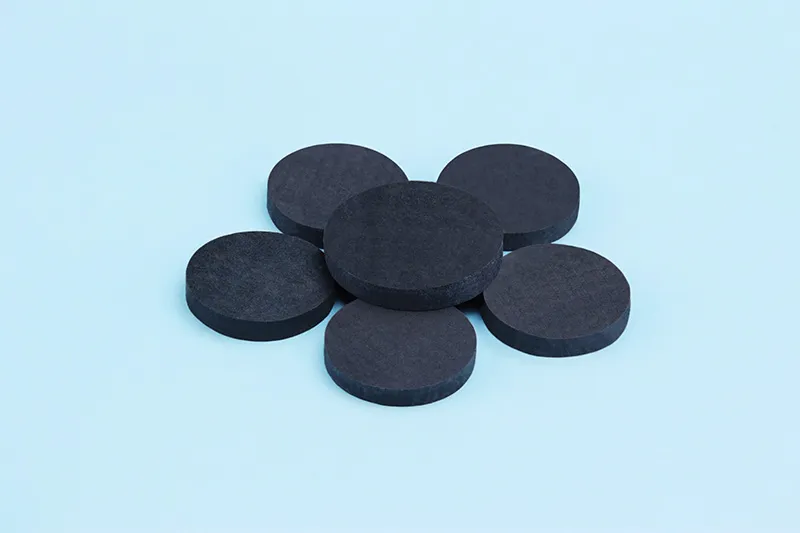
Define Your Thermal Performance Requirements
· Custom manufacturers of carbon fiber thermal pads move quicker when your ask is concrete, not vibes.· Thermal management target (what “good” looks like)
Use-case mapping
· Power electronics: high power density, short spikes, ugly hotspots
· LEDs: steady heat, color shift risk, strict operating temperature
· CPUs/GPUs: fast transients, high heat flux, thin gaps
· Battery packs: large-area heat dissipation, safety limits
Stack-up constraints
· Interface count, flatness, mounting load
· Performance numbers that drive selection
Core specs
· thermal conductivity (direction matters)
· thermal resistance through the pad
· allowable thermal impedance across the full stack
Practical add-ons
· max clamping pressure, dielectric needs, contamination limits
What to hand a vendor like Sheen Technology
· CAD + gap map + load window
· Test method preference, so comparisons aren’t apples-to-oranges
Confirm Material Options: Carbon Fiber vs. Graphite
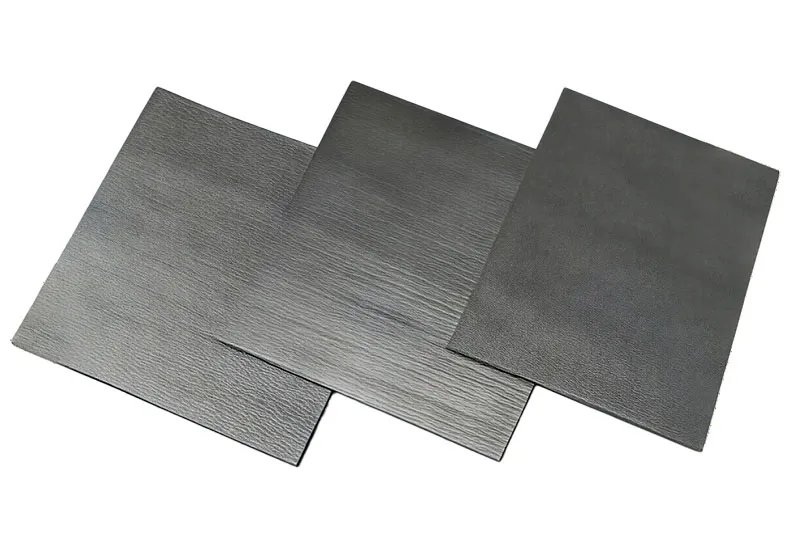
Carbon fiber can keep its shape and take handling abuse, while graphite often wins on in-plane spreading; the trick is matching the heat path to your mechanics. For material selection, ask for real material properties in the directions you’ll use, not a single headline number.
· carbon fiber pads: solid structure, good durability, easier kitting for repeat builds
· graphite sheets: strong lateral spreading, but can be fragile at edges
· thermal interface material alternatives when rules get strict: polymer TIMs for dielectric strength, or composite materials (graphite + binder) for better conformity
· For material comparison, request anisotropy notes, handling limits, and how parts age after cycling
If you’re vetting Custom manufacturers of carbon fiber thermal pads, confirm what “carbon” means in their manufacturing process—woven, chopped, or composite.
Evaluate Pad Characteristics: Thickness and Compressibility
Pick pad thickness to fill the real gap, not the “nominal” drawing gap.
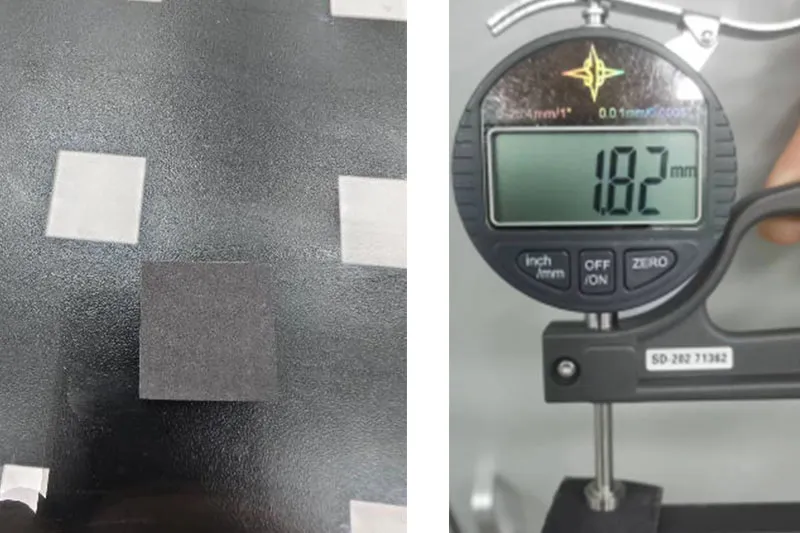
CSF20 Carbon Fiber Thermal Pad Compression Recovery Test Data:
| Test Item | Test Equipment | Test Conditions |
| Recovery Rate | Compression Recovery Tester | Compressed by 50% for 30 minutes, followed by a 30-minute rest period. |
Test Data:
| D0: Initial Thickness(mm) | 2.02 |
| D1: Thickness After Compression(mm) | 1.01 |
| D2: Thickness After Rest(mm) | 1.82 |
| Recovery Rate(%) | 80.4 |
Fit and thermal tradeoff
· Thicker can hide tolerance stack, yet raises through-plane thermal resistance
· Thinner cuts resistance, yet risks air pockets if flatness is poor
· Use measured gap data; don’t guess from enclosure models
Mechanics that keep contact honest
· Compressibility window:Enough to wet out surfaces, not so soft that clamp load drifts
· Conformability for imperfect parts:Match to surface finish and warpage
Stability items
· pressure distribution over bosses, ribs, and frames
· Reusability after service pulls; watch set and creep
· Validate mechanical properties after thermal cycling, not just day-one
This is where carbon fiber thermal pads succeed or fail in the field.
Streamline Lead Time with Preferred Suppliers
Speed comes from less back-and-forth with supplier selection, not from rushing the build.Pre-approve what you can
Material spec pack
· Standard thicknesses and die-cut outlines
· Approved alternates for supply shocks
Capacity and routing
· Verify production capacity by region
· Backup lane for global constraints, tied to delivery schedule
Sampling and ramp
· Fast prototyping path: stock forms → quick cuts → pilot run
Supply chain optimization basics
· Buffer inventory on your top two sizes
· Lock packaging and labeling early for clean receiving
If Sheen Technology is on your short list of Custom manufacturers of carbon fiber thermal pads, ask for standard form factors and ready-to-ship blanks; it cuts quoting time and keeps lead time from ballooning.
Need a closer match for your project? Browse these related application pages to see where carbon fiber thermal pads are used in real production environments.
5 Key Steps to Vet Custom Manufacturers of Carbon Fiber Thermal Pads
Finding custom manufacturers of carbon fiber thermal pads is easy; picking the right one is where projects get messy. Split the keyword into bite-size checks—custom, manufacturers, carbon fiber, thermal pads—and test each part in real life. The goal is simple: stable heat paths, clean cuts, solid paperwork, and a supplier that answers you like a human.
Step 1: Verify Supplier Qualification and ISO Certification
For custom manufacturers of carbon fiber thermal pads, supplier qualification is your “prove it” moment, not a checkbox.
ISO certification and quality management
· Ask for ISO 9001 scope pages that match the actual product family (not vague “thermal materials”).
· Request last audit dates plus internal auditing routines tied to industry standards.
Vendor assessment and compliance
· Confirm incoming inspection rules for fiber, resin, and adhesive lots; link each to compliance records.
· Check how nonconforming pads are quarantined, tagged, and dispositioned (rework vs scrap).
Traceability that doesn’t fall apart
· Material certs should map to PO → lot → roll/sheet → finished pad labels.
· Ask for documented dimensional accuracy metrics (Cp/Cpk or pass-rate by feature).
If you need fast iteration, pick a partner like Sheen Technology that can back custom specs with responsive tech support.
Step 2: Assess Thermal Conductivity and Heat Dissipation Data
You’re not buying a vibe; you’re buying thermal conductivity and predictable heat transfer from hotspot to sink. For custom manufacturers of carbon fiber thermal pads, ask for performance data that matches your clamp load and surface finish.
Confirm directionality: in-plane vs through-plane material properties.
· Check testing methods: ASTM/ISO references, sample thickness, pressure, and temperature.
· Tie it to your design: power density, contact pressure, and target thermal resistance.
· Do quick data analysis: compare what’s promised vs what was measured under compression.
Sheen technology carbon fiber thermal pad properties:
| Product name | Color | Thermal Conductivity | Thermal Impedance (1mm,@20psi) | Thickness | Standard Hardness |
|---|---|---|---|---|---|
| Unit | - | W/m·K | ℃*in2/W | mm | Shore 00 |
| CSF15 | Black | 15.0 | 0.28 | 0.3 ~ 12.0 | 40/60±5 |
| CSF20 | Black | 20.0 | 0.18 | 0.3 ~ 12.0 | 40/60±5 |
| CSF25 | Black | 25.0 | 0.12 | 0.3 ~ 12.0 | 40/60±5 |
| CSF30 | Black | 30.0 | 0.10 | 0.3 ~ 12.0 | 40/60±5 |
| CSF35 | Black | 35.0 | 0.09 | 0.3 ~ 12.0 | 40/60±5 |
| CSF40 | Black | 40.0 | 0.08 | 0.3 ~ 12.0 | 40/60±5 |
| CSF45 | Black | 45.0 | 0.07 | 0.3 ~ 12.0 | 40/60±5 |
| Test Method | Visual | ASTM D5470 | ASTM D5470 | ASTM D374 | ASTM D2240 |
If the supplier can’t explain why numbers shift with thickness or pressure, keep shopping—many carbon fiber thermal pad suppliers hand-wave here.
Step 3: Review Manufacturing Processes and Precision Cutting Capabilities
With custom manufacturers of carbon fiber thermal pads, your CAD file is only half the story; the other half is manufacturing processes that can repeat cleanly at scale.
Process fit and production technology
Fabrication methods to verify:
· Die-cut for speed and consistent per-part cost.
· Laser for tight features but watch HAZ or edge fray.
· CNC for prototypes and odd geometries.
Ask what equipment is in-house vs outsourced (outsourcing adds lead-time surprises).
Tolerance and quality control
· Request tolerance bands by cut type (internal holes vs outside profile).
· Confirm edge quality specs: burr limits, fiber pull-out rules, and adhesive squeeze-out limits.
Tooling and customization
· Get the tooling plan: who owns dies, revision handling, and storage life.
· Confirm prototype-to-volume scaling: same process route, same inspection gates.
This is where “custom thermal pads” can quietly turn into “custom headaches” if precision cutting isn’t dialed in.
Step 4: Check RoHS/REACH Compliance and Reliability Testing
Paperwork matters, but reliability testing keeps returns off your desk.
Short checks that catch long-term pain:
· RoHS compliance: confirm any adhesives, release liners, and fillers are covered, not just the base pad.
· REACH regulations: ask for SVHC status updates on a schedule, not “on request.”
· Test protocols that reflect reality: thermal cycling range, dwell time, and real clamp load.
· Durability proof: compression set, aging drift in k-value, and peel/adhesion stability after heat soak.
If a vendor’s regulatory adherence is shaky, your whole build can get stuck at the dock.
Step 5: Negotiate Volume Requirements and Logistics Optimization
Even top custom manufacturers of carbon fiber thermal pads can stumble if volume requirements and shipping plans are fuzzy. Keep it practical.
CSF20 Carbon Fiber Thermal Pad Fatigue Resistance Test Data:
| Test Item | Test Equipment | Test Conditions | Product Model | Sample Thickness |
| Fatigue Resistance | Compression-Recovery Tester | Compressed at 20 psi for 40 cycles; pressure held for 3 minutes. | CSF20 | 1mm |
Test Data:
| Compression Cycles | 0 | 1 | 2 | 3 | 4 | 5 | 6 | 7 | 8 | 9 | 10 |
| Thickness(mm) | 1.00 | 0.980 | 0.975 | 0.970 | 0.969 | 0.968 | 0.966 | 0.968 | 0.968 | 0.970 | 0.966 |
| Compression Cycles | 11 | 12 | 13 | 14 | 15 | 16 | 17 | 18 | 19 | 20 | 21 |
| Thickness(mm) | 0.965 | 0.965 | 0.963 | 0.965 | 0.963 | 0.970 | 0.965 | 0.964 | 0.964 | 0.959 | 0.959 |
| Compression Cycles | 22 | 23 | 24 | 25 | 26 | 27 | 28 | 29 | 30 | 31 | 32 |
| Thickness(mm) | 0.958 | 0.958 | 0.956 | 0.954 | 0.96 | 0.962 | 0.950 | 0.958 | 0.957 | 0.950 | 0.958 |
| Compression Cycles | 33 | 34 | 35 | 36 | 37 | 38 | 39 | 40 | |||
| Thickness(mm) | 0.944 | 0.946 | 0.945 | 0.943 | 0.953 | 0.945 | 0.941 | 0.945 | |||
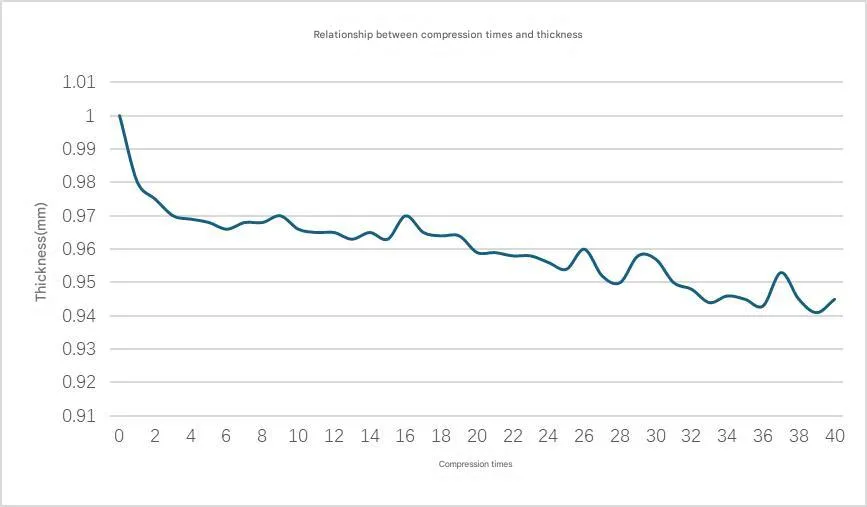
Conclusion: After undergoing 40 compression cycles at a pressure of 20 psi, the CSF20 carbon fiber thermal pad exhibited no significant deformation or cracking, and its thermal resistance did not increase; therefore, it meets the requirements for fatigue resistance.
Need exact thermal conductivity, thickness range, compressibility, and fatigue data before you choose? Download the product datasheets to compare carbon fiber thermal pad options for your build.
Quick negotiation points
· MOQ tied to your ramp, with step-down pricing once forecasts firm up.
· Clear delivery schedules with buffer stock rules for urgent builds.
Supply chain stuff that saves weekends
· Inventory planning: consignment or VMI for repeat SKUs.
· Transportation choices: air for first articles, ocean for steady-state.
· Logistics optimization: packaging that prevents edge crush and keeps pads flat.
If you’re scaling globally
· Map lanes for global distribution, then confirm incoterms and who handles customs docs.
For carbon fiber thermal pad manufacturers, this is where smooth replenishment is won—or lost.
Scenario: Emergency Rush Order for Thermal Pads
Need heat sorted out fast, with no drama at assembly. This rush playbook keeps specs tight, cutting quick, and shipping clean. It’s built for teams sourcing Custom manufacturers of carbon fiber thermal pads without losing sleep.
Fast-Track Material Selection with Prequalified Carbon Fiber
When material selection gets rushed, lock it down with prequalification and hard numbers; Sheen Technology keeps a short list for Custom manufacturers of carbon fiber thermal pads and similar builds.
carbon fiber / composite materials TIM checks
material specifications
· thickness and tolerance bands
· surface texture tied to contact quality
material properties
· compression set limits for repeat builds
Thermal proof points
· thermal conductivity and interface performance targets
· acceptance gates: thermal test coupons, dielectric pass/fail, incoming inspection
Quick cheat sheet for Custom manufacturers of carbon fiber thermal pads shopping under pressure:
| Thermal Conductive(W/m*K) | Pad thickness (mm) | Thermal resistance (°C*in²/W @ 20 psi) | Dielectric strength (kV/mm) | Recommended Selection |
| 15.0 | 0.3~12.0 | 0.28 | 0.1 | CSF15 |
| 30.0 | 0.3~12.0 | 0.10 | 0.1 | CSF30 |
| 45.0 | 0.3~12.0 | 0.07 | 0.1 | CSF45 |
Also fold in short-tail needs—custom manufacturers, carbon fiber thermal pads, and carbon fiber pads—so purchasing and QA stay aligned.
Expedited Custom Fabrication via CNC Machining
For custom fabrication, stick to what cuts clean today: CNC machining for tight features, or laser for flat profiles when time is nasty. Share CAD plus stack-up notes so precision engineering doesn’t turn into guesswork for Custom manufacturers of carbon fiber thermal pads.
Fast inputs that save hours
· STEP + DXF, critical dimensions, hole callouts
· surface finish and flatness targets tied to pad contact
Shop-floor reality checks
· pick a manufacturing process with minimal tooling
· confirm edge quality and burr control
· lock production methods for repeatability, even in “just 50 pieces” runs
If you’re comparing Custom manufacturers of carbon fiber thermal pads, ask for a cut sample and a simple compressibility note, not a long essay
Sheen Technology can turn around prototypes fast, but the win is keeping geometry stable so assembly torque doesn’t change your interface performance.
Rapid Delivery: Inventory Management and Shipping Solutions
Speed is mostly planning, not magic. For rapid delivery, treat inventory management and packing as part of the thermal spec when working with Custom manufacturers of carbon fiber thermal pads.
Supply chain setup
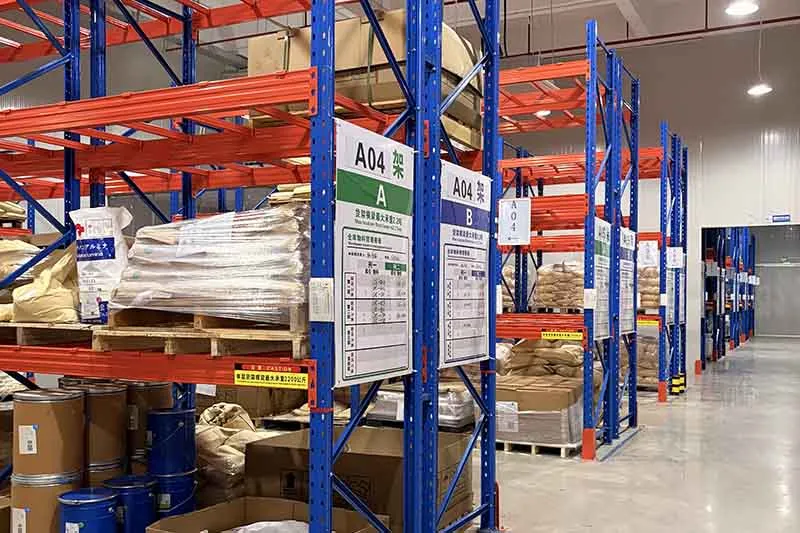
warehousing options
· supplier safety stock for common thicknesses
· regional hubs to shorten lanes
logistics choices
· express air for first lot
· economy for replenishment
Shipping execution
shipping solutions
· split shipments: “enough to build now” + “balance later”
· labeled lots tied to revision control
packing rules that protect the pad
· flat trays, no bend radius, no heavy stacking
· humidity barriers if the TIM spec calls it
This is the boring part that saves you: clean packaging keeps shape, shape keeps contact, and contact keeps temps down—exactly what Custom manufacturers of carbon fiber thermal pads get judged on.
【Request a Custom Quote】 Not sure which carbon fiber thermal pad fits your application? Send us your target thickness, operating temperature, heat load, and production volume, and we can help recommend the right thermal solution for your build.
Sheen Thermal
Dongguan Sheen Electronic Technology Co., Ltd · Founded in 2008
Manufacturer of thermal interface materials and silicone foam for automotive electronics, energy storage, power electronics, communications and consumer electronics.
Certified
- ISO 9001:2015
- ISO 14001:2015
- IATF 16949:2016
What we supply
- Thermal conductivity Up to 90 W/m·K
- Thickness 0.3–10.0 mm
- Custom & samples Die-cut to drawing, 3–7 days