
 English
 usheenthermal

Tired of Re-pasting? What Can a 0.3 mm Graphene Pad Do for Your PC
Date:2026-11-12
Fresh dusting. Fresh paste. For a few glorious weeks, the machine finally runs quiet. Then the games get longer, the renders get heavier, and the temperatures creep back up. The fans start clocking in overtime. Out comes the screwdriver. Off comes the cooler. Wipe, re-paste, re-mount, re-test. Thermal paste is the houseguest of PC cooling: it moves in quietly, dries out on its own schedule, and always makes you clean up after it.
Sometimes the comeback of heat is about dust, airflow, or a tired cooler. But when the whole system has been checked and the problem keeps returning, the thin layer squeezed between chip and heatsink deserves a second look. That is where Graphene thermal pads enter the conversation — users want the heat out, and they want fewer chores on the way.
For thermal management engineers, this implies a more specific objective: to identify an interface solution—within the constraints of the device’s allowable thickness and pressure—that balances thermal performance, ease of assembly, and long-term stability.
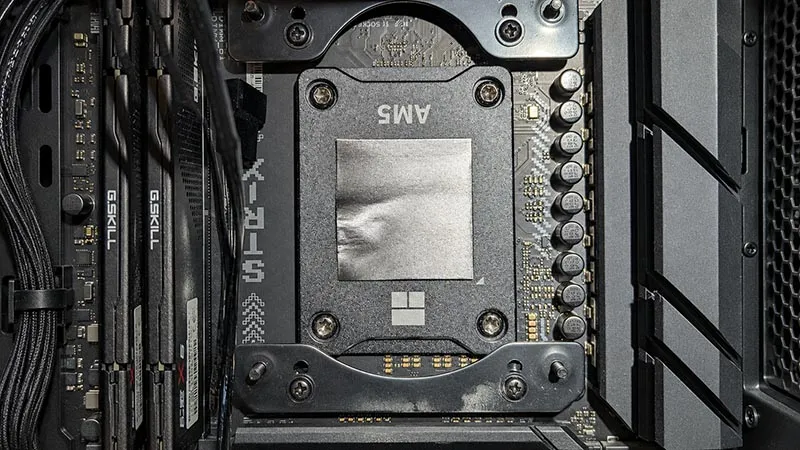
Figure 1. A CPU-and-cold-plate application scene. AI-generated illustration of the use context — not an actual GSF130-030 installation photo.
What Users Actually Buy: Not Just Degrees
Read through owner reviews of Graphene thermal pads and the motivations split into three camps:
- The temperature hunters, chasing a few more degrees at full load.
- The silence seekers, fed up with GPU fans spinning like jet engines.
- The maintenance minimalists — happy with their temperatures, they just never want to scrape off old paste again.
Two real user reports show why the story is bigger than one thermometer reading:
- A Ryzen 9 7950X3D owner swapped in another brand's Graphene sheet. At roughly 150 W load, CPU temperature moved from 77.1 °C to 76.1 °C. A small change, measured under different ambient conditions — yet it hints that “worth switching” often includes the convenience of never re-pasting, not only the degrees.
- A Core i7-14700K owner reported something stranger: some cores still touched 100 °C after switching, but the self-reported all-core average frequency rose from 3.6 GHz to 3.9 GHz, with power climbing from 165 W to 210 W. Unverified without a full test — but it teaches a selection mindset: when a CPU lives near its thermal limit, judge the interface by how much work the chip sustains, not only by the temperature number.
Both reports involve different products on different systems. They are not cooling promises for GSF130-030. For your own hardware, the honest comparisons are: lower temperature rise under identical load; sustained performance under the same temperature limit; or slower fan speeds at the same performance.
The Pad's Job Description: Move Heat Through, Not Sideways
PC cooling is a relay race. Heat leaves the chip, crosses the interface material, enters the cold plate or heatsink, and the rest of the system carries it away. A huge radiator and strong fans cannot rescue a bad handoff at the first exchange. That first exchange is the pad's entire job.
GSF130-030 uses directionally aligned, laminated Graphene to build a vertical heat path — think of it as an elevator that carries heat floor by floor, straight through the pad's thickness, instead of a corridor that only lets it wander sideways. Rated thermal conductivity: 130 W/(m·K). Area-normalized thermal resistance at a 50 psi test pressure: no higher than 0.06 °C·cm²/W.
This also answers a fair question users ask about conductivity numbers. Graphitic sheets are famous for spreading heat along their surface — and that talent does not automatically transfer to the through-thickness direction. When you judge any material sitting between a die and a cold plate, look at three things together: conduction direction, real thickness, and assembled thermal resistance.
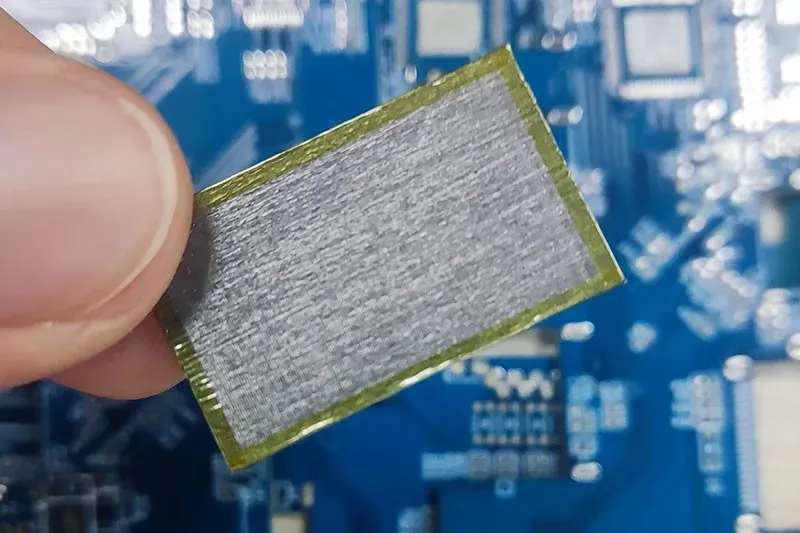
Figure 2. Sheen's official GSF130-030 product page image. The appearance photo does not represent actual thickness, packaging, or delivered dimensions.
For GSF130-030, the 130 W/(m·K) figure is where understanding starts. The ≤0.06 °C·cm²/W thermal resistance at 50 psi is the metric that arrives with its test conditions attached — which is exactly what you want when comparing candidates. When requesting samples from Sheen, state the pressure your device can actually apply, and discuss test conditions closer to your real assembly.
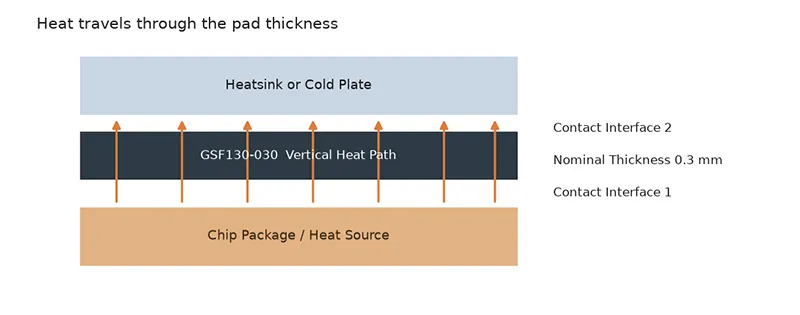
Figure 3. Heat travels through the pad thickness from the heat source into the cold plate. Schematic of the heat path — not a micrograph, dimensions not to scale.
Fit Before Speed: Getting a 0.3 mm Pad to Sit Right
Many first-time users treat a pad like a sticker: cut it, place it, done. In truth, a 0.3 mm pad is a very thin diplomat negotiating between two imperfect surfaces. The deal only closes when the cooler comes down and both sides make full contact.
GSF130-030's nominal thickness is 0.3 mm, with a published tolerance of ±0.03 mm. For a mechanical engineer, that number drives retainer travel, assembly tolerance, and force. For a PC modder, it decides whether the original cooler still clamps down correctly. Laptops, handhelds, and bare-die graphics cards are the strictest cases — their cooling modules allow limited position and load, and swapping a thin paste layer for a sheet changes the entire contact state. User reviews reflect this split: satisfied laptop owners on one side, handheld owners reporting noticeably higher temperatures after switching on the other. Structure compatibility belongs at the front of the selection checklist, not the back.
| GSF130-030 | Published Value | How to Read It During Selection |
|---|---|---|
| Thermal conductivity | 130 W/(m·K), ASTM E1461 | Judge together with conduction direction and finished-part test conditions |
| Nominal thickness | 0.3 mm, tolerance ±0.03 mm | Check working thickness, real gap, and retainer travel |
| Thermal resistance | ≤0.06 °C·cm²/W at 50 psi, ASTM D5470 | Evaluate alongside the pressure your device can actually apply |
| Rebound rate | ≥90% | A reference for conformability — reuse cycles need separate verification |
| Material service temperature | −40 to 150 °C | The material's own range; the chip still runs under its own limits |
Data sources: Sheen selection materials and product page; specific specifications and test conditions follow the corresponding product documents. 50 psi is about 345 kPa — a test condition for thermal resistance, not a tightening requirement for installation.
So when samples arrive, settle “can it mount properly” before “how much does it improve.” Confirm thickness, load, and contact state first. Every temperature test after that becomes more meaningful — and assembly rework becomes less likely.
The Convenience You Can See — and the Habits That Come With It
The relief Graphene pads bring is wonderfully concrete:
- No more agonizing over how much paste to squeeze out.
- No more wondering whether the spread is even.
- No more scraping gray sludge off a cooler during maintenance.
For anyone maintaining water loops, cleaning heatsinks, or assembling prototypes repeatedly, that convenience is not abstract — it is time back on the clock. For device makers there is a second layer of value: shape and coverage can be fixed in advance. GSF130-030 supports custom die-cut shapes, so engineers can design samples around the heat source footprint, surrounding components, and assembly space, then confirm positioning. A well-sized part means less on-site trimming and fewer adjustments.
Of course, skipping the paste means picking up a few new habits instead:
- The pad can skate across the surface while you lower the cooler — one of the most common complaints in user reviews. Keep the work surface level and lower the heatsink straight down, without dragging it back and forth across the pad.
- If the device needs a dedicated fixing method, confirm it with the material and mechanical engineers rather than improvising.
- Manage GSF130-030 as an electrically conductive material: shape and positioning must avoid bare neighboring components. Folding this into the sample design is far less painful than discovering it mid-assembly.
Peace of Mind Is Measured Months Later
The quiet fear behind every material swap: temperatures look great on day one, then maintenance season returns in three months. A first test is only the opening act. What deserves tracking is what happens after the machine has lived with the pad. A practical validation rhythm:
- Record temperature rise and performance right after the first installation.
- Repeat after multiple thermal cycles.
- Repeat again after a period of real operation — and watch whether the interface holds steady.
GSF130-030's rebound figure (≥90%) is a reference for conformability, not a certificate for repeated reuse. Rebound and reworkability are two different exams. If the project requires disassembly and re-use, treat that as its own test item: does the material stay intact, does positioning stay easy, and does thermal performance hold after re-mounting? Only results like these can feed an honest maintenance-cost estimate.
And in consumer electronics, the material bill is never just the unit price. The full ledger includes:
- Cutting and installation labor.
- Rework when assembly goes wrong.
- Maintenance and cleaning over the product's life.
- Damage risk during disassembly.
A solution that removes one process step or one rework loop earns its value on both the user's bench and the factory floor — but whether the ledger balances is a question only real assembly and testing can answer.
Start With Samples, Not a Leap of Faith
Match the evaluation to the device in front of you:
- Desktop CPU or workstation: first check GSF130-030 against the existing cold plate, retainer, and working gap; then run sustained-load comparisons. Track temperature rise, frequency, power — and fan behavior at the same performance level.
- Graphics card: beyond core temperature, log hotspot readings, and confirm contact over memory and power components at the same time.
- Laptop, handheld, or small-form-factor device: verify thickness and available load first, then decide whether a sheet material is even a candidate.
For users who want to retire the paste routine, improve heat transfer through a thin interface, and are willing to validate against their own structure, GSF130-030 deserves a seat in the sample round. 【Request a Custom Quote】Sheen can discuss custom shapes around your actual dimensions, so the material fits the device instead of the other way around.
A worthwhile cooling upgrade should show up in the numbers and in the maintenance calendar. Let GSF130-030 run one comparison round on your own hardware — temperature, performance, and assembly experience will give you the straightest answer.
Sheen Thermal
Dongguan Sheen Electronic Technology Co., Ltd · Founded in 2008
Manufacturer of thermal interface materials and silicone foam for automotive electronics, energy storage, power electronics, communications and consumer electronics.
Certified
- ISO 9001:2015
- ISO 14001:2015
- IATF 16949:2016
What we supply
- Thermal conductivity Up to 130 W/m·K
- Thickness 0.3–10.0 mm
- Custom & samples Die-cut to drawing, 3–7 days
LAST:Nothing