
 English
 usheenthermal

Maximize Cooling Efficiency with a Graphite-Filled Thermal Conductive Sheet
Date:2026-06-04
Maximize Cooling Efficiency with a Graphite-Filled Thermal Conductive Sheet
As heat crowds compact electronics, a graphite-filled thermal conductive sheet works like a quiet fixer, pulling warmth away before components act up.
Old-school pads feel stiff and clumsy, slowing assembly and leaving gaps that quietly cook performance over time.
According to a 2025 MarketsandMarkets report, demand is shifting toward thermal interface materials integrating cooling, shielding, and lightweight design.
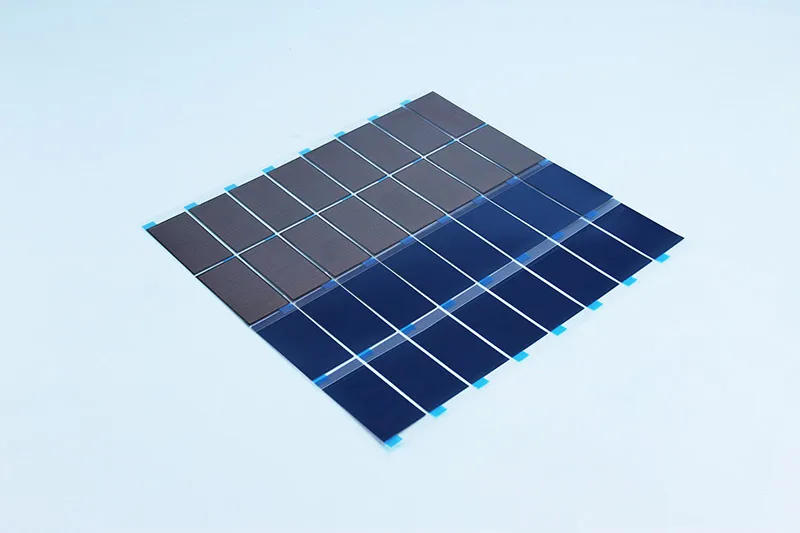
Key Insights into Graphite-filled Thermal Conductive Sheet
➔ Rapid Heat Transfer: Harness high thermal conductivity to dissipate heat in LEDs, power electronics, and semiconductors.
➔ Lightweight & Flexible: Polymer-reinforced sheets conform to tight gaps, reducing system weight and ensuring consistent contact.
➔ EMI Shielding & Damping: Graphite layers block electromagnetic interference and absorb vibration for reliable operation.
➔ Compliance & Safety: Halogen-free, RoHS and REACH-compliant formulations support eco-friendly manufacturing.
➔ Customizable & Easy Install: Die-cut shapes and adhesive backing simplify assembly and fit complex geometries seamlessly.
5 Surprising Benefits Of Graphite-Filled Thermal Conductive Sheet
Heat problems sneak up fast in modern electronics. This cluster walks through why a Graphite-filled thermal conductive sheet keeps devices cool, light, and compliant, without adding headaches during assembly.
Rapid Heat Dissipation via High Thermal Conductivity
Heat hates shortcuts, yet rapid heat dissipation depends on exactly that. A graphite sheet works as a conductive material, pushing heat transfer away from hotspots and raising real-world cooling efficiency in daily use. In thermal management, numbers tell the story:
| Material Type | Thermal Conductivity (W/m·K) | Relative Thermal Resistance |
| Graphite-filled thermal conductive sheet | 8.5 | Low |
| Silicone pad | 3.0 | Medium |
| Ceramic spacer | 5.2 | Medium |
Design teams often circle back to the Graphite-filled thermal conductive sheet because stable performance beats flashy specs. Less trapped heat. Fewer surprises.
Lightweight Cooling with Polymer Matrix Reinforcement
Lightweight builds matter. A polymer matrix bonded with graphite creates lightweight cooling that still feels solid.
· Reduced mass helps portable gear
· Material reinforcement supports long-term use
· The composite material stays slim
This thermal interface and flexible sheet combo fits phones, cars, and wearables. Enhanced performance comes without bulky metal plates, which is why Sheen Technology keeps it in rotation.
Exceptional Flexibility and Compressibility for Tight Gaps
Crowded boards leave tight gaps, and rigid pads just complain. This interface material bends, compresses, and settles in.
Core behavior
· Exceptional flexibility adapts to curves
· High compressibility handles uneven heights
Contact result
· Better thermal conformability
· Reliable gap filler coverage
As an adaptable solution, the Graphite-filled thermal conductive sheet keeps pressure even, heat moving, and assemblies calm.
EMI Shielding and Vibration Damping in One Sheet
One layer doing two jobs feels like cheating, yet it works. Graphite supports EMI shielding while inner layers add vibration damping for noise reduction.
“Integrated thermal and electromagnetic materials are becoming standard in dense electronics,” noted an IEEE Spectrum materials review published in late 2024.
This multi-functional sheet limits electromagnetic interference and supports steady thermal management in radios and network gear.
Halogen-Free, RoHS-Compliant Solution
Rules matter. A halogen-free build supports RoHS-compliant goals and regulatory compliance without trade-offs.
· Safer sourcing improves environmental safety
· Eco-friendly chemistry meets global audits
· A sustainable material profile avoids rework
The Graphite-filled thermal conductive sheet stays a non-toxic solution for teams shipping worldwide, and Sheen Technology treats that as table stakes, not a bonus.
4 Key Parameters For Cooling Efficiency
Efficient cooling is not just about adding a fan and hoping for the best. In tight electronics, the real game changer is the Graphite-filled thermal conductive sheet—where graphite boosts heat flow, and the sheet manages heat dissipation like a quiet workhorse. Let’s break down what actually drives performance.
Thermal Conductivity: Maximizing Heat Flow
When choosing a Graphite-filled thermal conductive sheet, thermal conductivity defines how fast heat transfer happens and how low the thermal resistance stays.
Core performance logic
1.1 Material level
· Graphite filler content directly affects material properties
· Higher filler ratio → faster heat flow
1.2 Interface level
· Reduced thermal resistance at contact surfaces
· Improved overall heat dissipation
Practical impact in devices
2.1 Power electronics
· Lower junction temperature
· Stable output under peak load
2.2 LED modules
· Even temperature spread
· Fewer hotspots
A graphite-filled thermal sheet with 5–12 W/m·K can drastically shorten the thermal path. That’s why many engineers upgrading from silicone pads now shift toward Graphite-filled thermal conductive sheet solutions for compact builds.
“Thermal management remains one of the top constraints in power-dense electronics,” noted a 2025 IDC hardware outlook, highlighting material-level innovation as a primary efficiency driver.
Thickness and Density: Balancing Performance and Space
The Graphite-filled thermal conductive sheet must fit tight layouts without killing performance. Here’s how thickness and density work together:
· Thin sheets reduce stack height.
· Proper density improves internal conduction paths.
· Controlled material volume keeps weight reasonable.
Performance balance often follows this logic:
1) Increase thickness → better gap coverage
2) Increase compression → improved gap filling
3) Overdo either → wasted space constraints
In ultra-slim devices:
· 0.2–0.5 mm suits small IC gaps
· 0.5–1.0 mm handles uneven housings
· Higher-density graphite layers enhance lateral spreading
For brands like Sheen Technology, tuning sheet thickness alongside density ensures the thermal interface material adapts to both compact wearables and heavier industrial boards. A well-selected graphite thermal sheet saves space without sacrificing cooling punch.
Hardness and Flexibility: Ensuring Reliable Gap Filling
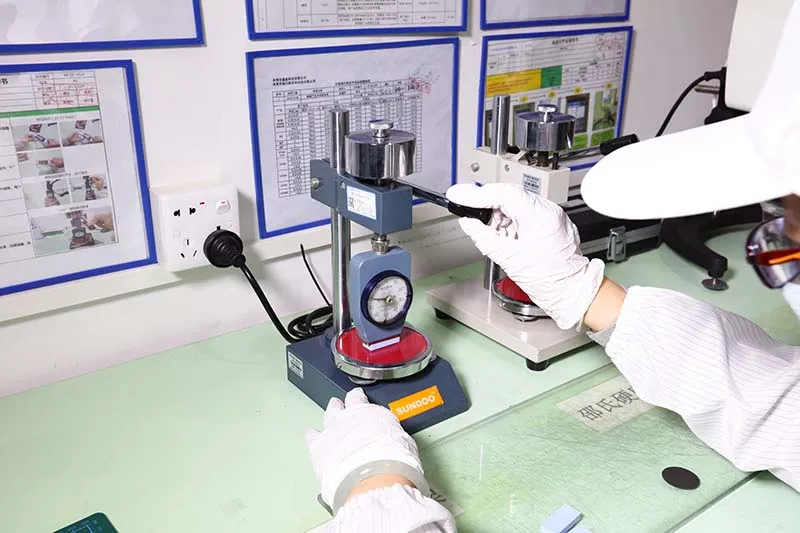
A Graphite-filled thermal conductive sheet has to sit snugly. Too hard, and it lifts at corners. Too soft, and compression set becomes a headache.
Performance depends on:
Mechanical balance
1.1 Hardness
· Maintains structure
· Prevents excessive squeeze-out
1.2 Flexibility
· Boosts conformability
· Enhances surface contact
Thermal interface behavior
· Better gap filling lowers thermal contact resistance
· Stable mechanical properties reduce stress over time
In real assemblies, installers press the graphite-filled thermal sheet into micro-gaps created by solder masks and component height variation. Good flexibility means intimate surface mating. That means less trapped air. Less air means smoother heat escape.
Sheen Technology fine-tunes this balance so the sheet handles vibration, shock, and reassembly without cracking or losing compression integrity.
Dielectric Strength and Long-Term Reliability
Cooling isn’t helpful if insulation fails. A Graphite-filled thermal conductive sheet must combine dielectric strength with consistent electrical insulation.
Key reliability layers:
Electrical safety
1.1 High dielectric strength prevents leakage
1.2 Stable electrical properties under voltage stress
Thermal aging resistance
· Survives repeated thermal cycling
· Resists material degradation
Long service life
· Maintains stability across wide temperatures
· Preserves long-term performance in 24/7 systems
In power modules and EV control boards, rising temperature swings test material limits. A high-quality graphite conductive sheet keeps insulation intact while still pushing heat outward. That’s the sweet spot—strong cooling, zero electrical drama.
Specifications For Graphite Thermal Sheets
Modern electronics run hot, and heat control is no joke. A well-designed Graphite-filled thermal conductive sheet keeps devices stable, slim, and safe. By optimizing graphite powder, refining production methods, and meeting strict compliance rules, manufacturers deliver consistent performance. The right graphite filled thermal sheet can make or break thermal management efficiency.
Material Composition: Graphite Powder and Binder Material Ratios
The core of any Graphite-filled thermal conductive sheet lies in its composition. Performance depends heavily on balancing graphite powder, binder material, and precise material ratios within the matrix material.
Filler Framework
1.1 Graphite powder
· Controls in-plane thermal conductivity
· Determines heat spreading speed
1.2 Filler content
· Higher loading improves conduction
· Excess reduces flexibility
Binder System
2.1 Silicone-based binder material
· Enhances elasticity
· Improves surface conformity
2.2 Non-silicone matrix
· Better for contamination-sensitive devices
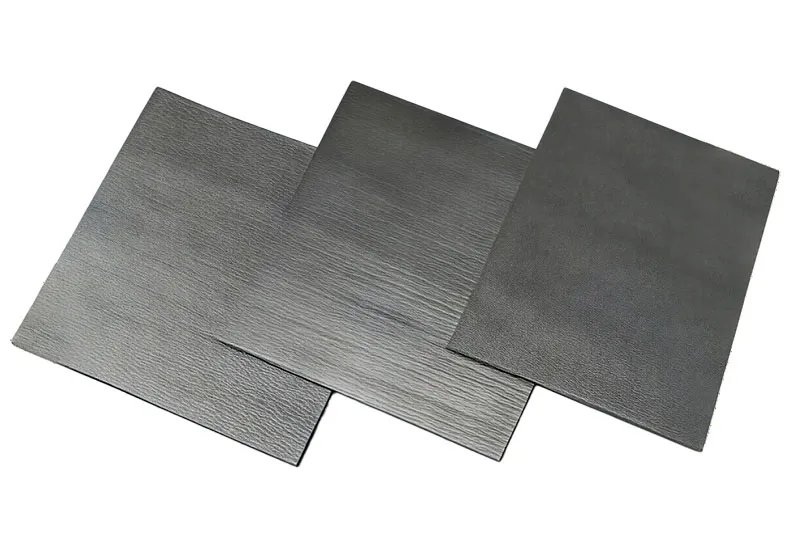
A balanced graphite-filled thermal sheet keeps flexibility intact while pushing thermal output higher. That’s the sweet spot engineers chase.
Manufacturing Processes: Compounding, Curing, and Die-Cutting
Production of a Graphite-filled thermal conductive sheet blends material science with precise manufacturing process control.
· Compounding mixes graphite powder with the selected binder material until dispersion is uniform. No clumps. No weak zones.
· During curing, temperature and pressure stabilize the internal structure. Proper timing improves bonding inside the matrix material.
· Die-cutting shapes sheets for CPUs, LEDs, battery packs, or compact modules.
Quick breakdown of production methods:
· Raw material inspection
· Controlled material processing
· Sheet fabrication under calibrated rollers
· Precision die formation
Some suppliers rush this flow. Sheen Technology keeps tight tolerance control, which helps each graphite thermal sheet maintain thickness accuracy and consistent heat flow.
Need exact thermal conductivity, thickness range, dielectric strength, and compliance details before you choose? Download the product datasheets to compare graphite-filled thermal conductive sheet options.
Quality Standards: UL Certification and MSDS Compliance
Compliance builds trust. A Graphite-filled thermal conductive sheet must align with strict quality standards and global safety regulations.
Certification Layer
1.1 UL certification
· Verifies flammability ratings
· Confirms electrical insulation properties
1.2 ISO system alignment
· Process traceability
· Batch-level documentation
Documentation Layer
2.1 MSDS compliance
· Complete material safety data sheet
· Chemical hazard transparency
2.2 Regulatory reporting
· RoHS alignment
· REACH conformity
“Thermal interface materials remain a high-growth category driven by compact electronics and EV expansion,” noted a 2025 update from MarketsandMarkets, highlighting increasing demand for certified thermal solutions.
Product Qualification
· Mechanical durability testing
· Long-term thermal cycling validation
· Environmental aging checks
For global OEM buyers, regulatory compliance is not optional. It’s the entry ticket. A certified graphite thermal sheet from Sheen Technology simplifies sourcing, reduces risk, and supports long-term product qualification without surprises.
Graphite Vs. Metal Thermal Pads
Thermal management isn’t just lab talk anymore. From gaming laptops to EV control boards, heat control decides lifespan and performance. Let’s break down Graphite-filled thermal conductive sheet options and metal pads in a way that actually makes sense.
Graphite-Filled Thermal Conductive Sheet
When engineers discuss flexible heat control, the Graphite-filled thermal conductive sheet often leads the conversation. This Graphite material acts as a high-efficiency thermal interface, moving heat fast while staying thin and light.
A Graphite-filled thermal conductive sheet works because:
· High in-plane thermal conductivity
· Ultra-thin flexible sheet structure
· Strong heat dissipation stability
· Built-in EMI shielding for electronic devices
Performance snapshot:
| Material Type | In-Plane Conductivity (W/m·K) | Thickness (mm) | Density (g/cm³) | Flexibility Rating |
| Graphite-filled thermal conductive sheet | 800–1500 | 0.02–0.2 | 1.0–1.9 | High |
| Synthetic graphite sheet | 600–1200 | 0.025–0.1 | 1.1–1.8 | High |
| Aluminum pad | 200–237 | 0.5–2.0 | 2.7 | Low |
| Copper pad | 380–400 | 0.5–2.0 | 8.9 | Very Low |
Why manufacturers like it:
· Cut to shape without cracking.
· Conforms to uneven surfaces.
· Boosts cooling performance instantly.
· Lightweight.
· Stable under vibration.
· Quiet in operation.
Application flow in electronics:
· Heat source (CPU / GPU).
· Placement of Graphite-filled thermal conductive sheet.
· Transfer across surface plane.
· Dissipation toward the heat sink.
Within modern assemblies:
· Contact optimization,Reduced air gaps
· Lower junction temperature,Longer device lifespan
Electronic devices
· Smartphones
· Power modules
· LED systems
The Graphite-filled thermal conductive sheet supplied by Sheen Technology integrates clean die-cut precision and stable heat dissipation, making it ideal for tight builds.
According to MarketsandMarkets 2025 thermal management outlook, “Graphite-based interface materials are gaining accelerated adoption in compact electronics due to weight reduction and improved lateral heat spreading.”
In short, graphite thermal sheet solutions solve uneven contact without making assembly a headache.
Metal Thermal Pads
Metal solutions rely on solid metal alloy construction. As a traditional cooling solution, these thermal pads emphasize direct heat transfer through bulk conductivity.
Core traits:
· High through-thickness conductivity
· Strong mechanical durability
· Stable interface material for rigid assemblies
Working sequence:
· Machine metal pad.
· Align with electronic components.
· Apply compression force.
· Secure heat sink.
Inside performance logic:
Heat transfer
· Direct conduction path
· Minimal spreading loss
Metal alloy
· Aluminum for weight balance
· Copper for peak conductivity
Limitations
· Low flexibility
· Poor vibration tolerance
Metal pads still shine in flat, static structures like industrial power modules. Yet in compact or uneven layouts, installation becomes tricky.
That’s where Graphite-filled thermal conductive sheet alternatives from Sheen Technology often win—lighter handling, smoother mounting, and smarter thermal conductivity distribution without extra fastening pressure.
For projects demanding balance between cooling performance and assembly ease, engineers increasingly swap solid metal pads for graphite-based thermal sheet materials.
Overheating Chips? Try Graphite-Filled Conductive Sheet
Modern electronics run hot and tight. A Graphite-filled thermal conductive sheet acts like a fast lane for heat, pulling it away before damage builds up.
High-Power LED Lighting: Lower Junction Temperatures
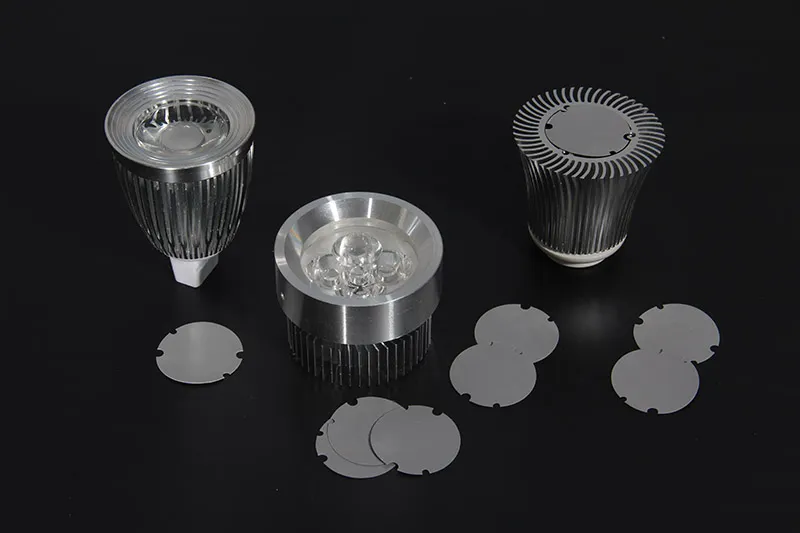
In high-output fixtures, high-power LED arrays push limits daily. The fix often starts with a Graphite-filled thermal conductive sheet placed beneath each LED module to reduce junction temperature and improve heat dissipation.
· Better thermal conductivity
· Higher cooling efficiency
· Longer service life
· Mount the graphite thermal sheet.
· Clamp for surface contact.
Monitor thermal management data.
| Material Type | Thermal Conductivity (W/m·K) | Junction Temp Drop (°C) | Lifespan Increase (%) |
| Standard Pad | 3–5 | 4–6 | 8–12 |
| Aluminum Shim | 8–12 | 6–9 | 10–15 |
| Graphite-filled thermal conductive sheet | 15–25 | 10–18 | 18–30 |
Quick win. Less heat. Brighter for longer.
Many lighting brands choose Sheen Technology graphite solutions for stable output without bulky sinks.
Telecommunications Equipment: Stable Thermal Resistance
High-density telecommunications equipment hates thermal swings. A Graphite-filled thermal conductive sheet stabilizes thermal resistance and boosts thermal stability across racks packed with electronic components.
✓ Consistent heat transfer
✓ Thin thermal interface material
✓ Fits tight network infrastructure layouts
Core Benefits
Performance
· Reduced signal drift
· Balanced hotspot spread
Reliability
· Lower failure rate
· Smoother thermal cycling
Install the graphite sheet between the chip and sink. Apply pressure. Recheck contact. Done.
With Sheen Technology, operators keep cabinets cooler without redesigning airflow.
Battery Modules and Semiconductor Devices: Enhanced Operating Range
Power systems run hard. Battery modules and semiconductor devices need a wider operating range without stress cracks.
A Graphite-filled thermal conductive sheet improves thermal performance and supports safer power electronics through efficient heat spreading.
Short bursts. Fast discharge. Repeat cycles.
The thermal conductive graphite sheet absorbs peaks, flattens spikes, and reduces strain.
Application Path
Device Layer
· Chip surface
· Graphite-filled thermal conductive sheet
Cooling Layer
· Heat plate
· External sink
Result? Stable temps. Fewer shutdowns. Longer uptime.
That’s why integrators often spec Sheen Technology graphite sheet materials when margins are tight, and heat won’t wait.
Need a closer match for your project? Browse these related application pages to see where graphite-filled thermal conductive sheets are used in real systems.
7 Design Tips For Sheet Application
Graphite-filled thermal conductive sheet can look simple, yet its performance depends on smart design choices. From material composition to compliance checks, every detail shapes heat flow, durability, and safety. Here’s how to get real performance from a graphite-filled thermal sheet setup.
Tip 1: Select Proper Filler Content for Optimal Conductivity
· Optimize Graphite ratio· Balance filler material loading
· Protect electrical insulation
Adjust material composition to raise thermal conductivity. Test heat transfer across the thermal interface. Tune additives for steady performance optimization.
Too much graphite boosts heat flow but weakens structure. Too little, and your graphite sheet just can’t move heat fast enough. Dial it in.
Tip 2: Match Sheet Thickness to Your Assembly Gap
· Check component spacing· Measure assembly gap
· Select correct sheet thickness
A thicker thermal pad helps gap filling, yet excess compression increases thermal resistance.
Key alignment flow:
· Measure gap →
· Estimate compression range →
· Validate interface material contact →
· Confirm stable heat path.
Graphite-filled thermal conductive sheet works best when compression stays controlled.
Tip 3: Use Die-Cut Parts for Precise Custom Shapes
• Clean-edge die-cutting improves fit.· Map device geometry.
· Convert CAD to precision parts.
· Enhance component integration.
Accurate custom shapes reduce air pockets inside the graphite thermal interface sheet, boosting thermal management efficiency.
Tip 4: Incorporate Adhesive Backing for Easy Installation
· Add adhesive layer· Improve bonding strength
· Secure mounting position
Process flow:
· Surface cleaning
· Peel liner
· Controlled placement
· Apply pressure for peel strength balance
A graphite-filled thermal conductive sheet with adhesive prevents shift during vibration.
Tip 5: Integrate Reinforced Layers for Vibration Damping
· Add reinforced layers· Improve mechanical stability
· Support shock absorption
This structure improves durability and structural integrity in automotive hardware.
Tip 6: Ensure Halogen-Free Formulation for Safety
· Verify halogen-free chemistry· Meet safety standards
· Check flame retardancy
Short reality check:
Safe materials sell more easily. Clean chemical composition avoids compliance headaches. Environmental compliance matters in global supply chains.
Tip 7: Verify REACH and ISO Standards Before Scaling Up
· Confirm REACH compliance· Review ISO standards
· Audit quality assurance process
Multi-level validation:
· Regulatory compliance
· Product certification
· Supply chain traceability
· Mass production readiness
Before scaling any graphite-filled thermal conductive sheet program, double-check the documentation. Clean paperwork keeps market entry smooth and stress low.
【Request a Custom Quote】 Not sure which graphite-filled thermal conductive sheet fits your build? Send us your target thickness, operating temperature, application type, and performance requirements, and we can help recommend the right thermal solution for your project.
Sheen Thermal
Dongguan Sheen Electronic Technology Co., Ltd · Founded in 2008
Manufacturer of thermal interface materials and silicone foam for automotive electronics, energy storage, power electronics, communications and consumer electronics.
Certified
- ISO 9001:2015
- ISO 14001:2015
- IATF 16949:2016
What we supply
- Thermal conductivity Up to 90 W/m·K
- Thickness 0.3–10.0 mm
- Custom & samples Die-cut to drawing, 3–7 days