
 English
 usheenthermal

High Rebound vs. Low Compression Set: What Is the Difference?
Date:2026-08-27
Buying a High Rebound Graphene Thermal Pad sounds simple until rebound and compression set start masquerading as twins. That mix-up can cost contact pressure over time.
Sheen Technology engineers distinguish ASTM D5470 as pressure-dependent thermal testing, while compression set requires a defined compression-and-recovery procedure under specified conditions.
For volume buyers, the smart play is comparing recovery, permanent deformation, tolerances, and test conditions before signing any purchase order.
Swift Insights into High Rebound Graphene Thermal Pad
➔ Compression Set vs. Rebound: Measure permanent deformation after defined compression-and-recovery cycles, not just initial bounce.
➔ Graphene Dispersion & Recovery: Uniform filler distribution ensures stable elasticity, low compression set, and consistent thermal contact over repeated loads.
➔ Testing Standards Alignment: Use ASTM D5470 for pressure-dependent thermal resistance; apply dedicated compression-set protocols for thickness recovery to guarantee long-term interface performance.
Request the Graphene Pad Mechanical Datasheet →
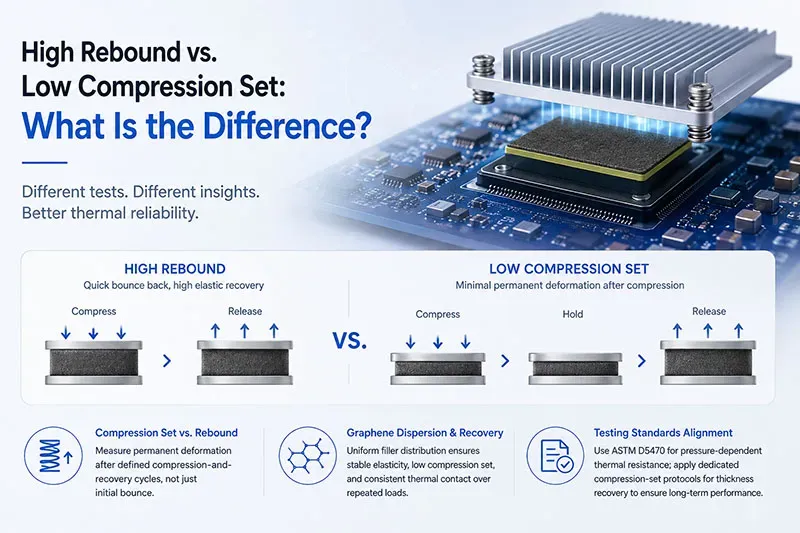
Note: This diagram was created with AI assistance and is not an actual photograph; the illustrated structure and operational logic align with real-world engineering applications and serve as a valid reference.
What Is Compression Set, Really?
A High Rebound Graphene Thermal Pad may spring back quickly yet still keep some lasting thickness loss after long loading. That difference matters in real assemblies, where pressure, heat, and fit all shift over time. In plain terms, compression set tracks what stays squashed, while recovery describes how much shape comes back.
Rebound vs. compression set:
| Property | Definition | What It Measures | Test Method |
| Rebound Resilience | Energy returned during short elastic deformation | Speed/extent of immediate recovery | ISO 4662 / ASTM D2632 (pendulum rebound) |
| Compression Set | Permanent thickness loss after prolonged compression | Long-term deformation that does NOT return | ASTM D395 / ISO 815 (constant strain, elevated temp) |
Unpacking Compression Deflection and Thickness Tolerance
For a High Rebound Graphene Thermal Pad, compression deflection describes force at a given strain, not permanent shape loss.
Fit and force
- load deflection shows how pressure changes with compression.
- thickness tolerance affects gap filling and contact consistency.
Long-term behavior
- stress relaxation reduces force while thickness is constrained.
- Low compression set supports dimensional stability, much like a well-designed elastomeric foam.
So, high rebound alone does not prove low permanent set.
How Elastic Recovery Rate Meets Graphene Dispersion
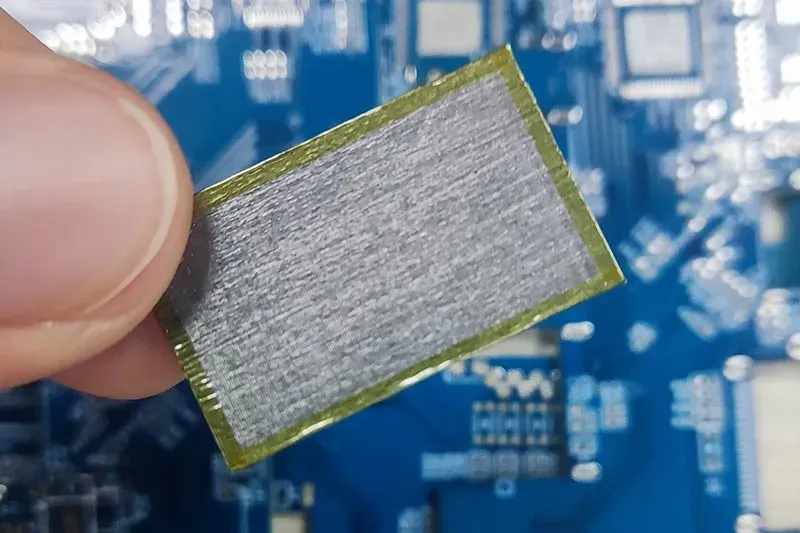
A High Rebound Graphene Thermal Pad depends on its polymer matrix as much as its conductive filler.
Material structure
- Uniform graphene dispersion limits weak, filler-rich zones.
- Well-distributed nanomaterials can help maintain consistent mechanical properties.
Repeated loading
- elastic recovery measures thickness regained after release.
- rebound resilience describes energy returned during deformation.
That combination helps a graphene thermal pad stay mechanically steady through repeated squeezing.
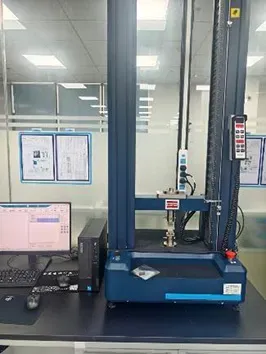
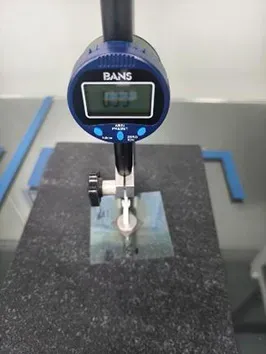
Measurement of Rebound Rate for GSF90-03 High Rebound Graphene Thermal Pad
- Test Standard: ASTM D575.
- Sample Preparation: Material specimens measuring 25 mm × 25 mm × 0.3 mm.
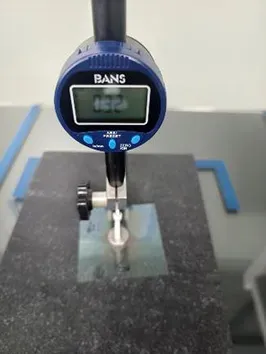
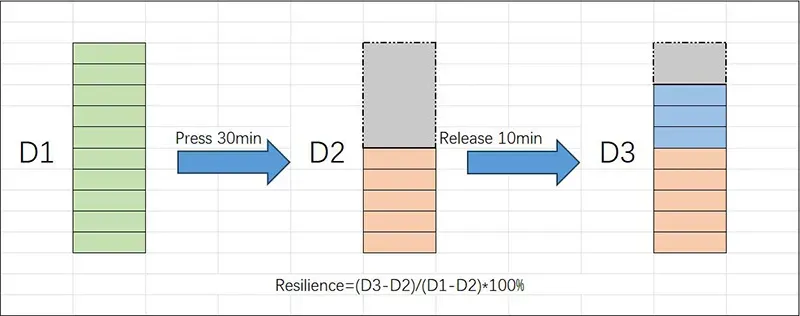
- Test Method: Zero the force reading before testing; apply a 2 N force to contact the sample surface. Set the compression speed to 0.5 mm/min and compress to 50% deformation. Maintain the load for 30 minutes. Let D1 be the initial thickness and D2 be the thickness after compression; measure the thickness again as D3 after a 10-minute recovery period. Calculate the recovery rate as (D3 - D2) / (D1 - D2) × 100%.
| Testing Equipment | Before Testing | After Testing |
 |  |  |
| Test Item | Test Data | |||
| 1 | 2 | 3 | Average Value | |
| Rebound Rate(%) | 92 | 94 | 95 | 93 |
Note: the values above are illustrative. For permanent-deformation qualification, record thickness before loading, after controlled conditioning, and after a defined recovery time.
3 Key Factors Affecting Rebound Performance
A High Rebound Graphene Thermal Pad depends on more than springiness alone. Graphene, processing quality, Shore hardness, and density work together to control rebound, lasting shape, and reliable thermal contact.
Why Graphene Dispersion Drives Elastic Recovery
A High Rebound Graphene Thermal Pad needs well-distributed graphene dispersion inside its polymer matrix.
Material balance
- Evenly spread nanomaterials reduce concentrated stiff spots, so the pad can compress without getting hung up locally.
- Good dispersion can support tensile properties and structural integrity while retaining useful thermal pathways.
Recovery behavior
- A balanced graphene thermal pad stores and releases strain energy more consistently.
- Controlled energy dissipation helps elastic recovery after pressure disappears, while excessive filler loading may make deformation harder.
In practical terms, uniformity matters just as much as graphene content.
Precision Die Cutting vs. Vacuum Impregnation Effects
Manufacturing changes rebound in two quite different ways.
Precision die cutting
- Clean edge quality helps avoid torn or stressed areas.
- Accurate dimensions support dimensional stability and repeatable compression.
Vacuum impregnation
- Filling unwanted voids can modify material porosity.
- Better internal consistency supports a more uniform cellular structure.
Neither manufacturing process automatically guarantees better rebound; the key is controlling both shape and internal structure.
Shore Hardness and Density’s Role in Rebound
For a High Rebound Graphene Thermal Pad, hardness and density need to land in a workable range.
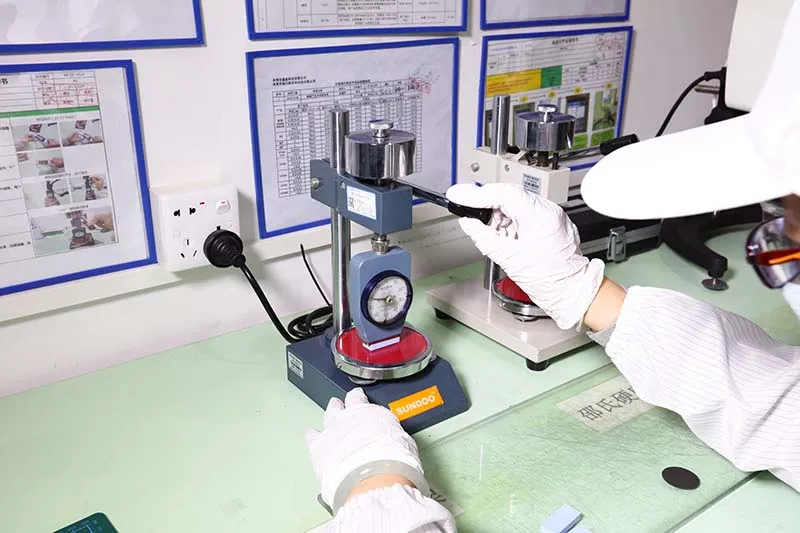
Shore hardness
- Measured on a durometer scale, it indicates resistance to indentation.
- Lower hardness often improves conformability; excessive softness can increase deformation.
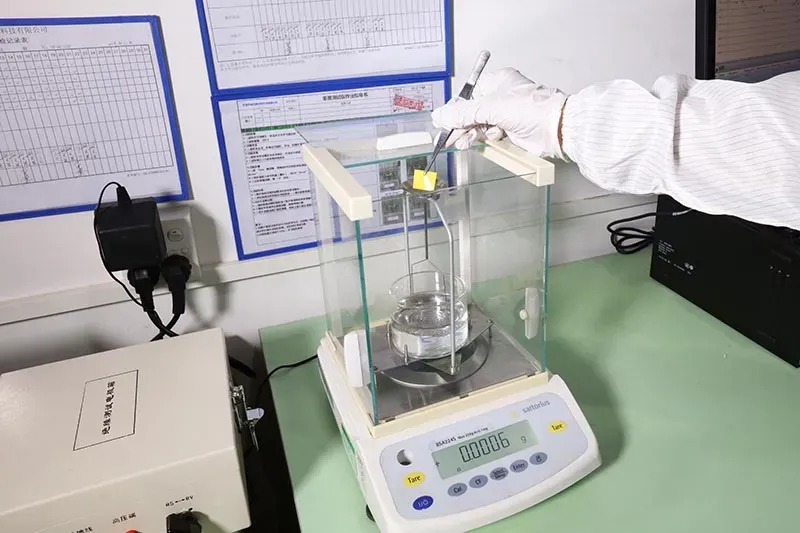
Material density
- Reflects how much material occupies a given volume.
- Combined with suitable elastomer properties, density influences rebound resilience and compression set.
That balance is the trick: strong rebound describes how quickly shape returns, while low compression set describes how little permanent thickness is lost after prolonged compression.
Low vs. High Compression Set: Use Cases
Compression set shows how much a thermal pad stays squashed after pressure is removed, so it matters when choosing materials for real hardware. A High Rebound Graphene Thermal Pad can help preserve contact over time, while application pressure, service life, heat cycles, and repair plans shape the right choice.
Low Compression Set
Low compression set is a strong fit for power battery packs, 5G base stations, processors, and automotive ECUs. In these jobs, a High Rebound Graphene Thermal Pad needs to rebound after repeated heat and pressure cycles, keeping thermal contact steady instead of gradually staying flat.
Material behavior
- Low-set elastomers resist lasting deformation after prolonged compression.
- Strong resilience helps graphene thermal pads recover thickness as parts expand and contract.
Practical benefits
- Gaskets and thermal interfaces can maintain pressure across uneven surfaces.
- Better recovery supports durability, especially in hardware expected to run for years with little attention.
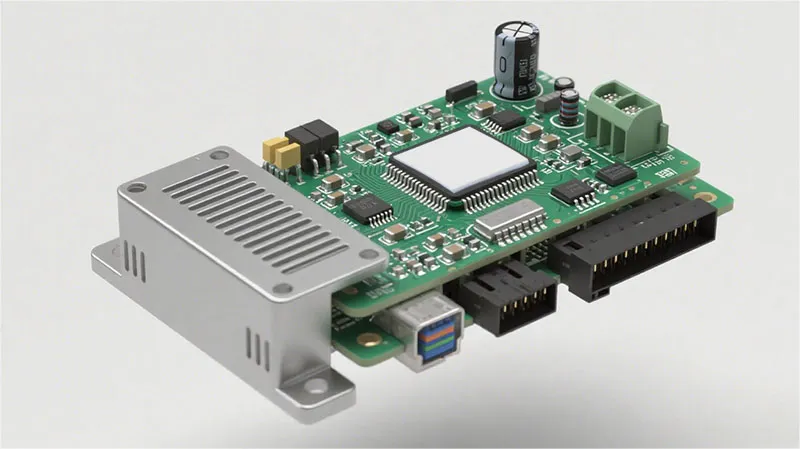
Demanding operating environments
- Battery packs and ECUs:High elastic recovery helps limit contact loss caused by vibration and thermal cycling.
- Processors and base stations:A High Rebound Graphene Thermal Pad supports stable heat transfer under sustained clamping pressure, making maintenance-free designs more practical.
High Compression Set
Higher compression set can work just fine where lasting thickness recovery is not critical. LED modules, simple static assemblies, and short-service applications may tolerate more permanent compression without a meaningful thermal penalty.
- Soft foam can provide useful cushioning and padding around low-stress parts.
- Good vibration damping and impact absorption may matter more than long-term rebound in some assemblies.
- Flexibility simplifies fitting around irregular components, while temporary seals suit hardware opened or replaced regularly.
When low vs. high compression set matters:
| Application | Recommended Property | Reason |
| AI processors / switch ASICs | Low compression set + high recovery | Sustained clamping under thermal cycling |
| 5G base stations | Low compression set | Long outdoor service, vibration |
| Power battery packs | Low compression set + resilience | Expansion/contraction cycles |
| Automotive ECUs | Low compression set | Years of thermal cycling |
| LED modules / static assemblies | High set acceptable | No meaningful thermal penalty |
| Temporary seals / reworked parts | High set acceptable | Replaced regularly |
In those cases, a graphene thermal pad may trade elastic recovery for softness, easy installation, or cost. Low compression set becomes more important once reliable contact pressure must survive years of service.
Rebound and compression set describe different mechanical behaviors, and both must be evaluated when qualifying a graphene thermal pad for long-service thermal interfaces. Sheen Technology provides graphene pads with mechanical and thermal data measured under defined test conditions.
→ Contact Sheen Technology for Compression-Set Data
Sheen Thermal
Dongguan Sheen Electronic Technology Co., Ltd · Founded in 2008
Manufacturer of thermal interface materials and silicone foam for automotive electronics, energy storage, power electronics, communications and consumer electronics.
Certified
- ISO 9001:2015
- ISO 14001:2015
- IATF 16949:2016
What we supply
- Thermal conductivity Up to 90 W/m·K
- Thickness 0.3–10.0 mm
- Custom & samples Die-cut to drawing, 3–7 days