
 English
 usheenthermal

High Elastic Recovery Graphene Thermal Pads for AI Networking Equipment
Date:2026-08-26
AI racks run hot, and one shaky thermal interface can turn procurement into a costly headache. A High Elastic Recovery Graphene Thermal Pad combines heat transfer, conformability, and compression recovery, helping maintain contact through assembly pressure and thermal cycling.
For volume buyers, headline conductivity is only half the story. Recovery rate, impedance, resistivity, thickness tolerance, formulation, testing, and consistency deserve equal attention.
Key Insights for High Elastic Recovery Graphene Thermal Pad
- Thermal Matching: Select pads by conductivity grade (W/m·K) and electrical resistivity to suit AI processors, power electronics, or 5G base stations.
- Recovery & Durability: Prioritize elastic recovery rate and tensile strength for sustained contact through repeated thermal cycles and assembly stress.
- Composition & Purity: Opt for formulations with high-grade graphene nanosheets in a stable polymer or silicone binder; watch for catalyst residue.
- Dimensional Control: Specify thickness, tolerance, and surface area to fill interface gaps without obstructing nearby components.
- Compliance & Packaging: Ensure ASTM D5470/ISO 22007 certification and proper packaging, shelf life, and storage conditions.
→ Request the Graphene Thermal Pad Datasheet
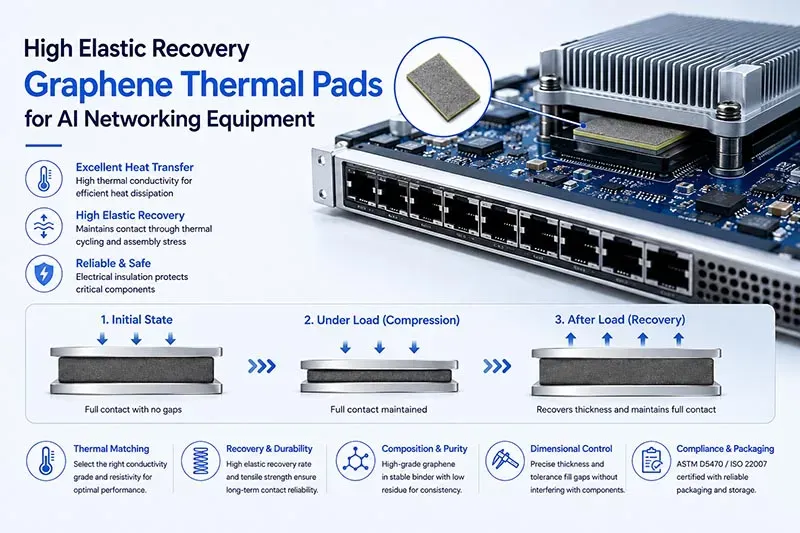
Note: This diagram was created with AI assistance and is not an actual photograph; the illustrated structure and operational logic align with real-world engineering applications and serve as a valid reference.
Classifications Of Graphene-Based Thermal Pads
Graphene thermal pads come in several practical grades, so choosing one is not just about chasing the biggest number. A High Elastic Recovery Graphene Thermal Pad can balance heat transfer, fit, and repeated compression. Sheen Technology offers options suited to processors, electronics, and cooling assemblies.
By Thermal Conductivity Grades
High-performance grades
- Ultra-high conductivity supports heavy heat flux density from AI processors.
- A higher W/mK rating can improve the heat dissipation rate.
Sheen Technology High-performance graphene thermal pad performance properties:
| Properties | Unit | GSF75-03 | GSF90-03 | Test Method |
| Thermal Conductivity | W/m·K | 75 | 90 | ASTM E1461 |
| Thermal Resistance (@40psi) | ℃*cm2/W | ≤0.12 | ≤0.10 | ASTM D5470 |
| Thickness | mm | 0.3~2.0 | 0.3~2.0 | ASTM D374 |
| Density | g/cm³ | 0.3~0.7 | 0.3~0.7 | ASTM D792 |
| Rebound Rate | % | ≥90 | ≥90 | - |
| Tensile Strength | Mpa | ≥0.03 | ≥0.05 | ASTM D412 |
| Oil Bleeding Rate | % | ≤3 | ≤3 | / |
| Application Temperature | ℃ | -40~150 | -40~150 | / |
| Flame rating | - | V-0 | V-0 | UL 94 |
General grades
- Medium-conductivity material balances cost and cooling.
- Low thermal impedance helps the thermal interface material move heat across mating surfaces.
A High Elastic Recovery Graphene Thermal Pad may combine strong conductivity with dependable contact.
According to Elastic Recovery Performance
A high elastic recovery pad springs back after pressure changes, which is handy during repeated heating and cooling.
- High resilience supports deformation recovery after compression.
- Low compression set helps preserve thickness.
- Controlled stress relaxation keeps the flexible interface in contact.
Good mechanical durability and cushioning property protect uneven component surfaces.
Based on Chemical Composition
Carbon system
- Graphene nanosheets or another carbon allotrope carry heat.
Matrix system
- A polymer matrix or silicone composite provides flexibility.
- The binder material holds conductive particles together.
Formula tuning
- Filler concentration affects conductivity and softness.
- Organic additives can adjust processing or physical behavior.
Varying Thickness and Surface Area
A graphene thermal pad must physically match the hardware, plain and simple. Pad thickness and profile height handle different gaps, while dimensions and die-cut size establish coverage. A larger contact area can support heat spreading, and controlled tolerance level improves predictable gap filling during assembly.
5 Key Factors In Pad Selection
Choosing a High Elastic Recovery Graphene Thermal Pad comes down to heat transfer, electrical safety, mechanical life, sizing, test data, and storage. For AI networking hardware, Sheen Technology buyers can compare these factors together rather than chasing one headline number. That keeps pad selection practical and avoids nasty surprises later.
Thermal Conductivity and Electrical Resistivity
Thermal performance
- A graphene filler supports fast heat dissipation and lower thermal impedance.
Electrical safety
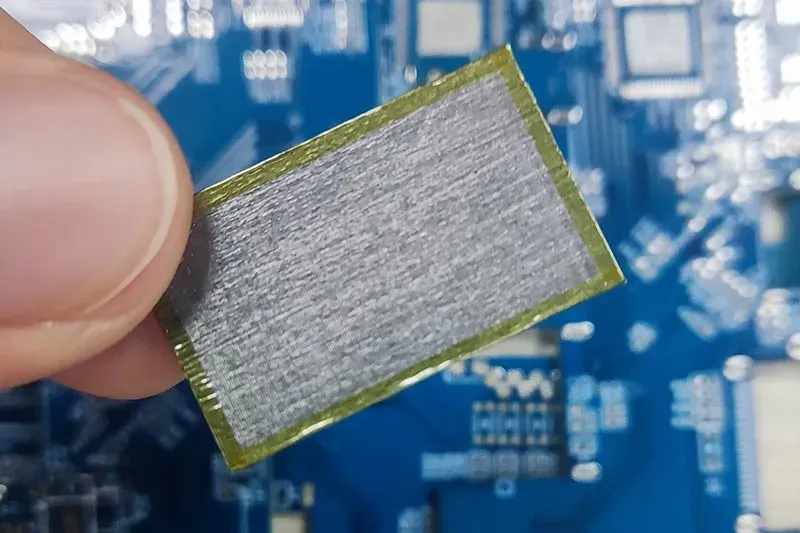
- Graphene pads are electrically CONDUCTIVE. They must not bridge exposed conductors without external isolation. In crowded boards, specify edge sealing or a film laminate when isolation is required, or choose a ceramic-filled silicone pad for dielectric applications.
Elastic Recovery Rate and Tensile Strength
Compression behavior
- High elastic recovery limits compression set and permanent deformation.
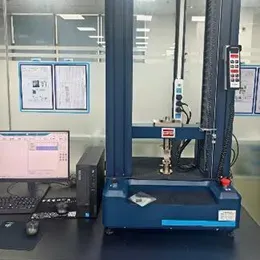
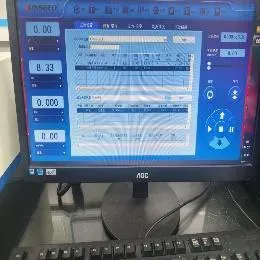
Sheen Technology laboratory GSF90-03 Graphene Thermal pad Tensile strength test:
- Test Standard: ASTM D412
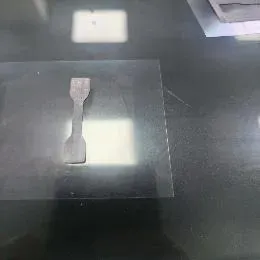
- Sample Preparation: Dumbbell-shaped standard specimens were prepared using a mold.
- Test Method: The specimen was clamped vertically in the grips, the speed was set to 300 mm/min, the initial gauge length was measured, and the test was initiated.
| Test Equipment | Pre-test Status | Test Results |
 |  |  |
| Test Item | GSF90-03 Graphene Thermal pad Tensile strength test Data | |||
| Sample 1 | Sample 2 | Sample 3 | Average Value | |
| Tensile Strength(Mpa) | 0.061 | 0.058 | 0.059 | 0.059 |
Good rebound resilience counters stress relaxation, while tensile strength helps the elastomer matrix withstand mechanical stress and improves durability. A High Elastic Recovery Graphene Thermal Pad can therefore keep contact pressure after repeated loading.
Physical Dimensions: Thickness & Tolerance
| Thickness | Tolerance | Length | Width |
| 0.5 mm | ±0.05 mm | 100 mm | 100 mm |
| 1.0 mm | ±0.10 mm | 100 mm | 100 mm |
| 1.5 mm | ±0.10 mm | 100 mm | 100 mm |
| 2.0 mm | ±0.15 mm | 100 mm | 100 mm |
| 3.0 mm | ±0.20 mm | 100 mm | 100 mm |
Check values with a micrometer. Proper gap filling, surface flatness, and dimensional stability reduce manufacturing variance while keeping the graphene thermal pad pad profile clear of connectors.
Compliance with ASTM D5470 & ISO 22007
Verification
- ASTM D5470 supports a recognized thermal test method and steady-state technique.
ISO 22007 supports standardized measurement of properties including thermal diffusivity.
Sheen Technology can pair standards-based laboratory verification with dielectric breakdown, Shore A hardness, and thermal-impedance data for quality assurance.
Packaging Type, Shelf Life, and Storage Conditions
Before installation
- Keep the high-elastic-recovery thermal pad on its release liner.
- Follow specified ambient temperature and humidity control limits.
For longer storage
- A vacuum seal may support anti-oxidation protection where specified.
- Respect shelf-life limits to reduce contamination, deformation, and material degradation.
4 Steps! Install High Elastic Recovery Graphene Pads
Installing a high-elastic-recovery graphene thermal pad requires controlled handling: clean surfaces, accurate sizing, flat placement, and controlled pressure deliver reliable heat transfer in AI networking hardware.
Step 1: Surface Preparation and Cleaning
For a High Elastic Recovery Graphene Thermal Pad, clean contact areas are a big deal.
Clean
- Remove surface contaminants, old thermal interface residue, and loose particles.
Use isopropyl alcohol with a lint-free wipe; a suitable degreasing agent can handle stubborn oil.
Check the metal for an oxidation layer before fitting the pad.
Step 2: Cutting to Size—Length, Width, and Tolerance
Keep the High Elastic Recovery Graphene Thermal Pad flat while cutting.
Size
- Match the required thermal pad geometry and aspect ratio.
- Hold the specified dimensional tolerance.
Cut
- Use sharp precision scissors or a clean cutting blade on the graphene sheet. Don’t tug or stretch it.
Step 3: Placement on Processor Heat Sink or 5G Base Station
Careful alignment helps avoid hot spots.
Position
- Center the pad over the processor die using an alignment guide.
- Match full coverage with the heat sink assembly or 5G base station cooling surface.
Finish
- Remove adhesive backing, when supplied, without touching the interface.
- Use gentle placement for air bubble prevention.
Step 4: Compression Molding or Curing for Optimal Bonding
Sheen Technology recommends following the pad-specific processing limits rather than guessing pressure or temperature.
Bond
- Apply specified compression force and bonding pressure evenly.
- Follow the stated curing temperature when a binder requires curing.
Verify
- Preserve elastic recovery and avoid excessive squeeze.
- Correct compression supports thermal conductivity while lowering contact resistance.
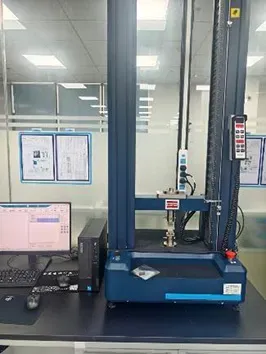
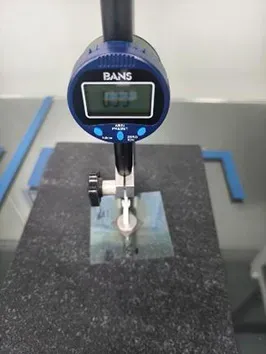
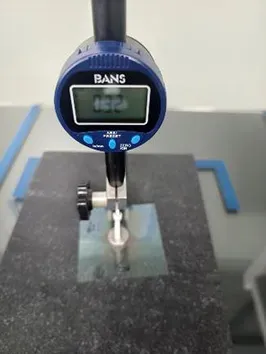
Sheen Technology High Rebound Graphene Thermal Pads Performance Testing
- Test Standard: ASTM D575.
- Sample Preparation: Material specimens measuring 25 mm × 25 mm × 0.3 mm.
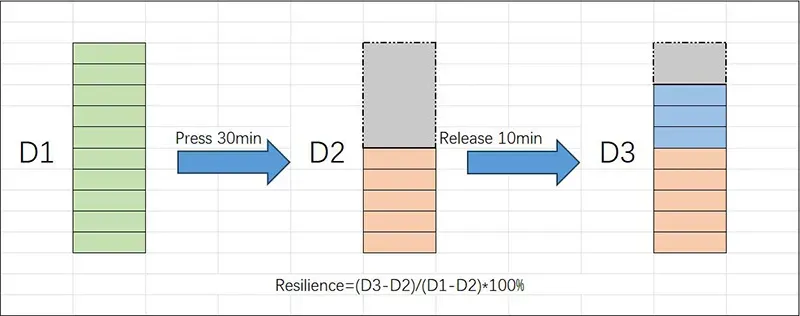
- Test Method: Zero the force reading before testing; apply a 2 N force to contact the sample surface. Set the compression speed to 0.5 mm/min and compress to 50% deformation. Maintain the load for 30 minutes. Let D1 be the initial thickness and D2 be the thickness after compression; measure the thickness again as D3 after a 10-minute recovery period. Calculate the recovery rate as (D3 - D2) / (D1 - D2) × 100%.
| Testing Equipment | Before Testing | After Testing |
 |  |  |
| Test Item | Test Data | |||
| 1 | 2 | 3 | Average Value | |
| Rebound Rate(%) | 92 | 94 | 95 | 93 |
Now a bit deeper. Flexible polymer-backed graphene pad layers behave less like rigid sheets and more like cushions. That matters in automotive boards and factory gear where constant motion is just part of the environment.
Sheen Technology provide Selection Decision Framework
Decision framework for graphene thermal pad selection:
| Scenario | Preferred Material | Key Validation |
| ASIC / processor with high heat flux, no exposed conductors | Vertically aligned graphene pad | Through-plane impedance (ASTM D5470), recovery rate |
| AI networking board with exposed conductors nearby | Edge-sealed / film-laminated graphene pad | Isolation layer integrity, dielectric (external) |
| Application requiring electrical isolation | Ceramic-filled silicone pad (not graphene) | Dielectric strength, volume resistivity |
| Repeated thermal cycling / vibration | High-elastic-recovery graphene pad | Compression set, stress relaxation, tensile strength |
A high-elastic-recovery graphene thermal pad addresses a specific need in AI networking equipment: sustained interface contact under thermal cycling combined with strong through-plane heat transfer. Selection must account for electrical conductivity — graphene is not an insulator, so isolation requires external edge sealing or film lamination — and for the vertically aligned through-plane conduction that makes the pad effective. Match conductivity, recovery rate, thickness tolerance, and test data to the application, and validate with ASTM D5470 and ISO 22007. Sheen Technology provides vertically aligned graphene pads with specification data and application engineering support.
→ Contact Sheen Technology for Graphene Pad Selection Support
Sheen Thermal
Dongguan Sheen Electronic Technology Co., Ltd · Founded in 2008
Manufacturer of thermal interface materials and silicone foam for automotive electronics, energy storage, power electronics, communications and consumer electronics.
Certified
- ISO 9001:2015
- ISO 14001:2015
- IATF 16949:2016
What we supply
- Thermal conductivity Up to 90 W/m·K
- Thickness 0.3–10.0 mm
- Custom & samples Die-cut to drawing, 3–7 days