
 English
 usheenthermal

Is Thermal Paste Electrically Conductive? The Truth About Cooling
Date:2026-04-29
Is Thermal Paste Electrically Conductive? The Truth About Cooling
If you’re asking is thermal paste electrically conductive, you’re already sensing the risk. One wrong dab can fry a board.
According to the 2025 MarketsandMarkets report on thermal interface materials, demand is accelerating as electronics manufacturers tighten safety and reliability standards across data centers and EV systems.
Clarity here protects uptime, budgets, and reputations. Start with the facts.
Is Thermal Paste Electrically Conductive? Explained
When people ask, is thermal paste electrically conductive, they usually just want a straight answer. Fair enough. The truth depends on chemistry, filler content, and application style. Let’s break down how thermal paste, electrical flow, and hardware safety actually connect.
Understanding Dielectric Strength in Thermal Greases
If you’re wondering is thermal paste electrically conductive, start with dielectric strength. This property tells us how well thermal greases resist electrical breakdown under voltage.
What dielectric strength really means
· It reflects resistance against electrical insulation failure.
· Higher breakdown voltage equals stronger insulating properties.
· Low electrical resistance in grease can raise red flags.
How this affects everyday builds
· In CPUs and GPUs, paste sits between the chip and heat sink.
· If the material is non-conductive, stray current won’t travel.
· If not, leakage paths may form at high temps.
Practical takeaway
· Most mainstream pastes are designed as non-conductive.
· Premium formulas highlight strong insulating properties on labels.
When someone asks, is thermal paste electrically conductive, the safest answer is: many are not, but check specs.
So, is thermal paste electrically conductive in all cases? No. It depends on formulation and rated dielectric strength.
Role of Metallic Particles and Polymers in Electrical Conductivity
Now let’s tackle composition. The question is thermal paste electrically conductive often comes down to what’s inside the tube.
Thermal paste typically blends a non-conductive matrix made of polymers with various conductive fillers. The balance defines electrical conductivity.
Here’s how it plays out:
· Silver-based or aluminum-loaded pastes contain metallic particles.
· Ceramic or carbon-based blends rely more on insulating polymers.
· Particle density influences if current can bridge gaps.
Low filler concentration
· Dispersed metallic particles remain isolated.
· The paste behaves mostly insulating.
High filler concentration
· Particles may touch.
· A conductive path can form.
That’s when people seriously ask, is thermal paste electrically conductive for this specific product? Some high-performance compounds are slightly conductive. Others clearly state “electrically insulating.”
For builders who don’t want to stress over this, brands like Sheen Technology clearly specify paste composition, thermal ratings, and insulation class. That clarity matters when you’re hovering over a live motherboard.
In short: is thermal paste electrically conductive? Sometimes. It depends on filler type, ratio, and distribution.
Impact on Integrated Circuits and Semiconductor Devices
This is where things get real. If someone spills paste and wonders, is thermal paste electrically conductive, the risk shows up on integrated circuits and circuit boards.
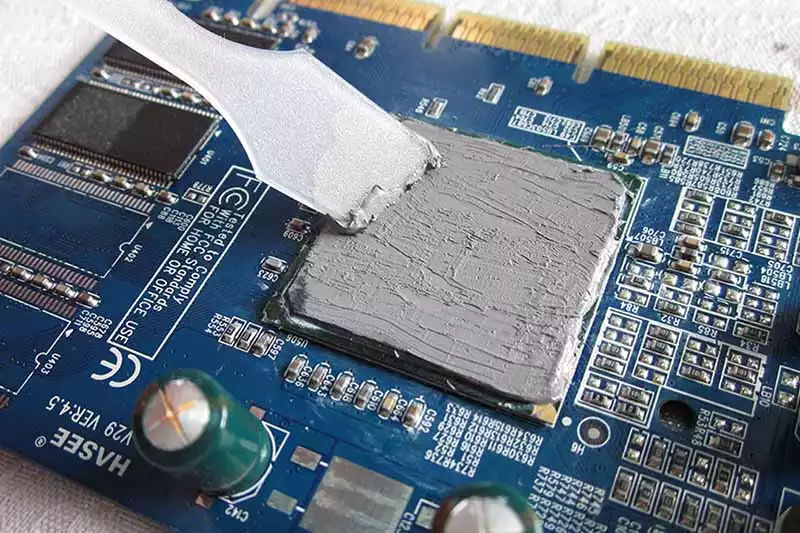
Direct contact risks
· Excess paste spreads onto pins of electronic components.
· Conductive material may bridge solder points.
· Result: short circuits.
Long-term reliability concerns
· Tiny leakage currents stress semiconductor devices.
· Heat plus current can trigger electrical damage.
· Over time, that leads to component failure.
Safe handling habits
· Apply a pea-sized amount.
· Keep paste away from exposed traces.
· Verify if your answer to is thermal paste electrically conductive is yes before powering up.
Many system integrators prefer electrically insulating formulas to reduce risk. Sheen Technology promotes controlled spreadability to limit accidental bridging on dense integrated circuits.
So, is thermal paste electrically conductive? It can be. But with the right product and careful application, your hardware stays cool—and safe.
Thermal Conductivity Vs Electrical Conductivity
Thermal compounds often spark one big question: is thermal paste electrically conductive? People hear “conductive” and instantly think sparks and short circuits. Relax. Heat flow and current flow are two different games. To clear up confusion around is thermal paste electrically conductive, we need to break down Thermal Conductivity and Electrical Conductivity in plain language.
Thermal Conductivity
When someone asks, is thermal paste electrically conductive, the mix-up usually starts with heat movement. Thermal paste is mainly about Heat transfer, not Electrical current.
Core function
Improve Heat dissipation between CPU and Heatsink
· Fill microscopic gaps in the metal surface
· Reduce trapped air, which increases Thermal resistance
How conduction works
· A Temperature gradient forms
· Heat moves by Conduction from chip to cooler
Material composition
· Ceramic particles like aluminum nitride
· Act as a Thermal interface material
· Boost Cooling performance
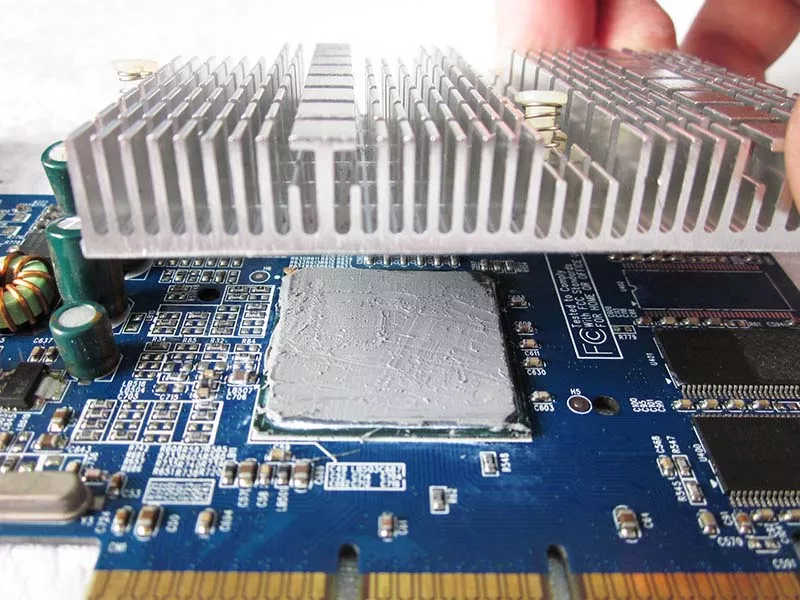
Short answer for heat: high thermal conductivity means better cooling. It says nothing about current flow. That’s why asking is thermal paste electrically conductive requires looking beyond heat specs.
At Sheen Technology, formulations focus on strong Heat transfer while maintaining electrical insulation. So when customers ask, is thermal paste electrically conductive, the answer for ceramic-based blends is typically no.
Electrical Conductivity
Now to the real concern: is thermal paste electrically conductive in terms of Electron flow?
Electrical basics
· Electrical conductivity measures how easily Electrical current moves
· Low Electrical resistance = strong Conductor
· High resistance = Insulator
Thermal paste categories
Metal-filled compounds
· May conduct electricity
· Risk of Short circuit if spilled on Circuitry
Ceramic-filled compounds
· Function as Dielectric material
· Electrically insulating
So, is thermal paste electrically conductive? It depends on the formula. Many modern pastes are not electrically conductive. If you’re still wondering, is thermal paste electrically conductive in your build, check the label.
Sheen Technology designs products where heat moves fast, but current doesn’t. That balance keeps systems cool and circuits safe. In short, high thermal performance does not automatically mean conductive paste—and that clears up the confusion around is thermal paste electrically conductive.
4 Common Myths About Thermal Paste Conductivity
People often ask, is thermal paste electrically conductive, and the answers online can get messy fast. Some say all paste conducts. Others say none of it does. Let’s break down what is thermal paste electrically conductive really means, using real material science, plain talk, and practical testing logic.
Myth 1: All Greases Conduct Electricity Like Metals
When someone asks, is thermal paste electrically conductive, the confusion usually starts with how thermal grease is built.
At the base level:
· Most heat transfer compound formulas use polymer binders.
· These binders act as insulating materials.
· That means no natural metallic conduction path exists.
Inside the formulation:
· Fillers determine electrical conductivity.
· Ceramic-based fillers → strong dielectric properties.
· Metal-filled blends → measurable conductivity under lab testing.
Dispersion quality matters.
· Even conductive particles must form a continuous chain to pass current.
In real assembly:
· Thin bond lines reduce bridging risk.
· Controlled application prevents spillover onto pads.
So, is thermal paste electrically conductive like copper? No. Most are intentionally non-conductive, and conductivity only appears in specific engineered cases.
Myth 2: Higher Viscosity Means Better Insulation
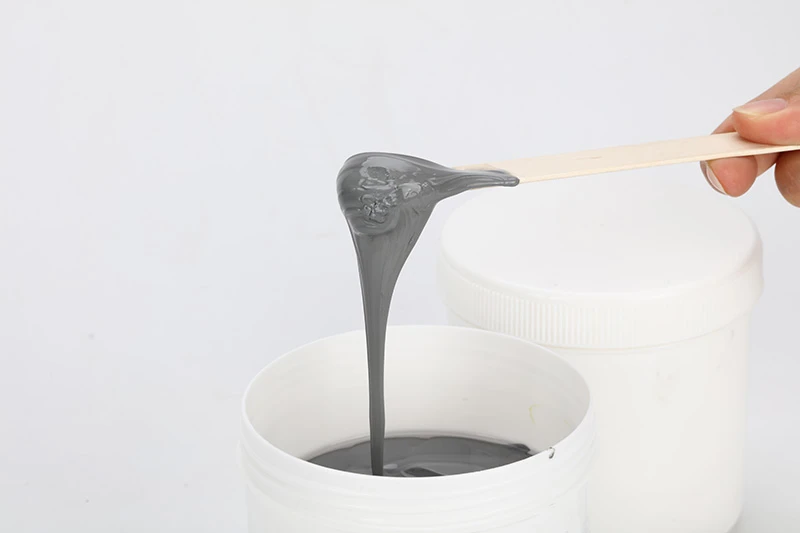
People mix up viscosity with electrical insulation all the time. Thick paste feels safer. That’s not how physics works.
Here’s what actually drives dielectric strength and thermal resistance:
· Filler chemistry
· Particle distribution
· Moisture resistance
· Testing under voltage stress
A quick comparison makes it clearer:
| Paste Type | Viscosity (Pa·s) | Dielectric Strength (kV/mm) | Thermal Conductivity (W/mK) | Electrical Behavior |
| Silicone + Ceramic | 120 | 8.5 | 3.2 | Non-conductive |
| Alumina Blend | 150 | 7.9 | 4.0 | Insulating |
| Silver Hybrid | 90 | 2.1 | 8.5 | Limited conductivity |
| Carbon-Based | 110 | 1.8 | 6.2 | Semi-conductive |
| Industrial TIM | 130 | 9.2 | 3.8 | High insulation |
See the pattern? Paste consistency doesn’t define material properties like insulation. If you’re wondering again, is thermal paste electrically conductive, check dielectric ratings—not thickness.
Myth 3: Silver Fillers Always Cause Short Circuits
Silver sounds scary. Conductive metal, right?
Here’s how silver particles really behave inside a thermal interface material:
Particle engineering:
· Controlled size prevents random electrical contact chains.
· Surface coatings limit ion movement.
Dispersion control:
· Uniform spacing reduces short circuit risk.
· Resin barriers interrupt conduction pathways.
Assembly factors:
· Proper torque.
· No overflow.
· Clean substrate.
Even IPC industry discussions in 2025 technical briefings emphasized that well-formulated conductive fillers do not automatically equal circuit damage when applied within spec.
IPC technical updates in 2025 noted that particle control and dispersion quality are critical variables in determining electrical bridging risk in metallic TIM formulations.
So is thermal paste electrically conductive when silver is inside? Sometimes partially—but not automatically dangerous. Brands like Sheen Technology engineer dispersion carefully to minimize circuit damage exposure.
Myth 4: Ceramic Particles Offer No Electrical Risk
Ceramic sounds totally safe. Most of the time, it is.
But let’s keep it real.
· Ceramic particles provide strong dielectric properties.
· As non-conductive fillers, they resist electrical breakdown.
· High-quality insulation material testing ensures stability.
Still, edge cases exist:
· Contamination during production
· Moisture absorption over time
· Extreme voltage spikes
Under those rare conditions, even a ceramic-based thermal compound safety rating can shift slightly.
So, is thermal paste electrically conductive when ceramic-based? Normally no. Is it immune to every risk on earth? Also no.
That’s why manufacturers like Sheen Technology invest in moisture resistance validation and batch dielectric testing.
To wrap it up:
When asking is thermal paste electrically conductive, break it into parts—thermal, paste, electrically, conductive. The answer depends on formulation, filler science, and real-world handling—not rumors from a random forum thread.
How To Test Thermal Paste Conductivity
Thermal management pros often ask, is thermal paste electrically conductive when qualifying new materials. It sounds simple, yet lab validation tells the real story. Below breaks down how engineers test, stress, and interpret data to answer: is thermal paste electrically conductive in real use?
Setting Up Electrical Testing for Dielectric Strength
To clarify is thermal paste electrically conductive, labs rely on structured electrical testing under controlled environments.
Test Preparation
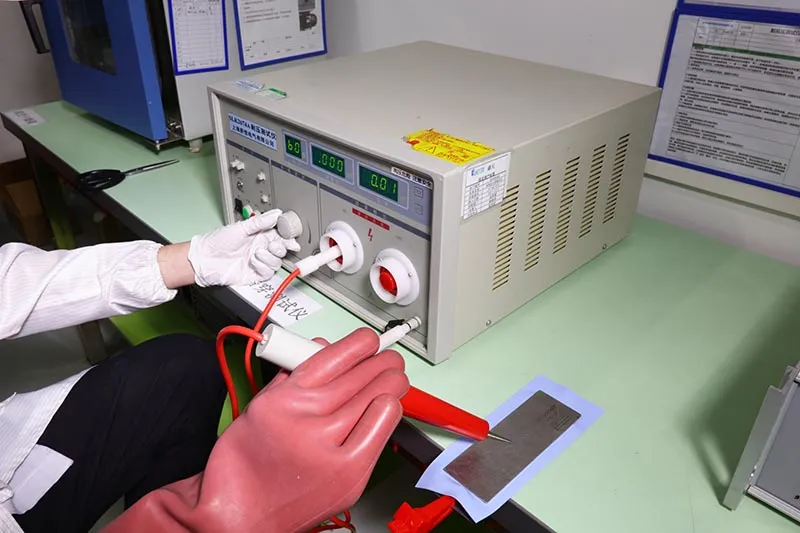
Sample curing
· Controlled thickness (0.1–0.2 mm)
· Standard substrate pairing
Environmental conditioning
· 23°C / 50% RH baseline
Instrumentation Setup
· Test equipment calibration
· High-voltage supply
· Sensitive current measurement meter
Secure test fixture alignment
· Parallel plate configuration
· Guard ring to reduce surface leakage
Voltage Application Protocol
· Gradual voltage application ramp
· Record leakage every 10 V increment
· Identify breakdown for dielectric strength rating
Data Validation
· Compare insulation properties against IPC or IEC benchmarks
· Flag abnormal drift suggesting conductive fillers
If someone asks again, is thermal paste electrically conductive, this workflow provides proof instead of guesswork. Brands like Sheen Technology standardize this process to ensure stable insulation performance even at higher voltages.
Thermal Cycling and Material Characterization Methods
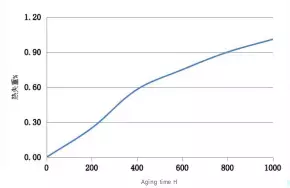
| Sheen technology SG560-10 Thermal paste High-Temperature Aging Test Results | |||||||||
| Aging Duration(H) | 0 | 200 | 400 | 600 | 800 | 1000 | Change Rate (1000 Hours) | Acceptance Criteria | Result |
| Thermal Resistance(℃*in²/W) | 0.06975 | 0.08018 | 0.08246 | 0.08717 | 0.09615 | 0.1046 | +50% | Increase ≤ 2x | OK |
| Thermogravimetric Analysis(%) | 0 | 0.25% | 0.58% | 0.75% | 0.9% | 1.01% | -1.01% | ≤20% | OK |
 |
 |
||||||||
Lab numbers are cool, but heat swings tell the truth.
Start with thermal cycling between -40°C and 125°C. That range mirrors automotive ECUs and packed server racks. During each loop:
Monitor material characterization metrics
· Volume resistivity
Bond line thickness
· Track property changes after 100, 300, 500 cycles
· Log signs of material degradation
Then layer in stress analysis. Expansion mismatch can form micro-cracks. Tiny cracks can shift conductivity, raising the question again: is thermal paste electrically conductive after aging?
Short check-ins help:
· Resistance stable? Good sign.
· Leakage climbing? Time to reassess formulation.
· Adhesion dropping? Reliability risk.
Reliability testing connects lab theory with field reality. Sheen Technology integrates both conductivity checks and heat endurance trials so customers don’t have to second-guess if thermal paste is electrically conductive under pressure.
Interpreting Results: Thermal Resistance vs. Leakage Current
Balancing cooling and insulation comes down to sharp data analysis and clear performance metrics.
Core Evaluation Layers
Thermal Path
· Measured thermal resistance (°C·cm²/W)
· Impact on heat transfer efficiency
Electrical Safety
· Recorded leakage current (µA)
· Effective electrical conductivity trend
Cross-Comparison Table
| Sample ID | Thermal Resistance (°C·cm²/W) | Leakage Current (µA @100V) | Breakdown Voltage (V) |
| A | 0.12 | 2.1 | 1500 |
| B | 0.09 | 18.5 | 420 |
| C | 0.11 | 3.4 | 1320 |
Low thermal resistance looks great—until leakage spikes. Sample B cools well but raises the red flag: is thermal paste electrically conductive in a risky way?
Engineers weigh both sides. If leakage climbs while cooling improves, the paste may be partially conductive. When teams ask, is thermal paste electrically conductive, the right answer lives in this balance between insulation and performance.
Electrical Leakage Concerns With Metallic Paste
Thermal compounds sit quietly between chips and heatsinks, yet one big question keeps popping up: is thermal paste electrically conductive? Break that phrase down—is / thermal paste / electrically conductive—and the concern becomes real for anyone working with dense boards. When metal fillers enter the mix, small mistakes can turn into costly electrical leakage.
Corrosivity and Toxicity Issues in Power Electronics
In high-load power electronics, metallic fillers inside thermal paste can shift the answer to is thermal paste electrically conductive from “usually no” to “it depends.”
Material composition
Metallic compounds such as silver or aluminum
· Improve heat flow
· May raise Corrosivity in humid air
Additives and binders
· Affect Material compatibility with copper traces
· Influence long-term Chemical degradation
Operational risks
Surface reactions
· Increased Toxicity concerns during handling
· Residue buildup near transistor legs
Reliability impact
· Gradual drop in Device reliability
· Potential micro-bridging across pads
Short answer? Not all pastes conduct, but some metallic blends can. That’s why engineers keep asking, is thermal paste electrically conductive in this exact setup?
RoHS Compliance and MSDS Requirements
Compliance isn’t red tape; it protects your boards and your team.
Regulatory alignment
· RoHS compliance
· Limits on lead and hazardous metals
· Environmental directives under EU law
Documentation control
MSDS requirements
· Clear listing of Hazardous materials
· Handling and disposal guidance
Chemical disclosure for audits
Certification flow
· Raw material screening
· Lab validation
· Final Product certification
Brands like Sheen Technology emphasize traceable sourcing and up-to-date Regulatory standards, reducing doubts around “thermal paste electrically conductive” claims while supporting safe Material safety practices.
Mitigating Leakage in Data Centers and Computing Systems
Large-scale Data centers push hardware hard, so electrical safety is non negotiable.
Application control
Automated dispensing
· Prevents overflow
· Supports Short circuit prevention
Thickness monitoring
· Protects System integrity
Material choice
· Verify Dielectric properties of Thermal interface materials
· Add Insulation barriers near exposed contacts
Maintenance protocol
· Visual inspection
· Periodic reapplication
· Testing for Electrical leakage
When someone asks again, is thermal paste electrically conductive, the smart reply is: check the formula, check the data, and choose trusted suppliers like Sheen Technology. In dense Computing systems, small details keep big systems running clean.
Comparing Silver Vs Ceramic Thermal Compounds
When people ask, is thermal paste electrically conductive, the answer depends on the filler inside. Let’s break down silver and ceramic options in plain talk so you know what’s safe for your CPU or GPU.
Silver Thermal Paste
When discussing is thermal paste electrically conductive, silver formulas often raise eyebrows because of their silver particles and metallic compound base.
Core Composition
Silver Thermal Paste
· Filled with micronized silver particles
· Designed for high conductivity
Performance Focus
· Built for maximum heat transfer
· Popular in high-load CPU and GPU setups
Electrical Behavior
Conductivity Profile
· Thermal: Excellent
· Electrical: Partial
Risk Layer
· Possible electrical risk if paste spreads onto exposed pins
· Careful application required near surface-mounted components
Practical Performance
· Strong thermal output under overclocking
· Stable performance in gaming rigs
· Demands precise spreading
So, is thermal paste electrically conductive in silver form? In short, yes—slightly. That’s why brands like Sheen Technology refine particle dispersion to control conductivity while keeping elite heat transfer efficiency. If someone asks again, is thermal paste electrically conductive, silver-based products are the ones that might conduct a bit of current.
Ceramic Thermal Paste
Ceramic options take a calmer route. Instead of metal, you get ceramic particles like aluminum nitride or boron nitride. The big question—is thermal paste electrically conductive here? Not really.
• Non-conductive formulation
• Strong electrical insulation
• Safe around compact motherboard layouts
Thermal and electrical comparison data:
| Compound Type | Thermal Conductivity (W/m·K) | Electrical Conductivity | Dielectric Strength (kV/mm) |
| Silver-Based | 8.5 – 12.0 | Low (Partial) | 0.5 – 1.0 |
| Ceramic-Based | 3.5 – 8.0 | None (non-conductive) | 4.0 – 7.0 |
| Hybrid Blend | 6.0 – 9.5 | Minimal | 2.0 – 4.0 |
Ceramic paste focuses on safety and steady thermal performance. No drama, no stray current, just clean heat dissipation.
If you’re still wondering, is thermal paste electrically conductive, ceramic formulas answer that clearly—they act as electrical insulators. For system builders who value safety over raw metallic output, Sheen Technology offers ceramic solutions that balance reliable cooling with peace of mind.
FAQs about Is Thermal Paste Electrically Conductive
Is thermal paste electrically conductive in microprocessors and GPUs?
In most computing systems, the answer is no. Standard thermal greases are designed to transfer heat—not electricity—between microprocessors or GPUs and heat sinks.
Insulating types (most common)
· Base: Silicone or other polymers
· Fillers: Aluminum Nitride, Boron Nitride, Zinc Oxide, ceramic particles
· Traits: High Thermal Conductivity + strong Dielectric Strength
· Use: Consumer Electronics, Data Centers, Telecommunications
Partially conductive types
· Fillers: Silver or other metallic particles
· Traits: Higher Electrical Conductivity, lower insulation margin
· Risk: Short circuits if spread across exposed chipsets or integrated circuits
In practice, ceramic-filled composites dominate because they balance Thermal Resistance control with electrical safety.
Can conductive thermal paste cause short circuits in semiconductor devices?
Yes—under the wrong conditions. Silver-based or metal-filled greases can bridge contacts if application spills onto exposed semiconductor devices or power transistors.
The risk depends on three interacting factors:
· Material Composition – Metallic particles increase conductivity and may raise Corrosivity concerns.
· Application Method – Poor Dispensing during assembly can overflow onto chip pins.
· Operating Temperature & Viscosity – Low viscosity at high heat may allow slight migration.
In tightly packed chipsets inside automotive electronics or industrial control systems, even a thin unintended path can disrupt integrated circuits. Careful curing and controlled film thickness protect performance in power electronics.
How can manufacturers test and verify electrical safety before large-scale use?
Before approving bulk material for computing systems or power transistors, teams focus on structured validation:
· Electrical Testing – Measures leakage current and Dielectric Strength.
· Thermal Cycling & Environmental Testing – Confirms stability across real Operating Temperature ranges.
· Material Characterization – Reviews filler dispersion, Electrical Conductivity, and Thermal Conductivity.
· Quality Assurance Checks – Shelf Life Testing, MSDS review, and confirmation of RoHS Compliance and REACH Compliance.
In high-volume assembly with process automation and quality inspection, small lab results translate into safer heat management across consumer electronics and telecommunications infrastructure.
Sheen Thermal
Dongguan Sheen Electronic Technology Co., Ltd · Founded in 2008
Manufacturer of thermal interface materials and silicone foam for automotive electronics, energy storage, power electronics, communications and consumer electronics.
Certified
- ISO 9001:2015
- ISO 14001:2015
- IATF 16949:2016
What we supply
- Thermal conductivity Up to 90 W/m·K
- Thickness 0.3–10.0 mm
- Custom & samples Die-cut to drawing, 3–7 days