
 English
 usheenthermal

Understanding Phase Change Materials (PCMs): A Complete Overview
Date:2026-04-29
Understanding Phase Change Materials (PCMs): A Complete Overview
Heat is choking modern electronics, and phase change materials (pcms) offer a smarter, quieter fix for overloaded servers and batteries.
In 2025 public materials, Sheen Technology engineers outline strict integration standards, stressing controlled melting points, electrical insulation, and long cycle stability requirements.
That’s the edge: steady temperatures, longer lifespans, fewer costly shutdowns when heat hits hard.
5 Classifications Of Phase Change Materials (PCMs)
Phase change materials (PCMs) are the quiet heroes of thermal control. From batteries to LEDs, these thermal energy storage materials manage heat through smart phase transition behavior and controlled melting point design.
Paraffin Waxes (Organic PCMs)
Under organic phase change materials (PCMs), paraffin stands out.
Chemical Basis
· Derived from organic alkanes
· Stable crystallization behavior
· Predictable melting point
Thermal Features
· High latent heat for efficient thermal storage
· Low supercooling
· Strong dielectric reliability
Application Fit
· Electronics insulation
· Microencapsulation systems
· Power modules requiring electrical isolation
In many phase change materials setups, paraffin wax keeps things simple and reliable.
Fatty Acids with High Latent Heat
These fatty acids, a class of carboxylic acids, serve advanced thermal energy storage needs.
Core Properties
· Sharp phase transition
· High enthalpy
· Stable melting temperature
Performance Edge
· Better cycling durability
· Reduced volume shift
· Improved material compatibility
Compared with other phase change materials (PCMs), this type costs more but handles battery cooling like a pro.
Salt Hydrates for Enhanced Thermal Conductivity
Within inorganic phase change materials (PCMs), salt hydrates dominate.
Composition
· Inorganic salts in aqueous solutions
· High density
· Elevated thermal conductivity
Technical Challenges
· Supercooling
· Incongruent melting
· Phase separation
Engineering Fixes
· Add nucleating agents
· Encapsulation control
· Structural stabilization
For high-power devices, these phase change materials move heat faster than most organic options.
Eutectic Mixtures: Tunable Melting Temperatures
A eutectic mixture blends components to lock in a specific melting point.
Design Logic
· Adjust composition using a phase diagram
· Control thermal properties precisely
· Optimize phase transition range
Benefits
· Reduced supercooling
· Balanced heat absorption
· Custom temperature windows
This makes phase change materials (PCMs) far more flexible for compact electronics.
Polymeric PCMs with Superior Mechanical Stability
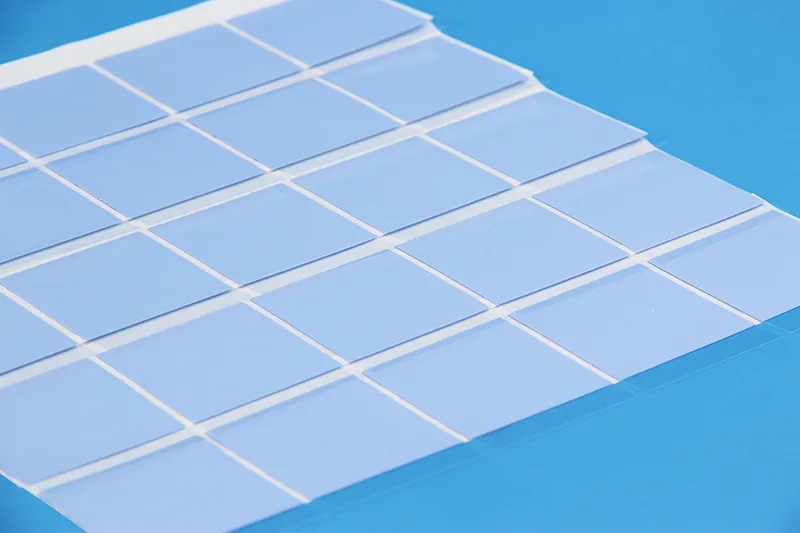
Polymeric systems shift heat through solid–solid change.
Material Structure
· Polymers with cross-linked networks
· Shape-stabilized matrices
· Embedded latent heat domains
Mechanical Advantages
· High mechanical stability
· Minimal leakage
· Strong adhesion
Processing Benefits
· Sheet formats
· Composite integration
· Reliable thermal cycling
For engineers who hate messy leakage, these advanced phase change materials are a clean fix. Brands like Sheen Technology fine-tune these phase change materials (PCMs) for real-world electronics where heat control simply has to work.
3 Applications Where PCMs Boost Device Lifespan
Heat kills electronics slowly. Smart thermal control using phase change materials (pcms) keeps temperatures steady, reduces stress, and helps devices last longer without constant mechanical cooling or energy waste.
Thermal Management in Data Centers
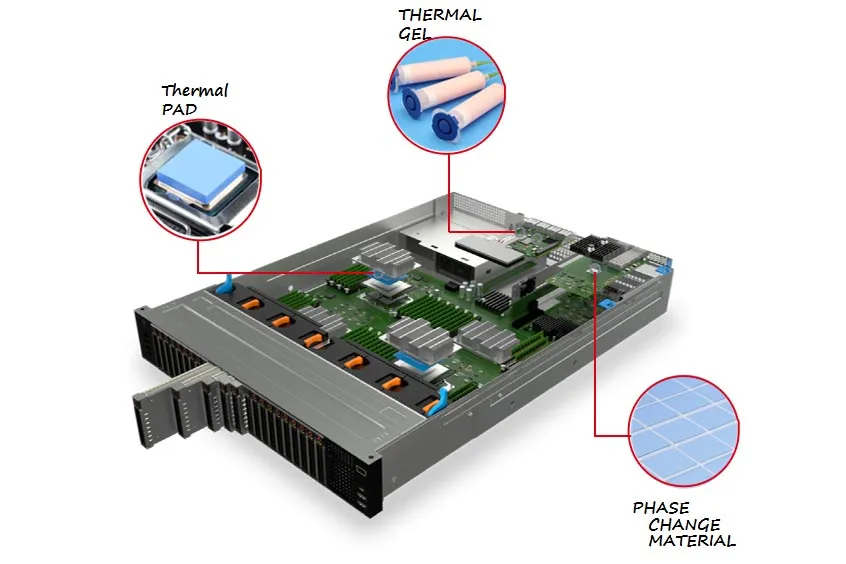
In modern Data centers, heat spikes from Servers and fluctuating Heat load stress Cooling infrastructure daily. Integrating phase change materials (pcms) into PCM panels creates a passive buffer that supports stable Temperature regulation and better Energy efficiency.
Infrastructure Layer
Rack Level
· PCM panels installed behind high-density Servers
· Absorb peak heat during traffic surges
Thermal Response Process
Heat spike occurs
· Phase change material absorbs latent heat
· Melt transition stabilizes inlet air temperature
· HVAC load decreases
Performance Snapshot
| Parameter | Without PCM | With phase change materials (pcms) | Improvement |
| Peak Temp Fluctuation | ±6°C | ±2°C | 66% reduction |
| HVAC Cycling/Hour | 8–10 | 4–5 | ~45% lower |
| Server Failure Rate | 1.8% | 1.1% | Improved reliability |
| Energy Use (Cooling) | 100% baseline | 88% | 12% savings |
By embedding thermal energy storage materials from Sheen Technology, operators get passive buffering that protects hardware and extends service intervals without adding complex moving parts.
Battery Cooling for Portable Devices
Compact Batteries in Portable electronics face constant Overheating risk. Microencapsulated phase change materials (pcms) support smart Thermal management while preserving Device longevity.
Cell-Level Integration
· PCM microcapsules blended into battery packs
· Melting point tuned to 35–45°C optimal battery window
Protection Mechanism
During fast charging
· Heat rises rapidly
· Phase change material absorbs excess energy
During discharge bursts
· Stabilizes internal temperature
· Limits Battery degradation
Lifecycle Impact
· Reduced swelling
· Lower internal resistance growth
· Better Performance optimization over 800+ cycles
With PCM integration strategies developed by Sheen Technology, manufacturers maintain energy density while slowing chemical aging. The result is safer devices that keep their punch longer, even under heavy daily use.
Power Electronics Heat Regulation
High-switching Power electronics and Semiconductor devices operate under rapid Thermal cycling stress. Managing Heat dissipation is critical for Thermal stability and long Component lifespan.
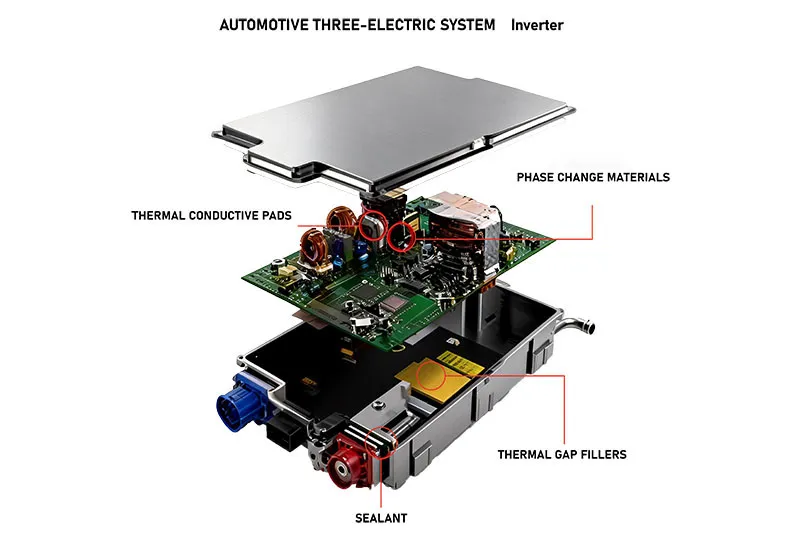
Material Architecture
· Conductive foams infused with phase change material
· Composite sheets placed near MOSFETs and IGBTs
Thermal Event Control
· Load spike in inverter
· Junction temperature rises
· Phase change materials (pcms) absorb transient heat
· Temperature plateau protects breakdown voltage
Reliability Outcomes
· Reduced solder fatigue
· Stabilized Reliability metrics
· Extended maintenance intervals
By pairing advanced phase change materials with enhanced conductivity matrices, engineers cut peak junction swings without oversizing heatsinks. That practical balance keeps converters efficient and electronics durable, especially in EV drives and renewable power systems.
Battery Packs: PCMs Vs Active Cooling
Battery packs heat up fast, and that heat can quietly kill performance. Choosing between phase change materials (pcms) and active cooling isn’t just technical talk—it shapes safety, lifespan, and cost. Here’s how phase change materials (pcms) stack up against powered systems in real-world battery thermal management.
PCMs
When engineers talk about phase change materials (pcms), they’re referring to smart thermal buffers built on latent heat and thermal energy storage.
Core Working Principle
· Phase change materials (pcms) absorb heat during melting point transition
· Heat is stored as latent heat rather than raising temperature
· During solidification, stored energy is released
This enables steady temperature regulation without fans or pumps
Functional Advantages
In battery thermal management:
· No moving parts
· High electrical resistivity
· Silent operation
As a phase change material solution:
· Lower parasitic energy use
· Compact integration inside modules
Practical Limits
· Heat absorption depends on phase transition enthalpy
· Continuous heavy loads can saturate phase change materials (pcms)
· Cooling resets require time
At Sheen Technology, optimized phase change materials (pcms) are engineered to match cell chemistry and real operating ranges, making thermal control feel almost effortless.
Active Cooling
Active systems rely on powered cooling systems to move heat out—fast and continuously.
System Architecture
Active thermal management includes:
· Liquid cooling loops
· Pump-driven coolant flow
· High heat dissipation capacity
· Air cooling channels
· Some setups integrate refrigeration units
Performance Characteristics
· Higher thermal conductivity pathways
· Precise temperature control
· Better suited for high C-rate discharge
Trade-Off Factors
· Increased complexity
· Added power consumption
· Maintenance and leak risks
Sheen Technology evaluates both phase change materials (pcms) and active cooling designs to match energy density, duty cycle, and safety targets—so the battery pack stays cool without overengineering the solution.
FAQs about Phase Change Materials (Pcms)
What are phase change materials (PCMs) and why are they critical in electronics?
Phase change materials (PCMs) absorb and release latent heat during melting and solidifying. That silent phase transition controls melting temperature spikes, protecting delicate chips.
In electronic environments such as:
· Battery cooling
· Power electronics
· LED lighting
· Integrated circuits
Key properties that matter:
· High phase transition enthalpy for efficient heat storage
· Stable thermal cycling stability under repeated loads
· Strong electrical resistivity and low dielectric constant for insulation safety
When heat rises fast, PCMs respond without pumps or noise—purely passive thermal management.
How do different classes of PCMs serve specific applications?
Each class answers a different thermal challenge.
| PCM Class | Strength | Typical Use |
| Paraffin waxes (Organic PCMs) | Stable melting temperature, high electrical resistivity | Data centers, encapsulated boards |
| Fatty acids | Precise enthalpy control | Portable devices |
| Salt hydrates (Inorganic PCMs) | High thermal conductivity | Energy systems, large modules |
| Eutectic mixtures | Tunable melting range, low supercooling | LED lighting, IC cooling |
| Polymeric PCMs | Low volume change, mechanical stability | Power electronics sheets & foams |
Material choice balances density, viscosity, thermal conductivity, and compatibility with the device architecture.
Why are organic PCMs preferred in data centers?
Data centers demand predictability. Organic PCMs such as paraffin waxes provide:
· Consistent melting temperature
· High breakdown voltage
· Low loss tangent
· Reliable thermal expansion coefficient
Unlike many salt hydrates, organic PCMs show minimal supercooling and lower corrosion risk. In server racks where uptime defines profit, stable dielectric behavior protects sensitive boards.
How do PCMs extend battery pack lifespan?
Battery cells fear heat swings. PCMs cushion that stress.
Short sequence of protection:
· Absorb sudden heat through latent heat storage
· Limit peak temperature rise
· Reduce mechanical strain caused by volume change
Microencapsulated or composite PCMs placed between cells improve:
· Thermal management stability
· Uniform temperature distribution
· Long-term reliability testing results
No moving parts. No vibration. Just steady control.
What forms are PCMs supplied in for electronic integration?
Form determines performance as much as chemistry.
Common material forms:
· Microencapsulated particles for slurries and coatings
· Macroencapsulated modules for battery packs
· Sheets and foams using polymeric PCMs
· Pellets and composites for structural inserts
Selection depends on:
· Processing temperature
· Adhesion to substrates
· Dispensing methods
· Encapsulation compatibility
A mismatch here can reduce thermal cycling stability even if the PCM itself is excellent.
Which parameters matter most when selecting salt hydrate PCMs in bulk?
Salt hydrates offer strong heat capacity, but scrutiny is essential.
Critical checks:
· Latent heat & specific heat capacity → storage efficiency
· Thermal conductivity → charging speed
· Supercooling behavior → discharge reliability
· Phase segregation resistance → long-term stability
· Permittivity & electrical resistivity → safety in power electronics
A small oversight in compatibility or curing conditions can compromise an entire thermal management system. Careful evaluation turns raw material into dependable protection.
Sheen Thermal
Dongguan Sheen Electronic Technology Co., Ltd · Founded in 2008
Manufacturer of thermal interface materials and silicone foam for automotive electronics, energy storage, power electronics, communications and consumer electronics.
Certified
- ISO 9001:2015
- ISO 14001:2015
- IATF 16949:2016
What we supply
- Thermal conductivity Up to 90 W/m·K
- Thickness 0.3–10.0 mm
- Custom & samples Die-cut to drawing, 3–7 days