
 English
 usheenthermal

Low Thermal Resistance Carbon Fiber Heat Sink vs Traditional Metals
Date:2026-04-08
Low Thermal Resistance Carbon Fiber Heat Sink vs Traditional Metals
The Low thermal resistance carbon fiber heat sink isn’t just a fancy lab experiment—it’s the cooling world’s answer to engines running hot and patience running thin. As chips pack more punch into tighter spaces, old-school aluminum and copper start sweating like a linebacker in August. Engineers feel it. Procurement teams feel it. And when systems overheat, everyone feels it.
Here’s the rub: power density keeps climbing. The International Energy Agency reports that global data center electricity demand could more than double by 2026. Heat isn’t a side issue anymore—it’s the main character.
“Thermal management is becoming mission critical for energy efficiency,” notes the U.S. Department of Energy.
Think of it like swapping a cast-iron skillet for carbon fiber racing gear—lighter, faster to respond, built for pressure. If your current heat sink feels like it’s dragging its feet, this is where the story turns.
Reading Notes for Low Thermal Resistance Carbon Fiber Heat Sink
➔ Core Concept: Combines PAN- or pitch-based carbon fibers with epoxy prepreg to achieve high thermal conductivity (0.3°C/W), low density, and structural integrity for compact electronics.
➔ Performance Gains: 40% faster cooling, uniform temperature distribution, enhanced power handling, and longer component life under thermal cycling.
➔ Key Applications: Data centers, EV inverters, aerospace modules, LED lighting, and telecommunications equipment.
Low Thermal Resistance Carbon Fiber Heat Sink Material Breakdown
Low thermal resistance carbon fiber heat sink solutions are changing how power devices stay cool without adding bulk. By splitting the phrase into low thermal resistance, carbon fiber, and heat sink, we can unpack how each part matters. From carbon fiber heat sink cores to advanced composite heat sink builds, this low thermal resistance carbon fiber heat sink approach keeps electronics chill, light, and ready for serious workloads.
Raw Materials: PAN-Based Carbon Fibers and Epoxy Resin Prepreg
In a low thermal resistance carbon fiber heat sink, material choice sets the tone for everything that follows.
Fiber Foundation
· PAN-based carbon fibers
· Derived from Polyacrylonitrile
· Provide high tensile strength and directional Thermal conductivity
· Enable lightweight Composite material frameworks
Matrix System
· Epoxy resin prepreg
· A Thermosetting polymer system
· Delivered as Pre-impregnated fibers
· Ensures controlled resin content in carbon fiber heat sink laminates
Material Synergy in a Composite Heat Sink
· Fiber network conducts heat along preferred paths.
· Resin locks geometry in place after curing.
Together, they form the backbone of a low thermal resistance carbon fiber heat sink with stable thermal cycling behavior.
Sheen Technology selects aerospace-grade prepreg systems so the carbon fiber heat sink maintains both stiffness and consistent thermal pathways under load.
Key Material Properties: Thermal Conductivity, Density, Specific Heat Capacity
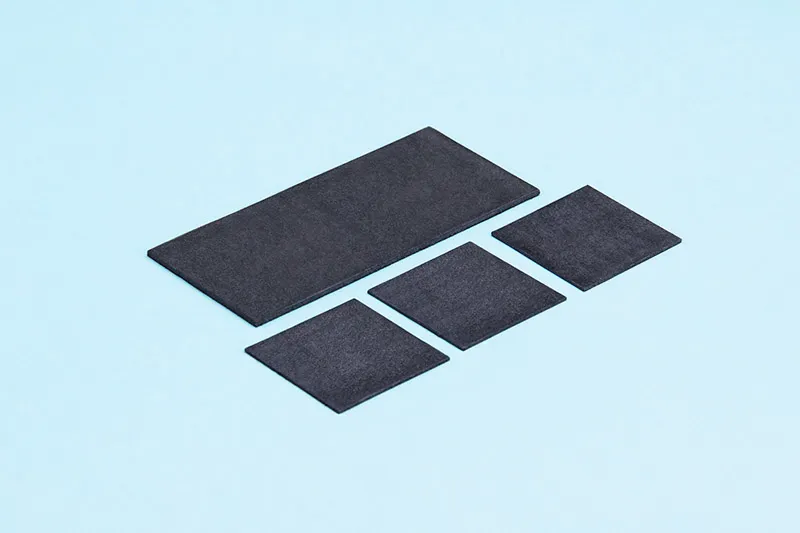
Performance in a low thermal resistance carbon fiber heat sink comes down to measurable data.
Core Thermal Metrics
· Thermal conductivity → drives heat spreading.
· Thermal diffusivity → controls response speed.
· Specific heat capacity → buffers temperature spikes.
· Density → impacts total device weight.
Material Characterization Snapshot
| Property | Typical Value Range | Impact on Heat Dissipation |
| Thermal conductivity | 200–600 W/m·K (in-plane) | Faster lateral heat flow |
| Density | 1.5–1.8 g/cm³ | Lightweight structure |
| Specific heat capacity | 700–900 J/kg·K | Better transient control |
| Thermal diffusivity | 1.5–4.0 ×10⁻⁴ m²/s | Rapid temperature equalization |
| CTE (in-plane) | Near 0 ppm/K | Reduced stress on chips |
System-Level Thermal Performance
· Lower density supports compact electronics.
· Optimized heat dissipation reduces reliance on oversized aluminum heat sink blocks.
· Balanced properties create a low thermal resistance carbon fiber heat sink that handles both steady and pulse loads.
Manufacturing Processes: Resin Impregnation, Curing, Machining Techniques
A low thermal resistance carbon fiber heat sink only works if manufacturing stays tight and consistent.
Composite Manufacturing Flow
Lay-up process
· Align fibers for directional Thermal conductivity.
Resin impregnation
· Ensures full wet-out of carbon bundles.
Autoclave curing
· Controls pressure and temperature.
· Stabilizes the final Curing process profile.
Post-Cure Precision
CNC machining
· Achieves flat mounting faces.
· Refines fin channels in custom heat sink design.
Advanced Machining techniques
· Minimize fiber pull-out.
· Maintain structural edges.
Quality Control Loop
· Dimensional inspection
· Void content analysis
· Thermal performance validation
Sheen Technology integrates in-house composite manufacturing and CNC machining so each low thermal resistance carbon fiber heat sink meets tight power electronics tolerances without drama.
Design Considerations: Fin Geometry, Surface Treatment, Structural Integrity
Designing a low thermal resistance carbon fiber heat sink is more than cutting fins. It’s about airflow, bonding, and long-term durability.
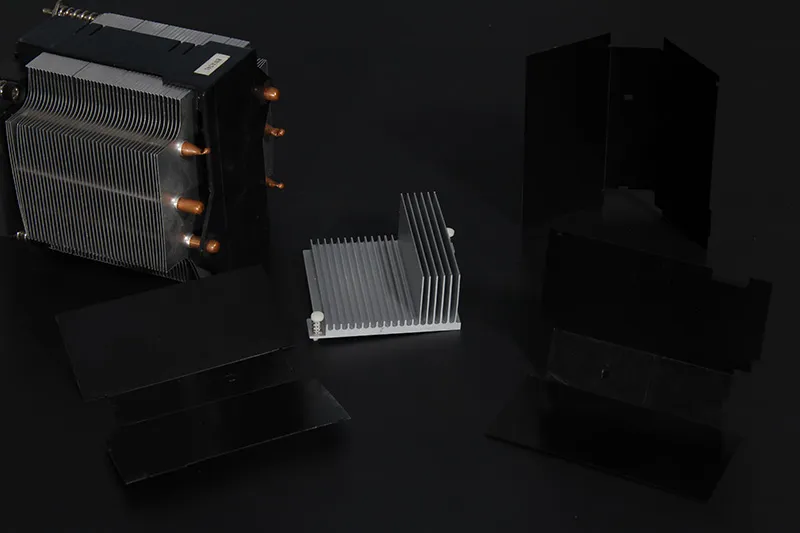
Heat Sink Design Architecture
Fin geometry
· Thin, closely spaced fins for forced airflow.
· Wider channels for natural convection.
Aerodynamic efficiency
· Reduced pressure drop.
· Improved boundary layer disruption.
Surface Engineering
Surface treatment
· Boosts emissivity.
· Improves bonding with Thermal interface material.
· Coatings tuned for corrosion resistance.
Mechanical Backbone
Structural integrity
· Prevents warpage during thermal cycling.
· Maintains flatness under clamping force.
· Reinforced zones around mounting points enhance Mechanical strength.
When all these layers align—materials, properties, processing, and geometry—the result is a low thermal resistance carbon fiber heat sink that stays light, spreads heat fast, and holds up in automotive and high-power electronic systems without breaking a sweat.
40% Faster Cooling With Carbon Fiber Heat Sink
Heat is the silent killer in electronics. A Low thermal resistance carbon fiber heat sink flips the script by cutting thermal resistance carbon fiber pathways and pushing cooling efficiency to the edge. From telecom racks to EV modules, this carbon fiber heat sink setup keeps temperatures steady and performance smooth.
Reduced Thermal Resistance: From 0.5°C/W to 0.3°C/W
A Low thermal resistance carbon fiber heat sink directly lowers thermal resistance, and that shift changes everything.
Carbon fiber matrix
· Optimized material properties for higher axial conduction
· Reduced interface gaps for better cooling efficiency
Fin alignment
· Air channel tuning
· Lower back pressure
Performance Outcome
· Verified performance improvement in rack systems
| Configuration | Thermal Resistance (°C/W) | Temp Rise @100W (°C) |
| Aluminum sink | 0.50 | 50 |
| Hybrid sink | 0.38 | 38 |
| Carbon fiber heat sink | 0.30 | 30 |
This Low thermal resistance carbon fiber heat sink design isn’t hype—it simply moves heat faster, plain and simple. Sheen Technology applies this low thermal resistance carbon fiber architecture to keep data gear cool under pressure.
Improved Temperature Uniformity Across Graphite Sheets
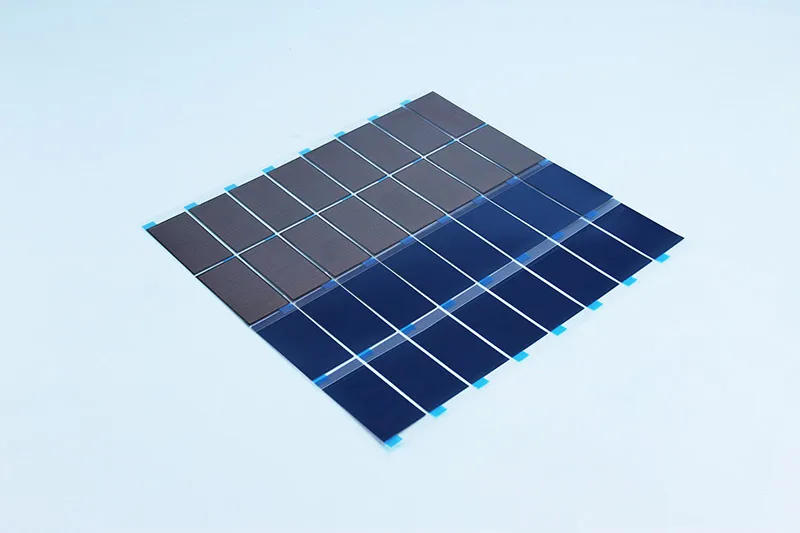
Hotspots ruin boards fast. A Low thermal resistance carbon fiber heat sink paired with graphite sheets spreads heat with high in-plane conductivity.
Key effects:
· Better temperature uniformity
· Stable surface temperature
· Balanced heat dissipation
Because the thermal resistance carbon fiber base distributes load evenly, thermal management becomes predictable. No weird spikes. Just even cooling across LED arrays and power modules. That’s the real win of a carbon fiber heat sink built for uniform flow.
Enhanced Power Handling and Lifetime Reliability
Lower heat equals longer life. A Low thermal resistance carbon fiber heat sink improves power handling by reducing thermal stress at the component level.
Electrical Layer
· Higher heat dissipation capacity
· Stable current under load
Mechanical Layer
· Less expansion mismatch
· Improved durability
Lifecycle Impact
· Stronger lifetime reliability
· Greater component longevity
· Steady operational stability
When heat drops from 0.5°C/W to 0.3°C/W, fatigue slows down. That’s why Sheen Technology builds every low thermal resistance carbon fiber heat sink to support aerospace and automotive systems that just can’t afford failure.
5 Key Factors Driving Carbon Fiber Heat Sink Adoption
As electronics push harder and run hotter, engineers keep hunting for smarter cooling. The Low thermal resistance carbon fiber heat sink stands out by blending low weight, sharp heat transfer, and smart insulation into one tidy solution.
Factor 1: Weight Reduction Through Low-Density Materials
When teams evaluate a Low thermal resistance carbon fiber heat sink, weight usually tops the list.
Material Properties
Carbon Fiber
· Inherently Low-Density
· High stiffness-to-weight ratio
· Supports true Lightweight Design
Aerospace Applications
· Reduced payload mass
· Better fuel efficiency
Automotive Industry
· Lighter EV control units
· Extended driving range
Compared with aluminum blocks, a carbon fiber heat sink cuts grams without cutting strength. That’s why the Low thermal resistance carbon fiber heat sink keeps popping up in flight systems and compact automotive modules.
Factor 2: Superior Heat Dissipation Versus Aluminum Alloys
Thermal numbers tell the story. A well-designed Low thermal resistance carbon fiber heat sink channels heat along the fiber path, boosting Thermal Conductivity and improving Heat Transfer efficiency.
| Material Type | In-Plane Thermal Conductivity (W/m·K) | Density (g/cm³) | Thermal Resistance Trend | Application Fit |
| Carbon Fiber Composite A | 400 | 1.6 | Low | Power modules |
| Carbon Fiber Composite B | 600 | 1.7 | Very Low | RF systems |
| Aluminum Alloy 6061 | 167 | 2.7 | Medium | General electronics |
| Aluminum Alloy 1050 | 205 | 2.7 | Medium | LED cooling |
| Graphite Plate | 500 | 1.9 | Low | Specialty devices |
With optimized Carbon Fiber Composites, heat dissipation beats many Aluminum Alloys in directional layouts. That’s a serious Performance Enhancement in tight Thermal Management designs.
Factor 3: Airflow Optimization Enabled by Custom Fin Geometry
Cooling isn’t just material science; airflow matters.
Heat Sink Design
Tailored Fin Geometry
· Thin, tall fins for vertical racks
· Wide, short fins for lateral flow
Custom Design Path
· Mold shaping
· Fiber orientation control
· Surface tuning
Performance Outcome
· Better Airflow Optimization
· Improved Convective Cooling
· Higher Aerodynamic Efficiency
A Low thermal resistance carbon fiber heat sink built with custom tooling can fit awkward telecom layouts where aluminum simply feels bulky.
Factor 4: Electrical Resistivity Benefits in Power Electronics
In high-voltage gear, metal can be risky.
Electrical Resistivity
· Tuned fiber architecture
· Stable surface behavior
Application Value
Power Electronics
· Reduced short risk
· Improved Component Reliability
High-Frequency Applications
· Cleaner Signal Integrity
· Lower Electromagnetic Interference
This makes the Low thermal resistance carbon fiber heat sink a practical thermal and insulation solution at the same time.
Factor 5: Quality Control via Thermal Imaging and Non-Destructive Testing
Performance has to be proven, not promised.
Quality Control
· Infrared Thermal Imaging for hotspot mapping
· Ultrasonic Non-Destructive Testing for hidden flaws
Material Integrity
· Fiber alignment checks
· Resin distribution review
Performance Verification
· Load cycling
· Thermal resistance benchmarking
A reliable Low thermal resistance carbon fiber heat sink depends on tight inspection routines. That’s where Sheen Technology stands out, applying strict Product Assurance and supplier audits to keep every carbon fiber heat sink consistent. For brands scaling advanced cooling hardware, partnering with Sheen Technology keeps things cool—literally and operationally.
Low Thermal Resistance Carbon Fiber Heat Sink In EV Inverters
Electric vehicles push power electronics hard. Inverter cooling is no small task when current spikes and summer roads get brutal. A Low thermal resistance carbon fiber heat sink keeps temperatures steady, protects modules, and helps EV systems stay cool under pressure without adding bulk.
Cooling Demands in Automotive Electronics and Power Modules
In modern Electric Vehicles, inverter assemblies sit at the heart of Power Electronics, switching high currents at high frequency. That heat builds fast.
Thermal Load Sources
1.1 Switching Losses
· IGBT and SiC devices generate concentrated heat.
· Poor Heat Dissipation raises junction temperature quickly.
1.2 Conduction Losses
· Continuous high current increases copper and substrate heating.
Environmental Stress
2.1 Ambient Conditions
· Under-hood temperatures can exceed 85°C.
2.2 Road Vibration
· Mechanical fatigue affects Thermal Management interfaces.
Cooling Architecture Requirements
3.1 Low Interface Resistance
· A Low thermal resistance carbon fiber heat sink reduces temperature gradients.
3.2 Stable Temperature Control
· Uniform spreading prevents hot spots in inverter cooling paths.
A 2025 IEA update noted:
“Power electronics efficiency and thermal control remain critical to EV cost and durability targets.” — IEA Global EV Outlook 2025
That’s why carbon fiber heat sink solutions with ultra-low thermal resistance are gaining traction.
Material Selection: Pitch-Based Carbon for High-Voltage Environments
When selecting Carbon Fiber materials for a Low thermal resistance carbon fiber heat sink, engineers care about three things: heat flow, expansion stability, and electrical behavior.
· High Thermal Conductivity
· Controlled Electrical Insulation
· Stable Material Properties under high voltage
Pitch-based carbon stands out in Composite Materials used for inverter bases. Its in-plane conductivity can exceed aluminum, while maintaining a low coefficient of thermal expansion—perfect for high-voltage stacks.
Below is a comparative snapshot:
| Material Type | Thermal Conductivity (W/m·K) | CTE (ppm/°C) | Density (g/cm³) |
| Aluminum 6061 | 167 | 23 | 2.70 |
| Copper | 385 | 17 | 8.96 |
| Pitch-Based Carbon | 600–1000 | 1–2 | 2.10 |
| Standard PAN Carbon | 200–400 | 0–1 | 1.80 |
| Graphite Composite Plate | 400–800 | 2–4 | 2.20 |
A carbon fiber heat sink with low thermal resistance handles high voltage spacing better due to inherent Electrical Insulation behavior when engineered properly. That balance matters.
Supplier Qualification and Performance Testing for EV Reliability
Automotive Quality Assurance is strict. No shortcuts.
Material Verification
1.1 Thermal Characterization
· Measure conductivity and interfacial resistance.
1.2 Electrical Validation
· Confirm dielectric behavior in high-voltage setups.
Mechanical and Environmental Testing
2.1 Thermal Cycling
· −40°C to 150°C repeated exposure.
2.2 Vibration and Shock
· Simulated road profiles for Component Validation.
Production and Manufacturing Processes Control
3.1 Dimensional Inspection
· Flatness and parallelism affect thermal contact.
3.2 Supply Chain Audits
· Traceability aligned with Automotive Standards.
A Low thermal resistance carbon fiber heat sink must survive thousands of cycles without cracking or losing contact pressure. That’s the real-world test. Reliable suppliers, including Sheen Technology, align performance metrics with long-term EV durability targets so inverter cooling stays solid year after year.
FAQs about Low Thermal Resistance Carbon Fiber Heat Sink
What makes a Low Thermal Resistance Carbon Fiber Heat Sink stand out in power electronics?
When current surges and heat climbs, thermal resistance becomes the breaking point. A low thermal resistance carbon fiber heat sink answers with precision:
· Thermal resistance reduced to lower °C/W values, enabling faster heat dissipation.
· High in-plane thermal conductivity from pitch-based carbon and graphite sheets.
· Low density delivers meaningful weight reduction in power electronics and data centers.
· Stable coefficient of thermal expansion, protecting solder joints and mounting interfaces.
The result is tighter temperature uniformity, stronger power handling, and longer lifetime reliability—without adding bulk.
How do materials and manufacturing processes influence performance?
Performance begins at the fiber level and is locked in during fabrication.
Raw Materials
· PAN-based carbon for mechanical strength and balanced thermal conductivity.
· Pitch-based carbon for extreme heat spreading.
· Epoxy resin prepreg for structural cohesion.
Composite Fabrication Process
· Controlled resin impregnation ensures density consistency.
· Precise curing stabilizes electrical resistivity and specific heat capacity behavior.
· CNC machining and surface treatment refine airflow contact and emissivity.
Every stage shapes structural integrity and heat flow. Poor curing or weak mold design can raise thermal resistance; disciplined process control keeps performance sharp.
What should engineers and procurement teams evaluate before selection?
A heat sink is not just a block of material—it is a system decision.
Key Design Considerations
· Fin geometry → larger surface area, better airflow optimization.
· Mounting interface → flatness verified by dimensional inspection.
· Material selection → match density, mechanical strength, and expansion rate to the application.
Application vs Performance Focus
| Application | Priority Metric |
| Automotive electronics | Thermal cycling stability |
| LED lighting | Temperature uniformity |
| Aerospace systems | Weight reduction |
| Telecommunications equipment | Lifetime reliability |
Quality control seals the decision:
material characterization, thermal imaging, non-destructive testing, and supplier qualification confirm that the promised thermal conductivity and thermal resistance are real—not just printed numbers.
Sheen Thermal
Dongguan Sheen Electronic Technology Co., Ltd · Founded in 2008
Manufacturer of thermal interface materials and silicone foam for automotive electronics, energy storage, power electronics, communications and consumer electronics.
Certified
- ISO 9001:2015
- ISO 14001:2015
- IATF 16949:2016
What we supply
- Thermal conductivity Up to 90 W/m·K
- Thickness 0.3–10.0 mm
- Custom & samples Die-cut to drawing, 3–7 days