
 English
 usheenthermal

Premium Ultra-thin Carbon Fiber Thermal Conductive Film (0.3mm-0.5mm) for Electronics
Date:2026-04-08
Premium Ultra-thin Carbon Fiber Thermal Conductive Film (0.3mm-0.5mm) for Electronics
Your devices are running hotter than a July sidewalk. The fix isn’t a louder fan—it’s smarter heat control. Ultra-thin carbon fiber thermal conductive film (0.3mm–0.5mm) slips into tight builds like a tailored suit, spreading heat fast without bulking up your design. Thin, tough, and electrically insulating, it keeps performance steady when components start to sweat.
Here’s the rub: chips keep shrinking, power keeps climbing. IDC reports global smartphone shipments topping 1.17 billion units in 2023—more devices, more heat, less space to hide it. One thermal engineer put it bluntly: “Heat is the silent killer of electronics.”
This film acts like a heat highway—directing energy away from hotspots before throttling kicks in. For OEMs and buyers, that means fewer failures, tighter builds, and hardware that keeps its cool when the pressure’s on.
Ultra-Thin Carbon Fiber Film Specifications
Ultra-thin carbon fiber thermal conductive film (0.3mm-0.5mm) is changing how compact electronics handle heat. From chips to wearables, this ultra-thin carbon fiber thermal conductive film keeps things cool without adding bulk. Here’s how thickness control, conductivity, flexibility, and certification shape real-world performance.
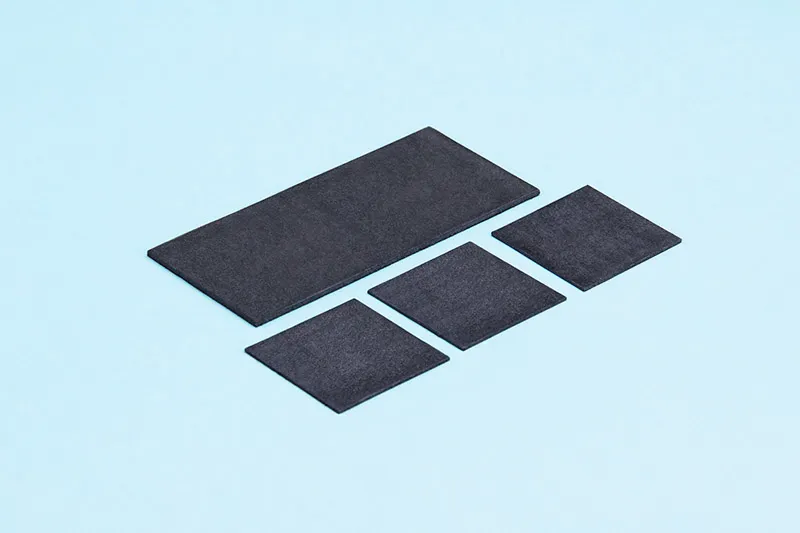
Thickness, Tolerance, and Dimensional Uniformity
Ultra-thin carbon fiber thermal conductive film (0.3mm-0.5mm) depends heavily on precise film thickness and strict thickness tolerance. Even a tiny deviation affects lamination pressure and chip contact.
Precision manufacturing
a. Controlled rolling and graphitization
b. Inline laser measurement
c. Automated trimming for edge accuracy
Dimensional stability
a. Stable fiber alignment
b. Low shrinkage during curing
c. Balanced resin distribution
Material consistency
a. Batch density inspection
b. Surface flatness validation
c. Thickness mapping across width
For devices using Ultra-thin carbon fiber thermal conductive film (0.3mm-0.5mm), steady uniformity ensures even bonding to processors and power modules. No weird gaps. No hot spots. Sheen Technology keeps tolerance within tight micrometer ranges, helping the carbon fiber thermal film fit snugly inside slim smartphones and compact chipsets.
Thermal Conductivity Performance and Anisotropy
| Product name | Color | Thermal Conductivity | Thermal Impedance (1mm,@20psi) | Thickness | Standard Hardness |
|---|---|---|---|---|---|
| Unit | - | W/m·K | ℃*in2/W | mm | Shore 00 |
| CSF15 | Black | 15.0 | 0.28 | 0.3 ~ 12.0 | 40/60±5 |
| CSF20 | Black | 20.0 | 0.18 | 0.3 ~ 12.0 | 40/60±5 |
| CSF25 | Black | 25.0 | 0.12 | 0.3 ~ 12.0 | 40/60±5 |
| CSF30 | Black | 30.0 | 0.10 | 0.3 ~ 12.0 | 40/60±5 |
| CSF35 | Black | 35.0 | 0.09 | 0.3 ~ 12.0 | 40/60±5 |
| CSF40 | Black | 40.0 | 0.08 | 0.3 ~ 12.0 | 40/60±5 |
| CSF45 | Black | 45.0 | 0.07 | 0.3 ~ 12.0 | 40/60±5 |
| Test Method | Visual | ASTM D5470 | ASTM D5470 | ASTM D374 | ASTM D2240 |
Heat moves differently across this ultra-thin carbon fiber thermal conductive film. The magic lies in anisotropy—strong lateral flow, controlled vertical flow.
In-plane conductivity
a. Graphene-aligned layers
b. High crystallinity after heat treatment
c. Rapid lateral heat dissipation
Through-plane conductivity
a. Managed resin interface
b. Insulated backing control
c. Stable thermal performance under load
Thermal management integration
a. CPU heat spreading
b. GPU module balancing
c. Power transistor buffering
This balance between thermal conductivity, in-plane conductivity, and through-plane conductivity allows Ultra-thin carbon fiber thermal conductive film (0.3mm-0.5mm) to push heat away fast while protecting nearby parts. It’s why thin carbon fiber heat spreader film is now common in gaming laptops and AI edge devices.
Mechanical Flexibility, Lightweight Design and Durability
Bend it. Fold it. Install it in tight corners. Ultra-thin carbon fiber thermal conductive film (0.3mm-0.5mm) handles stress thanks to high tensile strength and real mechanical flexibility.
· Slim profile supports lightweight design in drones and wearables.
· Stable fiber matrix improves wear resistance.
· Reinforced layers boost impact resistance.
Short bends during assembly? Fine. Repeated opening in foldable devices? Still fine. The carbon fiber thermal sheet keeps durability without cracking. Sheen Technology fine-tunes resin ratios so foldability doesn’t reduce thermal output. That balance makes this ultra-thin carbon fiber film a go-to pick for compact automotive electronics too.
Chemical Vapor Deposition, Surface Treatment and UL Certification
Material quality starts at chemical vapor deposition, where controlled material synthesis aligns carbon layers for strength and heat flow. After that, smart surface treatment improves bonding and electrical insulation.
Key processing indicators:
| Parameter | Typical Range | Functional Impact |
| Deposition Temperature | 900–1100°C | Crystal alignment |
| Film Thickness | 0.3–0.5 mm | Device compatibility |
| Surface Roughness | ≤0.8 µm | Adhesion strength |
| Flame Rating | UL94 V-0 | Flame retardancy |
Post-treatment surface modification boosts adhesion to aluminum plates and graphite pads. Verified UL certification and global safety standards back its reliability in consumer electronics and EV battery modules.
Sheen Technology ensures every Ultra-thin carbon fiber thermal conductive film (0.3mm-0.5mm) passes flame and insulation checks before shipment, so performance and safety walk hand in hand.
4 Benefits Of 0.3mm-0.5mm Thermal Films
Ultra devices are getting hotter and thinner at the same time. That’s where Ultra-thin carbon fiber thermal conductive film (0.3mm-0.5mm) steps in. From gaming rigs to wearables, this carbon fiber thermal conductive film keeps heat under control without adding bulk. Let’s break it down.
Enhanced Heat Dissipation for High-End Processors
When High-End Processors push peak clock speeds, Thermal Management becomes mission-critical.
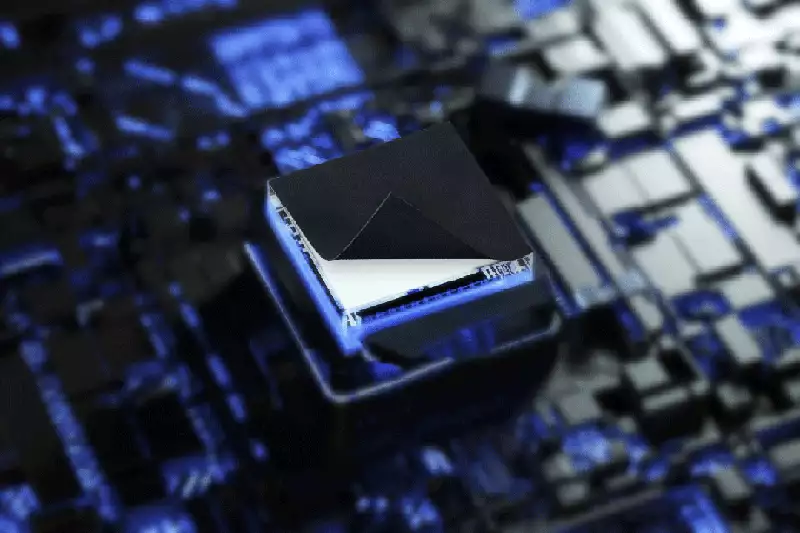
Core advantages of Ultra-thin carbon fiber thermal conductive film (0.3mm-0.5mm):
· Higher Thermal Conductivity
· Faster Heat Dissipation
· Direct Performance Enhancement
· Active Overheating Prevention
Heat flows from CPU/GPU die
· Transfers through carbon fiber thermal conductive film (0.3mm-0.5mm)
· Spreads across heat sink surface
· Reduces thermal throttling
Performance Snapshot
| Application | Thickness (mm) | Thermal Conductivity (W/m·K) | Temp Drop (°C) |
| Gaming Laptop CPU | 0.3 | 600 | 8–12 |
| Data Center GPU | 0.5 | 650 | 10–15 |
| AI Accelerator | 0.4 | 620 | 9–13 |
| Mini PC Chipset | 0.3 | 580 | 6–9 |
Under heavy loads, the Ultra-thin carbon fiber thermal conductive film (0.3mm-0.5mm) spreads heat laterally, stabilizing hotspots and extending processor lifespan. Sheen Technology fine-tunes this thin carbon fiber heat film for dense server boards and compact gaming builds alike.
Electrical Insulation Combined with Lightweight Composites
Inside compact electronics, Electrical Insulation can’t be compromised.
Material system of Ultra-thin carbon fiber thermal conductive film (0.3mm-0.5mm):
· Carbon fiber core
· Polymer matrix
· Reinforced Lightweight Composites
Key performance layers:
· Dielectric Strength shields circuits
· Balanced Material Properties protect signal paths
· Maintained Structural Integrity
· Noticeable Weight Reduction
This carbon fiber thermal sheet handles heat while isolating voltage-sensitive zones. In tablets and smart home boards, it prevents short circuits and keeps overall weight low. Sheen Technology designs each Ultra-thin carbon fiber thermal conductive film (0.3mm-0.5mm) to meet strict board-level insulation targets without adding mechanical stress.
Exceptional Flexibility Around Memory Modules and LEDs
Tight spaces demand real Flexibility.
Around Memory Modules
· Adapts to uneven chip heights
· Supports clean Component Integration
Around LEDs
· Improves heat spreading
· Protects solder pads
Application flow:
· Cut thin carbon fiber thermal conductive film (0.3mm-0.5mm) to layout size
· Position across memory array
· Apply light pressure for full Conformability
· Seal within housing
Because the Ultra-thin carbon fiber thermal conductive film (0.3mm-0.5mm) bends without cracking, it improves Assembly Ease and preserves every Thermal Interface Material contact point. That means fewer stress fractures and longer LED life in automotive lighting and display modules.
Compliance-Ready Durability under RoHS and REACH
Regulations matter. So does long-term stability.
Compliance framework:
RoHS Compliance
· Heavy metal control
· Restricted substance testing
REACH Compliance
· Chemical registration
· Continuous monitoring
Durability stack:
· High Product Durability under vibration
· Verified Material Safety
· Documented Regulatory Adherence
· Stable Long-Term Performance
The Ultra-thin carbon fiber thermal conductive film (0.3mm-0.5mm) used by Sheen Technology meets environmental standards for automotive ECUs and wearable sensors. This ultra-thin carbon fiber heat film keeps devices cool while staying aligned with global compliance rules. In short, safer materials, steadier output, and less hassle during certification.
Smartphone Cooling: Carbon Fiber Film Application
Slim phones run hot, no surprise there. Smart integration of Ultra-thin carbon fiber thermal conductive film (0.3mm-0.5mm) keeps devices fast without turning your pocket into a heater. From carbon fiber thermal layers to ultra-thin thermal conductive film stacks, cooling design is getting seriously refined.
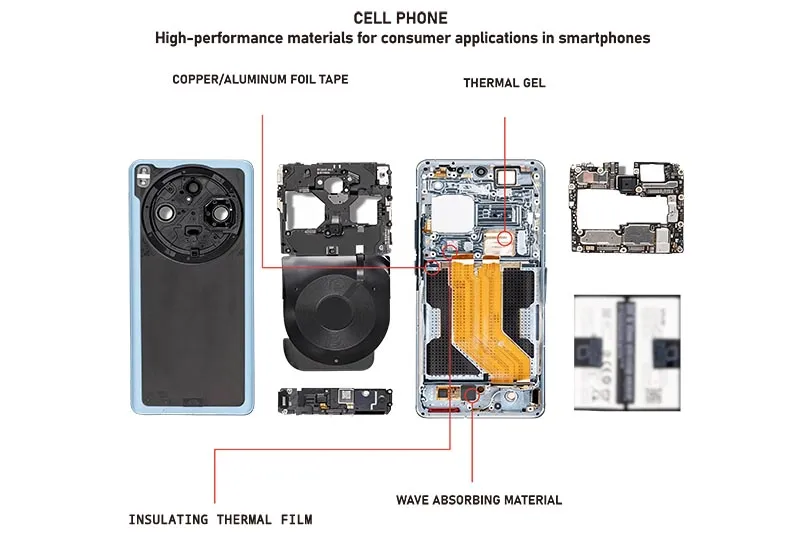
Lamination Integration with Ultra-Thin Vapor Chambers
The pairing of Carbon Fiber Film with Ultra-thin Vapor Chambers reshapes internal cooling layouts.
Core Integration Logic
Heat Source Interface
· Processor transfers heat through Thermal Interface Material
· Bonded to Ultra-thin carbon fiber thermal conductive film (0.3mm-0.5mm)
Spreading Layer
· Film distributes heat laterallyVapor chamber accelerates Heat Dissipation
Structural Optimization
Thickness Optimization
· 0.3mm–0.5mm range balances rigidity and flexibility
Device Integration
· Fits slim smartphones
· Supports foldable layouts
At Sheen Technology, lamination control keeps the ultra-thin carbon fiber sheet flat, tight, and bubble-free—small detail, big cooling gain.
Graphene-Reinforced Film for Power Transistor Thermal Management
When Graphene-Reinforced Film enters the stack, heat moves fast.
Material Enhancement
· Graphene boosts High Thermal Conductivity
· Carbon fiber base stabilizes structure
Application Focus
Power Transistors
· RF modules
· Fast-charging ICs
Thermal Flow Path
· Chip hotspot forms
· Heat spreads across reinforced layer
· Frame assists Component Cooling
The result? Higher Heat Transfer Efficiency with thinner build. Ultra-thin carbon fiber thermal conductive film (0.3mm-0.5mm) combined with graphene handles peak gaming loads without drama.
Surface-Treated Film Coupled with Phase Change Materials
This combo is all about contact quality and smart buffering.
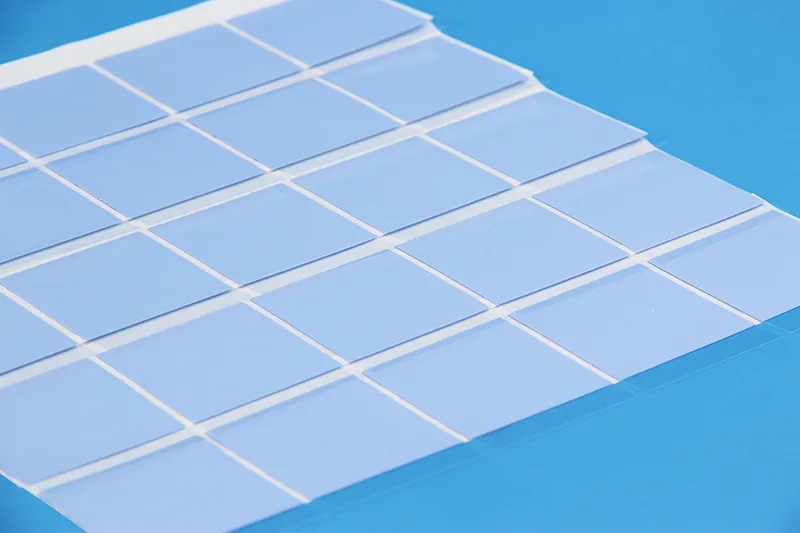
Interface Engineering
· Surface-Treated Film improves Enhanced Adhesion
· Reduces micro air gaps
Energy Buffering
· Phase Change Materials enable Thermal Energy Storage
· Absorb spikes, release gradually
Coupled System Performance
· Better Temperature Regulation
· Stable frame temperature
· Longer component lifespan
In real builds, Sheen Technology aligns surface-treated ultra-thin thermal conductive film with PCM layers to raise Heat Absorption efficiency. The thin carbon fiber thermal film works quietly in the background, but it keeps performance steady when users push their phones hard.
FAQs about Ultra-Thin Carbon Fiber Thermal Conductive Film (0.3mm-0.5mm)
What makes Ultra-thin carbon fiber thermal conductive film (0.3mm-0.5mm) ideal for smartphones and laptops?
In ultra-slim smartphones and laptops, heat builds up fast around processors, graphics cards, and memory modules. This film acts as a quiet heat highway.
It delivers:
· High in-plane thermal conductivity through graphene alignment
· Strong heat dissipation without adding bulk
· Mechanical flexibility for curved housings
· Lightweight structure with reliable electrical insulation
When laminated with vapor chambers or thermal interface materials, it spreads heat evenly across the chassis, reducing throttling and keeping consumer electronics steady under pressure.
How do manufacturing processes ensure stable performance and thickness control?
Consistency begins at the material level and ends in certified production lines.
· Graphitization improves crystal structure and boosts thermal conductivity.
· Chemical vapor deposition refines surface integrity and bonding strength.
· Precision cutting maintains 0.3mm–0.5mm tolerance for tight assemblies.
· Surface treatment supports lamination with phase change materials or polymers.
Quality control aligned with ISO standards and UL certification, plus RoHS compliance and REACH regulation, ensures each sheet meets JEDEC standards for chipsets and power transistors.
Why is thermal anisotropy important for processors and automotive electronics?
Anisotropy means heat moves quickly along the plane, not through thickness. That directional control changes everything:
· In data centers and laptops: heat from processors and graphics cards spreads outward instead of stacking up.
· In automotive electronics, composites resist vibration while maintaining durability and stable heat dissipation.
· In LED modules and power transistors, reduced hot spots extend service life.
By combining graphene or carbon nanotubes within carbon composites, the film channels energy with precision—supporting heat sinks, vapor chambers, or even liquid cooling systems without adding weight or rigidity.
Sheen Thermal
Dongguan Sheen Electronic Technology Co., Ltd · Founded in 2008
Manufacturer of thermal interface materials and silicone foam for automotive electronics, energy storage, power electronics, communications and consumer electronics.
Certified
- ISO 9001:2015
- ISO 14001:2015
- IATF 16949:2016
What we supply
- Thermal conductivity Up to 90 W/m·K
- Thickness 0.3–10.0 mm
- Custom & samples Die-cut to drawing, 3–7 days