
 English
 usheenthermal

How a Multi-layer Graphene Composite Pad Improves Thermal Cooling
Date:2026-06-22
How a Multi-layer Graphene Composite Pad Improves Thermal Cooling
Heat is quietly wrecking modern electronics, and the Multi-layer graphene composite pad steps in like a cool-headed fixer that actually keeps systems from cooking themselves alive.
Sheen Technology engineers note layered graphene structures improve thermal pathways and maintain stability under repeated thermal cycling.
That means fewer failures, cooler performance, and a smarter path for designs pushing limits.
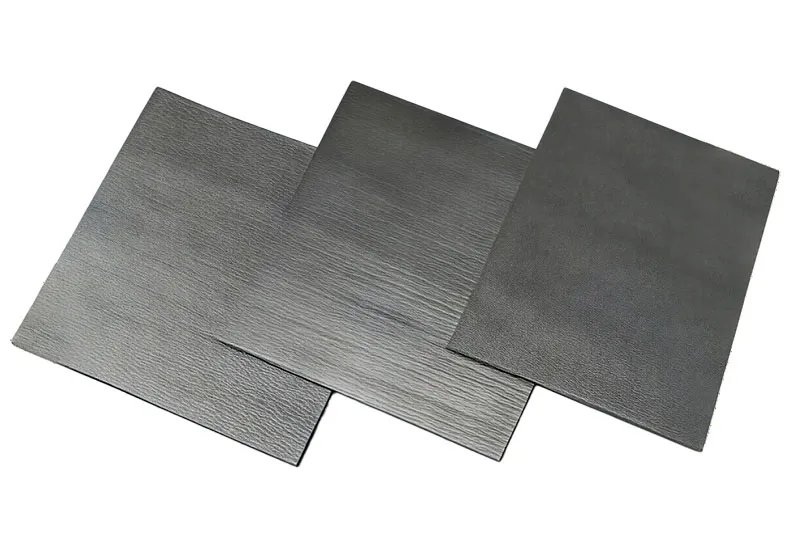
Key Points: Multi-layer graphene composite pad
· Enhances thermal pathways by embedding graphene layers and polymer binder, boosting heat dissipation in high‐density electronics.
· Balances thermal conductivity and mechanical strength through filler ratios (graphene flakes, CNTs), ensuring reliable packaging.
· Incorporates interfacial layers to reduce resistance and maintain adhesion under thermal cycling, improving long‐term stability.
· Follows a four‐step integration: CVD/exfoliation, solution processing, hot pressing/lamination, and ASTM‐standard thermal testing.
Understanding Thermal Bottlenecks In Electronics
Thermal limits quietly shape how modern devices behave. From LEDs to wearables, trapped heat slows performance and chips away at lifespan. Let’s unpack where the real bottlenecks hide—and how smarter materials fix them.
Heat accumulation from low thermal conductivity components
When low thermal conductivity materials sit inside dense electronic components, heat accumulation builds fast. The issue is not dramatic at first. Then thermal resistance rises, hot spots form, and device degradation follows.
Material Layer Constraints
1.1 Substrate limitations
· Epoxy and standard polymers restrict heat transfer.
· Ceramic fillers help, yet dispersion gaps remain.
1.2 Interface barriers
· Air voids increase thermal resistance.
· Poor bonding amplifies heat accumulation.
System-Level Impact
· 2.1 LEDs:Junction temperature climbs,Lumen output drops.
· 2.2 Battery packs:Uneven temperature zones,Cell imbalance,Reduced cycle life
Data Snapshot
| Material Type | Thermal Conductivity (W/m·K) | Hot Spot Risk Level | Typical Application |
| Standard epoxy | 0.2–0.3 | High | PCB encapsulation |
| Alumina-filled resin | 1–3 | Medium | Power modules |
| Graphite sheet | 75–90 | Low | LED backplanes |
| Aluminum alloy | 150–200 | Low | Heat spreaders |
A Multi-layer graphene composite pad—segmented as Multi-layer / graphene / composite / pad—cuts internal thermal resistance sharply. The graphene composite layer spreads heat sideways, while the pad structure fits tight spaces. Sheen Technology integrates this multi layer graphene pad into compact assemblies, reducing hot spots without adding bulk.
Dielectric constant and thermal expansion effects on reliability
Tiny mismatches create big headaches. A drifting dielectric constant changes electrical properties, while uneven thermal expansion causes material stress.
Key stress triggers:
· Sudden temperature swings
· High-frequency switching
· Flexible bending cycles
1) Expansion mismatch
· Silicon vs. polymer CTE gap
· Result: interfacial delamination
2) Electrical drift
· Rising dielectric constant under heat
· Signal delay and loss
3) Mechanical fallout
· Micro-cracks
· Reduced mechanical stability
· Long-term reliability drop
A graphene composite pad with layered architecture balances conductivity and expansion. The Multi-layer graphene composite pad absorbs strain between chip and housing. In wearables, that buffer effect keeps material stress from turning into cracks. Sheen Technology fine-tunes filler alignment so the multi-layer graphene composite pad supports both insulation control and thermal flow—no trade-off drama.
EMI shielding constraints hindering efficient heat dissipation
Dense devices need strong EMI shielding, but heavy metal fillers restrict heat dissipation. That tension complicates thermal management.
· Step 1: Add shielding metals for electromagnetic interference control.
· Step 2: Electrical conductivity improves, yet thermal pathways remain uneven.
· Step 3: Weight and density increase, limiting airflow and system cooling.
· Step 4: Internal temperature rises, stressing thermal interface materials.
“Thermal density in compact electronics is projected to rise over 15% by 2027 as device integration accelerates,” notes the International Energy Agency’s 2025 efficiency outlook.
Smart balance changes the game:
· Graphene networks maintain shielding effectiveness.
· Layered composite pads guide lateral heat spread.
· Reduced mass eases overall system constraints.
A Multi-layer graphene composite pad works here as both shield support and heat spreader. The multi layer graphene pad structure keeps EMI control tight while letting heat move freely. That balance is why Sheen Technology positions its graphene composite pad solutions for compact 5G modules and high-density boards—cooler, lighter, and built to last.
Multi-Layer Graphene Composite Pad: Core Concept
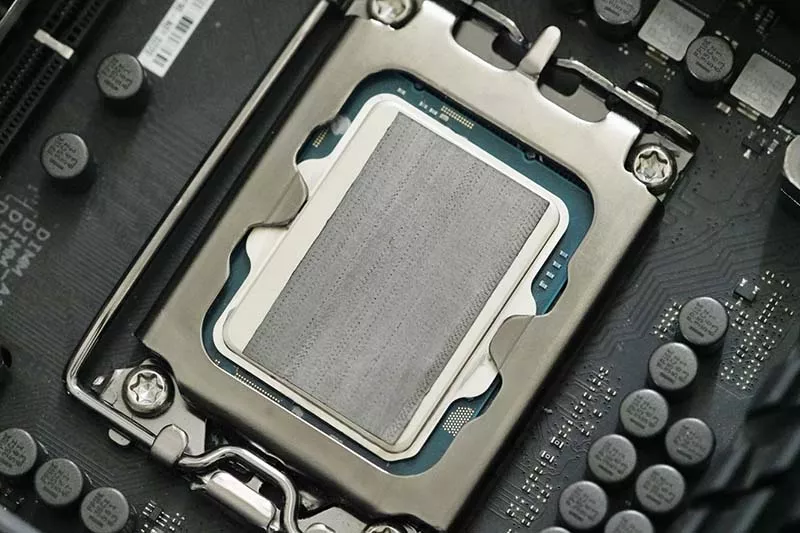
The Multi-layer graphene composite pad sits at the crossroads of heat control and mechanical resilience. In semiconductor packaging, heat is the silent dealbreaker. A well-designed multi layer graphene composite pad moves heat fast while staying flexible. This is where Sheen Technology turns material science into something practical, durable, and ready for real-world pressure.
Graphene layers and polymer binder in the composite matrix
A high-performing Multi-layer graphene composite pad relies on the coordination of graphene, layers, and polymer systems inside a unified composite matrix.
Core material architecture
1.1 Graphene layers
· Provide ultra-high in-plane thermal pathways
· Build a conductive network across the structure
· Maintain mechanical thinness without sacrificing strength
1.2 Polymer binder
· Acts as flexible binder within the matrix
· Enhances adhesion to adjacent material surfaces
· Absorbs mechanical stress during thermal cycling
Structural interaction inside the composite
2.1 Heat conduction mechanism
· Phonons travel across stacked graphene layers
· The polymer binder fills micro-voids, reducing air gaps
2.2 Mechanical synergy
· The composite balances rigidity and compliance
· The internal structure prevents crack propagation
Application alignment
3.1 In chip packaging
· The Multi-layer graphene composite pad bridges dies and heat spreaders
· Maintains uniform contact under pressure
3.2 In power modules
· Stable matrix material supports long-term thermal load
A graphene composite pad without this layered coordination simply cannot deliver consistent thermal output.
Optimizing thermal conductivity versus mechanical strength
Balancing thermal conductivity and mechanical strength in a Multi-layer graphene composite pad is a real-world optimization game. Push heat transfer too hard and you risk brittleness. Focus only on toughness and heat starts to bottleneck.
Key adjustment levers include:
· Graphene flake size and orientation
· Filler loading ratio inside the composite matrix
· CNT hybrid reinforcement for added tensile support
1) Increasing graphene density
· Boosts heat transfer pathways
· Raises stiffness
2) Adjusting polymer elasticity
· Improves flexibility
· Moderates internal stress
3) Fine-tuning interface bonding
· Enhances overall material properties
· Protects long-term performance
Industry data backs this up:
“Advanced thermal interface materials using graphene-enhanced composites are projected to see accelerated adoption in high-power electronics through 2026 due to superior conductivity-to-weight ratios.” — IDTechEx, 2025 Thermal Interface Materials Report
The Multi-layer graphene composite pad from Sheen Technology reflects this trade-off mindset—heat moves fast, yet the pad stays intact under compression. It’s not about extremes. It’s about controlled balance.
Interfacial layers’ role in long-term stability
Long-term stability in a Multi-layer graphene composite pad doesn’t happen by accident. It’s built step by step through smart interfacial layers.
Step 1: Interface preparation
· Surface roughness is optimized to strengthen adhesion.
· Contaminants that trigger early degradation are removed.
Step 2: Interfacial layer integration
· Thin bonding films reduce contact thermal resistance.
· Stress is redistributed across the interface, limiting crack formation.
Step 3: Thermal cycling validation
· Repeated expansion and contraction test durability.
· Performance consistency confirms reliability over time.
Without engineered interfacial layers, even a well-designed multi layer graphene composite pad can lose contact pressure and thermal efficiency. A properly tuned graphene composite pad keeps its grip—mechanically and thermally—through thousands of cycles.
4 Steps To Integrate Graphene Pads
Getting a Multi-layer graphene composite pad right isn’t just lab work—it’s craft plus control. From graphene prep to final ASTM testing, every move shapes thermal flow, bonding strength, and long-term reliability in real devices.
Step 1 – Preparing graphene flakes via CVD and exfoliation
The backbone of a stable Multi-layer graphene composite pad starts with disciplined preparation of graphene flakes. The route blends CVD, controlled exfoliation, and precise synthesis.
Core material targets:
· High in-plane conductivity
· Few-layer thickness control
· Minimal lattice defects
CVD growth phase
· Gas ratio tuning:Methane concentration,Carrier gas stability.
· Temperature zoning:Uniform heat field,Controlled cooling rate.
Exfoliation refinement
· Mechanical separation
· Chemical-assisted thinning
· Particle size screening
Quality validation
· Raman mapping
· Sheet resistance scan
When flakes show clean edges and stable conductivity, the base for the Multi-layer graphene composite pad is ready. Skip this discipline and the later composite work won’t hold up.
Step 2 – Solution processing of graphene oxide with polymer matrix
Here the chemistry gets practical. Solution processing blends graphene oxide with a polymer matrix, shaping a workable composite slurry for the multilayer graphene pad.
Key control points:
· Stable dispersion without agglomeration
· Balanced solvent evaporation rate
· Predictable mixture viscosity
Typical flow looks like this:
• Disperse graphene oxide under controlled shear
• Adjust pH for compatibility
• Introduce polymer gradually
• Degas before coating
Too thick? Coating lines choke. Too thin? Layer uniformity drops. A well-managed graphene composite pad slurry spreads evenly in roll-to-roll setups, supporting consistent layer stacking. The result feeds directly into a stronger Multi-layer graphene composite pad with fewer internal voids.
Step 3 – Hot pressing and lamination for ideal density and adhesion
After coating, consolidation defines performance. Hot pressing and lamination transform a loose stack into a dense composite body with reliable bonding.
Pressure calibration
· Surface contact leveling
· Void reduction
Thermal profile tuning
· Polymer softening window
· Controlled cooling to lock structure
Adhesion enhancement
· Interface activation
· Surface energy matching
Nested control matters:
· Manufacturing stage checks:Density measurement,Peel strength sampling.
· Microstructure checks:Cross-section SEM,Interlayer uniformity.
A properly consolidated Multi-layer graphene composite pad shows tight interfaces and reduced thermal boundary resistance. That’s where real heat transfer gains happen, not in marketing slides.
Step 4 – Verifying performance through ASTM thermal conductivity measurement
Performance verification isn’t guesswork. It follows ASTM standard protocols for thermal conductivity measurement and repeatable testing.
Evaluation stack:
· Laser flash diffusivity test
· Guarded hot plate validation
· SEM morphology review
· Raman structural scan
A 2025 thermal materials outlook from IDTechEx notes:
“Graphene-enhanced thermal interface materials are moving from pilot to scaled adoption as consistency and standards compliance improve.”
That shift shows why each Multi-layer graphene composite pad must pass recognized benchmarks. When a graphene thermal pad meets ASTM conductivity targets and mechanical reliability checks, device makers gain confidence in long-cycle electronics and power modules.
With disciplined synthesis, smart solution processing, controlled lamination, and verified metrics, companies like Sheen Technology help manufacturers move from lab samples to stable production of high-performance Multi-layer graphene composite pad solutions—without cutting corners or overhyping results.
【Request a Custom Quote】Share your target thermal conductivity, thickness, compression requirements, and application environment. We can help evaluate the right composite pad structure for your design.
Sheen Thermal
Dongguan Sheen Electronic Technology Co., Ltd · Founded in 2008
Manufacturer of thermal interface materials and silicone foam for automotive electronics, energy storage, power electronics, communications and consumer electronics.
Certified
- ISO 9001:2015
- ISO 14001:2015
- IATF 16949:2016
What we supply
- Thermal conductivity Up to 90 W/m·K
- Thickness 0.3–10.0 mm
- Custom & samples Die-cut to drawing, 3–7 days