
 English
 usheenthermal

The Ultimate Guide to Nano-alumina Thermally Conductive Applications in 2026
Date:2026-02-22
The Ultimate Guide to Nano-alumina Thermally Conductive Applications in 2026
You’ve heard the buzz, right? "Nano-alumina Thermally Conductive materials" are stealing the spotlight in 2026, and for good reason. That’s where nano-alumina swoops in like a superhero, boasting up to 45% thermal conductivity gains while keeping electrical insulation rock-solid. Engineers rave about its magic combo of durability and efficiency, all packed into microscopic particles that fit seamlessly into manufacturing flows.Now here’s the kicker: thermal management isn’t just about cooling—it’s about saving big bucks long-term. Sheen Electronic Technology reported last year that improved heat dissipation directly cuts warranty costs by nearly 30%. If you’re sourcing for scale, wouldn’t you want something reliable enough to run marathon lifespans without breaking a sweat?
Data Proves: Nano-Alumina Thermally Conductive Fillers Boost Thermal Conductivity by 45%
Nano-alumina thermally conductive fillers are revolutionizing heat management in electronics, delivering a remarkable 45% boost in thermal conductivity.Particle Size Distribution’s Impact on Thermal Conductivity
• Optimized particle size enhances the dispersion of nano-alumina fillers, minimizing voids and improving overall thermal conductivity.• At higher filler loading, smaller particles cross the percolation threshold more effectively, creating efficient heat pathways.
Reducing interfacial resistance between particles ensures smoother heat transfer across interfaces.
X-Ray Diffraction and Thermal Analysis Validating a 45% Boost
• Advanced X-ray diffraction techniques reveal improved filler crystallinity, ensuring stable phase composition for heat flow.• Precise measurements confirm reduced phonon scattering, boosting overall energy transfer efficiency.
• Enhanced composite morphology promotes consistent performance even under varying conditions.
"Recent thermal analysis studies highlight how nano-alumina-based composites significantly outperform traditional materials in maintaining high conductivity under stress." – Market Insights Report, 2024
Reliability Testing Confirms Extended Device Lifespan
• Rigorous thermal cycling tests demonstrate reduced failure rates in devices incorporating nano-alumina fillers.• Accelerated aging simulations show consistent improvements in long-term stability and operational durability.
By improving overall device performance, manufacturers like Sheen Electronic Technology ensure extended lifespans for critical power electronics solutions.
Why Choose Nano-Alumina Thermally Conductive Fillers?
Nano-alumina thermally conductive fillers are game-changers in thermal management applications. Their unique properties make them indispensable for industries seeking efficiency and reliability in heat transfer.Exceptional Thermal Conductivity Paired with High Dielectric Constant
• Nano-alumina excels at balancing thermal conductivity and electrical insulation, making it ideal for demanding environments.• Its high dielectric constant ensures superior electrical performance while effectively managing heat transfer.
• Applications include power electronics and advanced circuit boards, where both thermal and electrical stability are critical.
This dual capability simplifies material selection for engineers, ensuring performance without compromise.
Controlled Coefficient of Thermal Expansion for Durable Heat Sinks
• Thermal expansion is a key factor in designing reliable heat sinks.• Nano-alumina minimizes mismatches between materials, reducing stress during temperature changes.
• This leads to longer-lasting devices with enhanced durability under extreme conditions.
By controlling the coefficient of thermal expansion, nano-alumina ensures that structural integrity is maintained even during repeated thermal cycling.
Versatile Forms: From Nano-Alumina Powder to Dispersion
• Available as powders, slurries, or ready-to-use dispersions, nano-alumina adapts to diverse manufacturing needs.• These versatile forms simplify integration into composites or formulations tailored for specific applications like coatings or adhesives.
Whether you need precise processing control or enhanced material properties, nano-alumina delivers flexibility without compromising quality.
Enhanced Heat Dissipation in Power Electronics and LED Packaging
Efficient heat dissipation is crucial for the longevity of electronic components such as LEDs and power modules:
- Nano-alumina improves thermal pathways within devices, maintaining consistent performance over time.
- It also boosts device reliability by preventing overheating, which can degrade sensitive components.
- Perfect for use in thermal interface materials, these fillers ensure optimal cooling efficiency.
3 Key Factors In Nano-Alumina Thermally Conductive Performance
Nano-alumina thermally conductive materials are transforming heat management in modern electronics.Particle Size Distribution’s Role in Lowering Thermal Resistance
• Smaller particle size ensures better packing, minimizing voids and enhancing thermal transfer.• Uneven size distribution leads to agglomeration, which disrupts heat flow.
• Optimizing packing density reduces both phonon scattering and interfacial resistance, improving efficiency.
By carefully controlling particle sizes, manufacturers can achieve consistent thermal conductivity, vital for high-performance applications like CPUs and LEDs.
Surface Treatment Techniques for Improved Composite Densification
• Advanced surface treatment methods, such as using coupling agents, improve filler dispersion within composites.• Enhanced wettability ensures better interaction between fillers and matrix materials.
• Uniform surface modifications reduce voids, increasing overall composite density.
Improved densification directly boosts a material's ability to manage heat effectively while maintaining durability under stress.
Matrix Compatibility Influences Heat Dissipation and Reliability
1) A well-matched polymer matrix enhances overall thermal stability by reducing mismatches in thermal expansion rates.2) Stronger bonds between the filler and matrix improve both mechanical properties and long-term reliability.
When compatibility is prioritized, the result is a composite material capable of superior heat dissipation without compromising structural integrity or lifespan.
Nano-Alumina Vs. Boron Nitride Composites
Nano-alumina and boron nitride composites are widely recognized for their distinct advantages in advanced material applications, especially within electronics and thermal management systems. Each offers unique benefits tailored to specific needs, making them indispensable in various industries.Nano-Alumina Composites
Key Benefits:• Thermal conductivity enhancement ensures efficient heat dissipation in electronic devices.
• High dielectric strength supports robust insulation properties, safeguarding sensitive equipment.
• Exceptional mechanical durability makes it a preferred filler material for demanding polymer matrices.
Nano-alumina's fine particle size contributes to uniform dispersion within the polymer matrix, resulting in enhanced performance metrics across multiple domains.
Boron Nitride Composites
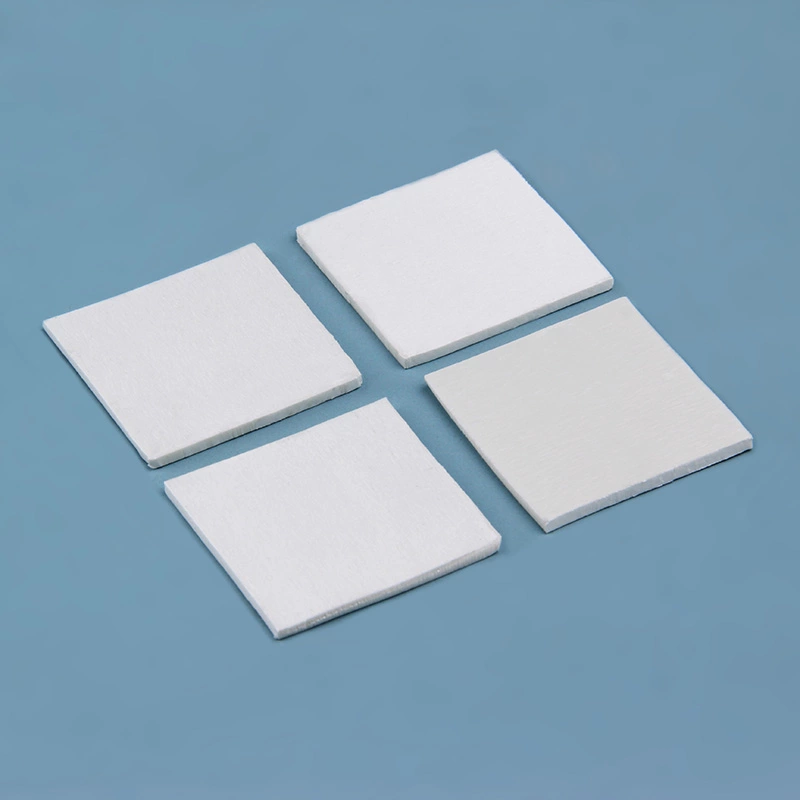
Boron nitride composites stand out for their ability to handle extreme temperatures and provide reliable thermal management solutions.
1) Unique Characteristics:
• Superior electrical insulation enables safe operation under high-voltage conditions.
• The hexagonal structure of hexagonal boron nitride enhances its anisotropic thermal properties.
2) Applications:
• Used extensively as thermal interface materials, especially in semiconductor cooling systems.
• Its compatibility with a range of ceramic matrices makes it ideal for aerospace-grade components.
3) Challenges:
While offering excellent stability at elevated temperatures, it may lack the broad mechanical adaptability seen in nano-alumina composites.
Grouped Features:
• High-temperature resistance ensures reliability under extreme working conditions.
• Anisotropic behavior allows directional heat flow optimization.
• Compatibility with diverse ceramic matrices expands its industrial utility.
Both materials cater to niche requirements but differ significantly when examined through the lens of application-specific priorities like dielectric strength or mechanical resilience
Power Modules: Nano-Alumina Thermally Conductive Integration
The integration of nano-alumina thermally conductive materials into power modules enhances thermal performance, reliability, and device longevity.Compounding Nano-Alumina Fillers for Power Transistor Modules
Key Benefits of Nano-Alumina Fillers:• Superior thermal conductivity for heat dissipation.
• Enhanced mechanical strength in the polymer matrix.
• Consistent dispersion to avoid hotspots.
3 Main Factors in Filler Optimization:
• Particle size uniformity to ensure seamless compounding.
• Surface treatment to improve adhesion with the polymer matrix.
• Concentration levels that balance conductivity and structural integrity.
Proper filler compounding ensures power transistor modules can efficiently manage heat loads while maintaining durability under high-stress conditions.
Thermal Analysis: Ensuring Operating Temperature Stability
Thermal analysis plays a critical role in maintaining temperature stability across all operating conditions:• Why It Matters: Excessive heat can degrade components, leading to failure or reduced performance over time.
Methods Used in Thermal Management:
• Simulation tools to predict heat dissipation patterns.
• Monitoring systems that track real-time temperature fluctuations.
• Optimization of thermal resistance layers within module design.
"Recent studies indicate that advanced thermal management techniques reduce semiconductor failure rates by up to 40%," according to a report from TechInsights, published in early 2024.
Optimizing Densification for Minimal Thermal Resistance
Achieving minimal thermal resistance requires careful attention during densification processes:1️⃣ Sintering Precision: Uniform heating avoids voids and maximizes material density.
2️⃣ Particle Size Control: Smaller particles enhance packing density while reducing porosity.
3️⃣ Interface Engineering: Strengthening interfaces between materials minimizes thermal barriers.
A well-densified structure ensures efficient heat flow, crucial for high-performance power modules where every degree counts!
Integration Strategies for Enhanced Device Lifespan
To extend device lifespan, manufacturers focus on innovative integration strategies:- Use of advanced thermal interface materials (TIMs) reduces stress caused by temperature cycling.
- Improved packaging designs enhance adhesion and minimize delamination risks over time.
- Stress distribution techniques ensure consistent performance even under extreme conditions.
FAQs about Nano-Alumina Thermally Conductive
What makes Nano-Alumina ideal for power electronics?• High thermal conductivity quietly escorts heat away from microprocessors and integrated circuits.
• Electrical insulation guards delicate paths inside semiconductor devices against stray currents.
• Balanced coefficient of thermal expansion keeps structures calm under rapid temperature swings in power transistors.
How does particle size distribution change performance in LED packaging?
• Smaller particles slip into every gap within thermal interface materials, cutting down on thermal resistance.
• A tailored mix ensures even contact with encapsulants and potting compounds, allowing LEDs to glow without the shadow of overheating.
What durability gains do encapsulants see with these fillers?
⚙ Surface treatments coax stronger bonds between filler and matrix during mixing or compounding.
⚙ Controlled CTE prevents cracking during shifts in operating temperature—critical for sensors and memory modules that endure long duty cycles.
Can powders be customized before shipment for industrial runs?
Customized sizing tunes particle compatibility across multiple applications.
| Form | Custom Option | Application Focus |
| Powder | Particle size distribution | Thermal interface materials & heat sinks |
| Slurry | Composite blend ratio | LED packaging & encapsulants |
| Dispersion | Surface treatment type | Semiconductor device cooling |
Sheen Thermal
Dongguan Sheen Electronic Technology Co., Ltd · Founded in 2008
Manufacturer of thermal interface materials and silicone foam for automotive electronics, energy storage, power electronics, communications and consumer electronics.
Certified
- ISO 9001:2015
- ISO 14001:2015
- IATF 16949:2016
What we supply
- Thermal conductivity Up to 90 W/m·K
- Thickness 0.3–10.0 mm
- Custom & samples Die-cut to drawing, 3–7 days