
 English
 usheenthermal

Why is Silicone Foam Becoming the Preferred Material for New Energy Vehicle Battery Packs?
Date:2025-11-28
Why is silicone foam becoming the preferred material for new energy vehicle battery packs?
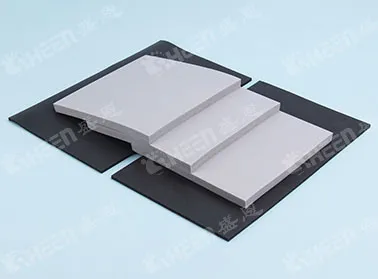
In a region with temperatures as low as -30°C, a new energy vehicle suddenly lost control while driving, resulting in a traffic accident. Subsequent investigations revealed that the incident was caused by a short circuit in the vehicle's battery pack due to seal failure in the cold environment. This real-world incident underscores that battery pack sealing technology is fundamental to new energy vehicle safety. Silicone foam—a novel eco-friendly material formed by heating and vulcanizing liquid silicone—has emerged as a preferred solution for battery pack sealing due to its high compressibility, excellent resilience, superior shock absorption, and sealing properties.
I. Key Challenges Facing Battery Packs Today
Despite accelerating advancements in new energy vehicles—including smarter autonomous driving systems and extended range capabilities—progress in these technologies cannot overshadow the critical role of battery pack development. Battery packs serve not only as energy storage containers but as core components determining vehicle safety and reliability. Consequently, challenges in battery pack advancement will inevitably constrain the broader new energy vehicle industry.
(1) Intrusion Risks from External EnvironmentsI. Key Challenges Facing Battery Packs Today
Despite accelerating advancements in new energy vehicles—including smarter autonomous driving systems and extended range capabilities—progress in these technologies cannot overshadow the critical role of battery pack development. Battery packs serve not only as energy storage containers but as core components determining vehicle safety and reliability. Consequently, challenges in battery pack advancement will inevitably constrain the broader new energy vehicle industry.
Research by Sheen Technology reveals that inadequate sealing of automotive battery pack enclosures allows external moisture, water vapor, dust, and even fine particulates to infiltrate the interior, threatening the normal operation of battery modules.
(2) Potential impacts from physical environments
During normal charging/discharging cycles and high-power output operations, battery modules undergo thermal expansion and contraction due to temperature fluctuations. The ability of the enclosure's sealing protection to withstand these physical environmental variations is critical.
(3) Vibration and Impact Factors During Operation
Vehicles encounter varying degrees of vibration and impact across different road conditions, subjecting the battery pack's internal structure to unavoidable vibrational stress. If sealing materials lack adequate cushioning properties and compression-rebound capability, they cannot effectively mitigate this stress, increasing susceptibility to internal structural damage.
(4) Dimensional Tolerances
As the range of new energy vehicles continues to increase, battery packs tend to grow larger. Consequently, dimensional tolerances exist in battery pack sealing. If sealing materials cannot perfectly match these dimensions during cutting, gaps may form, compromising battery safety.
(5) High User Demand for Long-Term Stability
Consumers expect extended service life and consistent reliability from new energy vehicles. Thus, sealing materials must maintain long-term stability throughout the extended usage cycle, preventing functional failure due to material aging or degradation.
These challenges necessitate evaluating battery pack sealing protection and reliability from multiple perspectives, including physical compression and rebound performance, density, and temperature resistance.
Let's first examine a real-world case: After delivery in frigid regions, a certain new energy vehicle model experienced widespread battery pack seal failures. Under prolonged exposure to low temperatures, the sealing material on the battery pack casing hardened due to thermal effects, causing the seals to fail. This allowed external rainwater, dust, and particulate matter to infiltrate the interior, triggering short-circuit faults. Furthermore, during operation on bumpy roads, foreign objects inside generated abnormal noises, severely impacting user experience and brand reputation.
Through professional analysis by Sheen's R&D team, we identified the root causes as:
(3) Vibration and Impact Factors During Operation
Vehicles encounter varying degrees of vibration and impact across different road conditions, subjecting the battery pack's internal structure to unavoidable vibrational stress. If sealing materials lack adequate cushioning properties and compression-rebound capability, they cannot effectively mitigate this stress, increasing susceptibility to internal structural damage.
(4) Dimensional Tolerances
As the range of new energy vehicles continues to increase, battery packs tend to grow larger. Consequently, dimensional tolerances exist in battery pack sealing. If sealing materials cannot perfectly match these dimensions during cutting, gaps may form, compromising battery safety.
(5) High User Demand for Long-Term Stability
Consumers expect extended service life and consistent reliability from new energy vehicles. Thus, sealing materials must maintain long-term stability throughout the extended usage cycle, preventing functional failure due to material aging or degradation.
These challenges necessitate evaluating battery pack sealing protection and reliability from multiple perspectives, including physical compression and rebound performance, density, and temperature resistance.
Let's first examine a real-world case: After delivery in frigid regions, a certain new energy vehicle model experienced widespread battery pack seal failures. Under prolonged exposure to low temperatures, the sealing material on the battery pack casing hardened due to thermal effects, causing the seals to fail. This allowed external rainwater, dust, and particulate matter to infiltrate the interior, triggering short-circuit faults. Furthermore, during operation on bumpy roads, foreign objects inside generated abnormal noises, severely impacting user experience and brand reputation.
Through professional analysis by Sheen's R&D team, we identified the root causes as:
- Traditional sealants harden and become brittle at low temperatures, failing to effectively absorb vibrations
- Mismatch between the battery pack shell sealing system and the internal thermal management system design
- Lack of precise functional positioning for battery pack sealing materials
To address the aforementioned challenges, silicone foam has emerged as a specialized sealing material for battery pack protection. Below are its characteristics and parameters:
(1) High Compressibility
Sheen Technology's developed silicone foam is an eco-friendly material vulcanized from liquid silicone through heating. Its closed-cell or semi-closed-cell structure provides exceptional compressibility, allowing it to be compressed during assembly to accommodate gaps between housings, assembly tolerances, and structural deformations.
(2) Superior Resilience
After compression, this silicone foam regains its original shape, maintaining a consistently tight seal. This significantly prevents deterioration or failure of sealing resilience caused by prolonged compression.
(3) Superior Shock Absorption and Cushioning
During vehicle operation, battery packs endure vibration and impact transmitted through force conduction. The silicone foam high compressibility and exceptional resilience enable its elastic structure to absorb mechanical stresses during vibrations, preventing fatigue in casings and module structures.
(4) Ultimate Sealing Performance
The closed-cell structure of silicone foam , combined with its silicone base material and high density, provides outstanding dustproof, waterproof, and salt spray resistance, supporting vehicle-grade IP rating requirements.
(5) High Environmental Adaptability
Sheen Technology's silicone foam undergoes rigorous testing, demonstrating long-term stability across operating temperatures from −55°C to 200°C or higher, exhibiting exceptional environmental adaptability.
(6) Flexible Custom Cutting
Our silicone foam is molded as a single piece, enabling die-cutting to match battery pack casing structures. It can be freely trimmed to conform to various geometric shapes, facilitating automated assembly and reducing costs.
Sheen Technology SA Series Silicone Foam Parameters Reference
| Model | SA700-200 | SA700-260 | SA700-300 | SA700-350 | SA700-400 |
| Density (kg/m³) | 200 | 260 | 230 | 350 | 400 |
| Thickness (mm) | 1.6~20±10% | 1.2~20±10% | 1.2~20±10% | 0.6~20±10% | 1.0~12±10% |
| Compression Set @100℃ | <5% | <5% | <5% | <5% | <5% |
| Compression Rebound (KPa) | 7 | 10 | 30 | 50 | 80 |
| Volume Resistivity(Ω·cm) | >1014 | >1014 | >1014 | >1013 | >1013 |
| Flame Retardancy Rating(UL94) | V-0 | V-0 | V-0 | V-0 | V-0 |
| Operating Temperature(℃) | -55~200 | -55~200 | -55~200 | -55~200 | -50~200 |
In the design of sealing systems for new energy vehicle battery packs, we strictly adhere to the following standards:
1. GB/T 31484-2015 “Safety Requirements for Power Batteries for Electric Vehicles”: Requires battery packs to maintain sealing performance at -40°C
2. ISO 16750-3:2019 “Road vehicles - Environmental conditions and tests”: Specifies vibration test conditions of 20g
3. UL 94 V-0: Requires sealing materials to possess flame-retardant properties
Our silicone foam fully complies with these standards and demonstrates outstanding performance in practical applications.
III. Implementation of Silicone Foam Solutions in Battery Packs
.webp "silicone foam for new energy vehicle battery packs")
Based on the aforementioned challenges and material properties, the following demonstrates how silicone foam plays a critical role in the structural design of new energy vehicle battery packs:
(1) Assembly Adaptation Process
Pre-cut silicone foam sealing strips are pre-installed between the battery pack's upper and lower housings. Their height slightly exceeds the housing gap, allowing metered compression during assembly. Its high compressibility enables automatic conforming even with significant assembly tolerances, minimizing manual adjustments.
(2) Achieving Sealing and Protection
Post-assembly, the silicone foam's high compressibility, excellent resilience, and closed-cell structure completely block dust, moisture, rain, and other fine particulate ingress from the external environment. This ensures superior sealing performance even in harsh conditions.
(3) Shock Absorption and Cushioning During Operation
During vehicle operation, road vibrations, sudden acceleration, or abrupt braking subject the entire battery pack to structural vibrations and impacts. As an eco-friendly material formed by heating and vulcanizing liquid silicone rubber, silicone foam functions as a complete cushioning layer. It effectively reduces vibration transmission to the cell modules, thereby enhancing product reliability and lifespan.
(4) Long-Term Reliability Assurance
Through market feedback and Sheen Technology's professional testing, silicone foam demonstrates superior resilience and resistance to extreme temperatures. It maintains consistent sealing height and conformability across multiple thermal cycles (e.g., −40°C → +85°C) and vibration cycles without collapsing.
As a thermal management materials company with 20 years of experience, Sheen deeply understands the importance of precisely defining each material's functional role. Silicone foam , serving as the sealing and protective material for battery packs, is key to resolving sealing challenges.
In the thermal management arena of new energy vehicles, we are not merely material suppliers but partners collaborating with customers to solve technical challenges. Looking ahead, as battery module power continues to increase, vehicle structures evolve, and lightweighting demands intensify, sealing materials must also advance. We believe silicone foam will become one of the “standard materials” for battery pack sealing and protection. As a thermal management and new materials technology company, Sheen Technology will persistently develop higher-performance, more tailored silicone foam solutions to deliver more reliable sealing protection for new energy vehicles.
Sheen Thermal
Dongguan Sheen Electronic Technology Co., Ltd · Founded in 2008
Manufacturer of thermal interface materials and silicone foam for automotive electronics, energy storage, power electronics, communications and consumer electronics.
Certified
- ISO 9001:2015
- ISO 14001:2015
- IATF 16949:2016
What we supply
- Thermal conductivity Up to 90 W/m·K
- Thickness 0.3–10.0 mm
- Custom & samples Die-cut to drawing, 3–7 days