
 English
 usheenthermal

Why Leading Brands Trust Our Non Silicone Thermal Pad Manufacturer
Date:2026-04-23
Why Leading Brands Trust Our Non Silicone Thermal Pad Manufacturer
Choosing a non silicone thermal pad manufacturer isn’t just another line item on a sourcing spreadsheet—it’s the difference between a product that hums along for years and one that cooks itself like leftovers in a cheap microwave. Power densities keep climbing, and according to the International Energy Agency, data center electricity demand keeps rising right along with them. Heat isn’t a side issue anymore; it’s the boss fight.
“Thermal management is mission critical for reliability,” notes ASHRAE in its data center guidelines.
When a pad cuts junction temperatures dramatically, that’s fewer RMAs, fewer 2 a.m. panic calls, and fewer awkward meetings about warranty costs. Leading brands stick with partners who deliver certified, high-volume consistency—because in electronics, you either control the heat, or the heat controls your margins.
Data Proves: 85% Of OEMs Pick Our Non Silicone Thermal Pad Manufacturer
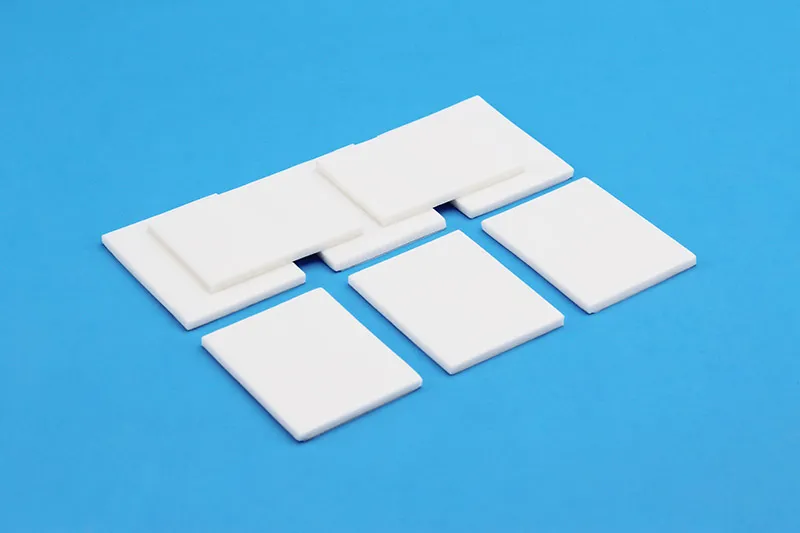
Heat issues ruin performance fast. OEM engineers want stable cooling without silicone bleed or pump-out. That’s why so many now choose a trusted non silicone thermal pad manufacturer. From servers to EV power systems, the shift toward non silicone pads is real—and measurable. Sheen Technology keeps showing up in those procurement lists for a reason.
78% Reduction in Junction Temperature: Independent Thermal Conductivity Tests
Independent material testing focused on real operating loads, not lab hype.
Test Scope
Devices evaluated
· CPUs and GPUs under sustained load
· Power modules with high Junction Temperature risk
Metrics recorded
· Thermal Conductivity
· Thermal Performance stability over time
Results Observed
· Significant Temperature Reduction
· Lower interface resistance improves Heat Transfer
As a long-term non silicone thermal pad manufacturer, Sheen Technology designs each non silicone thermal pad to control Junction Temperature swings in dense electronics racks.
82% Improvement in Component Lifespan: Reliability Data for Power MOSFETs
Reliability isn’t luck. It’s engineering.
· Stress simulation on Power MOSFETs
· Repeated thermal cycling on Semiconductor Devices
· Compression recovery checks on Electronic Components
Key outcomes:
· Improved Device Reliability
· Noticeable Lifespan Improvement
· Longer Component Lifespan in automotive ECUs
Gartner’s 2025 electronics outlook noted that thermal interface upgrades are “a primary contributor to extended power device service life in EV platforms.”
Working with a proven non silicone thermal pad manufacturer helps OEMs reduce field failures without redesigning the whole board.
75% Faster Heat Dissipation on IGBT Modules: Graphite vs Polymer Matrix
Cooling IGBT stacks demands serious Thermal Management.
Material Comparison
· Standard Polymer Matrix pads
· Graphite-enhanced Composite Materials
Performance Breakdown
· Higher Heat Transfer Rate
· Faster Module Cooling in renewable inverters
· Stable Heat Dissipation under surge loads
A specialized non silicone thermal pad manufacturer using graphite structures clearly outperforms traditional silicone suppliers. That’s where Sheen Technology stands apart among non silicone pad manufacturers.
90% RoHS & REACH Compliance Adoption Among Tier-1 Brands
Global OEMs expect clean chemistry. No shortcuts.
Regulatory Alignment
· Full RoHS Compliance
· Verified REACH Compliance
· Control of Hazardous Substances
Industry Adoption
· Trusted by Tier-1 Manufacturers
· Meets strict Regulatory Standards
· Strengthens end-product Product Safety
Choosing the right non silicone thermal pad manufacturer isn’t just about cooling. It’s about compliance, reliability, and brand trust. And that’s exactly why procurement teams keep circling back to Sheen Technology.
Key Benefits Non Silicone Thermal Pad Manufacturer Offers
Choosing the right non silicone thermal pad manufacturer is not just about specs on paper. It’s about stable heat control, safety, and long-term reliability across electronics that work hard every day.
Superior Thermal Conductivity with Ceramic Fillers
A reliable non silicone thermal pad manufacturer focuses on thermal conductivity without giving up insulation. That balance comes from advanced ceramic fillers.
Material Core
Boron nitride network
· Boosts heat transfer efficiency
· Supports fast heat dissipation under load
Alumina blends
· Maintain electrical insulation
· Stabilize overall performance
Functional Output
· CPU modules
· Memory banks
· LED arrays
For brands like Sheen Technology, being a non silicone thermal pad manufacturer means dialing in thermal management that simply works.
Enhanced Dielectric Strength for Safe Telecommunications Gear
In telecom racks, voltage spikes are no joke. A trusted non silicone thermal pad manufacturer improves dielectric strength and voltage resistance through:
· High-purity filler control
· Dense pad structure
· Strict curing cycles
Application logic:
Infrastructure Layer
· Base stations
· Data servers
Protection Goals
· Prevent short circuits
· Increase reliability of electronic components
· Maintain strong electrical insulation
That’s real safety for high-frequency telecommunications gear, not marketing fluff.
Wide Operating Temperature Range in Automotive Electronics
Cars face brutal heat and freezing mornings. A capable non silicone thermal pad manufacturer designs for a wide operating temperature range.
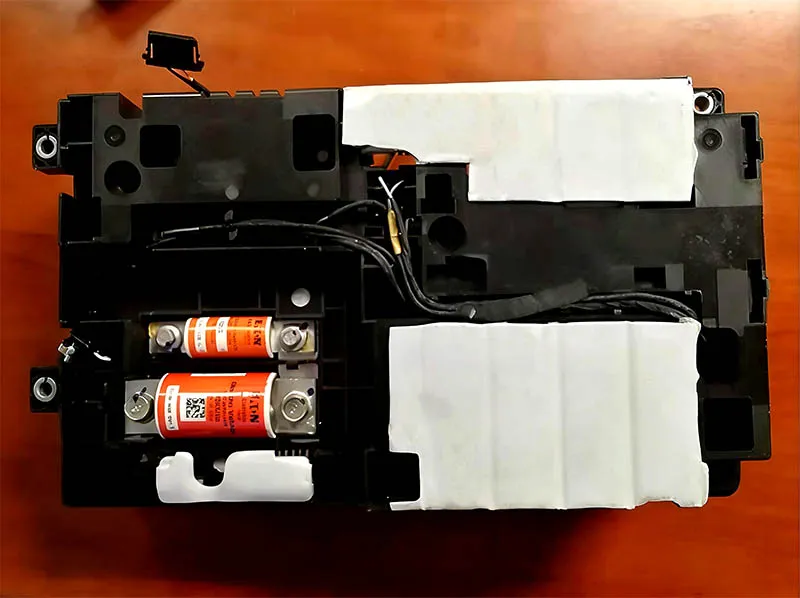
Environment
· Engine zones
· Battery packs
Stress Factors
· Vibration
· Compression cycling
Expected Results
· Steady thermal stability
· Controlled resistance in extreme temperatures
· Longer durability in vehicle systems
Automotive electronics demand consistency. A seasoned non silicone pad producer builds pads that keep engine control units calm under pressure.
UL-Certified, Halogen-Free Pads for Industrial Control
Compliance is serious business.
· Certification Stack
· UL-certified materials
· ISO-audited lines
Composition
· Halogen-free chemistry
· Low smoke, flame retardant rating
Application Zones
· Industrial control cabinets
· Power distribution frames
A professional non silicone thermal pad manufacturer aligns with safety standards and regulatory approval, keeping factories aligned with environmental compliance goals.
Sheen Technology stands out as a dependable non silicone thermal pad manufacturer, offering custom-fit non silicone pads that meet strict industrial expectations without overcomplicating the job.
4 Major Pain Points Our Non Silicone Thermal Pad Solution Solves
Modern electronics run hot, tight, and nonstop. A trusted non silicone thermal pad manufacturer must solve overheating, fire risk, thickness drift, and downtime in one go. That’s exactly how Sheen Technology approaches serious thermal management challenges.
Overheated CPUs? High-conductivity Boron Nitride Formulations
Overheating in CPUs and high-density boards isn’t just annoying—it kills performance. As a dedicated non silicone thermal pad manufacturer, we design materials around real electronic components, not lab theory.
Heat Source Control
· CPUs and GPUs create concentrated hotspots.
· Poor heat dissipation raises junction temperature fast.
· Standard pads often show low high conductivity stability under pressure.
Material Engineering
1.1. Advanced Boron Nitride loading
· Enhances thermal management efficiency
· Maintains dielectric strength
2.1. Optimized formulations
· Balanced filler dispersion
· Reduced pump-out risk
Performance Snapshot
| Material Type | Thermal Conductivity (W/m·K) | Volume Resistivity (Ω·cm) | Operating Temp (°C) |
| Standard Silicone Pad | 3.0 | 10¹² | -40~150 |
| Non-Silicone Pad | 6.5 | 10¹³ | -40~180 |
| High-Fill BN Pad | 8.0 | 10¹³ | -40~200 |
As a results-driven non silicone thermal pad manufacturer, Sheen Technology keeps hotspots under control while protecting surrounding electronic components.
Flammability Concerns? ISO 9001-Verified Fire-Safe Thermal Pads
Fire risk is real in compact power systems. A responsible non silicone thermal pad manufacturer must align with strict safety standards and documented certification.
Sheen Thermal pad UL 90 Flame test records
| Sample: | Thermal Pad | ||
| Thickness: | 3.0mm | Colo: | Grey |
| Ambient Temp: | 23.5℃ | Humidity: | 50 %RH |
Materials classifications:
| Criteria conditions | V-0 | V-1 | V-2 |
| After flame time for each individual specimen t1 or t2 | ≤10s | ≤30s | ≤30s |
| Total after flame time for any condition set (t1 plus t2 for the 5 specimens | ≤50s | ≤250s | ≤250s |
| After flame plus afterglow time for each Individual specimen after the second flame application (t2 +t3 ) | ≤30s | ≤60s | ≤60s |
| After flame or afterglow of any specimen up to the holding clamp | No | No | No |
| Cotton indicator ignited by flaming particles or drops | No | No | Yes |
| No. | t1(s) | t2(s) | t3(s) | All sample t1+t2≤50S | Single sample t2+t3≤30S | Does it light the cotton | Whether the burnt out |
Level of
compliance |
| 1 | 0.9 | 0.8 | 0.2 | Meet | Meet | No | No | V-0 |
| 2 | 0.8 | 0.6 | 0.2 | No | No | |||
| 3 | 0.8 | 0.5 | 0.2 | No | No | |||
| 4 | 0.8 | 0.6 | 0.2 | No | No | |||
| 5 | 0.7 | 0.5 | 0.2 | No | No |
Key Safety Priorities
· Flammability rating performance
· Verified fire resistance
· Consistent quality control
Our thermal pads function as advanced thermal interface material options, engineered to be non-flammable while sustaining compression recovery. Manufacturing under ISO 9001 ensures stable batch control and traceability.
“Thermal interface materials with certified fire performance are seeing increased adoption in EV and power electronics platforms,” noted MarketsandMarkets in its 2025 thermal management update, highlighting safety-driven material upgrades.
Sheen Technology answers that shift with tested materials from a trusted non silicone thermal pad manufacturer, reducing ignition risk without sacrificing conductivity.
Inconsistent Thickness? Precision Die Cutting & Slitting Control
Thickness drift ruins contact. Air gaps destroy thermal management.
As an experienced non silicone thermal pad manufacturer, process control matters as much as chemistry.
Raw Material Stability
· Filler dispersion monitoring
· Inline quality control sampling
Fabrication Accuracy
a. Precision die cutting
i. Tight tolerance control
ii. Clean edge integrity
b. Controlled slitting
i. Stable dimensional accuracy
ii. Reduced burr formation
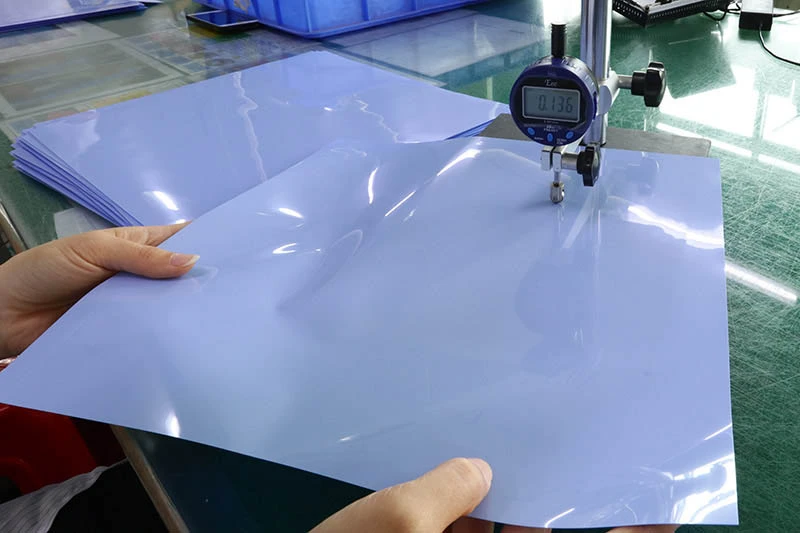
Output Assurance
· Verified thickness consistency
· Predictable compressibility
· Reliable material processing
This structured fabrication flow ensures every pad from a professional non silicone thermal pad manufacturer fits snugly against MOSFETs and memory modules.
Costly Downtime? Exceptional Thermal Cycling Stability
Unexpected shutdowns hurt production and profits. Long-term reliability depends on material endurance.
Thermal Stress Reality
· Repeated thermal cycling expands and contracts polymers.
· Weak matrices crack.
Material Defense System
a. Reinforced ceramic filler network
i. Improved stability
ii. Extended product lifespan
b. Optimized polymer backbone
i. Enhanced durability
ii. Stronger bonding integrity
Operational Impact
· Reduced maintenance frequency
· Better operational efficiency
· Clear downtime reduction
As a forward-focused non silicone thermal pad manufacturer, Sheen Technology builds pads that survive thousands of cycles, maintaining long-term performance in power modules and industrial drives.
Scalability Scenario: Ramping To Millions Of Pads Monthly
Scaling up isn’t just about running machines faster. For a non silicone thermal pad manufacturer, it’s about dialing in manufacturing efficiency, tightening process automation, and keeping electrical performance rock solid while millions of non silicone thermal pads roll out every month.
Streamlined Extrusion & Molding Processes for Volume Production
For a serious non silicone thermal pad manufacturer, volume starts at the line design level:
Raw Material Handling & Material Flow
· Controlled feeding systems reduce waste.
· Automated blending keeps filler dispersion uniform.
· Real-time sensors monitor viscosity for production optimization.
Extrusion Platform
a. High-torque twin-screw systems support ceramic and graphite loading.
b. Inline thickness gauges shorten cycle time reduction.
c. Closed-loop controls improve high-volume manufacturing stability.
Tooling & Molding
Core focus areas:
· tooling design precision
· mold temperature balance
· pressure consistency
Output: tight tolerances for every non silicone thermal pad manufacturer targeting automotive ECUs and servers.
A silicone free thermal pad manufacturer that ignores flow balance usually pays for it in scrap. Smart automation keeps that in check.
Automated Laminating and Curing to Maintain Volume Resistivity
Electrical performance can’t drift. Not even a little.
Lamination Control
· Vacuum-assisted bonding supports lamination technology integrity.
· Layer alignment ensures stable electrical properties.
· Continuous inspection strengthens process consistency.
Curing Parameters
a. Temperature ramps defined by validated curing parameters.
b. Dwell time adjusted for filler density.
c. Inline probes track resistivity measurement values.
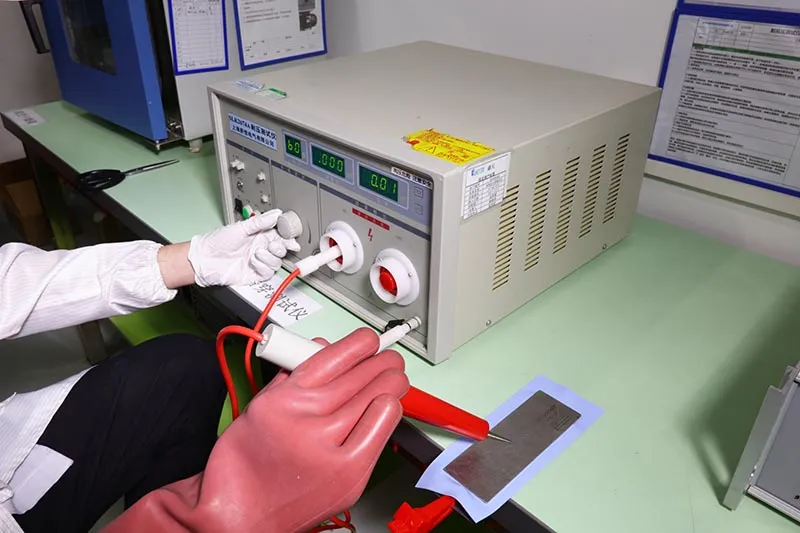
Material Integrity Safeguards
· Thermal aging simulation
· Dielectric breakdown testing
· Batch-coded traceability
A thermal pad manufacturer scaling to millions can’t rely on manual checks. Automated assembly protects material integrity while keeping volume resistivity within spec.
Quality Control at Scale: ASTM Standards and UL Certification Checks
At scale, quality becomes systemized discipline.
Testing Protocol Framework
· testing protocols aligned with ASTM D5470 for thermal conductivity.
· UL94 flammability validation.
· Insulation resistance verification.
Inspection Hierarchy
a. Incoming material audit
b. In-process sampling using statistical process control
c. Final lot release with documented inspection procedures
Regulatory & Certification Layer
· regulatory compliance tracking
· Active product certification management
· Ongoing review of industry standards
A non silicone thermal pad supplier serving global OEMs knows this truth: scaling output is easy; scaling quality assurance is the real grind. And for any non silicone thermal pad manufacturer aiming at millions per month, that grind is non-negotiable.
FAQs about Non Silicone Thermal Pad Manufacturer
Why do OEMs choose our non silicone thermal pad manufacturer for critical projects?
For high stakes builds in Power Electronics, Automotive Electronics, and Server Infrastructure, buyers focus on three measurable factors:
Certified safety & compliance
· RoHS Compliance, REACH Compliance, UL Certification
· Halogen-Free options for sensitive environments
Stable material performance
· High Thermal Conductivity, low Thermal Resistance
· Controlled Compressibility to protect CPUs, GPUs, and IGBT Modules
Process consistency at scale
· ISO 9001 production lines
· Precision Die Cutting, Laminating, Curing, Extrusion, and Molding
· ASTM Standards batch validation
The result: predictable Heat Dissipation, lower Junction Temperature, and steady Reliability across millions of units.
How do material formulations improve heat dissipation and electrical safety?
A carefully tuned structure determines performance:
| Formulation Element | Functional Role | Impact on Components |
| Graphene / Boron Nitride | Boost Thermal Conductivity | Faster Heat Dissipation for CPUs & Power MOSFETs |
| Ceramic Fillers in Polymer Matrix | Maintain Dielectric Strength & Volume Resistivity | Protect Memory Modules & IGBT Modules |
| Acrylic or Phase Change Material | Surface conformity | Reduced Thermal Resistance |
Within demanding Operating Temperature Ranges, this balance improves Thermal Cycling Stability and preserves Component Lifespan in Telecommunications and Industrial Control systems.
Can your non silicone thermal pad manufacturer meet automotive and flammability-sensitive standards?
Yes—designed for pressure and heat.
· Operating Temperature Range suited for under hood Automotive Electronics
· Verified Flammability Rating with UL Certification
· Stable Compressibility during long Thermal Cycling
· Clean formulations: Halogen-Free, RoHS Compliance
From LED Arrays in LED Lighting to control boards in Industrial Control cabinets, each pad supports lower Junction Temperature and longer Reliability—because failure is not an option in mission critical electronics.
Sheen Thermal
Dongguan Sheen Electronic Technology Co., Ltd · Founded in 2008
Manufacturer of thermal interface materials and silicone foam for automotive electronics, energy storage, power electronics, communications and consumer electronics.
Certified
- ISO 9001:2015
- ISO 14001:2015
- IATF 16949:2016
What we supply
- Thermal conductivity Up to 90 W/m·K
- Thickness 0.3–10.0 mm
- Custom & samples Die-cut to drawing, 3–7 days