
 English
 usheenthermal

How a Phase Change Heat Dissipation Solution for Data Centers Works
Date:2026-05-29
How a Phase Change Heat Dissipation Solution for Data Centers Works
Data centers are sweating under AI workloads, and a phase-change heat-dissipation solution for data centers steps in like a pressure valve, soaking up heat spikes without ripping out existing cooling systems or budgets.
It cuts peak loads, steadies performance, and buys time, but material choices decide if savings stick or slip.
Concise Insights: Phase Change Heat Dissipation Solution for Data Centers
➔ Stabilizing Spikes: PCMs buffer transient heat via melting/solidification, ensuring steady device temperatures.
➔ Material Matters: Choose paraffin wax for stability, salt hydrates for conductivity, or eutectics for tunable melting.
➔ Interface Efficiency: Deploy thermal greases, graphite sheets or liquid metals to minimize resistance to PCMs.
➔ Heat Rejection: Use copper or aluminum exchangers with glycol or dielectric fluids to offload stored heat.
➔ Retrofit Advantage: Integrates into existing racks with pads, polymeric PCMs, and microencapsulation for leak-proof cycling.
How Does Phase Change Heat Dissipation Work?
Phase change heat dissipation solution for data centers sounds fancy, but it’s basically a calmer way to handle hot spikes without panicking the cooling loop. You buffer heat with PCM, push it across clean interfaces, then dump it through a heat exchanger. Sheen Technology packages these ideas into deployable racks and pods.
Melting and Solidification: The PCM Heat Buffering Cycle
A phase-change heat-dissipation solution for data centers leans on PCM as a thermal “savings account,” using phase change to keep silicon temps from doing wild swings. It’s simple in spirit, picky in execution.
Melting (load spike)
· heat absorption happens fast at the melt point
· the win is latent heat, not just sensible heating
selection notes
· paraffin: stable cycling, lower conductivity
· salt hydrates: higher capacity, needs nucleation control
Solidification (load drops)
· heat release flows back out as solidification starts
· Recharge rate depends on how hard you can pull heat away
| PCM family | Melt range (°C) | latent heat (kJ/kg) |
| Paraffin wax | 45–65 | 150–220 |
| Salt hydrate | 25–55 | 180–280 |
| Fatty acid | 35–60 | 140–210 |
Phase change heat dissipation solution for data centers also shows up as “phase-change cooling” in vendor specs, same core idea.
Heat Transfer Pathways via Thermal Interface Materials
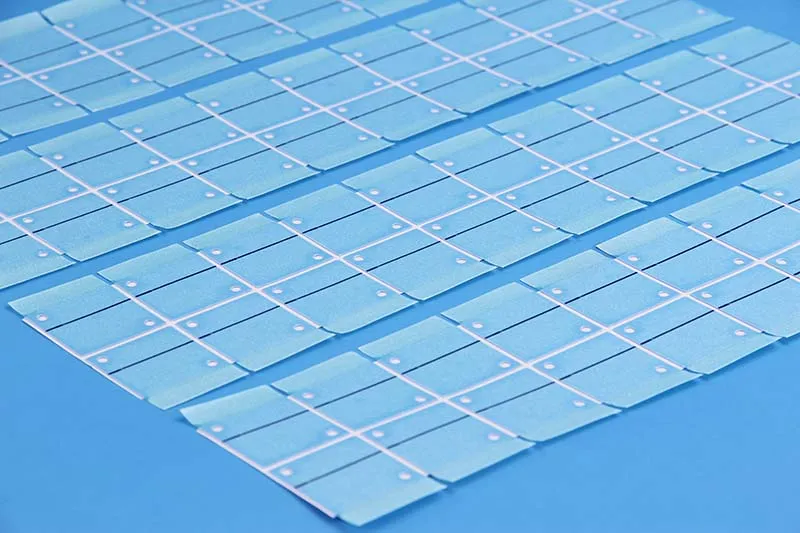
If Phase change heat dissipation solution for data centers is the plan, heat transfer is the make-or-break detail, because a bad thermal interface material turns your nice buffer into a warm paperweight. This is where TIM choices get real.
Quick checklist (plain talk):
· lower pump-out, better long-life contact at the interface
· higher thermal conductivity for tighter ΔT
Numeric sanity steps:
· map the hot component footprint and clamp pressure
· Pick a TIM type (grease, graphite, liquid metal) to match service rules
· validate heat conduction with a short thermal soak test
Notes from the field:
· grease handles gaps; graphite sheets spread laterally; liquid metal wins performance but raises handling and corrosion concerns
Phase change heat dissipation solution for data centers often pairs graphite with a PCM reservoir to smooth hotspots without adding loud fan ramps; Sheen Technology commonly specifies stack-ups that keep contact resistance under control.
Rejecting Heat with Heat Exchanger and Fluid Circulation
A phase-change heat-dissipation solution for data centers can’t stop at storage; you still need heat rejection on schedule, or the PCM never “recharges.” This is where the heat exchanger and fluid circulation do the boring, essential work.
Cooling loop layout (nested, practical)
Heat pickup
· PCM module to cold plate to manifold
· keep pressure drop predictable for the pump
Coolant selection
· glycol mixes for standard loops, dielectric fluids for direct contact
Low control
· sensors drive valve position so heat dissipation tracks IT load
Heat dump
· liquid-to-air or liquid-to-liquid heat exchanger
· tuned for approach temperature and fouling margins
For a phase-change heat-dissipation solution for data centers, the real trick is balancing stored heat against how fast the cooling loop can reject it; Sheen Technology tends to design for steady-state rejection so the PCM isn’t stuck half-melted during long peak windows.
Core Components Of A Phase Change Heat Dissipation Solution
Phase change cooling isn’t magic; it’s smart material choices working together. In a Phase change heat dissipation solution for data centers, each component plays a hands-on role, from soaking up heat spikes to moving energy away fast. Below, the building blocks are explained in plain terms, with practical angles engineers actually care about.
Paraffin Waxes, Salt Hydrates and Other Key PCMs
Phase change materials store latent heat during melting point transitions.
· Paraffin waxes: stable, clean cycling, predictable thermal energy storage.
· Salt hydrates: higher conductivity, sharper crystallization, tighter control.
· Tuning blends adjusts melting ranges for racks, aisles, or full data halls.
· This flexibility anchors any Phase change heat dissipation solution for data centers.
From Thermal Grease to Graphite Sheets: Selecting TIMs

Short list, real-world logic:
· Thermal grease fills gaps, lowers interface resistance.
· Thermal pads add compliance for uneven dies.
· Graphite sheets push lateral heat transfer with standout thermal conductivity.
CNT blends and elastomers step in when vibration or service access matters.
Choosing Dielectric Fluids, Mineral Oil, or Glycol Solutions
Immersion cooling favors dielectric fluids that stay non-conductive.
· Synthetic options handle higher loads.
· Mineral oil balances cost and stability.
· Glycol solutions act as a reliable coolant and heat transfer fluid in secondary loops.
Fluid choice can make or break a Phase change heat dissipation solution for data centers.
Copper Alloys vs. Aluminum Alloys in Exchanger Construction
· Start with thermal conductivity targets.· Weigh copper alloys against lighter aluminum alloys.
· Check corrosion resistance and material strength under flow.
· Refine fin design for pressure drop and service life.
Epoxy Resins, Ceramic Coatings, and HDPE for Encapsulation
· Encapsulation keeps PCMs where they belong.· HDPE shells add a tough moisture barrier.
· Epoxy resins lock in shape and electrical insulation.
· Ceramic coatings form a hard protective layer for long cycling.
Solutions from Sheen Technology often blend these for dense racks, proving that a Phase change heat dissipation solution for data centers can stay practical, not precious.
Need exact melt range, thermal conductivity, encapsulation details, and loop compatibility before you choose? Download the product datasheets to compare phase change thermal material options for data center cooling.
4 Steps To Implement Your Phase Change Solution
You want a Phase change heat dissipation solution for data centers that fits real racks, not fantasy lab setups. Here’s how to move from talk to install, with Sheen Technology keeping the plan grounded and practical.
Integrating Polymeric PCMs into Existing Rack Designs
A Phase change heat dissipation solution for data centers starts with where heat actually pools inside data center racks, then uses polymeric materials as phase change material to bank latent heat during spikes. It’s a clean form of thermal management, and it doesn’t demand a rebuild.
Audit for rack integration
· Hot zones:PSU corners and dense GPU bays: pick heat absorption targets
· Mounting limits:Check rail loads before any design modification
Pick a substrate match
· FR-4 when space is tight
· aluminum nitride when conductivity rules the day
Validate behavior
· Bench runs that show stored heat vs. release rate for the Phase change heat dissipation solution for data centers
Applying Phase Change Thermal Pads at Critical Interfaces
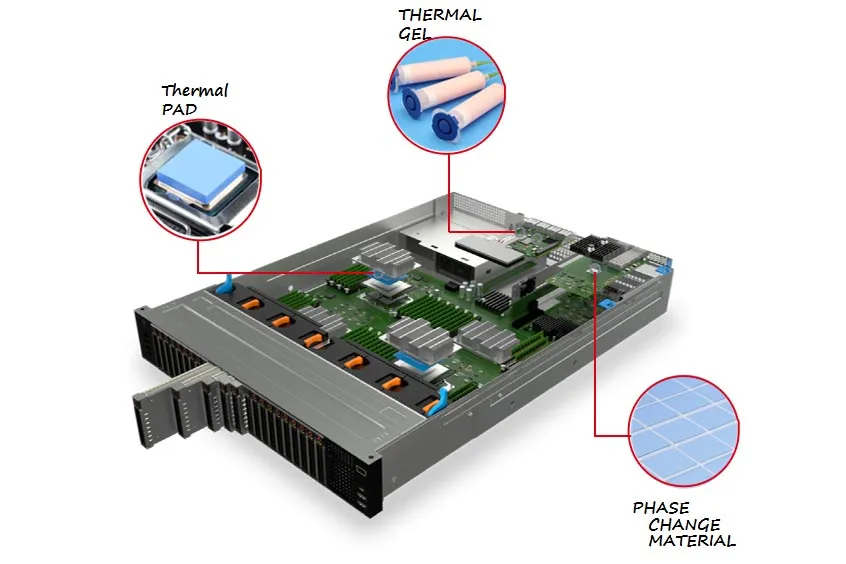
With a Phase change heat dissipation solution for data centers, the messy truth is interface loss. Thermal pads with phase change action warm up, soften, and behave like a smarter gap filler between electronic components.
Map interfaces: die-to-spreader, VRM-to-sink, memory-to-plate.
Set selection rules: higher thermal conductivity for the worst offenders, and stable interface material for long duty cycles.
Quick sanity checks:
· Watch heat transfer under burst loads
· Reject pads that pump out after repeated compression
This is where Sheen Technology typically tightens variance, because even “small” gaps quietly wreck a Phase change heat dissipation solution for data centers.
Circulating Fluorocarbons or Synthetic Esters through Exchangers
When stored PCM heat has to leave the building, a closed-loop liquid cooling path keeps the Phase change heat dissipation solution for data centers honest. Use a circulation system that moves a dielectric fluid—fluorocarbons or synthetic esters—through heat exchangers, pushed by a sized pump, then returned as conditioned coolant.
| Fluid type | Typical supply temp (°C) | Dielectric strength (kV/mm) |
| Fluorocarbon A | 22 | 12 |
| Fluorocarbon B | 28 | 10 |
| Synthetic ester A | 25 | 15 |
| Synthetic ester B | 30 | 14 |
| Baseline (air aisle) | 18 | 0 |
Loop layout
· Primary: rack manifold to heat exchangers
· Secondary: facility water side isolated from dielectric fluid
Control points
· Flow rate, pressure drop, and pump power draw, so the Phase change heat dissipation solution for data centers doesn’t become an energy tax
Sealing and Testing with Microencapsulation Shells
If PCM leaks, it’s game over, so microencapsulation is the quiet hero of a Phase change heat dissipation solution for data centers. A good encapsulation approach uses a tough shell material to lock in melt, protect PCM containment, and keep mechanical creep in check.
Containment stack
· Inner: microencapsulation bead shell
· Outer: coating tuned for rack vibration and install handling
Verification plan
· Leak testing after assembly and after vibration
· thermal cycling that mimics real load swings
· Track reliability and durability drift across cycles, not just day-one numbers
Handled right, Sheen Technology can help this phase-change cooling solution stay boring—in the best way—long after the first deployment.
Phase Change Solution Vs. Liquid Immersion: Which Wins?
Phase change heat dissipation solutions for data centers keep popping up because it’s simple, quiet, and plays nice with existing racks. Liquid tanks look slick, yet the ops workload can get real. Here’s the straight talk—pros, trade-offs, and where Sheen Technology fits.
Phase Change Solution
Phase change heat dissipation solution for data centers leans on phase change material and latent heat: heat goes in, temperature rises slowly, and the system “buffers” spikes without extra moving parts. Short version: it’s chill when workloads aren’t.
Core thermal path
Storage and release
· Melt/freeze cycle uses latent heat for thermal management.
· In some designs, vaporization and condensation move heat to a fin stack for faster heat dissipation.
Conductivity boosters
· Graphene/BN add-ons can cut hot spots inside the cooling system.
Fit with the room
· Works with today’s data center infrastructure—retrofit is usually less drama.
· Servicing feels familiar: trays, panels, and airflow tuning.
| Metric (typical) | PCM retrofit | Immersion (single-phase) | Notes |
| Peak heat buffering (kJ) | 600 | 120 | higher favors PCM |
| Continuous heat removal (W per node) | 450 | 900 | higher favors immersion |
| Maintenance touchpoints (per year) | 2 | 6 | fluids add tasks |
| Retrofit downtime (hours) | 4 | 14 | plumbing + validation |
For phase-change heat-dissipation solutions for data centers, Sheen Technology tends to position PCM packs where racks already struggle—right at the heat source—so the upgrade doesn’t hijack the floor plan. That’s the “get it done this weekend” appeal.
Liquid Immersion
1)Liquid immersion uses a dielectric fluid as the heat transfer fluid, so components get direct contact cooling through submersion technology. It’s a beast for nonstop loads, but the day-to-day details decide if it’s worth it.
+ Big win: immersion cooling can lift data center efficiency when heat density won’t quit.
– Real cost: fluid sampling, filtration, and hardware compatibility checks around server cooling and coolant properties.
★ If you want a quick pilot, ask for a small tank first, not a full hall build-out.
2) Reality check steps
3) Validate seals, plastics, and coatings for the chosen dielectric fluid.
4) Map the workflow for draining, refilling, and parts swaps; it’s not hard, just different.
Phase change heat dissipation solution for data centers still wins when you need passive stability and low fuss, while immersion wins when the racks run hot all day. Sheen Technology usually frames it as a lineup decision: PCM for mixed loads, immersion for brutal, steady density—phase change heat dissipation solution for data centers stays the “easy retrofit” anchor.
【Request a Custom Quote】 Not sure which phase change heat dissipation solution fits your data center? Send us your rack layout, target load profile, hot-zone map, and retrofit constraints, and we can help recommend the right thermal solution for your build.
Sheen Thermal
Dongguan Sheen Electronic Technology Co., Ltd · Founded in 2008
Manufacturer of thermal interface materials and silicone foam for automotive electronics, energy storage, power electronics, communications and consumer electronics.
Certified
- ISO 9001:2015
- ISO 14001:2015
- IATF 16949:2016
What we supply
- Thermal conductivity Up to 90 W/m·K
- Thickness 0.3–10.0 mm
- Custom & samples Die-cut to drawing, 3–7 days