
 English
 usheenthermal

What Determines the Service Life of Phase Change Materials?
Date:2026-06-02
What Determines the Service Life of Phase Change Materials?
The Service life of phase change materials can make or break a system, yet it often hides behind flashy specs and slick brochures while real costs quietly stack up in heat, leaks, and early failures.
Buyers don’t need hype; they need materials that last through brutal cycles without drama, because every replacement, shutdown, and safety scare hits budgets harder than any upfront savings could.
Key Insights on Service life of phase change materials
· Composition Trade-Offs: Choose between paraffin, salt hydrates, or eutectics to balance stability, conductivity, and phase-separation risk.
· Heat Management: Optimize latent heat capacity vs. supercooling and boost conductivity with fillers (graphite, graphene) to prevent hotspots and early degradation.
· Cycling Durability: Address volume change, leakage, and chemical breakdown by selecting robust encapsulation (microencapsulation, core-shell) for high-duty data centers and EV packs.
· Material Compatibility: Evaluate viscosity, toxicity, density, and corrosion potential to ensure long-term reliability and safe integration in electronics.
5 Critical Factors That Really Affect Service Life of Phase Change Materials
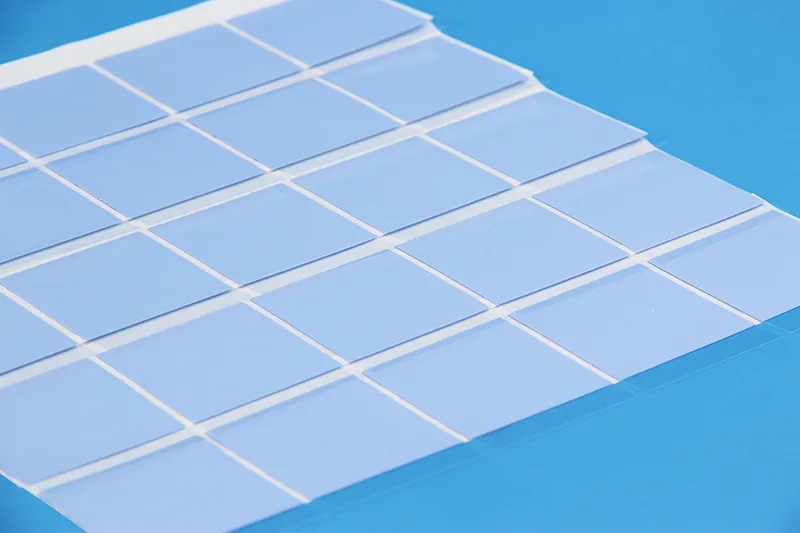
The Service life of phase change materials is not just about how long a PCM melts and solidifies. It reflects chemistry, structure, thermal stress, and real-world operating pressure. If the service life of phase change materials drops, energy systems lose stability fast. From data centers to EV packs, understanding phase change material lifespan helps extend durability and protect performance over years of thermal cycling.
PCM Composition: Paraffin Waxes, Salt Hydrates or Eutectic Mixtures
The composition of a PCM sets the tone for its service life of phase change materials. Different bases behave very differently under repeated phase transition.
· Paraffin and wax (classic organic PCM) offer chemical stability and low corrosion.
· Salt hydrate types (typical inorganic PCM) deliver higher thermal energy storage but risk phase separation.
· Eutectic mixture systems balance melting point and cycling reliability.
Performance Snapshot
| PCM Type | Typical Latent Heat (kJ/kg) | Corrosion Risk | Cycling Stability |
| Paraffin | 150–220 | Low | High |
| Salt Hydrate | 200–300 | Medium–High | Medium |
| Eutectic Mixture | 180–260 | Low–Medium | High |
In short: chemistry defines phase change material durability. Smart selection extends the Service life of phase change materials, especially in sealed battery modules.
Latent Heat Capacity and Supercooling Degree Trade-Offs
Higher latent heat and strong enthalpy values sound great on paper. But push supercooling too far, and delayed crystallization hurts thermal response.
· High heat capacity improves compact storage.
· Excessive supercooling delays heat release.
· Delayed melting point recovery stresses electronics.
For stable service life of phase change materials:
· Balanced melting point
· Controlled supercooling degree
· Consistent heat capacity
Thermal reliability always beats theoretical maximum energy density.
Cycling Stability in Data Centers and EV Battery Packs
Heavy-duty thermal cycling is brutal on PCM systems. In data center racks and EV battery modules, daily melt–freeze repetition drives degradation, leakage, and phase segregation.
BloombergNEF’s 2025 battery outlook notes that thermal management stability directly influences battery lifespan expectations in high-density EV platforms.
“Thermal management durability is becoming a defining factor in next-generation EV battery reliability.” — BloombergNEF, 2025
Repeated expansion and contraction reduce cycling stability, shortening the Service life of phase change materials. Brands like Sheen Technology focus on high-cycle formulations designed to maintain performance across thousands of transitions, extending PCM lifespan in demanding systems.
Material Compatibility: Viscosity, Toxicity, and Density Effects
Compatibility sounds boring—until failure happens.
· Low viscosity improves heat flow but increases leakage risk.
· High density mismatch triggers separation.
· Toxicity and corrosion affect enclosure safety.
To protect the service life of phase change materials:
· Match physical properties with container metals.
· Evaluate long-term chemical stability.
· Control interaction between PCM and structural components.
A small mismatch can quietly shorten phase change material service life by years.
Encapsulation Technologies: Microencapsulation to Core-Shell Structures
Encapsulation changes everything for the Service life of phase change materials.
Nested design logic:
Microencapsulation
· Improves surface area
· Reduces leakage
Core-shell
· Stronger shell material
· Protected core material
Composite containment
· Enhanced thermal management
· Higher mechanical durability
Microcapsules boost responsiveness. Core-shell containment improves structural strength. Composite matrices resist oxidation.
Sheen Technology integrates advanced microencapsulation and core-shell containment to extend the Service life of phase change materials in lithium battery cooling and electronics. Better containment equals longer phase change material lifespan—simple as that.
Need a closer match for your project? Browse these related application pages to see where phase change materials are used in real systems.
Can Thermal Conductivity Dictate Service Life of PCM? Find Out
Thermal control isn’t just about cooling things down. It quietly decides the Service life of phase change materials, especially in battery systems pushing high loads every day.
Thermal Conductivity’s Role in Managing Heat Flux of Lithium-Ion Batteries
When thermal conductivity drops, heat flux builds up fast. In lithium-ion batteries, that trapped heat stresses both cells and phase change materials, shortening the Service life of phase change materials in real-world energy storage setups.
· Low conductivity → uneven thermal regulation
· Hotspots → faster chemical aging
· Repeated stress → reduced PCM service life
From a system view:
Battery Thermal Management
Cell Level
· Core temperature rise
· Electrochemical degradation
Module Level
· Thermal gradients
· Structural stress
PCM Layer
· Absorption capacity
· Dissipation efficiency
If conductivity is tuned right, the Service life of phase change materials improves because temperature swings stay mild. Sheen Technology designs composite PCM systems that keep gradients tight, helping extend both battery durability and overall PCM service life.
Short truth? Better heat flow, longer working years.
Boosting PCM Lifespan with High-Conductivity Fillers and Additives
To extend the Service life of phase change materials, conductivity must rise without killing latent heat.
Common enhancers include:
· Graphite
· Graphene
· Metal-based fillers
Design logic often looks like this:
Filler Strategy
Material Selection
· Carbon family
· Metal particles
Dispersion Control
· Uniform mixing
· Agglomeration prevention
Structural Protection
· Micro-encapsulation
· Leakage resistance
Higher conductivity spreads heat quickly, easing internal strain. That slows material fatigue and protects PCM lifespan. Sheen Technology optimizes additive ratios so the Service life of phase change materials improves without sacrificing storage density.
In short bursts: better spread, less stress. Less stress, longer life.
Measuring Conductivity: DSC, TGA and Thermal Cycling Tests
Testing decides if improvements are real or just talk.
· Differential scanning calorimetry (DSC) checks phase transitions.
· Thermogravimetric analysis (TGA) tracks weight loss and thermal stability.
· Thermal cycling simulates years of use.
Evaluation path:
· Initial material characterization
· Conductivity baseline check
· Repeated cycling under load
· Post-test comparison
Inside labs:
Performance Metrics
· Latent heat retention
· Conductivity variation
Durability Metrics
· Structural integrity
· Degradation rate
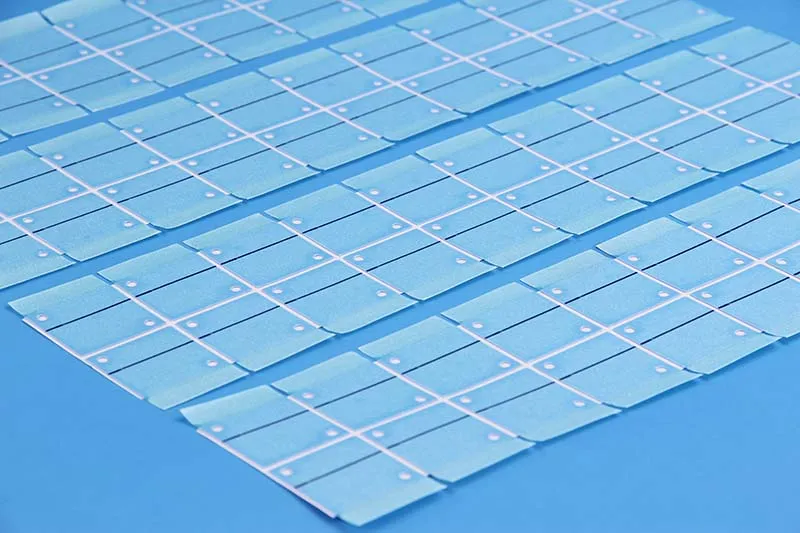
Sheen technology SP205A-60 phase change thermal sheet Reliability Test Report
| Test Items | Test Conditions | Test Equipment |
| High-Temperature Aging | 100℃,1000H | Precision Oven |
| Constant Temperature & Humidity | 85℃、85%RH,1000H | Constant Temperature & Humidity Chamber |
| Thermal Shock | -20℃~80℃,1000H | Constant Temperature & Humidity Chamber |
Criteria for Judging Test Results
| Performance Parameter | Initial Value | Acceptance Criteria |
| Thermal Conductivity(W/m*K) | 6.07 | ±30% |
| Thermal Resistance(℃*in²/W,@10 psi) | 0.082 | ±40% |
| Appearance | Smooth surface, uniform color | No abnormalities (e.g., powdering, discoloration) |
High-Temperature Aging Test Results
| High-Temperature Aging Test Record Sheet | |||||||||
| Aging Time | H | 0 | 200 | 400 | 600 | 800 | 1000 | Change | Assessment |
| Thermal Conductivity | W/m*k | 6.07 | 5.74 | 5.45 | 5.25 | 5.08 | 5.00 | -17.6% | OK |
| Thermal Resistance | ℃*in²/W,@10 psi | 0.082 | 0.084 | 0.089 | 0.095 | 0.102 | 0.107 | +30.5% | OK |
| Appearance | / | No change | No change | No change | No change | Slightly yellow | Slightly yellow | Slightly yellow | OK |
Constant Temperature and Humidity Test Results
| Constant Temperature and Humidity Test Record Sheet | |||||||||
| Aging Time | H | 0 | 200 | 400 | 600 | 800 | 1000 | Change | Assessment |
| Thermal Conductivity | W/m*k | 6.07 | 5.81 | 5.50 | 5.31 | 5.22 | 5.09 | -16.1% | OK |
| Thermal Resistance | ℃*in²/W,@10 psi | 0.082 | 0.090 | 0.094 | 0.098 | 0.101 | 0.105 | +28.0% | OK |
| Appearance | / | No change | No change | No change | No change | Slightly yellow | Slightly yellow | Slightly yellow | OK |
Thermal Shock Test Results
| Thermal Shock Test Record Sheet | |||||||||
| Aging Time | H | 0 | 200 | 400 | 600 | 800 | 1000 | Change | Assessment |
| Thermal Conductivity | W/m*k | 6.07 | 5.72 | 5.50 | 5.33 | 5.18 | 5.07 | -16.5% | OK |
| Thermal Resistance | ℃*in²/W,@10 psi | 0.082 | 0.086 | 0.092 | 0.099 | 0.105 | 0.110 | +34.1% | OK |
| Appearance | / | No change | No change | No change | No change | Slightly yellow | Slightly yellow | Slightly yellow | OK |
Test Conclusion: After aging for 1000 hours under various conditions, the SP205A-60 phase change thermal sheet maintained satisfactory performance with no changes to its appearance. Therefore, the reliability test results are deemed satisfactory.
If conductivity drops after cycling, the service life shrinks. Stable readings mean longer PCM service life and stronger reliability in battery thermal management systems.
The takeaway is simple. Protect conductivity, protect the Service life of phase change materials. That’s the core logic behind advanced testing and the engineering direction championed by Sheen Technology.
Need exact latent heat, thermal conductivity, encapsulation details, and cycle-life data before you choose? Download the product datasheets to compare phase change material options.
Are You Overlooking the Real Service Life Killers in PCMs?
The Service life of phase change materials sounds simple on paper, yet in real projects it’s a tug-of-war between chemistry, mechanics, and heat. If the service life drops, thermal stability fades fast. Let’s break down what really chips away at the Service life of phase change materials in everyday applications.
Phase Separation: Organic PCMs vs. Inorganic PCMs
When discussing the Service life of phase change materials, phase separation often sits at the core.
Inorganic PCMs – Salt Hydrates
Phase separation mechanism
· Density mismatch
· Incongruent melting
Impact on service life
· Reduced latent heat capacity
· Stratification after repeated melting
Typical mitigation
· Thickening agents
· Mechanical stirring
· Encapsulation
Organic PCMs – Paraffin and Fatty Acids
Structural stability
· No crystal water loss
· Better cycling consistency
Limitations
· Lower thermal conductivity
· Moderate energy density
According to a 2025 outlook from the International Energy Agency (IEA), long-duration thermal storage systems increasingly favor stabilized organic formulations to extend operational lifespan.
“Material stability over thousands of cycles is becoming a defining metric for commercial thermal storage viability.” — IEA Energy Storage Tracking Report, 2025
For manufacturers like Sheen Technology, improving dispersion stability directly improves the Service life of phase change materials, especially in electronics cooling modules.
Volume Change and Material Leakage under Thermal Cycling Fatigue
Expansion and contraction may look minor, but over 1,000+ cycles, stress builds up.
Key stress triggers:
· Repeated melting/freezing
· Weak encapsulation shells
· Poor container weld integrity
Expansion ratio matters. Encapsulation elasticity matters more. Seal durability decides the real service life.
| Material Type | Volume Change (%) | Cycle Life (1,000 cycles retention %) | Leakage Risk Level |
| Paraffin PCM | 8–12 | 92 | Low |
| Salt Hydrate | 10–15 | 75 | Medium |
| Bio-based PCM | 7–10 | 90 | Low |
A quick reality check: higher volume swing usually shortens the Service life of phase change materials unless mechanical buffers are built in.
Here’s how fatigue usually unfolds:
· Heat spike
· Rapid expansion
· Micro-cracks in encapsulation shell
· Gradual seepage
· Decline in thermal capacity
Short bursts of overheating accelerate this pattern. Over time, the service lifespan drops noticeably.
Chemical Decomposition: Oxidation and Corrosion Challenges
Chemical stability quietly defines the Service life of phase change materials.
Oxidation in Organic PCMs
· Oxygen diffusion through micro-pores
· Formation of acidic byproducts
· Reduced latent heat
Corrosion in Inorganic PCMs
· Interaction with metal containers
· Chloride-induced pitting
· Structural weakening
Environmental Accelerators
· High humidity
· Elevated temperature
· Impurities
The chain reaction is simple:
· Elevated temperature
· Chemical bond stress
· Molecular breakdown
· Performance decay
Even slight oxidation lowers thermal storage capacity. Over years, that compounds into a shorter Service life of phase change materials and unstable heat management performance.
Degradation Rate Accelerators in High-Power Density Modules
High-power electronics push PCMs hard. Fast heat flux, tight spaces, and constant cycling shrink the Service life of phase change materials if design isn’t thoughtful.
Common accelerators include:
· Concentrated heat flux
· Rapid on-off cycling
· Localized hotspots
· Poor thermal spreading
Here’s how degradation speeds up:
· Intense localized heating.
· Uneven melting front formation.
· Thermal stress concentration.
· Microstructural fatigue.
In high-density battery packs and power converters, small design tweaks make a big difference. Optimized thermal interface design, controlled peak temperature, and stable encapsulation can stretch PCM lifespan significantly.
Sheen Technology focuses on balancing conductivity enhancement with structural integrity so the Service life of phase change materials aligns with real-world cycling demands. Because at the end of the day, extending the life span of phase change materials isn’t just about chemistry—it’s about smart engineering choices that slow down every hidden killer of service durability.
【Request a Custom Quote】 Not sure which phase change material fits your application? Send us your target temperature range, cycle profile, thickness target, and deployment environment, and we can help recommend the right thermal solution for your build.
Sheen Thermal
Dongguan Sheen Electronic Technology Co., Ltd · Founded in 2008
Manufacturer of thermal interface materials and silicone foam for automotive electronics, energy storage, power electronics, communications and consumer electronics.
Certified
- ISO 9001:2015
- ISO 14001:2015
- IATF 16949:2016
What we supply
- Thermal conductivity Up to 90 W/m·K
- Thickness 0.3–10.0 mm
- Custom & samples Die-cut to drawing, 3–7 days