
 English
 usheenthermal

Optimizing Silicone-Free Thermal Conduction for Optical Equipment
Date:2026-06-08
Optimizing Silicone-Free Thermal Conduction for Optical Equipment
Silicone-free thermal conduction for optical equipment isn’t a luxury anymore—it’s real damage control. When haze creeps into lenses and sensors, it quietly wrecks performance, eats yields, and sparks warranty headaches engineers can’t shrug off.
That’s why silicone-free materials are stepping in, keeping heat in check without the messy outgassing. Pick the right one, and you protect clarity, extend lifespan, and keep production running without nasty surprises.
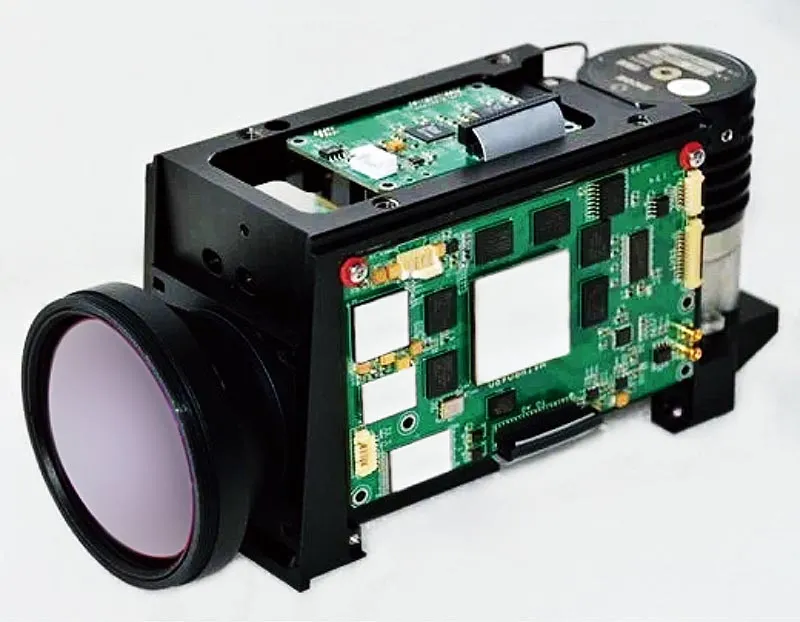
Key Insights: Silicone-free thermal conduction for optical equipment
➔ Material Essentials: Opt for epoxy, acrylic or ceramic-filled polymers and graphite sheets to eliminate siloxane outgassing and preserve optical clarity.
➔ Performance Metrics: Balance high thermal conductivity, low thermal impedance, electrical insulation, and adhesion strength for reliable heat dissipation in LEDs and photodetectors.
➔ Application Methods: Use automated dispensing, screen printing, or stencil techniques to ensure uniform TIM layers and consistent assembly without contamination.
➔ Reliability Focus: In spaceborne or fiber-optic modules, select vacuum-cured, low-outgassing formulations to prevent silicone migration, optical haze, and long-term degradation.
Silicone-Free Thermal Conduction For Optical Equipment Explained
Silicone-free thermal conduction for optical equipment sounds technical, yet it’s really about keeping light-based devices cool without risking contamination. From LEDs to sensors, silicone-free thermal interface materials make heat move out fast while optics stay clean and sharp.
What Defines Silicone-Free Thermal Interface Materials?
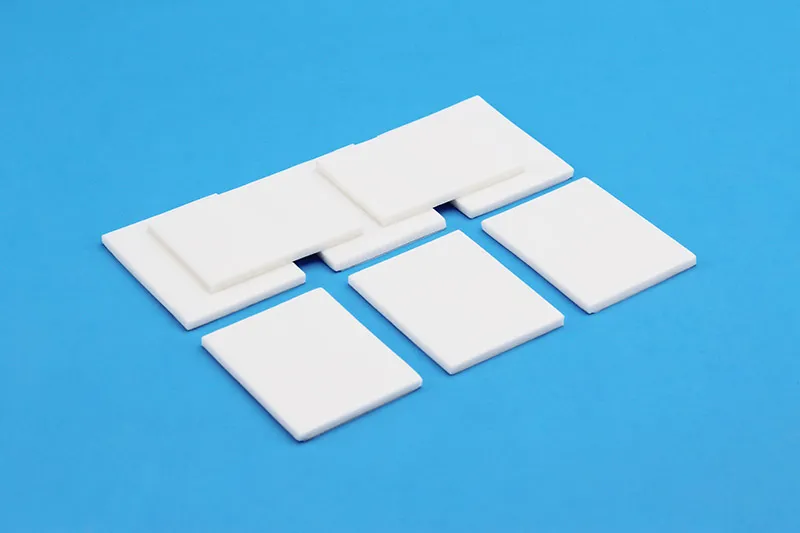
Silicone-free thermal conduction for optical equipment depends on carefully engineered silicone-free thermal interface materials. At the core, these TIMs remove siloxanes and rely on non-silicone composition to secure stable material properties.
· Key characteristics include low outgassing and tight molecular bonding.
· Enhanced dielectric strength supports fragile optical circuits.
· Clean separation from silicone chemistry avoids fogging.
For Silicone-free thermal conduction for optical equipment, performance flows from structure:
Polymer backbone
· Crosslink density
· Thermal expansion control
Filler dispersion
· Particle geometry
· Packing efficiency
This layered design keeps heat moving while lenses stay crystal clear.
From Thermal Grease to Metal Foils: Material Options
Material selection drives Silicone-free thermal conduction for optical equipment success. The market spans thermal grease, phase change materials, gap fillers, graphite pads, polymer composites, and thin metal foils.
· Soft pads cushion tolerance gaps.
· Graphite spreads heat laterally.
· Foils push heat straight into sinks.
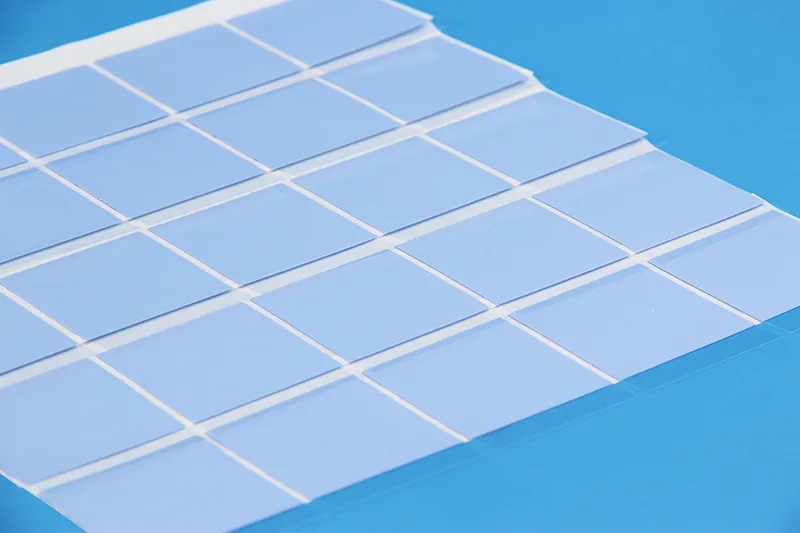
In practice:
· Evaluate surface flatness.
· Match compressibility to mounting force.
· Confirm long-term pump-out resistance.
For optical engines:
· Interface layer:Conformability,Thermal path length
· Mechanical link:Vibration stability,Assembly speed
Sheen Technology fine-tunes these combinations so Silicone-free thermal conduction for optical equipment performs reliably under real-world loads.
Key Roles in High-Power LEDs and Photodetectors Cooling
Heat creeps up fast in high-power LEDs and photodetectors. That’s where cooling solutions tied to thermal management matter.
• Lower junction temperature
• Stable wavelength output
• Longer component life
For optical devices and other electronic components, the path looks like this:
· Chip generates heat.
· Silicone-free thermal conduction for optical equipment transfers it across the interface.
· Heat sink disperses it to ambient air.
Inside the stack:
· LED package:Submount,Interface layer
· Heat sink:Base plate,Fin array
This clean, silicone-free thermal management approach keeps signal drift in check and avoids the messy surprises that silicone vapors can cause.
Preventing Silicone Migration and Optical Degradation
In sealed optics, silicone migration is trouble. Vapors condense, leading to optical degradation, haze, and signal drop.
· Risk source:Outgassing under heat,Poorly cured silicone gels.
· Impact:Surface contamination,Reduced performance stability.
Silicone-free thermal conduction for optical equipment removes that risk at the root. No volatile siloxanes, no creeping film on sensors. That’s a big win for device reliability.
Sheen Technology builds its silicone-free thermal conduction for optical equipment solutions around prevention strategies: controlled chemistry, strict curing, and compatibility testing with lenses and coatings. The result feels simple—clean optics, steady output, fewer headaches on the production line.
Need exact thermal conductivity, thickness range, dielectric strength, and outgassing data before you choose? Download the product datasheets to compare silicone-free thermal conduction for optical equipment options.
Key Parameters For Thermal Conduction Materials
Silicone-free thermal conduction for optical equipment sounds technical, yet it simply means moving heat fast without risking contamination. In optical systems, tiny thermal mistakes cause big clarity issues. For silicone free thermal management in fiber optics, performance isn’t optional—it’s survival.
Maximizing Thermal Conductivity and Low Outgassing
When targeting Silicone-free thermal conduction for optical equipment, two forces must work together: fast heat flow and clean material behavior.
Core priorities:
· High thermal conductivity for rapid heat transfer
· Minimal outgassing in sealed or vacuum environments
· Strict material purity to reduce volatile compounds
For silicone free thermal conduction optical equipment designs, material selection usually follows:
· Thermal pathway design:Filler loading inside the thermal interface material,Particle dispersion uniformity.
· Contamination control:Low total mass loss,Reduced condensable residue.
Sheen Technology Silicone-free thermal pad performance properties:
| Properties | Color | Thermal Conductivity | Thermal Impedance (1mm,@30psi) | Thickness | Standard Hardness |
|---|---|---|---|---|---|
| Unit | - | W/m·K | ℃*in2/W | mm | Shore 00 |
| AF100 | White | 1.0 | 1.1 | 0.25 ~ 5.0 | 50/70±5 |
| AF300 | White | 2.0 | 0.8 | 0.25 ~ 5.0 | 50/70±5 |
| AF500 | White | 3.0 | 0.6 | 0.25 ~ 5.0 | 50/70±5 |
| AF600 | White | 5.0 | 0.3 | 0.5 ~ 5.0 | 50/70±5 |
| AF600G | White | 6.0 | 0.25 | 0.5 ~ 5.0 | 50/70±5 |
| AF800 | White | 8.0 | 0.2 | 0.5 ~ 5.0 | 50/70±5 |
| Test Method | Visual | ASTM D5470 | ASTM D5470 | ASTM D374 | ASTM D2240 |
In short: better conduction, zero fogging. That’s why Sheen Technology engineers its silicone-free thermal conduction for optical equipment solutions with ultra-low outgassing chemistry tailored for optical housings.
Ensuring Electrical Insulation and Dielectric Strength
Optical assemblies pack power and precision into tight spaces. Good cooling means nothing if electrical insulation fails.
Key electrical metrics include:
· High dielectric strength
· Stable resistivity
· Controlled permittivity
· Adequate breakdown voltage
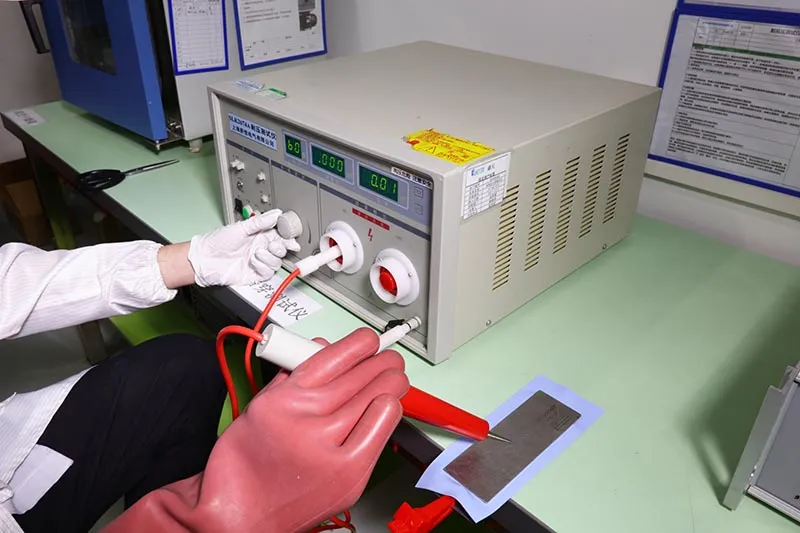
For silicone free thermal management optical equipment platforms:
· Electrical safety layer:Maintain isolation between ICs and heat sinks,Prevent micro-arcing under high humidity.
· Material integrity:Stable electrical properties across temperature shifts.
Silicone-free thermal conduction for optical equipment must cool and isolate at the same time. No shortcuts here.
Balancing Thermal Impedance with Adhesion Strength
Low thermal impedance improves heat flow. Still, if the bond slips, performance tanks.
Critical balance points:
· Thin bond line thickness
· Reduced contact resistance
· Controlled interface pressure
· Reliable adhesion strength
In silicone free thermal conduction optical equipment builds:
· Thermal path optimization:Lower thermal resistance,Even surface wetting.
· Mechanical stability:Vibration tolerance,Long-term structural grip.
Silicone-free thermal conduction for optical equipment isn’t just about numbers—it’s about staying locked in place during thermal cycling.
Operating Temperature Range for Fiber Optic Modules
Fiber optics live through wild swings in operating temperature.
For silicone free thermal conduction optical equipment:
Temperature capability
· Wide temperature range
· Strong thermal stability
Durability factors
· Resistance to thermal cycling
· Consistent performance under harsh environmental conditions
· Defined temperature limits
Reliable fiber optics depend on steady module reliability across cold starts and heat spikes. Silicone-free thermal conduction for optical equipment keeps signals sharp while heat quietly moves away. That’s exactly where Sheen Technology focuses—clean cooling, steady performance, zero drama.
Comparative: Polymer Pads Vs. Graphite Sheets
In precision optics, heat can quietly ruin alignment and image clarity. That’s why Silicone-free thermal conduction for optical equipment keeps coming up in engineering talks. When heat transfer, insulation, and clean assembly matter, material choice stops being casual and starts being critical.
Polymer Composite Pads
When discussing Silicone-free thermal conduction for optical equipment, polymer-based solutions often sit at the practical end of the table. A composite thermal interface material built on ceramic fillers balances insulation with stable heat transfer, which optical assemblies appreciate.
Core characteristics
Material composition
· Polymer composite matrix
· Ceramic filler network
Functional traits
· High dielectric strength
· Reliable conformability for uneven surfaces
· Fully silicone-free chemistry for sensitive optical equipment
Performance considerations
· Moderate thermal conductivity compared to carbon options
· Strong electrical isolation
· Easy die-cut shaping for compact modules
· Best suited for sealed imaging housings where insulation is non-negotiable
In labs building lenses and laser modules, engineers often choose pads because installation is simple: place, compress, secure. No mess. No curing. Companies like Sheen Technology tune pad hardness and thickness to support Silicone-free thermal conduction for optical equipment without stressing delicate glass stacks.
Carbon-Based Graphite Sheets
Now shift to carbon solutions. Graphite sheets act as ultra-thin heat spreader layers, pushing heat sideways with striking thermal conductivity due to strong in-plane anisotropy.
Structural hierarchy
· Carbon lattice orientation:High in-plane conduction,Limited through-thickness transfer.
· Physical attributes:Lightweight thin film format,Electrically conductive surface.
Application checkpoints
· Ideal for lateral heat spreading under sensor arrays
· Requires insulation layer in high-voltage designs
· Performs best where thickness is restricted
Short takeaway: thin, fast-spreading, but electrically active.
For Silicone-free thermal conduction for optical equipment, graphite shines in compact cameras and scanning modules where weight and profile dominate. Yet in high-voltage optical drivers, designers often pair it with insulating layers. That balancing act defines the choice.
3 Benefits Of Silicone-Free Conduction
Silicone-free thermal conduction for optical equipment is gaining traction as optical systems get smaller, hotter, and more sensitive. From laser modules to imaging sensors, engineers want cleaner interfaces and tighter temperature control. By rethinking silicone-free thermal conduction for optical equipment, teams can boost reliability, improve thermal flow, and simplify how parts move from bench to full-scale production.
Enhanced Reliability with Reduced Outgassing Residue
Silicone-free thermal conduction for optical equipment directly strengthens reliability by minimizing outgassing and surface residue.
· Cleaner interfaces
· Lower risk of contamination
· Better long-term performance in vacuum environments
In sensitive optical components, even trace residue can scatter light or shift calibration. Removing silicone lowers molecular migration, especially in sealed housings.
Key reliability drivers:
· Material Behavior:Low condensable emissions,Stable polymer backbone.
· Environmental Fit:Compatibility with vacuum environments,Resistance to thermal cycling.
· System Impact:Protection of coatings,Preservation of alignment accuracy.
For teams building precision optical equipment, that’s peace of mind.
Improved Performance via Lower Thermal Impedance
Performance rises when thermal impedance drops. Silicone-free thermal conduction for optical equipment supports tighter temperature management and stronger heat transfer.
· Faster heat dissipation
· Stable junction temperatures
· Higher sustained output
In high-power optical systems, heat buildup kills consistency. Lower interface resistance improves effective thermal conductivity, allowing energy to move away from emitters and detectors without bottlenecks.
Performance improvement stack:
· Interface Level:Reduced bond-line thickness,Uniform surface wetting.
· Material Level:Optimized filler loading,Controlled curing shrinkage.
· System Level:Stable beam quality,Extended component lifespan.
Silicone-free thermal conduction for optical equipment keeps performance steady, not just impressive on day one.
Simplified Assembly through Automated Dispensing
Manufacturing teams care about flow. Silicone-free thermal conduction for optical equipment aligns well with modern assembly lines.
• Clean cut-off during automated dispensing
• Consistent bead geometry
• Lower rework rates
Application advantages:
· Repeatable volume control
· Reduced manual touchpoints
· Cleaner manufacturing process
Process optimization layers:
· Equipment Integration:Compatibility with jetting and screen methods,Stable rheology for automation.
· Quality Control:Predictable spread,Improved process control metrics.
· Production Outcome:Higher production efficiency,Simplified inspection routines.
In short, silicone-free thermal conduction for optical equipment supports smoother builds, tighter tolerances, and fewer headaches on the factory floor.
Scenario: Spaceborne Optics Thermal Management
Space missions are tough on hardware. Extreme swings in heat, vacuum exposure, and strict contamination limits demand smart material choices. Silicone-free thermal conduction for optical equipment is becoming the go to solution for stable thermal management in orbit.
Thermal Challenges in Satellite Imaging Systems
In a space environment, heat doesn’t drift away through air. It moves through contact surfaces, or it stays put. For satellite payloads and imaging systems, that’s a serious headache.
“By 2025, over 70% of high-resolution Earth observation payloads require stricter contamination and thermal stability thresholds than legacy systems,” noted a 2025 Euroconsult space systems outlook.
Within optical components, temperature control shapes performance:
Structural Alignment
· Lens barrels expand.
· Mounts shift.
· Focus drifts.
Heat Flow Path
· Source: sensor electronics
· Transfer: interface materials
· Sink: radiative panels
Material Selection
· Low outgassing
· High heat transfer efficiency
· Stability across −150°C to +120°C
That’s where Silicone-free thermal conduction for optical equipment steps in.
No silicone bleed. No fogging. Just controlled conduction through solid interfaces.
Sheen Technology engineers tailor silicone free thermal interface materials to protect imaging systems from thermal distortion while keeping optics crystal clear.
Curing and Bonding on Printed Circuit Boards in Vacuum
Working with printed circuit boards in vacuum changes the game.
· Air bubbles don’t escape easily.
· Traditional adhesives may trap voids.
· Poor curing leads to material degradation.
To avoid this mess:
· Surface prep must remove moisture.
· Controlled ramp curing reduces stress.
· Low-outgassing polymers prevent contamination.
Key considerations include:
• Balanced bonding pressure
• Verified outgassing rates
• Compatibility with optical equipment
When applying Silicone-free thermal conduction for optical equipment, technicians prefer staged vacuum curing. It protects nearby optics and keeps thermal management stable long term.
With Sheen Technology, vacuum-compatible formulations are tuned for aerospace PCBs—tight bonds, clean surfaces, zero drama.
Ceramic-Filled Polymers for High-Temperature Environments
For orbiting systems, ceramic fillers inside polymers provide stability under repeated high temperature cycling. These composite materials combine insulation with strong thermal conductivity and dependable dielectric properties.
Integration typically follows:
· Filler dispersion
· Controlled viscosity adjustment
· Precision gap application
· Thermal cure validation
These materials are central to Silicone-free thermal conduction for optical equipment, especially where high temperature cycling threatens alignment.
Mitigating Contamination in Semiconductor Packages
Inside sealed semiconductor packages, even tiny amounts of particulate matter or outgassing can cloud lenses or degrade device performance.
Clean design focuses on:
· Low volatile content
· Verified hermetic sealing
· Cleanroom validation
Contamination control breaks down into three habits:
· Material screening
· Process monitoring
· Long-term bake testing
Short version? Keep it clean. Keep it stable. Keep heat moving where it should.
By adopting silicone free thermal conduction for optical equipment, aerospace teams reduce fogging risks and protect sensitive dies. Sheen Technology supports these builds with contamination-tested compounds designed for precision optics and advanced semiconductor packages.
When heat flows right and contaminants stay out, performance stays sharp.
【Request a Custom Quote】 Not sure which silicone-free thermal conduction for optical equipment solution fits your build? Send us your target operating temperature, thickness target, application type, and performance requirements, and we can help recommend the right thermal solution for your project.
Sheen Thermal
Dongguan Sheen Electronic Technology Co., Ltd · Founded in 2008
Manufacturer of thermal interface materials and silicone foam for automotive electronics, energy storage, power electronics, communications and consumer electronics.
Certified
- ISO 9001:2015
- ISO 14001:2015
- IATF 16949:2016
What we supply
- Thermal conductivity Up to 90 W/m·K
- Thickness 0.3–10.0 mm
- Custom & samples Die-cut to drawing, 3–7 days