
 English
 usheenthermal

Solving Contamination: Silicone-Free Thermal Conduction for Semiconductor Equipment
Date:2026-06-15
Solving Contamination: Silicone-Free Thermal Conduction for Semiconductor Equipment
Silicone-free thermal conduction for semiconductor equipment isn’t a nice upgrade—it’s how fabs dodge contamination that quietly wrecks yield and uptime.
Silicone TIMs can bleed siloxanes under heat, fog optics, foul chambers, and skew process control, turning tiny residues into big rework bills.
Sheen Technology engineers (2025) stress stable interfaces.
Reading Notes: Silicone-free thermal conduction for semiconductor equipment
➔ Outgassing Control: Silicone‐free TIMs eliminate siloxane bleed, protecting optics, chambers and IC surfaces during thermal cycling.
➔ Void and Resistance Reduction: Low‐viscosity, ceramic‐filled gap fillers ensure uniform bond lines, cutting voids and thermal impedance in power modules and microprocessors.
➔ Reliability & Compliance: Epoxy and phase‐change matrices with boron nitride/aluminum nitride deliver stable conductivity, high dielectric strength and cleanroom‐friendly performance under repeated thermal stress.
Why Silicone-Free Thermal Conduction For Semiconductor Equipment Matters
Silicone-free thermal conduction for semiconductor equipment is no longer niche—it’s becoming the smart move for fabs chasing tighter process control. As chips shrink and power climbs, silicone-free thermal conduction and non-silicone thermal interface materials help reduce contamination risks while keeping heat in check. That’s where practical engineering meets reliability.
Mitigating Outgassing Impact on Integrated Circuits
In advanced microelectronics, even minor outgassing can trigger contamination that harms integrated circuits and sensitive semiconductor devices. Silicone-free thermal conduction for semiconductor equipment addresses this at multiple levels:
Material Behavior
1.1 Lower volatile release during cure
1.2 Reduced molecular migration under thermal cycling
 thermal management.jpg.webp "5G Communication Base Station Remote radio unit (RRU) thermal management")
Device Protection
2.1 Cleaner environments for RF and memory dies
2.2 Stable device performance across process nodes
Yield Control
3.1 Fewer residues on wafers
3.2 Lower yield loss in high-volume lines
“Advanced packaging lines are tightening material volatility specifications to protect yield,” noted SEMI’s 2025 materials outlook.
Sheen Technology designs silicone-free thermal conduction solutions that keep contamination prevention front and center.
Ensuring Void Reduction in Power Modules
For power modules, voids are a silent killer. Poor wetting in thermal interface materials can trap air, raising thermal resistance and stressing solder joints and die attach layers.
Silicone-free thermal conduction for semiconductor equipment improves flow and contact through:
1) Low viscosity for surface wetting
2) Uniform bond line thickness
3) Controlled cure shrinkage
★ Fewer voids
★ Better heat dissipation
★ Stronger module reliability
Short takeaway: less air, more contact, cooler chips.
Sheen Technology tunes non-silicone TIMs to stabilize assembly in demanding automotive and industrial drives.
Enhancing Thermal Conductivity Without Silicone
High thermal conductivity no longer depends on silicone chemistry. Ceramic-filled, silicone-free materials support efficient heat transfer while maintaining insulation.
· Boron nitride networks
· Aluminum nitride fillers
· Optimized polymer matrices
Result? Real performance enhancement without the contamination risk common in traditional compounds.
For fabs upgrading thermal conduction for semiconductor equipment, Silicone-free thermal conduction for semiconductor equipment offers a cleaner path forward—and Sheen Technology keeps pushing that edge.
Classifications Of Silicone-Free Vs. Silicone-Based Interfaces
Silicone-free thermal conduction for semiconductor equipment is becoming a hot topic in chip fabs and packaging lines. As contamination rules tighten, engineers compare silicone-free thermal conduction for semiconductor equipment with traditional silicone-based options to protect yield and device life.
Silicone-Free Thermal Interfaces

When people talk about Silicone-free thermal conduction for semiconductor equipment, the focus is clean processing and steady output. This path centers on silicone-free compounds designed for contamination prevention in semiconductor manufacturing.
· Key material families: epoxy resins, phase change films, carbon sheets
· Core benefits: low outgassing reduction, strong bonding, stable thermal conductivity
· Fit areas: die attach, lid bonding, high-vacuum tools
Sheen Technology Silicone-free Thermal pad Performance snapshot:
| Properties | Color | Thermal Conductivity | Thermal Impedance (1mm,@30psi) | Thickness | Standard Hardness |
|---|---|---|---|---|---|
| Unit | - | W/m·K | ℃*in2/W | mm | Shore 00 |
| AF100 | White | 1.0 | 1.1 | 0.25 ~ 5.0 | 50/70±5 |
| AF300 | White | 2.0 | 0.8 | 0.25 ~ 5.0 | 50/70±5 |
| AF500 | White | 3.0 | 0.6 | 0.25 ~ 5.0 | 50/70±5 |
| AF600 | White | 5.0 | 0.3 | 0.5 ~ 5.0 | 50/70±5 |
| AF600G | White | 6.0 | 0.25 | 0.5 ~ 5.0 | 50/70±5 |
| AF800 | White | 8.0 | 0.2 | 0.5 ~ 5.0 | 50/70±5 |
| Test Method | Visual | ASTM D5470 | ASTM D5470 | ASTM D374 | ASTM D2240 |
In practice, interface materials without silicone protect device performance and long-term reliability. For fabs pushing tighter nodes, silicone-free thermal interface materials simply feel safer. Sheen Technology supports this shift with validated silicone-free thermal conduction for semiconductor equipment across advanced packaging lines.
Silicone-Based Thermal Interfaces

Silicone matrices still dominate many lines because silicone compounds are flexible and easy to dispense. Common formats include thermal grease, thermal pads, and gap fillers tuned for dielectric strength and soft contact.
★ Fast rework
★ Wide temp tolerance
★ Mature supply chain
Yet engineers keep an eye on outgassing issues and contamination potential, especially in EUV-related tools. Typical comparison looks like this:
· Check material properties under cycling
· Measure bleed and pump-out
· Track long-term stability
For less sensitive assemblies, silicone-based thermal conduction for semiconductor equipment can remain cost-friendly and stable. Sheen Technology evaluates both silicone-free thermal conduction for semiconductor equipment and silicone systems, helping clients balance risk, cleanliness, and throughput without overcomplicating the line.
3 Key Benefits Of Silicone-Free Conduction
Silicone-free thermal conduction for semiconductor equipment is gaining real traction on fab floors. As power densities climb and cleanroom rules tighten, teams are rethinking thermal management materials. Here’s how silicone-free thermal interface materials reshape performance, uptime, and compliance.
Low Thermal Resistance for High-Power Microprocessors
In microprocessors running at high power density, heat stacks up fast. Silicone-free thermal conduction for semiconductor equipment addresses this through:
Performance Layer
a) Thin bond lines cut thermal resistance
b) Stable interfaces improve heat dissipation
c) Lower junction temps protect semiconductor performance
Application Fit
a) Optimized for CPU cooling plates
b) Compatible with lid-to-sink architectures
c) Supports automated dispensing
Measured Thermal Comparison
| Material Type | Thermal Resistance (°C·cm²/W) | Bond Line Thickness (µm) |
| Silicone TIM | 0.18 | 80 |
| Silicone-Free TIM | 0.11 | 40 |
| Hybrid Pad | 0.15 | 60 |
Lower resistance means faster heat flow. In short, less heat stuck in the die.
Long-Term Reliability in Wafer Processing Equipment
Silicone-free thermal conduction for semiconductor equipment also matters in wafer fabrication tools.
· Reduced risk of silicone contamination
· Better contamination control in vacuum zones
· Higher equipment uptime
Here’s how it plays out:
1) Stable polymers resist pump oil exposure.
2) Thermal cycling doesn’t spike impedance.
3) Consistent contact pressure protects process reliability.
That stability supports yield optimization across critical semiconductor equipment. Less drift. Fewer surprises.
Environmental Compliance Across Packaging Lines
For packaging teams chasing tighter environmental standards, silicone-free thermal conduction for semiconductor equipment supports cleaner output.
Emissions Control
a) Lower volatile siloxanes
b) Reduced hazardous materials reporting
Manufacturing Impact
a) Smaller manufacturing footprint
b) Alignment with green initiatives
Packaging Integration
a) Compatible with automated packaging processes
b) Easier regulatory compliance audits
Across high-volume lines, silicone-free thermal interface materials simplify sustainable packaging goals while keeping thermal conduction for semiconductor tools steady and predictable.
Silicone-Free Vs. Silicone-Based Thermal Pads
In semiconductor fabs and advanced packaging lines, material choices can quietly shape yield and uptime. Silicone-free thermal conduction for semiconductor equipment has become a practical fix for contamination control, while silicone-based options still hold ground in less sensitive assemblies.
Silicone-Free Thermal Pads
When fabs push for tighter contamination control, Silicone-free thermal conduction for semiconductor equipment often moves to the top of the shortlist.
· Built on non-silicone polymer systems
· Enhanced with ceramic fillers as a thermal interface material
· Designed for outgassing reduction and cleanroom compatibility
Core Material Logic
1.1 Matrix Design
· Epoxy or engineered non-silicone polymer networks improve high purity performance.
· Low outgassing reduction supports semiconductor manufacturing tools.
1.2 Filler Integration
· Ceramic loading boosts insulation and contamination prevention.
· Stable dielectric behavior protects RF and LED assemblies.
Operational Impact
2.1 Process Stability:Less airborne siloxane means fewer defects during lithography.
2.2 Reliability Edge:Better long-term reliability under thermal cycling.
In day-to-day fab life, that translates to fewer mystery particles and smoother audits. For teams focused on silicone-free TIM for chips, it’s simply peace of mind.
Silicone-Based Thermal Pads
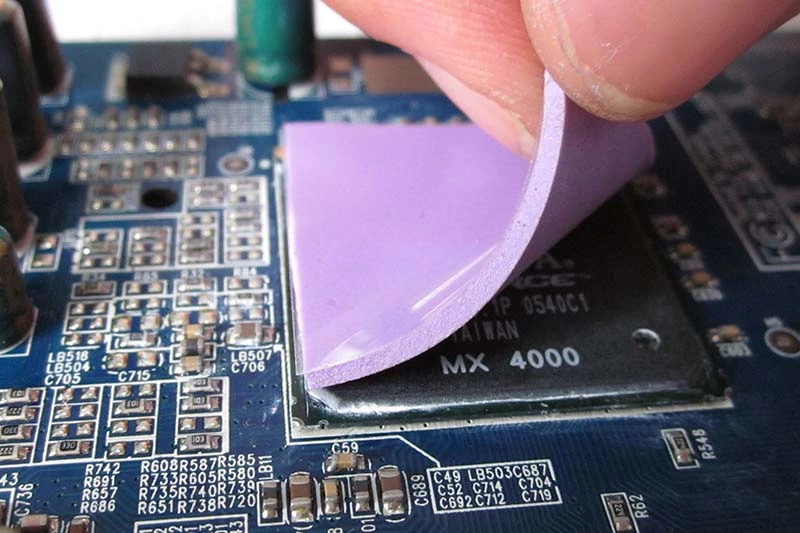
Silicone-based pads still dominate many cooling stacks because flexibility matters.
· High thermal conductivity from silicone polymer chemistry
· Strong surface wetting
· Easy compression fit
Material Behavior
1.1 Flex Profile
· Excellent flexibility cushions uneven heat sinks.
1.2 Chemical Concerns
· Release of volatile organic compounds can raise contamination risk.
· Trace outgassing may interfere with a sensitive semiconductor process.
Long-Term Considerations
2.1 Environment Fit
· Acceptable in power modules or automotive ECUs.
2.2 Degradation Path
· Gradual material degradation under high heat.
For advanced fabs chasing Silicone-free thermal conduction for semiconductor equipment, silicone pads can feel risky. Still, in less critical systems, their softness and strong heat flow keep them in the game.
Cleanroom Assembly: Silicone-Free Material Benefits
Silicone-free thermal conduction for semiconductor equipment is getting serious attention in fabs and packaging lines. As chip density rises, cleanroom teams want cleaner chemistry, tighter control, and zero surprises during bonding and rework.
High Temperature Stability with Ceramic-Filled Pads
In silicone-free thermal conduction for semiconductor equipment, heat control starts with the right thermal pads and smart material composition. Ceramic-filled systems rely on ceramic filler such as aluminum nitride to push thermal stability far beyond traditional gels.
Key performance drivers include:
· High heat resistance above 200 °C
· Stable thermal interface thickness under pressure
· Minimal outgassing in vacuum tools
Performance Snapshot for Thermal Interface Materials
| Material Type | Thermal Conductivity (W/m·K) | Continuous Temp (°C) | Dielectric Strength (kV/mm) |
| Silicone Pad | 1-15 | 150 | 8 |
| Ceramic-Filled Boron nitride pad | 15-20 | 220 | 12 |
| Phase-Change Film | 3-8 | 180 | 9 |
For fabs adopting silicone-free thermal management, this matters in reflow ovens and wafer stages where even slight pump-out ruins yield.
1) Heat enters the die
2) Transfers across the thermal interface
3) Dissipates through heat spreaders
Silicone-free thermal conduction for semiconductor equipment keeps thermal drift low, even after hundreds of cycles. Sheen Technology integrates these ceramic systems into precision cleanroom assemblies built for high temperature reliability.
Ultra-Low Viscosity for Precision Dispensing Systems
When ultra-low viscosity meets advanced dispensing systems, material flow becomes predictable. That’s critical for silicone-free thermal conduction for semiconductor equipment in fine-pitch die attach.
Performance depends on fluid properties and rheology:
· Controlled shear thinning
· Stable bead geometry
· Accurate precision application
· Repeatable automated dispensing
Nested process logic in semiconductor packaging:
Material Control
· Viscosity window: 2,000–5,000 cP
· Temperature conditioning: 23 ± 1 °C
Dispense Path
· Needle diameter selection
· Flow rate calibration
Post-Dispense
· Void inspection
· Thickness verification
Short take: smoother flow, fewer voids, tighter bonding lines.
“Advanced packaging continues to demand tighter material control and contamination-free interfaces,” noted a 2025 SEMI materials outlook, highlighting rising demand for silicone-free systems in high-density integration.
Silicone-free thermal conduction for semiconductor equipment paired with optimized material flow reduces waste and boosts yield. Sheen Technology tunes dispensing parameters to match each assembly line, keeping things efficient without messy rework.
Dielectric Strength Ensuring Process Compatibility
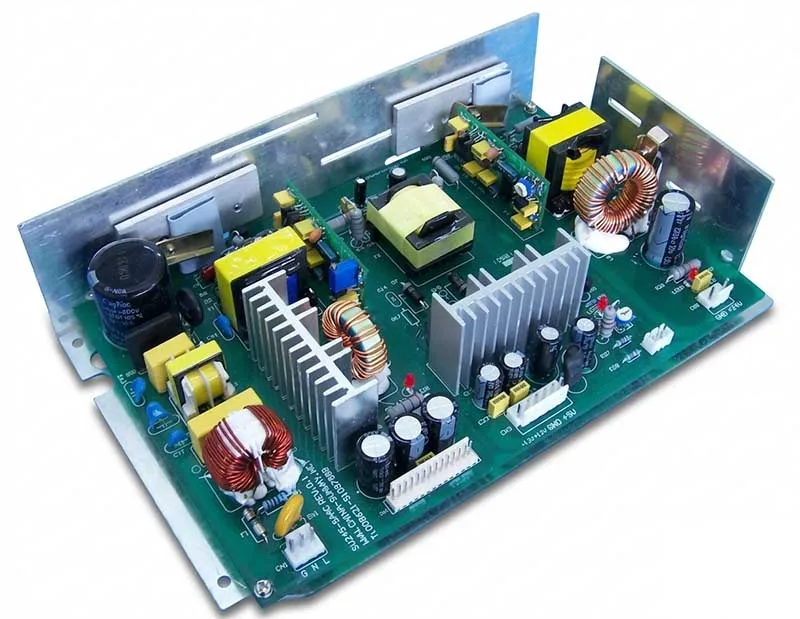
High dielectric strength is non-negotiable in power modules and stacked ICs. Silicone-free thermal conduction for semiconductor equipment must maintain electrical insulation while transferring heat fast.
Core electrical properties include:
· Breakdown voltage stability
· Long-term material integrity
· Low ionic contamination
Process compatibility logic:
Semiconductor Manufacturing
· Plasma exposure tolerance
· Cleanroom particle limits
Assembly
· Die attach pressure profile
· Cure temperature mapping
Operation
· High-voltage endurance
· Thermal cycling resistance
In short bursts: no shorts. No drift. No surprises.
Silicone-free thermal interface solutions support higher breakdown voltage margins in compact layouts, giving engineers breathing room in tight designs.
Reworkability in Die Bonder Operations
Reworkability keeps production flexible. In die bonding lines, mistakes happen; materials must allow clean component removal without wrecking substrates.
Rework sequence for silicone-free thermal conduction for semiconductor equipment:
· Controlled heating
· Softening of adhesive properties
· Die lift using vacuum tool
· Surface cleaning
· Re-dispense and rebond
Manufacturing logic stack:
Semiconductor Assembly
· Bond strength target
· Thermal cycling qualification
Manufacturing Operations
· Rework rate tracking
· Yield recovery metrics
Silicone-free thermal conduction for semiconductor equipment supports process flexibility while protecting wafers and lead frames.
Silicone-free thermal management isn’t just a spec sheet phrase—it’s practical chemistry built for cleanrooms. With silicone-free thermal conduction for semiconductor equipment at its core, Sheen Technology helps fabs stay clean, cool, and confidently in control.
Sheen Thermal
Dongguan Sheen Electronic Technology Co., Ltd · Founded in 2008
Manufacturer of thermal interface materials and silicone foam for automotive electronics, energy storage, power electronics, communications and consumer electronics.
Certified
- ISO 9001:2015
- ISO 14001:2015
- IATF 16949:2016
What we supply
- Thermal conductivity Up to 90 W/m·K
- Thickness 0.3–10.0 mm
- Custom & samples Die-cut to drawing, 3–7 days