
 English
 usheenthermal

Silicone-Free High Thermal Conductivity Gasket vs. Standard Pads
Date:2026-05-21
Silicone-Free High Thermal Conductivity Gasket vs. Standard Pads
Your hotspot problem won’t be fixed by a fancier pad. A Silicone-free high thermal conductivity gasket can tame build-to-build variation, stop silicone fogging, and hold a sane bondline when clamp load gets touchy.
Pads can squish, drift, and leave you chasing throttles and mystery returns; gaskets stay disciplined under cycling.
For clean procurement, put Sheen Technology application engineers and quality managers on the thread, and request rev-2026+ datasheets, dielectric limits, and thermal-cycling results before you sign.
Need a closer match for your project? Browse these related application pages to see where silicone-free high thermal conductivity gaskets are used in real systems.
Quick Answers: Silicone-free high thermal conductivity gasket Essentials
· Ensures consistent heat transfer by maintaining a controlled bondline under cycling and varying clamp loads.
· Offers phase-change, graphite-based, or ceramic-infused options for tailored thermal resistance and electrical insulation.
· Outperforms standard pads in long-term durability—resisting pump-out, creep, fogging, and thickness variation.
· Fits existing hardware seamlessly with die-cut shapes and thicknesses, enabling maintenance-free operation in 24/7 applications.
Classifications Of Silicone-Free Thermal Gaskets
Picking a Silicone-free high thermal conductivity gasket can feel like a picky little game of “what fails less.” Below is a clear way to match heat, pressure, and reliability to real electronics builds—no silicone drama.
Phase-Change Silicone-Free Gasket
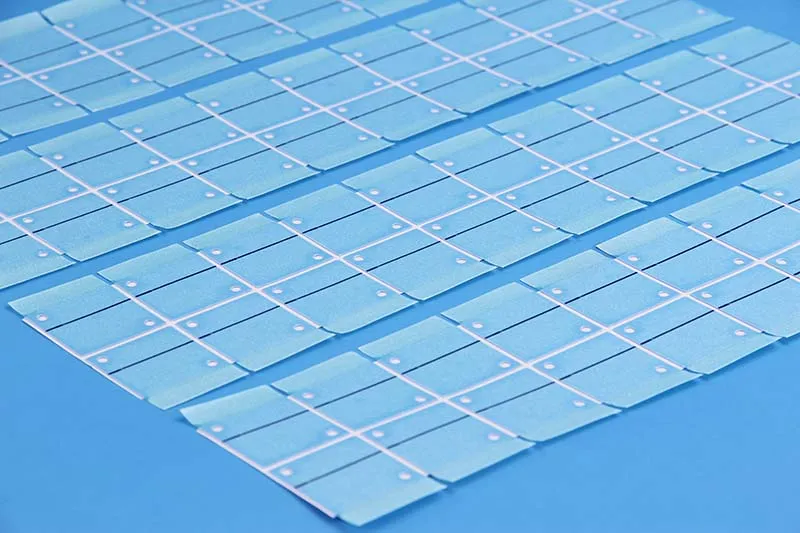
A Silicone-free high thermal conductivity gasket with phase change behavior stays tidy during handling, then loosens up at working temps so the thermal interface actually wets the mating faces. It’s a quiet win for electronics where reliability matters.
Fit check for a Silicone-free high thermal conductivity gasket:
material behavior
· Room temp: solid, clean cut edges
· Hot spot: softens and fills micro-gaps for better heat dissipation
Assembly reality
· Rework: lifts and replaces without the silicone mess
· Flow control: less squeeze-out than a greasy pad
Quick shorthand you’ll hear on the line: “phase-change thermal gasket” and “silicone-free thermal gasket.” Same family, different shop talk.
Graphite-Based High Conductivity Gasket
Graphite options are all about raw thermal conductivity; a graphite sheet moves heat sideways fast, so a Silicone-free high thermal conductivity gasket here often doubles as a spreader. It’s flexible under clamp load, but it can also be electrically lively, so don’t get casual with clearances.
Where it shines
· heat transfer across hot components, then out toward a cold plate
What to watch
· Conductive path risk in electronics and power management layouts
· Compression set over time; choose durable grades and validate torque
When it’s the right call
· Tight stacks that need a thin, flexible interface and fast lateral spreading
Sheen Technology typically positions graphite builds when the heat map is wide, not just tall.
| Gasket type | In-plane k (W/m·K) | Electrical insulation |
| Graphite sheet | 300 | No |
| Ceramic-filled polymer | 6 | Yes |
| Phase-change film | 3 | Varies |
Ceramic-Infused Thermal Interface Gasket
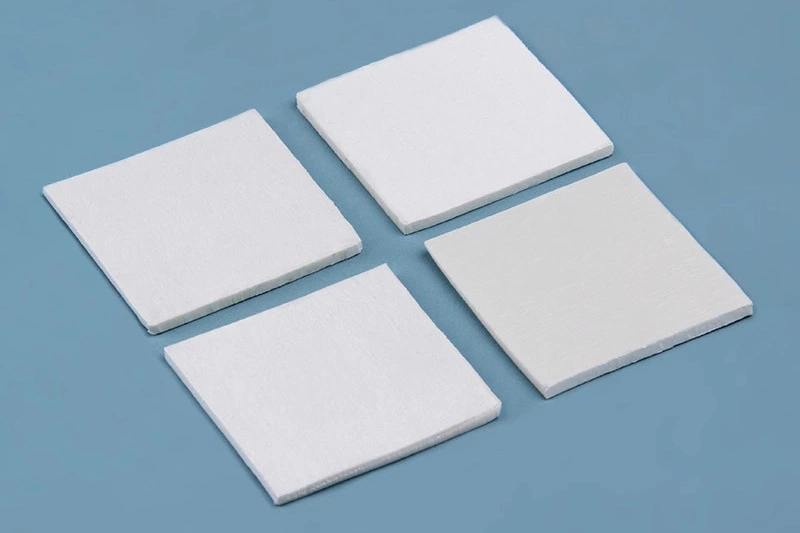
A ceramic-filled thermal interface pick is the “don’t fry the board” choice: the ceramic boosts conduction while keeping dielectric strength, so a Silicone-free high thermal conductivity gasket can sit close to sensitive nodes without weird shorts.
Selection logic for power modules:
Temperature and stability
· Holds thickness at high temperature
· Less pump-out, more consistent contact pressure
Electrical rules
· Insulating gasket body for safer layouts
· Matches electronics that demand isolation
Build feel
· Firmer, more controlled stack-up; still plenty robust
If you’re chasing a “silicone-free high thermal conductivity gasket” that behaves the same after months of heat cycling, Sheen Technology often steers buyers toward ceramic-infused options.
4 Key Differences Between Gaskets And Standard Pads
Quick reality check: gaskets and pads can both move heat, but they “win” in different ways. If you’re shopping for a Silicone-free high thermal conductivity gasket or a pad, the small details decide your temps, stress, and long-term headaches.
Thermal Conductivity Performance
Heat flow isn’t just a Conductivity value on a datasheet; it’s Heat transfer across messy surfaces, and that’s where a Silicone-free high thermal conductivity gasket often plays smart. Standard pads can post good bulk numbers, yet lose ground when Interface efficiency drops.
Where the heat bottleneck shows up
At the interface
· Gaskets chase lower Thermal resistance by conforming under load, improving Thermal impedance even at thin bondlines.
· A silicone-free high-k gasket can keep contact clean where silicone contamination is a no-go.
In the bulk
· Pads depend on thickness and filler network; too thick and Temperature management suffers.
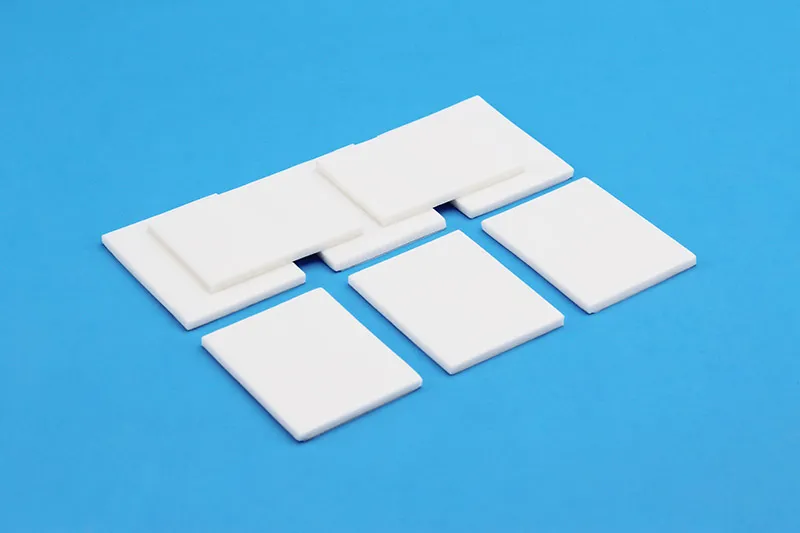
Sheen technology Silicone-free thermal gaskets Properties:
| Properties | Color | Thermal Conductivity | Thermal Impedance (1mm,@30psi) | Thickness | Standard Hardness |
|---|---|---|---|---|---|
| Unit | - | W/m·K | ℃*in2/W | mm | Shore 00 |
| AF100 | White | 1.0 | 1.1 | 0.25 ~ 5.0 | 50/70±5 |
| AF300 | White | 2.0 | 0.8 | 0.25 ~ 5.0 | 50/70±5 |
| AF500 | White | 3.0 | 0.6 | 0.25 ~ 5.0 | 50/70±5 |
| AF600 | White | 5.0 | 0.3 | 0.5 ~ 5.0 | 50/70±5 |
| AF600G | White | 6.0 | 0.25 | 0.5 ~ 5.0 | 50/70±5 |
| AF800 | White | 8.0 | 0.2 | 0.5 ~ 5.0 | 50/70±5 |
| AF1000 | Gray | 10.0 | 0.13 | 1.0~2.0 | 70±7 |
| Test Method | Visual | ASTM D5470 | ASTM D5470 | ASTM D374 | ASTM D2240 |
Need exact thermal conductivity, thickness range, dielectric strength, and compression data before you choose? Download the product datasheets to compare silicone-free high thermal conductivity gasket options.
Material Compression and Gap Filling
This is where “feels squishy” can fool you. A Silicone-free high thermal conductivity gasket usually compresses to a planned stop, so Contact pressure stays sane and parts don’t get bullied.
Quick way to judge fit on the bench
· Check nominal gap and tolerance stack; big swing means you need real Gap filling.
· Pick a Silicone-free gasket when you want controlled Deflection and repeatable Compressibility.
· Pick a pad when you need easy Conformability, but watch for over-squeeze and uneven thinning.
· Keep an eye on Surface wetting and Void elimination; air pockets are tiny heat blankets.
If you’re swapping pad to silicone-free gasket, ask Sheen Technology for a Silicone-free high thermal conductivity gasket cut to your keep-out zones, so compression lands where it should.
Long-Term Durability and Reliability
Short-term tests can look great, then real life shows up with Thermal cycling, vibration, and time. A Silicone-free high thermal conductivity gasket is often chosen because it holds shape and contact, keeping Performance stability from drifting.
What usually changes over time
Mechanical changes
· Lower creep helps Mechanical integrity, which protects Service life.
· Pads can relax, and that can quietly raise Thermal resistance month by month.
Chemistry and environment
· Better Environmental stability reduces hardening and oil bleed.
· Less Material degradation means your mounting torque still “means something” after cycles.
Practical outcome
· Better Aging resistance tends to keep Heat dissipation consistent, not just on day one.
Sheen Technology typically steers high-power builds toward a Silicone-free high thermal conductivity gasket when field returns are expensive, and rework is a pain.
Electrical Insulation Characteristics
Thermal parts sometimes sneak in electrical surprises. Many gaskets are built for thin bondlines with strong Electrical isolation, while pads range from fully insulating to “oops, that’s conductive.”
When you’re doing the stack-up, watch these like a hawk:
· Dielectric strength and Breakdown voltage at your real thickness, not the marketing thickness.
· Volume resistivity and Insulation resistance after heat soak; some pads drift.
· Leakage current risk around fasteners, shields, and vias; Dielectric constant can also shift EMI behavior.
If your design needs insulation plus heat flow, a Silicone-free high thermal conductivity gasket can simplify the safety margin—fewer band-aids, fewer “how did that short happen” moments.
Overheating Devices? Try Silicone-Free Gaskets
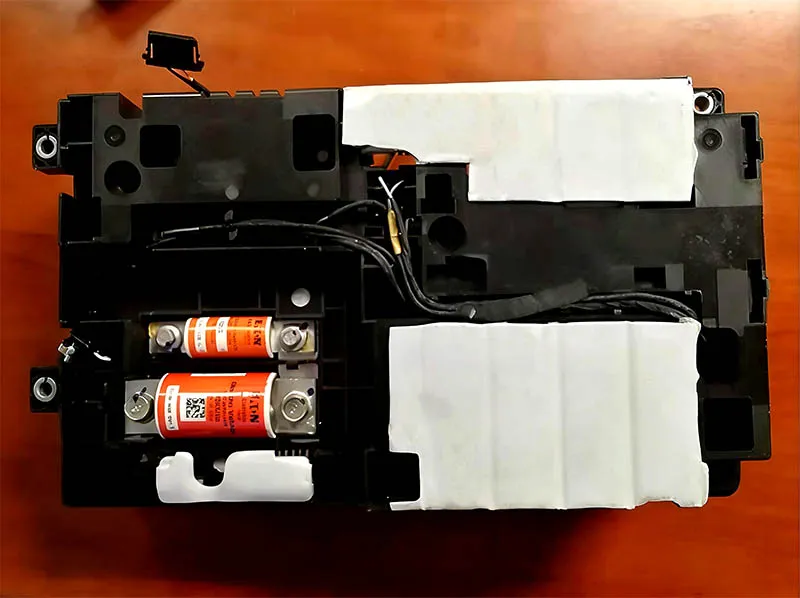
Hot parts don’t wait for you to redesign the box. This is where a Silicone-free high thermal conductivity gasket earns its keep: it chills down spikes, fits into the gear you already ship, and stays clean for optics and sensors. Sheen Technology builds options that feel like an easy swap, not a science project.
Rapid Heat Dissipation for Hotspots
When hotspots pop up, a Silicone-free high thermal conductivity gasket works like a fast lane for heat. It’s plain thermal management that keeps performance from wobbling.
Where the gains come from:
Contact behavior
· High conformity helps the thermal interface bridge gaps from warped lids.
· Better pressure spread supports heat dissipation right at the junction.
Heat flow path
· High high conductivity moves heat out of CPUs, power stages, and LEDs.
· Heat reaches the chassis faster, so cooling solutions don’t lag behind the spike.
Real-world result
· Lower junction swings mean steadier clocks and fewer surprise throttles, a quiet performance enhancement.
Sheen Technology can spec a Silicone-free high thermal conductivity gasket that matches your clamping force so you don’t end up “fixing heat” by cracking a PCB.
Seamless Retrofit on Existing Hardware
If you’re stuck with existing systems, the nice part is how a Silicone-free high thermal conductivity gasket drops in without drama.
Quick-fit perks (seamless integration):
· Die-cut shapes, standard sheets, and multiple thicknesses keep hardware compatibility realistic.
· Easy installation with your current screws or clips; no fancy new fixtures.
What to check before you swap:
· Measure the old pad thickness at the most compressed spot.
· Pick a high thermal conductivity gasket that still seals contact after tolerance stack-ups.
· Test for uneven lids; a silicone-free gasket can recover better on bad flats.
Little upgrade path, big payoff:
· Cleaner contact equals smoother temps, so your retrofit solutions don’t turn into a redesign loop.
· That’s real design flexibility, and it keeps the upgrade path open for the next rev.
Sheen Technology supports drop-in conversions with a silicone-free, high thermal conductivity gasket that’s cut to match the footprint you already have.
Maintenance-Free Operation for Continuous Use
A Silicone-free high thermal conductivity gasket is a solid pick when gear runs all day, and nobody wants to babysit it. In 24/7 setups, “set it and forget it” isn’t laziness; it’s operational efficiency.
Why silicone-free matters:
Clean surroundings
· Silicone-free chemistry reduces bleed and fogging near lenses.
· That helps avoid sensor drift, keeping continuous operation stable.
Long life under a clamp
· Low compression set supports long-term reliability.
· Less retorque means fewer service calls and better durability.
Business-level wins
· Fewer shutdowns protect uninterrupted performance.
· Stable thermal contact stretches system extended lifespan.
If you’re chasing a cleaner line and calmer thermals, Sheen Technology offers a Silicone-free high thermal conductivity gasket that stays put and stays consistent.
FAQs about Silicone-free high thermal conductivity gasket
What makes a silicone-free, high thermal conductivity gasket a better bulk-purchase choice than standard thermal pads?
A gasket behaves like a disciplined spacer: it compresses to a known thickness and keeps the assembly honest run after run. Pads can feel forgiving at install, then betray you by over-compressing and loading fragile parts.
· Gasket win: lower interface resistance through conformability + controlled clamp load
· Pad risk: “squish until it fits” installs can stress components and shift bondlines across builds
· Production mood: fewer surprises, fewer torque debates on the line
Which silicone-free gasket type should I specify for high-volume builds: phase-change, graphite-based, or ceramic-infused?
Pick the material that matches how your product lives—hot, cycled, reworked, or sealed tight.
| Gasket type | What it feels like in production | Best fit | Watch-outs |
| Phase-change (silicone-free) | Clean handling; then softens with heat and “settles in” | Reworkable assemblies, controlled flow | Needs operating heat to fully wet |
| Graphite-based | Strong heat spreading under clamp; quick heat “escape” | Heat spreading across plates/chassis | Can be electrically conductive |
| Ceramic-infused | Steady thickness; calm under heat cycling | High-temp, dielectric needs, long duty cycles | Often stiffer; verify compression curve |
How does clamp load and thickness affect real thermal conductivity performance in production?
Thermal numbers on a datasheet can look heroic—until the stack-up meets real screws, real warpage, real people with torque drivers.
· Clamp load: more pressure usually means less contact resistance as surfaces conform
· Thickness: thicker stacks add bulk resistance, even with high W/m·K filler
· Repeatability: defined compression stops “good unit / bad unit” drift across shifts
Silicone-free high thermal conductivity gasket: which options reduce pump-out, creep, and oil bleed for 24/7 equipment?
Long-running gear punishes soft interfaces; heat cycles pull and push until weak materials creep. Silicone-free gaskets help when contamination is a personal enemy—optics, sensors, relays.
· Favor ceramic-infused grades for stability and pump-out resistance at higher temps
· Ask for a low compression set so the clamp force doesn’t fade over months
· Keep it silicone-free to cut fogging/film near sensitive parts
Can graphite-based high-conductivity gaskets cause electrical shorts, and how do buyers prevent them at scale?
Yes—graphite can conduct, and one stray edge can turn a clean design into a field return that feels like betrayal. Prevention is simple, but it must be enforced.
· Add a dielectric film or insulating layer in the stack-up
· Build in keep-out margins so the sheet can’t wander into copper or chassis ground
· Validate with hipot/insulation tests on the full assembly, not loose samples
【Request a Custom Quote】 Not sure which silicone-free high thermal conductivity gasket fits your build? Send us your operating temperature, clamp load, thickness target, and application type, and we can help recommend the right thermal solution for your design.
Sheen Thermal
Dongguan Sheen Electronic Technology Co., Ltd · Founded in 2008
Manufacturer of thermal interface materials and silicone foam for automotive electronics, energy storage, power electronics, communications and consumer electronics.
Certified
- ISO 9001:2015
- ISO 14001:2015
- IATF 16949:2016
What we supply
- Thermal conductivity Up to 90 W/m·K
- Thickness 0.3–10.0 mm
- Custom & samples Die-cut to drawing, 3–7 days