
 English
 usheenthermal

How to Find Reliable Custom Insulating Thermal Sheet Manufacturers
Date:2026-05-21
How to Find Reliable Custom Insulating Thermal Sheet Manufacturers
Custom insulating thermal sheet manufacturers can make or break your production line, and that’s the bottom line. One bad batch and your margins go up in smoke real fast too.
You need proof of consistency, traceability, and straight answers before signing anything. No guesswork, no crossed fingers. Just solid process.
Key Points for Custom insulating thermal sheet manufacturers
➔ Visit Facilities: Inspect production lines, QC stations, storage, calibration, and nonconformance handling.
➔ Analyze Test Reports: Request COA/MTR with lot numbers, verify methods, accreditation, and batch consistency.
➔ Assess Communication: Measure quote speed, technical clarity, proactive risk sharing, and structured updates.
➔ Confirm Custom Tooling: Review CAD support, prototyping, mold control, maintenance, and dimensional repeatability.
➔ Verify Supply Stability: Check financial health, raw-material sourcing, dual suppliers, inventory buffers, and contingency plans.
5 Insider Tips to Vet Manufacturers
Picking Custom insulating thermal sheet manufacturers isn’t about vibes; it’s about proof. This quick vetting run helps you spot real manufacturing process control, clean quality assurance, and steady delivery. Keep it practical, keep it skeptical, and save yourself the rework headaches later.
Visit Production Facilities in Person
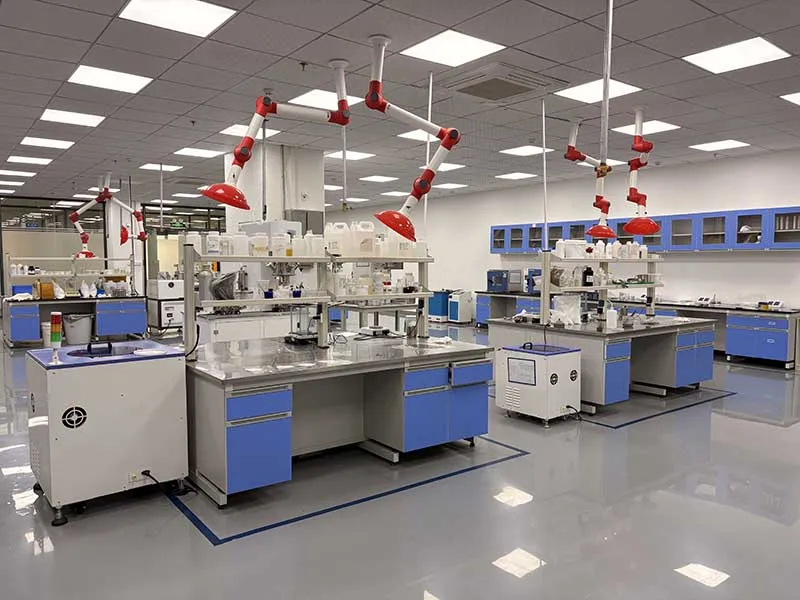
A solid site visit beats a slick slide deck, every time, when you’re screening Custom insulating thermal sheet manufacturers or any thermal sheet manufacturers.
Factory audit focus
Production facility
· Look for real flow, not staged stations: raw-in → cut/laminate → cure → pack.
· Match claimed output to visible WIP and staffing; note bottlenecks that kill operational efficiency.
Equipment
· Check maintenance tags, calibration stickers, and downtime logs; “we calibrate” doesn’t count without dates.
· Ask what happens when a critical tool goes out—backup press, spare heaters, alternate line?
Quality control
· Walk the checkpoints: incoming, in-process, final.
· Verify how nonconforming rolls/parts are labeled, quarantined, and dispositioned—scrap, rework, or “blend it in.”
· Inspect storage: humidity, dust, and FIFO discipline can quietly wreck performance.
Request and Analyze Material Test Reports
For Custom insulating thermal sheet manufacturers, the paperwork is only useful when it’s tied to reality—lot numbers, material analysis, and your own incoming checks.
Quick hits to request (keep it simple):
· COA/MTR that references lot/heat numbers and shipment IDs (certifications, industry standards).
· Test method names and lab credentials (test data, quality assurance).
What to verify, in plain terms:
1) Material specifications: do the reported ranges actually match your spec limits, not “typical values”?
2) Performance metrics: pull the few that matter—tensile, elongation, adhesion, aging, flame rating if relevant.
3) Thermal properties: confirm units and conditions (temperature points, thickness, conditioning time).
If you want a fast sanity check, compare across lots, not just one golden report:
| Lot ID | Thickness (mm) | Thermal Conductivity (W/m·K) | Tensile Strength (MPa) |
| A21-04 | 0.50 | 0.034 | 9.8 |
| A21-05 | 0.50 | 0.036 | 9.1 |
| A21-06 | 0.50 | 0.035 | 9.6 |
| A21-07 | 0.50 | 0.041 | 7.9 |
If one lot is drifting, ask why—resin swap, filler change, cure profile shift. That’s the stuff that bites later when insulating thermal sheet manufacturers promise “same as last time.”
Evaluate Supplier Responsiveness and Communication
When you’re juggling timelines, supplier communication becomes a quality signal, not just a “nice to have,” especially with Custom insulating thermal sheet manufacturers.
What good looks like (and it’s not fancy):
Response time
· Quotes come back with assumptions listed, not hidden.
· ETA updates arrive before you chase; missed dates get explanations, not excuses.
Technical support
· A decent engineer asks pointed questions: service temp, compression set targets, adhesion surface, test method.
· Risks show up early—tool wear, thickness tolerance, material lead time.
Problem resolution
· Clear 8D/CAPA style thinking: containment → root cause → corrective action → prevention.
· Photos, measurements, and sample tracking, not “we’ll handle it.”
Project updates + transparency
· Short, structured notes: what changed, what’s blocked, what you need to decide.
· A working feedback mechanism so your drawing tweaks don’t get “lost in email.”
If you’re buying through Sheen Technology, ask them to map who owns what—your spec questions, the factory’s actions, and the escalation path—so communication stays crisp.
Verify Customization Capabilities and Tooling Options
Real customization options aren’t “pick a color.” For Custom insulating thermal sheet manufacturers, it’s about repeatable dimensions, controlled inputs, and tooling that doesn’t wander.
What to check on day one
Engineering capabilities
· Ask for a quick DFM pass: tolerance stack, minimum bend radius, shrink, adhesive edge bleed.
· Confirm CAD formats and revision control; sloppy rev history causes “mystery changes.”
Design flexibility
· Can they adjust density, coating weight, reinforcement scrim, die-cut geometry?
· What’s the limit before performance drops off?
Tooling reality check (this is where projects go sideways)
Tooling development
· Who owns molds/dies on paper, and who physically stores them?
· What’s the maintenance schedule—sharpening, resurfacing, replacement intervals?
Prototyping
· Pilot runs should mimic production settings, not a lab-only setup that can’t scale.
· Demand dimensional data across multiple pulls to prove repeatability.
· Small but telling question: “If we reorder in 9 months, what guarantees the same output?”
If the answer is vague, keep shopping.
Check Long-Term Supply Chain Stability
A supplier can look perfect today and still fail you next quarter. With Custom insulating thermal sheet manufacturers, stability is about inputs, planning, and calm reactions when freight or resin prices spike.
Practical checks that don’t waste time:
Supply chain reliability
· List upstream dependencies: key polymers, foils, coatings, liners.
· Confirm material sourcing regions and any single-point bottlenecks.
Risk assessment
· Ask what breaks the line fastest: one chemical, one liner, one heater cartridge?
· Request continuity plans for geopolitical shifts and port delays.
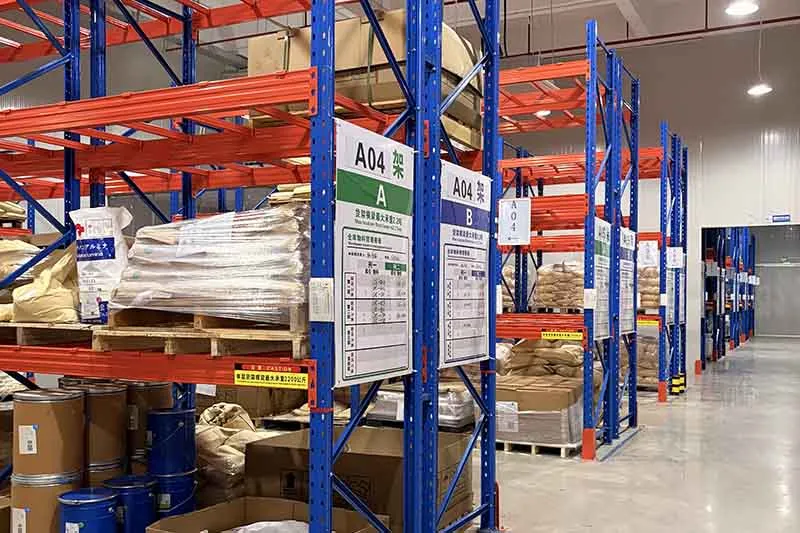
Inventory management + logistics
· Do they run safety stock on critical inputs, or is it all “just in time” talk?
· Can they stage finished goods, and for how long, without degrading properties?
Production capacity + long-term partnership
· Look for capacity headroom and a plan for peak months.
· Ask how they handle priority conflicts when bigger buyers cut in line.
If you need a steady ramp, Sheen Technology can help pressure-test these answers with supplier records and real lead-time behavior—not promises.
Need a closer match for your project? Browse these related application pages to see how insulating thermal sheets are used in real production environments.
Top 3 Red Flags in Manufacturer QC Processes
Chasing Custom insulating thermal sheet manufacturers can feel like speed dating—lots of promises, not enough proof. This quick run-through flags the stuff that quietly wrecks schedules and field performance. If you’re buying custom insulation sheets, thermal sheets, or insulating sheets, use these tells to filter vendors fast, then lock specs down with Sheen Technology.
Inconsistent Batch-to-Batch Quality
When Custom insulating thermal sheet manufacturers swing from one lot to the next, your build turns into guesswork. Big Batch variation kills Product consistency fast.
Quality control signals to watch
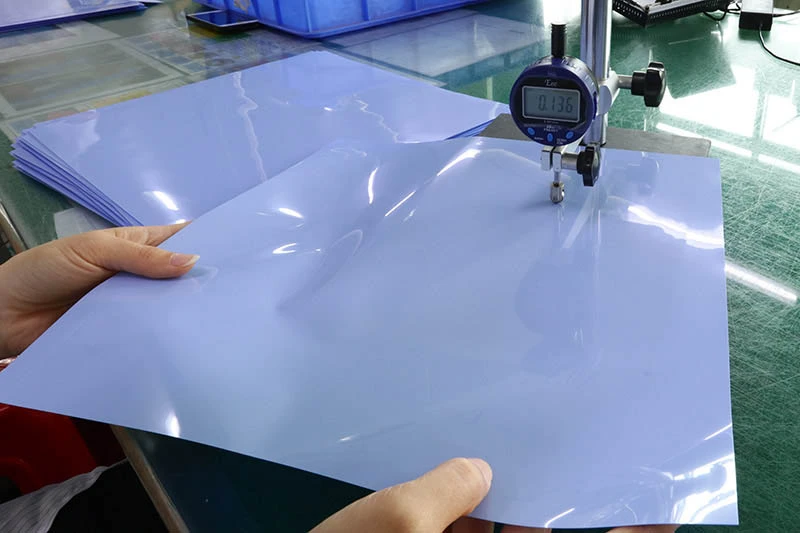
Production batches
· Dimensional drift: thickness, width, flatness shift between runs
· Performance deviation: thermal resistance or dielectric changes for the same SKU
Material properties
· Resin cure window drifting, filler loading drifting, moisture pickup
What usually sits underneath
· Manufacturing standards not pinned down
· Weak SPC limits, “we tweaked the line” without re-validation
Operator habits
· Training gaps, undocumented setpoint changes, rushed changeovers
Quick buyer checks (ask, don’t assume)
· Control charts for key CTQs across 10+ Production batches
· Maintenance logs tied to out-of-spec spikes
Custom insulating thermal sheet manufacturers worth sticking with can show trend lines, not excuses.
Missing or Incomplete Inspection Certificates
If a vendor can’t hand over clean paperwork, you’re buying risk—simple as that. With Custom insulating thermal sheet manufacturers, Inspection reports are the receipts.
Minimum certificate pack (ask for a sample PDF)
· COA with measured values, not “PASS”
· FAI for new tools or revisions
· Certification documents tied to Compliance standards (RoHS/REACH if relevant)
What “complete” looks like in Product verification
· Testing protocols listed (method, sample size, frequency)
· Instruments + calibration status (ID, due date)
· Acceptance criteria copied from the drawing/spec
Red-flag tells
· Documentation gaps: missing lot number, no inspector sign-off, mismatched units
Sheen Technology can provide a tight COA/FAI bundle on request, which makes comparing other thermal sheet manufacturers way less messy.
Poor Traceability of Raw Materials
For Custom insulating thermal sheet manufacturers, traceability isn’t “nice to have.” It’s your only shot at a targeted recall when a resin or adhesive lot goes sideways.
What good trace looks like end-to-end
Material sourcing
· Supplier COA captured and linked at receiving
· Supplier verification recorded (approved list + change notices)
Raw material origin to finished roll/sheet
· Material identification (batch IDs) carried through storage, drying, mixing
· Component tracking on travelers, not in someone’s inbox
Traceability systems
· ERP/MES link: incoming lot → WIP traveler → finished label → shipment
| Trace point | Expected record | Numeric check |
| Incoming resin lot | Receiving log + supplier COA | Lot ID match rate ≥ 99% |
| Mixing/compounding | Batch sheet + operator ID | Time stamp (24h clock) |
| In-process hold | Traveler + disposition code | Hold reason code count |
| Finished goods | Label + shipment mapping | 1 finished lot → ≥ 1 raw lot |
If a factory can’t map a shipped SKU back to Raw material origin, keep shopping—Custom insulating thermal sheet manufacturers with tight trace (including Sheen Technology) won’t dodge this question.
Which Insulating Sheet Specs Ensure Lasting Performance?
Choosing the right specs is not just a technical checklist; it’s what keeps equipment cool, safe, and running for years. For buyers comparing Custom insulating thermal sheet manufacturers, the details below separate average supply from long-term reliability.
Thermal Conductivity for Effective Heat Management
When reviewing data from Custom insulating thermal sheet manufacturers, focus on how thermal conductivity drives real-world heat transfer.
Spec Evaluation Logic
Material Level
· Check stated thermal conductivity and confirm the test temperature.
· Review filler content that influences the K-factor.
Application Level
· Match conductivity to expected heat flux.
· Calculate total thermal resistance across interfaces.
System Level
· Assess resulting temperature gradient under peak load.
· Confirm overall insulation performance stability over time.
Supplier Validation Path
· Lab verification:Third-party test reports.
· Pilot production:Small-batch validation from custom insulating sheet manufacturers.
· Mass production:Lot-to-lot consistency checks.
Professional Custom insulating thermal sheet manufacturers like Sheen Technology align lab values with actual assembly conditions, not just brochure numbers.
Dielectric Strength to Prevent Electrical Failures
Electrical safety is non-negotiable. When screening Custom insulating thermal sheet manufacturers, map dielectric strength to operating voltage and environment.
Core Electrical Metrics
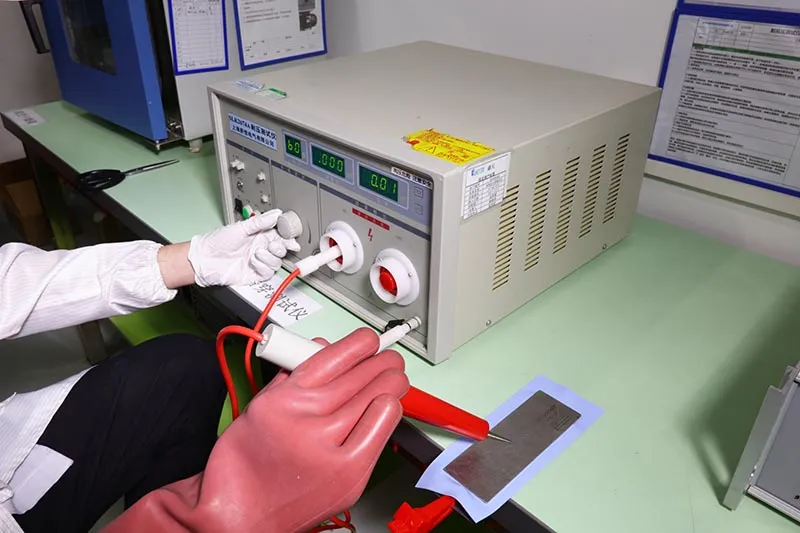
Breakdown Control
· Rated voltage breakdown must exceed working voltage with margin.
· Validate under humidity stress.
Insulation Quality
· High electrical resistance and stable permittivity.
· Confirm proper insulation class.
Arc Protection
· Test arc resistance in thin areas.
· Monitor long-term electrical integrity.
Risk Mitigation Flow
· Design review with insulating thermal sheet manufacturers.
· Prototype dielectric testing.
· Aging simulation under heat and moisture.
Experienced custom insulating thermal sheet manufacturers understand that thin spots often trigger failure, not average thickness.
Thickness Uniformity and Dimensional Tolerance
Spec sheets may look tidy, but real durability depends on thickness uniformity and tight dimensional tolerance.
Manufacturing Control Points
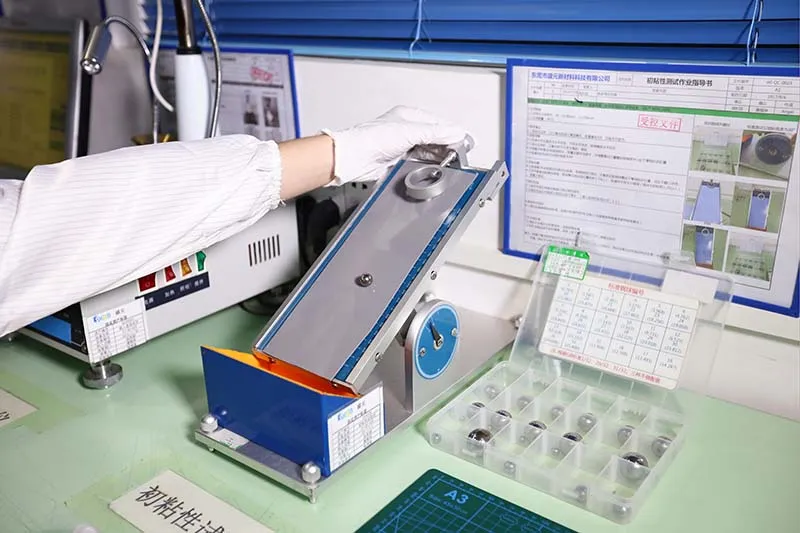
Raw Material Stage
· Stable resin viscosity.
Forming Stage
· Accurate gauge control.
· Continuous monitoring of material thickness.
Finishing Stage
· Precision cutting to maintain sheet dimensions.
· Surface flatness inspection.
Quality Assurance Layers
· In-line measurement.
· Random sampling for manufacturing consistency.
· Cross-lot comparison to ensure repeatable precision.
Top Custom insulating thermal sheet manufacturers document tolerance drift over time. Sheen Technology keeps variation tight so assembly teams don’t have to “make it fit.”
Material Composition and Aging Resistance
Long service life starts with smart material composition. Not all custom insulating sheet manufacturers disclose what really matters.
Composition Review
Base Polymer
· Verify thermal class and oxidation limits.
Fillers and Additives
· Impact on chemical stability.
· Influence on UV resistance and moisture resistance.
Flame Rating
· Confirm compliance level.
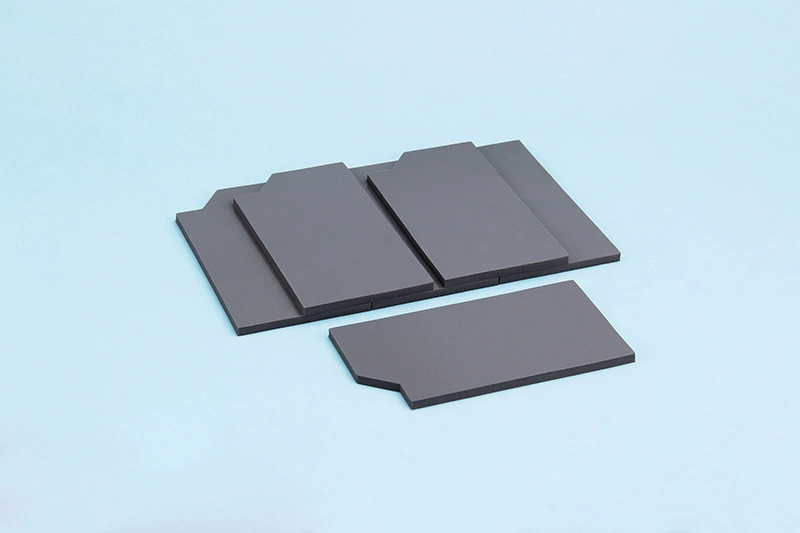
Sheen Thermal pad UL 90 Flame test records
| Sample: | Thermal Pad | ||
| Thickness: | 3.0mm | Colo: | Grey |
| Ambient Temp: | 23.5℃ | Humidity: | 50 %RH |
Materials classifications:
| Criteria conditions | V-0 | V-1 | V-2 |
| After flame time for each individual specimen t1 or t2 | ≤10s | ≤30s | ≤30s |
| Total after flame time for any condition set (t1 plus t2 for the 5 specimens | ≤50s | ≤250s | ≤250s |
| After flame plus afterglow time for each Individual specimen after the second flame application (t2 +t3 ) | ≤30s | ≤60s | ≤60s |
| After flame or afterglow of any specimen up to the holding clamp | No | No | No |
| Cotton indicator ignited by flaming particles or drops | No | No | Yes |
| No. | t1(s) | t2(s) | t3(s) | All sample t1+t2≤50S | Single sample t2+t3≤30S | Does it light the cotton | Whether the burnt out | Level of compliance |
| 1 | 0.9 | 0.8 | 0.2 | Meet | Meet | No | No | V-0 |
| 2 | 0.8 | 0.6 | 0.2 | No | No | |||
| 3 | 0.8 | 0.5 | 0.2 | No | No | |||
| 4 | 0.8 | 0.6 | 0.2 | No | No | |||
| 5 | 0.7 | 0.5 | 0.2 | No | No |
Aging Validation Framework
· Accelerated heat exposure.
· Humidity cycling to check environmental degradation.
· Mechanical load testing for creep and material durability.
Service Life Confirmation
· Retention of dielectric and thermal properties.
· No cracking or delamination.
· Predictable service life under field conditions.
Reliable Custom insulating thermal sheet manufacturers back claims with aging data, not guesswork. That’s how smart buyers filter serious insulating material manufacturers from the rest.
Need exact thermal conductivity, dielectric strength, thickness range, and material composition before you choose? Download the product datasheets to compare custom insulating thermal sheet options.
FAQs about Custom Insulating Thermal Sheet Manufacturers
How can Custom insulating thermal sheet manufacturers prove real production capacity during a factory visit?
A serious factory does not rely on slides—it opens the floor.
1) Walk the full production path
· Match machine count to stated monthly output
· Compare cycle time with declared capacity
2) Watch the details that reveal discipline
· Clear segregation of conforming vs. nonconforming sheets
· Labeled raw material storage with batch IDs
· Calibrated gauges at QC stations (check dates, not just stickers)
3) Talk to operators
· Can they explain tolerance targets?
· Do they know what happens if dielectric strength fails?
When the numbers, machines, and people tell the same story, capacity is real—not theatrical.
What should a COA/MTR include for insulating sheets in bulk orders?
In large purchases, paperwork is your quiet safeguard.
A valid COA/MTR from Custom insulating thermal sheet manufacturers should connect each shipment to a traceable lot number and clearly show:
· Measured values (not just “pass”)
· Test standards used
· Instrument ID and calibration status
· Acceptance criteria
· Inspector sign-off
| Item | Must Be Clear | Why It Matters |
| Thermal conductivity | Numeric data | Heat control consistency |
| Dielectric strength | Test method + value | Electrical safety margin |
| Thickness tolerance | Range + result | Assembly fit |
| Lab accreditation | Identified | Data credibility |
If incoming inspection results cannot be cross-checked to the same lot, risk quietly grows.
How do Custom insulating thermal sheet manufacturers maintain batch-to-batch consistency?
Consistency is rarely accidental. It is tracked.
Look for three layers of control:
Process layer
· SPC charts on thickness and density
· Controlled resin/filler ratios
Equipment layer
· Preventive maintenance logs
· Documented mold or die servicing
People layer
· Operator training records
· Defined response to parameter drift
Trend data over time tells more truth than a single good batch. Stable thermal conductivity and dielectric values across months signal mature control.
How can I evaluate supplier responsiveness before signing a long-term agreement?
Pressure reveals character.
Early interactions with Custom insulating thermal sheet manufacturers often predict future behavior:
1. Quote stage
· Speed of response
· Clear restatement of specs and tolerances
2. Technical feedback
· Do they flag unrealistic thickness or flame-rating targets?
· Do they suggest DFM improvements?
3. Issue handling
· Structured updates with actions and dates
· Clear disposition plan for nonconforming sheets
A supplier that asks sharp questions before the contract is usually the one that protects you after it is signed.
【Request a Custom Quote】 Not sure which custom insulating thermal sheet fits your application? Send us your target thickness, operating temperature, dielectric requirement, and production volume, and we can help recommend the right thermal solution for your build.
Sheen Thermal
Dongguan Sheen Electronic Technology Co., Ltd · Founded in 2008
Manufacturer of thermal interface materials and silicone foam for automotive electronics, energy storage, power electronics, communications and consumer electronics.
Certified
- ISO 9001:2015
- ISO 14001:2015
- IATF 16949:2016
What we supply
- Thermal conductivity Up to 90 W/m·K
- Thickness 0.3–10.0 mm
- Custom & samples Die-cut to drawing, 3–7 days