
 English
 usheenthermal

Boost EV Range: Thermal Management for New Energy Vehicle Batteries
Date:2026-06-18
Boost EV Range: Thermal Management for New Energy Vehicle Batteries
Thermal management for new energy vehicle batteries isn’t some backroom detail—it’s the difference between a smooth ride and a range drop that hits like a bad surprise.
Sheen Technology engineers note in recent briefs that heat imbalance accelerates cell aging and raises safety margins, pushing teams to prioritize precise materials.
That’s why smarter cooling choices and better interfaces aren’t optional anymore—they decide range, cost, and whether your build holds when conditions get messy.
Key Insights: Thermal management for new energy vehicle batteries
➔ Uniform Heat Removal: Employ micro-channels and cold plates for even liquid cooling and hotspot prevention.
➔ Phase-Change Buffering: Use paraffin wax or salt-hydrate PCMs to absorb latent heat and stabilize cell temperatures.
➔ Passive Spreaders: Integrate graphite sheets or carbon-fiber composites to level temperature gradients without pumps.
➔ Material Selection: Balance high thermal conductivity (copper, aluminum) with specific heat capacity and dielectric strength.
➔ Hybrid Strategies: Combine liquid circuits, heat pipes, and airflow to optimize thermal control, cost, and EV driving range.
Need the numbers before you finalize the design? Download Sheen’s datasheet resources to review thermal conductivity, thickness, flame resistance, and electrical insulation performance.
Types Of Battery Cooling Methods
Keeping Thermal management for new energy vehicle batteries under control isn’t just tech talk—it’s what keeps EVs safe, efficient, and long lasting. When battery packs heat up, performance drops fast. From battery cooling plates to phase change systems, smart thermal management makes sure energy vehicles stay cool even when pushed hard.
Micro-channels and Cold Plates for Uniform Heat Removal
In high-density packs, micro-channels inside cold plates act like narrow highways for coolant, improving heat transfer and steady fluid flow. This approach strengthens thermal management in electric platforms where temperature uniformity matters.
Key roles of this method include:
· Enhancing heat removal across each battery module
· Supporting precise battery cooling under rapid charging
· Reducing thermal stress during peak load
For Thermal management for new energy vehicle batteries, performance depends on structure:
Cell Layer
1.1 Heat spreads from the electrode core
1.2 Conducts into the aluminum cooling plate
Cooling Layer
2.1 Coolant circulates through micro-channels
2.2 Flow rate adjusts based on pack temperature
Control Layer
3.1 Sensors detect variation
3.2 Pump speed adapts for optimal thermal management
Immersion Cooling with Paraffin Waxes for Phase Change Benefits
Immersion cooling surrounds cells in a dielectric fluid, often enhanced with paraffin waxes as a phase change material. When temperatures climb, latent heat absorption kicks in. No drama—just smooth heat absorption.
Short breakdown:
· Heat rises
· Wax melts
· Energy is absorbed
· Temperature stabilizes
For new energy vehicle battery systems, this design supports:
· Thermal buffering during fast charge
· Passive temperature regulation at idle
· Improved thermal conductivity balance inside modules
BloombergNEF’s 2025 EV battery outlook notes that advanced cooling strategies, including immersion-based systems, are becoming critical as energy density climbs and fast-charging adoption accelerates globally.
In real-world Thermal management for new energy vehicle batteries, immersion setups reduce sharp spikes, improving pack safety while simplifying structural layouts.
Passive Cooling via Graphite Sheets and Carbon Fiber Composites
No pumps. No coolant loops. Just smart material science.
Passive cooling relies on graphite sheets and carbon fiber composites with high thermal conductivity. These lightweight materials spread heat laterally across the battery module, encouraging natural convection.
Structure inside a module:
· Core cells generate heat
· Graphite sheets spread energy sideways
· Outer casing releases it gradually
Advantages for battery thermal management:
· Reduced system weight
· Lower maintenance needs
· Silent operation
In compact EVs, this method supports Thermal management for new energy vehicle batteries where space is tight and simplicity matters. It’s low-cost and reliable—pretty hard to beat in entry-level electric platforms.
Hybrid Cooling Systems: Pumps Paired with Heat Pipes
Hybrid setups blend active cooling and passive cooling for higher thermal efficiency. Think of pumps pushing coolant while heat pipes move energy through phase change inside sealed tubes.
How it works in layered form:
Heat Generation Zone
1.1 Cells warm under acceleration
Transfer Mechanism
2.1 Heat pipes absorb heat
2.2 Vapor travels internally
2.3 Condenses at cooler region
Circulation Support
3.1 Fluid circulation from pumps
3.2 External radiator disperses heat
This combination strengthens heat transfer devices within large EV battery packs. For heavy-duty vehicles especially, Thermal management for new energy vehicle batteries depends on redundancy and stability.
3 Key Thermal Management Factors For Ev Range
Thermal management for new energy vehicle batteries sounds technical, yet it simply means keeping battery heat under control so range doesn’t drop when traffic, fast charging, or weather turns rough. Good battery thermal management keeps EV drivers relaxed and confident.
Thermal Conductivity and Specific Heat Capacity of Materials
When discussing Thermal management for new energy vehicle batteries, material choice quietly decides how far a vehicle can go on a single charge. It’s not hype. It’s physics.
· High thermal conductivity supports rapid heat transfer
· Elevated specific heat capacity stabilizes temperature swings
· Balanced thermal properties improve long-term heat dissipation
For battery thermal management in EV systems, the logic often unfolds like this:
Material Layer Selection
Conductive Path
· Copper busbars:Aluminum cooling plates.
· Thermal Buffer:High specific heat substrates.
Heat Control Objective
· Fast heat escape during acceleration
· Controlled temperature rise during fast charging
In Thermal management for new energy vehicle batteries, picking the wrong materials is like wearing a winter coat in summer. Smart engineering, such as solutions refined by Sheen Technology, keeps battery packs efficient without adding bulk.
Battery Cell Chemistry Choices: NMC, LFP, Solid-state
Chemistry changes the whole game in Thermal management for new energy vehicle batteries.
NMC-based battery cell systems bring strong energy density and respectable power density, yet they generate more heat under load. LFP chemistry sacrifices some energy density but offers excellent thermal stability within lithium-ion platforms. Solid-state designs aim to reduce thermal runaway risk while improving structural safety.
Here’s how battery thermal management aligns with chemistry:
Performance Demand
· Urban commuting → LFP stability
· Long-range highway use → NMC density
Safety Margin
· Lower combustion risk → Solid-state
Cooling Strategy
· Liquid cooling for high-density packs
· Passive designs for stable chemistries
Gap Fillers, Phase-change Thermal Materials, and Dielectric Strength
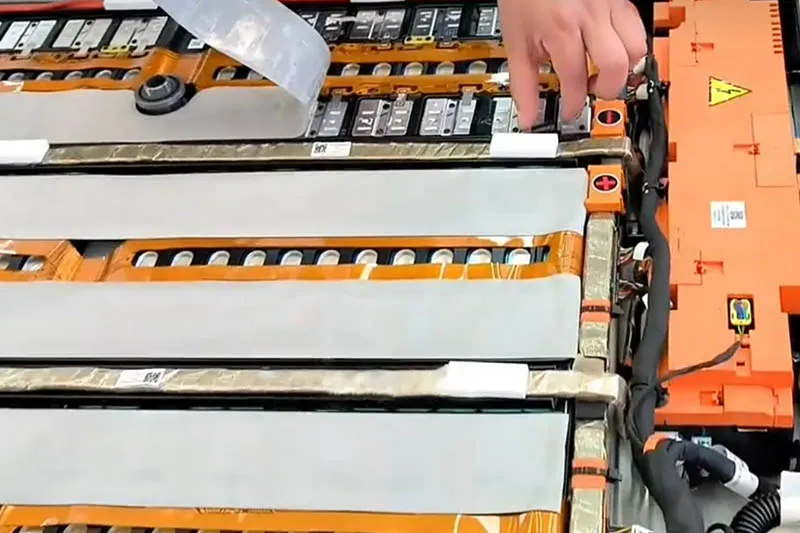
In tightly packed modules, air gaps ruin heat transfer. That’s where gap fillers and thermal interface materials step in.
· Fill micro-voids
· Improve surface contact
· Maintain electrical insulation
Effective EV battery thermal management depends on a careful balance:
Thermal Path Optimization
· Apply phase-change materials near hot spots
· Enhance conduction toward cooling plates
Safety Control
· Preserve high dielectric strength
· Prevent short circuits under vibration
Thermal management for new energy vehicle batteries is not just about cooling harder. It’s about cooling smarter. With engineered thermal materials that combine conductivity and insulation, Sheen Technology helps manufacturers protect battery packs while keeping driving range steady—even when the road gets tough.
Liquid Vs. Air Cooling For Batteries
Thermal management for new energy vehicle batteries is not just a tech buzz phrase; it’s the backbone of battery safety, lifespan, and driving range. When heat builds up, performance drops fast. In thermal management systems for EV batteries, cooling choice shapes everything from cost to consistency. Let’s break down liquid and air approaches in plain terms.
Liquid cooling
In thermal management for new energy vehicle batteries, liquid cooling is often the go-to for high-demand platforms. It moves heat using coolant, guided through a manifold, pushed by a pump, and stabilized through a heat exchanger.
Core architecture
1.1 Fluid circuit
· Coolant (often glycol-based) flows across a cold plate attached to cells.
· High thermal conductivity ensures fast heat transfer.
1.2 Heat rejection loop
· Pump circulates fluid
· Heat exchanger releases heat outward
Performance comparison in EV battery thermal management
| Parameter | Liquid Cooling | Practical Impact |
| Thermal conductivity | High | Stable cell temperature |
| Temperature uniformity | ±2°C | Longer battery life |
| System complexity | High | Needs controls |
| Cost level | Medium–High | Premium EV fit |
| Load tolerance | Excellent | Fast charging ready |
Why OEMs pick it
· Handles high C-rate charging
· Supports dense battery packs
· Fits advanced thermal management systems for electric vehicles
Air cooling
Air systems feel simpler, and in many entry models, that’s the point.
· Fan pushes airflow
· Air travels through ducts
· Heat leaves via vents
How it works in thermal management for new energy vehicle batteries:
· Heat rises from cells
· Convection carries it away
· Ambient temperature limits efficiency
Quick facts:
1) Lower upfront cost
2) Fewer moving liquid parts
3) Easier maintenance
But there’s a catch. When outside heat climbs, or fast charging kicks in, air struggles. A heat sink helps, yet temperature spread can widen beyond ideal EV battery cooling targets.
In short, liquid cooling dominates high-performance thermal management for new energy vehicle batteries, while air cooling keeps things lean and affordable. The right call depends on load profile, climate, and how hard the battery is expected to work.
Struggling With Range Drop? Battery Thermal Control Tips
Range anxiety hits hard when temperature swings mess with performance. That’s why Thermal management for new energy vehicle batteries isn’t just engineering talk—it’s the backbone of stable mileage. Break the phrase down: thermal management (heat control), new energy vehicle (EV systems), and vehicle batteries (lithium-ion packs). Mastering each layer keeps battery thermal management steady and efficient.
Ensure Proper Thermal Paste or Thermal Grease Application
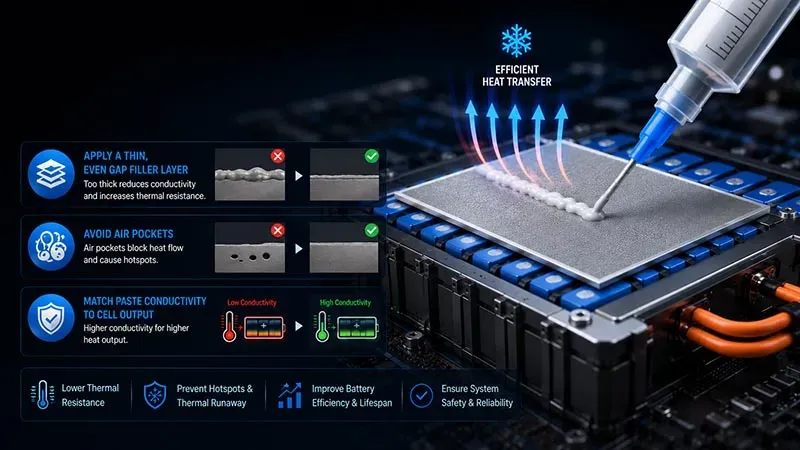
When it comes to Thermal management for new energy vehicle batteries, small gaps create big losses. Poor thermal paste or thermal grease application increases resistance at the interface material, slowing heat transfer.
· Apply a thin, even gap filler layer
· Avoid air pockets
· Match paste conductivity to cell output
For better battery thermal management, focus on structure:
Cell-to-plate interface
· Surface cleaning
· Uniform application pressure
Module assembly stage
· Inspect spread pattern
· Re-torque fasteners
Final validation
· Thermal imaging check
· ΔT comparison under load
Good EV battery heat control starts at the microscopic level. Sheen Technology refines coating precision so Thermal management for new energy vehicle batteries performs consistently, even under fast charging.
Integrate Cold Plates with Aluminum Alloys for Enhanced Dissipation
Efficient cold plates made from aluminum alloys upgrade heat dissipation without adding bulk. Lightweight, strong, and highly conductive, they support liquid cooling loops and act as compact heat exchangers.
Think in layers:
· Plate design
· Channel layout
· Flow balance
Under the hood of battery thermal management:
Material selection
· High-strength aluminum alloys
· Corrosion-resistant coatings
Liquid cooling path
· Optimized channel width
· Controlled turbulence via fluid dynamics
System integration
· Direct bonding to modules
· Leak-proof sealing
This approach strengthens Thermal management for new energy vehicle batteries, keeping pack temperatures tight and range steady. Sheen Technology integrates advanced cold plate machining for smarter EV battery cooling.
Deploy Bio-based PCMs and Salt Hydrates for Temperature Buffering
Sudden load spikes? That’s where bio-based PCMs and salt hydrates step in. These phase change materials absorb latent heat, offering passive temperature buffering and smart thermal energy storage.
Here’s how thermal regulation stacks up:
· Heat absorption during peak discharge
· Controlled release during idle
· Stabilized battery core temperature
For advanced Thermal management for new energy vehicle batteries:
Material pairing
· Select PCM melting point (35–45°C typical)
· Validate cycling durability
Encapsulation method
· Micro-encapsulation
· Structural containment
Pack-level integration
· Combine with liquid cooling
· Monitor thermal response sensors
The result? Smoother EV battery heat control and longer usable range.
Optimize Coolant Lines and Radiator Sizing to Maintain Operating Temperature
Even the best cooling system fails with poor flow rate design. Right-sized coolant lines and precise radiator sizing protect operating temperature stability.
Quick checklist:
· Match pump capacity to channel resistance
· Balance inlet and outlet pressure
· Validate thermal efficiency under peak load
Structured optimization improves Thermal management for new energy vehicle batteries:
· Fluid dynamics modeling:Reynolds number analysis,Pressure drop simulation.
· Heat exchanger calibration:Surface area expansion,Fin density tuning.
· Road-load testing:High-speed runs,Fast-charge cycles.
Tight control over EV battery cooling keeps degradation low and confidence high. That’s how smart battery thermal management translates into real-world range stability.
Unleash Hidden Ev Range Via Thermal Management For New Energy Vehicle Batteries
Thermal management for new energy vehicle batteries isn’t just lab talk anymore. It directly shapes EV range, safety, and charging speed. Smart battery thermal management keeps heat in check and energy efficiency on point.
Advanced Copper Radiators Coupled with Heat Pipes
When Copper meets a high-performance Radiator and a tuned Heat pipe, Thermal management for new energy vehicle batteries steps up its game.
Core heat transfer path
1.1 Battery core heat flows into the base plate.
1.2 The Heat pipe uses phase change for rapid Heat transfer.
1.3 The Cooling system pushes heat outward through finned Copper radiators.
Performance impact on EV battery systems
· Faster thermal balance
· Lower peak temperature
· Higher Energy efficiency
| Material | Thermal Conductivity (W/m·K) | Max Temp Stability (°C) | Typical Use in EV |
| Copper | ~401 | 250 | Radiator base |
| Aluminum | ~237 | 200 | Cooling plates |
| Steel | ~50 | 500 | Structural frame |
Additive Manufacturing of Silicon Carbide Heat Spreaders
Additive manufacturing changes the rules for Silicon carbide structures. Complex lattice Heat spreader designs now boost Thermal conductivity while keeping weight low.
· 3D-printed microchannels improve Battery cooling.
· Custom geometries enhance Thermal interface contact.
· High stability supports aggressive driving cycles.
In practical battery thermal management layouts:
1) Design digital model.
2) Optimize for heat flow density.
3) Print silicon carbide matrix.
4) Integrate into module plate.
This approach strengthens Thermal management for new energy vehicle batteries by shortening heat paths and improving material science-driven cooling efficiency.
Hybrid Cooling Strategies: Combining Liquid Cooling and Air Cooling
Pure Liquid cooling works great. Air cooling costs less. A smart Hybrid cooling layout blends both for balanced Thermal control.
Liquid loop layer
1.1 Coolant channels handle high-load Heat dissipation.
1.2 Direct contact improves battery thermal management response.
Airflow layer
2.1 Fans regulate ambient shifts.
2.2 Backup support under mild loads.
System coordination
3.1 Sensors feed data to the central Cooling strategy controller.
3.2 Adaptive switching stabilizes pack temperature.
For Thermal management for new energy vehicle batteries, this mixed approach cuts energy draw while extending range.
Ready to validate your design? Submit your inquiry today to request a datasheet, sample recommendation, or quotation for your EV battery thermal project.
Sheen Thermal
Dongguan Sheen Electronic Technology Co., Ltd · Founded in 2008
Manufacturer of thermal interface materials and silicone foam for automotive electronics, energy storage, power electronics, communications and consumer electronics.
Certified
- ISO 9001:2015
- ISO 14001:2015
- IATF 16949:2016
What we supply
- Thermal conductivity Up to 90 W/m·K
- Thickness 0.3–10.0 mm
- Custom & samples Die-cut to drawing, 3–7 days