
 English
 usheenthermal

Breakthroughs in Graphene Heat Dissipation for High-Power LEDs
Date:2026-06-18
Breakthroughs in Graphene Heat Dissipation for High-Power LEDs
Graphene heat dissipation for high-power LEDs isn’t a lab fantasy—it’s the fix for fixtures cooking themselves under pressure.
Recent U.S. Department of Energy and IEA reports highlight LED deployment while flagging thermal constraints, steering manufacturers toward advanced materials.
Graphene steps in, thin as gossip and tough as nails, pulling heat fast and keeping output steady.
Melodic Key Points: Graphene heat dissipation for high-power LEDs
➔ Thermal Runaway Prevention: Leverage graphene’s exceptional in-plane conductivity to disperse hotspots and avert catastrophic LED failures.
➔ Lifespan Extension: Maintain lower junction temperatures, slowing material degradation and preserving luminous output over time.
➔ Material Comparison: Favor graphene over copper in compact designs for faster lateral heat spreading, lighter weight, and enhanced flexibility.
➔ Integration Best Practices: Align PCBs precisely, use transfer printing or lamination for uniform graphene placement, and verify thermal resistance to ensure reliability.
Why Is Graphene Heat Dissipation Critical
High-power lighting keeps getting brighter and smaller, which means heat piles up fast. That’s why Graphene heat dissipation for high-power LEDs matters so much. When graphene heat dissipation, high-power LEDs, and smart thermal management work together, you get cooler chips, stronger reliability, and better light output without burning out your investment.
Preventing Thermal Runaway in High-Power LEDs
When driving high-power LEDs at extreme current density, heat generation skyrockets. If junction temperature rises unchecked, thermal runaway kicks in.
Heat Accumulation Mechanism
1.1 Rising current density
· Increased carrier recombination
· Localized lattice vibration
1.2 Poor heat dissipation
· Substrate bottlenecks
· Interface resistance
Failure Chain Reaction
2.1 Elevated junction temperature
2.2 Declining device stability
2.3 Accelerated failure mechanisms
With Graphene heat dissipation for high-power LEDs, the ultra-fast in-plane conductivity spreads heat before hotspots form. That’s the real edge of graphene thermal management—it keeps junction temperature stable and protects long-term device stability.
At Sheen Technology, engineered graphene films are tuned specifically for graphene heat dissipation for high-power LEDs, helping manufacturers avoid catastrophic breakdown.
Extending LED Lifespan Through Efficient Cooling
Cool chips last longer. Simple as that.
· Lower operating temperature
· Reduced thermal degradation
· Less material stress
Recent industry data backs this up:
The 2025 IEA Solid-State Lighting update notes that every 10°C reduction in LED operating temperature can significantly extend service life and preserve lumen maintenance in high-intensity applications.
That’s why Graphene heat dissipation for high-power LEDs keeps gaining traction. By improving efficient cooling, graphene spreads thermal load across substrates, easing internal strain and protecting overall LED lifespan.
For manufacturers working with graphene heat dissipation for high-power LEDs, consistent cooling translates directly into longer warranties and fewer field failures.
Maximizing Light Output by Managing Junction Temperature
Light output drops when junction temperature climbs. Managing it is key to stable brightness and luminous efficacy.
Thermal Impact on Performance:
| Junction Temperature (°C) | Relative Light Output (%) | Power Efficiency (%) |
| 60 | 100 | 95 |
| 80 | 96 | 92 |
| 100 | 90 | 88 |
| 120 | 82 | 80 |
Performance Optimization Path:
· Control junction temperature:Apply graphene heat spreaders,Improve interface bonding.
· Enhance thermal management:Reduce thermal resistance,Balance drive current.
· Maintain luminous efficacy:Stabilize light output,Improve overall power efficiency.
This is where Graphene heat dissipation for high-power LEDs shines again. By rapidly channeling heat away from the active region, graphene heat dissipation keeps brightness steady and performance predictable.
In high-density lighting arrays, that stability isn’t optional—it’s the difference between average output and peak performance.
Graphene vs. Copper: Thermal Performance Comparison
High-power LEDs run hot. Push brightness up, and heat builds fast. That’s why Graphene heat dissipation for high-power LEDs has become a hot topic in thermal management circles. By breaking down the phrase—Graphene/heat dissipation/high-power / LEDs—we can look at materials, cooling paths, and real-world lighting demands virtually. Let’s keep it simple and real.
Graphene
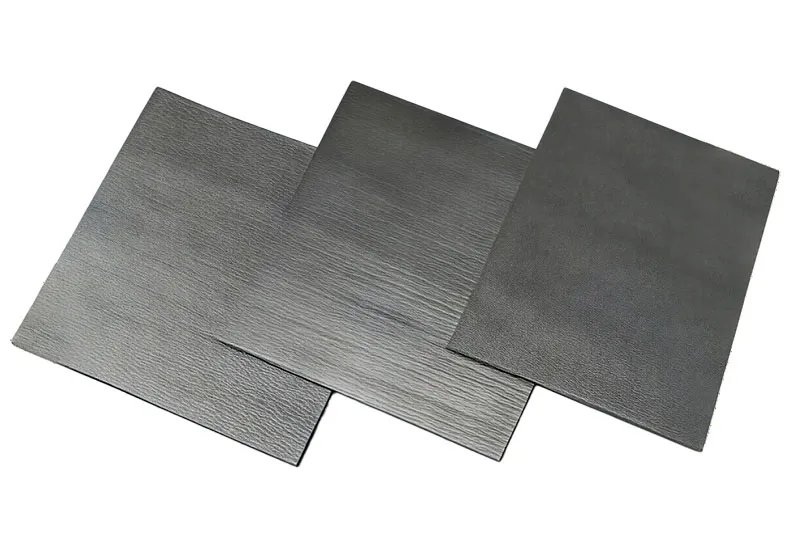
When discussing Graphene heat dissipation for high-power LEDs, performance starts at the atomic level.
· Ultra-high thermal conductivity
· Lightweight nanomaterial structure
In advanced thermal management systems, this matters a lot.
→ Thin-film integration
→ Flexible substrates
→ Hybrid metal-graphene stacks
Sheen Technology Graphene Thermal pad performance properties:
| Properties | Unit | GSF90-03 Graphene Thermal Pad | GSF75-03 Graphene Thermal Pad | Test Method |
| Color | - | Black | Black | Visual |
| Thermal Conductivity | W/m·K | ≥90 | ≥75 | ASTM E1461 |
| Thermal Resistance (@40psi) | ℃*in2/W | ≤0.013 | ≤0.016 | ASTM D5470 |
| Thickness | mm | 0.27~0.33 | 0.27~0.33 | ASTM D374 |
| Density | g/cm³ | 0.6~0.9 | 0.6~0.9 | ASTM D792 |
| Compression Rebound Rate | % | ≥55 | ≥60 | ASTM D575 |
| Tensile Strength | Mpa | ≥0.03 | ≥0.03 | ASTM D412 |
| Oil Bleeding Rate | % | ≤3 | ≤3 | / |
| Application Temperature | ℃ | -40~150 | -40~150 | / |
| RoHS | - | PASS | PASS | IEC 62321 |
| Halogen | - | PASS | PASS | EN 14582 |
| REACH | - | PASS | PASS | EN 14372 |
Now let’s organize the logic clearly:
Material Properties
1.1 Atomic-thin layered structure
1.2 Low density compared to bulk material metals
Heat Dissipation Mechanism
2.1 Rapid lateral heat spreading
2.2 Reduced thermal resistance between chip and substrate
2.3 Improved heat dissipation uniformity
Application in High-Power LEDs
3.1 Chip-on-board modules
3.2 Mini and micro LED arrays
3.3 Automotive and industrial lighting
The phrase Graphene heat dissipation for high-power LEDs isn’t hype. It reflects how lateral heat transfer beats traditional vertical-only flow in thin lighting systems.
According to a 2025 Yole Group report:
“Advanced carbon-based materials are accelerating next-generation LED thermal platforms, particularly where miniaturization limits conventional metal heat sinks.”
That shift is already visible in products developed by Sheen Technology, where graphene-enhanced substrates are tuned for tight LED assemblies.
Copper
Copper remains the classic thermal conductor. Solid, reliable, familiar. In many systems, it still plays the backbone role in electronic cooling and heat transfer.
· High bulk thermal conductivity
· Strong mechanical stability
· Widely used heat sink material
But copper behaves differently from graphene.
· Heat moves effectively through thickness.
· Lateral spreading is slower in thin plates.
· Weight increases system load.
Here’s a side-by-side technical snapshot relevant to Graphene heat dissipation for high-power LEDs:
| Property | Graphene (In-Plane) | Copper (Bulk) | Impact on High-Power LEDs |
| Thermal Conductivity (W/m·K) | 2000–5000 | ~400 | Faster lateral spreading with graphene |
| Density (g/cm³) | ~2.2 | 8.96 | Copper adds significant weight |
| Thickness Adaptability | Atomic-scale films | mm-level plates | Graphene suits ultra-thin modules |
| Heat Spreading Speed | Extremely high | Moderate | Lower hotspot risk with graphene |
| Flexibility | High | Low | Better for compact LED layouts |
Now structure the comparison clearly:
Material Nature
1.1 Graphene → nanomaterial
1.2 Copper → traditional metal
Heat Flow Pattern
2.1 Graphene → lateral dominant
2.2 Copper → bulk vertical conduction
System Limitation
3.1 Copper weight in portable lighting
3.2 Space constraints in high-density arrays
3.3 Efficiency trade-offs
Copper still works well in large, open heat sink assemblies. Yet in thin, high-brightness modules, Graphene heat dissipation for high-power LEDs provides faster spreading and smarter integration.
That’s why many advanced LED thermal solutions—especially from innovators like Sheen Technology—combine copper bases with graphene layers. Not a replacement. An upgrade path.
4 Key Layers In Graphene Thermal Interface Materials
Graphene heat dissipation for high-power LEDs sounds technical, but at its core it’s about moving heat fast and keeping chips cool. Let’s break down how each layer works together to make graphene heat dissipation actually perform in real devices.
Graphene Coating Layer
When discussing Graphene heat dissipation for high-power LEDs, this is where the magic starts. The graphene flakes form a tightly connected network with extreme thermal conductivity, enabling rapid heat transfer across the interface material while lowering thermal resistance.
Key performance drivers:
· High in-plane thermal conductivity
· Optimized deposition method
· Controlled flake alignment for better material properties
Performance comparison in LED modules:
| Material Type | Thermal Conductivity (W/m·K) | Thermal Resistance (°C/W) | LED Junction Temp Reduction (°C) |
| Silicone Pad | 1–15 | 0.1-0.9 | 2–4 |
| Graphene TIM | 75–90 | 0.016 | 8–15 |
For Graphene heat dissipation for high-power LEDs, lower junction temperature directly means longer lifespan and stable brightness. High-power LED cooling with graphene isn’t hype—it’s measurable.
Adhesion and Bonding Layer
Heat flow breaks down fast if bonding fails. This layer relies on adhesive material—often a polymer matrix or epoxy resin—to secure graphene while preserving thermal contact.
Performance depends on:
· Surface wetting behavior
· Bonding strength under thermal cycling
· Long-term interface integrity
In real-world LED heat management, mechanical stress from expansion can ruin performance. That’s why mechanical stability matters as much as conductivity.
· Strong adhesion
· Minimal pump-out
· Stable graphene heat transfer path
According to the International Energy Agency’s 2025 lighting efficiency outlook:
“Advanced thermal interface materials are now central to extending high-power LED system lifetime beyond 50,000 hours under elevated drive currents.”
That’s exactly where Graphene heat dissipation for high-power LEDs earns its place.
Metal Substrate Interface Layer
Here, heat exits graphene and enters the substrate material, typically a metal alloy acting as a heat spreader. The trick is controlling thermal expansion mismatch and maintaining high interface quality.
The thermal path flows like this:
· An LED chip generates heat
· Graphene spreads heat laterally
· Heat crosses the interface
· Metal base conducts heat outward
If surface preparation is sloppy, microscopic gaps increase resistance. Clean surfaces, matched coefficients, and tight bonding ensure stable LED heat dissipation.
For graphene-based LED cooling, this layer quietly determines reliability under high drive currents.
Protective Encapsulation Layer
Last but not least. Graphene can degrade without proper encapsulation material.
Protection goals:
· Environmental protection against dust
· Moisture barrier to prevent corrosion
· Oxidation resistance
· Long-term mechanical durability
· Stable dielectric properties
Some systems use a sealing compound that balances flexibility with protection. Too rigid? Cracks form. Too soft? Performance drifts.
In commercial Graphene heat dissipation for high-power LEDs, brands like Sheen Technology design this outer layer to keep graphene stable in streetlights, industrial lamps, and automotive modules. The result is consistent graphene heat transfer for LEDs even in harsh outdoor setups.
When all four layers align, graphene heat dissipation for high-power LEDs becomes practical, scalable, and ready for demanding applications.
How To Integrate Graphene Heat Spreaders In LED Modules
Integrating Graphene heat dissipation for high-power LEDs into module design isn’t just about adding a layer. It’s about tuning materials, layout, and process so heat moves fast and LEDs stay bright longer.
Design Considerations for PCB and Heat Spreader Alignment
When planning Graphene heat dissipation for high-power LEDs, alignment between PCB layout and heat spreader design drives performance.
· Tight alignment precision lowers interface gaps.
· Clean thermal interface surfaces reduce contact resistance.
· Stable mechanical integration prevents stress cracks.
Key integration logic:
Thermal path optimization
· Junction → dielectric → copper plane
· Copper plane → graphene layer
· Graphene → external sink
Mechanical stability
· CTE matching
· Fastener pressure control
Good Graphene heat dissipation for high-power LEDs means heat spreads sideways fast, not stacking up at the junction. That’s where LED heat management either wins or fails.
Manufacturing Techniques: From Transfer Printing to Lamination
Production decides if Graphene heat dissipation for high-power LEDs stays theory or becomes reality.
Common approaches include:
· transfer printing for patterned placement
· Controlled graphene deposition for thin, even films
· Precision lamination process for bonding strength
Process flow in practice:
· Surface prep and contamination check.
· Graphene alignment via transfer printing.
· Pressure-assisted lamination.
· Post-bond inspection for voids.
Advanced manufacturing methods focus on:
· Material control:Humidity during material handling,Film tension stability.
· Assembly repeatability:Inline inspection,Yield tracking for production scalability.
Brands like Sheen Technology optimize these assembly techniques to make graphene thermal solutions scalable, not just lab-friendly. For real-world high-power LED cooling, consistency beats hype every time.
Quality Control: Measuring Thermal Resistance and Reliability
No guesswork here. Thermal resistance defines if Graphene heat dissipation for high-power LEDs truly performs.
Quality checks typically cover:
· Junction-to-board thermal measurement
· Graphene integrity under shear stress
· Long-cycle reliability testing
The 2025 LED industry outlook from TrendForce notes that thermal management remains a “critical factor limiting lumen density growth in high-power packages,” pushing manufacturers toward advanced materials like graphene.
Verification layers:
· Performance metrics:Initial Rth values,Stability after burn-in.
· Aging simulation:High current stress,Thermal cycling.
· Failure analysis:Early LED degradation signs,Interface delamination.
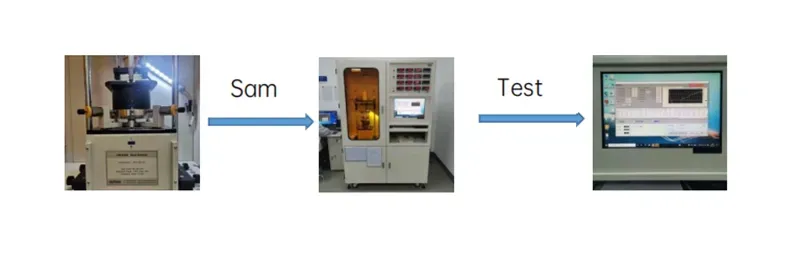
Sheen Technology Laboratory GSF75-03 Graphene Thermal Resistance Test Record:
1. Tested using the LW-9389 Thermal Conductivity Tester; reference standard: ASTM D5470.
2. Sample preparation: A 25.4mm x 25.4mm x 0.3mm sample is placed flat on the test platform.
3. Test method:
· Launch the software and select the calibration function; set parameters to 40 psi pressure and 80°C temperature, perform thickness zeroing, and set the duration to 15 minutes.
· Select the thermal resistance test mode for thermal pads; set the temperature to 80°C, initial pressure to 10 psi, pressure increment to 10 psi, and final pressure to 40 psi.
· Start the test and automatically obtain the results.
| Test Project | Test data | Pressure (psi) | |||
| Sample | 10 psi | 20 psi | 30 psi | 40psi | |
| Thermal resistance at 10–40 psi (°C·in²/W) @0.3 mm |
1 | 0.016 | 0.016 | 0.015 | 0.015 |
| 2 | 0.017 | 0.016 | 0.015 | 0.015 | |
| 3 | 0.016 | 0.016 | 0.015 | 0.015 | |
| average value | 0.016 | 0.016 | 0.015 | 0.015 | |
| Thermal resistance at 10–40 psi (°C·cm²/W) @0.3 mm |
1 | 0.106 | 0.100 | 0.095 | 0.094 |
| 2 | 0.108 | 0.101 | 0.095 | 0.096 | |
| 3 | 0.105 | 0.100 | 0.096 | 0.095 | |
| average value | 0.106 | 0.100 | 0.095 | 0.095 | |
With structured quality assurance, Sheen Technology ensures each module using Graphene heat dissipation for high-power LEDs maintains stable output over time. Strong heat control isn’t flashy. It’s quiet, steady, and keeps the lights on longer.
Sheen Thermal
Dongguan Sheen Electronic Technology Co., Ltd · Founded in 2008
Manufacturer of thermal interface materials and silicone foam for automotive electronics, energy storage, power electronics, communications and consumer electronics.
Certified
- ISO 9001:2015
- ISO 14001:2015
- IATF 16949:2016
What we supply
- Thermal conductivity Up to 90 W/m·K
- Thickness 0.3–10.0 mm
- Custom & samples Die-cut to drawing, 3–7 days