
 English
 usheenthermal

Is Your UL-Certified Insulation Thermal Material Truly Reliable?
Date:2026-03-28
Is Your UL-Certified Insulation Thermal Material Truly Reliable?
A UL-certified insulation thermal material looks like a golden ticket. Stamp on the datasheet, checkmark in procurement, everyone sleeps easy. Until the call comes in at 2 a.m.—overheating, breakdown, production stalled. It’s like buying a car because it passed inspection, then watching the engine cough on the highway. Certification says it’s safe to start the race, not that it’ll finish strong.
Engineers and buyers live in that uncomfortable gap between paper promises and factory-floor reality. Heat cycling, voltage spikes, moisture sneaking in like an uninvited guest—this is where materials show their true colors. Budgets get tight, timelines tighter, and suddenly “approved” doesn’t feel reassuring.
This is where the real conversation begins: what reliability actually means when the lab door closes and the real world kicks in.
What UL Certification Covers
UL certification isn’t just a stamp; it’s proof that a UL-certified insulation thermal material can handle heat, voltage, and fire without flinching. When engineers choose a UL-certified insulation thermal material, they expect stable numbers, safe performance, and zero drama in real-world use.
Aerogel Sheet Thermal Conductivity and Low K-Value Criteria
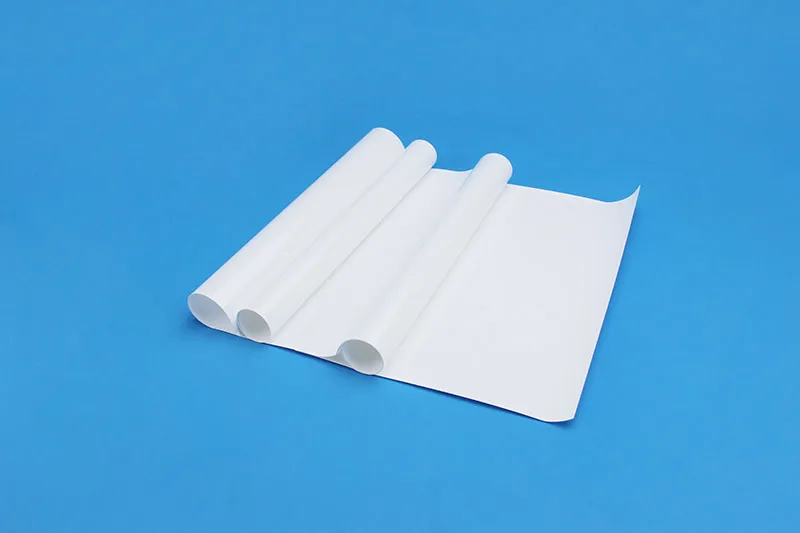
A UL-certified insulation thermal material built from aerogel sheet technology lives or dies by its thermal conductivity and k-value. Low numbers matter, but consistency matters more.
Core Thermal Metrics
Thermal conductivity
· Verified under steady-state and cyclic temperature exposure
· Checked at both high heat and cryogenic ranges
K-value
· Measured across thickness variations
· Compared against declared design limits
Insulation Performance Validation
· Thermal resistance stability
· Long-duration aging simulation
· Moisture-conditioned retesting
Heat transfer control
· Surface-to-surface gradient checks
· Edge-loss evaluation
In daily use, this means the aerogel sheet keeps insulation performance tight. No sudden spikes. No weird drops. A UL-certified insulation thermal material must prove that its insulation thermal material structure holds steady when temperatures swing hard.
Dielectric Strength Benchmarks for UL-Rated Materials
Electrical safety isn’t optional. A UL-certified insulation thermal material must show real dielectric strength, not just marketing talk.
1) Voltage breakdown testing under controlled ramp-up.
2) Surface and volume resistance checks to confirm electrical insulation stability.
3) Post-heat aging retest to confirm material integrity.
Key checks often include:
· Minimum insulating properties after humidity exposure
· Stable readings tied to the official UL rating
Short version? If the insulation thermal material can’t handle voltage stress, it doesn’t pass. A properly tested UL-certified insulation thermal material keeps current where it belongs and protects the system without fuss.
UL 94 V-0 Flammability and Smoke Density Standards
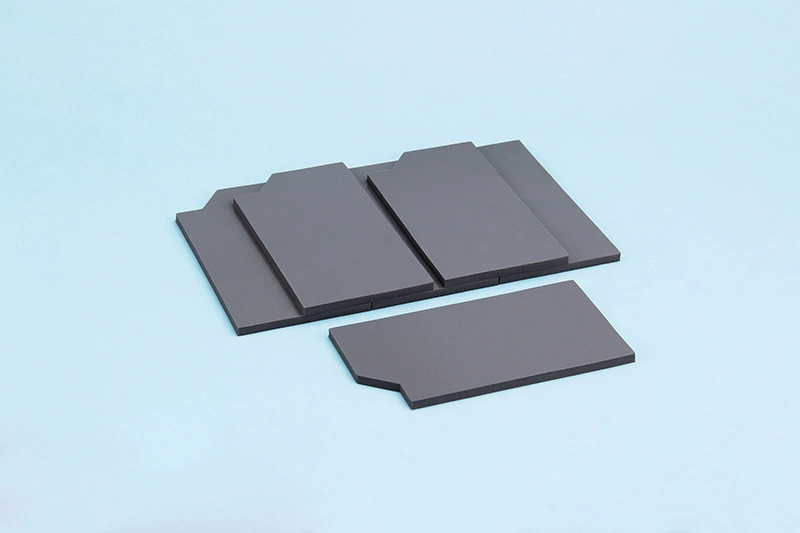
Sheen Thermal pad UL 90 Flame test records
| Sample: | Thermal Pad | ||
| Thickness: | 3.0mm | Color: | Grey |
| Ambient Temp: | 23.5℃ | Humidity: | 50 %RH |
Materials classifications:
| Criteria conditions | V-0 | V-1 | V-2 |
| After flame time for each individual specimen t1 or t2 | ≤10s | ≤30s | ≤30s |
| Total after flame time for any condition set (t1 plus t2 for the 5 specimens | ≤50s | ≤250s | ≤250s |
| After flame plus afterglow time for each Individual specimen after the second flame application (t2 +t3 ) | ≤30s | ≤60s | ≤60s |
| After flame or afterglow of any specimen up to the holding clamp | No | No | No |
| Cotton indicator ignited by flaming particles or drops | No | No | Yes |
| No. | t1(s) | t2(s) | t3(s) | All sample t1+t2≤50S | Single sample t2+t3≤30S | Does it light the cotton | Whether the burnt out | Level of compliance |
| 1 | 0.9 | 0.8 | 0.2 | Meet | Meet | No | No | V-0 |
| 2 | 0.8 | 0.6 | 0.2 | No | No | |||
| 3 | 0.8 | 0.5 | 0.2 | No | No | |||
| 4 | 0.8 | 0.6 | 0.2 | No | No | |||
| 5 | 0.7 | 0.5 | 0.2 | No | No |
Fire behavior is where certification gets serious. For a UL-certified insulation thermal material, meeting UL 94 V-0 isn’t about a label; it’s about controlled combustion behavior.
Flame Response
· Self-extinguishing time limits
· No flaming drips that ignite cotton indicators
Smoke Control
· Monitored smoke density during active burn
· Residue observation after flame removal
Safety Classification
· Final material classification under defined thickness
· Alignment with core fire safety benchmarks
A compliant insulation thermal material must stop burning fast and keep smoke output in check. That’s how a UL-certified insulation thermal material earns trust in tight electrical spaces.
ASTM/ISO Compliance Testing for Insulation Products
UL testing often references ASTM standards and ISO standards to confirm repeatable quality in insulation products.
Mechanical Verification
· Tensile and compression behavior
· Flex durability after thermal cycling
Thermal and Environmental Checks
· Dimensional stability at peak heat
· Moisture absorption limits
Compliance Framework
· Documented compliance testing flow
· Sample conditioning
· Controlled lab validation
· Third-party review
· Final performance verification and quality assurance
Brands like Sheen Technology align their insulation thermal material designs with these benchmarks from day one. That way, when a UL-certified insulation thermal material goes to market, it already fits the rulebook. For buyers, that means fewer surprises and insulation products that simply do their job.
3 Reasons UL-Certified Insulation Thermal Material Fails
UL-certified insulation thermal material sounds like a safe bet. Still, real-world jobs can expose weak spots. When UL-certified insulation thermal material underperforms, the gap between lab approval and daily use becomes obvious—and costly.
Inconsistent Thermal Resistance in Polyurethane Foam
Failures in Polyurethane Foam often trace back to unstable Thermal Resistance, even in UL-certified insulation thermal material.
Material Inputs
Raw chemical ratios
· Off-balance polyol and isocyanate levels
· Incomplete curing reactions
Moisture intrusion
· Storage in humid air
· Water uptake during transport
Production Variables
Foaming temperature
· Uneven heat distribution
· Density fluctuation across blocks
Cell structure control
· Open-cell inconsistency
· Shrinkage after expansion
Field Conditions
· Long-term compression
· Thermal cycling stress
When Inconsistency creeps in, Material Performance drops. That’s how insulation failure begins—slowly, then all at once. A UL thermal insulation material label does not erase handling mistakes. Sheen Technology addresses this by tightening batch tracking and conditioning control before the UL-certified insulation thermal material leaves the line.
Unexpected Loss Tangent Spikes in Silicone Foam
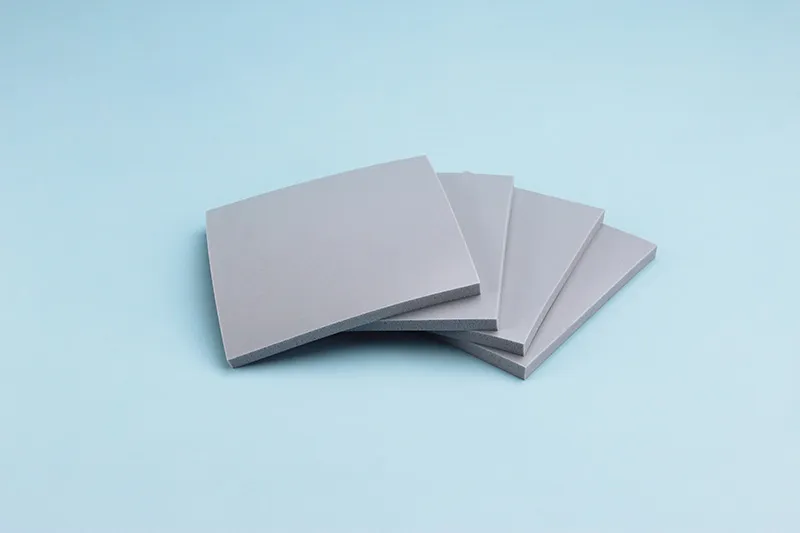
With Silicone Foam, the trouble shows up in Loss Tangent behavior. High-frequency loads can trigger sudden Dielectric Loss shifts.
Here’s what usually happens:
1) Electrical stress rises.
2) Heat builds inside the foam.
3) Electrical Properties drift.
Short bursts may look harmless. Longer exposure leads to Material Degradation and odd performance anomaly signals in testing logs.
Key warning signs include:
· Rapid temperature gain
· Signal attenuation
· Surface cracking
A reliable UL-certified insulation thermal material should keep stable dielectric values. Sheen Technology tests insulation thermal material samples under simulated frequency swings, reducing surprise spikes before shipment. That extra screening keeps UL-certified insulation thermal material dependable in compact electronics.
Elevated Smoke Density from Non–RoHS-Compliant Blocks
Smoke issues usually link to ignored RoHS Compliance standards, even when the product is sold as UL-certified insulation thermal material.
Additive Selection
Flame retardants
· Halogen-heavy blends
· Poor dispersion
· Plasticizers
· Low thermal stability
Combustion Impact
· Increased Smoke Density
· Higher Toxic Emissions
· Elevated Fire Hazard risk
Regulatory Pressure
· Tightened Regulatory Standards
· Building inspection failures
In short, a certified insulation thermal material can still create thick smoke if block chemistry cuts corners. Safer Building Materials start with compliant formulas. Sheen Technology aligns UL-certified insulation thermal material production with RoHS guidelines, keeping both fire safety and air quality in check.
Can Certification Guarantee Performance?
Certifications look reassuring on paper, yet real systems don’t run on paper. When selecting UL-certified insulation thermal material, engineers often assume lab validation equals field success. Let’s break down how UL certification, thermal ratings, and vacuum realities actually play out.
Does UL Testing Simulate High-Temperature Environments?
When evaluating a UL-certified insulation thermal material, testing scope matters. UL certification validates safety under defined conditions, but high-temperature environments in the field can push beyond standard testing simulation profiles.
“Thermal validation in controlled lab environments does not always reflect cyclic stress or peak-load exposure seen in industrial systems,” noted the 2025 UL Solutions Thermal Risk Insights Brief.
Here’s how the gap forms:
Laboratory Validation
· Defined ramp rates
· Fixed dwell times
· Limited thermal cycling
Field Exposure
· Rapid temperature spikes
· Repeated expansion and contraction
· Combined mechanical stress
Under these differences, performance validation may confirm compliance, yet miss long-term fatigue under temperature extremes.
A closer look:
· Standard UL test: steady-state exposure
· Real system: fluctuating heat + vibration
· UL-certified insulation thermal material: passes safety threshold
· Industrial furnace lining: faces cyclic overload
Manufacturers like Sheen Technology address this by extending internal validation beyond minimum UL certification benchmarks, aligning thermal material behavior with actual high-temperature environments rather than just baseline approval.
R-Value Ratings vs Real-World Heat Flux Demands
Published R-value ratings measure steady-state thermal resistance, not dynamic heat flux under operational load. That distinction can make or break insulation performance.
Quick reality check:
· Steady lab panel test ≠ localized hot spot
· Average R-value ≠ transient surge resistance
· Catalog data ≠ application demands
In fast-cycle equipment, real-world conditions introduce uneven heat flux, pushing a UL-certified insulation thermal material beyond its rated equilibrium.
Thermal Comparison Table
| Material Type | Rated R-Value (m²·K/W) | Peak Heat Flux (kW/m²) | Test Temp (°C) | Field Temp Spike (°C) |
| Standard Foam | 3.5 | 12 | 150 | 220 |
| Ceramic Fiber | 4.2 | 25 | 800 | 950 |
| Aerogel Panel | 5.8 | 18 | 650 | 720 |
| Vacuum Panel | 7.1 | 10 | 120 | 180 |
| Hybrid System | 6.3 | 28 | 900 | 1050 |
Energy efficiency claims rely on R-value ratings, yet system reliability depends on managing real heat flux intensity. A UL-certified insulation thermal material may meet insulation specs while still struggling with concentrated thermal loading in tight assemblies.
That’s why thermal insulation selection often pairs UL-certified insulation thermal material data with system-level modeling.
Chemical Compatibility Gaps in Vacuum Applications
Vacuum systems raise a different issue: chemical compatibility and outgassing.
A UL-certified insulation thermal material is rarely evaluated for:
· Low-pressure material degradation
· Molecular outgassing rates
· Reaction with process gases
Breakdown risk unfolds like this:
Material Science Considerations
· Polymer binders
· Residual solvents
· Surface treatments
Vacuum Applications
· Reduced pressure
· Elevated internal heat
· Sensitive components nearby
System Integrity Impact
· Contamination
· Seal damage
· Thermal insulation instability
Even certified thermal material can degrade when exposed to sustained vacuum cycling. Material degradation may not violate UL safety standards but can undermine long-term system integrity.
For aerospace chambers and semiconductor tools, Sheen Technology engineers evaluate outgassing profiles alongside UL-certified insulation thermal material data, ensuring the insulation thermal material supports both compliance and operational purity.
Certification is a baseline. Performance lives in the details.
UL vs Non-UL Insulation: Key Differences
When choosing UL-certified insulation thermal material, it’s easy to get lost in labels and price tags. The real gap shows up in safety proof, fire data, and long-term stability.
UL-Certified Insulation
UL-certified insulation thermal material is built around documented Safety Standards and traceable Regulatory Compliance. The difference starts at the testing bench and continues into daily operation.
Performance Testing Framework
1.1 Laboratory Validation
· Dielectric strength verification under controlled voltage loads
· Flame spread and ignition timing under ASTM protocols
· Thermal cycling for insulation thermal material stability
1.2 Certification Documentation
· Third-party audit trails
· Public listing in UL databases
· Batch-level traceability for Quality Assurance
Fire and Electrical Benchmarks
2.1 Fire Resistance Ratings
· Vertical burn classification
· Heat release index
· Smoke density measurement
2.2 Electrical Insulation Metrics
· Breakdown voltage thresholds
· Surface resistance stability
· Long-term Material Integrity
Below is a simplified reference table often associated with UL-certified insulation thermal material testing:
| Test Item | Standard | Typical UL Value | Test Cycles | Pass Criteria |
| Dielectric Strength | UL 94 | ≥20 kV/mm | 5 | No breakdown |
| Flame Rating | UL 94 V-0 | Self-extinguish | 5 burns | <10s flame |
| Thermal Aging | ASTM D3045 | 130°C rated | 168 hrs | No cracking |
| Insulation Resistance | IEC 60243 | ≥10¹² Ω | 3 | Stable value |
| Heat Deformation | ISO 75 | ≤2% change | 3 cycles | Within limit |
Manufacturers such as Sheen Technology align production with UL-certified insulation thermal material protocols, ensuring Performance Testing data is not just marketing talk but documented fact. That consistency protects equipment, buildings, and people.
Non-UL Alternatives
Non-UL insulation thermal material can look similar on the surface. Lower price. Faster sourcing. Fewer documents. Still, the gaps tend to show up later.
⚠ Unverified Materials may skip standardized burn tests.
⚠ Inconsistent Performance can appear under voltage spikes.
⚠ Unknown Durability often surfaces after long heat exposure.
1) Cost savings upfront sometimes mask higher lifecycle expenses.
2) Lack of third-party review complicates Risk Assessment.
3) Claims of fire resistance may lack measurable Safety Standards backing.
Some non-certified thermal insulation products perform well in niche settings. Others rely only on internal data, with no independent Quality Assurance. That’s where potential hazards creep in quietly.
A certified insulation system, especially UL-certified insulation thermal material, reduces guesswork. In contrast, non-UL insulation may depend heavily on supplier credibility alone. Sheen Technology advises buyers to compare not just price, but verified test reports, flame ratings, and electrical benchmarks before committing to any insulation thermal material.
When safety margins matter, paperwork and proof are not red tape. They’re protection.
High-Voltage Panels: Trust UL Insulators
High-voltage panels run hot, tight, and unforgiving. A solid UL-certified insulation thermal material keeps heat in check and voltage right where it belongs. From silicone foam to mica and Kapton, smart insulation choices mean safer gear and longer service life.
Silicone Foam Pads for Enhanced Volume Resistivity
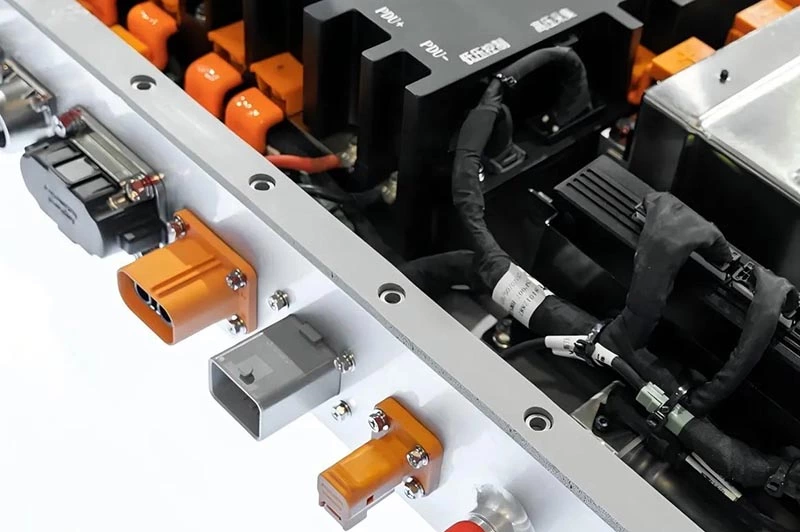
In compact panels, Silicone Foam acts as more than a cushion. It’s a serious Insulation Material designed for High Voltage reliability, especially when built as a UL-certified insulation thermal material.
Core Electrical Role
Volume Resistivity
· Limits leakage current under load
· Supports stable Electrical Insulation in humid sites
Dielectric Strength
· Handles sudden voltage spikes
· Maintains barrier integrity over time
· Thermal Control Layer
Thermal Performance
· Absorbs localized heat pockets
· Protects busbars and terminals
Moisture Resistance
· Shields sensitive contacts
· Preserves long-term insulation thermal material stability
Compliance & Integration
· Certified under UL insulation thermal material standards
· Fits tight enclosures without trimming hassles
· Works smoothly with other UL-certified insulation thermal material systems
Sheen Technology supplies custom-cut silicone pads tuned for both dielectric strength and airflow control. It’s a practical way to meet safety codes without overbuilding the panel.
Mica Sheet Rolls with Superior Dielectric Constant
Mica Sheet products in flexible Rolls are known for high Dielectric Constant and serious Voltage Withstand capacity. In hot zones, that matters.
Key advantages include:
· Stable Thermal Stability under continuous High Temperature stress
· Reliable Electrical Insulation even near coils and transformers
· Compatibility with UL-certified insulation thermal material assemblies
1) Install behind copper bus structures.
2) Layer between windings.
3) Combine with a UL-approved thermal insulation material outer wrap for extra security.
Strong arc resistance
· Low aging rate
· Consistent dielectric performance
The International Energy Agency noted in its 2024 electricity outlook that grid expansion and electrification are accelerating equipment upgrades worldwide.
“Electricity demand growth is set to remain strong through 2026, driven by electrification and digitalization.” — IEA, Electricity Market Update 2024
That growth pushes demand for dependable UL-certified insulation thermal material, especially mica-based barriers. Sheen Technology converts mica rolls to exact widths, helping panel builders stay quick on installs and tight on tolerances.
Short takeaway? Mica handles heat like a champ. And it keeps insulation thermal material performance steady when things get rough.
Kapton Film Encapsulants in Extreme Voltage Isolation
When space is limited and voltage is wild, Kapton Film steps up as a thin yet tough Encapsulant solution.
· Start with surface prep to remove dust and oil.
· Apply Kapton Film over windings or terminals.
· Seal edges to secure full Voltage Isolation.
· Test under simulated Extreme Conditions for Electrical Properties validation.
Its Thermal Resistance supports stable operation across wide temperature swings. Add long-term Durability, and the result is a lightweight UL-certified insulation thermal material option that doesn’t bulk up your design.
FAQs about UL-Certified Insulation Thermal Material
How does UL-certified insulation thermal material ensure stable electrical and thermal safety?
UL-certified insulation thermal material is tested under strict ASTM Standards and ISO Certified procedures to control both fire and electrical risk.
1) Electrical reliability
· Verified Dielectric Strength, Volume Resistivity, and controlled Loss Tangent
· Stable Surface Resistivity even in High Temperature panels
2) Thermal control
· Low K-value measured in W/mK
· Predictable Thermal Resistance and managed Heat Flux across Sheet, Pad, or Foam Block formats
3) Fire performance
· UL 94 V-0 Flame Retardant rating
· Controlled Ignition Temperature and low Smoke Density
Materials such as Silicone Foam, Mica Sheet, and Kapton Film maintain performance under Moisture Resistance demands, Cryogenic cycling, or elevated operating heat.
Why can R-value performance drop in real applications?
A certified R-value does not guarantee identical field behavior. Performance can shift under stress:
· Polyurethane Foam may absorb moisture, reducing effective Thermal Resistance.
· Aerogel Sheet can face uneven Heat Flux if installation gaps exist.
· Compression of a Pad or Foam Block alters W/mK behavior.
In Vacuum or High Temperature environments, material thickness, sealing quality, and Chemical Compatibility directly affect actual Low K-value stability. Real-world assembly discipline matters as much as lab data.
What should buyers confirm beyond UL certification?
UL 94 V-0 confirms flame performance, but selection requires a wider lens.
Key checkpoints before bulk orders:
| Category | What to Verify | Why It Matters |
| Electrical | Dielectric Constant, Volume Resistivity | Prevent leakage in high-voltage assemblies |
| Thermal | Low K-value (W/mK), Heat Flux stability | Maintain R-value under load |
| Environmental | Moisture Resistance, Vacuum stability | Protect long-term insulation integrity |
| Compliance | RoHS Compliant, REACH Compliant, IPC Standards | Align with regulatory and export needs |
Ceramic Fiber Rolls, Aerogel Sheets, or Kapton Film Encapsulant materials should also be reviewed for Limiting Oxygen Index and Smoke Density when installed near heat sources.
Certification is a foundation; durability under real pressure defines long-term trust.
Sheen Thermal
Dongguan Sheen Electronic Technology Co., Ltd · Founded in 2008
Manufacturer of thermal interface materials and silicone foam for automotive electronics, energy storage, power electronics, communications and consumer electronics.
Certified
- ISO 9001:2015
- ISO 14001:2015
- IATF 16949:2016
What we supply
- Thermal conductivity Up to 90 W/m·K
- Thickness 0.3–10.0 mm
- Custom & samples Die-cut to drawing, 3–7 days