
 English
 usheenthermal

Advanced Graphene Heat Dissipation Film for Mobile Phones Explained
Date:2026-05-15
Advanced Graphene Heat Dissipation Film for Mobile Phones Explained
Heat dissipation film for mobile phones is no longer a nice-to-have; it’s the thin line between sleek design and meltdown drama.
Processors run hotter, batteries sweat, and customers notice fast.
IDC reported in 2025 that global smartphone shipments rebounded to about 1.25 billion units in 2025, with further growth projected for 2026 ahead.
Cool Chronicles: Heat Dissipation Film for Mobile Phones
➔ Instant Temperature Control: Graphene films disperse hotspots within seconds, stabilizing device heat under heavy loads.
➔ Seamless Integration: Micrometer-thin profile adheres directly to CPUs and batteries, preserving phone slimness and design.
➔ Extended Performance: Reduced thermal throttling and battery stress ensure consistent gaming and streaming without rapid degradation.
Graphene Film Boosts Smartphone Cooling Instantly
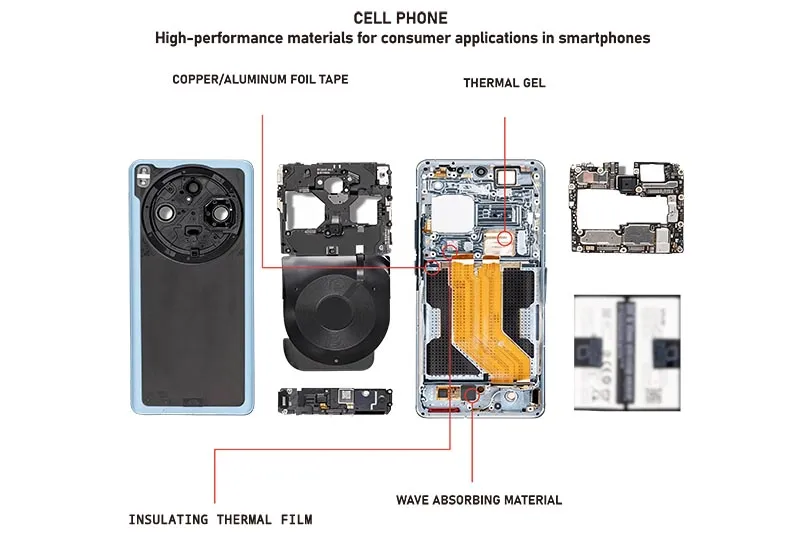
Modern phones run hot during gaming and streaming. A well-designed Heat dissipation film for mobile phones changes that fast, spreading heat before your hand even notices.
Instant Temperature Drop: How Graphene Accelerates Heat Spread
When a Heat dissipation film for mobile phones built with graphene sits above the CPU, the magic lies in structured heat transfer control:
Core Mechanism
· Thermal conductivity channels energy sideways instead of letting it pile up.
· Rapid heat spread lowers peak hotspot zones.
· Balanced thermal dissipation stabilizes outer shell temperature.
Inside the Phone
· CPU bursts create localized spikes.
· The film absorbs the spike.
· Lateral diffusion enables visible temperature drop within seconds.
· Battery warmth gets redistributed, reducing swelling risks.
Real Feel
· Less palm burn.
· Smoother gaming sessions.
· Noticeable cooling acceleration during charging.
Sheen Technology integrates layered graphene sheets to enhance this effect, turning a simple mobile phone heat dissipation film into a serious performance booster.
Ultrafast Thermal Conductivity in Smartphone Environments
Smartphone interiors are tight. Air barely moves. That’s where a Heat dissipation film for mobile phones proves its worth.
Material Advantage
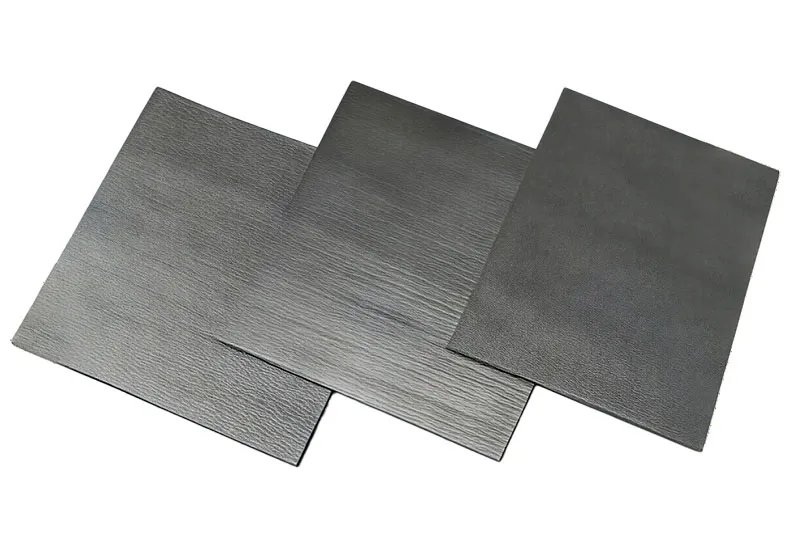
Graphene film conductivity surpasses copper in lateral flow.
· Higher thermal performance
· Faster heat dissipation
· Lower overall device temperature
In Real Smartphone Environment
· Chip heat transfers to the graphene film.
· Energy spreads across a wider surface.
· Frame disperses residual warmth outward.
IDC’s 2025 mobile hardware outlook noted that sustained performance now depends heavily on passive cooling materials inside slim devices.
IDC’s 2025 smartphone component report highlights that advanced thermal materials are becoming critical to maintain peak processor speeds under continuous load.
That’s why Sheen Technology designs each smartphone cooling film to match compact mobile device layouts.
Real-World Test Results for Graphene Cooling
Lab and gaming trials show clear numbers for Heat dissipation film for mobile phones:
· Under 30 minute gaming load
· Peak temperature reduced
· Lowered hotspot intensity
· Improved thermal efficiency
Delayed throttling time
Continuous benchmarking
· Stable temperature measurements across CPU zones
· Improved sustained clock speed
· Stronger overall cooling effectiveness
Sheen technology GSF75-03 graphene thermal sheet Thermal Resistance Stability Test
| Test Item | Test Date | Pressure(psi) | |||
| Sample | 10 psi | 20 psi | 30 psi | 40 psi | |
| 10~40 psi thermal Resistance(℃*in²/W)@0.3mm | 1 | 0.016 | 0.016 | 0.015 | 0.015 |
| 2 | 0.017 | 0.016 | 0.015 | 0.015 | |
| 3 | 0.016 | 0.016 | 0.015 | 0.015 | |
| Average Value | 0.016 | 0.016 | 0.015 | 0.015 | |
| 10~40 psi thermal Resistance(℃*cm²/W)@0.3mm | 1 | 0.106 | 0.100 | 0.095 | 0.094 |
| 2 | 0.108 | 0.101 | 0.095 | 0.094 | |
| 3 | 0.105 | 0.100 | 0.096 | 0.095 | |
| Average Value | 0.106 | 0.100 | 0.095 | 0.095 | |
Users testing Sheen Technology solutions report smoother gameplay and steadier frame rates. A well-made Heat dissipation film for mobile phones isn’t hype—it’s practical graphene cooling backed by measurable real-world performance and solid experimental data.
3 Layers Of Graphene Heat Dissipation Explained
Modern devices keep getting thinner, yet heat keeps building up. That’s why Heat dissipation film for mobile phones matters more than ever, especially when gaming, charging fast, or running heavy apps daily.
Top Layer – Heat Absorption Surface
The outer surface of a Heat dissipation film for mobile phones works like a smart gatekeeper.
Heat absorption at the surface layer
· Direct contact with processor hotspots
· Rapid thermal capture from chips
· Immediate energy transfer into the inner structure
How the dissipation film behaves under load
· Spreads heat across a wider heat sink area
· Reduces peak temperature at a single point
· Stabilizes the thermal interface during gaming spikes
Why this matters for phones
· Less frame drop
· Better battery comfort
· Longer component lifespan
In short, the heat absorption design turns sharp temperature bursts into manageable warmth, keeping the phone cool without adding bulk.
Middle Layer – Graphene Conduction Matrix
At the center sits the graphene matrix, the engine of thermal conduction.
• Ultra-thin graphene structure
• Dense material network
• Continuous thermal pathway
Here’s how it flows:
1) Heat enters from the top.
2) The high conductivity lattice spreads it in-plane.
3) The heat spreader effect prevents thermal crowding.
IDC noted in its 2025 smartphone materials outlook that advanced thermal materials are becoming “a standard expectation in performance-driven mobile devices,” highlighting growing reliance on graphene-based heat transfer solutions.
That’s exactly where Sheen Technology stands out, refining Heat dissipation film for mobile phones with optimized graphene layering for smoother heat transfer across compact boards.
Bottom Layer – Device Interface Adhesion
The base is all about tight bonding.
Device interface alignment
· Precision device contact with chips
· Stable integration surface
· Reliable thermal coupling
Adhesion performance
· Flexible adhesion layer
· Strong thermal bonding
· Long-term device integration
Why adhesion changes everything
· Minimizes thermal resistance
· Prevents air gaps
· Enhances overall cooling film for smartphones
A poorly bonded layer kills performance. A well-designed Heat dissipation film for mobile phones, like those engineered by Sheen Technology, locks onto the hardware and completes the full heat path—from surface layer to device interface—without drama.
5 Reasons You Need Graphene Cooling Film
Modern smartphones push hard on processing power, gaming graphics, and streaming loads. Without proper temperature control, performance drops fast. A high-quality Heat dissipation film for mobile phones keeps devices cool, steady, and ready for long sessions. Here’s why upgrading your phone heat dissipation setup simply makes sense.
Enhanced Performance Under Load
When a Heat dissipation film for mobile phones is installed correctly, the impact on performance is clear.
Core benefit
· Stable CPU and GPU frequency
· Reduced thermal throttling
· Consistent sustained speed
During gaming
· Higher frame stability
· Smoother graphics rendering
During multitasking
· Faster app switching
· Improved processing power allocation
A graphene-based mobile thermal film spreads heat quickly across the surface, preventing hot spots that choke performance. Sheen Technology designs its Heat dissipation film for mobile phones to maintain peak output even under heavy multitasking.
Prolonged Battery Longevity
Heat is the silent killer of battery health.
Temperature control supports:
· Longer battery life
· Reduced battery degradation
· Improved power efficiency
Lower internal heat
· Slows chemical aging
· Protects charging stability
Controlled charging cycles
· Extends overall lifespan
A reliable Heat dissipation film for mobile phones acts as daily temperature management. Less stress equals more stable charging cycles and fewer surprises over time.
Ultra-Thin Integration Without Bulk
Slim phones need slim solutions.
Design advantages
· Ultra-thin design
· Lightweight material
· Zero minimal bulk
Device structure
· Preserves original form factor
· Enables tight device integration
Space efficiency
· Better space optimization
· No added thickness
A modern phone cooling film should feel invisible. The Heat dissipation film for mobile phones from Sheen Technology fits neatly into compact layouts without altering the sleek profile users love.
Cost-Effective Mass Production
Performance is great, but scale matters.
Manufacturing strengths
· Streamlined manufacturing process
· High production efficiency
· Controlled material costs
Scalability
· Supports high volume production
· Maintains affordability
Market readiness
· Strong economic viability
· Easy adoption in consumer electronics
A scalable Heat dissipation film for mobile phones helps brands stay competitive while delivering real cooling gains.
Superior Reliability in Harsh Conditions
Phones face heat, drops, and long daily use.
Durability factors
· Proven reliability
· Strong durability
· High thermal stability
Extreme use
· Handles extreme temperatures
· Resists environmental stress
Long-term output
· Maintains long-term performance
· Ensures structural stability
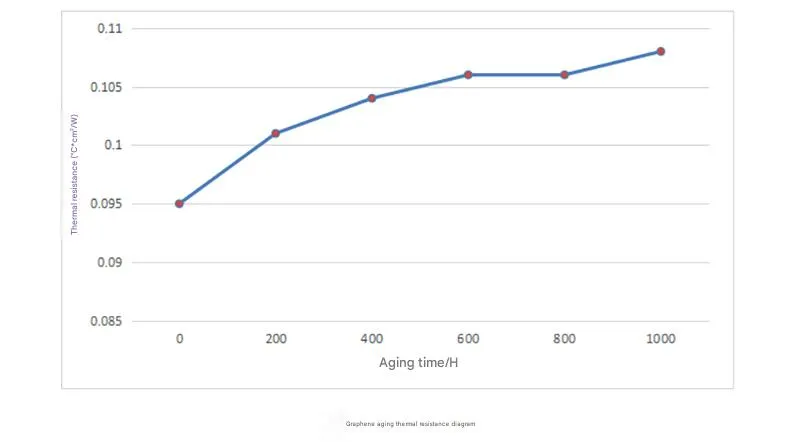
As indicated by the data shown in the figure, the graphene thermal pad demonstrated stable thermal resistance performance during the short-term aging test. After 1,000 hours, the thermal resistance increased by 13.7%, remaining within the acceptable range of variation.
A dependable Heat dissipation film for mobile phones keeps working quietly in the background. That’s the kind of upgrade that pays off every single day.
Graphene Vs. Copper: Which Cools Better?
Modern smartphones keep getting thinner, yet chips run hotter than ever. That’s why Heat dissipation film for mobile phones has become a hot topic. From graphene layers to classic metals, cooling choices shape performance, comfort, and battery life.
Graphene
When it comes to Heat dissipation film for mobile phones, graphene stands out in a very real way. As an advanced material, it changes how heat dissipation works inside tight spaces.
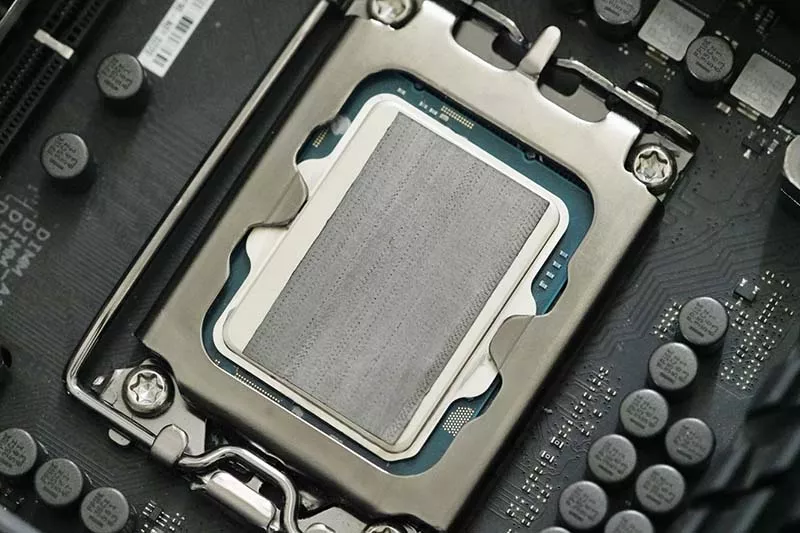
Core advantages of graphene in mobile phones:
· Ultra-high thermal conductivity along the in-plane direction
· Extremely thin film technology for slim builds
· Lightweight structure that won’t bulk up the device
In practical cooling solutions:
Material Layer
a. Atom-thin carbon lattice boosts heat transfer speed
b. Flexible sheets bend around batteries and chipsets
Device Integration
a. Works smoothly with vapor chambers
b. Pairs well with graphite-based cooling solutions
User Impact
a. Lower surface temperature during gaming
b. More stable frame rates
A well-designed Heat dissipation film for mobile phones using graphene spreads heat fast, not just away from the chip but across the entire back panel. That wide-area spreading effect is why brands like Sheen Technology focus heavily on graphene-based phone heat dissipation film options. Slim phone? No problem. Tight motherboard layout? Still fine. The material adapts.
Copper
Copper has long been the go-to thermal conductor. Solid, trusted, and easy to manufacture.
Here’s what it brings to a Heat dissipation film for mobile phones setup:
· Strong bulk heat transfer
· Reliable cooling performance
· Stable behavior as a traditional material
But there’s a catch. Copper is a metal with weight and thickness. In ultra-slim devices, that can feel like overkill.
A typical integration path looks like this:
· Copper sheet or heat sink placed over the chipset
· Thermal interface material bridges gaps
· Heat spreads into the mid-frame
It works. Yet compared to Heat dissipation film for mobile phones built with graphene, copper solutions often trade flexibility for rigidity.
For brands pushing thin designs, Sheen Technology often balances both materials—using copper where structural strength matters, and advanced graphene heat spreader film where space is tight. In short, copper cools well, but graphene-based Heat dissipation film for mobile phones fits the future of compact electronics better.
【Explore Related Application Pages】 Need a closer match for your project? Browse these related application pages to see how graphene thermal films are used in real device designs.
Extended Gaming: Film’s Long-Term Benefits
Mobile gamers know the grind. Long matches, rising temps, and sudden lag can kill the vibe fast. That’s why Heat dissipation film for mobile phones is becoming a low-key essential for serious play.
Reduced Thermal Throttling Over Marathon Sessions
When marathon sessions push hardware hard, thermal throttling creeps in. A well-designed Heat dissipation film for mobile phones changes that dynamic through layered heat management:
Core Control
· Spreads surface heat quickly
· Enhances temperature control
· Delays device overheating
Performance Stability
· Maintains clock speeds
· Reduces performance degradation
· Supports sustained performance
Structural Balance
· Works with graphite or vapor chambers
· Improves overall internal airflow rhythm
With Heat dissipation film for mobile phones, heat doesn’t spike all at once. It disperses steadily, keeping gameplay smooth even deep into the night. A reliable mobile phone cooling film simply keeps things chill.
Keeping Frame Rates Stable for Competitive Play
Competitive rounds demand tight frame rates and sharp response. Heat spikes mess with gaming performance, especially under heavy graphics processing loads.
Display Consistency
· Supports steady display refresh
· Protects smooth gameplay
Speed Integrity
· Prevents frequency drops
· Improves latency reduction
Competitive Edge
· Keeps reactions crisp
· Maintains stable competitive play output
IDC’s 2025 mobile device report notes that thermal stability is now a “core factor influencing sustained gaming frame consistency in high-performance smartphones.”
Using Heat dissipation film for mobile phones from Sheen Technology helps stabilize internal temps so sudden dips don’t sabotage clutch moments.
Minimizing Component Wear for Uninterrupted Quality
Heat stress quietly ages hardware. Over time, component wear builds up across internal components, reducing reliability.
Material Protection
· Less heat stress on solder joints
· Slower silicon fatigue
Quality Preservation
· Supports durability
· Extends overall device longevity
Long-Term Value
· Enhances extended lifespan
· Maintains consistent output
By integrating Heat dissipation film for mobile phones, Sheen Technology helps devices run cooler day after day. Lower temps mean fewer micro-cracks, steadier performance, and better quality preservation. In short, less heat drama, more uninterrupted wins.
【Download Product Datasheets】 Need exact thickness, thermal conductivity, and application guidance before you choose? Download the product datasheets to compare graphene thermal film options for mobile phones and related compact electronics.
FAQs about Heat Dissipation Film For Mobile Phones
How does a heat dissipation film for mobile phones improve gaming and heavy-use performance?
When a phone heats up, frame rates dip and touch response slows. A heat dissipation film for mobile phones spreads chip heat across a wider surface area, easing hot spots before throttling begins.
· Keeps CPU and GPU temperatures more stable
· Reduces sudden frame drops during long gaming sessions
· Maintains smoother multitasking under pressure
The result feels simple but powerful: fewer slowdowns, steadier performance, and a device that stays comfortable in your hand.
Why is graphene preferred over copper in modern cooling films?
Graphene excels where space is tight.
· Higher in-plane thermal conductivity
· Ultra-thin and lightweight
· Flexible enough for slim device structures
Copper transfers heat well but adds thickness and weight. Graphene achieves fast lateral heat spread without compromising design, making it ideal for compact smartphones and tablets.
What measurable changes can users notice after installing a heat dissipation film for mobile phones?
Real-world stress tests and gaming sessions reveal clear differences:
| Aspect | Before | After |
| Surface temperature | Noticeably warm | Several degrees cooler |
| Frame stability | Occasional dips | More consistent |
| Battery heating | Rapid buildup | Slower rise |
Lower surface heat often translates into improved comfort and steadier long-session endurance.
How does the 3-layer structure enhance thermal transfer efficiency?
The structure works like a guided pathway for heat:
· Top absorption layer: captures concentrated processor heat instantly
· Middle graphene matrix: channels heat outward at high speed
· Bottom adhesion layer: ensures tight contact, reducing thermal resistance
Each layer plays a defined role. Together, they shorten the distance between heat generation and heat release—protecting components and helping extend battery lifespan over repeated charge cycles.
【Request a Custom Quote】 Not sure which heat dissipation film for mobile phones fits your device design? Send us your phone model, thickness target, hotspot location, and performance goals, and we can help recommend the right graphene film structure for your application.
Sheen Thermal
Dongguan Sheen Electronic Technology Co., Ltd · Founded in 2008
Manufacturer of thermal interface materials and silicone foam for automotive electronics, energy storage, power electronics, communications and consumer electronics.
Certified
- ISO 9001:2015
- ISO 14001:2015
- IATF 16949:2016
What we supply
- Thermal conductivity Up to 90 W/m·K
- Thickness 0.3–10.0 mm
- Custom & samples Die-cut to drawing, 3–7 days