
 English
 usheenthermal

Comparing Boron Nitride and Thermal Paste in Heat Dissipation Modules
Date:2026-07-13
Comparing Boron Nitride and Thermal Paste in Heat Dissipation Modules
Heat is the silent deal-breaker, and the Application of boron nitride vs thermal paste in heat dissipation modules decides who melts down first.
Recent analyses from MarketsandMarkets and IDC flag rising demand for advanced TIMs, with boron nitride composites gaining preference in high-power electronics manufacturing.
Choose wisely, folks.
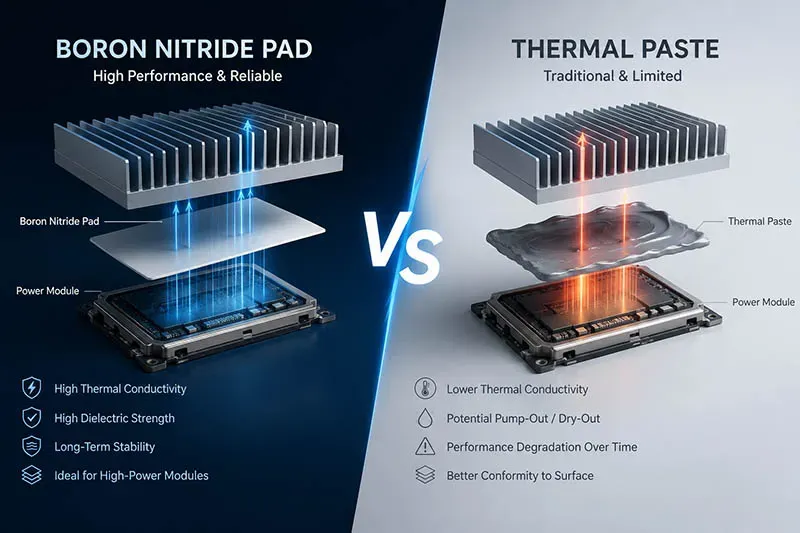
Key Points: Application of boron nitride vs thermal paste in heat dissipation modules
➔ Thermal Conductivity: BN composites achieve >200 W/m·K, Sheen Technology’s vertically aligned boron nitride pads offer up to 16 W/m·K, far surpassing the performance of typical thermal greases (1–5 W/m·K).
➔ Dielectric Strength: Hexagonal BN offers robust insulation for high-voltage electronics; paste formulations vary.
➔ Surface Conformity: Thermal pastes conform to micro-gaps easily; BN pads require precise thickness and surface preparation.
➔ Long-Term Stability: BN resists thermal cycling and degradation, while some pastes may dry, pump out, or change viscosity over time.
Heat Conduction Basics
Heat moving through electronics can feel like a big deal, yet the core ideas are fairly practical. The Application of boron nitride vs thermal paste in heat dissipation modules often comes up when engineers compare cooling paths, insulation needs, and long-term device performance.
What Drives Heat Flux in Heat Pipes and Heat Sinks
Heat flux follows temperature differences and travels through paths with lower thermal resistance.
Heat pipes
· Use phase change to move energy quickly.
· A wick structure returns working fluid to the hot zone.
Heat sinks
· Fins expand surface area.
· Convection carries heat into surrounding air.
For the Application of boron nitride vs thermal paste in heat dissipation modules:
· Heat leaves the chip.
· It crosses an interface layer.
· It spreads into a cooler body.
· Airflow removes it.
Many designers comparing boron nitride application and thermal paste cooling also evaluate contact quality and airflow together. Sheen Technology highlights this system-level view when optimizing thermal paths.
Why Thermal Conductivity and Dielectric Strength Matter
High thermal conductivity improves heat movement, while strong dielectric strength supports reliable electrical insulation.
· Better material properties can raise heat transfer efficiency.
· A suitable thermal interface material reduces interface losses.
· Higher breakdown voltage helps protect sensitive circuits.
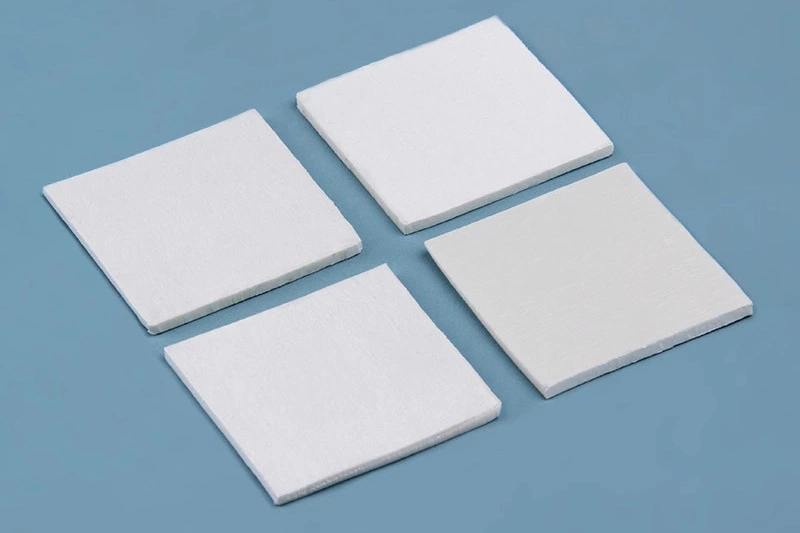
Sheen Technology Boron Nitride Thermal Pad performance properties:
| Properties | Unit | SF1600-BN-sp-03(0.3mm) | Test Method |
| Color | - | White | Visual |
| Thermal Conductivity | W/m·K | 16 | ASTM D5470 |
| Thermal Resistance (@40psi) | ℃*cm2/W | ≤0.3 | ASTM D5470 |
| Application temperature | ℃ | -40~150 | - |
| Thermal weight loss rate | % | ≤1 | - |
| Thickness | mm | 0.2~5.0 | ASTM D374 |
| Breakdown voltage | KV,@AC | ≥4 | ASTM D149 |
| Dielectric constant | F/m, @ 1MHz | ≤4.2 | ASTM D150 |
| Volume resistivity | Ω*cm, @250V | ≥1013 | ASTM D257 |
| Rebound rate | % | ≥90 | - |
| Density | g/cm³ | 1.6±0.2 | ASTM D792 |
| Hardness | shore 00 | 60~80 | ASTM D2240 |
| Flammability rating | - | V-0 | UL 94 |
In the Application of boron nitride vs thermal paste in heat dissipation modules, boron nitride thermal interface options are often valued when heat transfer and electrical isolation must coexist. Short version: cooler operation, fewer electrical risks.
Need exact thermal conductivity, dielectric strength, thickness range, thermal resistance, and reliability data before selecting a thermal interface material? Download the product datasheets to compare boron nitride thermal pads and other high-performance thermal solutions for power electronics, EV systems, and industrial equipment.
Assessing Junction Temperature and Power Dissipation Metrics
Monitoring junction temperature helps reveal thermal stress in semiconductor devices.
Key checks
· Power dissipation:Determines heat generation. Influences cooling requirements.
· Thermal resistance:Connects heat flow to temperature rise.
· Operating temperature:Affects device reliability and lifespan.
The Application of boron nitride vs thermal paste in heat dissipation modules is frequently reviewed alongside thermal management targets. Sheen Technology often evaluates these metrics together so cooling choices align with performance and reliability goals.
5 Factors Influencing Interface Thermal Resistance
A practical review of interface performance often compares the Application of boron nitride vs thermal paste in heat dissipation modules. In daily engineering work, heat flow, material contact, and long-term reliability all matter. The Application of boron nitride vs thermal paste in heat dissipation modules highlights these tradeoffs clearly.
Thermal Conductivity of Silicone Compounds vs Ceramic Fillers
Thermal conductivity rises when Ceramic fillers are blended into Silicone compounds.
Material selection
· Boron nitride improves Heat dissipation.
· Electrical insulation remains useful for Interface materials.
Performance outcome
· Lower Thermal resistance supports the Application of boron nitride vs thermal paste in heat dissipation modules.
Sheen Technology often evaluates boron nitride thermal interface solutions alongside paste-based designs.
Surface Wettability, Viscosity, and Gap Fillers Impact
Good Surface wettability helps Thermal interface materials spread evenly. Balanced Viscosity allows Gap fillers to occupy tiny gaps, cutting Contact resistance and improving Heat transfer. In practice, the Application of boron nitride vs thermal paste in heat dissipation modules is strongly affected by surface contact quality.
Adhesion Strength in Polymer Matrices and Thermal Films
Bonding foundation
· Strong Adhesion strength within Polymer matrices.
Interface durability
· Stable Thermal films maintain Interface bonding.
· Reliable Mechanical properties support repeated thermal loading.
These factors influence the Application of boron nitride vs thermal paste in heat dissipation modules over extended service periods.
Particle Size, Density, and Purity Effects on Thermal Grease
· Select appropriate Particle size.· Improve packing through higher Density.
· Maintain material Purity.
· Optimize Filler particles inside Thermal grease.
· Achieve stronger Thermal performance and better overall Material properties.
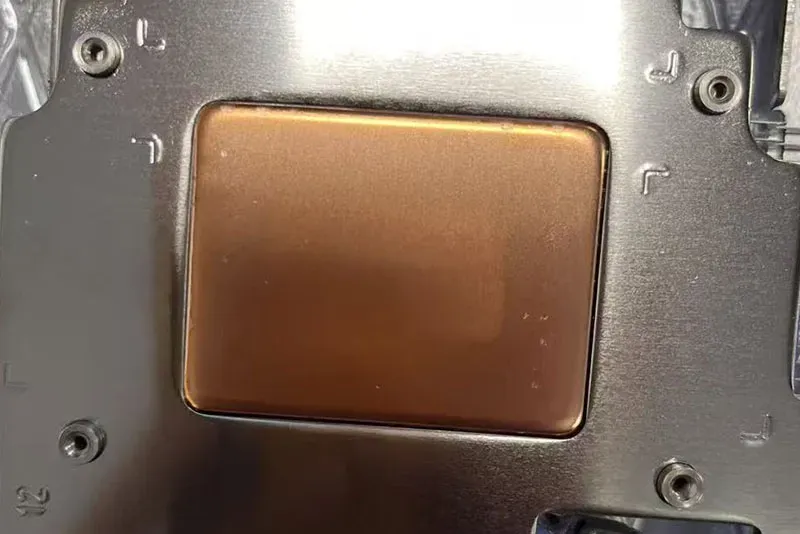
This process also affects boron nitride application in heat modules and thermal paste performance comparisons.
Thermal Stability, Temperature Cycling, and Material Degradation
Thermal stability supports continuous operation.
Reliability factors
· Resistance to Temperature cycling.
· Reduced Material degradation.
Long-life operation
· Improved Reliability and Durability.
· Better performance in Heat dissipation modules.
· Sustained Long-term performance.
As systems age, the Application of boron nitride vs thermal paste in heat dissipation modules remains a key benchmark for thermal management decisions.
Need a closer match for your project? Browse related application pages to see how boron nitride thermal pads are used in power modules, EV battery systems, industrial electronics, telecommunications equipment, and other applications requiring both thermal conductivity and electrical insulation.
Which Interface Wins? Paste Vs BN Comparison
For engineers comparing heat paths, the Application of boron nitride vs thermal paste in heat dissipation modules often comes up in everyday design chats. This comparison looks at cooling efficiency, reliability, and practical use while highlighting solutions associated with Sheen Technology.
Boron Nitride
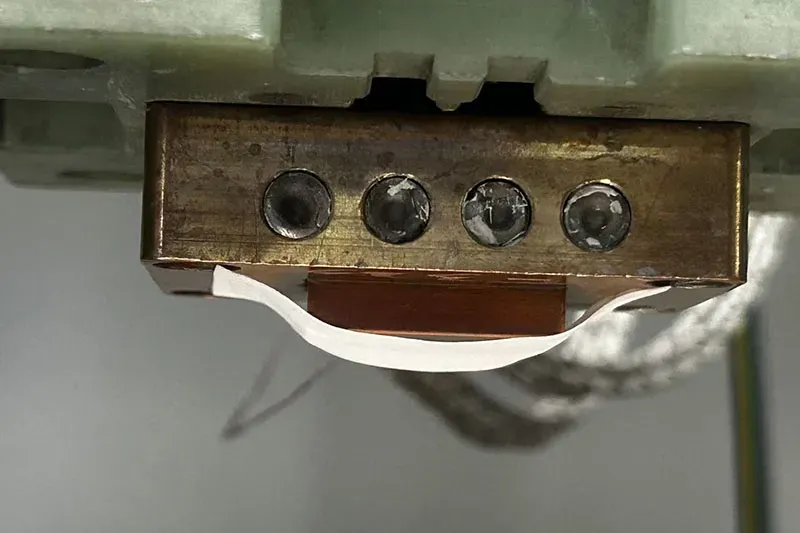
The Application of boron nitride vs thermal paste in heat dissipation modules frequently favors boron nitride when electrical safety and long-term stability matter.
Material advantages
· Hexagonal structure supports efficient heat transfer.
· Strong electrical insulation helps protect sensitive circuits.
· High dielectric strength suits demanding electronics.
Thermal behavior
· Excellent thermal conductivity assists heat movement across interfaces.
· Strong high-temperature stability keeps performance steady during extended operation.
Reliability factors
· Chemical inertness reduces reactions with neighboring materials.
· Commonly used in pads, composites, and advanced cooling assemblies.
For many heat dissipation module designs, boron nitride cooling materials provide a clean balance between insulation and thermal performance. Sheen Technology often highlights these characteristics in specialized thermal solutions.
Thermal Paste
The Application of boron nitride vs thermal paste in heat dissipation modules also points to thermal paste as a practical and budget-friendly choice.
Interface function
· Thermal grease acts as a thermal interface material.
· It improves gap filling between surfaces.
Performance pathway
· Apply the compound using an appropriate application method.
· Reduce trapped air.
· Lower thermal resistance and improve heat transfer.
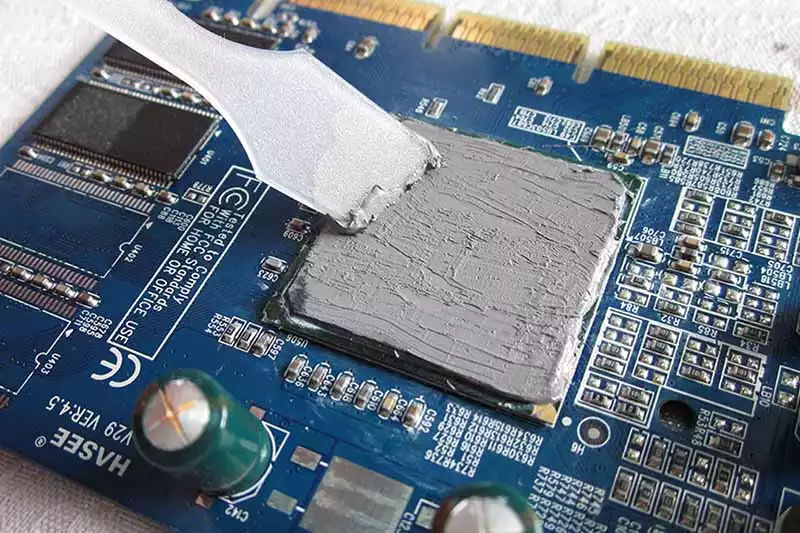
Typical uses
· CPUs, GPUs, and standard heat sinks.
· Fast maintenance and easy replacement cycles.
When comparing boron nitride vs thermal paste, thermal paste usually wins on simplicity and cost. The Application of boron nitride vs thermal paste in heat dissipation modules should be matched to operating temperature, insulation needs, and service life goals, with Sheen Technology offering options for both approaches.
【Request a Custom Quote】 Not sure whether a boron nitride thermal pad or thermal paste is the better choice for your application? Send us your operating temperature range, insulation requirements, interface gap, target thickness, and thermal performance goals, and our engineers can recommend the most suitable thermal interface solution for your project.
Sheen Thermal
Dongguan Sheen Electronic Technology Co., Ltd · Founded in 2008
Manufacturer of thermal interface materials and silicone foam for automotive electronics, energy storage, power electronics, communications and consumer electronics.
Certified
- ISO 9001:2015
- ISO 14001:2015
- IATF 16949:2016
What we supply
- Thermal conductivity Up to 90 W/m·K
- Thickness 0.3–10.0 mm
- Custom & samples Die-cut to drawing, 3–7 days