
 English
 usheenthermal

Why Is Silicon-free Thermal Conductive Pad Favored?
Date:2026-05-11
Why Is Silicon-free Thermal Conductive Pad Favored?
Silicon-free Thermal Conductive Pad is the upgrade your overheated boards have been begging for. When power density climbs and silicone bleed turns into a silent saboteur, production lines feel the heat in more ways than one.
Switching means cleaner interfaces, steadier thermal performance, and fewer warranty headaches eating your margins. For buyers moving volume, that stability keeps assembly humming, audits calm, and customers off your back year after year.
Which Pad Categories Avoid Silicone?
Choosing the right Silicon-free Thermal Conductive Pad is not just about heat flow. It is about clean assembly, stable output, and zero silicone bleed. From sheet form to roll format, each non-silicone thermal pad type serves a different production rhythm and design demand.
Sheet Material
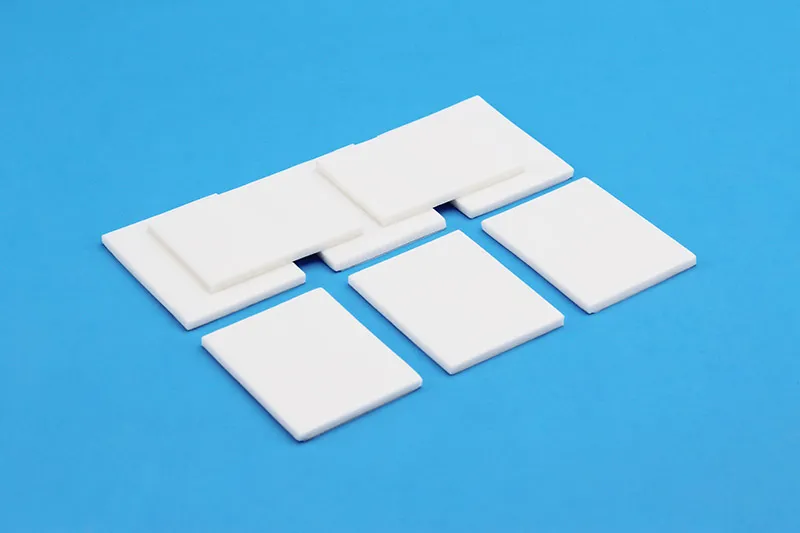
A Silicon-free Thermal Conductive Pad in sheet form works best when design teams need flexibility before final cutting.
Core composition
Polymer matrix base
· Reinforced with ceramic fillers such as boron nitride
· Enhances thermal conductivity while maintaining electrical insulation
Stable non-silicone material structure
· Prevents oil migration
· Improves long-term heat dissipation
Mechanical characteristics
· Controlled thickness tolerance
· Excellent conformability for uneven chip surfaces
· Reliable dielectric strength for power modules
Suitable for:
· Power electronics
· Telecom base stations
· Industrial control boards
Engineers can:
· Cut into prototypes
· Test compression ratios
· Adjust stack height easily
For brands like Sheen Technology, sheet-based Silicon-free Thermal Conductive Pad options give buyers room to test before scaling up. It’s practical. No mess, no guesswork.
Die-cut Parts
When assembly speed matters, die-cut formats step in.
Precision cutting ensures
· Tight specific dimensions
· Accurate component integration for MOSFETs and IC packages
Clean edges reduce contamination risks in non-silicone thermal pad interfaces.
Tailored custom shapes improve mounting accuracy and repeatability.
Under the surface, this Silicon-free Thermal Conductive Pad type still carries:
· High thermal management efficiency
· Controlled compression set
· Consistent bonding surfaces
In high-density boards:
Chip level
· Microprocessors
· Power drivers
Cooling interface
· Heat sink base
· Vapor chamber plates
Every layer benefits from stable thermal interface material behavior without silicone bleed.
Sheen Technology offers Silicon-free Thermal Conductive Pad die-cut formats designed for automated placement, keeping assembly lines smooth and downtime low.
Roll Stock
For mass production, roll form materials keep things moving.
· Continuous supply supports continuous processing
· Ideal for automated assembly
· Optimized for high volume dispensing systems
Production advantages include:
· Adjustable material width
· Uniform density across the roll
· Stable thermal transfer properties
In LED lighting and data center builds, a Silicon-free Thermal Conductive Pad in roll stock reduces scrap and speeds throughput. The material feeds straight into cutting or laminating equipment, no extra handling drama.
According to a 2025 thermal management outlook published by MarketsandMarkets:
“Non-silicone thermal interface materials are seeing increased adoption in automotive electronics and data infrastructure due to contamination control requirements and long-term reliability expectations.”
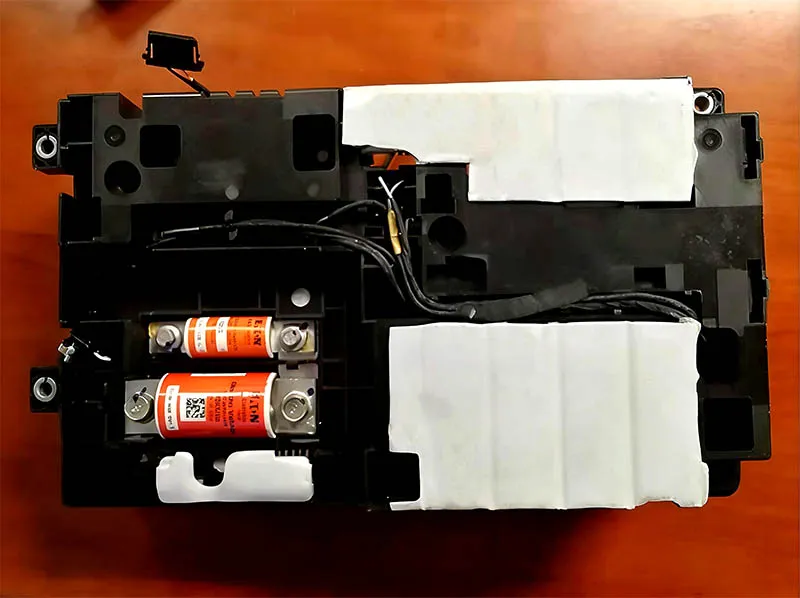
That shift explains why non-silicone thermal pad solutions are now standard in many clean assembly environments.
Custom Shapes
Some boards just refuse to follow simple geometry. That’s where tailored formats shine.
Design stage
· Identify unique geometries around chipsets
· Map pressure points
Development stage
· Create application-specific layouts
· Prototype with complex outlines
Validation stage
· Confirm thermal performance
· Test insulation stability

Custom Silicon-free Thermal Conductive Pad solutions also support:
· Irregular cavities
· Stacked power modules
· Specialized components with odd spacing
Instead of trimming standard sheets and hoping for the best, engineers specify exact contours. The result? Better contact area, lower junction temperature, and compliance with RoHS and REACH without compromise.
Sheen Technology continues refining non-silicone thermal pad manufacturing to meet these complex design calls, offering reliable Silicon-free Thermal Conductive Pad options that fit like they were born there.
3 Reasons Silicon-Free Thermal Conductive Pad Shines
Thermal stress kills electronics faster than most folks expect. A Silicon-free Thermal Conductive Pad tackles that issue head-on by boosting heat dissipation, lowering thermal resistance, and meeting strict environmental rules. Here’s why this silicon free thermal pad keeps getting attention.
Superior Heat Dissipation with Ceramic Fillers
A Silicon-free Thermal Conductive Pad relies on engineered ceramic fillers to push serious heat transfer performance.
Material science foundation
Aluminum nitride
· High intrinsic thermal conductivity
· Electrical insulation for safety
Boron nitride
· Stable at high temperature
· Supports consistent heat dissipation
Performance pathway
· Dense filler network:Forms continuous thermal bridges
· Optimized interface contact:Reduces air gaps,Enhances overall heat transfer
Application impact
· Power transistors → faster cooling cycles
· Automotive electronics → stable operation in hot zones
· High-density modules → balanced heat dissipation
This silicon-free thermal pad keeps heat moving instead of letting it pile up.
Lower Thermal Resistance for Cooler Junction Temperatures
Managing thermal resistance directly affects junction temperature and device lifespan. A well-designed Silicon-free Thermal Conductive Pad improves heat management in measurable ways.
Sheen technology Silicone-free thermal conductive pad:
| Properties | Color | Thermal Conductivity | Thermal Impedance (1mm,@30psi) | Thickness | Standard Hardness |
|---|---|---|---|---|---|
| Unit | - | W/m·K | ℃*in2/W | mm | Shore 00 |
| AF100 | White | 1.0 | 1.1 | 0.25 ~ 5.0 | 50/70±5 |
| AF300 | White | 2.0 | 0.8 | 0.25 ~ 5.0 | 50/70±5 |
| AF500 | White | 3.0 | 0.6 | 0.25 ~ 5.0 | 50/70±5 |
| AF600 | White | 5.0 | 0.3 | 0.5 ~ 5.0 | 50/70±5 |
| AF600G | White | 6.0 | 0.25 | 0.5 ~ 5.0 | 50/70±5 |
| AF800 | White | 8.0 | 0.2 | 0.5 ~ 5.0 | 50/70±5 |
| Test Method | Visual | ASTM D5470 | ASTM D5470 | ASTM D374 | ASTM D2240 |
Lower thermal resistance means real temperature reduction at the chip level. Cooler electronics run longer, crash less, and handle higher loads without drama.
Halogen-Free Compliance and ISO Certification
A Silicon-free Thermal Conductive Pad also checks the compliance box without making life complicated.
· Halogen-free formulation supports safer recycling.
· Compliance with RoHS aligns with global regulations.
· ISO-related certification systems strengthen process control and traceability.
In practical terms:
· Meets strict environmental standards.
· Reduces material risk in export markets.
· Enhances long-term safety credibility.
So it’s not just about cooling. A silicon free thermal pad brings cleaner chemistry, tighter quality systems, and dependable performance under pressure.
Automotive Electronics: Consistent Cooling in All Climates
Modern vehicles deal with desert heat, icy mornings, and nonstop vibration. Stable thermal management is no longer optional. A well-designed Silicon-free Thermal Conductive Pad keeps control modules steady, protects chips, and helps cars run smoothly year-round. That’s where smart materials and tight engineering really count.
Extreme Temperature Performance for Power Transistors
Inside high-current modules, every power transistor faces serious extreme temperature swings. A Silicon-free Thermal Conductive Pad supports stable heat dissipation while protecting sensitive circuits.
Material Core
Silicon-free formulation
· Maintains dielectric strength under -40°C to 150°C
· Prevents oil bleed common in silicone systems
High thermal conductivity matrix
· Sustains efficient thermal management
· Improves long-term component protection
Performance Snapshot
| Test Condition | Temperature Range (°C) | Thermal Conductivity (W/m·K) | Dielectric Strength (kV/mm) |
| Cold Start | -40 | 3.5 | 6.0 |
| Normal Drive | 25 | 3.8 | 6.2 |
| High Load | 150 | 3.6 | 5.9 |
A properly engineered thermal pad keeps output steady. No drama. Just consistent cooling.
Reliability Under Shock with High Compressibility
Cars shake. Roads aren’t polite. That’s why compressibility matters.
A Silicon-free Thermal Conductive Pad built for shock absorption handles sudden impact and long-term vibration damping without losing shape. The elastomer structure balances softness and strength.
Mechanical Response
High compressibility
· Reduces internal mechanical stress
· Maintains surface contact
Strong material resilience
· Recovers after repeated compression
· Supports long-term reliability
Short bumps. Long highway drives. Sudden braking. The pad stays in place and keeps heat moving away from chips. In automotive electronics, steady cooling means fewer failures and less downtime.
Gap Filling in Engine Control Unit Chipsets
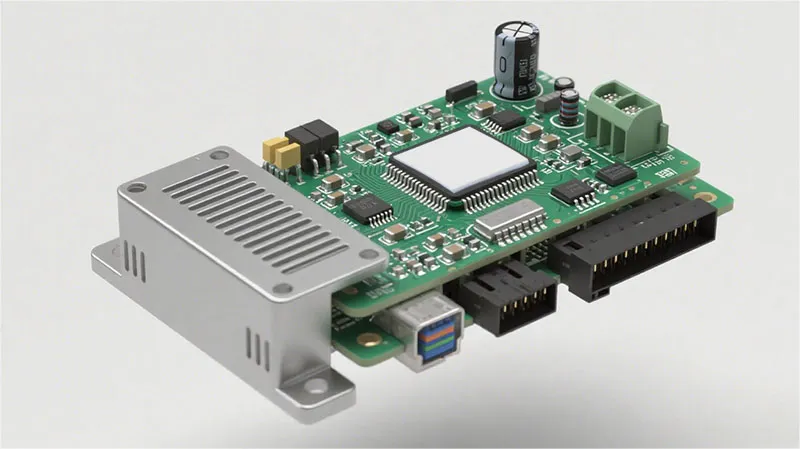
Within an ECU, spacing isn’t perfect. Surfaces vary. That gap increases resistance unless a proper gap filler is used.
A Silicon-free Thermal Conductive Pad acts as a conformable thermal interface, improving heat transfer from each chipset to the heat sink.
Interface Optimization
· Surface Conformity
· Fills micro air gaps
· Enhances component cooling
Controlled Compression
· Maintains thickness stability
· Avoids PCB warping
Application Layers
· Chipset:Direct contact surface
Thermal pad layer
· Even pressure distribution
· Heat sink
· Efficient heat spreading
The result is smoother ECU performance, even under heavy engine load.
Adhesive Backing for Long-Term Vibration Resistance
Placement stability can’t be left to luck. An integrated adhesive layer secures the Silicon-free Thermal Conductive Pad to the mounting surface.
Attachment Stability
Surface Tack
· Improves secure mounting
· Prevents lateral shift
Structural Integrity
· Supports component attachment
· Maintains long-term stability
Vibration Defense
Continuous engine vibration
· Pad remains aligned
· Preserves contact pressure
Automotive application stress
· Withstands thermal cycling
· Protects circuit reliability
Sheen technology AF300 Silicone-free thermal conductive pad reliability test report
Test Conditions
| Test Item | Test Equipment | Test Conditions |
| High-Temperature Aging | Constant-Temperature Oven | 110℃,1008H |
Criteria for Evaluating Test Results
| Performance | Initial Values | Acceptance Criteria |
| Thermal Conductivity W/m*k | 2.1 | ±10% |
| Hardness Shore 00 | 52 | ±10% |
High-Temperature Aging Test Results
| High-Temperature Aging Test Record Sheet | ||||||||
| Aging Duration | H | 0 | 168 | 336 | 504 | 672 | 840 | 1008 |
| Thermal Conductivity | W/m*k | 2.1 | 2.09 | 2.11 | 2.16 | 2.09 | 2.11 | 2.13 |
| Hardness | Shore 00 | 52 | 63 | 55.5 | 61 | 59.5 | 57 | 62 |
Performance Indicator Trend Curves:
| Performance | Variation Chart |
| Thermal Conductivity | 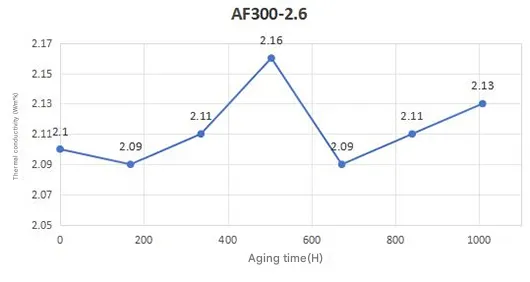 |
| Hardness | 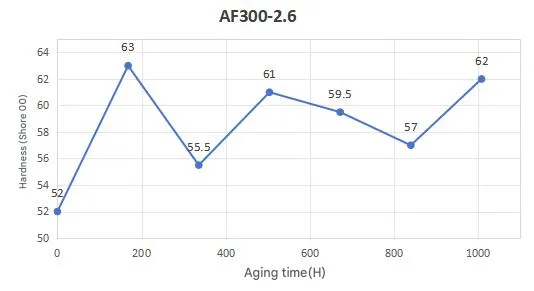 |
For manufacturers seeking dependable cooling, Sheen Technology offers a refined Silicon-free Thermal Conductive Pad solution tailored to automotive demands. In harsh climates and rough roads, that extra stability makes all the difference.
FAQs about Silicon-Free Thermal Conductive Pad
What makes a Silicon-free Thermal Conductive Pad suitable for mass production?
In high-volume lines for power electronics and telecommunications, consistency is everything. A Silicon-free Thermal Conductive Pad built on a stable polymer matrix with ceramic fillers keeps:
· Steady thermal conductivity and dielectric strength
· Controlled thickness and density for repeatable assembly
· Clean surfaces with no silicone bleed
The result is predictable heat dissipation, lower junction temperature in MOSFETs and integrated circuits, and fewer rework headaches on automated lines.
How do ceramic fillers improve heat transfer performance?
Ceramic fillers such as boron nitride and aluminum nitride form thermal pathways inside the elastomer structure.
| Filler Type | Performance Impact |
| Boron nitride | Enhances heat transfer, lowers thermal resistance |
| Aluminum nitride | Supports high dielectric strength and stable operating temperature range |
| Graphite (blend) | Improves in-plane heat spreading |
This balance protects microprocessors and power transistors from rising junction temperature during heavy loads.
Are Silicon-free pads compliant with global environmental standards?
Yes, and that matters in consumer electronics and automotive electronics. Typical compliance includes:
· RoHS compliance
· REACH regulation
· UL certification
· Halogen-free material composition
· ISO certification manufacturing systems
Production is often validated under ASTM standards to maintain stable thermal conductivity and reliability over time.
What form factors are available for different cooling designs?
Cooling layouts vary across chipsets and heat sinks, so flexibility is key:
· Sheet material for broad coverage
· Die-cut parts sized for integrated circuits or MOSFETs
· Roll stock for automated placement
· Custom shapes with adhesive backing for tight assemblies
· Gap filler formats for uneven surfaces
Each option controls compressibility and surface tack to maintain close contact and reduce thermal resistance.
Why are these pads valued in automotive and data center applications?
Extreme vibration, tight spaces, rising power density—pressure builds fast. In automotive electronics and data centers, the pad must:
· Maintain heat dissipation across a wide operating temperature range
· Absorb mechanical stress through compressible elastomer structure
· Protect heat sinks and chipsets from performance drift
When heat transfer remains stable, reliability follows—and downtime becomes far less dramatic.
Sheen Thermal
Dongguan Sheen Electronic Technology Co., Ltd · Founded in 2008
Manufacturer of thermal interface materials and silicone foam for automotive electronics, energy storage, power electronics, communications and consumer electronics.
Certified
- ISO 9001:2015
- ISO 14001:2015
- IATF 16949:2016
What we supply
- Thermal conductivity Up to 90 W/m·K
- Thickness 0.3–10.0 mm
- Custom & samples Die-cut to drawing, 3–7 days