
 English
 usheenthermal

How To Choose Thermal Conductive Silicone Film And What Should We Pay Attention To?
Date:2026-05-09
How To Choose Thermal Conductive Silicone Film And What Should We Pay Attention To?
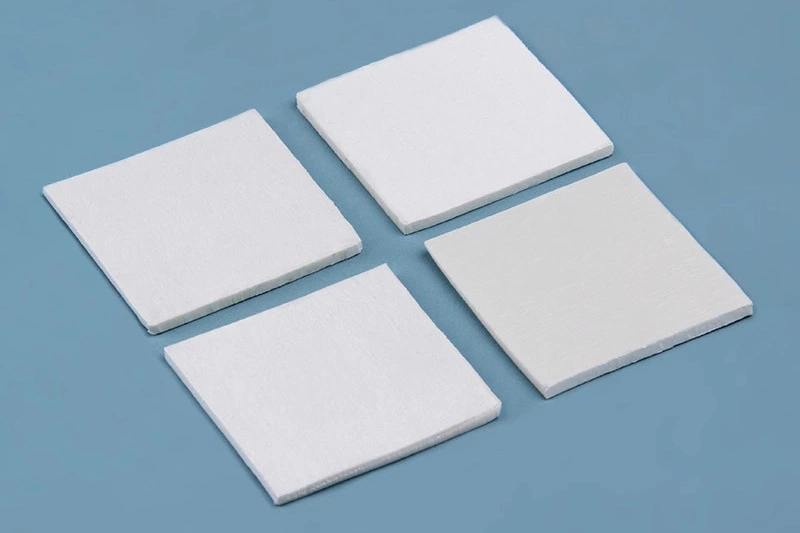
When selecting a film, consider the required thermal conductivity, thickness, and size, ensuring it covers the heat source efficiently. For enhanced strength, options reinforced with fiberglass or polyimide film are available.
Heat density keeps climbing, specs blur together, and suppliers all swear theirs works. This guide cuts through the noise and shows what actually matters in production.
Quick Insights for Thermal Interface Material Thermal Conductive Silicone Film Selection
➔ Operating Temperature: Define continuous and peak temperature ranges to ensure silicone film maintains conductivity, elasticity, and dielectric strength.
➔ Bond Line Thickness: Measure die-to-heatsink gaps; thinner films reduce resistance but must match package tolerances for reliable contact.
➔ Conductivity & Purity: Compare thermal conductivity of silicone gel, grease, or fillers (BN, Al₂O₃) while checking volatile content and dielectric strength.
➔ Assembly Compatibility: Verify dispensing, curing, compression, and rework processes to guarantee adhesion, gap filling, and automated integration.
4 Steps To Evaluate Conductive Silicone Film
Selecting the right thermal interface material isn’t just a box-ticking task. A conductive silicone film has to manage heat, insulate electrically, and survive stress inside tight devices.
Identify Operating Temperature and Application Area Requirements
When defining operating temperature limits and application area, start by mapping the real working window of your electronic components.
· Consumer CPU modules: 0 °C to 95 °C typical
· High-performance GPU boards: up to 110 °C peak
· Automotive control units: –40 °C to 150 °C
Now dig deeper:
Thermal management
· Continuous load temperature
· Peak transient spikes
Heat dissipation
· Power density (W/cm²)
· Airflow or liquid cooling support
Environmental conditions
· Humidity
· Vibration
· Dust exposure
A conductive silicone film used as a thermal interface material must hold elasticity and reliability under cycling stress. If the interface material hardens or cracks, device performance drops fast. That’s not something you want in a data center rack running 24/7.
Measure Bond Line Thickness for CPU and GPU Interfaces
For any thermal interface material, bond line thickness directly affects thermal resistance and heat transfer efficiency.
Below is a reference comparison for CPU and GPU interface material applications:
| Application Type | Bond Line Thickness (mm) | Thermal Resistance (°C·cm²/W) | Typical Gap Filling (mm) |
| CPU Interface | 0.05–0.15 | 0.05–0.12 | ≤0.20 |
| GPU Interface | 0.10–0.25 | 0.08–0.18 | ≤0.30 |
| Power Module | 0.20–0.50 | 0.15–0.35 | ≤0.80 |
Thinner isn’t always better. If component spacing varies or surfaces aren’t perfectly flat, the gap filling ability of the thermal interface material becomes critical.
Quick checks include:
· Measure die-to-heatsink flatness
· Verify compression under mounting torque
· Monitor contact resistance during thermal cycling
A stable thermal interface material maintains low contact resistance without pump-out over time.
Assess Dielectric Strength and Volatile Content Limits
Electrical safety is just as important as heat control. A conductive silicone film still needs strong dielectric strength for electrical insulation across PCB traces.
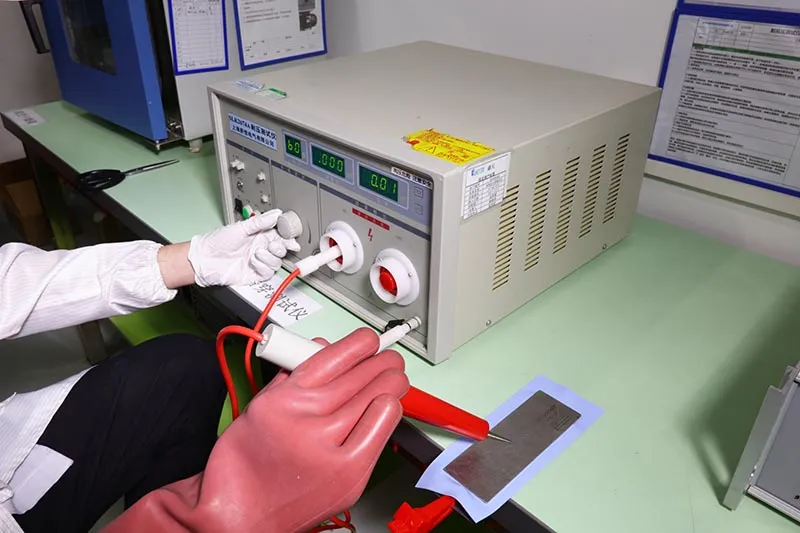
Key evaluation points:
· Electrical breakdown voltage rating
· Volatile content percentage
· Long-term material stability under 125 °C+ aging
High outgassing can contaminate optics or sensitive chips. That’s a silent killer in compact modules.
According to MarketsandMarkets (2025 update), the global thermal interface material market is projected to surpass USD 5.8 billion by 2028, driven by higher power density electronics and stricter reliability standards.
That growth reflects one reality: better material properties are no longer optional.
Compare Thermal Conductivity of Silicone Gel vs. Thermal Grease
When comparing silicone gel and thermal grease as a thermal interface material, focus on:
· Thermal conductivity (W/m·K)
· Reworkability
· Pump-out resistance
· Application consistency
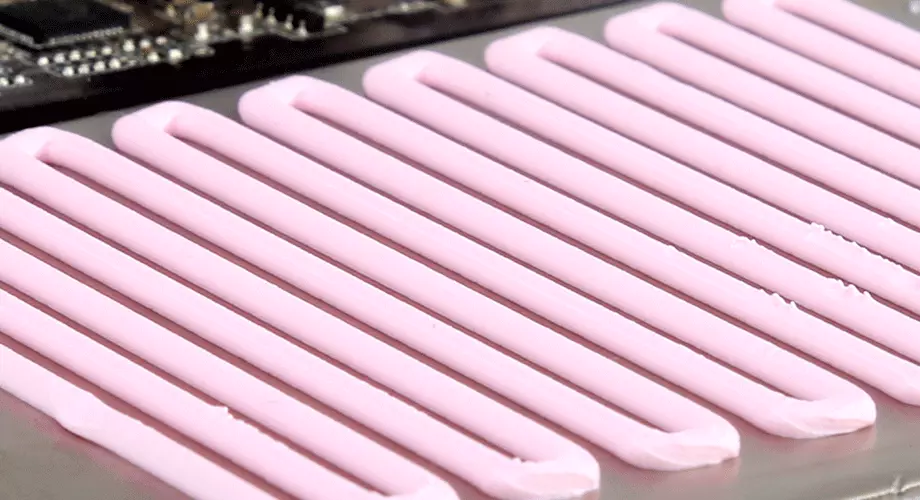
Silicone gel offers shape stability and controlled compression. Thermal grease often delivers higher initial heat transfer efficiency, but may suffer from migration over time.
In practical use:
· Gel → stable, cleaner, good for automated assembly
· Grease → flexible, easy to reapply, suitable for prototyping
Some advanced formulations even compete with phase change material solutions, balancing low thermal resistance with easier servicing.
Silicone Film Thickness Categories Explained
Silicone film thickness directly shapes how a thermal interface material performs in real hardware. From tight die contact points to vibration-heavy automotive systems, each thickness solves a different heat puzzle. Picking the right thermal interface, not just any material, keeps devices cool, stable, and running longer without drama.
Ultra-Thin Films (<0.1 mm) for Tight Die and Package Gaps
When space is tight, every micron counts. Ultra-thin thermal interface material options below 0.1 mm are built for compact electronic components where miniaturization drives design.
Application Focus
1.1 Chip-Level Integration
· Direct bonding between die and substrate
· Reduced package gaps in stacked memory
· Improved heat transfer across micro surfaces
1.2 Precision Assembly
· Controlled bond line thickness
· Minimal pump-out under pressure
· Stable contact resistance
Performance Drivers
2.1 Thermal Behavior
· Lower interface resistance
· Fast response to thermal spikes
2.2 Mechanical Stability
· Light compression force
· Maintains alignment in compact modules
Design Considerations
3.1 Surface Flatness
3.2 Assembly Tolerance
3.3 Compatibility with other thermal interface layers
In advanced CPUs and memory stacks, this type of thermal interface material reduces microscopic air pockets. That’s where real heat problems start. Keep it thin, keep it controlled, and heat moves out fast.
Standard Films (0.1–0.5 mm) between Heat Spreader and Heatsink
This thickness range is the everyday hero in thermal management. It sits comfortably between the heat spreader and heatsink, balancing compression and gap filling.
Key benefits include:
· Solid thermal conductivity for GPUs and chipsets
· Easy handling during assembly
· Reliable interface contact
Here’s a practical comparison of standard thickness thermal interface material options:
| Thickness (mm) | Thermal Conductivity (W/m·K) | Compression (%) | Dielectric Strength (kV/mm) | Typical Application |
| 0.10 | 3.0 | 15 | 6 | Compact chipsets |
| 0.20 | 3.5 | 20 | 7 | GPUs |
| 0.30 | 4.0 | 25 | 8 | Network boards |
| 0.40 | 5.0 | 30 | 9 | Industrial PCs |
| 0.50 | 6.0 | 35 | 10 | High-load modules |
In real builds, engineers often follow this flow:
1) Measure the interface gap.
2) Match compression range.
3) Confirm heat dissipation target.
4) Validate insulation needs.
A quality thermal interface material in this range acts as a steady bridge between spreading plate and cooling fins. Brands like Sheen Technology supply consistent silicone-based thermal interface solutions that maintain performance over long cycles without messy bleed or shift.
Heavy-Duty Films (>0.5 mm) for Power Electronics and Automotive ECUs
High power systems are rough. Thick films above 0.5 mm step in where gaps are wide and vibration never stops.
Step 1: Gap Compensation
Large tolerances in power electronics demand thicker thermal insulation layers. These films fill uneven mounting surfaces.
Step 2: Mechanical Protection
In automotive ECUs, constant vibration calls for built-in vibration damping. The material cushions components while preserving thermal paths.
Step 3: Electrical Safety
High voltage modules require stable dielectric strength. A thicker thermal interface material maintains isolation under stress.
Step 4: Sustained Thermal Performance
Heavy loads generate serious heat. A properly engineered thermal interface material keeps high power modules within safe limits across long duty cycles.
Sheen technology SC1000 Thermal Conductive Silicone Film Reliability Test Report
Test Conditions
| Test Item | Test Equipment | Test Conditions |
| High-Temperature Aging | Precision Oven | 200℃,500H |
Criteria for Evaluating Test Results
| Performance | Initial Values | Acceptance Criteria |
| Thermal Resistance | 0.40℃*in²/W,@50psi | ±10% |
| Breakdown Voltage | >4.0 Kv | - |
| Appearance | Smooth surface, uniform color | No abnormalities such as powdering or discoloration |
High-Temperature Aging Test Results
| High-Temperature Aging Test Record Sheet | |||||||
| Aging Duration | H | 0 | 100 | 200 | 300 | 400 | 500 |
| Thermal Resistance | ℃*in²/W | 0.40 | 0.40 | 0.41 | 0.42 | 0.44 | 0.47 |
| Breakdown Voltage | Kv/mm | 4.6 | 4.5 | 4.4 | 4.3 | 4.3 | 4.1 |
For demanding EV inverters or industrial converters, this type of thermal interface material delivers durability without sacrificing heat flow. Sheen Technology supports these applications with silicone films engineered for tough environments, keeping electronics cool even when conditions get wild.
How To Test Thermal Interface Material Performance?
Before a thermal interface material hits real devices, it has to prove itself. From heat flow to insulation and aging, every thermal interface material—pad, grease, or film—must survive strict lab checks. If your thermal interface material can’t handle pressure or temperature swings, the whole cooling setup falls apart. Here’s how pros test it.
Thermal Conductivity Measurement via Laser Flash Analysis
When validating a thermal interface material, labs focus on measurable material properties tied to heat control.
Core Principle
1.1 A short energy pulse is applied during laser flash analysis (LFA).
1.2 The rear surface temperature rise is recorded.
1.3 Thermal diffusivity is calculated from the time–temperature curve.
Converting to Real Performance
· Combine thermal diffusivity with density and specific heat.
· Derive true thermal conductivity for accurate heat transfer modeling.
Why It Matters
· Confirms if the interface material can move heat from chip to heatsink.
· Prevents overrating specs in datasheets.
At Sheen Technology, LFA validation ensures each thermal interface material performs as promised under tight tolerance control.
Thermal Resistance Profiling at Varying Bond Line Thickness
Even high thermal conductivity doesn’t guarantee low thermal resistance. Bond line matters.
Test Setup
1.1 Assemble IC simulator, TIM, and heatsink.
1.2 Adjust bond line thickness from thin compression to relaxed state.
Measurement Focus
· Track total heat flow.
· Separate bulk resistance from contact resistance.
Performance Mapping
3.1 Plot resistance vs. thickness.
3.2 Identify optimal compression window.
3.3 Flag pump-out risks.
This profiling shows how a thermal interface material behaves in real assemblies, not just in theory.
Dielectric Strength and Viscosity Testing of Silicone Film
For silicone-based thermal interface material used near power modules:
Electrical Safety
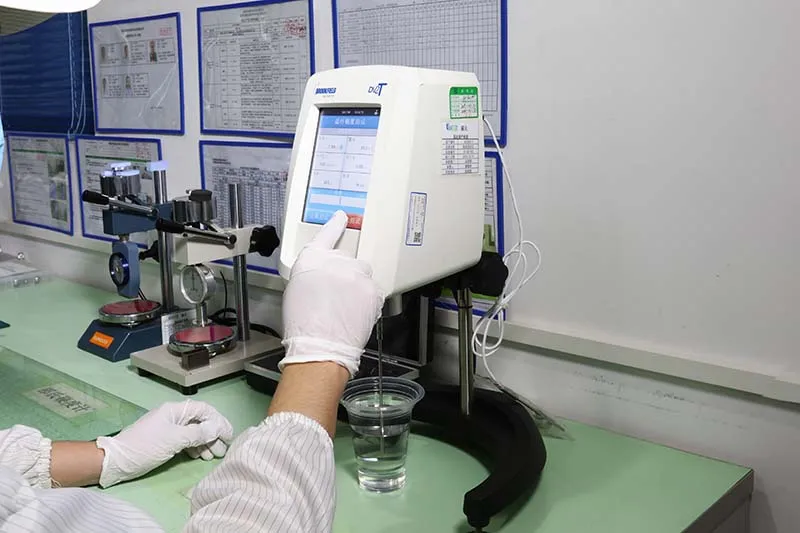
1.1 Measure dielectric strength and breakdown voltage.
1.2 Verify electrical insulation stability under voltage stress.
Flow Behavior
· Analyze viscosity through controlled rheology testing.
· Confirm printability and syringe dispensing consistency.
A solid thermal management material must insulate and spread smoothly—no drama during production.
Volatile Content and Operating Temperature Stability Checks
Long-term reliability defines premium thermal interface material quality.
Thermal Aging
1.1 Expose samples to elevated operating temperature.
1.2 Monitor material degradation over time.
Outgassing Control
· Quantify volatile content.
· Detect outgassing that could fog optics or weaken adhesion.
Reliability Benchmarks
3.1 Compare weight loss rates.
3.2 Track hardness and conductivity shifts.
Sheen Technology validates every heat transfer compound through these performance checks, ensuring stable cooling for LED modules, automotive electronics, and dense PCB assemblies where failure just isn’t an option.
Silicone Film Vs. Ceramic Pads: Which Wins?
Choosing the right thermal interface material can feel like splitting hairs, but in real hardware builds, the difference shows up fast. From CPU coolers to power modules, the right thermal interface, heat transfer layer, or interface material keeps temperatures in check and performance steady.
Silicone Film
When silicone film is used as a thermal interface material, it’s all about balance.
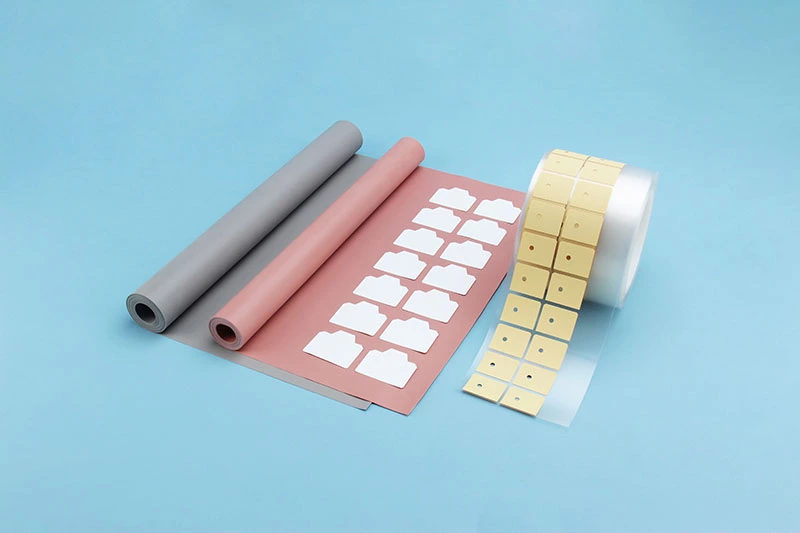
Core material traits
Mechanical behavior
· High flexibility allows tight contact on uneven chips
· Low modulus improves compression under mounting pressure
· Noticeable softness helps maintain surface wetting
Thermal performance
· Stable thermal conductivity with ceramic fillers
· Reliable heat dissipation across CPUs and GPUs
· Consistent bond line control in thin thermal interface layers
Electrical properties
· Strong electrical insulation for mixed-signal boards
Application advantages
Assembly side
· Easy die-cut shaping
· Clean rework in prototyping
Product lifecycle
· Maintains conformability after repeated thermal cycles
· Suitable for compact consumer electronics
In real production, silicone film as a thermal interface material shines where surface flatness isn’t perfect. It adapts. That slight give makes it popular in laptops and graphic cards. Sheen Technology fine-tunes filler loading to keep heat dissipation efficient without sacrificing mechanical compliance.
Ceramic Pads
Ceramic pads, by contrast, lean toward strength and endurance in a thermal interface material setup.
Material characteristics
Structural behavior
· Higher rigidity for stable mounting
· Increased hardness under clamping force
· Some level of brittleness in thin formats
Thermal profile
· Elevated thermal conductivity for power devices
· Efficient heat transfer in high-watt modules
Environmental resistance
· Strong high temperature resistance
· Long-term durability in harsh conditions
· Dependable electrical insulation
Target environments
· Power electronics
· IGBTs
· Industrial inverters
· Automotive systems
· On-board chargers
· Motor drives
For engineers pushing higher loads, ceramic-based interface material options handle stress like a champ. Sheen Technology supports custom thickness control to match pressure windows, helping maintain stable heat flow where failure simply isn’t an option.
Poor Thermal Conductivity? Upgrade Silicone Fillers
Heat problems sneak up fast in compact electronics. When your thermal interface material underperforms, chips throttle and lifespan drops. Upgrading silicone fillers inside a thermal interface material boosts heat dissipation without killing insulation. Below, we break down three filler routes that keep your thermal interface, material design, and overall thermal management strategy on point.
High-Purity Boron Nitride Ceramic Fillers
When boosting a thermal interface material, Boron nitride stands out in material science for balancing heat flow and insulation.
Core Material Traits
1.1 High purity structure reduces ionic contamination.
1.2 Hexagonal Ceramic lattice supports stable heat dissipation paths.
1.3 Strong electrical insulation preserves dielectric strength.
Performance Inside Silicone Systems
2.1 In gel-based thermal interface compounds
· Improves gap filling
· Maintains softness
2.2 In cured pads
· Enhances thermal management
· Stabilizes thickness under compression
Application Impact
3.1 Power modules
3.2 Automotive ECUs
3.3 5G base stations
For brands like Sheen Technology, tuning particle size distribution in this ceramic filler allows the thermal interface material to reach higher conductivity without sacrificing reliability. It’s a smart move for any serious thermal interface upgrade.
Conductive Graphite Platelets in Polymer Matrix
When in-plane spreading matters, Graphite wins.
Structural Advantage
1.1 Layered Platelets create directional heat paths.
1.2 Embedded in Polymer matrix, forming a stable composite material.
Thermal Behavior
2.1 High thermal conductivity along X-Y plane.
2.2 Moderate electrical conduction, so insulation design must be managed.
Practical Integration
3.1 Used as heat spreader layers.
3.2 Combined with traditional thermal interface material pads.
3.3 Functions as advanced interface material in LED arrays.
The International Energy Agency noted in its 2024 digital efficiency outlook that rising chip density is “accelerating demand for advanced thermal management materials with higher in-plane conductivity.”
For high-density boards, this style of thermal interface material keeps hotspots from stacking up. Sheen Technology engineers often pair graphite layers with insulating thermal interface sheets to balance safety and performance.
Aluminum Oxide-Enhanced Silicone Adhesive
For structural bonding plus cooling, Aluminum oxide fillers step in.
Material Enhancement
1.1 Reinforces Silicone adhesive backbone.
1.2 Improves thermal enhancement without heavy cost increase.
Mechanical + Thermal Synergy
2.1 Supports bonding agent strength for PCB-to-housing contact.
2.2 Acts as both gap filler and encapsulant.
2.3 Maintains solid dielectric strength.
System-Level Gains
3.1 Better heat transfer from components to chassis.
3.2 Reduced vibration stress.
3.3 Longer service life of the thermal interface material layer.
When your thermal interface material must glue, seal, and cool at the same time, aluminum oxide-enhanced systems make life easier. It’s a practical fix—clean, efficient, and ready for serious thermal interface demands.
Automotive ECUs: Vibration-Resistant Thermal Pads
Automotive ECUs live a rough life. Heat, shock, dust, and constant vibration push every thermal interface material to its limits. From ceramic-loaded pads to silicone gels and adhesive films, the right thermal interface solution keeps power modules cool and stable. Let’s break it down in plain terms.
Compression-Molded Ceramic Filler Pads for Harsh Vibration
In Automotive ECUs, vibration resistance is not a bonus; it’s survival. A thermal interface material used here must hold bond line thickness even after thousands of engine cycles.
Material Composition
Base structure
· Compression molding ensures uniform density.
· Controlled pressure minimizes internal voids.
Functional additives
· High-loading ceramic filler boosts thermal conductivity.
· Surface-treated particles improve matrix adhesion.
Performance Under Harsh Environments
Mechanical stability
· Resists pump-out during vibration.
· Maintains gap-filling in uneven housings.
Thermal behavior
· Stable thermal resistance over time.
· Compatible with aluminum and copper cold plates.
Thermal Data Snapshot
| Parameter | Standard Silicone Pad | Ceramic-Filled Pad | Test Condition |
| Thermal Conductivity (W/m·K) | 3.0 | 6.5 | ASTM D5470 |
| Compression Set (%) | 25 | 12 | 125°C / 22h |
| Vibration Loss (%) | 8 | 2 | 20–2000 Hz |
| Operating Temp (°C) | -40~150 | -40~180 | Continuous |
Application Fit
· Power MOSFET modules
· Inverter control boards
· Battery management ECUs
A high-grade thermal interface material in this format keeps heat moving and hardware locked tight. Sheen Technology fine-tunes filler ratios to balance stiffness and damping, making the thermal pad both tough and practical.
Pre-Cut Silicone Gel Pads with Low-Modulus Polymer Matrix
Soft matters here. A thermal interface material built with silicone gel and a low modulus polymer matrix absorbs shock instead of fighting it.
• Pre-cut pads simplify assembly.
• Flexible materials reduce stress on solder joints.
• Stable thermal conductivity supports long ECU life.
1) Shock absorption
2) Gap accommodation
3) Long-term reliability
The feel is almost cushion-like. Yet inside, engineered polymer chains control flow and rebound.
In tight housings, a soft thermal interface spreads evenly. It reduces micro-cracks between IC and heatsink. For electric vehicles, market analysts at IDC noted in a 2025 mobility electronics outlook:
“Thermal interface material performance has become a reliability gate in next-generation vehicle control units, especially under high-vibration duty cycles.”
That matches real-world shop talk. If the pad is too stiff, things crack. Too soft, and it pumps out. Sheen Technology balances gel softness with dimensional control, offering thermal management products that installers actually trust on the line.
Screen-Printed Thermal Adhesive Films for PCB to Housing Integration
Automation drives this design. A thermal interface material delivered through screen printing becomes part of the assembly rhythm.
Process Integration
Printing Stage
· Controlled thermal adhesive thickness.
· Defined edge patterns for clean curing.
Lamination
· Direct PCB integration to aluminum casing.
· Alignment pins ensure repeatability.
Functional Performance
Heat path
· Continuous thermal films reduce air gaps.
· Strong bond enhances heat dissipation.
Structural gain
· Adds rigidity to housing integration.
· Reduces fastener count.
Manufacturing Benefits
· Shorter takt time
· Lower rework rate
· Consistent curing profile
This type of thermal interface material acts like glue and heat bridge at once. For high-volume ECU lines, that combo keeps costs in check while thermal interface performance stays steady.
It’s practical engineering, no drama—just smart thermal management that holds up mile after mile.
FAQs about Thermal Interface Material
What should I evaluate when selecting a Thermal Interface Material for CPU or GPU cooling?
Choosing a thermal interface material for a CPU or GPU is a balance of heat, pressure, and precision.
1) Performance Metrics
· Thermal Conductivity and Thermal Resistance under real operating temperature
· Controlled Bond Line Thickness between die, heat spreader, and heatsink
· Adequate Dielectric Strength to protect the PCB
2) Material & Form Factor
· Thermal Grease (Paste in syringe) for thin, reworkable layers
· Thermal Pad or Gap Filler (Sheet or Pre-cut) for tolerance absorption
· Phase Change Material (Film or Roll) for automated assembly
3) Process Fit
Compatible with dispensing, compression, and fast assembly cycles without pump-out or dry-out under peak GPU loads.
How do Silicone-based Thermal Pads compare with ceramic-filled alternatives in Power Electronics?
In power electronics, surface flatness is rarely perfect. That’s where the difference becomes clear.
Silicone + Polymer Matrix + Boron Nitride / Aluminum Oxide
· Softer compression
· Better surface conformity
· Stable dielectric insulation
High Ceramic or Metallic Fillers
· Higher thermal conductivity
· Lower elasticity
· Higher stress on integrated circuit packages
For large modules mounted to a housing or heatsink, elasticity often determines long-term survival more than peak conductivity alone.
Why is low volatile content critical in Automotive Electronics?
Inside automotive electronics, heat and vibration never rest. Low volatile content in a thermal gel, thermal adhesive, or phase change material helps by:
· Reducing outgassing near sensitive chipsets and memory modules
· Preventing contamination on PCB surfaces
· Limiting pump-out under vibration and wide operating temperature swings
For ECU housings under compression assembly, stable material behavior protects both performance and reputation.
How can filler materials enhance a Thermal Interface Material?
Short answer: fillers create heat highways.
Ceramic fillers like boron nitride and aluminum oxide improve thermal conductivity while keeping dielectric strength intact.
Graphite or metallic fillers can lower thermal resistance further, though insulation must be verified.
In thermal grease, thermal gel, or thermal adhesive, the balance between filler loading and viscosity defines how easily the paste spreads across a die or package during dispensing and curing.
Which Thermal Interface Material types suit high-density CPU or Memory Module assemblies?
For tight gaps and rising heat flux, thickness control is everything.
| Material Type | Typical Form | Best Use Case | Key Advantage |
| Thermal Grease | Syringe / Paste | CPU, GPU | Ultra-low bond line thickness |
| Phase Change Material | Film / Roll | Memory Modules | Clean assembly, repeatable compression |
| Liquid Metal | Dispensed | Extreme CPU loads | Very high thermal conductivity |
| Ultra-thin Thermal Pad | Pre-cut Sheet | Chipset | Controlled thickness, easy handling |
In dense assemblies, even microns matter. The right thermal interface material keeps the integrated circuit cool without adding mechanical stress to the heatsink or package.
Sheen Thermal
Dongguan Sheen Electronic Technology Co., Ltd · Founded in 2008
Manufacturer of thermal interface materials and silicone foam for automotive electronics, energy storage, power electronics, communications and consumer electronics.
Certified
- ISO 9001:2015
- ISO 14001:2015
- IATF 16949:2016
What we supply
- Thermal conductivity Up to 90 W/m·K
- Thickness 0.3–10.0 mm
- Custom & samples Die-cut to drawing, 3–7 days