
 English
 usheenthermal

Why Top Engineers Choose Our Boron Nitride Thermal Pad Manufacturer
Date:2026-07-16
Why Top Engineers Choose Our Boron Nitride Thermal Pad Manufacturer
Choosing a boron nitride thermal pad manufacturer is not just a purchasing decision. For thermal engineers, R&D teams, and product designers, it is a material qualification decision that affects heat transfer, electrical insulation, assembly fit, production repeatability, and long-term reliability.
Sheen Technology supports customers who need boron nitride thermal pads and related thermal interface materials for power-dense electronic assemblies. The goal is to match pad structure, thickness, compression behavior, dielectric performance, and die-cut geometry to the actual design rather than forcing a standard sheet into a difficult application.
This article explains what engineers should evaluate when selecting a BN thermal pad manufacturer and where custom material development can reduce integration risk.
Quick Engineering Answers:
➔ Thermal Conductivity: Seek hot-pressed hexagonal BN for top heat dissipation and low thermal impedance.
➔ Dielectric Strength: Confirm precision-laminated BN sheets deliver high breakdown voltage and volume resistivity.
➔ Temperature Range: Verify material stability from –50 °C to 300 °C for automotive, aerospace, and data center use.
➔ Custom Form & Fit: Ensure streamlined die cutting and compounding services match your assembly geometry and production scale.
What Engineers Should Expect From a BN Thermal Pad Manufacturer
A strong manufacturer does more than quote a thermal conductivity value. The supplier should help engineers understand the relationship between boron nitride material design, interface contact, dielectric protection, mechanical fit, and production control.
Unrivaled Thermal Conductivity from Hot-Pressed Hexagonal Boron Nitride
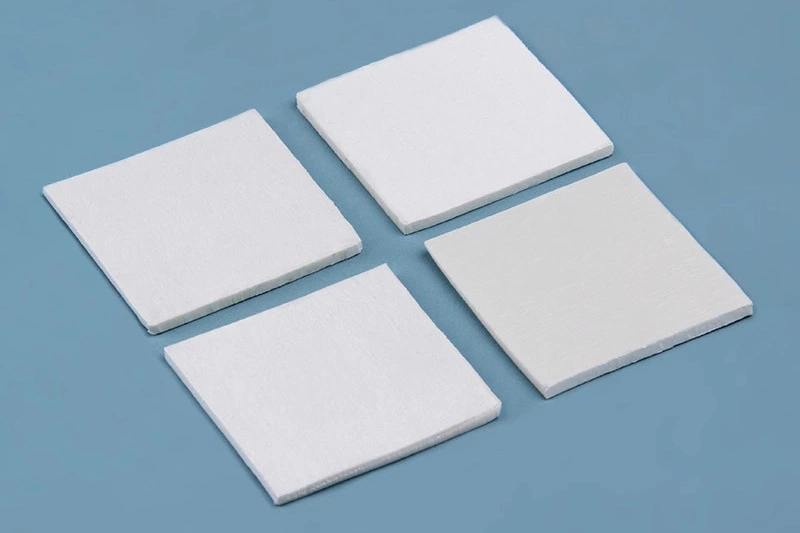
Hot pressing can support densification and layer alignment in suitable BN material systems, which may improve heat-transfer behavior and dimensional stability.
· Thermal pathway design: BN structure and orientation can affect heat spreading and through-plane performance.
· Interface behavior: surface conformity and contact resistance influence practical heat transfer.
· Material consistency: process control helps stabilize thermal and mechanical properties from batch to batch.
For engineers, the decision should be based on measured thermal impedance, bond line thickness, compression behavior, and application fit rather than a headline W/mK number alone.
Exceptional Dielectric Strength with Precision-Laminated BN Sheets
Electrical insulation is a key reason engineers consider boron nitride thermal pads. In power electronics, automotive control units, LED modules, battery systems, and high-density assemblies, a pad may need to transfer heat while maintaining dielectric separation.
· Breakdown voltage should be reviewed together with pad thickness and test method.
· Volume resistivity helps indicate insulation behavior across operating conditions.
· Lot-to-lot repeatability matters when the pad is used in safety-sensitive or high-voltage assemblies.
| Properties | Unit | SF1600-BN-sp-03(0.3mm) | Test Method |
| Color | - | White | Visual |
| Thermal Conductivity(through-plane) | W/m·K | 16 | ASTM D5470 |
| Thermal Resistance (@40psi) | ℃*cm2/W | ≤0.3 | ASTM D5470 |
| Application temperature | ℃ | -40~150 | - |
| Thermal weight loss rate | % | ≤1 | - |
| Thickness | mm | 0.2~5.0 | ASTM D374 |
| Breakdown voltage | KV,@AC | ≥4 | ASTM D149 |
| Dielectric constant | F/m, @ 1MHz | ≤4.2 | ASTM D150 |
| Volume resistivity | Ω*cm, @250V | ≥1013 | ASTM D257 |
| Rebound rate | % | ≥90 | - |
| Density | g/cm³ | 1.6±0.2 | ASTM D792 |
| Hardness | shore 00 | 60~80 | ASTM D2240 |
| Flammability rating | - | V-0 | UL 94 |
Broad Operating Temperature Range for Aerospace to Automotive Electronics
The source article mentions both -50 C to 300 C and -50 C to 900 C. These ranges should not appear together unless they refer to clearly different product families, such as a polymer-based thermal pad versus a BN ceramic sheet. For a B2B manufacturer blog, temperature claims need product-grade context.
· Cold-start behavior: check cracking, stiffness, and dimensional stability at low temperature.
· High-temperature behavior: evaluate thermal stability, compression set, and potential performance drift.
· Long-cycle durability: review thermal cycling, humidity exposure, shelf-life, and aging data when available.
Download the Sheen Technology boron nitride thermal pad datasheet to review available material grades, dielectric properties, thickness options, and temperature-related qualification notes before selecting a pad for your design.
Why Engineers Select a Custom Manufacturer Instead of a Standard Pad
Choosing a boron nitride thermal pad manufacturer isn’t just a spec sheet call—it’s about how heat, safety, and assembly play out in real devices. From CPUs to EV packs, a reliable boron nitride thermal pad manufacturer keeps things cool, safe, and fast to build, without adding headaches on the line.
Outstanding Heat Dissipation via Advanced Thermal Interface Material
Core performance layers in a boron nitride thermal pad manufacturer setup:
Material design
· Filler network → boosts thermal conductivity
· Binder tuning → stabilizes heat flow
Interface behavior
· Surface conformity → reduces air gaps, improves heat transfer
· Contact resistance control → steadier thermal performance
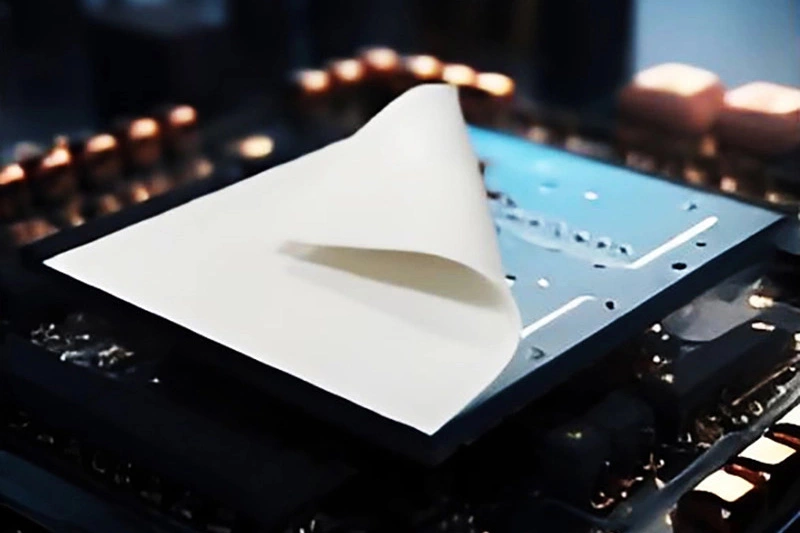
Application paths:
· Electronics:CPUs, GPUs → tighter thermal management
· Lighting:LED arrays → balanced cooling solutions
· Energy:Battery packs → controlled heat flow
Short take: a good boron nitride thermal pad manufacturer treats interface material like a system, not a sheet.
Rock-Solid Electrical Insulation and Volume Resistivity
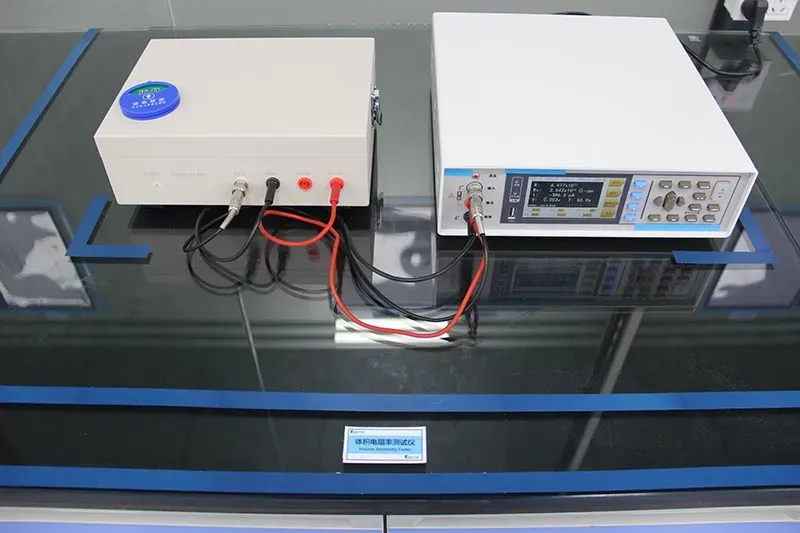
1) What matters on the bench
· High dielectric strength keeps circuits separated
· Stable resistivity prevents leakage
· Consistent electrical resistance across temps
2) How it plays in products
· Automotive ECUs → dependable electrical isolation
· Power modules → higher breakdown voltage margins
· Consumer gear → safe, non-conductive barriers
3) Why teams stick with Sheen Technology
· Tight control of insulation properties
· Repeatable lots from a trusted boron nitride thermal pad manufacturer
· Confidence in electrical safety under load
Streamlined Die Cutting and Formulation for Rapid Assembly
Production flow with a boron nitride thermal pad manufacturer:
Design input
· CAD-driven thermal pad design
· Custom material formulation for fit and compression
Conversion
· Precision precision cutting
· Clean edges, tight tolerances → reliable custom shapes
Line integration
· Faster placement → improved assembly speed
· Fewer reworks → higher production efficiency
Practical wins on the floor:
· Easier alignment, less scrap
· Stable supply from Sheen Technology
· Smooth scale-up without retool drama
A seasoned boron nitride thermal pad manufacturer keeps geometry, chemistry, and throughput aligned—so integration just clicks.
How Do Engineers Validate Boron Nitride Pad Quality?
A credible boron nitride thermal pad manufacturer should explain how product quality is validated. The article should make clear that testing is not a marketing extra; it is part of material selection, batch control, and engineering risk reduction.
Measuring Thermal Resistance with Industry-Standard Thermal Impedance Tests
Thermal impedance testing helps engineers understand how the pad performs under realistic contact conditions. Sample preparation, thickness control, pressure, surface flatness, and steady heat load all influence the result.
Core validation flow:
Sample prep
· surface flattening
· thickness control
Test execution
· apply steady heat load
· capture thermal impedance over time
Data interpretation
· compare thermal resistance vs spec
· verify thermal conductivity consistency
Supporting checks:
✔ interface contact quality
✔ repeatability across batches
✔ alignment with industry standards
For any serious boron nitride thermal pad manufacturer, clean measurement ensures real heat transfer efficiency, not lab-only performance.
Breakdown Voltage Evaluation to Confirm Dielectric Strength
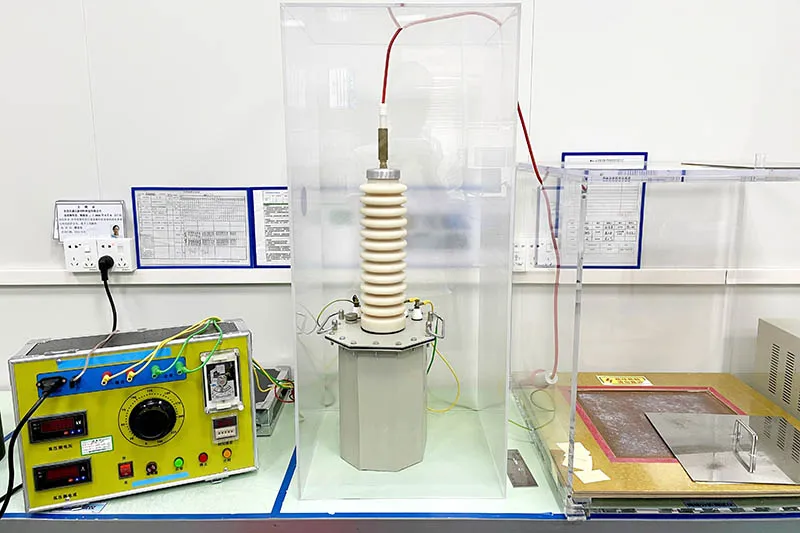
Breakdown voltage testing is useful when the pad is used near high-voltage components or power electronics. The article can retain the voltage ramp-up concept, failure point tracking, and insulation review, but should avoid quoting outside reports unless a full source is available.
· Voltage ramp-up testing:gradual increase until failure
· Failure point tracking:record breakdown voltage precisely
· Insulation review:confirm dielectric strength and electrical insulation
“Advanced thermal interface materials must meet rising insulation thresholds as power density increases,” noted a 2025 IPC materials outlook.
Reliable boron nitride pad products must balance thermal and electrical properties without compromise.
Volume Resistivity and Specific Gravity Assessments in R&D Labs
Volume resistivity confirms insulation behavior, while density and specific gravity checks can help monitor material consistency. Accelerated aging, temperature cycling, and shelf-life trials are useful when the customer application requires long service life or harsh-environment reliability
· volume resistivity → confirms insulation behavior
· specific gravity → ensures density control
· material properties → stability across batches
Nested validation:
· electrical: electrical resistivity consistency
· physical: density uniformity
· analytical: repeat R&D laboratory testing
Sheen Technology emphasizes this stage to keep every boron nitride thermal pad manufacturer output stable and predictable.
Accelerated Shelf Life Trials under Extreme Operating Temperature Cycles
Multi-phase durability simulation:
· High-temp exposure:push beyond rated operating temperature
· Rapid cooling:induce temperature cycling stress
· Long-cycle repetition:monitor material degradation
Outcome tracking:
· shelf durability → validated shelf life
· performance drift → checked via accelerated life testing
· reliability → confirmed under extreme conditions
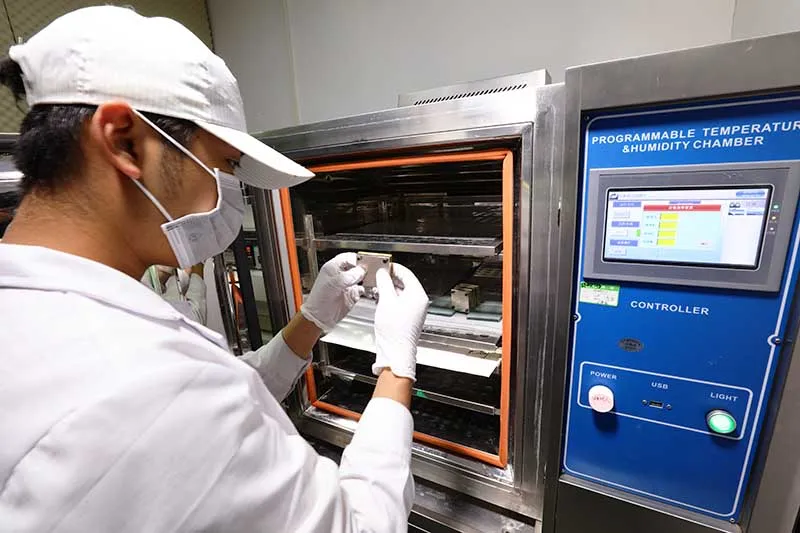
Sheen Technology applies these trials so each boron nitride pad—and every boron nitride thermal pad manufacturer batch—holds up long after installation.
Server Cooling: Best Pad Solution
A tight rack can cook hardware fast, so smarter pad choices matter. From thermal gap fillers to precision pads, this guide keeps electronics cooling practical, efficient, and easy to spec without guesswork.
Thermal Gap Fillers Tailored for High-Density Rack Environments
Core idea: thermal gap fillers bridge uneven surfaces in high-density racks, boosting heat dissipation and stable thermal management.
Material selection
Polymer base + ceramic loading
· thermal conductivity tuning
· vibration tolerance in server environments
Deployment flow
· Surface check → gap measurement → compression set
· Apply filler → verify contact → monitor temps
Performance tuning
· Increase filler softness for tighter gaps
· Balance pump-out resistance vs. compliance
Quick picks
· Soft pads for warped boards
· Higher W/mK for hotspot CPUs
boron nitride thermal pad manufacturer options often pair fillers with pads; a solid boron nitride thermal pad manufacturer will co-design both. Sheen Technology supports mixed filler–pad stacks for dense racks.
Compounded Boron Nitride Powder Formulations for Enhanced Heat Spread
Why it works
· boron nitride powder in compounded materials improves heat spreading across interfaces.
Formulation layers
· Resin system:viscosity control
· BN loading:higher loading → better thermal performance
Interface behavior
· Lower resistance
· Stable across cycles
In practice
· Choose a boron nitride thermal pad manufacturer that tunes particle size and orientation.
· Reliable boron nitride thermal pad manufacturer blends reduce hotspots without extra thickness.
Die-Cut Thermal Pads Optimized for Blade Server CPU Modules
Fit matters
· die-cut thermal pads match CPU modules in blade server cooling layouts.
Custom shaping
· CAD → die-cut → tolerance check
Install sequence
· Clean → place → compress → validate
Outcome
· Lower resistance, cleaner thermal interface, steady heat dissipation
Notes
· A trusted boron nitride thermal pad manufacturer ensures repeatable cuts and bonding.
For tight blades, a boron nitride thermal pad manufacturer with thin, high-fill pads keeps airflow free.
Other Application Scenarios for Custom BN Thermal Pads
| Application | Engineering Challenge | BN Pad Manufacturer Support |
| Server and data-center hardware | Dense boards, stacked heat sources, limited airflow, uptime requirements | Die-cut BN pads, thermal gap fillers, thickness optimization, and validation under load. |
| Power modules and inverters | High voltage, heat flux, insulation, and thermal cycling | Electrically insulating BN pads with dielectric and thermal impedance review. |
| Automotive electronics | Temperature cycling, vibration, compact ECUs, and repeatability | Custom pad geometry, compression behavior review, and lot-consistency support. |
| LED and lighting modules | Hotspot control, insulation, lifetime expectations | BN thermal interface materials for heat spreading and dielectric separation. |
| Battery and energy systems | Thermal stability, electrical isolation, and module-level safety design | Dielectric thermal pads and insulating heat-transfer layers matched to assembly needs. |
Visit the Sheen Technology applications page to match boron nitride thermal pad options with server cooling, power modules, automotive electronics, LED systems, battery assemblies, and other thermal management use cases.
What to Share Before Requesting a Custom BN Pad Recommendation
· Target thermal resistance, thermal conductivity, or maximum component temperature.
· Required dielectric strength, breakdown voltage, or insulation margin.
· Pad thickness, gap range, contact pressure, and compression target.
· Operating temperature range and thermal cycling profile.
· Assembly drawing, CAD outline, tolerance requirement, and die-cut shape.
· Surface materials, flatness, roughness, and whether adhesive or liner support is needed.
· Annual volume, prototype quantity, qualification timeline, and regulatory or reliability requirements.
Contact Sheen Technology to discuss custom boron nitride thermal pads, die-cut formats, dielectric thermal interface materials, and application-specific thermal management solutions for high-reliability electronic assemblies.
Sheen Thermal
Dongguan Sheen Electronic Technology Co., Ltd · Founded in 2008
Manufacturer of thermal interface materials and silicone foam for automotive electronics, energy storage, power electronics, communications and consumer electronics.
Certified
- ISO 9001:2015
- ISO 14001:2015
- IATF 16949:2016
What we supply
- Thermal conductivity Up to 90 W/m·K
- Thickness 0.3–10.0 mm
- Custom & samples Die-cut to drawing, 3–7 days