
 English
 usheenthermal

Better Than Paste? Boron Nitride Thermal Pad High Heat Dissipation
Date:2026-06-26
Better Than Paste? Boron Nitride Thermal Pad High Heat Dissipation
Heat is killing performance, and the Boron Nitride thermal pad with High Heat Dissipation steps in where messy paste keeps falling short.
IDC and Gartner report center operators are prioritizing consistent thermal interfaces over paste due to reliability, maintenance burden, and scaling challenges in systems.
That shift points straight to pads that install clean, stay stable, and keep hardware cool without constant rework today.
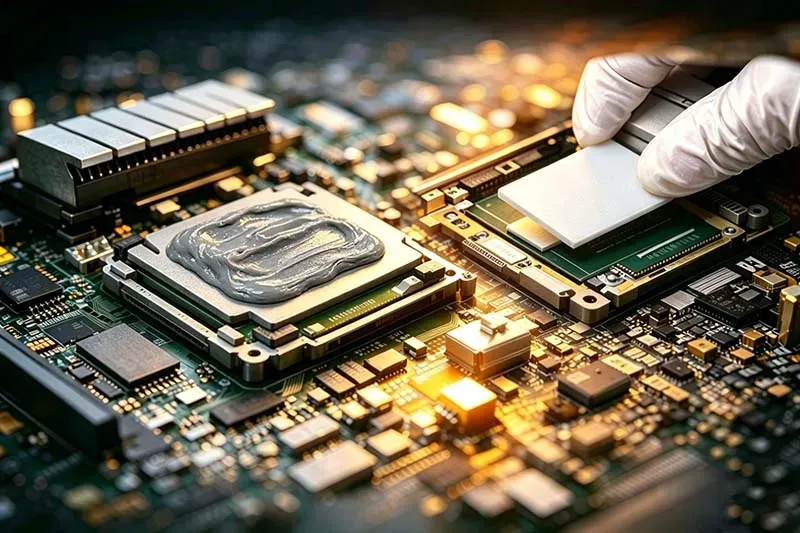
Quick Insights: Boron Nitride thermal pad with High Heat Dissipation
➔ Stable Thermal Performance – Maintains consistent conductivity without pump-out or drying over extended operation.
➔ Efficient Heat Spread – Hexagonal boron nitride fills micro-gaps, lowers thermal resistance, and evens temperatures across chips.
➔ Easy Installation & Maintenance – Clean, non-silicone pads install quickly, eliminate messy re-application, and stay in place under load.
➔ Customizable & Insulating – Available in die-cut sheets or roll stock for precise fit, offering high dielectric strength and low outgassing.
Thermal Paste Vs. Boron Nitride Pad
When heat builds up inside a device, small interface choices make a big difference. From CPU cooling rigs to compact GPU cooling modules, picking the right thermal interface material affects stability, noise, and lifespan. Let’s break down classic thermal paste and the rising favorite: Boron Nitride thermal pad with High Heat Dissipation.
Thermal Paste
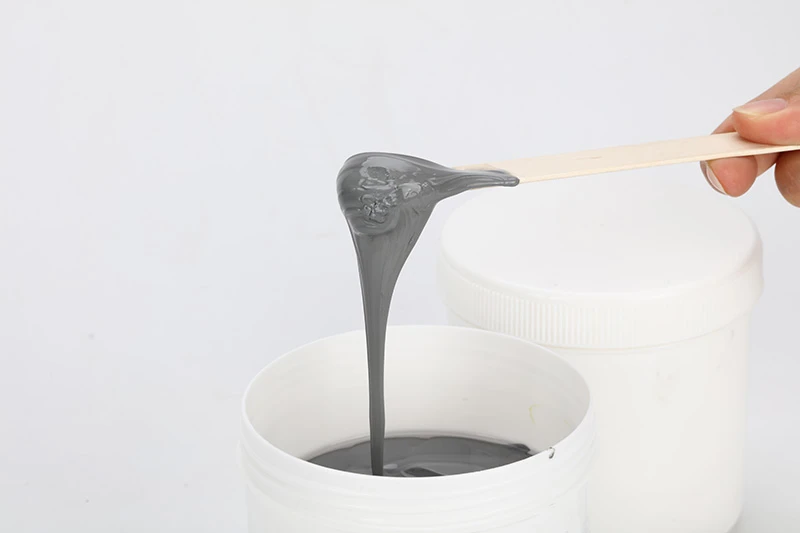
Thermal paste is a semi-liquid compound designed to improve heat transfer between a chip and a heatsink. It fills air gaps, but its behavior changes over time.
· Common in CPU cooling and GPU cooling
· Applied manually as an interface material
· Performance depends on application method
Key concerns:
◦ Pump-out under thermal cycling
◦ Drying at high temperature
◦ Uneven spread causing thermal resistance
In real-world builds, paste works well at the start. Months later, thermal impedance may creep up. Rework becomes messy. Consistency depends heavily on installer skill, pressure, and curing behavior.
Boron Nitride Pad
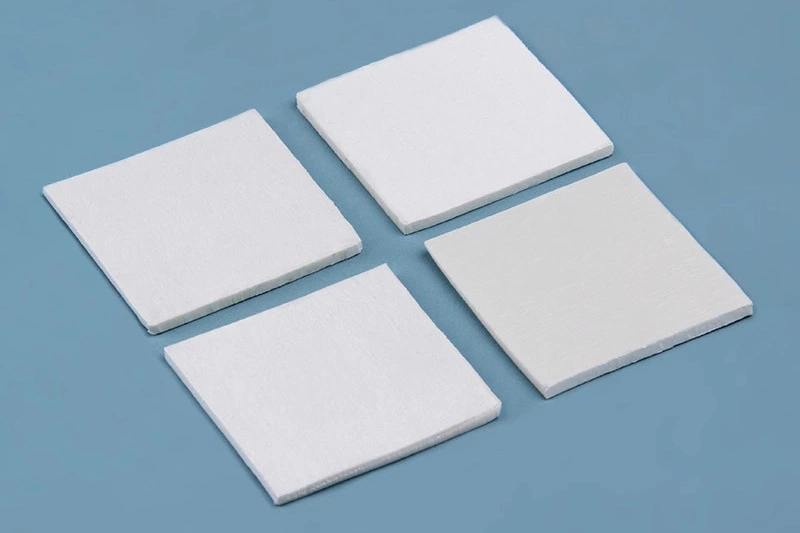
The Boron Nitride thermal pad with High Heat Dissipation changes the game by acting as a pre-formed solid pad rather than a spreadable material.
· Clean handling
· Fixed thickness
· No curing time
Boron Nitride thermal pad with High Heat Dissipation advantages:
Material Core
· Ceramic-filled matrix
· Stable thermal conductivity
· Built-in electrical insulator property
Performance Layer
· Reliable heat dissipation
· Withstands high temperature cycles
· No migration or drying
Practical Benefits
· Non-toxic composition
· Strong reusability
· Material flexibility for uneven surfaces
Unlike paste, the Boron Nitride thermal pad with High Heat Dissipation keeps the structure under pressure. The Boron Nitride thermal interface material stays consistent year after year.
Sheen Technology develops each Boron Nitride thermal pad with High Heat Dissipation for stable long-term output, especially in power electronics. For builders who want predictable results without the mess, Sheen Technology offers Boron Nitride heat dissipation pads that simply fit, press, and perform.
85% Fewer Hotspots Using Boron Nitride Thermal Pad
Heat problems can sneak up fast in GPUs, power modules, and automotive boards. A smart fix? The Boron Nitride thermal pad with High Heat Dissipation. By blending boron nitride thermal pad materials into advanced interfaces, engineers get smoother heat spread, lower thermal resistance, and stable output. At Sheen Technology, the focus stays on practical cooling that works in the real world, not just in lab charts.
Boosted Thermal Conductivity for Even Heat Spread
When thermal conductivity jumps, hotspots shrink. The Boron Nitride thermal pad with High Heat Dissipation works because its internal structure guides even heat flow instead of trapping it.
Core Performance Drivers
Material Layer
· Hexagonal BN particles enhance thermal conductivity
· Optimized filler ratios improve heat spread
Interface Contact
· Reduced thermal boundary resistance
· Stable conductivity under pressure
System-Level Impact
Power Electronics
· Balanced heat distribution across MOSFET arrays
GPUs
· Fewer localized spikes
· Smoother frame-rate stability
Why It Matters
· Lower cooling fan demand
· Longer component lifespan
· Noticeably fewer service issues
Sheen Technology Boron Nitride Thermal pad performance properties:
| Properties | Unit | SF1600-BN-sp-03(0.3mm) | Test Method |
| Color | - | White | Visual |
| Thermal Conductivity | W/m·K | 16 | ASTM D5470 |
| Thermal Resistance (@40psi) | ℃*cm2/W | ≤0.3 | ASTM D5470 |
| Application temperature | ℃ | -40~150 | - |
| Thermal weight loss rate | % | ≤1 | - |
| Thickness | mm | 0.2~5.0 | ASTM D374 |
| Breakdown voltage | KV,@AC | ≥4 | ASTM D149 |
| Dielectric constant | F/m, @ 1MHz | ≤4.2 | ASTM D150 |
| Volume resistivity | Ω*cm, @250V | ≥1013 | ASTM D257 |
| Rebound rate | % | ≥90 | - |
| Density | g/cm³ | 1.6±0.2 | ASTM D792 |
| Hardness | shore 00 | 60~80 | ASTM D2240 |
| Flammability rating | - | V-0 | UL 94 |
The International Energy Agency noted in a 2025 cooling efficiency update that improving interface thermal conductivity can cut localized overheating in data systems by over 30%, reinforcing the shift toward advanced gap materials.
That’s exactly where the Boron Nitride thermal pad with High Heat Dissipation proves its worth.
Need verified thermal conductivity, dielectric strength, compression characteristics, and thermal resistance data before selecting a thermal interface material? Download the product datasheets to compare Boron Nitride thermal pads for GPUs, power electronics, AI servers, and industrial equipment.
Superior Conformability in Polymer Matrix Gap Fillers
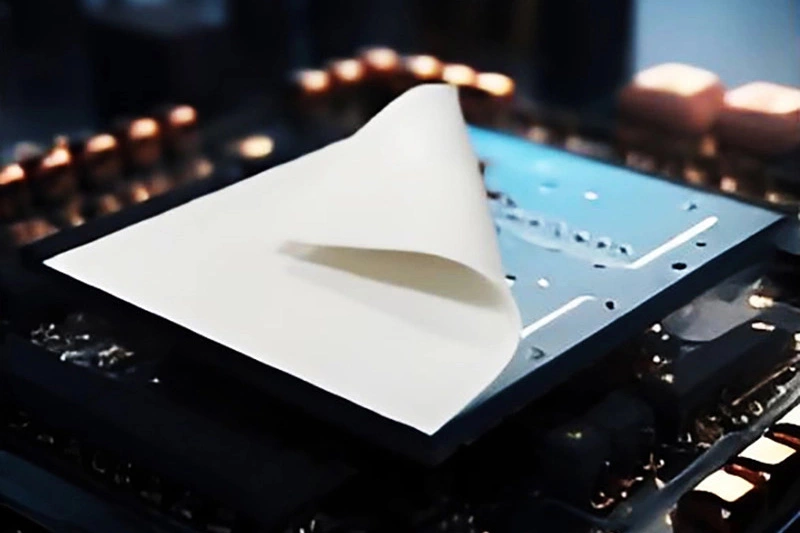
A polymer matrix sounds technical, but the idea is simple: flexibility plus performance.
Key Traits of BN-enhanced gap fillers:
· High conformability to uneven heatsinks
· Strong surface wetting
· Reliable gap coverage under vibration
In real devices, surfaces aren’t perfectly flat. A rigid pad leaves air pockets. A boron nitride thermal interface inside a soft matrix adapts under compression. That reduces impedance and keeps heat spread steady.
Here’s how it plays out:
· Apply light mounting pressure.
· The pad compresses and fills micro-voids.
· Thermal conductivity remains consistent even after repeated cycles.
The Boron Nitride thermal pad with High Heat Dissipation handles shock and torque without losing shape. Sheen Technology tunes filler loading so the polymer stays elastic while the matrix maintains structural strength. Fewer air gaps. Better heat flow. Simple as that.
High Temperature Resistance and Low Outgassing
High load? No problem. The Boron Nitride thermal pad with High Heat Dissipation thrives where ordinary pads dry out.
Step-by-step performance logic:
High temperature resistance
· Boron nitride stays chemically stable.
· The pad resists breakdown above standard operating ranges.
Structural integrity
· The temperature resistance prevents cracking.
· Mechanical stress doesn’t crush the interface.
Clean operation
· Low outgassing protects sensors and optics.
· Minimal residue in sealed systems.
Long-term reliability
· Consistent outgassing control
· Stable high temperature endurance in automotive ECUs and data racks
In tight data center aisles or engine compartments, that stability counts. The boron nitride thermal pad keeps performance steady, and Sheen Technology delivers it without overcomplicating the solution.
3 Reasons To Choose Boron Nitride Pad
High-power electronics are running hotter than ever, and nobody wants fried components. A Boron Nitride thermal pad with High Heat Dissipation bridges the gap between heat sources and heat sinks, keeping systems steady under pressure.
From servers to IGBT modules, this material keeps cool without sacrificing electrical safety.
Unmatched Heat Transfer Efficiency with Hexagonal Boron Nitride
When thermal loads spike, performance depends on three connected layers of logic:
Material Core: Hexagonal Structure
· hexagonal crystal alignment enables strong in-plane thermal conductivity.
· The boron nitride lattice promotes fast heat transfer across contact surfaces.
· Low interfacial resistance boosts overall efficiency.
Thermal Path Optimization
· Direct contact improves heat dissipation.
· Reduced air gaps lower thermal resistance.
· Stable material integrity maintains performance over time.
Application-Level Impact
· IGBT modules stay within rated temperature.
· Servers maintain steady throughput.
· A Boron Nitride thermal pad with High Heat Dissipation supports compact system design.
In real setups, a Boron Nitride pad doesn’t just move heat—it moves it fast and keeps the temperature curve flatter under stress.
Exceptional Dielectric Strength and Electrical Insulation
Safety rides on electrical control, built stepwise:
Electrical Barrier Function
· High dielectric strength resists breakdown under high voltage.
· As a non-conductive insulator, it blocks leakage paths.
· Stable electrical properties protect circuits.
Thermal + Electrical Balance
· Maintains electrical insulation without hurting heat flow.
· Supports dense PCB layouts.
· Prevents short circuits in power stacks.
System Reliability
· Power modules run cleaner.
· Failure rates drop.
A Boron Nitride thermal pad with High Heat Dissipation handles both heat and voltage like a pro.
Custom Dimensions via Die Cutting and Lamination
Precision fit matters more than people think:
Fabrication Methods
· Accurate die cutting defines final shape.
· Layered lamination controls thickness.
· Clean manufacturing ensures repeatable size.
Customization Options
· Tailored custom dimensions for tight housings.
· Roll or sheet formats for flexible fabrication.
· Clean edges for automated assembly.
Integration Workflow
· Measure interface gap.
· Select Boron Nitride thermal interface pad grade.
· Apply Boron Nitride thermal pad with High Heat Dissipation to match thermal load.
A well-cut Boron Nitride sheet isn’t flashy. It just fits, transfers heat, insulates power, and keeps the whole device running cool without drama.
Looking for a thermal solution that matches your application? Browse these related application pages to see how Boron Nitride thermal pads are used across demanding electronic systems.
Overheating GPUs? Switch to a Boron Nitride Pad
GPU temps creeping up and performance dropping can feel frustrating, especially during long rendering or AI workloads. A Boron Nitride thermal pad with High Heat Dissipation changes that game. By improving heat transfer, tightening interface contact, and reducing thermal resistance, it keeps GPU modules cool, steady, and ready for heavy lifting.
Identifying Thermal Resistance Issues in GPU Modules
Overheating rarely starts with the fan. It usually traces back to rising thermal resistance inside GPU modules, where poor heat transfer slows temperature management and sparks performance degradation.
Common warning signs include:
· Uneven hotspot readings
· Sudden throttling under load
· Noticeable thermal issues during long gaming sessions
Here’s how resistance builds up inside a GPU stack:
· Die surface irregularities
· Incomplete contact with the heatsink
· Aging thermal interface material
Now look deeper into the interface path:
Chip Level
1.1 Microscopic gaps trap air
1.2 Air increases thermal resistance
Interface Layer
2.1 Low-grade pad limits heat transfer
2.2 Pump-out reduces surface coverage
Cooling Assembly
3.1 Uneven mounting pressure
3.2 Warped plates disturb alignment
When these stack up, overheating becomes predictable. A Boron Nitride thermal pad with High Heat Dissipation directly targets that bottleneck by reducing resistance where it actually forms.
How Boron Nitride Composite Improves Heat Dissipation
The phrase Boron Nitride thermal pad with High Heat Dissipation isn’t just marketing talk. It reflects the material properties of boron nitride, known for strong thermal conductivity and electrical insulation.
At the material level:
· Boron nitride particles create fast thermal pathways
· The composite material balances flexibility and strength
· The thermal interface stays stable under cycling
Performance improvement happens in layers:
Particle Network
1.1 High thermal conductivity fillers
1.2 Reduced boundary resistance
Pad Matrix
2.1 Uniform particle dispersion
2.2 Controlled compressibility
System Integration
3.1 Better heat dissipation to spreader
3.2 Higher heat transfer efficiency
Short version? Less trapped heat. More consistent output. Even under AI workloads or 4K gaming.
Many engineers now prefer a boron nitride pad over silicone grease because the Boron Nitride thermal pad with High Heat Dissipation keeps the structure intact while pushing heat out fast.
Mechanical Stability and Compressibility under Load
A thermal pad must handle pressure without collapsing. The Boron Nitride thermal pad with High Heat Dissipation maintains mechanical stability while offering tuned compressibility.
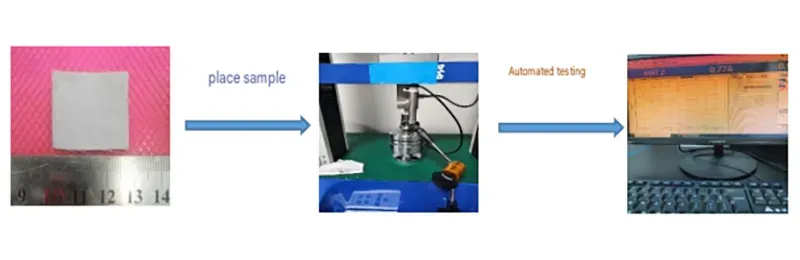
Sheen Technology laboratory Boron Nitride Thermal Pad Compressive stress test
Sample preparation: Material dimensions of 25mm x 25mm x 2mm.
Test method
1) Zero the force reading before testing; apply a 2N force to make contact with the sample surface.
2) For the compressive stress test, set the compression speed to 0.5 mm/min and the deformation range to 10–50%. For the residual stress test, set the compression speed to 0.5 mm/min and the hold time to 600 seconds.
| Test Item | Test Data | |||||
| Sample | 10% | 20% | 30% | 40% | 50% | |
| Instantaneous stress (psi) at 10–50% deformation | 1 | 21.80 | 38.51 | 69.42 | 101.14 | 168.26 |
| 2 | 17.65 | 34.12 | 60.32 | 89.35 | 150.37 | |
| 3 | 16.35 | 31.28 | 54.36 | 78.24 | 142.35 | |
| Average Value | 18.60 | 34.63 | 61.36 | 89.57 | 153.66 | |
| Residual compressive stress at 50% deformation | Sample | 1 | 2 | 3 | Average Value | |
| 40.61 | 34.96 | 27.62 | 34.40 | |||
Key physical traits:
· Balanced load pressure response
· Strong material integrity
· Predictable contact pressure
Load behavior unfolds like this:
Mounting Phase
1.1 Heatsink applies force
1.2 Pad compresses evenly
Operation Phase
2.1 Heat cycles expand materials
2.2 Pad adapts without cracking
Long-Term Use
3.1 Thickness remains stable
3.2 No pump-out effect
That stable interface keeps the thermal pad aligned, preventing micro gaps. In real-world rigs, especially high-density GPU modules, that consistency means fewer thermal spikes and longer component life.
Simple Installation of Non-Silicone Thermal Interface Material
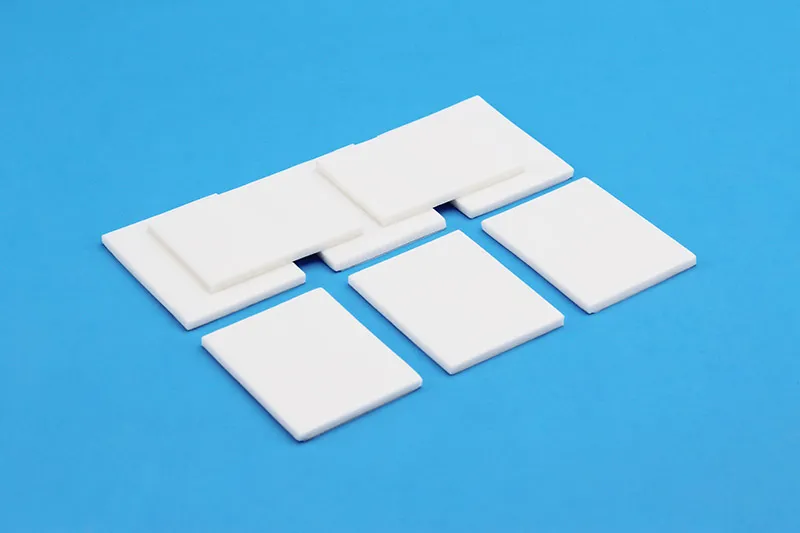
Nobody likes messy paste. A non-silicone thermal interface material such as a Boron Nitride thermal pad with High Heat Dissipation keeps the installation process clean and stress-free.
Installation basics:
· Measure gap thickness
· Cut pad to fit
· Apply even mounting force
Then follow this practical flow:
Surface Prep
1.1 Clean old residue
1.2 Inspect flatness
Pad Placement
2.1 Align with chip
2.2 Avoid folding edges
System Lock-In
3.1 Tighten screws diagonally
3.2 Verify even pressure
No grease. No cure time. Just solid contact and efficient heat dissipation.
For teams scaling production or maintaining data-center GPUs, Sheen Technology offers precision-engineered Boron Nitride thermal pads with High Heat Dissipation solutions designed for repeatable installs. The result? Cleaner workflow, reliable heat transfer, and hardware that runs cool without drama.
Server Maintenance: Pad Replacement Guide
Modern servers run hot, tight, and nonstop. A small mistake in pad selection or handling can raise thermal resistance and stress critical chips. This guide walks through inspection, removal, material selection, and electrical checks, with a focus on Boron Nitride thermal pad with High Heat Dissipation solutions trusted in demanding racks.
Pre-Installation Inspection of Dielectric Insulator Sheets
Before fitting a Boron Nitride thermal pad with High Heat Dissipation, carry out a structured inspection of dielectric insulator sheets to confirm stable material properties.
Visual & Surface Check
· Scratches, voids, oil stains
· Edge curling on sheets
Dimensional Control
· Measure thickness at 5 points
· Tolerance within ±0.05 mm
Property Alignment
· Confirm rated thermal conductivity
· Validate electrical insulation
Key checkpoints:
· Clean packaging
· No compression set
· Uniform filler dispersion
A reliable Boron Nitride thermal pad with High Heat Dissipation should feel consistent, slightly elastic, and free from surface residue. Sheen Technology advises documenting pre-installation readings so future pad replacement decisions stay data-driven, not guesswork.
Removal Techniques for Bulk and Sheet Material Pads
Old thermal pads—either bulk material or sheet material—must be removed without harming copper traces or GPU lids.
Removal flow:
· Power down and discharge.
· Warm the interface slightly (40–50°C) to soften residue.
· Lift pad slowly using a plastic scraper.
· Clean residue with lint-free wipes and isopropyl alcohol.
Surface preparation matters. Even tiny leftover fragments raise interface gaps.
• Avoid metal blades
• Inspect for residue under light
• Recheck flatness
For racks using a Boron Nitride thermal pad with High Heat Dissipation, smooth surfaces ensure the High Heat Dissipation pad performs as designed. A well-prepared base lets the Boron Nitride pad compress evenly, reducing micro air pockets and keeping servers cool under load.
Selecting Custom Roll Stock for Data Center Servers
Choosing custom roll stock for data center servers involves matching dimensions, thickness, and application load.
Selection logic:
Thermal Target
· CPU zones: ≥6 W/m·K BN thermal pad
· VR modules: 3–5 W/m·K
Gap Height
· 0.5 mm: low compression
· 1.0–1.5 mm: higher tolerance
Mechanical Fit
· Check board flex
· Confirm mounting pressure
A thermal interface material like a Boron Nitride thermal pad with High Heat Dissipation balances insulation and heat flow. Sheen Technology supplies roll formats for custom die-cutting, cutting waste and speeding deployment. For dense racks, consistent High Heat Dissipation across repeated installations keeps maintenance cycles predictable.
Verifying Volume Resistivity and Operating Temperature
Electrical and thermal verification ties performance together. Below is a reference table for a Boron Nitride thermal pad with High Heat Dissipation used in Sheen laboratory.
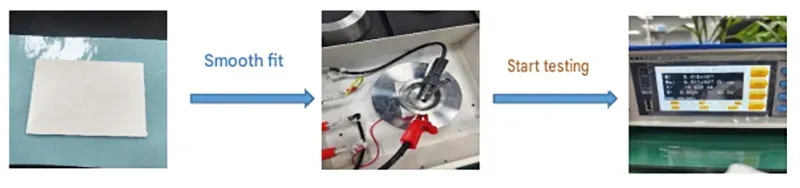
| Test Item | Test Data | |||
| Sample 1 | Sample 2 | Sample 3 | Average Value | |
| Volume Resistivity(Ω-cm) | 5.3*1013 | 4.9*1013 | 5.4*1013 | 5.2*1013 |
Verification process:
· Review supplier specifications.
· Conduct lab testing under load.
· Compare against server performance metrics.
Strong electrical properties protect circuits; stable thermal properties maintain uptime. With validated data and the right Boron Nitride thermal pad, Sheen Technology helps operators maintain steady cooling and minimize downtime.
【Request a Custom Quote】 Choosing the right Boron Nitride thermal pad depends on your thermal load, electrical insulation requirements, mounting pressure, gap thickness, and operating environment. Share your application details with our engineering team, and we'll recommend the most suitable thermal interface solution for your project.
Sheen Thermal
Dongguan Sheen Electronic Technology Co., Ltd · Founded in 2008
Manufacturer of thermal interface materials and silicone foam for automotive electronics, energy storage, power electronics, communications and consumer electronics.
Certified
- ISO 9001:2015
- ISO 14001:2015
- IATF 16949:2016
What we supply
- Thermal conductivity Up to 90 W/m·K
- Thickness 0.3–10.0 mm
- Custom & samples Die-cut to drawing, 3–7 days