
 English
 usheenthermal

Optimizing Thermal Management Using Boron Nitride Thermal Conductive Film Rolls
Date:2026-06-26
Optimizing Thermal Management Using Boron Nitride Thermal Conductive Film Rolls
Boron nitride thermal conductive film rolls are the quiet fix your overheating designs have been begging for, cutting through hot spots and shaky interfaces before they turn into costly failures on the line.
When heat starts acting up, production slows, warranties creep up, and nobody wants that headache. This material keeps things cool, consistent, and easy to scale, so operations run smoother and budgets stop bleeding.
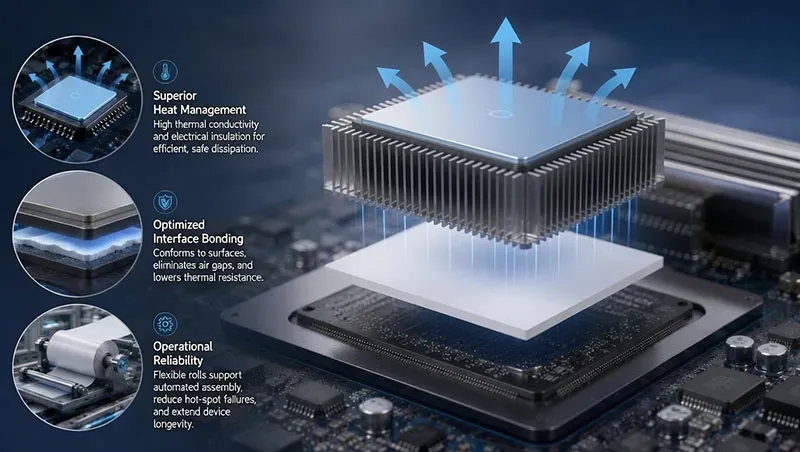
Lyrical Key Points of Boron Nitride Thermal Conductive Film Rolls
➔ Superior Heat Management: Leverages high in-plane thermal conductivity and electrical insulation for efficient, safe dissipation in compact electronics.
➔ Optimized Interface Bonding: Conforms to surfaces, eliminates air gaps, and lowers thermal resistance between chips and heat sinks.
➔ Operational Reliability: Flexible rolls support automated assembly, reduce hot-spot failures, and extend device longevity with minimal maintenance.
Why Boron Nitride Thermal Conductive Film Rolls Matter
When heat builds up inside tight electronic layouts, performance drops fast. Boron nitride thermal conductive film rolls step in as a practical fix, moving heat sideways while keeping circuits electrically safe. From BN film rolls in EV modules to boron nitride thermal films in telecom boards, smart thermal control keeps devices cool and business moving.
Unlocking Superior Thermal Conductivity
The power of Boron nitride thermal conductive film rolls comes from how hexagonal boron nitride (h-BN) crystals align within the thermal interface film.
Crystal Orientation and Heat Flow
1.1 In-Plane Conductivity
· Heat spreads laterally across the BN film surface.
· Ideal for battery packs and flat IC modules.
1.2 Through-Plane Moderation
· Controlled vertical transfer protects sensitive chips.
Electrical Insulation with Thermal Transfer
2.1 Dielectric Strength:Prevents short circuits in compact PCB stacks.
2.2 Signal Integrity:Supports high-frequency electronics without interference.
Sheen Technology Boron Nitride Thermal Pad Performance Metrics:
| Properties | Unit | SF1600-BN-sp-03(0.3mm) | Test Method |
| Color | - | White | Visual |
| Thermal Conductivity | W/m·K | 16 | ASTM D5470 |
| Thermal Resistance (@40psi) | ℃*cm2/W | ≤0.3 | ASTM D5470 |
| Application temperature | ℃ | -40~150 | - |
| Thermal weight loss rate | % | ≤1 | - |
| Thickness | mm | 0.2~5.0 | ASTM D374 |
| Breakdown voltage | KV,@AC | ≥4 | ASTM D149 |
| Dielectric constant | F/m, @ 1MHz | ≤4.2 | ASTM D150 |
| Volume resistivity | Ω*cm, @250V | ≥1013 | ASTM D257 |
| Rebound rate | % | ≥90 | - |
| Density | g/cm³ | 1.6±0.2 | ASTM D792 |
| Hardness | shore 00 | 60~80 | ASTM D2240 |
| Flammability rating | - | V-0 | UL 94 |
This balance makes boron nitride thermal conductive film rolls a go-to option when engineers need heat control without electrical risk.
How BN Film Rolls Reduce Thermal Resistance
Air gaps are the real troublemakers in stacked assemblies. Even tiny voids block heat flow. Boron nitride thermally conductive film rolls solve that by forming a tight, conformal bond between hot components and heat sinks.
Key effects include:
· Reduced interface void ratio
· Stable contact under pressure cycling
· Consistent performance across wide temperatures
Here’s how it plays out in practice:
1) Surface micro-roughness gets filled by the flexible BN thermal film roll.
2) Contact area increases across the thermal interface.
3) Heat transfers laterally before moving to the cooling plate.
The result feels simple: lower total thermal resistance, steadier junction temperature, and fewer thermal spikes during peak loads.
In real production lines, that means less rework and better yield. For manufacturers scaling EV converters or 5G power modules, that stability matters a lot.
3 Benefits for Electronic Materials Buyers
Choosing Boron nitride thermal conductive film rolls is not just a technical call; it’s a purchasing strategy.
Performance Assurance
1.1 Stable Thermal Conductivity:Predictable cooling across product lifecycles.
1.2 Long-Term Reliability:Resistant to oxidation and thermal aging.
Manufacturing Compatibility
2.1 Roll-to-Roll Processing:Fits automated lamination lines.
2.2 Clean Handling:No messy paste, less contamination risk.
Cost Efficiency at Scale
3.1 Lightweight Structure:Cuts transport and assembly load.
3.2 System-Level Savings:Fewer cooling redesigns over time.
Brands like Sheen Technology focus on precision coating, thickness control, and consistent ceramic dispersion in every boron nitride thermal conductive film roll. For buyers balancing performance, safety, and budget, that mix keeps projects on track without overcomplicating the supply chain.
Need verified thermal conductivity, dielectric strength, thickness tolerance, and thermal resistance data before selecting a thermal interface material? Download the product datasheets to compare boron nitride thermal conductive film rolls for EV battery systems, power electronics, telecom equipment, and high-density PCB applications.
5 Pain Points in Electronic Cooling Solutions
Electronic devices keep getting smaller, faster, and hotter. Behind every smooth-running system sits a quiet battle against heat. Here’s where Boron nitride thermal conductive film rolls step in—and where cooling systems often fall short.
Overheating Under Peak Loads
When power density spikes, cooling systems often fall behind. During sustained workloads, especially in compact enclosures, thermal resistance builds up faster than heat can escape.
Common triggers include:
· Insufficient thermal interface materials
· Poor airflow design
· Low-grade boron nitride film rolls
Now look closer at peak-load behavior:
· Heat generation exceeds dissipation capacity.
· Internal PCB temperature rises above 85°C.
· Performance throttling begins.
· Long-term reliability drops sharply.
In high-demand systems using Boron nitride thermal conductive film rolls, proper material thickness and surface conformity matter more than most teams expect.
Typical Thermal Threshold Data
| Load Condition | Temp Rise (°C) | Efficiency Loss (%) | Risk Level |
| Idle | +5 | 1 | Low |
| Moderate | +18 | 4 | Medium |
| Peak Burst | +32 | 9 | High |
| Sustained Peak | +45 | 15 | Critical |
High-performance boron nitride thermal conductive film rolls help spread heat before it concentrates—but only when matched correctly to load cycles.
Uneven Heat Spread on PCBs
Not all heat travels evenly across a printed circuit board. When thermal conductivity layers lack uniform bonding, temperature gradients form fast.
Heat imbalance usually develops in clusters:
· Around power MOSFETs
· Near high-frequency processors
· Under dense capacitor arrays
Here’s how it unfolds:
· Localized heat forms near high-current paths.
· Standard pads fail to distribute it laterally.
· Micro hot zones expand.
· Adjacent components absorb excess strain.
Using Boron nitride thermal conductive film rolls improves in-plane conductivity, especially when layered correctly.
The key? Consistent bonding pressure. Without it, even high-grade boron nitride thermal film rolls underperform.
Component Failure from Hot Spots
Hot spots are silent killers. A small 10–15°C spike in one corner of a chip can cut lifespan in half.
Signs usually show up as:
· Solder fatigue
· Delamination
· Silicon degradation
According to recent semiconductor reliability updates:
“Thermal concentration remains a primary driver of premature device fatigue in compact electronics,” noted the 2025 IPC reliability outlook.
Persistent hot spots accelerate material aging. Even quality Boron nitride thermal conductive film rolls must maintain surface conformity to prevent micro air gaps.
• Uniform compression
• Stable thermal impedance
• Long-term material integrity
Miss one, and failure creeps in quietly.
Inefficient Cooling Layer Bonding
Bonding issues rarely look dramatic. Instead, performance slowly slips.
Poor adhesion creates:
· Microscopic air pockets
· Reduced thermal transfer rate
· Rising junction temperature
Surface mismatch between layers weakens the whole stack. Even premium boron nitride film rolls can’t compensate for uneven torque pressure.
This is where Sheen Technology focuses heavily—precision lamination control that reduces trapped air and stabilizes conductivity across wide-format Boron nitride thermal conductive film rolls.
Maintenance Challenges in Thermal Interfaces
Thermal materials age. Some dry out. Others shift under vibration.
Maintenance headaches often include:
· Replacing degraded pads
· Reapplying interface grease
· Inspecting compressed boron nitride thermal film rolls
Over time:
· Repeated thermal cycling stresses bonding layers.
· Interface resistance climbs gradually.
· Cooling efficiency drops unnoticed.
High-quality Boron nitride thermal conductive film rolls maintain structural stability longer, especially when engineered with oxidation-resistant boron nitride layers.
Sheen Technology addresses lifecycle concerns by optimizing roll consistency and thickness tolerance, reducing long-term service frequency.
Because honestly, nobody wants to shut down a system just to fix heat that could’ve been managed right from the start.
Looking for a thermal solution that fits your application? Browse these related application pages to see how boron nitride thermal conductive film rolls improve reliability across demanding electronic systems.
Boron Nitride Rolls vs. Traditional Thermal Pads
Thermal management isn’t just a technical detail anymore—it’s make-or-break for compact electronics. Boron nitride thermal conductive film rolls are changing expectations, while old-school pads struggle to keep up in tight, high-power designs.
Boron Nitride Thermal Conductive Film Rolls
When engineers talk about Boron nitride thermal conductive film rolls, they’re usually thinking about three things:
· Ultra-thin thermal conductive film
· Flexible boron nitride rolls
· Reliable electrical insulation from BN film materials
But the real value shows up deeper in the design stack.
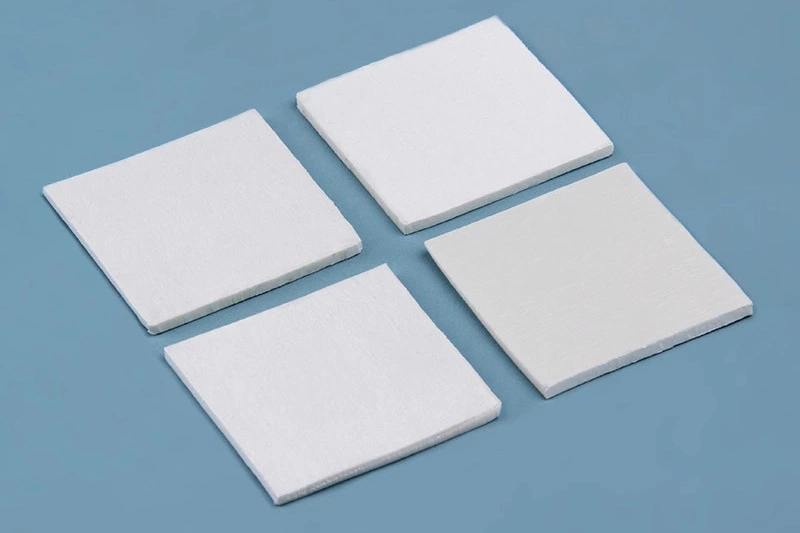
Material Layer
· Hexagonal boron nitride (h-BN) structure
· High in-plane thermal conductivity
· Strong dielectric strength
· Chemical stability
Polymer matrix integration
· Uniform filler dispersion
· Controlled thickness down to microns
Performance Layer
· Heat spreading efficiency
· Low thermal interface resistance
· Long-term cycling durability
Application Layer
· Foldable devices
· EV battery modules
· High-density PCBs
Short and simple: thinner path, faster heat escape. No drama.
Compared with bulky pads, Boron nitride thermal conductive film rolls conform closely to uneven surfaces. That reduces air gaps. Less air means less thermal resistance. It’s that straightforward.
Recent market commentary reflects this shift:
“Advanced thermal interface films, especially ceramic-filled flexible formats, are seeing accelerated adoption in EVs and AI hardware through 2025,” notes IDTechEx in its 2025 thermal management outlook.
Manufacturers looking for scalable supply often turn to Sheen Technology, known for precision-coated boron nitride thermal films tailored to compact assemblies. In demanding electronics, Boron nitride thermal conductive film rolls simply fit better, last longer, and move heat with less resistance.
Traditional Thermal Pads
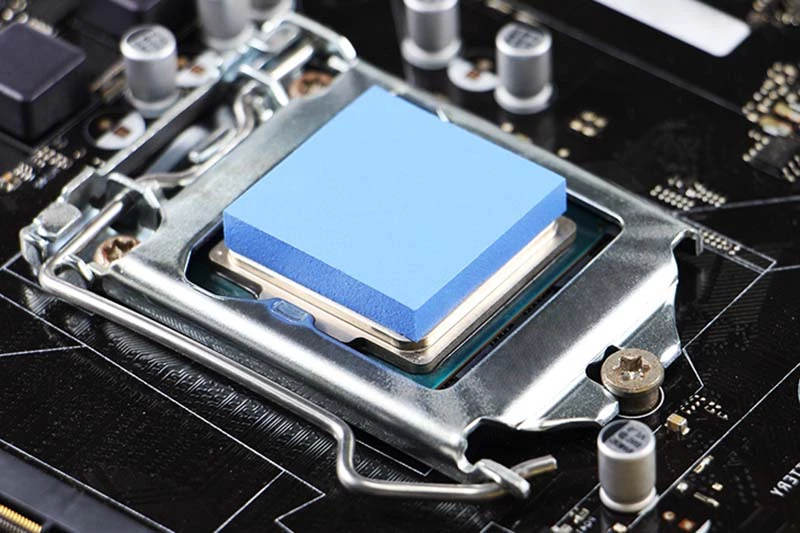
Traditional thermal pads still exist for a reason:
· Easy drop-in placement
· Low upfront tooling
· Familiar processing workflow
Yet structure tells the bigger story.
Material Composition
· Silicone base
· Ceramic fillers
· Adhesive backing
Structural Constraints
· Millimeter-level thickness
· Limited compression recovery
· Edge cracking over time
Thickness sounds harmless. It isn’t. Extra bulk increases the thermal path length, which slows heat transfer.
· More compression
· More pump-out risk
· More aging under thermal cycling
In compact modules, that stack-up becomes a bottleneck. Pads can shift. They can dry. Performance drifts.
By contrast, Boron nitride thermal conductive film rolls maintain stable geometry and dielectric strength across extended cycles. Even in high-voltage layouts, boron nitride thermal conductive films offer consistent insulation alongside heat spreading.
Some legacy systems still rely on pads for cost reasons. Fair enough. But as devices shrink and power density climbs, designers increasingly swap to Boron nitride thermal conductive film rolls to cut resistance without adding thickness.
The gap isn’t just technical. It’s practical. And in tight electronics, practical wins.
【Request a Custom Quote】 Choosing the right boron nitride thermal conductive film roll depends on your operating temperature, dielectric requirements, thickness target, assembly process, and thermal performance goals. Share your application details with our engineering team, and we'll help recommend the most suitable solution for your project.
Sheen Thermal
Dongguan Sheen Electronic Technology Co., Ltd · Founded in 2008
Manufacturer of thermal interface materials and silicone foam for automotive electronics, energy storage, power electronics, communications and consumer electronics.
Certified
- ISO 9001:2015
- ISO 14001:2015
- IATF 16949:2016
What we supply
- Thermal conductivity Up to 90 W/m·K
- Thickness 0.3–10.0 mm
- Custom & samples Die-cut to drawing, 3–7 days