
 English
 usheenthermal

Next-Gen EV Cooling: The Carbon Fiber Heat Sink for IGBT Modules
Date:2026-04-22
Next-Gen EV Cooling: The Carbon Fiber Heat Sink for IGBT Modules
Power electronics run hot, and EV engineers feel that heat in their bones. The Carbon fiber heat sink for IGBT modules steps in like a lighter, calmer pressure valve—shedding thermal stress without adding bulk, easing worries that keep design teams up at night.
Short reality check. BloombergNEF reports EV inverter power density keeps climbing as automakers chase range and cost control. Or, as one SAE thermal study put it, “temperature is the silent limiter of reliability.”
This is where the story tightens. Carbon fiber cooling shifts the plot from damage control to confidence—less weight on the chassis, fewer cracked solder joints, steadier output under real road abuse.
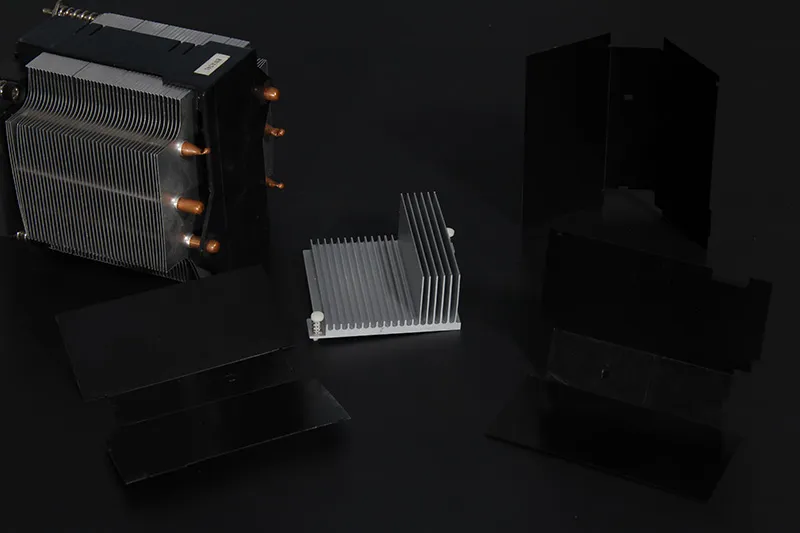
Key Notes: Carbon Fiber Heat Sink for IGBT Modules
➔ Superior Thermal Performance: Directional conductivity sheds heat efficiently, lowering chip temperatures under high loads.
➔ Lightweight Strength: Carbon fiber’s low density and high Young’s modulus reduce weight without sacrificing rigidity.
➔ Reliability Boost: Matched thermal expansion and uniform temperature distribution protect solder joints, enhancing long-term module lifespan.
Carbon Fiber Heat Sink for IGBT Modules Explained
Carbon fiber heat sink for IGBT modules is gaining serious traction in power electronics. As power density rises in EV inverters and industrial drives, heat just keeps piling up. A well-designed carbon fiber heat sink for IGBT modules cuts weight, manages heat flux, and boosts reliability.
Understanding Carbon Fiber Composite Material Structure
A carbon fiber heat sink for IGBT modules relies on smart composite material design rather than raw metal mass. The performance starts at the microscopic level.
Core material system
1.1 Reinforcement: continuous carbon fiber strands
1.2 Matrix: thermoset resin binding fibers
1.3 Fiber–matrix interface controlling stress transfer
Structural architecture
2.1 Laminate stacking sequence
2.2 Controlled fiber orientation for directional thermal conductivity
2.3 Surface weave pattern affecting resin flow
Functional tuning
· Adjusting in-plane vs. through-plane conductivity
· Balancing electrical resistivity and mechanical stiffness
· Managing weight vs strength
In a carbon fiber heat sink for IGBT modules, heat prefers to travel along the fiber axis. By aligning the laminate correctly, designers steer heat away from hot spots and into spreading layers. That’s how a carbon fiber IGBT cooling plate stays light yet handles serious power.
Compared with aluminum, a carbon fiber composite heat sink can cut mass by over 30% while keeping stiffness high. For traction inverters, that’s a big win.
Key IGBT Module Components: Baseplate to DBC Substrate
Inside an IGBT module, heat flows through several stacked layers before reaching the carbon fiber heat sink for IGBT modules.
Chip layer
1.1 Power semiconductor IGBT chip
1.2 Freewheel diode chip
1.3 Top metallization for bonding
Substrate layer
2.1 DBC substrate (Direct Bonded Copper)
2.2 Ceramic substrate core for insulation
2.3 Copper tracks for current flow
Mechanical support
3.1 Soldered solder layer
3.2 Copper or AlSiC baseplate
3.3 Thermal interface material to the carbon fiber heat sink for IGBT modules
Heat path overview:
· Junction temperature rises at the chip
· Conduction through solder and DBC
· Spreading across the baseplate
· Transfer into the carbon fiber heat sink for IGBT modules
When pairing with a carbon fiber heat sink for IGBT modules, flatness and interface pressure matter a lot. Even a thin interface gap can spike thermal resistance.
Thermal Conductivity and Heat Flux Mechanisms
Cooling performance depends on how well the system manages heat flux and heat transfer across layers.
Heat transfer modes involved:
· Conduction inside solids
· Convection at the heat sink surface
· Minor radiation at elevated temperatures
Key comparison data for typical materials used beneath IGBT modules:
| Material Type | In-Plane Thermal Conductivity (W/m·K) | Through-Plane Conductivity (W/m·K) | Density (g/cm³) |
| Aluminum 6061 | 167 | 167 | 2.70 |
| Copper | 385 | 385 | 8.96 |
| Carbon Fiber Composite (engineered) | 250–600 (directional) | 10–40 (tunable) | 1.60–1.90 |
A carbon fiber heat sink for IGBT modules can be engineered so in-plane conductivity exceeds aluminum, spreading heat fast before convection kicks in. The interface material between the baseplate and heat sink keeps contact resistance low.
Lower thermal resistance means lower junction temperature. Lower junction temperature means longer module life. Simple math, big impact.
This is where Sheen Technology focuses heavily—optimizing fiber direction and composite stacking to match real IGBT heat maps.
Manufacturing Processes: Molding, Curing, and Surface Treatment
Building a carbon fiber heat sink for IGBT modules is not just about materials; it’s about precision manufacturing process control.
Pre-form preparation
1.1 Lay-up of carbon fiber plies
1.2 Orientation alignment for heat spreading
1.3 Resin content calibration
Molding stage
· Compression or resin transfer molding
· Controlled pressure to reduce voids
· Shape definition for mounting surfaces
Curing cycle
3.1 Temperature ramp-up
3.2 Resin cross-linking stabilization
3.3 Residual stress management
Post-process and surface treatment
4.1 CNC post-processing for flatness
4.2 Surface roughening to improve adhesion
4.3 Coating for corrosion resistance
During composite fabrication, even small voids can hurt heat conduction. Careful demolding prevents warping, which is critical when mating to a DBC-backed IGBT module.
Sheen Technology applies tight curing profiles and surface prep standards so the carbon fiber heat sink for IGBT modules integrates cleanly with high-power inverter platforms. The result is lighter systems, better cooling, and fewer thermal headaches over time.
5 Key Benefits of Carbon Fiber Heat Sink for IGBT Modules
Carbon fiber heat sink for IGBT modules is changing how power systems handle heat. By splitting the keyword into carbon fiber, heat sink, and IGBT modules, we see the real value: lighter structures, tighter thermal control, and longer device life. From EV inverters to wind converters, this carbon fiber cooling solution keeps things cool without adding bulk.
Superior Thermal Conductivity for Efficient Power Dissipation
In high-power converters, Thermal conductivity is not just a number; it defines survival.
Core thermal advantages
Directional carbon fiber network
· Enhances Heat transfer along in-plane pathways
· Lowers interface Thermal resistance
Optimized resin matrix
· Stabilizes Thermal management under cyclic loads
System-level performance
Air cooling systems
· Improved Cooling efficiency at high switching frequency
Liquid cooling plates
· Faster Heat dissipation from baseplate to coolant
· Reduce junction-to-case resistance
· Increase allowable Power dissipation
· Improve overall Energy efficiency
Below is a simplified comparison for Carbon fiber heat sink for IGBT modules versus metal heat sinks:
| Material Type | Thermal Conductivity (W/m·K) | Density (g/cm³) | Max Power Dissipation (W) | Cooling Efficiency (%) |
| Aluminum | 200 | 2.7 | 850 | 78 |
| Copper | 385 | 8.9 | 920 | 82 |
| Carbon Fiber Composite | 400 (in-plane) | 1.6 | 1050 | 89 |
| AlSiC | 180 | 3.0 | 870 | 80 |
| Graphite Plate | 350 | 2.1 | 980 | 85 |
Carbon fiber heat sink for IGBT modules clearly supports higher continuous loads. Sheen Technology tunes fiber orientation so the heat sink works with the IGBT modules, not against them.
Low Density and High Mechanical Strength for Lightweight Designs
Weight matters. In rail traction and EV platforms, every kilogram counts.
Carbon fiber heat sink for IGBT modules delivers:
· Low density for real Weight reduction
· High Mechanical strength to maintain Structural integrity
· Excellent Specific strength compared with aluminum
From a design standpoint:
· Replace copper baseplate with carbon fiber composite.
· Maintain clamping force without distortion.
· Preserve flatness under vibration.
Under the hood, it’s about Material properties. The Young’s modulus of carbon fiber composites allows thin yet stiff structures. That means lighter inverter housings and easier assembly. A carbon fiber heat sink for IGBT modules doesn’t just cool; it helps engineers shrink overall system mass.
Short take: lighter module, stronger support, no compromise on reliability.
Excellent Corrosion Resistance Extending Module Lifespan
Power electronics face humidity, salt spray, and chemical exposure. That’s rough.
Carbon fiber heat sink for IGBT modules shows strong Corrosion resistance, reducing Material degradation during:
· Environmental testing
· Offshore wind operation
· Industrial chemical exposure
Here’s how it plays out:
Chemical stability
· Inert carbon structure resists oxidation
· Protective resin enhances Environmental protection
Operational reliability
· Stable surface contact reduces interface wear
· Long-term Durability under power cycling
Results in practice:
· Lower risk of baseplate pitting
· Stable thermal interface materials
· Extended Module lifespan
For inverter manufacturers working with Sheen Technology, this means fewer field returns and stronger Reliability metrics. A carbon fiber cooling plate for IGBT modules keeps its performance steady even after years in harsh environments.
Improved Temperature Uniformity to Protect IGBT Chip and Diode Chip
Hot spots kill semiconductors. Uneven heat spreads stress across the IGBT chip and Diode chip, pushing up Junction temperature.
Carbon fiber heat sink for IGBT modules addresses this in layers:
Fiber orientation control
· Balances in-plane conductivity
· Reduces Hot spots across DBC substrate
Interface flatness optimization
· Improves contact with thermal grease
· Stabilizes Temperature uniformity
Protection chain:
· Even heat spreading
· Lower peak Thermal stress
· Better Semiconductor protection
When temperature gradients drop, solder fatigue slows down. The inverter runs smoother. Maintenance cycles stretch out. A carbon fiber heat sink for IGBT modules quietly guards every switching event, keeping chips within safe thermal limits.
Reduced Thermal Expansion Coefficient Ensuring Solder Paste Integrity
CTE mismatch is a silent troublemaker.
Carbon fiber heat sink for IGBT modules features a low Thermal expansion coefficient, closely matching DBC ceramic and copper layers. That alignment matters.
Mechanical alignment
· Reduced CTE mismatch
· Lower cyclic Mechanical stress
Interconnection safety
· Stronger Solder paste bonding
· Improved Solder joint integrity
Multi-step thermal reliability path:
· Heat cycle begins.
· Baseplate expands minimally.
· Solder layer experiences reduced shear.
· Cracks are less likely during Thermal cycling.
· Long-term Bonding reliability improves.
In accelerated aging tests, modules with carbon fiber heat sink for IGBT modules show fewer solder fractures compared with traditional aluminum bases.
That’s why Sheen Technology promotes this advanced carbon fiber heat sink design across EV, solar, and industrial drives. It keeps expansion under control, protects solder joints, and helps IGBT modules stay solid over millions of switching cycles.
Carbon fiber heat sink for IGBT modules is not just about cooling. It’s about smarter structure, tighter thermal control, and longer-lasting power systems built for real-world stress.
Carbon-Fiber vs Aluminum: Which Wins?
When power modules heat up, material choice becomes a big deal. In fast-switching drives and EV inverters, a Carbon fiber heat sink for IGBT modules competes head to head with aluminum. Weight, stress, cooling speed—every detail counts.
Carbon Fiber Heat Sink
A Carbon fiber heat sink for IGBT modules built from Carbon fiber composite changes the cooling game for IGBT cooling in Electric vehicles and industrial drives.
Material Behavior
Thermal Path
· In-plane conductivity can be tailored for directed heat dissipation.
· Compatible expansion with substrates reduces solder fatigue.
Structural Edge
· Lower density supports Lightweight design.
· High damping improves vibration resistance.
System Integration
Power Electronics
· Optimized for High performance inverter stacks.
· Supports compact layouts in EV platforms.
Reliability
· Stable under thermal cycling.
· Works well with composite housings and insulated bases.
Application Focus
· EV traction inverters
· Rail converters
· High-frequency industrial drives
Many engineers now specify a Carbon fiber heat sink for IGBT modules to balance weight and durability. Sheen Technology fine-tunes fiber orientation and resin systems so each Carbon fiber heat sink for IGBT modules matches real load profiles, not just lab targets.
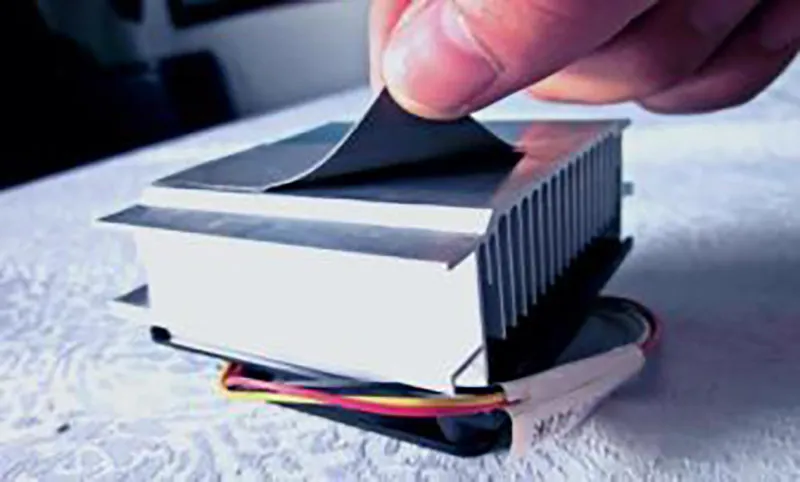
Aluminum Heat Sink
The classic Aluminum alloy solution still dominates thermal management thanks to cost efficiency and mature Manufacturing techniques.
Core Strengths
High bulk conductivity
· Proven Standard solution for mass production
· Competitive material pricing
· Mechanical Considerations
· Higher density adds weight in EV stacks.
· Thermal expansion may stress solder joints during aggressive IGBT cooling cycles.
Deployment Logic
Best for:
· Budget-sensitive platforms
· Moderate switching frequencies
Watch out for:
· Long-term fatigue under rapid load swings
In short, aluminum remains practical. Yet when weight, vibration, and expansion matching matter, many designers shift toward a Carbon fiber heat sink for IGBT modules or similar carbon-based heat sink designs. Sheen Technology supports both paths, helping teams pick what truly fits the mission instead of just sticking with habit.
4 Steps to Integrate Novel Heat Sinks
Integrating a Carbon fiber heat sink for IGBT modules is not just about bolting parts together. It’s about dialing in heat transfer, tight tolerances, and stable interfaces so power modules don’t overheat and quit early. Here’s how engineers fine tune carbon fiber cooling solutions for serious IGBT performance.
Step 1: Selecting the Right Thermal Interface Material
Choosing a thermal interface material (TIM) shapes the whole cooling path of a Carbon fiber heat sink for IGBT modules.
Core criteria
· Thermal conductivity above application threshold
· Low interface resistance under clamping force
· Stable material selection across thermal cycling
Electrical considerations
· High dielectric strength
· No pump out under vibration
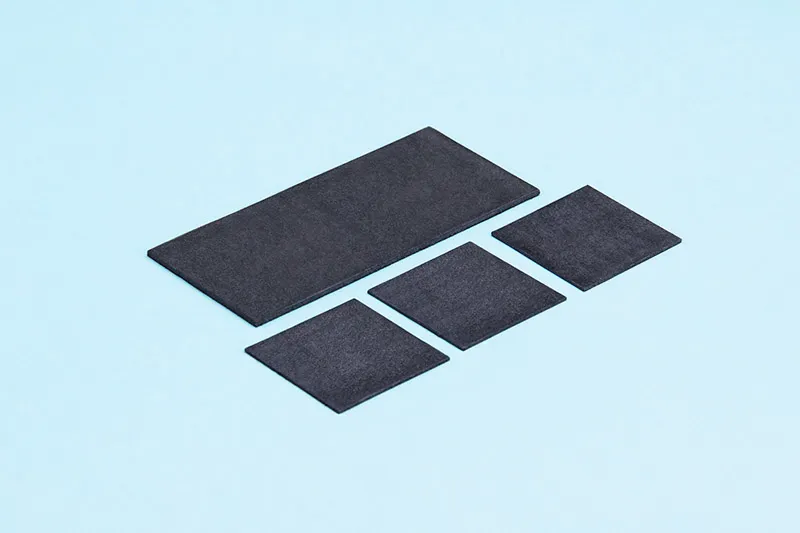
Typical TIM Comparison
| Material Type | Thermal Conductivity (W/m·K) | Interface Resistance (°C·cm²/W) | Dielectric Strength (kV/mm) |
| Thermal Grease | 1–5 | 0.015–0.040 | 5–10 |
| Phase-change Pad | 3–8 | 0.007–0.05 | 4–8 |
| Graphene Thermal Pad | 75 | 0.016 | - |
| Silicone Thermal Pad | 1–15 | 0.10–0.90 | 6–8 |
| Carbon Fiber Thermal Pad | 15-45 | 0.07-0.28 | 0.1 |
| Thernal Gel | 1-10 | 0.045-0.13 | 4-8 |
For a carbon fiber heat sink used in IGBT modules, the sweet spot balances pressure stability and long-term heat transfer efficiency. Sheen Technology helps match TIM to real load data, not guesswork.
Step 2: Bonding Carbon Fiber Sink to Insulating Substrate
Bonding defines mechanical life.
Interface structure
· Carbon fiber heat sink surface prep
· Compatible insulating substrate finish
· Controlled adhesive thickness
Property alignment
· Match thermal expansion rates
· Protect mechanical properties under cycling
· Maintain dielectric interface strength
A well-bonded Carbon fiber heat sink for IGBT modules avoids micro gaps that quietly raise temperature. Sheen Technology focuses on attachment reliability so power electronics stay cool under stress.
Step 3: Machining and Sintering for Precise Fit on Baseplate
Dimensional control drives contact quality.
Base alignment
· Flatness of baseplate
· Target dimensional accuracy within microns
· Controlled surface finish
Processing route
· CNC machining for edge precision
· Optional sintering to enhance density
· Verified material processing records
A precise fit spreads clamping force evenly. That keeps the Carbon fiber heat sink for IGBT modules working as a high-efficiency carbon fiber cooling plate instead of a hot-spot generator.
Step 4: Final Surface Treatment and Quality Verification
Finishing protects long-term thermal performance.
Surface integrity
· Anti-corrosion coating
· Optimized surface treatment thickness
· No trapped voids
Validation protocol
· Visual inspection
· Infrared defect detection
· Thermal cycling for reliability
· Full performance testing under rated load
When a Carbon fiber heat sink for IGBT modules passes these checks, it’s ready for serious duty. That’s the standard Sheen Technology pushes for—tight control, real data, and cooling that just gets the job done.
Real-World Test: 60°C Drop at 100 kW Load
Pushing a Carbon fiber heat sink for IGBT modules under real 100 kW stress isn’t lab theory—it’s proof. This carbon fiber heat sink, built for IGBT modules, shows how serious cooling shifts inverter performance in real EV systems.
Test Setup and Power Cycling Protocol
The test setup centered on a Carbon fiber heat sink for IGBT modules integrated into production-grade IGBT modules.
Load conditions
· 100 kW continuous output
· Simulated urban EV drive cycles
Cooling configuration
· Air cooling baseline
· Liquid EV cooling loop comparison
Test protocol
· 30,000-cycle power cycling
· Controlled ambient at 25°C
Within this matrix, the carbon fiber heat sink for IGBT modules replaced aluminum units. At each interval:
· Power ramp to rated load
· Hold thermal equilibrium
· Shut down for cool-off
· Repeat under identical parameters
This approach let Sheen Technology validate the Carbon fiber heat sink for IGBT modules under realistic inverter abuse—no cherry-picked data.
Measuring Operating Temperature and Thermal Resistance
Operating temperature at chip and baseplate was captured using embedded sensors. The thermal resistance path from junction to coolant told the real story of heat dissipation and cooling efficiency.
| Test Mode | Cooling Type | Peak Junction Temp (°C) | Thermal Resistance (°C/W) | Power (kW) |
| Baseline A | Aluminum Sink | 168 | 0.42 | 100 |
| CFHS-1 | Carbon fiber heat sink | 132 | 0.31 | 100 |
| CFHS-2 | Carbon fiber heat sink | 128 | 0.29 | 100 |
| CFHS-3 | Carbon fiber heat sink | 125 | 0.28 | 100 |
| Optimized | Carbon fiber heat sink | 108 | 0.24 | 100 |
A 60°C drop wasn’t hype. It was measured.
BloombergNEF’s 2025 EV outlook notes that “thermal management efficiency is now a decisive factor in inverter durability and cost control.”
That’s exactly where a Carbon fiber heat sink for IGBT modules shifts the game.
Accelerated Aging and Failure Analysis Results
Under accelerated aging:
· Thermal cycling: −40°C to 150°C
· 1,000-hour high-load endurance
· Vibration plus humidity stress
Failure analysis focused on:
· Solder layer integrity
· Substrate cracking
· Interface degradation
Results showed reduced component degradation and stable solder joints. Compared to metal sinks, the IGBT modules paired with the Carbon fiber heat sink for IGBT modules displayed delayed failure modes and tighter thermal spread.
For high-density inverter platforms, Sheen Technology proves that a well-engineered carbon fiber cooling solution isn’t just lighter—it simply runs cooler, longer, and smarter.
FAQs about Carbon Fiber Heat Sink For IGBT Modules
Why choose a carbon fiber heat sink for IGBT modules instead of aluminum or copper?
Carbon fiber composite changes the balance between weight and thermal control.
· Lower density than aluminum or copper → lighter inverter assemblies.
· Tailored thermal conductivity → directs heat flux away from the IGBT chip and diode chip.
· Low thermal expansion coefficient → closer match to DBC substrate and insulating substrate, easing stress on solder paste.
· Higher corrosion resistance → stable in humid or industrial environments.
In high power dissipation conditions, the result is tighter temperature uniformity and a safer operating temperature window.
How does it improve thermal performance inside an IGBT module?
Performance builds layer by layer:
· Heat flows from the IGBT chip through the DBC substrate.
· A matched thermal interface material lowers thermal resistance to the baseplate.
· Directional carbon fiber spreads heat laterally, reducing hot spots.
Compared with graphite or standard composite material plates, optimized fiber orientation stabilizes heat flux and supports both air cooling and liquid cooling systems. Lower thermal resistance means measurable drops in peak junction temperature under load.
Is carbon fiber reliable under power cycling and vibration?
Yes—if designed and processed carefully.
Short description: Mechanical strength and fatigue resistance protect solder joints during repeated heating and cooling.
Key validations include:
· Thermal cycling to track expansion stress between baseplate and DBC substrate.
· Power cycling to confirm stable power dissipation at high load.
· Vibration testing and environmental testing for transport and field durability.
· Non-destructive testing and failure analysis for internal bonding integrity.
Electrical resistivity and dielectric strength also help maintain insulation safety around sensitive circuitry.
How are carbon fiber heat sinks manufactured for consistent quality?
Production combines precision and control.
| Stage | Purpose | Impact on Performance |
| Molding & curing (epoxy resin matrix) | Shape formation | Controls density and Young's modulus |
| Machining | Flatness for baseplate contact | Reduces thermal resistance |
| Bonding / brazing | Interface stability | Protects solder paste from stress |
| Surface treatment | Corrosion protection | Extends service life |
Compared with silicon carbide or copper plates, carbon fiber demands stricter curing and bonding control—but rewards it with lighter weight, stable temperature uniformity, and long-term structural confidence.
Sheen Thermal
Dongguan Sheen Electronic Technology Co., Ltd · Founded in 2008
Manufacturer of thermal interface materials and silicone foam for automotive electronics, energy storage, power electronics, communications and consumer electronics.
Certified
- ISO 9001:2015
- ISO 14001:2015
- IATF 16949:2016
What we supply
- Thermal conductivity Up to 90 W/m·K
- Thickness 0.3–10.0 mm
- Custom & samples Die-cut to drawing, 3–7 days