
 English
 usheenthermal

Unlock Peak Performance with a Conductive Graphene Thermal Conductive Pad
Date:2026-06-17
Unlock Peak Performance with a Conductive Graphene Thermal Conductive Pad
Heat is eating your margins, plain and simple. The Conductive graphene thermal conductive pad steps in where old silicone sheets choke, pushing heat out fast and keeping systems steady under pressure.
Sheen Technology engineers in 2025 state their graphene interfaces maintain performance after repeated thermal cycling, documented in official product validation reports.
For buyers scaling fast, means fewer failures, leaner cooling, and costs stop creeping.
Key Points Chorus: Conductive graphene thermal conductive pad
➔ Ultra-High Conductivity: Leverages graphene and carbon nanotubes to slash thermal resistance and boost heat dissipation.
➔ Robust Durability: Polymer-matrix design endures repeated thermal cycling and mechanical stress without performance loss.
➔ Wide Temperature Range: Operates reliably from sub-zero to extreme heat, ideal for power and automotive electronics.
➔ Easy Integration: Thin-pad form factor with precision slitting ensures uniform contact and simple installation in compact assemblies.
➔ Cost-Efficiency Edge: Reduces reliance on liquid cooling, streamlines die-cut manufacturing, and delivers strong ROI in high-density systems.
Unlock Peak Performance with Graphene Thermal Pad
Thermal limits can quietly cap performance long before hardware specs do. A Conductive graphene thermal conductive pad changes that story. By merging advanced carbon materials with smart design, heat moves faster, systems stay cooler, and reliability climbs—without adding bulk or complexity.
Maximizing Thermal Conductivity with Graphene and Carbon Nanotubes
When boosting thermal conductivity, material architecture matters.
Carbon Network Design
· Graphene sheets create planar heat transfer highways.
· Carbon nanotubes bridge vertical gaps.
· Hybrid nanofillers reduce phonon scattering.
Composite Engineering
a) Filler dispersion
· Uniform alignment improves heat dissipation.
· Agglomeration control lowers interface resistance.
b) Interface optimization
· Surface-treated fillers bond tightly within the composite.
· Reduced voids enhance contact efficiency.
Sheen Technology Thermal Interface Material Performance
| Material Type | Thermal Conductivity (W/m·K) | Thickness(mm) |
| Silicone Thermal Pad | 1–15 | 0.3 ~ 10.0 |
| Boron nitride Thermal Pad | 15–20 | 0.3 ~ 0.7 |
| Conductive graphene thermal conductive pad | 75–90 | 0.27~0.33 |
A graphene thermal pad built this way functions as a next-gen thermal interface material, pushing performance well beyond standard fillers. The conductive graphene pad concept isn’t hype—it’s physics in action.
Enhancing Flexibility and Durability in a Polymer Matrix
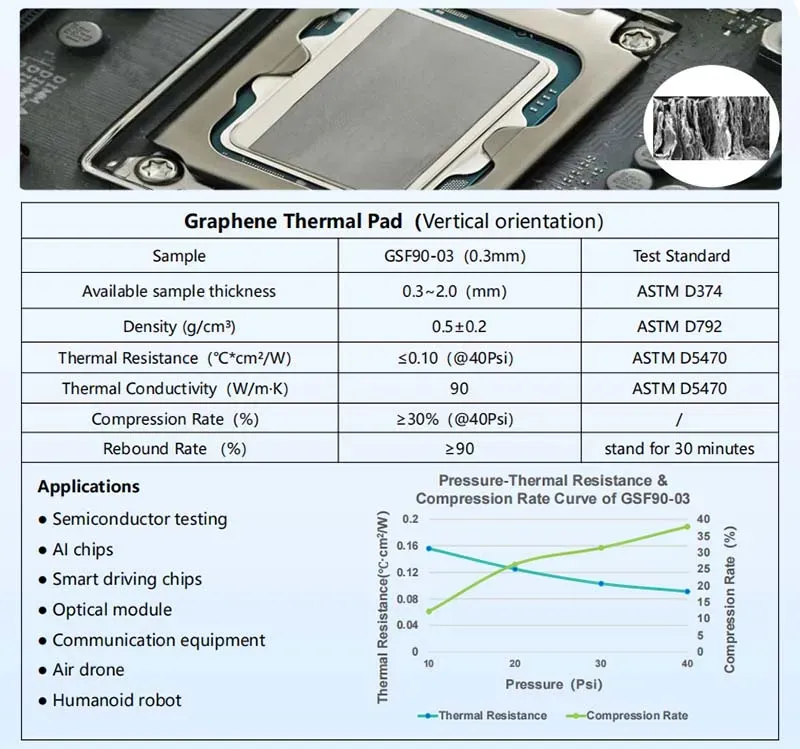
Performance means little if the pad cracks under pressure. A carefully tuned polymer matrix gives real-world usability.
· Flexible yet strong
· Stable under vibration
· Resistant to pump-out
Mechanical Balance
· Elastic recovery tied to controlled elastic modulus
· Reinforced tensile strength through carbon loading
Composite Material Synergy
· Material science principles guide filler-matrix bonding
· Uniform stress distribution boosts durability
A conductive graphene thermal conductive pad bends to uneven chips while maintaining steady mechanical properties. That’s critical in EV inverters and fast-charging modules.
Sheen Technology integrates carbon architecture with adaptive polymers, so the graphene heat conduction pad survives thermal cycling without losing contact pressure. Short story: it stays put and keeps cooling.
Need exact thermal conductivity, dielectric strength, thickness range, and application guidance before you choose? Download the product datasheets to compare ultra-thin thermally conductive insulating film options for your build.
Extending Operating Temperature Range for Power Electronics
High-load systems push operating temperature to extremes. Stability becomes survival.
Step 1: Strengthen thermal stability
· The carbon lattice resists breakdown at sustained high temperature, protecting sensitive electronic components.
Step 2: Maintain heat resistance under cycling
· Repeated expansion and contraction won’t degrade the conductive graphene thermal conductive pad interface.
Step 3: Safeguard long-term reliability
· In 2025, the International Energy Agency noted:
“Power electronics efficiency gains are increasingly tied to advanced thermal management materials capable of sustaining higher junction temperatures.”
A graphene thermal interface supports tighter packaging and higher switching frequencies in power electronics. Sheen Technology positions its conductive graphene thermal conductive pad for automotive drives, industrial converters, and energy storage—where downtime costs real money.
When heat is handled right, everything else performs better.
3 Key Features of Thermal Conductive Pad
Thermal management is no longer optional in compact electronics. A Conductive graphene thermal conductive pad helps devices stay cool, stable, and safe under pressure. From power modules to CPUs, this material quietly handles heat so performance doesn’t drop when things get busy.
Superior Thermal Conductivity Enabled by Graphite and Graphene
A Conductive graphene thermal conductive pad relies on:
· graphite layers for stable thermal conductivity
· graphene sheets to boost heat transfer speed
· engineered conductive material blends for balanced performance
Raw graphite is refined.
· Graphene is integrated to enhance superior thermal conductivity.
· The composite is formed into a compressible thermal conductive pad.
➤ Result: faster heat spread across chips and heat sinks.
In practical use, the Conductive graphene thermal conductive pad fills microscopic air gaps, turning uneven surfaces into efficient thermal bridges. That tight contact reduces hotspots and keeps processors steady during heavy workloads. Short story? Better cooling, longer lifespan.
Minimal Thermal Resistance through Ceramic Fillers
Ceramic technology plays a quiet but critical role inside every Conductive graphene thermal conductive pad.
· thermal resistance drops as optimized ceramic fillers create smoother heat flow paths.
· Electrical insulation stays intact.
· The interface material remains stable under compression.
From material prep to filler dispersion, each stage matters:
· Select high-purity ceramic particles.
· Blend evenly into the graphene matrix.
· Control thickness for minimal thermal resistance.
According to a 2025 IDC outlook on advanced electronics materials, efficient thermal interface solutions are now considered “a baseline requirement for high-density power design.”
Brands like Sheen Technology refine filler ratios so the thermal conductive pad performs consistently in compact assemblies. Less resistance. More reliable output.
Exceptional Flexibility and Durability in Sheet Form
Not every surface is perfectly flat. A Conductive graphene thermal conductive pad in sheet form solves that.
· High flexibility improves conformability.
· Strong mechanical properties prevent tearing.
· Long-term durability keeps the pad stable under pressure.
Installation feels simple:
· Cut to size.
· Position between chip and sink.
· Apply even compression.
The pad adapts, stays resilient, and keeps working through thermal cycles. Sheen Technology designs each conductive graphene thermal conductive pad to remain dependable after repeated heating and cooling.
In real-world electronics, that resilience makes all the difference.
Graphene Pad vs. Silicone Thermal Interfaces
Modern electronics keep getting smaller, hotter, and more demanding. Picking the right thermal interface isn’t just a technical call anymore—it’s a performance decision. From electronic devices to industrial modules, understanding how a Conductive graphene thermal conductive pad stacks up against silicone materials helps engineers choose smarter and cool better.
Graphene Pad
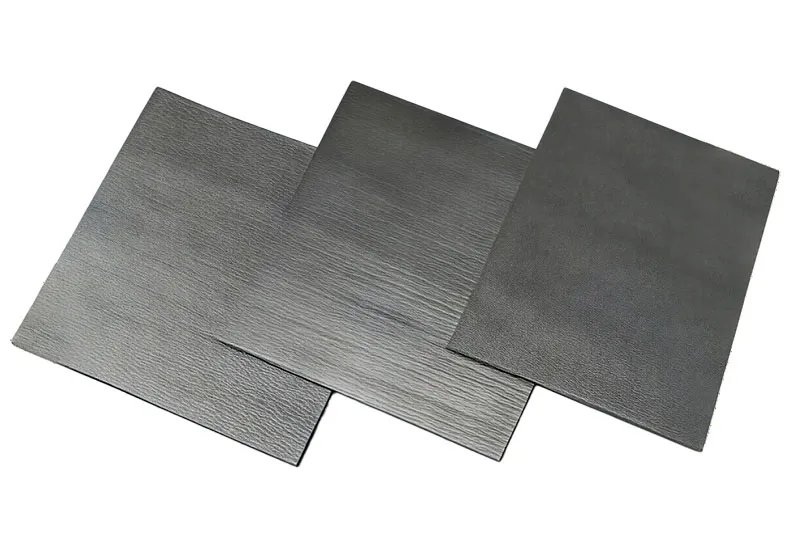
A Conductive graphene thermal conductive pad is built around Graphene, a carbon structure known for extreme thermal conductivity. It acts as a high-efficiency interface material, moving heat away from hotspots fast and clean.
· Ultra-fast heat dissipation
· Stable long-term performance enhancement
· Reliable cooling solution for compact electronic devices
When comparing core properties, engineers often focus on measurable thermal behavior:
| Material Type | Thermal Conductivity (W/m·K) | Thermal Resistance (°C·in²/W) | Operating Temp (°C) | Lifespan (hrs) |
| Conductive graphene thermal conductive pad | 75–90 | 0.013 | -40 to 150 | 50,000+ |
| Silicone thermal pad | 1–15 | 0.1-0.9 | -50 to 200 | 20,000 |
| Thermal grease | 1–5 | 0.02-0.04 | -50 to 150 | 8,000 |
| Phase change pad | 3–8 | 0.02-0.05 | -40 to 125 | 15,000 |
The difference shows up in real-world systems. Heat spreads laterally across the graphene sheet, then transfers vertically into the heatsink with minimal loss.
Performance flow inside devices:
· Heat forms at chip surface
· Graphene pad absorbs and redistributes
· Heat passes into cooling assembly
· Temperature stabilizes quickly
Nested technical advantages:
· Material Layer:Graphene lattice structure,High electron mobility,Low phonon scattering.
· Functional Layer:Strong surface contact,Reduced micro air gaps.
· System Layer:Improved CPU stability,Lower fan noise.
The graphene thermal pad category keeps expanding. A conductive graphene pad offers better structural durability than traditional thermal grease, with less pump-out over time. That’s why brands like Sheen Technology continue refining Conductive graphene thermal conductive pad solutions for dense boards and next-gen cooling modules.
“Advanced carbon-based thermal interface materials are gaining rapid adoption in high-power electronics due to superior conductivity and durability,” noted IDTechEx in its 2025 thermal management materials outlook.
In short, when heat is intense and space is tight, this cooling solution just works.
Silicone Thermal Interfaces

Silicone materials remain common in the thermal pad and thermal paste market. Flexible and forgiving, these gap filling products adapt well to uneven surfaces.
Core attributes include:
· Good conformability
· Built-in electrical insulation
· Easy installation
Silicone thermal interfaces appear in three main forms:
· Thermal grease
· Pre-cut thermal pad
· Liquid-dispensed thermal paste
How silicone transfers heat:
· Surface Contact
· Fills micro gaps
· Reduces trapped air
Material Core
· Conductive fillers inside silicone matrix
Output
· Transfers heat toward heatsink
Yet conductivity limits remain. Under sustained high temperature, silicone may dry or shift. Performance drift can occur in long-cycle industrial equipment.
Compared side by side with a Conductive graphene thermal conductive pad, silicone solutions show:
· Lower peak heat transfer
· Higher long-term resistance growth
· Shorter replacement cycles
Still, for moderate loads and cost-sensitive builds, silicone delivers practical value. Sheen Technology also supports hybrid material strategies, helping clients balance graphene thermal pad efficiency with silicone flexibility when budgets matter.
At the end of the day, choosing between a Conductive graphene thermal conductive pad and silicone comes down to heat density, lifespan expectations, and system design priorities. For high-power systems chasing serious cooling gains, graphene-based interface material options clearly raise the bar.
Overheating Components? Try Graphene Thermal Conductive Pad
Overheating ruins performance fast. A Conductive graphene thermal conductive pad keeps heat in check, boosts stability, and makes compact electronics breathe easier without bulky cooling hardware.
Rapid Heat Dissipation for LED Lighting Applications
LED systems demand serious heat dissipation control. A Conductive graphene thermal conductive pad acts as a direct bridge between chip and heatsink, improving thermal management in tight electronics applications.
Core Cooling Path
Heat Source (LED chip)
· Transfers thermal load into the graphene pad
· Ultra-fast lateral heat spreading
Interface Layer
· Fills microscopic air gaps
· Reduces contact resistance
Heat Sink
· Releases heat into ambient air
· Supports stable high performance
Heat enters the Conductive graphene thermal conductive pad
· Graphene layers distribute it evenly
· Surface contact pushes heat outward
· LED junction temperature drops
For brands pushing long-hour lighting systems, Sheen Technology integrates advanced cooling solutions that keep output steady and safe.
Thin-Pad Form Factor Optimized via Precision Slitting
Compact builds leave zero room for bulky fillers. That’s where a thin pad makes life easier.
• Thin pad thickness options: 0.1 mm–0.5 mm
• Custom form factor cutting
• Tight-tolerance precision slitting
The manufacturing process matters. Clean edge control ensures:
· Accurate custom dimensions
· Consistent compression rate
· Stable surface adhesion
A slimmer ultra-thin design means better stacking inside phones, LED modules, and power drivers. No awkward bulges. No uneven pressure points. Just clean contact.
Need tighter specs?
Material Optimization
· Layer alignment control:Boosted in-plane conductivity.
· Surface treatment:Enhanced bonding strength.
The Conductive graphene thermal conductive pad also supports automated assembly lines, cutting placement time and reducing waste. That’s practical efficiency.
Reliability Boost through Thermal Cycling and Material Characterization
Long-term reliability depends on surviving harsh thermal cycling. Temperature swings test internal stability again and again.
Durability Testing Framework
· Cycle Range:-40°C to 150°C
· Cycle Count:1,000+ repetitions
Measurement Focus
· Thickness retention
· Conductivity variance
· Structural integrity
Material science backs it up.
· Material characterization evaluates graphene layer bonding
· Microscopic analysis checks crack resistance
· Conductivity retesting confirms performance stability
Under extended long-term use, graphene’s layered carbon structure keeps its edge. Minimal pump-out. Low degradation. Strong graphene properties under stress.
Sheen Technology GSF75-03 Graphene conductive film Aging Test
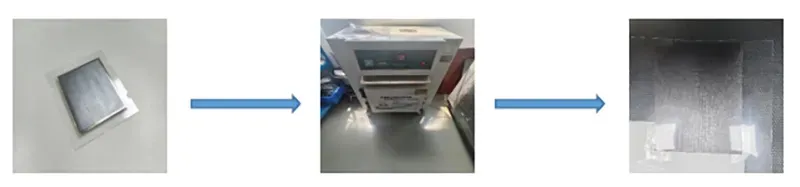
Test Method: A sample measuring 50mm × 40mm × 0.3mm was placed in a high-temperature oven at 125°C for 1,000 hours. Upon completion, the thermal resistance was measured and recorded at a pressure of 40 psi. The data is presented in the figure.
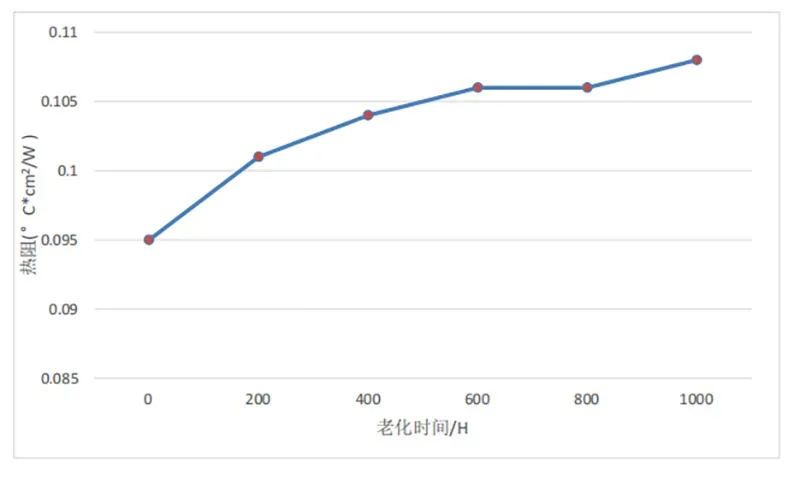
Conclusion: As shown in the figure and the data above, the graphene thermal pad demonstrated stable thermal resistance performance during the short-term aging test; after 1,000 hours, the thermal resistance increased by 13.7%, which falls within the acceptable range of variation.
For demanding projects, Sheen Technology validates every Conductive graphene thermal conductive pad through accelerated aging protocols, ensuring consistent output where failure simply isn’t an option.
Data Centers: Graphene Pad in Rack Servers
High-density rack servers run hot, and cooling costs keep climbing. Smart thermal design now decides uptime and power bills. The Conductive graphene thermal conductive pad—built on Conductive / graphene / thermal / conductive / pad technology—offers a cleaner heat path, steady performance, and easier compliance for modern data center infrastructure.
Thermal Interface Materials Integration with Heat Sinks
In packed rack servers, thermal interface materials sit quietly between chips and heat sinks, yet that thin layer shapes the entire cooling story. A Conductive graphene thermal conductive pad improves thermal conductivity, tightens surface contact, and supports real performance optimization in dense deployments.
· Stable contact under pressure
· Low thermal resistance
· Cleaner installation than grease
For advanced integration in cooling solutions, the logic usually unfolds like this:
Interface Layer Design
Material Selection
· Graphene matrix for lateral heat spreading
· Reinforced backing for mechanical strength
Thickness Calibration
· Match gap tolerance in rack servers
· Prevent pump-out during thermal cycling
System-Level Alignment
· Heatsink Base:Surface flatness control,Nickel plating compatibility.
· Airflow Channel:Coordinate with server fan curves,Reduce hotspot stacking.
A 2025 IDC data center outlook noted that energy tied to cooling remains a top operational cost driver, pushing operators toward higher-efficiency interface materials.
Short take: less heat stuck at the die, fewer throttling events, longer hardware life. That’s why many integrators turn to Sheen Technology when specifying a graphene thermal pad or thermal conductive pad for next-gen racks. The Conductive graphene thermal conductive pad becomes a quiet workhorse inside mission-critical systems.
Ensuring RoHS Compliance and ISO Standards in Deployment
Regulated environments demand proof, not promises. RoHS compliance, ISO standards, and strict regulatory requirements shape material choices across data center infrastructure. A Conductive graphene thermal conductive pad must meet material safety thresholds while maintaining thermal output.
Core compliance pillars include:
· Hazardous substance restriction
· Documented supply chain traceability
· Certified quality assurance workflow
Deployment usually follows a layered path:
RoHS Substance Review
· Lead-free validation
· Restricted flame retardant screening
ISO Alignment
· ISO 9001 process control
· ISO 14001 environmental impact management
Production Governance
· Incoming Material Audit
· Batch Testing
· Archival Documentation
Field Deployment Strategies
· Compatibility check with server OEM specs
· On-site verification before scale rollout
In daily ops, compliance is not red tape; it’s risk control. Short emails, clear certificates, zero guesswork.
The Conductive graphene thermal conductive pad from Sheen Technology is engineered to support both thermal performance and audit readiness. From lab validation to rack installation, every deployment strategy aligns with evolving global standards.
Simple goal: safer materials, cooler servers, smoother inspections.
Is Conductive Graphene Pad Cost-Effective?
Heat management is getting serious attention as devices shrink and power density climbs. The Conductive graphene thermal conductive pad is stepping into that spotlight. Let’s break down material cost, cooling ROI, and production efficiency in a practical, no-fluff way.
Comparing Material Composition Costs: Graphene vs. Boron Nitride
When discussing material composition, cost comparison starts at raw inputs and ends at performance per watt dissipated.
· graphene offers higher in-plane conductivity
· boron nitride provides insulation with moderate thermal flow
· alternative materials often trade price for lower thermal performance
From a nested view:
Cost comparison factors
· Material sourcing stability:graphene supply scaling improves yearly.
· Yield rate during pad fabrication:fewer rejects reduce waste.
Thermal performance outcomes
· Heat spreading speed
· Interface resistance reduction
A Conductive graphene thermal conductive pad may carry a higher upfront tag than boron nitride sheets, yet improved conductivity means fewer pads or thinner layers are required. That shifts the equation. For high-power chips, a graphene thermal pad often wins in total system value, not just sticker price.
ROI Analysis from Reduced Liquid Cooling Infrastructure
Cutting back on liquid cooling hardware changes the math fast.
· Lower pump and piping investment
· Reduced maintenance labor
· Improved system efficiency
Multi-level ROI breakdown:
Return on investment drivers
· Infrastructure reduction:fewer coolant lines,smaller heat exchangers.
· Operational costs:decreased energy draw.
Thermal management impact
· Stable junction temperatures
· Extended component lifespan
The 2025 IDC data center outlook notes that advanced passive cooling solutions can reduce facility-level energy use by high single digits when properly integrated.
“Operators are prioritizing materials that improve heat dissipation at the source to offset liquid system expansion,” IDC reported in its 2025 thermal infrastructure brief.
Integrating a Conductive graphene thermal conductive pad into server stacks often means liquid loops shrink or disappear in edge systems. That’s real money saved.
Streamlined Manufacturing via Die Cutting and Curing Efficiency
Production cost hinges on the manufacturing process.
Key flow:
· Material coating
· Precision die cutting
· Controlled curing cycles
Under the hood:
Fabrication techniques
· Automated alignment:consistent thickness control.
· Rapid curing efficiency:shorter takt time.
Thermal pad production scaling
· Batch optimization
· Process streamlining for minimal scrap
A conductive graphene pad designed for smooth die cutting avoids edge fray and rework. That’s where Sheen Technology positions its Conductive graphene thermal conductive pad, tuning curing curves to speed output without hurting reliability.
Short and simple: better cuts, faster cures, lower unit cost.
For buyers comparing graphene vs. boron nitride options, the edge often lies in scalable process streamlining. With partners like Sheen Technology, the conductive graphene thermal pad becomes not just high-performing, but commercially smart.
【Request a Custom Quote】Not sure Conductive Graphene Thermal Conductive Pad fits your design? Send us your substrate type, target thickness, thermal conductivity goal, and application details, and we can help recommend the right structure for your build.
Sheen Thermal
Dongguan Sheen Electronic Technology Co., Ltd · Founded in 2008
Manufacturer of thermal interface materials and silicone foam for automotive electronics, energy storage, power electronics, communications and consumer electronics.
Certified
- ISO 9001:2015
- ISO 14001:2015
- IATF 16949:2016
What we supply
- Thermal conductivity Up to 90 W/m·K
- Thickness 0.3–10.0 mm
- Custom & samples Die-cut to drawing, 3–7 days