
 English
 usheenthermal

Edge-Sealed Graphene Thermal Pads vs. Paste: Which Wins?
Date:2026-08-10
Edge-sealed graphene thermal pads are edging out messy paste, and the reason is simple: inconsistency is costing you uptime, labor, and sleep.
Paste can hit strong temps on day one, but shop-floor variation, pump-out, and rework creep in fast when volumes spike.
IDC, Gartner highlight reliability in thermal management.
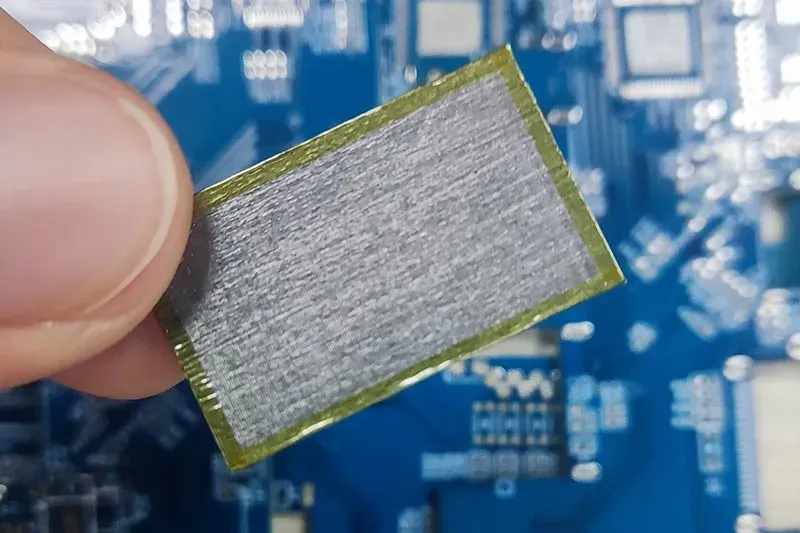
Key Insights: Edge-sealed Graphene Thermal Pads
➔ Superior Conductivity: Graphene’s high thermal conductivity and carbon nanotube networks slash thermal resistance for rapid heat dissipation.
➔ Enhanced Durability: Edge sealing shields against oxidation, pump-out, and contamination, maintaining consistent performance over thermal cycles.
➔ Effortless Reliability: Pre-formed sheets and gaskets ensure uniform thickness, clean installation, and stable temperature control in CPUs, GPUs, and power modules.
Why Edge-Sealed Graphene Thermal Pads Are Rising in Electronics
Edge-sealed graphene thermal pads are getting real traction because heat is the quiet killer in modern electronics. As chips push harder, old-school materials just can’t keep up. By blending graphene, sealing tech, and smarter manufacturing, these pads improve heat dissipation, stability, and lifespan—especially where performance and reliability actually matter day to day.
How Graphene’s Thermal Conductivity Beats Traditional Polymers
Core comparison:
- graphene → ultra-fast heat transfer paths
- polymers → slower, more resistive flow
Material behavior
- thermal conductivity in graphene reaches thousands W/m·K
- polymers sit drastically lower
Application effect
- reduced hotspots,smoother heat dissipation
- thinner layers,better surface contact
Quick data snapshot from Sheen Technology:
| Material / Product | Filler In-Plane κ (W/m·K) | Composite Through- Plane K (W/m·K) | Test Method |
| Edge-Sealed Graphene Pad | 500–3,000 (graphene filler) | 75-90 | ASTM D5470 |
| CNT-Enhanced Pad | 600–1,000 (CNT filler) | - | ASTM D5470 |
| Silicone Pad (Al₂O₃) | 30–40 (alumina filler) | - | ASTM D5470 |
| Phase-Change Material | N/A (flowable) | 3–8 | ASTM D5470 |
| Thermal Paste | N/A (particulate) | 1–5 | ASTM D5470 |
That’s why edge sealed graphene thermal pads outperform typical fillers in tight builds. Need thermal conductivity, thermal resistance, dielectric strength, thickness tolerance, and long-term reliability data for edge-sealed graphene thermal pads? Download the product datasheets to compare graphene pads, thermal paste, gap fillers, and carbon nanotube-enhanced materials for data centers, power electronics, CPU cooling, and semiconductor packaging.
Edge Sealing’s Role in Enhancing Pad Durability
Edge sealing blocks oxygen, dust, and fluid ingress
Protection layers
- outer encapsulation
- internal material protection
Mechanical gains
- improved mechanical stability
- less cracking under cycling
Long-term behavior
- stable durability
- consistent long-term performance
Tighter seal. Less drift. Better reliability.
Brands like Sheen Technology push sealed graphene thermal pads that hold shape even after repeated heating cycles—something unsealed pads struggle with.
Adoption in Data Centers and Power Electronics
In data centers and power electronics, heat isn’t optional—it’s constant.
Demand drivers
- rising high-performance computing loads
- denser servers and semiconductors
Performance gains
- tighter thermal control
- improved cooling technology efficiency
Industry use
- GPUs
- EV power modules
- industrial converters
Edge sealed graphene thermal pads slide neatly into these systems, cutting thermal throttling. Sheen Technology has been active here, especially where uptime equals money.
CVD and Exfoliation Driving Nanomaterial Innovations
→ Production paths shaping nanomaterials:
- CVD process:controlled graphene synthesis
- exfoliation:scalable,cost-friendly
Nested impact:
- Manufacturing:better material innovation,smoother surfaces,consistent thickness
- Integration:easier bonding in advanced pads,improved manufacturing processes
Cleaner sheets. Fewer defects. Better thermal flow.
This is why edge-sealed graphene thermal pads—and similar graphene thermal pads—are becoming a go-to choice, with Sheen Technology aligning production methods to keep quality tight and scalable.
Struggling With CPU Overheating? Try Graphene Pads
Quick heads-up: overheating isn’t just annoying—it throttles speed and shortens lifespan. Edge-sealed graphene thermal pads bring cleaner installs and cooler chips, especially when you’re pushing clocks or running long sessions.
Thermal Resistance Relief: Faster Heat Dissipation for CPUs
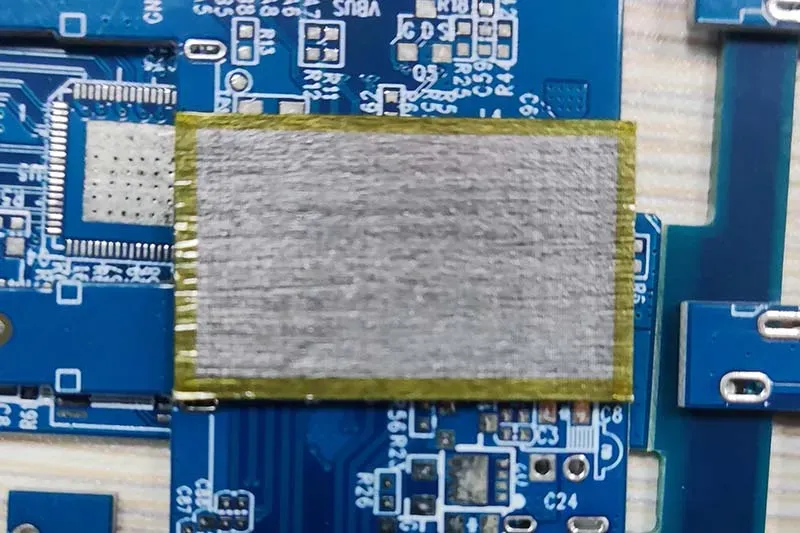
At the core, thermal resistance drops when edge-sealed graphene thermal pads sit flush between die and heatsink. That tighter interface boosts heat transfer and heat dissipation, so CPU cooling feels immediate and temperature reduction is steady.
What improves:
- cooling efficiency under bursts
- steadier thermal performance in sustained loads
1) contact → 2) spread → 3) release
Each step benefits from edge sealing that prevents pump-out.
Interface layer
- edge sealed graphene pads: uniform thickness
- micro-gap fill: fewer air pockets
Heatsink path
- faster lateral spread
- quicker exhaust to fins
Sheen Technology tunes surface finish so Edge-sealed graphene thermal pads keep that low resistance over time.
“Advanced TIMs with graphene fillers show measurable gains in junction-to-case resistance under continuous workloads,” notes a 2025 semiconductor cooling brief.
Production-Line Installation Consistency
No goo, no guesswork. thermal sheets and thermal gaskets make simplified installation real—just place, align, done.
perks:
- mess-free handling
- consistent pressure
- easy application
Multi-step flow:
1) peel liner
2) place edge sealed graphene pads
3) mount cooler
Under the hood:
- Fit & finish:clean edges prevent squeeze-out,repeatable thickness = reliable contact
- User side:user-friendly feel,quick swaps during upgrades
Sheen Technology offers Edge-sealed graphene thermal pads pre-cut for common sockets, trimming install time.
Enhanced Reliability: Stable Temperature Performance Under Load
When workloads spike, stable temperature matters. Edge-sealed graphene thermal pads hold thermal stability, keeping consistent performance even under load.
Short takes:
- fewer hot spots
- less drift over hours
- quieter fans
Deep dive:
- graphene network resists breakdown → durability
- edge seal reduces drying and migration
System impact
- sustained clocks
- improved long-term use
Choose Edge-sealed graphene thermal pads (or graphene thermal pads, edge sealed variants) to lock in enhanced reliability without babysitting temps.
Graphene Pads Vs. Traditional Paste Performance
Picking between modern cooling gear can feel like splitting hairs, yet the gap shows up fast once heat builds. Edge-sealed graphene thermal pads bring consistency, while paste leans on fresh application quality. Brands like Sheen Technology push pad design forward, making the whole edge sealed graphene pad conversation less theoretical and more practical.
Edge-Sealed Graphene Thermal Pads
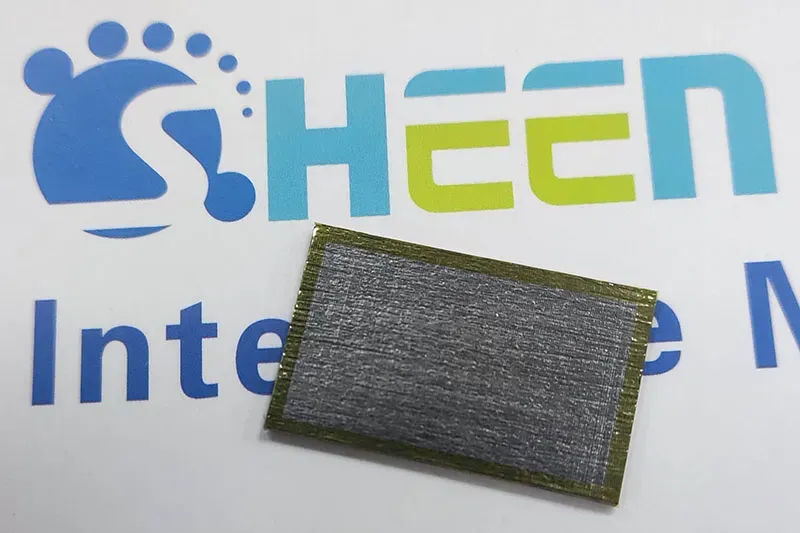
Core material focus
- Graphene layers boost thermal conductivity, pushing efficient heat transfer across the interface material
- Stable structure keeps thickness uniform, so your cooling solution doesn’t shift under pressure
Performance over time
- Edge sealing locks shape in place,Prevents pump-out during thermal cycling
- Maintains contact across CPU and GPU hotspots,High reusability compared to paste
Practical benefits
- Clean install, no spread guesswork
- Works consistently in laptops, consoles, and desktops
Edge-sealed graphene thermal pads from Sheen Technology keep things predictable. No messy reapplication, no slow decline—just steady performance from an edge sealed graphene pad that holds its ground.
Thermal Paste
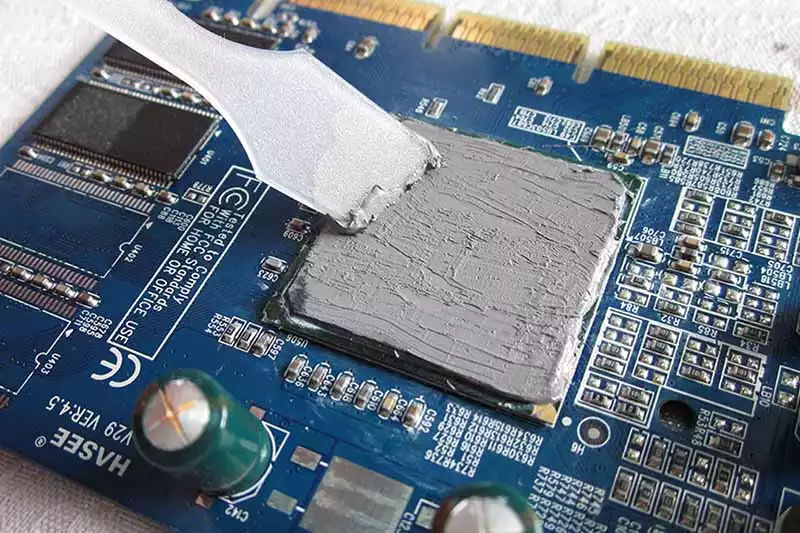
Thermal paste, or thermal grease, still dominates basic CPU cooling and GPU cooling setups, mostly because it starts strong. A fresh layer fills micro gaps between chip and heat sink, lowering resistance right away.
1) Application depends on method
- Dot, spread, or line—each changes coverage
- Viscosity affects how well it settles
2) Performance drift shows up
- Drying over time
- Pump-out under heat cycles
- Shifts during mounting pressure changes
3) Long-term trade-offs
- Requires reapplication
- Curing time can delay peak efficiency
| Parameter | Edge-Sealed Graphene Pad | Thermal Paste (Grease) | Engineering Implication |
| Thermal Conductivity (W/m·K) | 75-90 | 1–5 | Pad advantage for high-κ formulations |
| Thermal Resistance (°C·cm²/W) | <0.10 | 0.10-0.97 | Paste: lower initial Pad: more stable aged |
| Thickness (μm / mm) | 0.3-2.0 | 0.05 | Pad: predictable BLT Paste: thinner but variable |
| Oxidation Resistance | Edge-sealed: excellent | N/A (not carbon-based) | Edge sealing critical for carbon TIMs |
| Pump-Out Resistance | Excellent (solid, no flow) | Poor–Moderate (thermal cycling) | Pad: long-term stability Paste: reapplication risk |
| Production Consistency | High (pre-formed, fixed thickness) | Low–Moderate (dispense-dependent) | Pad: SPC-friendly Paste: operator-dependent |
| Service Life (estimated) | 5–10 years (sealed) | 1–3 years (drying, pump-out) | Pad: lower TCO for long-lifecycle products |
Sheen Technology highlights how edge-sealed graphene thermal pads outperform paste once time enters the equation. Paste wins the sprint; pads win the marathon. → Download Full Comparison Whitepaper.
3 Benefits Of Graphene Thermal Pads
Edge-sealed graphene thermal pads are quietly changing how devices stay cool, from gaming rigs to power modules. By blending graphene material with smart sealing, these pads keep heat under control while staying reliable over long runs.
Superior Heat Dissipation Through Carbon Nanotube Networks
Core flow logic
- Material layer:graphene material fused with carbon nanotubes builds a dense nanostructure,boosts thermal conductivity and stabilizes heat flow
- Interface behavior:Edge-sealed graphene thermal pads reduce lateral leakage,graphene thermal pads push faster heat transfer across chips
Result
1) Heat enters the pad
2) Carbon nanotube graphene thermal pads spread it instantly
3) Edge sealing prevents loss, keeping heat moving outward
| Material Type | Thermal Conductivity (W/mK) | Heat Flow Stability | Application Fit |
| Silicone Pad | 3–8 | Medium | Basic electronics |
| Edge-sealed graphene thermal pads | 75–90 | Very High | High-power chips |
Sheen Technology integrates this network so performance doesn’t dip mid-session.
Consistent Thickness Ensuring Uniform Contact Pressure
Contact mechanics
thickness control
- keeps pressure distribution steady
- improves surface contact
Interface sealing
- edge-sealed graphene thermal pads fill micro gaps
- enhance gap filling across uneven dies
Short notes:
- steady contact pressure = lower resistance
- graphene thermal pads stay flat, no pump-out
- smoother thermal interface behavior
Edge-sealed graphene thermal pads maintain balance: no hotspots, no weird pressure zones, just even cooling.
Long-Term Reliability and RoHS Compliance
Durability chain
- Material stability:supports long cycles,resists cracking and drying
- Compliance layer:uses non-toxic materials,meets RoHS compliance and environmental standards
Multi-step lifecycle:
- Install edge-sealed graphene thermal pads
- Maintain consistent long-term performance
- Extend product lifespan without maintenance
Sheen Technology focuses on pads that last, not just cool, keeping devices safe while meeting modern compliance rules.
Mass Production: Pad Consistency Advantages
Quick reality check—when scaling Edge-sealed graphene thermal pads, consistency is the difference between smooth installs and thermal headaches. This cluster breaks down how tight process control, smart inspection, and certified workflows keep graphene pads stable, repeatable, and ready for real-world electronics.
Automated Lamination and Edge Sealing for Uniform Layers
Core flow built on automation and tuned lamination process
Layer stacking
- graphene sheets aligned via manufacturing equipment
- pressure + heat stabilize graphene materials
Edge finishing
- edge sealing technology locks boundaries
- prevents fray, boosts layer uniformity
Output impact
- steady thickness across edge-sealed graphene pads
- fewer voids in graphene thermal pads
Sheen Technology integrates closed-loop controls so Edge-sealed graphene thermal pads stay consistent batch to batch.
Inline Quality Control with Surface Roughness Monitoring
Quality isn’t guessed—it’s measured mid-line using inline inspection and tight monitoring systems. For thermal interface materials, small defects spike resistance, so continuous defect detection matters.
Key checkpoints mix quick scans with deeper reads:
- thickness drift alerts
- surface roughness thresholds
- feedback for process optimization
Data snapshot:
| Metric | Target | Measured Avg | Tolerance | Impact |
| Thickness (µm) | 50 | 49.8 | ±1.0 | contact stability |
| Roughness (Ra µm) | 0.8 | 0.82 | ±0.1 | interface resistance |
| Void Rate (%) | 0.5 | 0.4 | ≤0.6 | heat flow |
| Edge Integrity (%) | 99 | 99.2 | ≥98 | durability |
| Defect Density (/cm²) | 2 | 1.6 | ≤3 | yield |
That’s how edge sealed graphene thermal interface pads keep low resistance in real installs.
ISO-Certified Manufacturing for High-Volume Semiconductor Packaging
- Align with ISO certification and strict manufacturing standards
- Scale via high-volume production lines tuned for graphene thermal pads
- Validate for semiconductor packaging integration
- Maintain quality management loops
- Expand with production scalability for global demand
Edge-sealed graphene thermal pads represent a meaningful advancement in TIM technology, bridging the gap between carbon-based materials' exceptional intrinsic conductivity and the practical requirements of volume electronics manufacturing: consistent thickness, long-term reliability, and production-line compatibility.
For OEM thermal engineers and procurement teams evaluating TIM options for high-reliability, high-volume products, the comparison with thermal paste ultimately reduces to three decision variables: production consistency requirements, expected product service life, and total cost of ownership including rework and field failure costs. Sheen Technology's application engineering team is available to support product evaluation, performance modeling, and production integration.
→ Contact Sheen Technology for an Edge-Sealed Graphene Pad Evaluation
Sheen Thermal
Dongguan Sheen Electronic Technology Co., Ltd · Founded in 2008
Manufacturer of thermal interface materials and silicone foam for automotive electronics, energy storage, power electronics, communications and consumer electronics.
Certified
- ISO 9001:2015
- ISO 14001:2015
- IATF 16949:2016
What we supply
- Thermal conductivity Up to 90 W/m·K
- Thickness 0.3–10.0 mm
- Custom & samples Die-cut to drawing, 3–7 days