
 English
 usheenthermal

Understanding Thermal Pad Hardness: Shore A, Compressibility & Material Selection for Electronic Assemblies
Date:2026-08-12
“What does hardness refer to in thermal pads? It’s resistance to indentation and deformation—often expressed as Shore A—and it can make or break compression, contact, and assembly consistency.
ASTM D2240 defines standardized durometer hardness testing for rubber and elastomeric materials, giving production teams a recognized basis for comparing material hardness.
Softer isn’t automatically cooler, and harder isn’t automatically better. Conductivity, pressure, bond-line thickness, and fit still call the shots. For volume sourcing, hardness belongs beside tolerances, qualification, and lot consistency.”
Quick Answers: What does hardness refer to in thermal pads?
➔ Hardness Defined: Shore A durometer per ASTM D2240 indicates pad resistance to indentation and deformation under mounting pressure.
➔ Performance Balance: Softer pads boost conformability and gap filling; harder pads resist puncture and ensure consistent assembly.
➔ Quality Control: Pair hardness with thermal conductivity, bond-line thickness, and standards (JEDEC, RoHS) for reliable sourcing and volume consistency.
What Does Hardness Refer To In Thermal Pads?
In practical terms, thermal-pad hardness tells you how strongly a pad resists being pressed or indented. That simple material property affects fit, contact, and heat flow. So, when choosing thermal pads, hardness matters—but the number only makes sense alongside compression, thickness, and mounting conditions.
Hardness Defined: Shore A and Modulus Explained
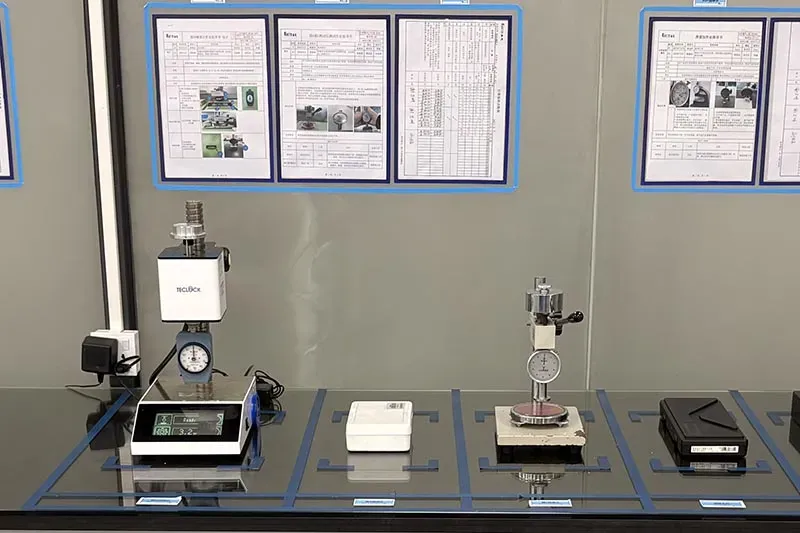
What does hardness refer to in thermal pads? Two related properties help answer it: Shore A hardness and modulus.
- Shore A is an indentation measurement commonly made using ASTM D2240.
- A lower reading on this durometer scale generally means a softer elastomer.
- A higher reading indicates greater resistance to indentation.
Modulus describes how strongly a material resists deformation under load.
- It is not simply another definition of hardness.
- Together, modulus and durometer hardness give designers a better feel for how a pad behaves when clamped down.
In plain terms, a soft thermal pad usually gives more easily under pressure.
How Compressibility and Conformability Influence Contact
Compressibility and conformability determine how well a pad settles into the real-world interface between parts. This is where hardness gets practical.
- Mounting pressure compresses the pad.
- The pad accommodates component-height differences through gap filling.
- Good conformability follows small bumps, dips, and surface texture.
- Better surface contact can displace insulating air pockets and improve contact with the heat sink.
A softer pad may conform readily, but going too soft can create handling or thickness-control issues. So, what does hardness refer to in thermal pads? It partly signals how easily that physical adjustment happens.
Relating Density and Elasticity to Thermal Impedance
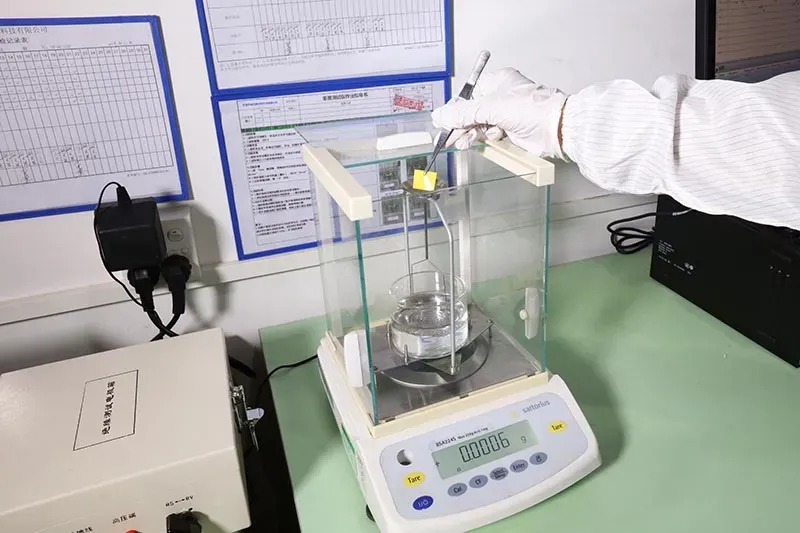
Hardness alone does not predict thermal impedance. Pad behavior comes from several interacting material properties.
Density can reflect polymer composition and filler loading.
- Filler choice can influence thermal conductivity.
- Density itself should not be treated as a direct conductivity rating.
Elasticity affects recovery after compression.
- Compression changes bond-line thickness and interface contact.
- Those changes can alter heat transfer and practical thermal performance.
In short, thermal pad hardness describes mechanical resistance, while density, elasticity, conductivity, thickness, and contact conditions collectively govern thermal results.
Uneven Heat Dissipation? Choose The Right Hardness.
Put simply, hardness describes how firmly a pad resists compression and adapts to surfaces. Picking the right thermal interface material is a big deal: too firm can leave tiny air gaps, while too soft can create handling issues. Sheen Technology matches hardness with real assembly needs.
Matching Shore A Hardness to Power Electronics and LED Lighting
For power electronics and LED lighting, Shore A hardness influences how closely the pad follows package and heat-sink variations. What does hardness refer to in thermal pads? Here, it means the resistance felt as clamping force compresses the material.
Start with the hardware:
- Fragile LEDs generally benefit from lower force and good component conformity.
- High-power packages may permit firmer mounting.
Check pad behavior:
- Lower hardness can improve compression deflection around uneven features.
- Proper contact supports heat transfer efficiency without piling excessive stress onto components.
In short, thermal pad hardness needs to fit the actual gap and clamp design, not just look good on a datasheet.
Balancing Thermal Conductivity and Puncture Resistance
What does hardness refer to in thermal pads? It is also a practical balance between softness, filler content, and mechanical integrity. High ceramic loading can raise thermal conductivity, yet formulation changes can affect flexibility and puncture resistance.
| Example design target | Sheen product | Conductivity (W/m·K) | Shore A | Pad thickness (mm) |
| Conformable contact | Silicone thermal pad | 1-15 | 40-60 | 0.3-10.0 |
| Firm interface | Boron Nitride thermal pad | 16 | 60-80 | 0.2-5.0 |
These are illustrative design examples showing typical trade-off relationships, not guaranteed product specifications. Sheen Technology provides product-specific Shore A and conductivity data per ASTM D2240 and ASTM D5470.
Need Shore A hardness, thermal conductivity, compressibility, dielectric strength, and RoHS/REACH compliance data for thermal pads? Download the product datasheets to compare soft pads, hard pads, silicone elastomers, and boron nitride-filled thermal interface materials for CPUs, ASICs, power electronics, and data center cooling.
Impact on Long-term Reliability in Data Centers
Data-center hardware keeps cooking through sustained loads and repeated temperature swings, so hardness selection affects more than initial contact.
During installation, suitable conformity fills tolerance gaps without placing needless force on packages.
- Good compression supports consistent thermal contact.
- Controlled hardness limits permanent deformation.
During service, cycling can expose thermal degradation and compression-set weaknesses.
- Stable contact helps control heat stress.
- Lower thermal impedance supports system performance and operational stability.
Over time, preserving pad geometry can improve long-term reliability and component lifespan in data centers.
Material checks can become part of preventive maintenance for serviceable equipment.
That makes thermal pad hardness a design variable worth qualifying under real temperatures, pressure, and cycling conditions.
5 Steps To Test Thermal Pad Hardness
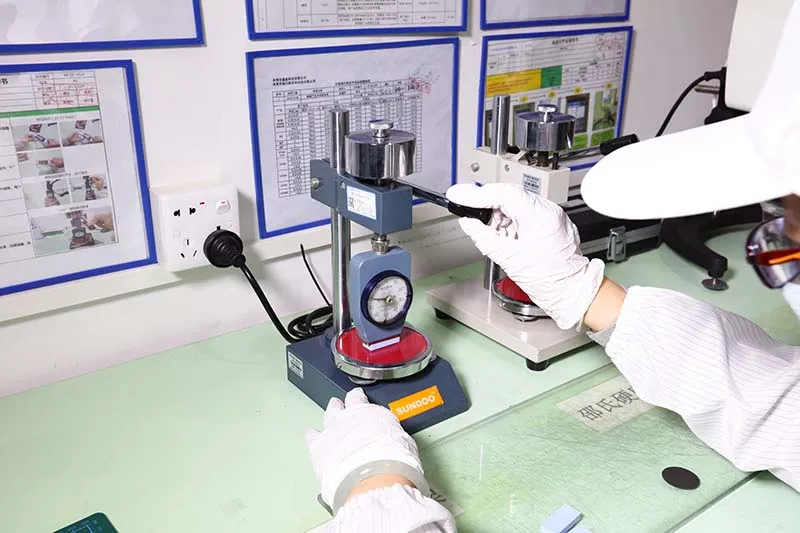
What does hardness refer to in thermal pads? In practical terms, hardness describes how strongly a pad resists indentation and compression, while flexibility affects how well it fills tiny gaps. Testing this material property takes more than giving a pad a quick squeeze. The five checks below connect sample quality, hardness, stiffness, surface behavior, and compliance records.
Step 1: Preparing Samples via Die-cutting and Sheet Material
Reliable samples start with controlled preparation.
Prepare representative sheet material
- Condition pieces at the specified temperature and humidity.
- Use controlled die-cutting for repeatable sample fabrication.
- Reject torn edges, contamination, and unusual thickness.
- Avoid adhesive backing that could skew readings.
Good material processing keeps the comparison fair. Pretty straightforward.
Step 2: Measuring Shore A Hardness per ASTM D2240
What does hardness refer to in thermal pads? For Shore A hardness, it means resistance to indentation under defined conditions.
Set up the durometer according to ASTM D2240.
- Meet specimen thickness and conditioning requirements.
Keep contact pressure and reading time consistent.
Compare the average hardness measurement on the same hardness scale.
This testing standard makes pad-to-pad comparisons much more meaningful.
Step 3: Evaluating Modulus with ASTM D5470 Equipment
Hardness and stiffness are related, but not interchangeable.
Use ASTM D5470 testing equipment for thermal transmission measurements.
- If the fixture records force and displacement, examine compression behavior separately.
- Apply a defined mechanical method before reporting modulus evaluation.
Review the resulting stress-strain curve.
- Relate elasticity to material stiffness and the required mechanical property.
Step 4: Verifying Tackiness and Conformability after Curing
After the curing process, check tackiness and conformability under specified pressure.
- Surface checks:Assess material adhesion and each relevant surface property.
- Mechanical checks:Run flexibility testing and inspect recovery after compression.
A pad can feel soft yet conform poorly, so this verification matters.
Step 5: Documenting Results for JEDEC and RoHS Compliance
What does hardness refer to in thermal pads? The answer only carries weight when test conditions and traceability are recorded.
- Results documentation:Log hardness, dimensions, conditioning, compression, and thermal data.
- Compliance records:Keep JEDEC compliance reliability evidence separate from RoHS compliance declarations.
Maintain material certification, data recording, and compliance reporting tied to applicable industry standards and regulatory requirements.
→ Request Thermal Pad Testing Methodology Documentation
Soft Vs. Hard Pads: Which Is Better?
In practical terms, hardness describes how easily a pad compresses under force and adapts around components. Choosing soft or hard material affects contact, assembly, and cooling, so Sheen Technology considers surface shape and mounting pressure together.
Soft Pads
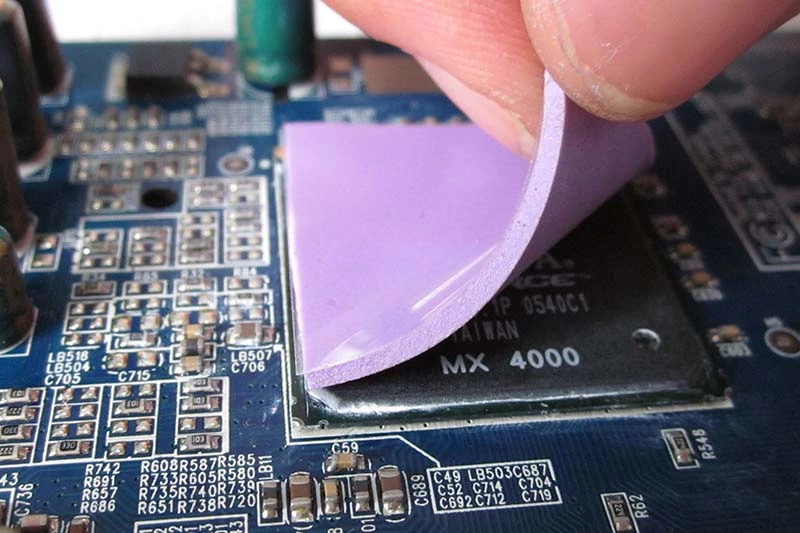
Soft thermal pads favor Compressibility and Conformability, useful when component heights vary or mating surfaces aren't perfectly level. In plain terms, softer material squishes into tiny voids with less force. That makes thermal pad hardness a key consideration around fragile electronics.
For uneven assemblies:
- Strong Gap filling helps reduce trapped air, which is a poor heat conductor.
- Good contact with Irregular surfaces can improve the practical thermal path without cranking down fasteners.
For sensitive hardware:
- Low pressure can suit Delicate components that should not carry heavy mechanical loads.
- Greater Flexibility makes positioning easier around small height differences.
For production:
- Very soft material may stretch, wrinkle, or change thickness during handling.
- Sheen Technology can match pad softness with compression targets when dimensional control matters.
So, what does hardness refer to in thermal pads? For a soft grade, it mainly indicates how readily the material deforms under a given load.
Hard Pads
Hard pads trade easy deformation for Rigidity, giving assemblies steadier thickness and stronger Structural support. That can be a neat fit when surfaces are flat and mounting loads are controlled.
- Flat surfaces generally suit firmer pads because little material movement is needed to establish contact.
- High pressure may be necessary to close microscopic gaps. Too little force can leave air pockets and raise thermal resistance.
- Durability and Wear resistance can help during handling or assemblies exposed to repeated mechanical stress.
| Property | Soft Pad (Shore A 10–30) | Hard Pad (Shore A 50–70) | Engineering Implication |
| Compressibility (% at 50 psi) | 25–40% | 5–15% | Soft: better gap filling Hard: tighter BLT control |
| Conformability | Excellent (fills irregularities) | Limited (requires flat surfaces) | Soft: uneven surfaces Hard: precision-machined surfaces |
| Handling | May stretch/wrinkle during placement | Dimensionally stable during assembly | Hard: preferred for automated pick-and-place |
| Mounting Pressure Required | Low (10–30 psi) | High (30–80 psi) | Soft: fragile components Hard: robust assemblies |
| Best Application | LED, uneven modules, low-pressure designs | CPU lid, flat heatsinks, controlled-clamping | Selection depends on assembly, not performance |
Hardness, then, is not the same thing as thermal conductivity. Effective Heat dissipation depends on conductivity, thickness, contact quality, and compression working together. Sheen Technology treats pad hardness as a mechanical property that should match the real assembly rather than a simple “harder is better” score.
CPU and ASIC Hardness Selection
What does hardness refer to in thermal pads? In practical terms, pad hardness describes resistance to compression and how readily a thermal interface material conforms to mating surfaces. What does hardness refer to in thermal pads? It also points to assembly behavior: softer pads fill gaps easily, while firmer grades tolerate pressure without squishing out. Sheen Technology helps match hardness with electrical, mechanical, and cooling needs.
Ensuring Dielectric Strength Around Microprocessors and ASICs
For microprocessors and ASICs, hardness should be considered alongside dielectric strength, rather than treated as proof of insulation quality.
Electrical protection
- Check specified voltage breakdown at the pad thickness used in the real assembly.
- Maintain enough electrical insulation around exposed leads and other semiconductor devices.
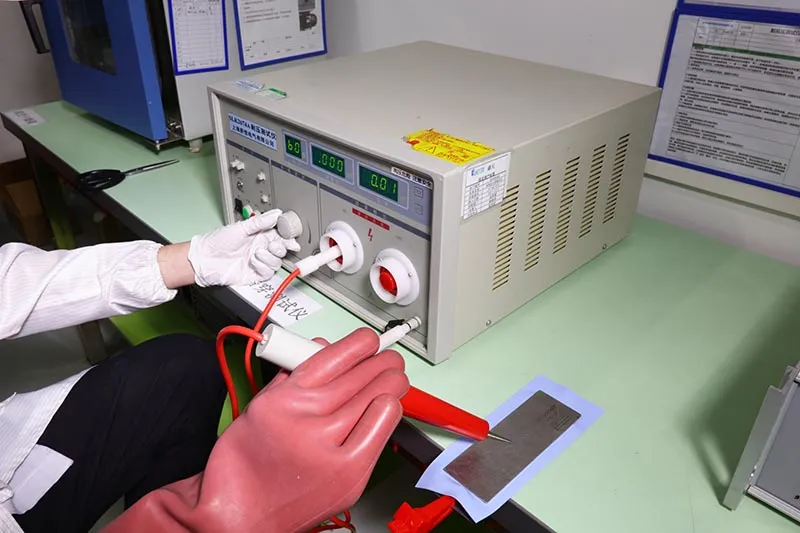
Mechanical fit:A softer thermal interface material can conform around uneven parts. Pretty handy, but excessive compression may leave too little insulating thickness.
So, what does hardness refer to in thermal pads? Here, it mainly tells designers how the material will compress and make contact, not how much voltage it can safely withstand.
Optimizing Thermal Cycling Stability under High Operating Temperatures
Repeated thermal cycling puts the pad through a fairly rough routine as parts expand and contract.
Set the expected operating temperature and clamping load.
- Select hardness that preserves contact during temperature fluctuations.
- Check thermal stability at both temperature limits.
Review aging behavior.
- Low permanent set supports consistent heat dissipation.
- Excessive material degradation may raise thermal resistance.
- Good elastic recovery can reduce thermal fatigue caused by repeated cycling.
In this context, thermal pad hardness is really about retaining useful compression over time.
Choosing Silicone- or Boron Nitride-Filled Elastomers for Voltage Regulators
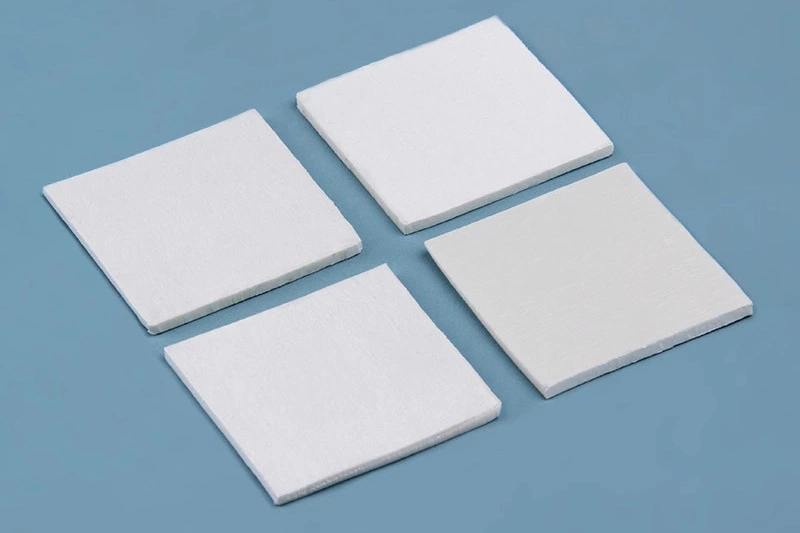
For voltage regulators, silicone elastomers are popular because flexibility and temperature resistance make assembly less fussy.
Material choice
- Silicone supports conformability and steady heat transfer.
- Boron nitride filler materials can raise thermal conductivity while maintaining electrical insulation.
Design trade-offs
- Higher filler loading changes material composition and can make a pad firmer.
Thermal pad hardness — measured as Shore A per ASTM D2240 — is a critical but often oversimplified specification parameter. The engineering value of hardness data emerges only when correlated with:
- assembly clamping pressure and component coplanarity;
- pad thickness and target compression percentage;
- thermal conductivity at the installed BLT;
- long-term compression set behavior under thermal cycling.
Treating hardness as one variable in this multi-parameter system enables informed material selection that balances thermal performance with mechanical reliability. Sheen Technology supports this engineering process with ASTM-referenced test data, application-specific hardness and compression recommendations, and product samples for in-situ validation.
→ Request Thermal Pad Evaluation Samples with Hardness Documentation
Sheen Thermal
Dongguan Sheen Electronic Technology Co., Ltd · Founded in 2008
Manufacturer of thermal interface materials and silicone foam for automotive electronics, energy storage, power electronics, communications and consumer electronics.
Certified
- ISO 9001:2015
- ISO 14001:2015
- IATF 16949:2016
What we supply
- Thermal conductivity Up to 90 W/m·K
- Thickness 0.3–10.0 mm
- Custom & samples Die-cut to drawing, 3–7 days