
 English
 usheenthermal

How Graphene Thermal Conduction for Smartphones Prevents Overheating
Date:2026-06-19
How Graphene Thermal Conduction for Smartphones Prevents Overheating
Graphene thermal conduction for smartphones is quickly shifting from lab talk to boardroom urgency—because overheated devices choke performance, drain batteries, and spark returns. Slim designs keep squeezing airflow out, while chips keep running hotter, leaving manufacturers stuck between speed and stability.
Graphene steps in as a practical fix, spreading heat fast without bulking up modern builds.
Whispered Insights: Graphene thermal conduction for smartphones Essentials
➔ Atomic Highways: CVD graphene’s lattice enables ultrahigh thermal conductivity for rapid phonon transport and heat evacuation.
➔ Ultra-Thin Spreaders: Laminated graphene films lower processor junction temperatures, outperforming traditional graphite layers in stability and flexibility.
➔ Composite Interfaces: Graphene-enhanced TIMs boost heat flux management by reducing thermal resistance between chips and heat sinks.
➔ Flexible Shielding: Roll-to-roll graphene films guard display panels from hot spots, maintaining uniform device temperatures without added bulk.
Graphene Thermal Conduction For Smartphones Uses Atomic Highways To Cool
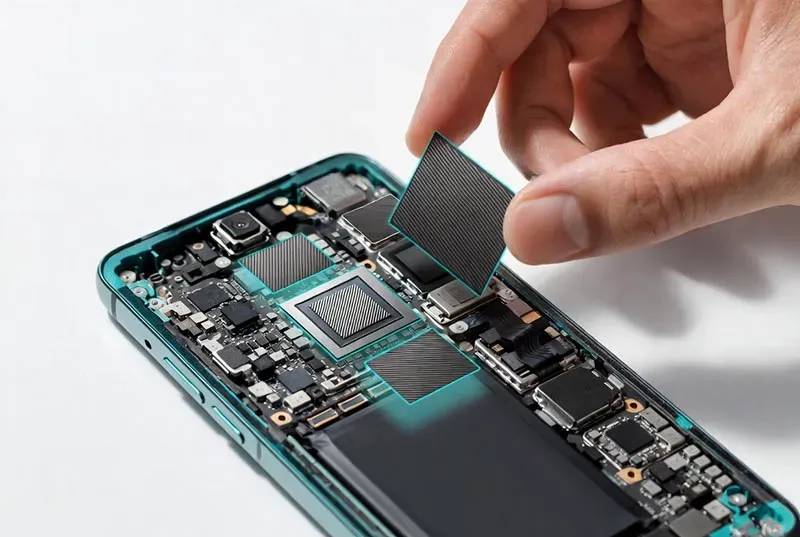
Smartphones keep getting thinner, faster, and hotter. That heat has to go somewhere. Graphene thermal conduction for smartphones is turning into the quiet hero behind smooth gaming and stable 5G performance. From atomic design to chip-level cooling, heat control now moves at near light speed.
Inside the Atomic Highway: CVD Graphene’s Thermal Conductivity
At the core of Graphene thermal conduction for smartphones sits CVD graphene, grown on copper through controlled methane-based material synthesis. Its tightly bonded atomic structure forms a near-perfect crystal lattice, which changes how heat transport behaves at the nanoscale.
Key thermal traits:
· High in-plane thermal conductivity
· Low phonon scattering
· Fast lateral heat spreading
Atomic Layer Behavior
· Carbon bonds:Strong covalent links,Minimal lattice defects.
· Phonon Flow:Reduced boundary scattering,Long mean free path.
· Thermal Performance:Lab scale: >2000 W/m·K.
· Device scale: optimized for stability.
“Advanced carbon materials are redefining thermal pathways in compact electronics,” notes a 2025 materials outlook from IDTechEx, pointing to smartphone integration as a leading driver.
For brands like Sheen Technology, mastering this atomic highway means pushing Graphene thermal conduction for smartphones from lab promise to daily reliability.
Graphene Film as a Heat Spreader for Processor Units
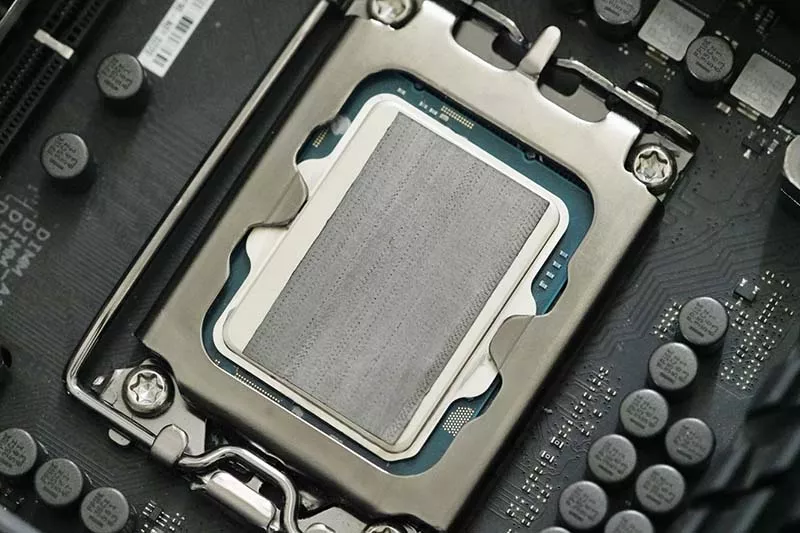
When chips spike under gaming loads, graphene film acts as an ultra-thin heat spreader directly over processor units. In Graphene thermal conduction for smartphones, this layer evens out hotspots fast.
Benefits:
· Lower junction temperature
· Better thermal dissipation
· Stable device performance
Under the hood:
· Chip Surface:Direct graphene contact,Reduced interface gaps
· Lateral Spread:Rapid in-plane conduction,Balanced temperature map
· Cooling Stack Integration:Vapor chamber pairing,Graphite hybrid backup
Compared with standard graphite sheets, graphene-based thermal management offers higher flexibility and stronger thermal stability. Sheen Technology integrates graphene heat spreaders tuned for tight smartphone layouts, boosting Graphene thermal conduction for smartphones without adding bulk.
Short and simple: less heat choke, more frame rate.
Graphene Composites in Thermal Interface Materials for Heat Flux Management
Between chip and heat sink sits a quiet bottleneck: interface resistance. Graphene composites blended into thermal interface materials improve contact, which sharpens heat flux control in electronic packaging.
Core enhancements in Graphene thermal conduction for smartphones include:
Composite Structure
· Filler Network:Aligned graphene flakes,Continuous conductive paths.
· Matrix Binding:Stable polymer base,Improved material properties.
Multi-step performance effect:
· Fills microscopic gaps
· Lowers thermal resistance
· Enhances vertical conduction
· Extends component lifespan
Quick wins:
· Better heavy-load stability
· Reduced throttling
· Longer battery health
In plain terms, graphene-enhanced interfaces help smartphones stay cool when life gets busy. Sheen Technology applies engineered graphene composites to refine Graphene thermal conduction for smartphones, keeping heat flow smooth, controlled, and ready for tomorrow’s processors.
4 Hidden Secrets Of Graphene’s Phone-Cooling Magic
Phones heat up fast. Gaming, streaming, fast charging—it all stacks heat inside a tight shell. That’s where Graphene thermal conduction for smartphones changes the game, turning trapped heat into controlled flow and keeping performance steady without bulky cooling parts.
Nanoplatelets Amplify Heat Dissipation Efficiency
When it comes to Graphene thermal conduction for smartphones, nanoplatelets act like tiny highways for heat. Inside modern boards and battery packs, they create layered escape routes that improve heat dissipation and overall thermal efficiency.
Core Function
· Formation of conductive bridges inside graphene-enhanced layers
· Faster lateral heat spread across PCB surfaces
· Reduced peak temperature near processors
Application Zones
· Processor modules
· Battery cells
· Power management chips
Performance Impact
· Lower internal resistance
· Enhanced cooling technology integration
· Smarter thermal management without adding weight
Within Sheen Technology Solutions, dispersion control matters:
· Uniform alignment increases conduction paths
· Stable bonding prevents material drift
· Thin coatings maintain slim device profiles
All of this supports graphene cooling for phones that feel cool even under pressure. That’s the quiet power behind Graphene thermal conduction for smartphones—simple structure, serious amplification.
Graphene Oxide Boosts Thermal Resistance and Durability
Not all heat problems are about spreading warmth. Some are about surviving it. Graphene oxide improves thermal resistance while reinforcing durability in composite layers used for encapsulation and shielding.
Here’s how it plays out in real metrics:
| Material Type | Thermal Conductivity (W/m·K) | Mechanical Strength (MPa) | Heat Transfer Stability (%) |
| Standard Polymer | 0.2 | 45 | 68 |
| Polymer + GO (0.5%) | 1.1 | 62 | 81 |
| Polymer + GO (1.0%) | 2.4 | 75 | 89 |
| Polymer + RGO Hybrid | 4.8 | 83 | 93 |
Quick takeaways:
· Higher GO loading improves heat transfer
· Composite blends strengthen material properties
· Structural reinforcement boosts mechanical strength
In thermal conduction for smartphones, durability matters just as much as speed. Devices bend, drop, and heat-cycle daily.
Sheen Technology fine-tunes oxidation levels so graphene thermal conduction remains stable even after thousands of charge cycles. That’s long-term reliability, not just lab numbers.
Flexible Films Protect Display Panels from Hot Spots
Displays are thin. Heat isn’t. That mismatch causes hot spots, especially near brightness drivers and touch ICs. Flexible graphene films fix this through a clear sequence:
· Step 1: Ultra-thin flexible films are produced via roll processing.
· Step 2: Films are laminated beneath display panels without affecting clarity.
· Step 3: Heat spreads laterally across the film surface.
· Step 4: Temperature equalizes, improving heat distribution and screen lifespan.
Why it works:
· Even spread reduces localized strain
· Balanced temperature supports thermal protection
· Stable cooling enhances smartphone displays during gaming
In plain terms, screen cooling stops that “top-corner burn” feeling. Graphene thermal conduction for smartphones keeps visuals sharp and surfaces comfortable. It’s subtle, but you feel it after long streaming sessions.
Reduced Graphene Oxide Prevents Thermal Throttling
Performance drops when chips overheat. That’s thermal throttling, and it’s a buzzkill. Reduced graphene oxide (RGO) helps prevent it by restoring high conductivity while keeping structural flexibility.
Conductivity Restoration
1.1 Chemical reduction improves electron mobility
1.2 Enhanced pathways support processor cooling
1.3 Faster heat escape reduces overheating prevention cycles
Integration with Power Systems
2.1 Embedded under CPU layers
2.2 Linked to vapor chambers
2.3 Reinforced with adhesive composites
Device-Level Benefits
3.1 Stable frame rates
3.2 Extended peak performance
3.3 Improved device performance under load
In heat management for phones, RGO acts like a pressure valve. When workloads spike, it moves thermal energy fast enough to avoid frequency drops. That’s the backbone of advanced graphene thermal conduction and a core strength behind Sheen Technology’s cooling platforms.
At the end of the day, Graphene thermal conduction for smartphones isn’t hype. It’s layered science—nanoplatelets, graphene oxide, flexible films, and RGO working together. And when tuned right, your phone just feels cooler. Simple as that.
Astonishing Graphene Sheets Outperform Metallic Coolers Every Time
Modern devices keep pushing limits, and heat is the silent troublemaker. From gaming spikes to 5G streaming, Graphene thermal conduction for smartphones is reshaping how brands fight rising temperatures.
Graphene Sheets
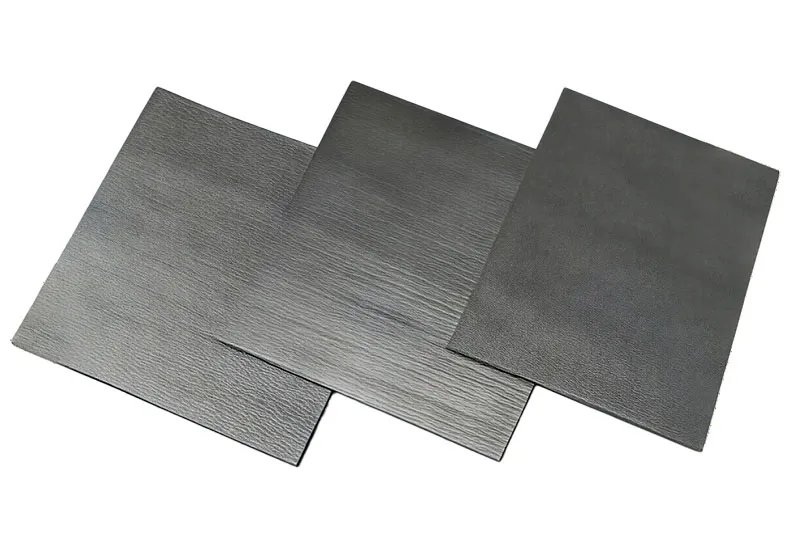
When people talk about Graphene thermal conduction for smartphones, the real magic sits inside ultra-thin Graphene layers engineered for serious thermal conduction and sharp heat dissipation.
· Lighter than copper
· Flexible like film
· Built for tight internal layouts
Here’s how it plays out in real devices:
· Heat spreads fast across the nanomaterial surface.
· Energy moves outward instead of building up.
· Overheating prevention kicks in before performance drops.
At the design level:
· Core Advantage:High in-plane conductivity,Even heat transfer.
· Device Impact:Slimmer smartphones,Stable gaming frame rates.
· Performance Layer:Sustained high performance,Lower power drain.
Graphene thermal conduction for smartphones also improves battery stability. Phones stay cool under pressure. No random dimming. No sudden lag.
Sheen Technology integrates graphene thermal management films that optimize internal airflow paths while reducing bulk. The result feels simple: faster response, cooler touch, longer play.
Metallic Coolers
Traditional Metallic coolers rely on copper heat sinks and pipes for thermal management.• Solid conduction
• Proven durability
• Predictable manufacturing
But there’s a catch.
· Added weight limits to thin designs.
· Heat spreads slower compared to graphene layers.
· Performance throttling appears under sustained loads.
In many phones, metallic plates create hot zones. That impacts long gaming sessions and camera recording.
Recent industry analysis reflects the shift:
“Advanced materials such as graphene-based films are accelerating adoption in consumer electronics thermal solutions due to their lightweight profile and superior conductivity,” notes a 2025 IDTechEx report on thermal interface materials.
Compared with traditional cooling, Graphene thermal conduction for smartphones offers broader surface diffusion instead of point-based transfer. That difference matters in compact builds.
Sheen Technology applies graphene sheets to replace bulky copper layouts, reducing device thickness while improving heat dissipation efficiency. The outcome? Cooler hands. Smoother multitasking. Stronger sustained output.
In the ongoing debate between metal and graphene, Graphene thermal conduction for smartphones keeps proving it’s not hype—it’s a smarter thermal upgrade.
【Request a Custom Quote】 Share your device type, target operating temperature, thickness target, and thermal performance goals. Sheen Technology can help evaluate the right graphene thermal solution for your smartphone design.
Sheen Thermal
Dongguan Sheen Electronic Technology Co., Ltd · Founded in 2008
Manufacturer of thermal interface materials and silicone foam for automotive electronics, energy storage, power electronics, communications and consumer electronics.
Certified
- ISO 9001:2015
- ISO 14001:2015
- IATF 16949:2016
What we supply
- Thermal conductivity Up to 90 W/m·K
- Thickness 0.3–10.0 mm
- Custom & samples Die-cut to drawing, 3–7 days