
 English
 usheenthermal

Essential Heat Dissipation for AI Server Chips for 2026
Date:2026-06-21
Essential Heat Dissipation for AI Server Chips for 2026
Heat dissipation for AI server chips is no longer a backroom engineering headache; it's the make-or-break purchase keeping racks from cooking themselves and budgets from quietly bleeding out.
Buyers are now juggling coolants, interface materials, and full-on liquid systems, where one bad call can spike downtime, maintenance costs, and energy bills faster than anyone can explain it.
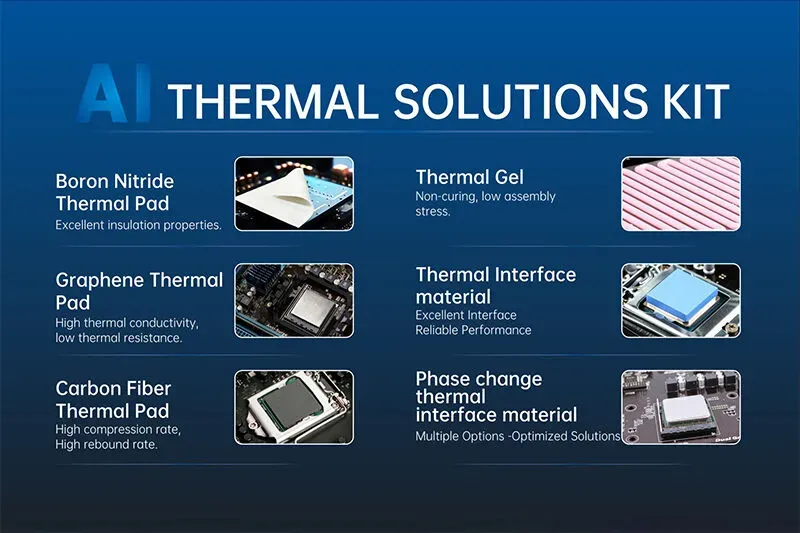
Key Points: Heat Dissipation for AI Server Chips
➔ Select optimal interface materials (thermal paste, liquid metal, Graphene sheets) to minimize contact resistance and junction temperatures.
➔ Balance coolant choice: glycol-water mixtures for cost-effective cold plates versus mineral oil or fluorocarbons for immersion safety.
➔ Ensure mounting precision: choose copper or aluminum baseplates, apply correct torque, and verify with dielectric immersion tests.
➔ Evaluate long-term reliability: monitor outgassing in gap fillers and compression stability of liquid metals.
➔ Consider advanced spreaders (graphene, boron nitride) and substrates (ceramic, silicon interposers) for high-density rack deployments.
2026 Forecast: Dissipation Needs Up 50% By Volume
AI racks are running hotter than ever, and Heat dissipation for AI server chips is now a boardroom topic, not just an engineering headache. As chip power climbs past 800W, AI server chip cooling, AI chip heat management, and advanced interface materials are scaling fast. The market feels the pressure.
Thermal paste and liquid metal driving interface volume surge
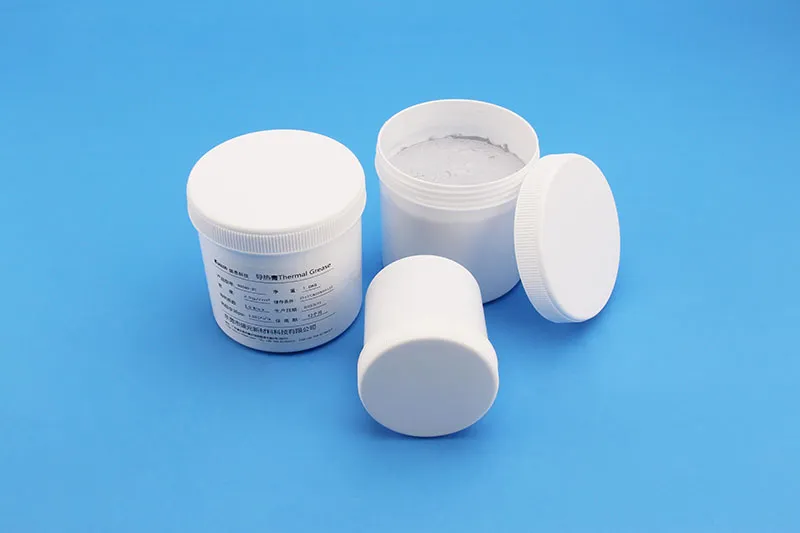
Demand for thermal paste and liquid metal is rising because tighter packaging leaves zero room for sloppy heat transfer. In Heat dissipation for AI server chips, the interface material decides if heat escapes or gets trapped.
· Higher thermal conductivity reduces junction spikes
· Greater volume consumption per rack
· Improved dissipation stability under load swings
Liquid metal pushes conductivity beyond 70 W/m·K, while next-gen paste blends chase consistency over raw numbers. For Heat dissipation for AI server chips, consistency wins uptime.
Sheen Technology supports hyperscale clients with tailored interface stacks tuned for AI server thermal stress.
【Download Datasheet】Review the product datasheet for thermal paste, liquid metal, graphene sheets, and phase change materials.
Graphene sheets and phase change materials in high-density arrays
In dense GPU trays, hotspots pop up fast. Managing Heat dissipation for AI server chips now relies on layered spreading:
Material Layer
Graphene sheets
· High in-plane conductivity
· Thin profile for compact trays
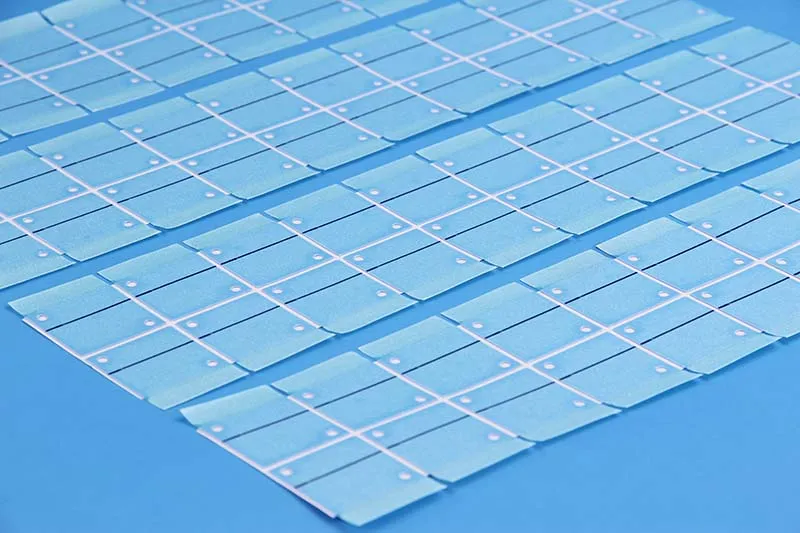
Phase change materials
· Melt at target temp
· Fill micro gaps
Cooling Path
· Contact to heat sink
· Transfer to cold plate
System Goal
· Stable thermal management
· Balanced cooling across high-density arrays
The result? Fewer thermal throttling events and longer component life.
Cooling fluid demand: Glycol-water mixtures versus mineral oil
The cooling fluid debate is practical, not theoretical.
· Glycol-water mixtures dominate liquid cooling loops
· Mineral oil fits immersion tanks
· Total demand rising with rack density
For cold plates, glycol blends deliver solid heat transfer and cost control. Immersion setups favor dielectric mineral oil, trading some efficiency for safety. In large AI halls, Heat dissipation for AI server chips often blends both strategies—direct-to-chip coolant plus immersion pilots.
Sheen Technology aligns fluid selection with workload profiles, ensuring AI server cooling stays efficient without blowing up operating budgets.
4 Key Parameters Determining Thermal Interface Performance
Heat builds fast inside high-density racks. Heat dissipation for AI server chips is no longer a side topic; it sits right at the core of stable AI workloads. When AI processors run large models day and night, even small interface flaws can throttle performance. AI server heat dissipation depends heavily on how well thermal interface materials behave under stress, pressure, and time.
Thermal conductivity of phase change materials
When discussing Heat dissipation for AI server chips, phase change materials play a quiet but critical role. Their thermal conductivity may look average on paper, yet once the melting point is reached, the material softens and flows into microscopic voids.
Key performance factors include:
· Effective heat transfer during phase transition
· Reduction of interfacial thermal resistance
· Stability of the thermal interface material after repeated cycling
Performance progression often follows this path:
· Solid state at room temperature
· Activation near operating temperature
· Microgap filling through softened flow
· Re-solidification during cooldown
Sheen Technology phase change Material performance properties:
| Properties | Color | Reinforcement Carrier | Thermal Conductivity | Thermal Impedance (@50psi) | Thickness | Phase Change Temp. |
|---|---|---|---|---|---|---|
| Unit | - | - | W/m·K | ℃*in2/W | mm | ℃ |
| SP205A-30 | Gray | - | 3.0 | 0.05 | 0.2 | 45 ~ 55 |
| SP205A-35 | Gray | - | 3.5 | 0.04 | 0.2 | 45 ~ 55 |
| SP205A-40 | Gray | - | 4.0 | 0.03 | 0.2 | 45 ~ 55 |
| SP205A-50 | Gray | - | 5.0 | 0.02 | 0.3 | 45 ~ 55 |
| SP205A-60 | Gray | - | 6.0 | 0.015 | 0.3 | 45 ~ 55 |
| SP205A-AL-40 | Green/Gray | Aluminum Foil | 4.0 | 0.06 | 0.18 | 50 ~ 60 |
| SP350P | Green | Polyimide | 1.8 | 0.4 (30psi) | 0.13 ~ 0.5 | 45 ~ 55 |
| Test Method | Visual | - | ASTM D5470 | ASTM D5470 | ASTM D751 | ASTM D3418 |
In AI chip cooling scenarios, that cycle repeats thousands of times. If latent heat absorption is balanced correctly, server chip thermal management becomes steadier, not jumpy. For AI server cooling systems pushing dense compute nodes, this balance keeps heat dissipation predictable instead of chaotic.
Contact resistance in thermal grease and pads
Contact resistance can quietly sabotage Heat dissipation for AI server chips. Even with high bulk conductivity, poor surface mating creates trapped air pockets.
Core influences include:
· Surface roughness of chip and heatsink
· Applied interface pressure
· Controlled bond line thickness
Small changes matter. Too thick, and thermal impedance rises. Too thin, and pump-out risk increases during thermal cycling.
For AI server heat dissipation in hyperscale data centers:
· Chip power density rises
· Interface pressure increases
· Grease migration risk grows
· Maintenance intervals shorten
According to a 2025 IDC data center infrastructure update:
“Thermal interface optimization is becoming a decisive factor in sustaining AI server performance density beyond traditional air-cooling limits.”
That statement mirrors what engineers already see on the bench. Better contact equals steadier AI chip cooling. No drama. Just controlled heat flow from silicon to sink.
Compression stability of liquid metal and graphene sheets
When pushing extreme Heat dissipation for AI server chips, engineers sometimes move toward liquid metal or graphene sheets. Performance can be impressive, but only if compression stability holds.
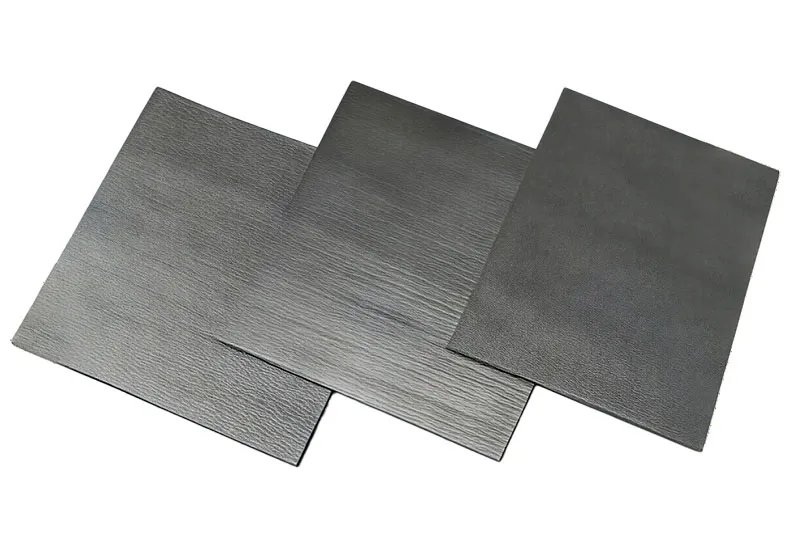
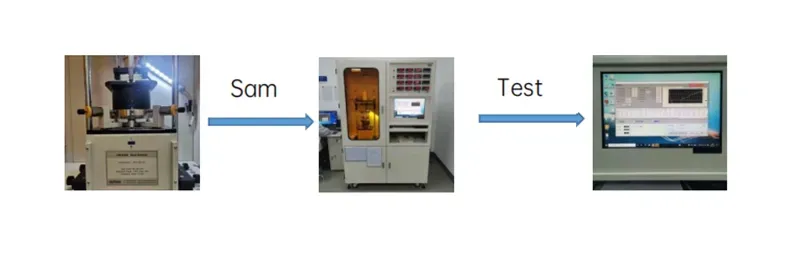
Sheen Technology Laboratory GSF75-03 Graphene Thermal Resistance Test Record:
1. Tested using the LW-9389 Thermal Conductivity Tester; reference standard: ASTM D5470.
2. Sample preparation: A 25.4mm x 25.4mm x 0.3mm sample is placed flat on the test platform.
3. Test method:
· Launch the software and select the calibration function; set parameters to 40 psi pressure and 80°C temperature, perform thickness zeroing, and set the duration to 15 minutes.
· Select the thermal resistance test mode for thermal pads; set the temperature to 80°C, initial pressure to 10 psi, pressure increment to 10 psi, and final pressure to 40 psi.
· Start the test and automatically obtain the results.
| Test Project | Test data | Pressure (psi) | |||
| Sample | 10 psi | 20 psi | 30 psi | 40psi | |
| Thermal resistance at 10–40 psi (°C·in²/W) @0.3 mm |
1 | 0.016 | 0.016 | 0.015 | 0.015 |
| 2 | 0.017 | 0.016 | 0.015 | 0.015 | |
| 3 | 0.016 | 0.016 | 0.015 | 0.015 | |
| average value | 0.016 | 0.016 | 0.015 | 0.015 | |
| Thermal resistance at 10–40 psi (°C·cm²/W) @0.3 mm |
1 | 0.106 | 0.100 | 0.095 | 0.094 |
| 2 | 0.108 | 0.101 | 0.095 | 0.096 | |
| 3 | 0.105 | 0.100 | 0.096 | 0.095 | |
| average value | 0.106 | 0.100 | 0.095 | 0.095 | |
Consider the mechanical chain reaction under AI workloads:
· High mechanical stress from mounting pressure
· Continuous thermal cycling
· Long-term risk of pump-out or creep
For graphene sheets in server chip thermal management:
· Layer alignment must remain intact
· In-plane conductivity must stay continuous
· Thickness must resist permanent deformation
For liquid metal in AI server cooling systems:
· Containment is mandatory
· Electrical isolation must be verified
· Oxidation control affects long-term stability
If compression shifts even slightly, AI server heat dissipation drops unevenly. That leads to hot spots on AI processors. In dense racks, one hot spot can ripple into system-wide throttling.
Long-term reliability: outgassing in thermal gap fillers
Long-term reliability often gets less attention than peak conductivity, yet it directly impacts Heat dissipation for AI server chips.
Within thermal gap fillers, especially silicone-based materials, outgassing can release volatile organic compounds over time. The chain looks like this:
Material aging
· Chemical breakdown
· Release of trapped compounds
Contamination effects
· Film buildup on heatsinks
· Sensor interference
Performance shift
· Rising thermal resistance
· Declining thermal performance
In data center chip heat control environments, even minor material degradation can affect adjacent optics or connectors. That’s why long-term reliability testing is no side task; it supports stable AI server heat dissipation year after year.
For teams focused on AI chip cooling, the takeaway is simple: conductivity matters, contact matters, compression matters, and aging absolutely matters. Keep those four aligned, and Heat dissipation for AI server chips stays steady—even when workloads spike.
5 Steps To Optimize Heat Sink Mounting
Efficient Heat dissipation for AI server chips starts with smart mounting decisions. From material selection to immersion validation, every detail shapes AI chip cooling, server heat control, and long term stability in data centers.
Step 1: Selecting aluminum alloys or copper baseplates
When designing a heat sink, material selection drives real gains in Heat dissipation for AI server chips.
· aluminum
· copper
· alloys
· baseplates
Here’s how teams typically compare options:
| Material | Thermal Conductivity (W/m·K) | Density (g/cm³) | Relative Cost Index |
| 6063 Aluminum | 200–210 | 2.7 | 1.0 |
| 1050 Aluminum | 220 | 2.7 | 1.1 |
| C110 Copper | 385–400 | 8.9 | 3.5 |
| Cu-Mo Composite | 250 | 9.6 | 4.2 |
For lightweight AI racks
· Choose aluminum alloys:Lower density reduces mechanical load.
For extreme thermal load
· Select copper baseplates:Higher thermal conductivity improves heat transfer.
Heat dissipation for AI server chips often balances cost and performance. That’s where Sheen Technology guides clients—aligning alloy choice with real AI workload density.
Step 2: Applying thermal paste or thermally conductive epoxies
Small interface gaps kill AI chip cooling efficiency.
· thermal paste
· epoxies
· thermal interface material
Interface evaluation
· Surface flatness check
· Micron-level deviation impacts heat transfer
Material choice
· Paste for replaceable modules
· thermally conductive epoxies for fixed GPU arrays
Thickness control
· Too thin → dry spots
· Too thick → higher thermal resistance
Good application technique reduces hotspots and stabilizes Heat dissipation for AI server chips during peak AI inference loads.
Step 3: Inserting phase change materials or thermal gap fillers
AI racks vibrate. Surfaces aren’t perfect.
· phase change material
· thermal gap filler
· interface stabilization
Process alignment:
Identify uneven zones
· Memory stacks
· Power delivery modules
Match material properties
· Soft fillers for fragile dies
· Higher Shore hardness for structural support
· Validate heat absorption under load cycling
These materials reduce thermal resistance, boosting server heat management across large AI clusters.
Step 4: Torque calibration for bolt-down silicon carbide fins
Mounting pressure directly affects Heat dissipation for AI server chips.
· torque
· calibration
· bolt-down
· silicon carbide
· fins
Calibration logic:
Mechanical baseline
· Measure allowable mechanical stress
Controlled tightening
· Cross-pattern sequence
· Even mounting pressure
Post-assembly inspection
· Warpage check
· Contact uniformity
AI chip cooling fails fast when torque varies by even 10%. Sheen Technology integrates calibrated drivers in its heat sink assembly lines to keep pressure distribution stable across GPU trays.
Step 5: Verifying performance with dielectric fluid immersion
Real validation happens under stress.
· dielectric fluid
· immersion cooling
· thermal testing
Testing stack:
Submerge assembled module
· Monitor heat removal rate
Load simulation
· 100% GPU utilization
· Track fluid temperature rise
Efficiency mapping
· Identify micro hot spots
· Confirm liquid cooling stability
Recent market outlook supports immersion scaling:
“Immersion cooling for AI-intensive data centers is expected to see double-digit growth through 2026 as rack power density exceeds traditional air-cooling limits.” — IDC Data Center Trends Report, 2025
Performance verification closes the loop on thermal management. Done right, Heat dissipation for AI server chips becomes predictable, scalable, and ready for next-gen AI workloads.
Air Cooling Vs. Liquid Cooling: Which Wins?
Heat dissipation for AI server chips is no small thing. When racks start pulling serious kilowatts, heat builds up fast. Good heat dissipation for AI server chips keeps AI server chips cooling stable, protects uptime, and saves power. Let’s break down air and liquid options in plain terms.
Air Cooling
Air-based heat dissipation for AI server chips relies on smart airflow design and solid components. It’s simple, familiar, and easier on budgets.
· Core parts: Fans, Heat sinks, Thermal paste
· Air guides: Airflow channels, chassis layout
· Heat spreaders: Heat pipes, Fins, Vapour chambers
How it stacks up for AI chip heat management
✔ Lower upfront cost
✔ Easy maintenance
✖ Limited for high-density AI server chips cooling
For moderate loads, server chip cooling with air still works fine. But once power density climbs, heat dissipation for AI server chips hits a ceiling because air simply can’t carry enough heat away.
Liquid Cooling
Liquid systems raise the bar for heat dissipation for AI server chips by moving heat with fluid, not air.
Key hardware
· Cold plates attached to chips
· Coolant (water or Dielectric fluid)
· Pumps, Hoses, Radiators
· Optional Immersion tanks
Thermal Performance Snapshot
| Cooling Type | Typical Power Density (kW/rack) | Heat Transfer Efficiency | PUE Impact |
| Air Cooling | 10–30 | Moderate | 1.4–1.6 |
| Direct-to-Chip Liquid | 30–80 | High | 1.2–1.3 |
| Immersion Cooling | 80–120+ | Very High | 1.1–1.2 |
System flow hierarchy
Chip Level
a. Cold plates absorb heat
b. Coolant captures thermal energy
Loop Level
a. Pumps circulate fluid
b. Radiators reject heat
Facility Level
a. Heat reuse or dry coolers
b. Energy optimization controls
For dense AI racks, thermal management for AI chips leans heavily toward liquid. That’s why many data centers now pair advanced liquid loops with engineering support from Sheen Technology, balancing efficiency and reliability.
Air keeps things simple. Liquid handles the heavy lifting. For serious heat dissipation for AI server chips, liquid usually takes the win—especially as AI chip heat management demands keep rising.
High-Density Rack: Heat Dissipation For AI Server Chips

High-density racks push Heat dissipation for AI server chips to the limit. As AI server loads climb, heat dissipation, AI server cooling, and chip-level thermal control decide uptime. Smart materials and immersion design keep AI server chips cool without slowing compute.
Ceramic substrates and silicon interposers for tight layouts
In compact layout design, Heat dissipation for AI server chips starts at the package level.
· ceramic substrate improves thermal flow under each die
· silicon interposer shortens signal paths in dense integration
· Advanced packaging trims resistance between chip and sink
Inside the stack:
Material layer
· High-conductivity ceramic substrate
· Fine-pitch silicon interposer
Interface layer
· Low-loss thermal joints
· Stress-controlled integration zones
Tighter routing means better Heat dissipation for AI server chips, less hotspot drama, and smoother AI server performance. Sheen Technology aligns substrate design with rack airflow so heat dissipation works hand in hand with system cooling.
Fluorocarbon coolants and hydrofluoroethers in immersion systems
When racks get brutally dense, immersion steps in for Heat dissipation for AI server chips.
· fluorocarbon coolant resists breakdown
· hydrofluoroether fluids stay stable in each immersion system
· Dielectric liquid cooling avoids short circuits
“Immersion cooling adoption in AI-focused data centers is accelerating as rack densities exceed traditional air limits,” notes a 2025 data center outlook from the International Energy Agency.
Flow path inside the tank:
Fluid domain
· Circulating coolant loop
· Vapor management in two-phase immersion
Chip domain
· Direct contact with AI server chips
· Rapid heat dissipation into dielectric system
Result: cleaner Heat dissipation for AI server chips, lower fan noise, and stable AI server cooling even during training spikes.
Graphene and boron nitride spreaders for vertical heat paths
For stacked dies, vertical escape routes matter.
• graphene layer boosts in-plane thermal spread
• boron nitride acts as an insulating interface material
• Ultra-thin spreader guides each vertical heat path
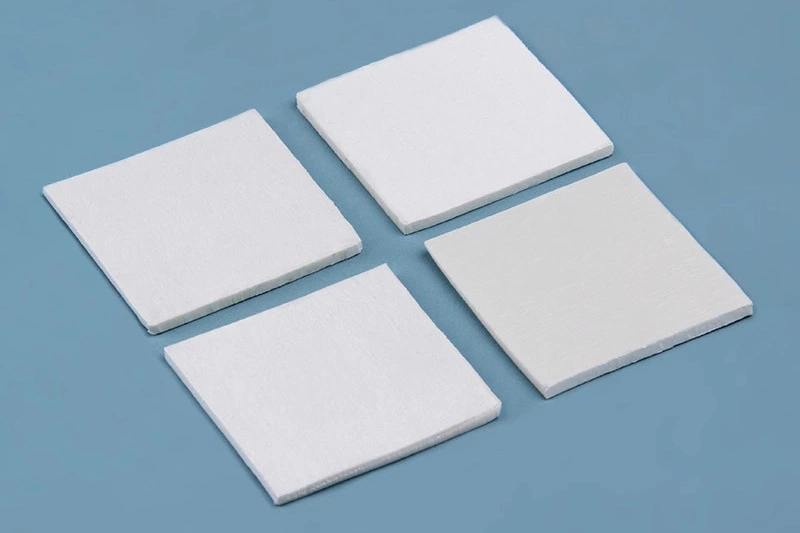
Structure inside advanced packages:
· Top layer:Graphene spreader sheet
· Middle interface:Bonded boron nitride film
· Base:Contact to cold plate
This combo sharpens Heat dissipation for AI server chips and balances AI chip temperature from core to lid. With refined thermal interface material control, Sheen Technology keeps heat dissipation steady, protecting AI server chips during nonstop workloads.
【Request a Custom Quote】 Share your rack power density, chip package type, target junction temperature, and mounting constraints. Our team can help evaluate the right thermal stack for your design.
Sheen Thermal
Dongguan Sheen Electronic Technology Co., Ltd · Founded in 2008
Manufacturer of thermal interface materials and silicone foam for automotive electronics, energy storage, power electronics, communications and consumer electronics.
Certified
- ISO 9001:2015
- ISO 14001:2015
- IATF 16949:2016
What we supply
- Thermal conductivity Up to 90 W/m·K
- Thickness 0.3–10.0 mm
- Custom & samples Die-cut to drawing, 3–7 days