
 English
 usheenthermal

Improve Cooling: Carbon Fiber Thermal Pad for Server Power Supplies
Date:2026-08-04
Server racks run hot, and a carbon fiber thermal pad for server power supplies cuts heat fast, keeping failures from creeping in and costs from spiking.
Sheen Technology engineers in 2025 describe tighter contact and lower resistance in graphite-based pads, pointing to steadier MOSFET temperatures and longer service intervals.
Upgrade now, or keep paying for heat with downtime and rising bills.
Quick Answers for Carbon Fiber Thermal Pad for Server Power Supplies
- Enhanced Heat Dissipation: Graphite-based pads deliver high thermal conductivity, preventing hot spots in dense server racks.
- Improved Reliability: Lower junction temperatures in MOSFETs and voltage regulators extend service life and reduce failure rates.
- Optimal Contact: Flexible, compressible composites fill micro-gaps between heat sinks and components, cutting thermal resistance.
- Easy Installation: Die-cut to fit, cleaned, laminated, cured, and tested for consistent performance in power conversion units.
Why Carbon Fiber Thermal Pad Matters
A quick look at why a carbon fiber thermal pad for server power supplies keeps systems cool and stable. From tighter heat paths to better contact, it’s all about steady performance without the drama.
Thermal Conductivity and Heat Dissipation in Server Infrastructure
Core idea: thermal conductivity drives faster heat dissipation across dense server infrastructure.
Heat path setup
- Carbon networks boost heat transfer across hotspots
- Even spread reduces localized power density spikes
Cooling loop impact
- Better interface raises cooling efficiency
- Fans and liquid loops work less, last longer
In practice, a carbon fiber thermal pad for server power supplies keeps racks from cooking under load. A carbon fiber thermal pad server PSU setup also stabilizes thermal management during peak traffic.
Sheen Technology tunes graphite orientation so the carbon fiber thermal pad for server power supplies moves heat sideways and down, not just one way.
Reducing Junction Temperature for Power Transistors Reliability
Device level
- Lower junction temperature protects power transistors
- Cuts thermal stress on semiconductor devices
System level
- Fewer failures, higher reliability
- Longer device lifespan, steady performance stability
Risk control
- Limits thermal runaway during spikes
A carbon fiber thermal pad for server power supplies consistently drops junction temps a few critical degrees. That small drop matters a lot over months of uptime. Sheen Technology integrates this into carbon fiber thermal pad PSU kits for high-density servers.
Flexibility and Compressibility for Optimal Gap Filling
Fit and contact
- flexibility + compressibility improve gap filling
- Strong thermal interface material behavior under varied contact pressure
Surface match
- Pads conform to rough heatsinks → better surface conformity
- Reduced voids → stronger thermal contact
Sheen Technology CSF30 Compression Test Report
| Test items | Test conditions | Test equipment | Test Standards |
| Compression Ratio | 25*25 | Compression and Rebound Tester | / |
Test results:
| Force(N) | 85.42 | 195.31 |
| Compression Ratio(%) | 10 | 18 |
Result: a carbon fiber thermal pad for server power supplies keeps consistent contact even after vibration or thermal cycling. This carbon fiber thermal pad for server power supplies design from Sheen Technology balances softness with durable material properties, so cooling stays predictable day after day.
Benefits of Carbon Fiber Thermal Pads
Carbon fiber thermal pad for server power supplies setups are getting serious attention lately, and yeah, for good reason. When heat starts messing with electronic components and uptime, better thermal management isn’t optional. This is where carbon fiber solutions step in, keeping systems cool without overcomplicating design or maintenance.
Enhanced Heat Transfer for MOSFETs and Voltage Regulators
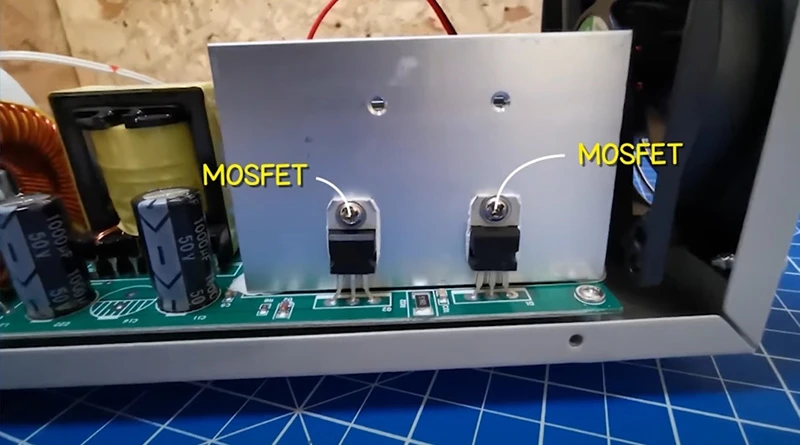
In power-heavy environments, MOSFETs and voltage regulators tend to heat up fast, especially inside dense power supplies.
Core process
Heat leaves active chips
- travels through carbon fiber thermal pad for server power supplies layers
- reaches heatsinks faster
Result
- smoother heat transfer
- improved cooling
Contact optimization
- Reduced interface gaps
- Faster thermal management
A carbon fiber thermal pad for server power supplies setup from Sheen Technology helps stabilize temps during peak loads, cutting down thermal spikes that usually mess with efficiency.
Lower Thermal Resistance Boosting Data Center Efficiency
Lower thermal resistance directly improves heat dissipation across server infrastructure.
System impact
- less cooling strain, better airflow efficiency, reduced energy draw
- improved data center performance, higher energy efficiency, stable cooling performance
Short bursts of heat no longer bottleneck performance. That’s key in scaling operations where every watt counts.
Durability and Thermal Stability under High-Performance Computing
Under high-performance computing (HPC) conditions, materials face constant expansion and contraction.
Material behavior
- resin-bound carbon fibers, resist cracking, maintain thermal stability
- long-term output, steady reliability, consistent durability
A good carbon fiber thermal pad for server power supplies keeps working through extreme cycles without losing effectiveness, which matters more than raw performance numbers.
Electrical Insulation Combined with Superior Conduction
Balancing electrical insulation and thermal conduction is tricky, but this material handles both.
Functional layering
- polymer matrix: ensures dielectric strength, keeps parts non-conductive
- carbon fibers: drive heat flow, maintain superior conductivity
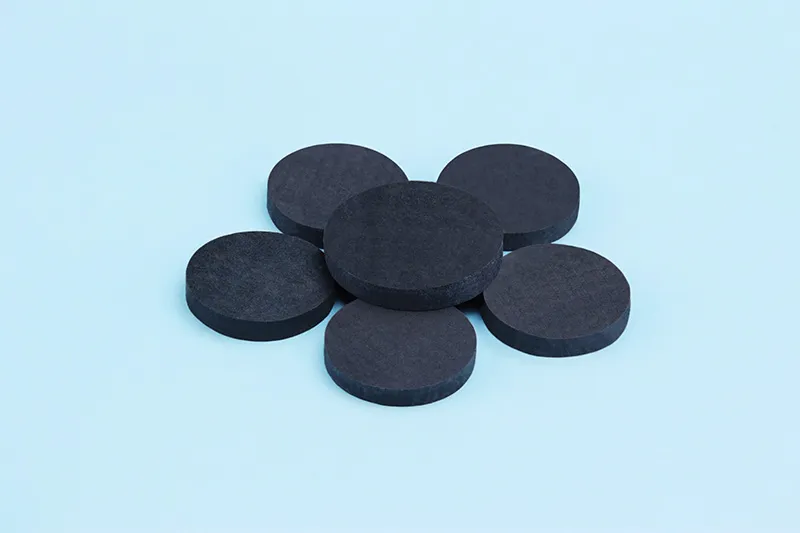
Sheen Technology carbon fiber thermal pad performance properties:
| Product name | Color | Thermal Conductivity | Thermal Impedance (1mm,@20psi) | Thickness | Standard Hardness |
| Unit | - | W/m·K | ℃*in2/W | mm | Shore 00 |
| CSF15 | Black | 15.0 | 0.28 | 0.3 ~ 12.0 | 60~70 |
| CSF20 | Black | 20.0 | 0.18 | 0.3 ~ 12.0 | 60~70 |
| CSF25 | Black | 25.0 | 0.12 | 0.3 ~ 12.0 | 60~70 |
| CSF30 | Black | 30.0 | 0.10 | 0.3 ~ 12.0 | 60~70 |
| CSF35 | Black | 35.0 | 0.09 | 0.3 ~ 12.0 | 60~70 |
| CSF40 | Black | 40.0 | 0.08 | 0.3 ~ 12.0 | 60~70 |
| CSF45 | Black | 45.0 | 0.07 | 0.3 ~ 12.0 | 60~70 |
| Test Method | Visual | ASTM D5470 | ASTM D5470 | ASTM D374 | ASTM D2240 |
Sheen Technology integrates this combo cleanly, so sensitive hardware stays protected while heat moves exactly where it should.
4 Steps to Install a Thermal Pad
Getting a carbon fiber thermal pad for server power supplies installed right isn’t just about sticking material in place; it’s about matching fit, surface quality, and pressure so cooling actually works. A good carbon fiber thermal pad for server power supplies keeps temps stable, avoids hotspots, and extends component life. Here’s how that process plays out in real setups, without the fluff.
Step 1: Die-cutting to Match Heat Sink Footprint
Core idea:
Align Die-cutting with Heat Sink geometry
- Match exact Footprint
- Ensure Matching tolerance stays tight
- Avoid gaps in Thermal Pad contact
- Support Cooling efficiency
Carbon Fiber layers must stay intact
- Clean edges reduce fraying
- Consistent thickness improves pressure spread
Short notes:
- A carbon fiber thermal pad for server power supplies works best when cut precisely
- Bad cuts = poor heat flow
- Tight fit = better contact
Step 2: Surface Preparation and Polymer Matrix Cleaning
Prep flow:
- Inspect Surface of Components
- Remove residue from Polymer Matrix
- Apply proper Cleaning method
Surface prep:
- Dust removal
- Oil elimination
- Improves Installation reliability
Matrix care:
- Keep pad structure intact
- Avoid over-handling
Quick hits:
- Clean surfaces boost adhesion
- A carbon fiber thermal pad for server power supplies needs zero contamination
- Even minor debris affects heat transfer
Step 3: Lamination onto Power Conversion Units Components
Position Thermal Pad on Power Conversion Units
- Target Components like rectifiers
- Maintain alignment during Installation
Lamination:
- Apply even pressure
- Prevent air pockets
- Support Server stability
Fixing:
- Keep pad from shifting
- Reinforce Cooling path
Extra notes:
- A carbon fiber thermal pad for server power supplies must sit flat
- Uneven pressure ruins performance
- Sheen Technology solutions help keep placement consistent
Step 4: Curing, Assembly, and Thermal Resistance Testing
Process chain:
- Curing stabilizes structure, Locks material properties
- Assembly integrates full system, Align with Server layout
Thermal validation:
- Measure Thermal Resistance
- Confirm Performance
- Verify Cooling output
Final checks:
- No displacement
- Stable contact
- Repeatable results
Wrap-up notes:
- A carbon fiber thermal pad for server power supplies must pass testing, not just fit
- Reliable brands like Sheen Technology focus on consistent thermal resistance
- Solid install = long-term performance without surprises
Standard Vs Carbon Fiber Pads
Cooling choices can make or break server stability, especially in power-heavy racks. Picking between basic materials and advanced composites shapes uptime, efficiency, and cost. The carbon fiber thermal pad for server power supplies keeps popping up for good reason—heat control is everything here.
Standard Pads

Standard pads rely on familiar material composition like silicone or elastomers, which keeps costs down but limits heat dissipation when loads spike. In server power units, that gap shows quickly.
Core behavior
- Thermal conductivity stays moderate, slowing heat transfer under sustained load
- Rising thermal resistance builds hotspots in dense boards
Application in systems
- Common in entry-level server power supplies
- Acceptable cooling performance for light workloads
Performance chain
- Heat builds near components
- Pad transfers heat slowly
- Cooling lag reduces efficiency
Compared with a carbon fiber thermal pad for server power supplies, standard options simply can’t keep up in high-density racks. Even when tuned, they struggle to match the stability offered by a carbon fiber thermal pad for server power supplies or similar advanced materials. Sheen Technology still supports these pads for budget-sensitive builds, but scaling limits appear fast.
Carbon Fiber Pads
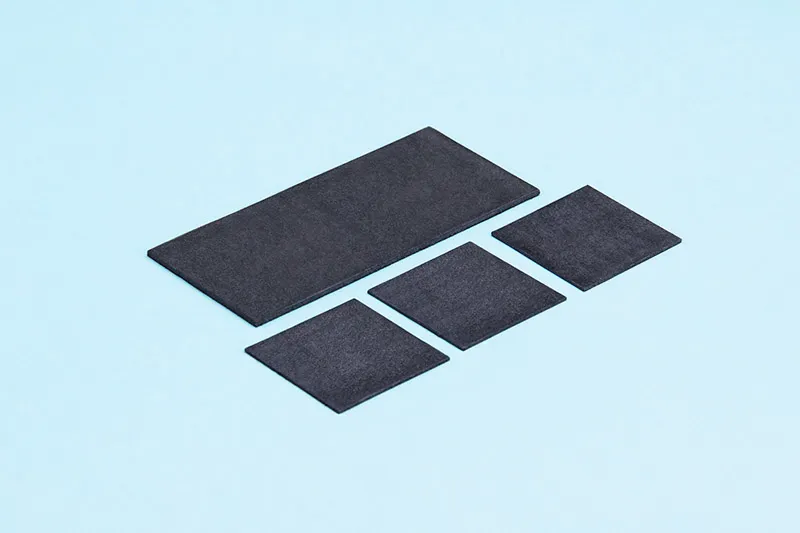
Carbon fiber pads step into a different league. Built on a graphite structure, they push enhanced thermal conductivity and faster heat spreading, which directly improves uptime.
Here’s how it plays out:
Quick wins
- Better thermal management in compact layouts
- Strong high performance cooling for AI and HPC nodes
Heat leaves chips rapidly
- Improved heat transfer stabilizes voltage modules
- Systems maintain peak output longer
A carbon fiber thermal pad for server power supplies consistently outperforms older materials, especially in modern racks. You’ll notice tighter thermal control, less throttling, and longer hardware life.
Short takeaways:
- Cooler systems run longer
- Less heat spreading delay
- Better fit for next-gen server cooling solutions
Sheen Technology pushes this category forward, refining each carbon fiber thermal pad for server power supplies to meet evolving data center demands.
Sheen Thermal
Dongguan Sheen Electronic Technology Co., Ltd · Founded in 2008
Manufacturer of thermal interface materials and silicone foam for automotive electronics, energy storage, power electronics, communications and consumer electronics.
Certified
- ISO 9001:2015
- ISO 14001:2015
- IATF 16949:2016
What we supply
- Thermal conductivity Up to 90 W/m·K
- Thickness 0.3–10.0 mm
- Custom & samples Die-cut to drawing, 3–7 days