
 English
 usheenthermal

A Step-by-Step Installation Method for Graphene Thermal Conductive Films
Date:2026-06-26
A Step-by-Step Installation Method for Graphene Thermal Conductive Films
Heat is wrecking your hardware, plain and simple. The Installation method for graphene thermal conductive films isn’t just a process; it’s the difference between systems that choke and systems that keep their cool under pressure, from packed circuit boards to high-load power modules.
Skip guesswork and patch fixes; precision handling, clean adhesion, and scalable steps decide performance and yield. Get installation right; production stops sweating the small stuff while output matches design intent.
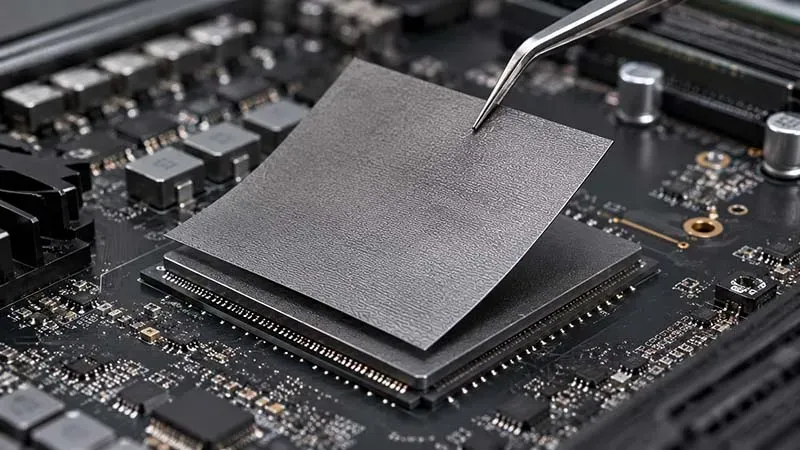
Key Notes: Installation method for graphene thermal conductive films
➔ Substrate Prep: Clean silicon wafers and copper substrates, remove oxides, verify flatness and surface energy.
➔ Lamination Setup: Configure roll-to-roll system with precise tension, temperature, and pressure for uniform film adhesion.
➔ Die-Cutting: Shape graphene rolls or sheets to device-specific profiles using high-precision die-cutting machines.
➔ Transfer Printing: Use pick-and-place printers to align and bond graphene films onto PCBs with minimal resistivity.
➔ Quality Checks: Test thermal conductivity, adhesion strength, cycling stability, and purity before final assembly.
Installation Method Steps Overview
Getting the Installation method for graphene thermal conductive films right is not just factory talk—it decides heat flow, bonding strength, and product life. Below is a practical breakdown of the graphene film installation process, from substrate prep to PCB integration, explained in a straight, no-fluff way.
Preparing Silicon Wafers and Copper Substrates
A stable Installation method for graphene thermal-conductive films begins long before lamination. It begins with Silicon wafers and Copper substrates that are clean, flat, and chemically ready.
Surface preparation workflow
1.1 Cleaning
· Remove organic residue using solvent baths.
· Strip native oxides through controlled plasma processing.
· Rinse with deionized water to avoid ionic contamination.
1.2 Surface treatment
· Adjust surface energy via corona or plasma activation.
· Verify contact angle to confirm adhesion readiness.
1.3 Handling and storage
· Use vacuum wands for materials safety.
· Store in low-humidity cabinets to prevent re-oxidation.
Flatness and conductivity validation
2.1 Macro-scale flatness check
2.2 Surface roughness scan
2.3 Thermal interface resistance pre-test
For any graphene thermal film installation method, skipping careful substrate processing is asking for bubbles, delamination, and weak heat paths. A solid base keeps the entire graphene heat dissipation film installation steady.
Setting Up Roll-to-Roll Lamination Systems
When scaling the Installation method for graphene thermal conductive films, Roll-to-roll lamination systems make continuous manufacturing realistic.
Key setup points:
· Calibrate equipment tension to prevent graphene wrinkling.
· Stabilize roller temperature for uniform bonding.
· Adjust nip pressure to balance adhesion and film integrity.
A small misalignment in machinery can stretch thin graphene films, hurting thermal conductivity. That is why experienced assembly engineers monitor line speed and surface contact in real time.
Industry data backs this up:
“Advanced thermal interface materials, including graphene-based films, are seeing rapid adoption in high-power electronics manufacturing,” noted a 2025 IDC materials outlook, pointing to continuous process optimization as a key driver of yield improvement.
For brands like Sheen Technology, a fine-tuned roll-to-roll setup defines repeatability in the graphene film installation process and supports consistent output across batches.
Need verified thermal conductivity, thickness tolerance, adhesion performance, and thermal resistance data before selecting a graphene thermal film? Download the product datasheets to compare graphene thermal conductive films for consumer electronics, power modules, AI servers, and industrial equipment.
Step 3: Die-Cutting Graphene Films to Shape
Precision matters. In the Installation method for graphene thermal conductive films, die-cutting transforms raw graphene films into exact shapes for chips, LEDs, or automotive modules.
• Use hardened tooling to maintain edge integrity.
• Optimize cutting pressure to avoid micro-cracks.
• Inspect edges under magnification for burr control.
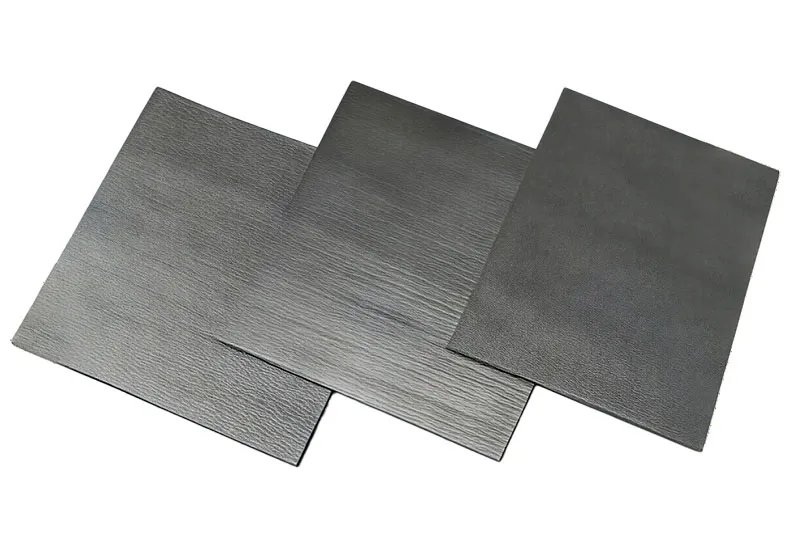
Shaping is not just cutting—it’s controlled material shaping. Clean edges improve contact with heat sources and reduce thermal gaps.
1)Define CAD geometry for the target device.
2)Program cutting depth according to film thickness.
3)Perform pilot film processing run.
4)Validate dimensional tolerance.
For any graphene heat film installation method, sloppy shaping equals poor alignment later. That’s why Sheen Technology emphasizes precision conversion before final bonding.
Short version? Cut clean. Handle gently. Store flat.
Transfer Printing onto Printed Circuit Boards
The last stage of the Installation method for graphene thermal conductive films is integration with printed circuit boards.
Pre-alignment stage
1.1 Optical positioning over PCBs
1.2 Fiducial recognition calibration
Transfer printing operation
2.1 Vacuum pick-up of graphene layer
2.2 Controlled deposition onto copper pad region
2.3 Pressure-assisted bonding
Post-placement verification
3.1 Electrical continuity check
3.2 Thermal path resistance test
3.3 Inspection for air voids near electronic components
During this graphene film installation process, alignment tolerance directly affects resistivity and heat spreading efficiency. Even slight shifts reduce performance.
The full graphene thermal conductive film installation method—from substrate prep to PCB bonding—works best when every stage is controlled as one flow. That integrated mindset is exactly how Sheen Technology approaches large-scale deployment of advanced thermal solutions.
Want to see how graphene thermal conductive films are applied in real products? Browse these related application pages to explore practical thermal management solutions across different industries.
5 Key Factors Before Installation
Getting the Installation method for graphene thermal conductive films right is not just a technical task—it’s the difference between smooth heat transfer and frustrating hot spots. Before locking in your graphene film installation plan, slow down and check these five factors carefully.
Evaluating Thermal Conductivity and Diffusivity
When planning the Installation method for graphene thermal conductive films, start with real numbers. Thermal conductivity and thermal diffusivity define how fast and how evenly heat moves across a graphene film under a temperature gradient.
Core measurement path
1.1 Sample preparation
· Keep the surface flat to avoid skewed measurement results.
· Prevent contamination that may affect characterization.
1.2 Testing methods
· Laser flash for thermal diffusivity
· Steady-state technique for thermal conductivity
1.3 Data validation
· Cross-check repeatability
· Compare with supplier specs
Sheen Technology Graphene Thermal pad performance properties:
| Properties | Unit | GSF90-03 Graphene Thermal Pad | GSF75-03 Graphene Thermal Pad | Test Method |
| Color | - | Black | Black | Visual |
| Thermal Conductivity | W/m·K | 90 | 75 | ASTM E1461 |
| Thermal Resistance (@40psi) | ℃*cm2/W | ≤0.1 | ≤0.12 | ASTM D5470 |
| Thickness | mm | 0.3~2.0 | 0.3~2.0 | ASTM D374 |
| Density | g/cm³ | 0.3~0.7 | 0.3~0.7 | ASTM D792 |
| Rebound Rate | % | ≥90 | ≥90 | ASTM D575 |
| Tensile Strength | Mpa | ≥0.05 | ≥0.03 | ASTM D412 |
| Oil Bleeding Rate | % | ≤3 | ≤3 | / |
| Application Temperature | ℃ | -40~150 | -40~150 | / |
Good heat transfer starts with verified data. No shortcuts here.
Ensuring Uniform Film Thickness and Flexibility
Film quality affects the Installation method for graphene thermal conductive films more than most people expect.
· Check film thickness tolerance (±5% is common for high-end sheets).
· Confirm uniformity under backlight inspection.
· Test flexibility against target bending radius.
Why it matters:
· Uneven graphene layer → local overheating
· Poor mechanical properties → cracking during bonding
· Weak material integrity → long-term failure
For curved housings or polymer enclosures, thin yet consistent layers win. A reliable installation method for graphene heat conductive film must match the substrate shape without stress buildup.
Checking Adhesion Strength on Polymer Films
Bonding defines durability. During the Installation method for graphene thermal conductive films, evaluate the adhesion strength between the graphene film and polymer film substrate.
Key validation steps:
Interface analysis
· Assess surface energy compatibility
· Examine bonding uniformity
Mechanical testing
· Peel test for separation resistance
· Shear strength under lateral load
Environmental simulation
· Humidity exposure
· Repeated thermal expansion cycles
⚠ Weak bonding at the interface often causes early delamination.
A stable installation method for graphene thermal conductive films always considers substrate chemistry before scaling production. Sheen Technology emphasizes pre-treatment control to stabilize adhesion without adding excessive thickness.
Verifying Thermal Stability Through Cycling Tests
Heat comes and goes. Reliability depends on how materials survive temperature cycles and ongoing thermal stress.
Testing flow:
· Set cycling range (e.g., -40°C to 125°C)
· Run 500–1000 cycling tests
· Measure performance shift
Focus on:
· Thermal stability retention
· Surface cracking
· Electrical drift
· Material degradation
Sheen Technology laboratory Graphene Thermal pad aging Test:
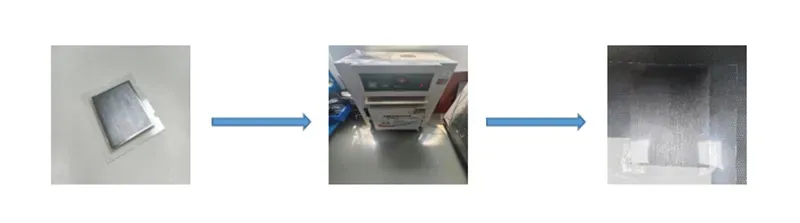
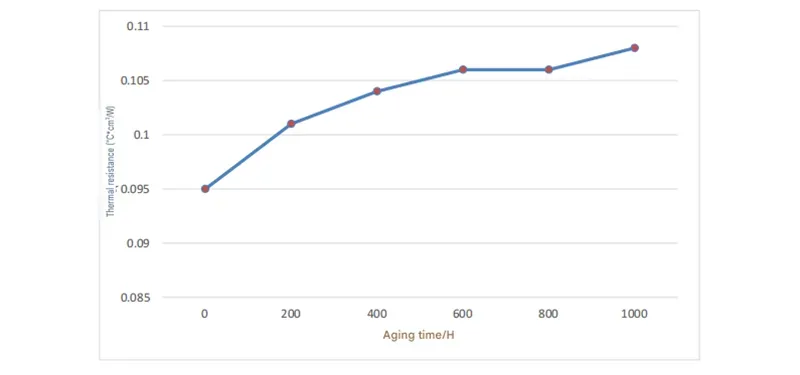
Conclusion: As shown in the figures and data above, the graphene thermal pad demonstrated stable thermal resistance during short-term aging tests; after 1,000 hours, the thermal resistance increased by 13.7%, remaining within the acceptable range of variation.
According to a 2025 IDC data center infrastructure update:
Thermal management materials that maintain over 95% performance after 1,000 thermal cycles are increasingly specified in AI server deployments.
That’s the benchmark. Real material endurance equals long-term reliability in automotive and semiconductor devices.
Assessing Purity and Electrical Resistivity
The final checkpoint in the Installation method for graphene thermal conductive films is material quality itself.
Look closely at:
· Purity and contamination level
· Defect density via Raman mapping
· Bulk and surface electrical resistivity
Evaluation path:
· Spectroscopy for material composition
· Four-point probe for conductivity
· Cross-sectional microscopy for graphene quality
Low electrical properties variation means consistent performance. High resistivity can reduce spreading efficiency and interfere with sensitive circuits.
A precise Installation method for graphene thermal conductive films connects all these dots—heat flow, bonding, endurance, and purity. That’s how Sheen Technology approaches graphene film integration: data-driven, practical, and built for real-world devices.
Comparative: Graphene Vs. Polymer Pads
Compact electronics keep getting hotter, and choosing the right interface material is no small feat. This comparison looks at performance, handling, and the practical installation method for graphene thermal conductive films versus polymer options. If you care about stable heat transfer, long-term reliability, and clean manufacturing, this breakdown keeps it real and usable.
Graphene Thermal Conductive Films
When heat density spikes inside advanced electronic components, Graphene stands out for raw thermal conductivity and slim films that fit tight builds. The installation method for graphene thermal conductive films plays a direct role in performance, so details matter.
· Ultra-thin structure
· High in-plane heat spreading
· Low electrical resistivity
Key factors shaping the installation method for graphene thermal conductive films:
Material level
· Graphene films:Crystal alignment affects heat transfer,Thickness impacts thermal resistance.
Adhesive layer
· Controls interface contact
· Influences long-term stability
Application level
· Power modules:High flux zones,Demands precision installation.
· Compact consumer boards:Space-limited layouts,Require thin interface material.
Process level
· Manual lamination
· Automated roll-to-roll manufacturing
The proper graphene film installation method reduces air gaps, lowers contact resistance, and keeps performance steady under cycling loads.
The International Energy Agency noted in its 2025 electronics efficiency outlook that advanced thermal interface materials are “critical to maintaining device reliability as power density continues to rise.”
Sheen Technology optimizes the Installation method for graphene thermal conductive films through controlled bonding pressure and clean-room handling, ensuring repeatable results.
Polymer Thermal Pads
Polymer - based thermal pads are softer and more forgiving. For many teams, that’s a win.
• Easy placement
• Strong surface wetting
• Good flexibility
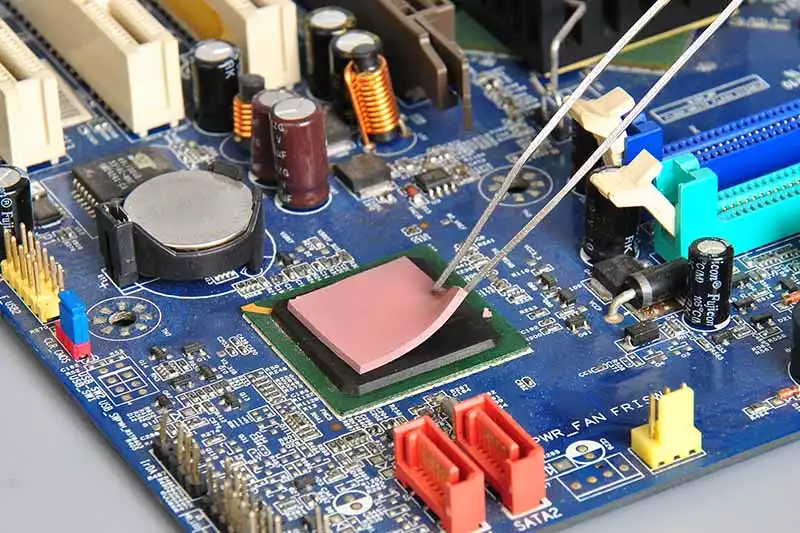
Performance comparison often centers on:
Thermal behavior
· Lower bulk thermal conductivity
· Higher thermal resistance
Mechanical traits
· Excellent conformability
· Tolerates uneven surfaces
Application areas
· LED modules
· Low-to-mid power devices
· Prototyping builds
Still, when heat load climbs, pads may struggle with sustained heat dissipation. Thickness adds resistance, and compression set can reduce contact over time.
For high-flux designs where the Installation method for graphene thermal conductive films directly boosts efficiency, engineers often shift toward graphene solutions supplied by Sheen Technology, especially in compact power electronics demanding tighter thermal control.
【Request a Custom Quote】Need help selecting the right graphene thermal conductive film for your manufacturing process? Share your substrate material, operating temperature, film thickness requirements, installation method, and thermal performance goals. Our engineering team can recommend the most suitable solution for your application.
Sheen Thermal
Dongguan Sheen Electronic Technology Co., Ltd · Founded in 2008
Manufacturer of thermal interface materials and silicone foam for automotive electronics, energy storage, power electronics, communications and consumer electronics.
Certified
- ISO 9001:2015
- ISO 14001:2015
- IATF 16949:2016
What we supply
- Thermal conductivity Up to 90 W/m·K
- Thickness 0.3–10.0 mm
- Custom & samples Die-cut to drawing, 3–7 days