
 English
 usheenthermal

Thermal Pads vs. Low-Temperature Phase Change Thermal Conductive Sheet Options
Date:2026-05-27
Thermal Pads vs. Low-Temperature Phase Change Thermal Conductive Sheet Options
Heat is the silent dealbreaker in modern electronics, and choosing between a Low-temperature phase change thermal conductive sheet and a basic pad can make or break your build. One plays it safe, the other plays to win, and that choice shows up fast in performance, returns, and headaches.
Pads keep lines moving and costs predictable, but phase change sheets close gaps, cut resistance, and handle rising heat without flinching.
Key Highlights of Low-temperature phase change thermal conductive sheet
1)Ultra-Thin Bond Line: Melts at designated temperature to minimize thickness and contact resistance for high-performance CPUs and GPUs.
2)Superior Wettability: Conforms to micro-scale surface irregularities, ensuring tight adhesion and efficient heat transfer over time.
3)Wide Operating Range: Maintains thermal conductivity and stability in automotive electronics, data centers, and LED lighting across –40 °C to 150 °C.
4)Long-Term Reliability: Resists pump-out and degradation over repeated thermal cycles, sustaining performance in power modules and telecom equipment.
Types Of Thermal Pads Explained
Thermal pads look simple, yet small material choices change real-world performance. From soft silicone blends to graphite layers, each type fits a different heat problem. This overview keeps it practical, mixing shop-floor talk with engineering logic, while tying in Low-temperature phase change thermal conductive sheet options used alongside modern thermal pads.
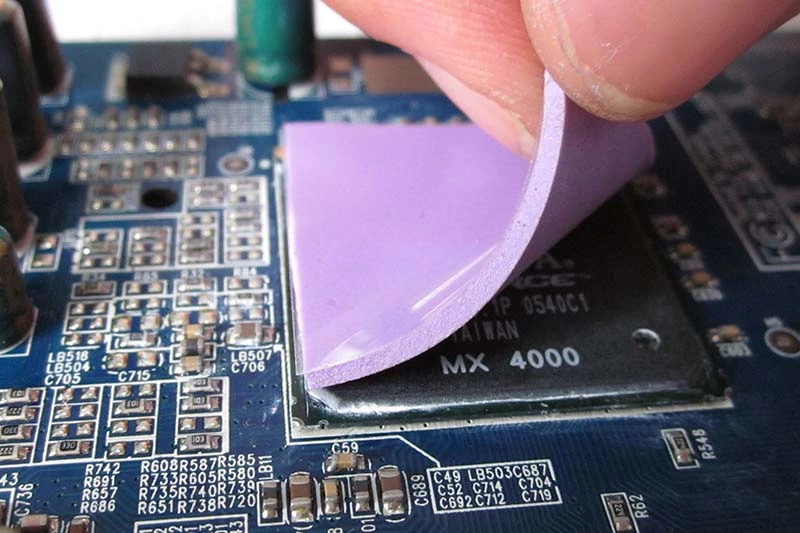
Silicone-Based Thermal Pads: Softness and Dielectric Strength
· Silicone bases stay elastic under pressure· Thermal pads here focus on safety, not extreme heat flow
· Softness helps uneven chips make contact
· Dielectric strength keeps live parts insulated
· Conformability protects fragile IC packages
· Electrical insulation supports dense layouts
Silicone pads work well when paired with a Low-temperature phase change thermal conductive sheet on hotspots. That combo balances elasticity with controlled heat spread. In power modules, designers often stack materials: a soft pad for isolation, a phase change thermal conductive sheet where heat spikes. Sheen Technology supports this mix for converters and industrial boards, where handling matters as much as watts moved.
Ceramic Filler Pads with Boron Nitride for High Conductivity
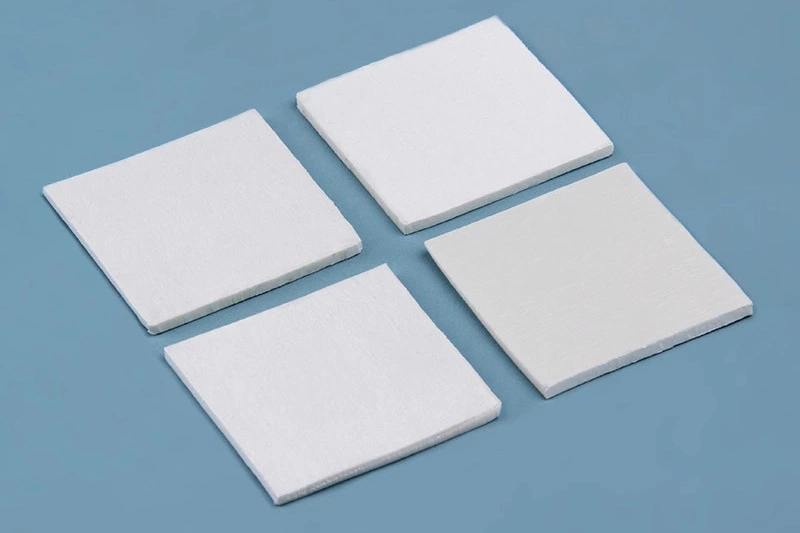
Core makeup
· Ceramic filler systems:Boron nitride or aluminum nitride
· Performance focus:High conductivity without losing insulation
Application logic
CPUs and GPUs
· Tight thermal interface gaps
· Stable heat transfer under load
Automotive ECUs
· Vibration tolerance
· Long service life
Yole Group’s 2024 thermal materials outlook notes that boron nitride composites remain a top choice where electrical isolation and sustained heat flow must coexist.
These pads often sit next to a Low-temperature phase change thermal conductive sheet to manage burst loads. Sheen Technology integrates both to keep processors calm during peaks.
Graphite-Infused Pads for Low Thermal Impedance
Short and direct. Graphite layers move heat fast. Low thermal impedance cuts delays between chip and sink. Carbon structures push strong thermal conductivity sideways.
That makes sense in phones and SSDs. Space is tight. Heat spreads laterally. A thin thermal pad plus a Low-temperature phase change thermal conductive sheet handles quick ramps. Flexibility stays decent, even with repeated cycles.
Gap Filler Pads in Roll Stock and Die-Cut Parts
Form options
Roll stock
· Easy lamination
· Consistent thickness
Die-cut parts
· Clean edges
· Faster assembly
Functional role
Gap filler behavior
· Bridges tolerance gaps
· Supports conformable layouts
System impact
· Better heat management
· Reliable thermal interface
Used with a Low-temperature phase change thermal conductive sheet, gap fillers smooth out stack-ups across boards. Sheen Technology supplies both formats so manufacturing stays predictable while thermal paths stay efficient.
4 Key Benefits Of Phase Change Sheets
Phase change sheets sound technical, yet the payoff is simple: cooler chips, steadier performance, fewer headaches. Below is a grounded look at how a Low-temperature phase change thermal conductive sheet fits real hardware, from servers to cars, without the fluff.
Benefit 1: Ultra-Low Bond Line Thickness for CPUs and GPUs
Core idea
· Reduced Bond Line Thickness after melting
· Tighter contact around CPUs and GPUs
Why it matters
· Lower thermal resistance improves heat transfer inside semiconductor packages
· microprocessors run closer to design limits without spikes
Practical view
· A Low-temperature phase change thermal conductive sheet softens early
· Flow fills gaps that pastes miss
· Result: a thinner, cleaner thermal interface material layer
| Interface Type | Average Bond Line (µm) | Thermal Resistance (°C·cm²/W) |
| Grease | 30 | 0.25 |
| Pad | 50 | 0.35 |
| PCM Sheet | 10 | 0.12 |
| Low-temp PCM | 8 | 0.10 |
| Optimized PCM | 6 | 0.09 |
This is why Sheen Technology pushes low-temperature designs for dense compute boards.
Benefit 2: Superior Wettability & Adhesion to Integrated Circuits
· Wettability kicks in once the phase change point is reached· Material spreads across uneven silicon
· Adhesion locks onto Integrated Circuits
· Better thermal contact means fewer air pockets
· Surface-to-surface interface stays intact
· electronic components see steadier thermal performance
A Low-temperature phase change thermal conductive sheet behaves more like a liquid at work, more like a solid at rest. That balance keeps mounts stable, even after transport.
“Advanced PCM interfaces show measurable gains in contact efficiency for high-density chips,” notes a 2024 thermal packaging brief from Yole Group.
Benefit 3: Wide Operating Temperature Range in Automotive Electronics
Step 1: Cold start at low temperatureStep 2: Rapid warm-up near power modules
Step 3: Long exposure to high temperature under load
Step 4: Cool-down cycles overnight
Across that swing, Operating Temperature Range stability supports Automotive Electronics, vehicle systems, and other harsh environments. A Low-temperature phase change thermal conductive sheet stays predictable where ordinary pads stiffen or slump.
Benefit 4: Excellent Cycle Stability and Long-Term Reliability
Short takeaways, straight talk:
· Cycle Stability handles constant thermal cycling
· Less material degradation over years
· Strong durability protects lifespan
· Lower thermal stress keeps performance consistency
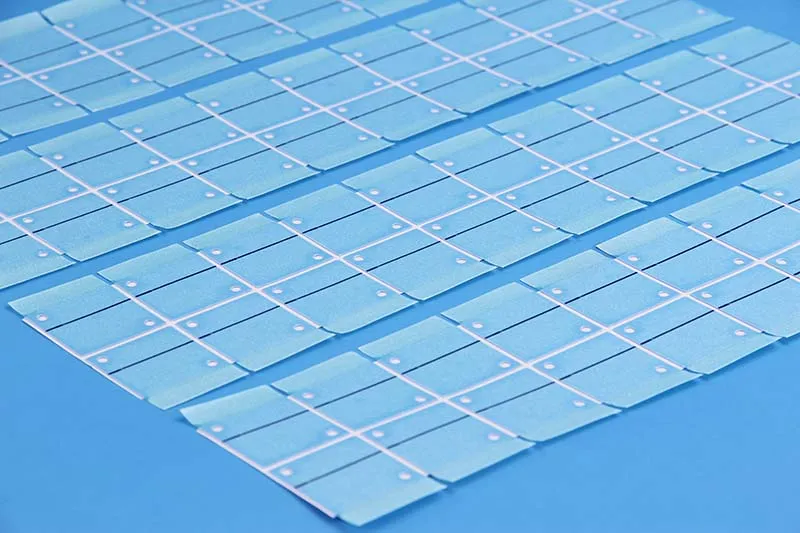
Sheen technology SP205A-60 phase change thermal sheet Reliability Test Report
| Test Items | Test Conditions | Test Equipment |
| High-Temperature Aging | 100℃,1000H | Precision Oven |
| Constant Temperature & Humidity | 85℃、85%RH,1000H | Constant Temperature & Humidity Chamber |
| Thermal Shock | -20℃~80℃,1000H | Constant Temperature & Humidity Chamber |
Criteria for Judging Test Results
| Performance Parameter | Initial Value | Acceptance Criteria |
| Thermal Conductivity(W/m*K) | 6.07 | ±30% |
| Thermal Resistance(℃*in²/W,@10 psi) | 0.082 | ±40% |
| Appearance | Smooth surface, uniform color | No abnormalities (e.g., powdering, discoloration) |
High-Temperature Aging Test Results
| High-Temperature Aging Test Record Sheet | |||||||||
| Aging Time | H | 0 | 200 | 400 | 600 | 800 | 1000 | Change | Assessment |
| Thermal Conductivity | W/m*k | 6.07 | 5.74 | 5.45 | 5.25 | 5.08 | 5.00 | -17.6% | OK |
| Thermal Resistance | ℃*in²/W,@10 psi | 0.082 | 0.084 | 0.089 | 0.095 | 0.102 | 0.107 | +30.5% | OK |
| Appearance | / | No change | No change | No change | No change | Slightly yellow | Slightly yellow | Slightly yellow | OK |
Constant Temperature and Humidity Test Results
| Constant Temperature and Humidity Test Record Sheet | |||||||||
| Aging Time | H | 0 | 200 | 400 | 600 | 800 | 1000 | Change | Assessment |
| Thermal Conductivity | W/m*k | 6.07 | 5.81 | 5.50 | 5.31 | 5.22 | 5.09 | -16.1% | OK |
| Thermal Resistance | ℃*in²/W,@10 psi | 0.082 | 0.090 | 0.094 | 0.098 | 0.101 | 0.105 | +28.0% | OK |
| Appearance | / | No change | No change | No change | No change | Slightly yellow | Slightly yellow | Slightly yellow | OK |
Thermal Shock Test Results
| Thermal Shock Test Record Sheet | |||||||||
| Aging Time | H | 0 | 200 | 400 | 600 | 800 | 1000 | Change | Assessment |
| Thermal Conductivity | W/m*k | 6.07 | 5.72 | 5.50 | 5.33 | 5.18 | 5.07 | -16.5% | OK |
| Thermal Resistance | ℃*in²/W,@10 psi | 0.082 | 0.086 | 0.092 | 0.099 | 0.105 | 0.110 | +34.1% | OK |
| Appearance | / | No change | No change | No change | No change | Slightly yellow | Slightly yellow | Slightly yellow | OK |
Test Conclusion: After aging for 1000 hours under various conditions, the SP205A-60 phase change thermal sheet maintained satisfactory performance with no changes to its appearance. Therefore, the reliability test results are deemed satisfactory.
Need exact thermal conductivity, melting temperature, thickness range, and test data before you choose? Download the product datasheets to compare phase change thermal material options for high-power LEDs.
Data centers lean on this behavior. Telecom racks do too. It’s also why Sheen Technology backs PCM thermal sheet options for long-haul deployments, not quick fixes.
Thermal Pads Vs. Phase Change Sheets
Thermal interface choices feel boring until heat starts acting up. This comparison cuts through lab jargon and shop-floor talk, showing how different materials behave once pressure, temperature, and assembly speed all collide in real devices people actually ship.
Thermal Pads
Thermal pads sit in the comfort zone for many engineers, especially when tolerance stack-up gets messy.
· Thermal pad sheets arrive pre-formed
· Gap filling material handles uneven surfaces
· Dielectric insulation keeps signals calm
· Thickness stays predictable
· Handling feels forgiving
· Assembly time drops fast
A closer look reveals layered logic rather than a single benefit:
Mechanical behavior
Compression control
· Maintains contact under vibration
· Reduces pump-out risk
Elastic recovery
· Supports rework cycles
Thermal behavior
Moderate conductivity
· Suitable for power modules
· Stable across lifespan
Electrical safety
High breakdown voltage
· Trusted in consumer electronics
· Common in industrial control boards
Sheen technology Silicone Thermal pad performance properties:
| Properties | Color | Thermal Conductivity | Thermal Impedance (1mm,@30psi) | Thickness | Standard Hardness | Customized Hardness |
|---|---|---|---|---|---|---|
| Unit | - | W/m·K | ℃*in2/W | mm | Shore 00 | Shore 00 |
| SF100 | Gray White | 1.5 | 0.90 | 0.3 ~ 10.0 | 40/60±5 | 10 ~ 90 |
| SF300 | Dark Gray | 2.0 | 0.70 | 0.3 ~ 10.0 | 40/60±5 | 10 ~ 90 |
| SF400 | Yellow | 2.5 | 0.50 | 0.3 ~ 10.0 | 40/60±5 | 10 ~ 90 |
| SF500 | Blue | 3.0 | 0.45 | 0.3 ~ 10.0 | 40/60±5 | 20 ~ 90 |
| SF600D | Gray | 4.0 | 0.40 | 0.3 ~ 5.0 | 40/60±5 | 30 ~ 90 |
| SF600 | Gray/Pink | 5.0 | 0.35 | 0.5 ~ 5.0 | 40/60±5 | 30 ~ 90 |
| SF600G | Gray | 6.0 | 0.30 | 0.5 ~ 5.0 | 40/60±5 | 30 ~ 90 |
| SF700 | Gray | 7.0 | 0.25 | 0.5 ~ 5.0 | 40/60±5 | 30 ~ 90 |
| SF800 | Gray | 8.0 | 0.22 | 0.5 ~ 5.0 | 40/60±5 | 30 ~ 90 |
| SF1000 | Gray | 10.0 | 0.18 | 0.5 ~ 5.0 | 40/60±5 | 30 ~ 80 |
| SF1200 | Gray | 12.0 | 0.15 | 0.8 ~ 5.0 | 40/60±5 | 30 ~ 80 |
| SF1500 | Gray | 15.0 | 0.10 | 1.0 ~ 5.0 | 40±10 | 30 ~ 60 |
Design teams working with Sheen Technology often lean on thermal pads when production lines value speed over microscopic thermal gains. Simple. Reliable. Hard to mess up.
Phase Change Sheets
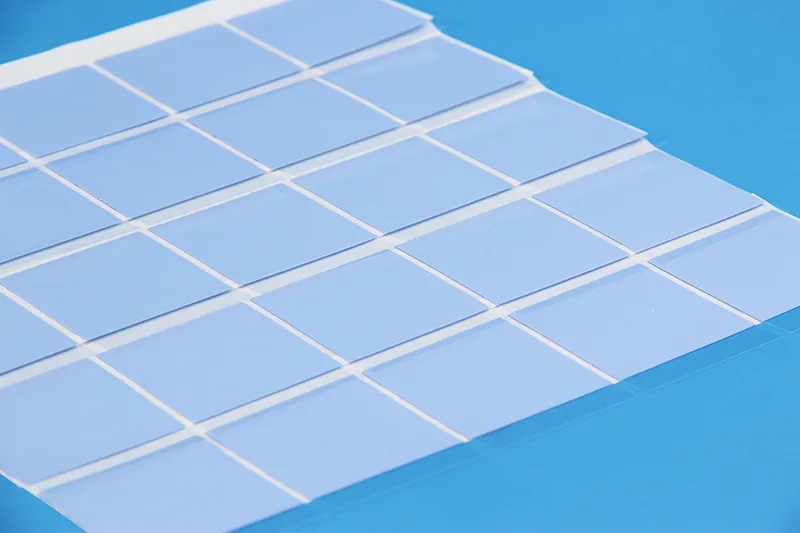
Phase change sheets feel quiet until heat wakes them up.
· Softening point matters
· Surface wetting improves
· Interface resistance drops
The Low-temperature phase change thermal conductive sheet earns attention because it behaves halfway between solid and liquid. Low temperature, phase change, thermal, conductive, sheet—each word pulls weight. The full Low-temperature phase change thermal conductive sheet melts just enough to flow, not run.
Thermal response path
Temperature rise
· Material softens
· Micro-gaps disappear
Contact optimization
· Lower thermal impedance
Application focus
· High-performance microprocessors
· Tightly coupled interfaces
Performance trade-offs
· Cleaner heat paths
· Slightly stricter storage rules
In lab comparisons, the Low-temperature phase change thermal conductive sheet consistently beats standard pads once steady-state heat settles in. That’s why a Low-temperature phase change thermal conductive sheet shows up near CPUs, GPUs, and AI accelerators.
Short version? When margins are tight and watts stack up, the Low-temperature phase change thermal conductive sheet shines. Teams sourcing from Sheen Technology often pair it with advanced packages where every degree counts.
Overheating Issues? Try Low-Temperature Phase, Change Sheets
Heat keeps sneaking into modern hardware. This cluster looks at how a Low-temperature phase change thermal conductive sheet steps in early, spreads heat fast, and stays put when systems work hard.
Power Electronics: Rapid Thermal Conductivity and Pump-Out Resistance
Power modules live rough lives. Fast switching, stop start loads, constant expansion.
· Power devices face sharp heat spikes, so heat dissipation has to react early.
· A thermal interface material that softens at low temperature reduces thermal resistance before trouble starts.
· The phase change material behavior matters when cycles repeat.
Under the hood, the logic stacks like this:
Heat path control
Contact quality
· Lower thermal resistance at the interface
· Reduced gaps that push up junction temperature
Mechanical stability
· Resistance to the pump-out effect
· Steady performance under vibration
Outcome for power electronics
· Cleaner heat dissipation
· Longer service windows for converters and inverters
A low temperature phase change thermal conductive sheet activates sooner than grease, spreads evenly, and stays where it should.
LED Lighting Applications with Low Phase Change Temperature
LED systems feel simple, yet heat sneaks in tight spaces.
· LED modules sit close together inside a luminaire.
· Heat builds fast, pushing junction temperature upward.
· Early softening of the interface boosts thermal conductivity before damage starts.
Quick notes, engineers swap on the floor:
· Lower activation temperature helps compact designs.
· Better thermal management protects color stability.
· Stable heat dissipation supports longer product lifetime.
A Low-temperature phase change thermal conductive sheet, sometimes called a low-temp phase change thermal sheet, fills microscopic gaps once warm, not once hot. That timing keeps LEDs bright without cooking the substrate.
Data Centers & Telecommunications Equipment Thermal Management
 thermal management.jpg.webp "5G Communication Base Station Remote radio unit (RRU) thermal management")
Servers never really rest. Fans hum, processors sweat.
Core concerns
· Servers and networking equipment pack dense processors
· Continuous heat removal drives energy efficiency
Interface behavior
· Thermal interface material maintains contact under load
· Low-temperature phase change thermal conductive sheet spreads heat evenly
System-level impact
· Cooling solutions work less aggressively
· Higher system reliability over long duty cycles
Seen from the rack level:
· Lower contact resistance stabilizes hotspots.
· Reduced thermal stress supports uptime goals.
In data halls, a Low-temperature phase change thermal conductive sheet keeps heat moving quietly, which is exactly what operators want.
Need a closer match for your project? Browse these related application pages to see where phase change materials are used in real lighting and electronics builds.
Step-By-Step Guide To Low-Temperature Phase Change Thermal Conductive Sheet Selection
Choosing a Low-temperature phase change thermal conductive sheet shouldn’t feel like guesswork. This guide breaks it down with plain talk, real tradeoffs, and hands-on checks that engineers actually care about when heat starts creeping where it shouldn’t.
Step 1: Assess Required Thermal Conductivity and Contact Resistance
Heat moves fast, but bad interfaces slow it down. Start by sizing up thermal conductivity against contact resistance, not in isolation, but as a pair tied to heat transfer reality.
· Performance assessment often reveals that higher conductivity means little if interface resistance stays high.
· In tight assemblies, the thermal interface must spread, fill, and settle without pushing components out of spec.
A quick reference helps anchor expectations:
| Heat Load (W) | Target Conductivity (W/m·K) | Acceptable Contact Resistance (°C·cm²/W) |
| 15 | 2.0 | 0.20 |
| 30 | 3.0 | 0.15 |
| 50 | 4.0 | 0.10 |
| 80 | 5.0 | 0.08 |
| 120 | 6.0 | 0.05 |
This is where Sheen Technology often gets looped in early, since matching thermal requirement to form factor avoids late-stage redesigns. Low-temperature, phase-change, thermal conductive sheet choices benefit from this upfront math.
Step 2: Match Phase Change Temperature to Component Integration
Activation timing matters. A phase change temperature that’s too low turns messy; too high, and heat stacks up.
· Operating temperature ranges of CPUs and GPUs set the guardrails.
· Component integration needs a melting point that syncs with real workloads, not datasheets alone.
Grouped checks help keep it clean:
Application matching
· Mobile devices: narrow windows, fast response
· Power modules: wider swings, slower ramps
Device compatibility
· Board flex
· Clamp pressure
· Rework cycles
When done right, a low-temperature phase change thermal conductive sheet activates quietly and stays put.
Step 3: Choose Material Composition—Polymer Matrix or Paraffin Wax
Here’s where material composition drives long-term behavior.
· Polymer matrix options hold shape and resist pump-out.
· Paraffin wax excels at wetting and phase response.
Short takeaways:
· Material selection leans polymer for vibration-heavy systems.
· Formulation favors paraffin when interface gaps vary.
· Material properties decide reusability.
Engineers using Sheen Technology sheets often mix priorities, picking stability first, then tuning phase change thermal conductive sheet performance around it.
Step 4: Verify Manufacturing Requirements: Die-Cutting and Lamination
Production realities bite hard if ignored.
· Manufacturing requirements include storage temp and liner release.
· Die-cutting tolerances affect edge flow.
· Lamination pressure changes surface contact.
Nested checks keep lines moving:
Fabrication process
· Roll vs sheet supply
· Clean-room handling
Assembly considerations
· Pick-and-place grip
· Scrap rates
A low-temperature phase change thermal conductive sheet that’s great in the lab but awkward on the line won’t last long.
Step 5: Evaluate Performance Metrics: Cycle Stability and Wettability
Heat comes and goes. The sheet has to keep up.
· Cycle stability shows how the interface ages.
· Wettability reveals how well the material spreads under load.
Look at thermal cycling data, then zoom out:
· Interface quality after 500+ cycles
· Thermal reliability under idle-to-peak swings
· Long-term performance without dry-out
This final check often seals the deal, especially when Sheen Technology materials are benchmarked side by side with other low-temp phase change thermal interface sheet options.
【Request a Custom Quote】 Not sure which PCM fits your LED design? Send us your target junction temperature, operating profile, thickness target, and application details, and we can help recommend the right thermal solution for your build.
Sheen Thermal
Dongguan Sheen Electronic Technology Co., Ltd · Founded in 2008
Manufacturer of thermal interface materials and silicone foam for automotive electronics, energy storage, power electronics, communications and consumer electronics.
Certified
- ISO 9001:2015
- ISO 14001:2015
- IATF 16949:2016
What we supply
- Thermal conductivity Up to 90 W/m·K
- Thickness 0.3–10.0 mm
- Custom & samples Die-cut to drawing, 3–7 days