
 English
 usheenthermal

Top Applications for Flame-Retardant Phase Change Material Tech
Date:2026-05-27
Top Applications for Flame-Retardant Phase Change Material Tech
Overheating kills margins fast. Flame-retardant phase change material absorbs heat spikes and keeps fire risk from getting out of hand in dense electronics.
Recent findings from the International Energy Agency and UL research highlight rising thermal safety demands across data centers, batteries, and power systems.
That’s where smarter materials start pulling real weight today.
Key Points: Flame-Retardant Phase Change Material Highlights
➔ Thermal Buffering: High latent heat of fusion absorbs heat spikes, stabilizing temperatures in servers, LEDs, and batteries.
➔ Fire Safety: UL94-compliant, halogen-free additives and char-forming phosphorus compounds reduce heat release and smoke density.
➔ Uniform Dissipation: Expandable graphite or metal fillers boost thermal conductivity, preventing hotspots in power electronics.
➔ Mechanical Integrity: Microencapsulation shells ensure leak-proof cycling stability, tested via Differential Scanning Calorimetry for long-term reliability.
5 Key Benefits of Flame-Retardant Phase Change Material
Flame retardant phase change material keeps electronics calm when heat gets pushy. By blending smart chemistry with safety-first design, this material handles spikes, smooths temperatures, and stays dependable over time. From batteries to servers, it works quietly in the background. At Sheen Technology, this balance of safety and performance is treated as everyday engineering, not a special trick.
Improved Thermal Conductivity for Uniform Heat Dissipation
· Fast heat transfer paths reduce bottlenecks.· Fillers lift overall thermal conductivity.
Results show steadier uniform temperature profiles. Heat spreads sideways, not just outward. Thermal management gains become visible under load. Less stress on sensitive parts.
Under the hood, nested effects stack up:
· material properties tuned for flow
· graphite networks move heat
· better heat dissipation
· higher energy efficiency
Flame retardant phase change material here acts like a calm traffic cop for heat.
Stabilized Phase Change Temperature to Avoid Hotspots
Short notes matter. Phase change temperature stays locked in. Temperature stability improves. Hotspots prevention stops thermal panic.
· Sensors read smoother curves.
· Thermal regulation stays predictable.
Step-by-step cooling follows a rhythm: absorb, pause, release. Over cycles, thermal cycling barely dents material performance. Flame retardant PCM earns trust in battery packs.
High Latent Heat of Fusion for Peak Load Buffering
This benefit stacks data neatly:
| latent heat of fusion | thermal capacity | heat absorption | use case |
| 180 J/g | high | rapid | servers |
| 200 J/g | higher | sustained | LEDs |
| 210 J/g | peak | buffered | power modules |
· energy storage happens quietly.
· peak load buffering feels natural.
Nested logic applies:
thermal buffering
· via phase change material
· keeps limits safe
Flame retardant phase change material smooths spikes without drama.
UL94-Compliant Fire Safety with Char Formation Control
Safety layers pile on:
UL94 compliance at the core
· fire resistance verified
· char formation seals heat
Additives activate.
· flame retardancy slows spread.
· thermal protection buys time.
This approach supports material safety while staying halogen-free, a detail Sheen Technology highlights often.
Microencapsulation Shells Boost Mechanical Integrity
Quick hits, then depth. Microencapsulation stops leaks. Mechanical integrity stays intact. Structural stability improves.
· Shells protect cores.
· shell materials flex without cracking.
Nested durability shows up over years:
· encapsulation technology
· guards material durability
· stabilizes phase change material
Flame retardant phase change material lasts longer in films and pastes, a reason Sheen Technology keeps pushing it into real-world builds.
Can PCM Tech Prevent Overheating Failures?
PCM sounds simple—soak up heat, keep gear calm—but real overheating failures happen when high power spikes slam a load again and again. This cluster looks at how Flame-retardant phase change material behaves under thermal cycling, why specific heat capacity is only part of the story against thermal runaway, and what battery packs teach us when heat won’t quit. Expect practical talk, not lab-only hype.
Assessing Thermal Cycling Reliability under High-Power Loads
thermal cycling is where many PCM ideas get real or get wrecked.
Test goals tied to reliability and lifespan
· Heat-soak targets
· Hold latent heat of Flame-retardant phase change material steady across cycles
· Track drift in melt/freeze plateaus that hints at degradation
Power-module reality checks under high power
· Fast ramps that mimic switching losses
· Uneven hotspots that punish performance
What to measure (and what people miss)
· Thermal metrics:Peak temp, recovery time, and heat flux under changing load
· Material health:Encapsulation cracking, bleed-out, and volume change that shorten lifespan
· Pass/fail logic:If latent heat drops while cycle count climbs, reliability claims don’t hold up
Quick numeric snapshot (typical screening view)
| Cycle Count | Peak Temp (°C) | Latent Heat Retention (%) |
| 0 | 92 | 100 |
| 500 | 95 | 97 |
| 1000 | 98 | 94 |
| 2000 | 103 | 89 |
If you’re buying Flame-retardant phase change material for power modules, Sheen Technology often pushes to document this kind of curve, not just a brochure value.
Does Specific Heat Capacity Stop Thermal Runaway?
High specific heat capacity can slow the climb, but it doesn’t “stop” thermal runaway when a cell or module starts feeding its own fire. Flame-retardant phase change material helps because phase change adds a second brake: latent heat absorption that holds the line during the worst spike.
Here’s the street-level way to think about it:
· Temperature control is time, not magic. Extra seconds can mean a BMS trips or a fuse pops.
· If the event keeps generating heat, sensible heat storage tops out fast.
You want stacked defenses:
· High specific heat capacity for early buffering
· Strong phase change enthalpy for the mid-spike clamp
· Safety extras: flame resistance, low-smoke behavior, and stable containment to reduce overheating escalation
Tip list people actually use:
· Pick a melt range that matches the “uh-oh” zone, not room temp.
· Validate repeated heat absorption after aging; degradation sneaks up quietly.
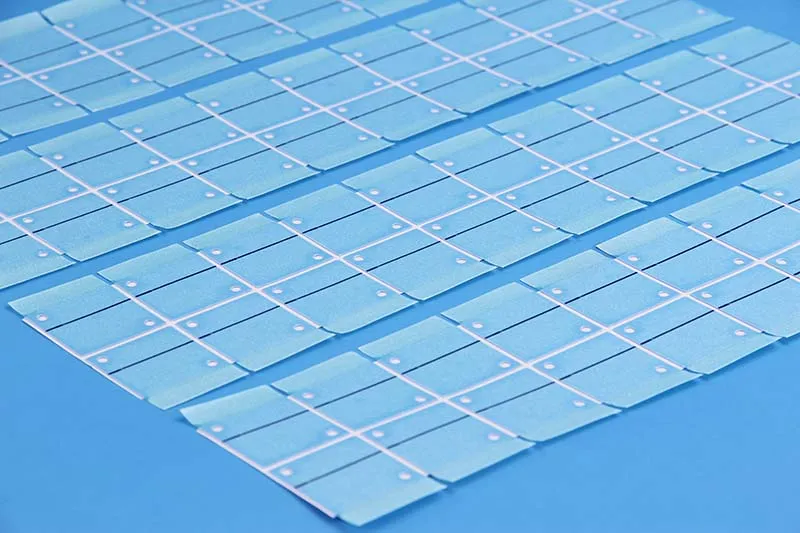
Sheen technology SP205A-60 phase change thermal sheet Reliability Test Report
| Test Items | Test Conditions | Test Equipment |
| High-Temperature Aging | 100℃,1000H | Precision Oven |
| Constant Temperature & Humidity | 85℃、85%RH,1000H | Constant Temperature & Humidity Chamber |
| Thermal Shock | -20℃~80℃,1000H | Constant Temperature & Humidity Chamber |
Criteria for Judging Test Results
| Performance Parameter | Initial Value | Acceptance Criteria |
| Thermal Conductivity(W/m*K) | 6.07 | ±30% |
| Thermal Resistance(℃*in²/W,@10 psi) | 0.082 | ±40% |
| Appearance | Smooth surface, uniform color | No abnormalities (e.g., powdering, discoloration) |
High-Temperature Aging Test Results
| High-Temperature Aging Test Record Sheet | |||||||||
| Aging Time | H | 0 | 200 | 400 | 600 | 800 | 1000 | Change | Assessment |
| Thermal Conductivity | W/m*k | 6.07 | 5.74 | 5.45 | 5.25 | 5.08 | 5.00 | -17.6% | OK |
| Thermal Resistance | ℃*in²/W,@10 psi | 0.082 | 0.084 | 0.089 | 0.095 | 0.102 | 0.107 | +30.5% | OK |
| Appearance | / | No change | No change | No change | No change | Slightly yellow | Slightly yellow | Slightly yellow | OK |
Constant Temperature and Humidity Test Results
| Constant Temperature and Humidity Test Record Sheet | |||||||||
| Aging Time | H | 0 | 200 | 400 | 600 | 800 | 1000 | Change | Assessment |
| Thermal Conductivity | W/m*k | 6.07 | 5.81 | 5.50 | 5.31 | 5.22 | 5.09 | -16.1% | OK |
| Thermal Resistance | ℃*in²/W,@10 psi | 0.082 | 0.090 | 0.094 | 0.098 | 0.101 | 0.105 | +28.0% | OK |
| Appearance | / | No change | No change | No change | No change | Slightly yellow | Slightly yellow | Slightly yellow | OK |
Thermal Shock Test Results
| Thermal Shock Test Record Sheet | |||||||||
| Aging Time | H | 0 | 200 | 400 | 600 | 800 | 1000 | Change | Assessment |
| Thermal Conductivity | W/m*k | 6.07 | 5.72 | 5.50 | 5.33 | 5.18 | 5.07 | -16.5% | OK |
| Thermal Resistance | ℃*in²/W,@10 psi | 0.082 | 0.086 | 0.092 | 0.099 | 0.105 | 0.110 | +34.1% | OK |
| Appearance | / | No change | No change | No change | No change | Slightly yellow | Slightly yellow | Slightly yellow | OK |
Test Conclusion: After aging for 1000 hours under various conditions, the SP205A-60 phase change thermal sheet maintained satisfactory performance with no changes to its appearance. Therefore, the reliability test results are deemed satisfactory.
Need exact thermal conductivity, phase change temperature, flame rating, and reliability data before you choose? Download the product datasheets to compare flame-retardant phase change material options.
If you need an alternate phrase on specs, “flame-retardant PCM” is commonly used, but still verify it’s truly a Flame-retardant phase change material, not just a filler-loaded wax.
Case Study: PCM in Battery Thermal Management Systems
Battery packs don’t care about good intentions; they care about heat dissipation and even temps across cells. In an electric vehicle pack, paraffin-based PCM with microencapsulation can smooth gradients, but only if the battery layout and vent paths are handled like adults, not afterthoughts.
What the thermal management system is trying to fix
Uneven temperature regulation
· Edge cells running cooler than core cells
· Fast-charge hotspots that strain energy storage capacity over time
Safety gaps
· Delaying propagation buys response time, but doesn’t erase risk
Where Flame-retardant phase change material fits (and where it doesn’t)
Works well as a passive buffer
· Dampens peak temps during fast charge/discharge
· Improves pack-level uniformity for performance consistency
Needs partners for real safety
· Thermal barriers, vents, sensors, and shutdown logic
· Designs that still allow outbound heat dissipation, not heat “trapping”
Practical packaging notes
· Microencapsulation reduces leakage and helps cycling durability
Fill fraction matters
· Too little PCM: weak buffering
· Too much PCM: mass/volume penalties and slower cooldown
If you’re sourcing Flame-retardant phase change material, Sheen Technology typically recommends verifying cell-to-cell delta-T under repeat drive cycles, not just a single bench test
Phase Change Material vs. Fireproof Foams
Quick take: Flame-retardant phase change material can soak up heat spikes, while fireproof foams mainly block heat and flame. The real trick is matching the safety vibe to the job, not chasing buzzwords.
Phase Change Material
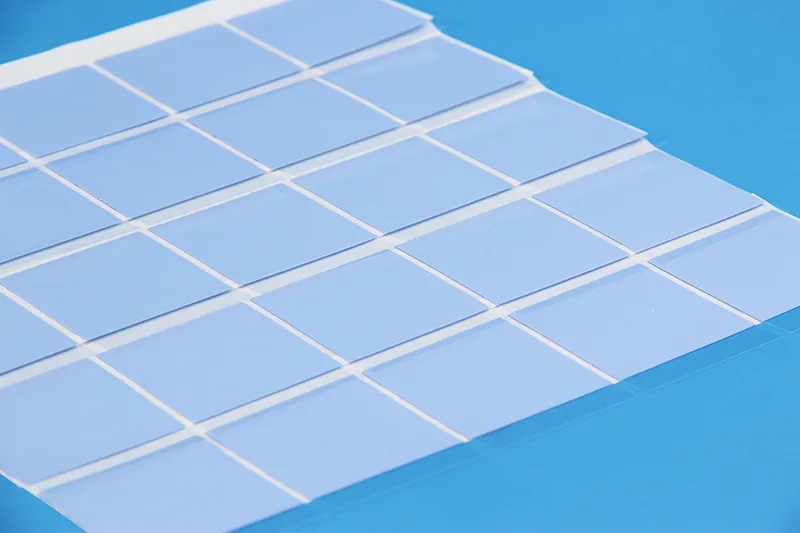
For boards that run hot, Flame-retardant phase change material acts like a heat “buffer,” using latent heat for thermal energy storage so temperature regulation doesn’t swing wildly. It’s still a materials game, though, and Sheen Technology usually treats it as thermal management plus compliance, not magic.
· Keyword split used in practice: flame-retardant / phase change / material.
· Pick the heat target: map the peak load and decide the PCM melt point for steady temperature regulation.
· Lock it in: encapsulation keeps leaks and pump-out from ruining performance.
· Make it safer: additives push flame retardancy toward testable outcomes, including UL paths in building applications.
· Put it where people feel it: textile integration can smooth skin-side temperature swings without bulky insulation.
Sheen technology Performance snapshot for Flame-retardant phase change material choices:
| Properties | Color | Reinforcement Carrier | Thermal Conductivity | Thermal Impedance (@50psi) | Thickness | Phase Change Temp. |
Flammability
|
|---|---|---|---|---|---|---|---|
| Unit | - | - | W/m·K | ℃*in2/W | mm | ℃ | / |
| SP205A-30 | Gray | - | 3.0 | 0.05 | 0.2 | 45 ~ 55 | V-0 |
| SP205A-35 | Gray | - | 3.5 | 0.04 | 0.2 | 45 ~ 55 | V-0 |
| SP205A-40 | Gray | - | 4.0 | 0.03 | 0.2 | 45 ~ 55 | V-0 |
| SP205A-50 | Gray | - | 5.0 | 0.02 | 0.3 | 45 ~ 55 | V-0 |
| SP205A-60 | Gray | - | 6.0 | 0.015 | 0.3 | 45 ~ 55 | V-0 |
| SP205A-AL-40 | Green/Gray | Aluminum Foil | 4.0 | 0.06 | 0.18 | 50 ~ 60 | V-0 |
| SP350P | Green | Polyimide | 1.8 | 0.4 (30psi) | 0.13 ~ 0.5 | 45 ~ 55 | V-0 |
| Test Method | Visual | - | ASTM D5470 | ASTM D5470 | ASTM D751 | ASTM D3418 | UL94 |
Fireproof Foams
Fireproof foams are the “stand there and take it” option: strong fire resistance, steady thermal insulation, and often decent smoke suppression. Sheen Technology tends to position them as simple, reliable fire barriers when heat buffering isn’t the priority.
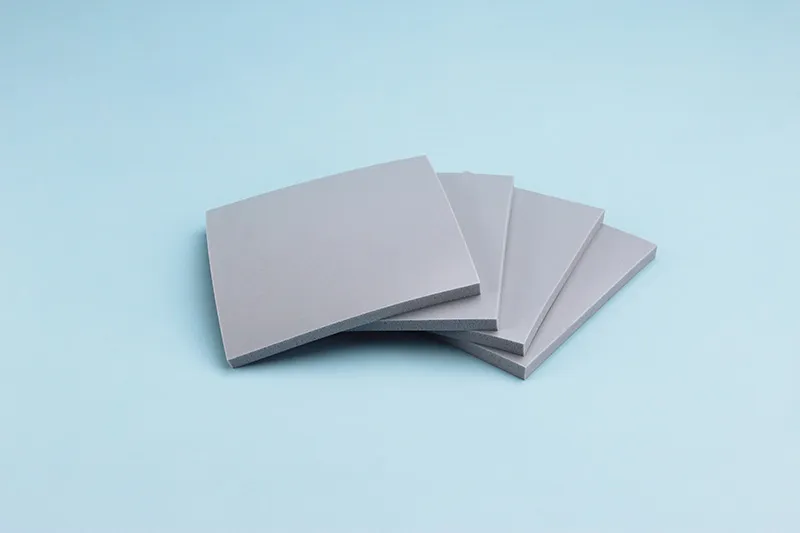
Common foam families: polyurethane, phenolic. When flames hit, intumescent properties can swell and seal gaps fast.
A practical way to compare:
1) If the risk is flash heating in electronics, Flame-retardant phase change material wins on dynamic cooling via thermal management.
2) If the risk is flame spread across cavities, foams win on structural protection.
3) If both risks show up, pair a foam shell with Flame-retardant phase change material at hot spots, and tune for fire resistance plus temperature regulation—that combo is usually the least headache.
Scenario: Data Center Emergency Cooling with PCM
Cooling failures don’t wait for perfect plans. This cluster talks straight about how flame retardant phase change material, or flame retardant phase change material, steps in during rough moments, keeping racks calm, smoke low, and data safe.
Rapid Deployment of Encapsulated Spheres in Server Racks
Heat spikes feel sudden, so fixes must move fast. Encapsulated spheres filled with phase change material slide into server racks without rewiring drama. The rapid deployment idea works because of simple logic:
Thermal management
· Passive heat absorption kicks in when airflow drops.
· The phase, change, and stored material soak energy, buying time.
Emergency cooling
· Localized buffering near CPUs
· Reduced thermal runaway risk
· Safer windows for recovery
Operational feel
· Low noise
· No power draw
· Minimal footprint
Sheen Technology pushes this setup for teams that want calm reactions, not panic.
Combining Expandable Graphite with PCM for Smoke Density Reduction
Fire safety isn’t just about stopping flames; it’s about visibility and breathing room. Mixing expandable graphite into phase change material adds a flame retardant edge.
Bullet thoughts:
· Lower smoke density
· Better char layers
Numeric cues:
· Faster heat spread
· Lower peak release
Symbol notes:
· Cleaner evacuation paths
A composite material built this way acts like a quiet guard, improving thermal insulation while staying ready for fire events. Sheen Technology markets this blend as a practical upgrade, not a lab toy.
“Thermal buffering and passive fire mitigation are now core to digital infrastructure resilience,” noted an Uptime Institute 2024 data center resiliency outlook.
Real-Time Monitoring of Temperature via Differential Scanning Calorimetry
Watching PCM behavior live matters. Differential scanning calorimetry supports real-time monitoring, mixing sensor technology with steady data acquisition.
Short takes:
· Melt point clarity
· Repeatable thermal analysis
· Trusted temperature trends
Multi-step flow shows how flame retardant PCM stays honest:
· Heat ramp
· Phase shift detected
· Stability confirmed
| Test Cycle | Peak Temp (°C) | Latent Heat (J/g) |
| A | 52 | 180 |
| B | 54 | 176 |
| C | 53 | 179 |
This loop validates fire resistant phase change material choices and keeps teams confident when cooling goes sideways.
【Request a Custom Quote】Not sure which flame-retardant phase change material fits your build? Send us your target temperature range, application type, thickness target, and safety requirements, and we can help recommend the right thermal solution for your project.
Sheen Thermal
Dongguan Sheen Electronic Technology Co., Ltd · Founded in 2008
Manufacturer of thermal interface materials and silicone foam for automotive electronics, energy storage, power electronics, communications and consumer electronics.
Certified
- ISO 9001:2015
- ISO 14001:2015
- IATF 16949:2016
What we supply
- Thermal conductivity Up to 90 W/m·K
- Thickness 0.3–10.0 mm
- Custom & samples Die-cut to drawing, 3–7 days