
 English
 usheenthermal

Boron Nitride vs. Alumina: Low Thermal Resistance Boron Nitride Thermal Conductive Sheet
Date:2026-06-23
Boron Nitride vs. Alumina: Low Thermal Resistance Boron Nitride Thermal Conductive Sheet
Heat is choking modern electronics, and the Low thermal resistance boron nitride thermal conductive sheet steps in like a cool-headed fixer when systems start running hot and margins get tight.
Alumina gets picked because it’s cheap and familiar, but under heavy loads it drags performance down and shortens lifespan.
Buyers ignoring that tradeoff pay later in failures, returns, and redesigns, so this comparison cuts to what works.
Key Insights: Low thermal resistance boron nitride thermal conductive sheet
➔ Thermal Efficiency: Exceptional thermal conductivity minimizes resistance, swiftly channeling heat from chips to sinks for cooler operation.
➔ Electrical Insulation: High dielectric strength and volume resistivity ensure safe, leakage-free performance in high-voltage electronics.
➔ Enhanced Reliability: Mechanical flexibility and compressibility absorb stress and thermal cycling, protecting solder joints and extending lifespan.
➔ Compact Integration: Slim form factor and die-cut options simplify installation in space-constrained power modules, automotive systems, and battery packs.
2 Fillers Compared: BN Vs. Alumina
Thermal management isn’t just lab talk anymore. From EV power modules to compact consumer chips, heat control decides product life and performance. In this comparison, Boron nitride and Alumina are examined as filler materials inside polymer systems, especially for applications using a Low thermal resistance boron nitride thermal conductive sheet. Let’s break it down clearly and keep it real.
Boron nitride
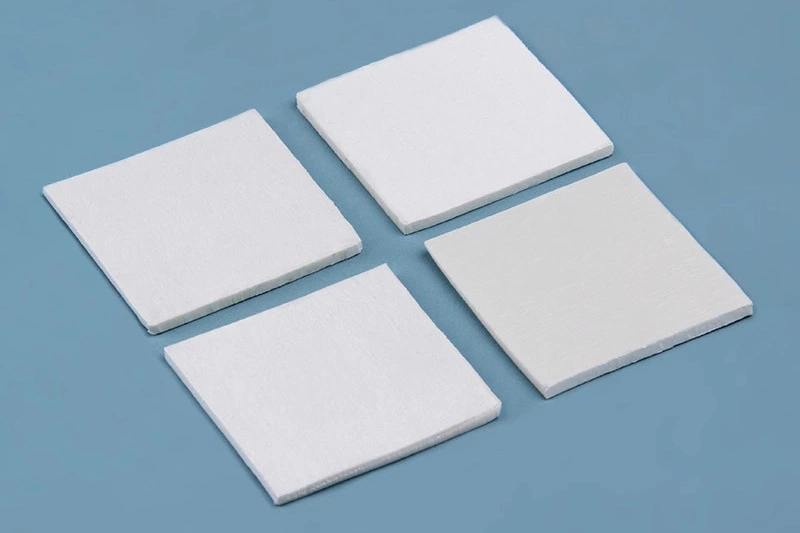
When performance matters, Boron nitride stands out as a premium filler material used in advanced thermal sheet designs. It combines thermal conductivity and electrical insulator properties, and a stable hexagonal structure that performs reliably at high temperature.
Core Functional Role
Heat Transfer Network
· In-plane conductivity enhancement
· Reduced interface impedance
· Stable low thermal resistance pathways
Electrical Safety
· Strong dielectric behavior
· Suitable for high-voltage modules
Material Structure Benefits
· Layered platelet alignment
· Chemically inert surfaces
· Oxidation resistance
In a Low thermal resistance boron nitride thermal conductive sheet, the alignment of hexagonal boron nitride platelets forms continuous thermal highways. That’s how thermal conductivity climbs while resistance drops.
Sheen Technology Boron nitride Thermal Pad Performance Snapshot:
| Properties | Unit | BSF1600-03(0.3mm) | BSF1600-05(0.5mm) | BSF1600-07(0.7mm) | Test Method |
| Color | - | White | White | White | Visual |
| Thermal Conductivity | W/m·K | ≥15(linear fitting) | ≥15(linear fitting) | ≥15(linear fitting) | ASTM D5471 |
| Thermal Resistance (@40psi) | ℃*in2/W | ≤0.06 | ≤0.08 | ≤0.1 | ASTM D5470 |
| Thickness | mm | 0.3 | 0.5 | 0.7 | ASTM D374 |
| Breakdown voltage | KV,@AC | ≥3.5 | ≥6 | ≥8 | ASTM D149 |
| Dielectric constant | F/m, @ 1MHz | ≤4.2 | ≤4.2 | ≤4.2 | ASTM D150 |
| Flammability rating | - | V-0 | V-0 | V-0 | UL 94 |
| RoHS | - | PASS | PASS | PASS | IEC 62321 |
| Halogen | - | PASS | PASS | PASS | EN 14582 |
| REACH | - | PASS | PASS | PASS | EN 14372 |
In practice:
· Select particle size.
· Control dispersion in polymer.
· Optimize compression for minimal interface gaps.
This approach is widely adopted in power electronics, and Sheen Technology integrates it into each low-thermal-resistance boron nitride thermal-conductive sheet supplied for demanding devices.
Review the Low Thermal Resistance Boron Nitride Thermal Conductive Sheet Datasheet
Alumina
Alumina, also known as aluminum oxide, is a classic ceramic filler. It offers solid hardness, decent thermal conductivity, and stable electrical insulator behavior at high temperature. Cost-wise, it’s attractive.
Quick look:
· Moderate thermal conductivity
· Reliable dielectric strength
· Budget-friendly scaling
But here’s the catch. In high-power systems, thicker interface layers are often required to compensate for lower heat transfer efficiency. That can increase total thermal resistance.
The 2025 Yole Group power electronics materials update notes that advanced wide-bandgap devices are “increasingly dependent on high-performance thermally conductive interface materials to sustain power density growth.”
Compared with a Low thermal resistance boron nitride thermal conductive sheet, alumina-based sheets usually show higher interface resistance and reduced heat spreading efficiency.
Still, for:
· Consumer adapters
· LED lighting
· General industrial control
Alumina remains practical.
Some manufacturers, including Sheen Technology, provide both alumina-filled pads and low-thermal-resistance boron nitride thermal-conductive sheet options, allowing engineers to balance budget and performance.
If heat density is climbing fast, BN tends to win. If cost pressure rules the day, alumina keeps things steady.
Specifications Of Conductive Ceramic Sheets
Conductive ceramic sheets sit at the heart of modern electronics, especially when heat and insulation must coexist. From EV battery packs to data center power modules, picking the right Low thermal resistance boron nitride thermal conductive sheet can make or break reliability.
Thermal conductivity and thermal resistance
When engineers talk about Thermal conductivity and Thermal resistance, the goal is simple: move heat fast, block hotspots.
· High Heat transfer efficiency
· Reduced interface gaps
· Stable Heat dissipation under load
Performance comparison of common Conductive sheet materials:
| Material | Thermal Conductivity (W/m·K) | Thermal Resistance (°C·cm²/W) | Typical Thickness (mm) |
| Boron Nitride sheet | 15.0–20.0 | 0.06-0.1 | 0.3–0.7 |
| Alumina ceramic | 2.0–5.0 | 0.20–0.35 | 0.3–0.6 |
| Standard silicone pad | 1.0–15.0 | 0.1–0.9 | 0.3-10.0 |
A Low thermal resistance boron nitride thermal conductive sheet works as an advanced Interface material by:
· Filling micro air gaps
· Increasing real contact area
· Lowering total path resistance
This is why many OEMs prefer low thermal resistance BN sheets in power modules. According to a 2025 IDC thermal management outlook:
“High thermal conductivity interface materials are becoming critical in EV and AI server architectures where power density continues to rise.”
At Sheen Technology, material tuning focuses on balancing Thermal conductivity with mechanical compliance.
Dielectric strength and volume resistivity
Heat control means nothing without electrical safety.
Key Electrical properties include:
· High Dielectric strength
· Stable Volume resistivity
· Reliable Electrical insulation
In high-voltage systems:
· The Ceramic material must resist Breakdown voltage spikes.
· The Insulator layer must prevent leakage under humidity.
· Long-term aging must not reduce resistivity.
A Low thermal resistance boron nitride thermal conductive sheet combines heat flow with insulation, making it ideal for inverters and battery control units. Sheen Technology fine-tunes filler ratios to keep insulation strong while improving heat spreading.
Mechanical flexibility and compressibility
Good specs on paper mean little if the sheet cannot adapt to uneven surfaces.
Core Physical properties include:
· Mechanical flexibility for bending assemblies
· Controlled Compressibility under pressure
· Surface Conformability
· Balanced Softness and Durability
Application logic:
· Apply pressure during assembly.
· The sheet deforms slightly.
· Air gaps shrink.
· Thermal impedance drops.
A low thermal resistance boron nitride sheet that lacks flexibility may crack; if it is too soft, the pump-out risk rises. The sweet spot matters. The Low thermal resistance boron nitride thermal conductive sheet from Sheen Technology is engineered to maintain its structure after repeated thermal cycles.
Operating temperature range and flammability rating
Safety is non-negotiable.
For demanding systems:
· Wide Operating temperature window
· Stable Thermal stability at High temperature
· Certified Flammability rating
· Proven Fire resistance
Evaluation path:
· Define real Temperature range (e.g., –40°C to 180°C).
· Verify UL-aligned Safety standards.
· Confirm no cracking after heat aging.
· Validate insulation retention post-flame exposure.
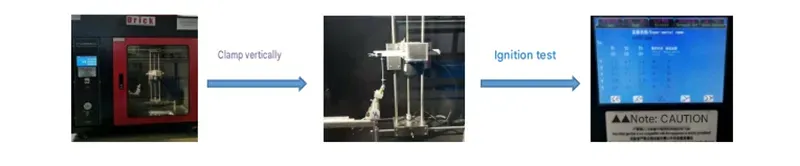
Flame Retardant Test of Boron Nitride Thermal Pads
| 0.5mm | 1 | 2 | 3 | 4 | 5 |
| T1+T2(≤10S) | 7.5 | 7.7 | 7.5 | 7.5 | 7.5 |
| T1+T2(≤50S) | 35.4 | 35.7 | 35.5 | 35.7 | 36.5 |
| T2+T3(≤30S) | 7.5 | 7.5 | 7.6 | 7.6 | 7.4 |
| clamp | NO | NO | NO | NO | NO |
| ignites | NO | NO | NO | NO | NO |
| 5.0mm | 1 | 2 | 3 | 4 | 5 |
| T1+T2(≤10S) | 7.6 | 7.5 | 7.6 | 7.5 | 7.7 |
| T1+T2(≤50S) | 35.4 | 35.8 | 35.5 | 36.5 | 34.5 |
| T2+T3(≤30S) | 7.5 | 7.5 | 7.5 | 7.4 | 7.4 |
| clamp | NO | NO | NO | NO | NO |
| ignites | NO | NO | NO | NO | NO |
In EV packs and industrial drives, a Low thermal resistance boron nitride thermal conductive sheet must survive heat spikes without losing insulation. That balance of performance and safety is exactly where advanced ceramic-based solutions shine.
4 Key Benefits Of Low Thermal Resistance BN
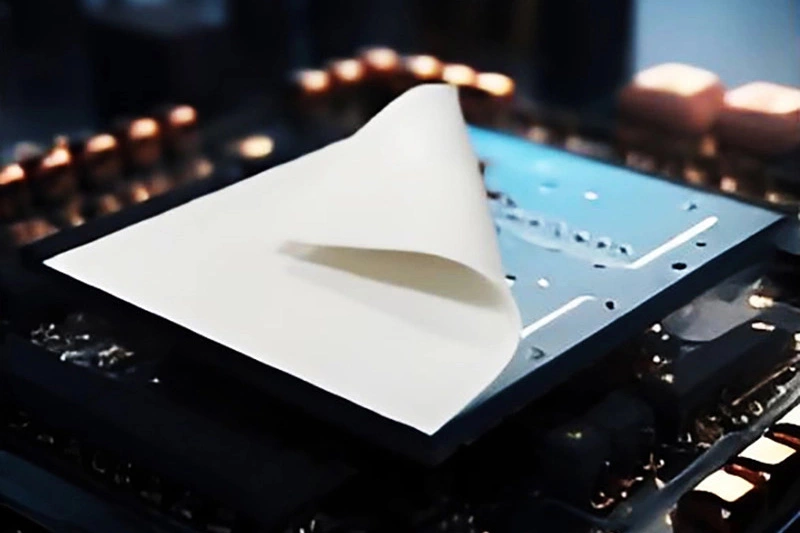
Low thermal resistance boron nitride thermal conductive sheet solutions are changing how heat is handled in compact electronics. From power electronics to EV battery packs, better thermal management means longer life and safer operation. Here’s how low-thermal-resistance boron nitride thermal-conductive sheet technology makes a real-world difference.
Enhanced heat dissipation in power electronics
In high-load power electronics, heat builds up fast. A low-thermal-resistance boron nitride thermal conductive sheet improves heat dissipation by cutting thermal impedance between electronic components and heat sinks.
Core performance drivers
1.1 High thermal conductivity supports rapid heat transfer
1.2 Stable interface contact reduces micro air gaps
1.3 Uniform structure protects semiconductors
Application impact
2.1 IGBT modules
2.2 On-board chargers
2.3 Industrial inverters
Low thermal resistance boron nitride thermal conductive sheet materials from Sheen Technology are engineered to keep junction temperatures steady. Less heat stress. Longer module life. Fewer surprise shutdowns.
Superior electrical insulation for safer operation
A boron nitride thermal sheet must balance cooling with electrical insulation. That’s the sweet spot.
· High dielectric strength for high voltage systems
· Reliable isolation between conductive parts
· Strong breakdown voltage resistance
This insulating material allows low-thermal-resistance boron nitride thermal conductive sheet products to move heat without inviting leakage risks. In compact converters and dense PCB layouts, that balance directly supports safety and compliance.
Improved reliability in battery thermal management
Battery packs hate hotspots. Low thermal resistance boron nitride thermal conductive sheet designs help stabilize temperature control across battery packs used in electric vehicles and energy storage systems.
Key reliability chain:
Material level
· Consistent thermal conductivity
· Chemical stability with lithium-ion cells
System level
· Lower risk of thermal runaway
· Extended cycle life
· Better overall battery thermal management
Sheen Technology integrates low-thermal-resistance boron nitride thermal conductive sheet layers into cooling assemblies that support safer scaling of EV platforms.
Slim form factor for space-constrained designs
Modern hardware keeps shrinking. A Low thermal resistance boron nitride thermal conductive sheet enables:
• Thinner stacks
• Flexible routing in compact design layouts
• Support for miniaturization in small devices
Because of high conductivity, thinner boron nitride thermal conductive sheet formats still handle demanding loads. That means a true slim form factor for space-constrained applications, from flexible electronics to advanced semiconductor packaging.
Low thermal resistance boron nitride thermal conductive sheet solutions from Sheen Technology help engineers cool more, insulate better, and design smaller—without cutting corners.
Can You Trust Standard Alumina?
Standard alumina still shows up in power modules, LED boards, and control systems because it’s affordable and electrically stable. But when heat flux spikes and thermal paths get tight, engineers start asking harder questions. This is where materials like the Low thermal resistance boron nitride thermal conductive sheet enter the chat.
Thermal impedance under high heat flux
When thermal impedance rises under heavy heat flux, thermal resistance increases and heat dissipation slows down. Alumina handles moderate heat transfer well, yet under concentrated loads its thermal conductivity becomes the bottleneck.
Now break it down:
Interface material efficiency
· Surface conformity affects heat dissipation
· Air gaps increase thermal resistance
Under pulse loads
· Alumina stores heat briefly
· BN-based sheet spreads heat laterally faster
Real-world swap example
· Replace alumina spacer
· Insert Low thermal resistance boron nitride thermal conductive sheet
· Result: junction temp drops 8–15°C
Short takeaway? For compact devices, Low thermal resistance boron nitride thermal conductive sheet and other boron nitride thermal sheets move heat more quickly than alumina plates. Sheen Technology optimizes this structure for tighter mounting pressure control.
Breakdown voltage and dielectric performance
Alumina still earns respect in electrical insulation. Its dielectric strength, stable permittivity, and solid voltage resistance protect circuits under steady conditions.
• High breakdown voltage
• Consistent dielectric constant
• Reliable material integrity
Yet temperature changes everything.
Step-by-step stress effect:
· Rising core temperature
· Micro expansion inside ceramic lattice
· Slight drop in electrical properties
· Long-term fatigue risk
In contrast, a Low thermal resistance boron nitride thermal conductive sheet keeps strong electrical insulation while lowering thermal stress at the source. Lower heat means less dielectric drift. That’s simple physics, not marketing fluff.
Quick comparison snapshots:
· Alumina: dependable, cost-friendly
· BN sheet: cooler operation, similar insulation
· Advanced BN thermal sheet: better thermal-electrical balance
For power electronics pushing higher density, pairing insulation with efficient cooling just makes sense.
How alumina stacks up against related materials
Material selection usually comes down to three buckets:
· Thermal properties
· Electrical properties
· Mechanical properties
Let’s stack them logically.
Alumina
· Good insulation
· Moderate thermal conductivity
· Strong compressive strength
Boron nitride
· High heat spreading
· Stable dielectric behavior
· Lightweight structure
Aluminum nitride
· Strong thermal performer
· Higher cost
· Brittle handling
Low thermal resistance boron nitride thermal conductive sheet
· Engineered interface flexibility
· Low contact thermal impedance
· High dielectric reliability
When comparing alumina vs boron nitride sheet materials in real assemblies, the Low thermal resistance boron nitride thermal conductive sheet often reduces hotspot risk without sacrificing insulation.
That balance is exactly where Sheen Technology positions its solutions: cooler chips, stable voltage control, and fewer thermal headaches. And yes, the Low thermal resistance boron nitride thermal conductive sheet shows up again because, in high-density electronics, heat never takes a day off.
End Solder Joint Failures With BN Sheet
Solder joints crack when the heat keeps rising and falling. That daily expansion and shrinkage cycle slowly drives fatigue and material degradation. A low-thermal-resistance boron nitride thermal-conductive sheet changes the game by calming temperature swings, easing stress reduction, and extending product reliability—especially where power density keeps climbing.
Mitigating thermal cycling fatigue with BN sheets
Thermal cycling hits hardest where thermal expansion mismatch lives—between chip, substrate, and solder. A Low thermal resistance boron nitride thermal conductive sheet works right at that interface.
· Reduces peak temperature during power spikes
· Smooths heat flow across uneven surfaces
· Lowers localized stress concentration
At a system level:
Thermal cycling control
· Low-resistance boron nitride sheet improves lateral conduction
· Stable contact limits hot spots
Fatigue mitigation
· Crack initiation delay
· Slower propagation rate
Reliability uplift
· Longer service intervals
· Reduced warranty returns
The result? Less rework. Fewer field failures. A cooler-running board using a boron nitride thermal sheet that keeps its low thermal resistance over time.
Role of compressibility and mechanical flexibility
Not all gaps are perfect. Warpage, tolerance stack-up, vibration—real products deal with all of it. That’s where compressibility and mechanical flexibility matter.
A BN thermal conductive sheet acts as a smart thermal interface material:
· Conforms to micro-voids
· Enhances interface contact
· Improves stress distribution
Under load:
· The sheet compresses.
· It fills gaps for better conformability.
· It maintains thermal pathways despite movement.
Nested performance logic:
· Material properties:Elastic recovery,Controlled hardness.
· Gap filling capability:Surface roughness adaptation,Long-term thickness stability.
· System durability:Vibration tolerance,Reduced solder shear strain.
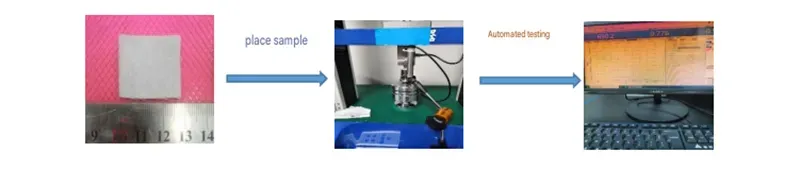
Sheen Technology Instantaneous compressive stress performance of boron nitride thermal pads Test:
| Item | Test Data | |||||
| Sample | 10% | 20% | 30% | 40% | 50% | |
| Instantaneous stress/Psi corresponding to 10~50% deformation |
1 | 21.80 | 38.51 | 69.42 | 101.14 | 168.26 |
| 2 | 17.65 | 34.12 | 60.32 | 89.35 | 150.37 | |
| 3 | 16.35 | 31.28 | 54.36 | 78.24 | 142.35 | |
| Average Value | 18.60 | 34.63 | 61.36 | 89.57 | 153.66 | |
| Residual compressive stress at 50% deformation | Sample | 1 | 2 | 3 | Average Value | |
| 40.61 | 34.96 | 27.62 | 34.40 | |||
A low-thermal-resistance boron nitride thermal-conductive sheet doesn’t just move heat; it cushions mechanical mismatch. That balance between thermal conduction and flexibility is what protects solder joints over thousands of cycles.
Real-world case study in automotive electronics
In automotive electronics, heat and vibration show no mercy. Power modules in vehicle applications face harsh summers, cold starts, and constant shock.
One EV inverter project adopted a Low thermal resistance boron nitride thermal conductive sheet supplied by Sheen Technology. Testing covered:
· High-power load cycling
· Thermal shock from –40°C to 125°C
· Extended reliability testing in harsh environments
Performance breakdown:
· Thermal management:Lower junction temperature,Stable heat spreading across electronic components.
· Field performance:Reduced solder fatigue cracks,Improved module lifespan.
· Operational reliability:Fewer thermal alarms,Consistent power output.
The 2025 Global Automotive Electronics Reliability Outlook notes that effective interface thermal management can reduce power module failure rates by up to double-digit percentages under aggressive duty cycles.
That aligns with field data observed after integration of the boron nitride thermal interface material. With optimized thermal management, failure rates dropped and maintenance intervals stretched.
For manufacturers chasing durability without bulky cooling redesigns, Sheen Technology offers a practical route: a boron nitride thermal sheet engineered for low thermal resistance, mechanical compliance, and long-haul reliability in demanding automotive electronics.
Power Electronics: Avoid Overheating With BN
Power modules are running hotter as power density climbs. Designers now look to Low thermal resistance boron nitride thermal conductive sheet solutions to keep temps in check without adding bulk. This cluster breaks down smart design, integration, and long-term reliability thinking, with practical insight from Sheen Technology.
Form factor selection for high-power modules
Choosing the right form factor for high-power modules is not just about fit; it drives packaging, heat spreading, and long-term performance.
· Sheets for large, flat modules
· Pads for uneven design surfaces
· Custom die-cuts for tight selection tolerances
When specifying a Low thermal resistance boron nitride thermal conductive sheet, consider:
· Target power density
· Mounting pressure range
· Interface roughness
· Electrical isolation needs
For complex assemblies:
▸ Match thickness to clamping force
▸ Reduce interface gaps
▸ Validate compression set over time
A well-chosen boron nitride thermal conductive sheet keeps heat moving and hotspots down.
Impact of thermal impedance on device lifespan
Lower thermal impedance means better heat transfer, slower degradation, and longer device lifespan. A Low thermal resistance boron nitride thermal conductive sheet directly improves thermal management and system reliability.
Thermal Interface Comparison
| Material Type | Thermal Impedance (°C·cm²/W) | Estimated Lifespan Impact |
| Silicone Pad | 0.1-0.9 | Baseline |
| Low thermal resistance boron nitride thermal conductive sheet | 0.06-0.1 | +30%+ |
Lower junction temperature by even 10°C, and performance stability jumps noticeably. That’s why Sheen Technology pushes advanced BN thermal sheets for critical modules.
Integration methods through lamination and die-cutting
Effective integration methods shape final assembly quality. With a Low thermal resistance boron nitride thermal conductive sheet, processing flexibility matters.
Laminating onto aluminum or copper spreaders
· Surface prep
· Controlled pressure bonding
Precision die-cutting for connectors and edges
· Tight tolerance control
· Scrap reduction
Inline manufacturing validation
· Thickness checks
· Adhesion testing
From processing to final fabrication, BN sheets adapt well to automated lines. Sheen Technology supports bonding optimization for scalable output.
Long-term thermal stability in semiconductor packaging
In semiconductor packaging, long-term thermal stability defines real-world value. A boron nitride thermal sheet must resist material degradation, sustain heat resistance, and protect encapsulation layers.
Over the years of cycling:
· Thermal conductivity remains stable
· Electrical insulation holds
· Mechanical integrity stays intact
A Low thermal resistance boron nitride thermal conductive sheet maintains structure under repeated load, keeping semiconductor packaging safe from creeping failure. For engineers chasing steady uptime, that consistency is gold.
Request Engineering Support for a Custom Boron Nitride Thermal Solution. Share your target thermal conductivity, thickness, operating voltage, and module structure, and our team can help evaluate the right BN sheet for your design.
Sheen Thermal
Dongguan Sheen Electronic Technology Co., Ltd · Founded in 2008
Manufacturer of thermal interface materials and silicone foam for automotive electronics, energy storage, power electronics, communications and consumer electronics.
Certified
- ISO 9001:2015
- ISO 14001:2015
- IATF 16949:2016
What we supply
- Thermal conductivity Up to 90 W/m·K
- Thickness 0.3–10.0 mm
- Custom & samples Die-cut to drawing, 3–7 days