
 English
 usheenthermal

Why Choose an Anti-oxidation Graphene Thermal Conductive Pad?
Date:2026-06-24
Why Choose an Anti-oxidation Graphene Thermal Conductive Pad?
Heat is killing your hardware and your margins, and an Anti-oxidation graphene thermal conductive pad cuts straight to the fix—faster heat flow, steadier temps, fewer meltdowns when systems run hot and crowded.
Downtime shrinks, parts last longer, and supply stays consistent, so you stop babysitting overheating gear and start shipping without the drama.
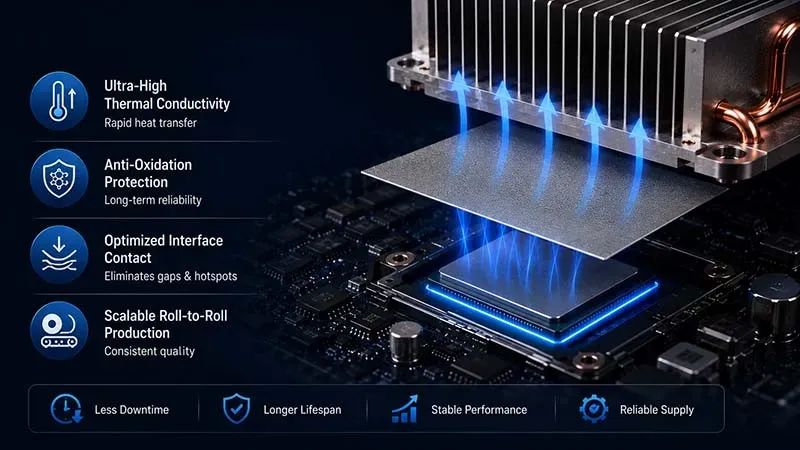
Key Points: Anti-oxidation Graphene Thermal Conductive Pad
➔ Ultra-high Thermal Conductivity: Rapidly channels heat from CPUs, GPUs, and power modules into heat sinks, stabilizing performance under heavy loads.
➔ Built-in Oxidation Inhibitors: Shields graphene and binder materials from degradation, preserving long-term reliability in automotive, telecom, and industrial electronics.
➔ Optimized Interface Contact: Balances compressibility and surface roughness to eliminate air gaps and hotspots across uneven IC and heat sink surfaces.
➔ Scalable Roll-to-Roll Production: Ensures consistent thickness and density for high-volume sheet manufacturing, reducing downtime and deployment failures.
Overheating Issues? Try Graphene Thermal Pad
Modern CPUs and GPUs run hot. Push them hard—gaming, AI workloads, 4K editing—and heat builds up fast. An Anti-oxidation graphene thermal conductive pad offers a practical fix. By improving heat transfer and reducing thermal resistance, it keeps electronics stable and performing at their best without the drama of overheating.
How graphene’s ultra-high thermal conductivity cools CPUs and GPUs
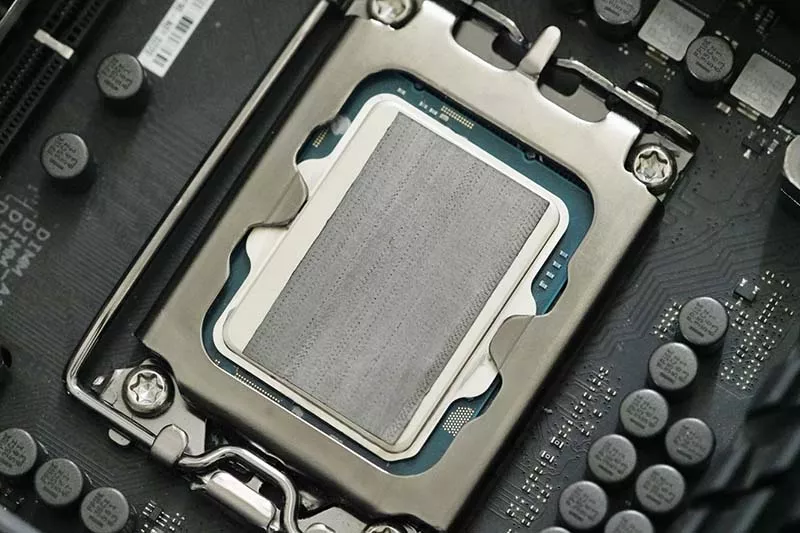
At the core of every Anti-oxidation graphene thermal conductive pad is graphene with exceptional thermal conductivity. Heat from CPUs and GPUs doesn’t linger—it moves.
· Heat leaves the chip surface.
· The graphene thermal conductive pad absorbs it quickly.
· Energy flows toward the heat sink through optimized heat transfer pathways.
· Cooling systems dissipate it into the air.
Key performance factors include:
· High in-plane thermal conductivity for rapid lateral cooling
· Low interfacial thermal resistance between chip and sink
· Stable anti-oxidation graphene structure under long workloads
When integrated correctly:
· Chip Surface:Microscopic gaps form due to uneven metal,Air pockets increase thermal resistance
· Anti-oxidation Graphene Thermal Conductive Pad:Flexible layer conforms to surfaces,Fills voids and boosts heat transfer
· Heat Sink Base:Receives evenly distributed heat,Improves sustained cooling
The result? Fewer thermal throttling drops. Smoother frame rates. Longer component lifespan.
Sheen Technology designs each Anti-oxidation graphene thermal conductive pad to maintain stable electronics cooling even under extreme GPU loads.
Polymer matrix with reinforcement fibers for superior heat dissipation
An Anti-oxidation graphene thermal conductive pad is not just graphene. Its polymer matrix binds everything together while maintaining electrical insulation.
Material structure works like this:
· Outer Layer:Protective anti-oxidation barrier.
· Core Composite:Graphene sheets、Reinforcement fibers、Thermally conductive fillers.
· Base Contact Layer:Adaptive thermal interface materials surface.
Why this matters:
• Stronger mechanical stability
• Reliable heat dissipation
• Long-term thermal management consistency
The polymer matrix ensures flexibility. The reinforcement fibers prevent tearing under compression. Together, these composite materials create efficient internal heat transfer channels.
Short takeaways:
· Better structural integrity
· Improved safety for sensitive ICs
· Consistent thermal management performance
Sheen Technology refines its Anti-oxidation graphene thermal conductive pad formulations so the composite remains durable without sacrificing softness.
Balancing compressibility and surface roughness to prevent hotspots
Hotspots usually appear where contact fails. Tiny gaps. Uneven pressure. Rough metal.
An Anti-oxidation graphene thermal conductive pad solves this by balancing:
· Controlled compressibility
· Optimized surface roughness
· Stable interface pressure
Here’s how it works step by step:
· The pad compresses under mounting force.
· It adapts to uneven chip and sink surfaces.
· Air gaps disappear through effective gap filling.
· Improved thermal contact reduces localized hotspots.
Nested performance logic:
· Mounting Pressure:Even distribution,Reduced thermal resistance.
· Surface Texture:Micro-level conformity,Enhanced heat transfer.
· Material Elasticity:Long-term rebound control,Stable cooling cycles.
The outcome is simple. Lower temperatures. No random spikes. Reliable GPU boosts.
With every Anti-oxidation graphene thermal conductive pad, Sheen Technology focuses on precise compression control so your system runs cool without over-tightening hardware.
3 Reasons to Choose Graphene Thermal Pad
When heat builds up inside high-power electronics, performance drops fast. That’s why an Anti-oxidation graphene thermal conductive pad matters. By combining anti-oxidation protection, graphene conductivity, and stable pad fabrication, this solution keeps electronic components cool, steady, and ready for long hours of heavy use.
Exceptional thermal resistance reduction for power modules
In high-load power modules, small thermal gaps can snowball into major failures. An Anti-oxidation graphene thermal conductive pad targets this at material level.
· Thermal resistance drops because graphene forms continuous heat pathways.
· Heat transfer improves across interfaces with fewer air voids.
· Heat dissipation becomes faster under peak current spikes.
· Thermal management stabilizes junction temperature in sensitive chips.
Sheen Technology Graphene Thermal pad performance properties:
| Properties | Unit | GSF90-03 Graphene Thermal Pad | GSF75-03 Graphene Thermal Pad | Test Method |
| Color | - | Black | Black | Visual |
| Thermal Conductivity | W/m·K | ≥90 | ≥75 | ASTM E1461 |
| Thermal Resistance (@40psi) | ℃*in2/W | ≤0.013 | ≤0.016 | ASTM D5470 |
| Thickness | mm | 0.27~0.33 | 0.27~0.33 | ASTM D374 |
| Density | g/cm³ | 0.6~0.9 | 0.6~0.9 | ASTM D792 |
| Compression Rebound Rate | % | ≥55 | ≥60 | ASTM D575 |
| Tensile Strength | Mpa | ≥0.03 | ≥0.03 | ASTM D412 |
| Oil Bleeding Rate | % | ≤3 | ≤3 | / |
| Application Temperature | ℃ | -40~150 | -40~150 | / |
| RoHS | - | PASS | PASS | IEC 62321 |
| Halogen | - | PASS | PASS | EN 14582 |
| REACH | - | PASS | PASS | EN 14372 |
For engineers, it usually comes down to three things:
· Lower interface temperature
· Faster cooling cycles
· Longer electronic components lifespan
The anti-oxidation graphene thermal pad works by layering graphene sheets into a dense network. Inside that network:
· Graphene layers → create rapid lateral conduction
· Conductive fillers → bridge vertical micro-gaps
Binder system
· Anti-oxidation agents
· Chemical stabilizers
· Adhesion enhancers
This structure reduces thermal resistance while keeping mechanical flexibility. In power transistors and inverters, stable cooling solutions mean fewer shutdowns and smoother output.
Industry observers are noticing the shift toward advanced thermal materials:
“High-power density electronics in EVs and telecom infrastructure are accelerating demand for next-generation thermal interface materials,” noted a 2025 IDC materials outlook.
That trend is exactly where the Anti-oxidation graphene thermal conductive pad fits.
Built-in oxidation inhibitors ensure long-term reliability
Heat alone isn’t the only enemy. Oxidation slowly damages conductive pathways, leading to material degradation and reduced output.
An anti oxidation graphene thermal pad adds built-in inhibitors that protect:
· Graphene surfaces
· Polymer binders
· Internal conductive junctions
Here’s how protection unfolds over time:
· Protective layers shield graphene from oxygen exposure.
· Chemical stabilizers maintain chemical stability at high temperature.
· Structural bonding prevents cracking and delamination.
Inside the material system:
Surface level
· Anti-oxidation coating
· Moisture resistance barrier
Mid-layer
· Graphene dispersion matrix
· Cross-linked binder
Core
· Dense conductive framework
· Long-term reliability backbone
For automotive control units and telecom base stations, long-term stability isn’t optional. The Anti-oxidation graphene thermal conductive pad keeps long-term stability intact even after repeated heating cycles. That translates to fewer replacements and stronger field performance.
Roll-to-roll processing enables scalable sheet manufacturing
Performance is only half the story. Manufacturing scale matters.
With roll-to-roll technology, graphene sheets are fabricated in continuous motion. That means:
· Stable thickness control
· Uniform density
· Predictable fabrication quality
The production chain looks like this:
· Graphene slurry preparation
· Precision coating onto carrier film
· Controlled drying and curing
· Sheet lamination
· Automated inspection
Within industrial production methods, roll-to-roll supports:
· High-volume mass production
· Consistent graphene sheets output
· Reduced unit cost in industrial production
Nested into that system:
Coating stage
· Thickness sensors
· Edge alignment control
Curing stage
· Temperature zoning
· Oxidation control environment
Final inspection
· Thermal resistance testing
· Surface flatness scanning
This is where Sheen Technology stands out. By refining roll-to-roll processing for the Anti-oxidation graphene thermal conductive pad, Sheen Technology ensures scalability without sacrificing thermal management precision. The result feels simple on the outside—a thin pad—but inside, it’s engineered for serious heat loads and real-world durability.
Download Datasheet. Review Technical Specifications for the Anti-oxidation Graphene Thermal Conductive Pad
Anti-oxidation Graphene Thermal Conductive Pad Cuts Downtime 35%
Modern devices heat up fast and cool down hard. The Anti-oxidation graphene thermal conductive pad keeps that swing under control, protecting boards and chips while trimming downtime. Here’s how this anti oxidation graphene pad earns its keep in real-world electronics.
Data proves temperature stability under rigorous thermal cycling
When engineers test an Anti-oxidation graphene thermal conductive pad, the focus stays on data, not hype.
Testing Framework
1.1 Rigorous heat-up and cool-down loops
1.2 Continuous temperature stability tracking
1.3 Material deformation checks
Proof of Stability
2.1 Conductivity retention after repeated thermal cycling
2.2 Structural integrity under expansion stress
2.3 Verified stability across high-load processors
Key observations:
· Minimal thermal resistance drift
· No cracking under pressure
· Consistent bonding to copper and aluminum
Sheen Technology laboratory Graphene Thermal pad aging Test:
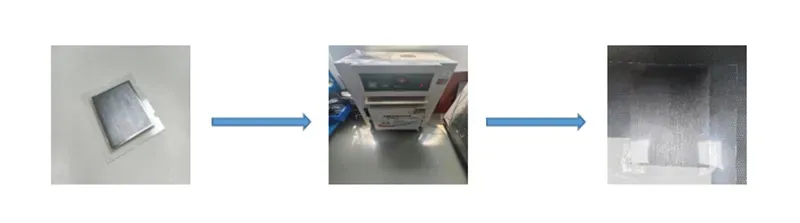
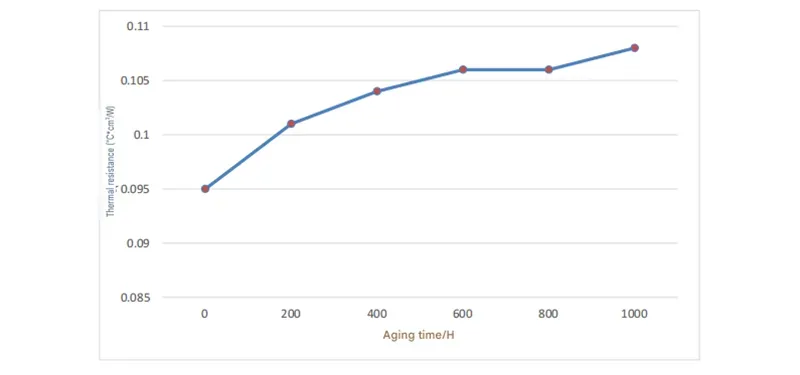
This graphene thermal pad doesn’t just survive lab simulations; it handles real server racks and gaming rigs without flinching. That’s why Sheen Technology keeps pushing its anti oxidation graphene thermal conductive pad through extreme cycle counts before release.
Oxidation resistance protects integrated circuits and memory modules
Heat is only half the battle. Air, humidity, and time attack metal surfaces. The Anti-oxidation graphene thermal conductive pad adds a barrier layer that boosts oxidation resistance and long-term protection.
· Shields delicate integrated circuits
· Preserves signal paths inside memory modules
· Maintains dielectric performance in dense circuits and stacked modules
According to IDC’s 2025 semiconductor reliability outlook:
“Material-level oxidation control is becoming a primary factor in long-term computing stability, especially in high-density memory environments.”
That lines up with field feedback. Anti oxidation graphene pads reduce corrosion risk while keeping heat flow steady. In plain terms, fewer surprise crashes and fewer late-night maintenance calls.
Quality control and adhesion testing for zero-failure deployments
Reliability isn’t luck. It’s layered quality control.
Incoming Material Validation
1.1 Graphene dispersion checks
1.2 Surface oxidation screening
Process Assurance
2.1 Automated adhesion testing
2.2 Thickness calibration
2.3 Thermal impedance verification
Deployment Readiness
3.1 Board-level bonding trials
3.2 Stress simulation for zero-failure targets
3.3 Batch traceability for global deployments
The anti oxidation graphene thermal conductive pad from Sheen Technology sticks cleanly, transfers heat fast, and stays put. No peeling. No weak spots. Just steady cooling that keeps systems online and downtime down.
Request a Custom Quote. Discuss a Custom Thermal Pad Solution with Our Engineers
Sheen Thermal
Dongguan Sheen Electronic Technology Co., Ltd · Founded in 2008
Manufacturer of thermal interface materials and silicone foam for automotive electronics, energy storage, power electronics, communications and consumer electronics.
Certified
- ISO 9001:2015
- ISO 14001:2015
- IATF 16949:2016
What we supply
- Thermal conductivity Up to 90 W/m·K
- Thickness 0.3–10.0 mm
- Custom & samples Die-cut to drawing, 3–7 days